
Should I open or buy a Rockin’ Jump trampoline park franchise in 2027?
 Curated byKory White · Fractional CRO · Maryland
 PULSEKNOWLEDGE LIBRARY
Only if you can fund a $1M–$2.5M build in a genuinely underserved, youth-dense trade area and you intend to run it as a party-sales business. Rockin' Jump is an established trampoline brand in a mature, crowded segment; open-jump walk-in traffic alone will not carry the rent, insurance, and royalty load.
The outcome you should expect
Set your expectations against the shape of the segment, not against the best year any single park ever had. A Rockin' Jump-style indoor trampoline and adventure park occupies roughly 18,000–35,000 square feet of warehouse or big-box shell, fills it with trampoline arenas, dodgeball courts, foam pits, ninja obstacle courses, and climbing elements, and monetizes four distinct revenue lines: open-jump admissions, birthday parties, group and corporate events, and food and beverage concessions. Those four lines do not contribute equally, and the mistake most first-time owners make is assuming they do.
Mature parks in the category commonly gross somewhere in the $1.2M–$2.8M range, and the spread inside that band has far more to do with party utilization than with brand or attraction count. A park doing $1.4M on 65% open-jump revenue and a park doing $1.4M on 45% party-and-group revenue are not the same business. The second one throws off meaningfully more owner profit because a booked party sells a guaranteed head count, a food attachment, and a pre-paid deposit weeks in advance, while open jump sells one unpredictable admission at a time and consumes the same court supervision either way.
After labor at roughly 22%–28% of revenue, occupancy at 12%–16%, a royalty near 5%–6%, a marketing fee around 2%, and an insurance line that is materially heavier than almost any other retail franchise category, net margins in this segment realistically land between 12% and 25%. On a well-utilized park that translates to something like $120,000–$380,000 in owner profit before debt service — and the phrase "before debt service" is doing enormous work in that sentence. If you financed $1.4M of the build at commercial rates, your annual principal and interest can consume a large share of that number. Plan for 18–36 months to reach breakeven on a new build, and treat any pro forma that promises faster as a sales document rather than a forecast.

The honest framing is this: a trampoline park is an operations-intensive, weekend-and-holiday-peaked, liability-heavy family entertainment business with real capital intensity and real recurring capex. It is not passive income, it will not run itself under a general manager in year one, and the difference between a good outcome and a bad one is decided mostly by two things you control before you ever open the doors — where you put it, and whether you build a party sales engine.
What drives that outcome
Trace the money and the levers become obvious. Revenue enters through four doors with very different margin profiles. Open jump is volume-driven and staffing-heavy: every jumper on the court requires court monitors regardless of how many people are there, so a half-empty Tuesday afternoon carries nearly the same supervision cost as a packed Saturday. Birthday parties bundle admission, a dedicated room, a host, and food into a per-head package at a much higher effective revenue-per-guest, and they book in advance, which lets you staff to a known number instead of guessing. Group events — school field trips, church groups, sports teams, camps, corporate outings — behave like parties but fill weekday daytime hours that would otherwise be dead. Concessions attach to all three and carry the best gross margin in the building.

On the cost side, four lines dominate and only two of them are truly variable. Labor flexes with hours and bookings if you schedule tightly, but there is a floor: you cannot open the doors without a minimum court-monitor count dictated by your safety protocol and your insurer. Occupancy is fixed the day you sign the lease, which is why the rent negotiation is one of the highest-leverage hours of the entire project. Royalty and marketing fees are a fixed percentage of gross, meaning they scale with revenue whether or not that revenue was profitable. Insurance is its own category — in this segment it is not a rounding error, and it prices off your claims history, which means safety management is a direct P&L line, not a compliance chore.
The decision node at the bottom is the whole business. Everything upstream — site, attractions, brand, staffing model — either feeds party and group utilization or it does not. When you interview existing owners, that is the number to press on: not gross revenue, but what percentage of gross came from parties and groups, and what their weekend party slot fill rate looked like in the trailing twelve months.
Benchmarks and realistic ranges
Use these as a planning frame, and verify every one of them against the current franchise disclosure document and against owners you actually call. Ranges in this category move year to year, and insurance in particular has been a moving target across the whole indoor-play sector.

Build and startup. The franchise fee sits around $50,000. Leasehold improvements and buildout on a warehouse shell typically run $280,000–$900,000 depending on the condition of the space, how much HVAC and electrical you inherit versus install, and local permitting. Trampoline courts, padding, foam, ninja elements, and climbing attractions run another $320,000–$800,000. Technology — waiver kiosks, online booking, POS, party management — runs $30,000–$110,000. Launch marketing and pre-sell campaigns run $30,000–$110,000. Insurance binders and permits before you open run $25,000–$85,000. Training and travel run $8,000–$25,000. Working capital for the first three to six months should be $90,000–$280,000, and undercapitalizing this line is the single most common way a structurally viable park dies. Total lands roughly $1,000,000–$2,500,000, with lenders typically wanting $250,000–$500,000 liquid from you before they will look at the rest.
Ongoing fees. Royalty around 5%–6% of gross, plus a marketing fee near 2%. On a $1.8M park that is roughly $126,000–$144,000 a year off the top, paid on revenue regardless of profitability.
Occupancy. Rent at 6%–9% of projected gross is a reasonable target for this format. Push hard for a 10–15 year term with a five-year renewal option, and push harder for three to six months of abated rent during buildout and ramp — that single concession can preserve $30,000–$60,000 of startup cash, which is real money against your working capital line.

Labor structure. Expect 8–15 staff on the floor during peak weekend and school-holiday blocks. Above them you need a full-time general manager, an assistant manager, and — this is the hire people skip — a dedicated party coordinator whose entire job is booking, confirming, and upselling parties. Turnover among the teenage and young-adult floor staff in this category is brutal, routinely exceeding 100% annually, which means recruiting and training are permanent operating functions rather than one-time launch tasks. Build a training pipeline that assumes you are replacing the floor roughly once a year.
Recurring capex nobody models. Trampoline mats, springs, padding, and foam degrade on a schedule. Budget annual maintenance in the $15,000–$30,000 range, plan a full trampoline surface replacement roughly every three to four years at $40,000–$80,000, and replace foam pit cubes every 12–18 months for hygiene and compression reasons at $5,000–$12,000 a cycle. Owners who ignore these lines run fine for 18 months and then discover the capex wall exactly when their launch buzz has faded.

Insurance. Liability coverage for a single trampoline location is a five-to-six-figure annual line, and it has trended up materially since 2020 across the sector as litigation and medical cost inflation compound. Franchisors in this segment typically mandate general liability plus a substantial umbrella layer, and carriers attach inspection and protocol requirements to the policy. Get a real quote from a broker who has written trampoline parks specifically — not a generic retail quote — before you sign anything, and get it in writing with your specific market and park size.
Ramp and hold. Breakeven at 18–36 months. If you are building new, underwrite a three-to-five-year hold minimum; a park needs several birthday-party cycles to build the repeat-and-referral base that carries year three and beyond.
Risks, edge cases, and failure modes
Saturation is the top risk, and it is geographic, not brand-level. The trampoline park category expanded aggressively through the mid-2010s and the segment matured. Urban Air, Sky Zone, Get Air, Altitude, DEFY, and Launch all compete for the same suburban family and the same Saturday birthday slot. A trade area with two or more competing parks inside a 15-minute drive splits the same finite party demand, and per-unit revenue in those markets is materially weaker than in underserved ones. Corporate demographic support is useful, but do your own count: drive the radius, pull competitor party booking calendars online, and see how far out their weekend slots are booked. A competitor booked solid three weeks out signals demand; a competitor with open Saturday slots next week signals a saturated trade area.
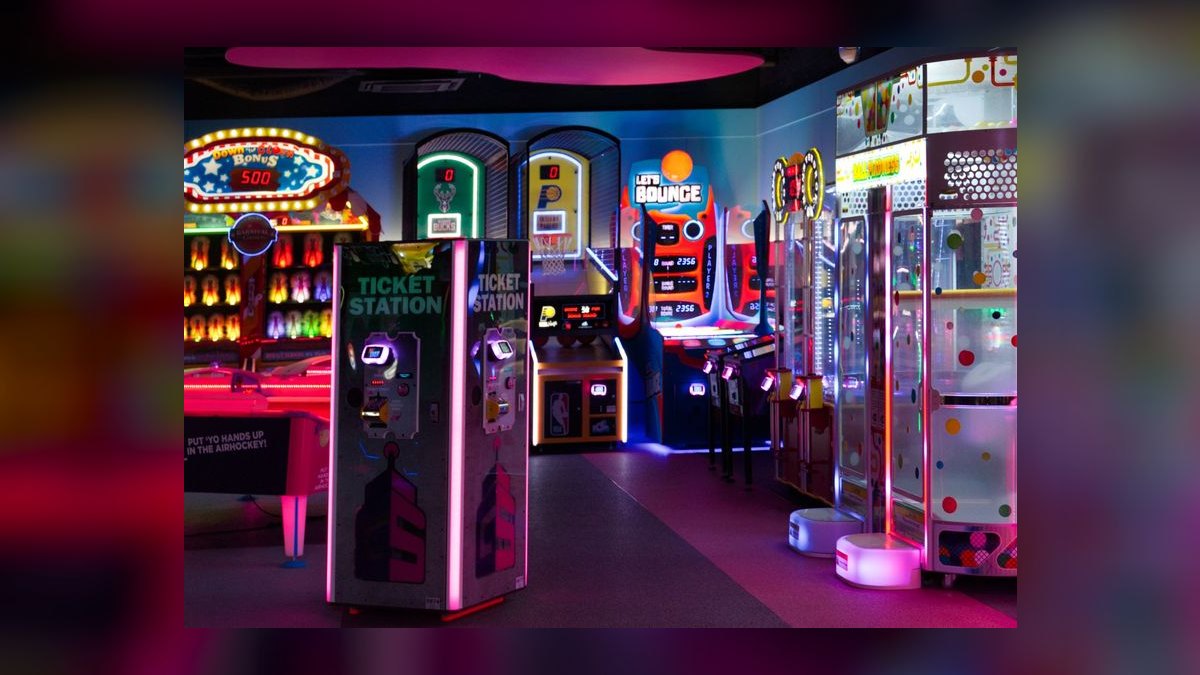
Adjacent competition is easy to miss. Your competitive set is not only other trampoline parks. Every laser tag venue, bowling center, indoor playground, climbing gym, arcade-and-eatery, axe-throwing bar, and mini-golf operator in your radius competes for the same birthday-party dollar and the same rainy-Saturday family decision. Be actively wary of a shopping center where another children's entertainment anchor already sits — co-tenancy that looks like complementary traffic is usually just a split of the same party demand. The broader family entertainment center category has been consolidating attractions under one roof for years, which means the standalone single-attraction park faces pressure from multi-attraction venues that can sell a longer visit and a bigger check.
Undercapitalization kills otherwise-good parks. The failure pattern is consistent: an owner funds the build to the dollar, opens with a thin working capital cushion, hits the post-launch trough that arrives around month four when the opening buzz fades, and cannot fund the marketing needed to build the party pipeline. The park is not structurally broken — it is simply out of runway before the flywheel starts. Fund the working capital line at the top of the range, not the bottom.

Safety and insurance are a single system. Injuries drive claims, claims drive premiums, and premiums are a fixed drag on a business where three points of margin matters. A disciplined safety program — real court monitor ratios, enforced rules, documented inspections, no over-capacity on the courts during peak — is not overhead. It is margin protection, and it is also the difference between a renewable insurance program and a park that becomes hard to insure at any price.
Seasonality and weather dependence cut both ways. Revenue concentrates into weekends, school holidays, summer, and bad-weather days. That is a manageable pattern, but it means a mild winter or a shifted school calendar can move a quarter noticeably, and it means your weekday daytime hours are structurally underused unless you actively sell into them with school field trips, camp partnerships, homeschool groups, and toddler-time programming. Parks that treat Monday through Thursday daytime as dead time leave real contribution on the table.
Buying an existing park has its own failure modes. Resale in this category typically prices off a multiple of EBITDA, with well-maintained parks in growing suburbs at the top of the range and tired parks in flat markets at the bottom. On top of the purchase price you will owe a franchise transfer fee and, almost always, deferred capex the seller has been avoiding — surfaces, padding, paint, lobby furniture. Underwrite that refresh explicitly. Treat a park that has sat on the market past a year as a diagnostic finding, not a bargain: the usual causes are declining party bookings, an aging equipment package, or a lease approaching expiration with an unfavorable renewal. Demand a 30–60 day diligence window, verify party booking trends month by month over 24 months rather than accepting an annual total, inspect the equipment with someone who knows the equipment, and read the lease yourself. Transfers require franchisor approval and typically a financial review plus training for the buyer, so build that timeline into your close.

The exit is not fast. Median time to sell a park in this category runs several months to a year. If your plan requires liquidity on a specific date, this is the wrong asset.
A practical rollout plan
Work the sequence below in order and do not skip ahead. Each stage is a gate — if the answer at a gate is bad, stopping there costs you weeks instead of a million dollars.
Days 1–20 — Read the documents and price the insurance. Read the full franchise disclosure document, not the summary. Pay specific attention to the fee table, the territory definition, the transfer and renewal provisions, the required capital expenditure obligations, and the mandated insurance limits. Then take those limits to a broker who has actually written trampoline parks and get a real quote for your specific market. If insurance comes back materially above your model, the deal changes shape immediately and you want to know that in week three, not month nine.

Days 21–45 — Interview at least eight owners. Ask for the full franchisee contact list from the FDD and call widely, including the exits. The questions that matter: what percentage of gross came from parties and groups; what your weekend party slot fill rate was in the trailing twelve months; what you actually paid for insurance last year and the year before; what you spent on surface and foam replacement; what your net was before and after debt service; and what you would do differently on site selection. Ask the same questions of a couple of owners in other trampoline brands — the segment economics rhyme, and cross-brand answers tell you what is category-wide versus brand-specific.
Days 46–70 — Find an underserved, youth-dense trade area. Screen for population within a 20-minute drive, household income, growth trajectory, and — critically — existing park density per capita. Count elementary and middle schools inside a 10-minute drive; school density is a direct proxy for the birthday-party and field-trip pipeline that carries the business. Walk the shortlist at 4pm on a Tuesday and 11am on a Saturday. Verify the demographic story yourself rather than accepting a corporate map at face value.

Days 71–110 — Negotiate the lease and start buildout. The lease negotiation is where you win or lose several years of margin. Target rent as a percentage of realistic — not optimistic — projected gross, secure the abatement period, confirm the landlord's delivery condition in writing including HVAC and electrical capacity, and confirm the space can carry your attraction layout and required ceiling height before you sign. Get permitting timelines from the municipality directly; indoor recreation permitting is slower than retail in many jurisdictions.
Days 111–150 — Install attractions and pre-sell parties. This is the stage most owners underrun. While the courts go in, your party coordinator should already be selling — school outreach, sports league partnerships, camp directors, community groups, founding-member packages. Opening with a booked party calendar rather than an empty one shortens the ramp by months and changes the entire first-year cash picture.
Post-open operating rhythm. Review weekend party slot fill rate weekly, not monthly — it is the leading indicator for everything else, and it moves before revenue does. Sell weekday daytime deliberately into schools, camps, and toddler programming. Fund a capex reserve from month one so the surface replacement in year three is a scheduled event rather than a crisis. Run your safety program as if your insurance renewal depends on it, because it does. And plan a facility and marketing refresh cycle — in a mature category with newer competitors opening nearby, a park that looks the same in year five as it did in year one loses the party booking to whoever repainted last.
Related questions
How much liquid capital do I actually need before a lender will talk to me?
Plan on $250,000–$500,000 liquid against a $1M–$2.5M project, plus a net worth well above that. SBA-backed lending is common in this category, but underwriters will scrutinize the segment's insurance load and your operating experience closely.
Is buying an existing park safer than building new?
Sometimes. You buy proven revenue and skip the ramp, but you inherit deferred capex, an existing reputation, and a lease you did not negotiate. Verify 24 months of party booking trends and budget a refresh before you compare it to a new build.
Can I run this absentee under a general manager?
Not in year one. The business is party-sales-driven and safety-critical, both of which require owner attention while systems are being built. Absentee ownership becomes plausible only after a proven GM and a functioning party pipeline exist.
What single metric best predicts whether a park will succeed?
Weekend party slot fill rate. It captures demand, sales execution, and competitive position in one number, and it moves before revenue does — which makes it the only metric worth reviewing weekly.
How does this compare to lower-capital experiential entertainment?
Axe throwing, escape rooms, and similar formats open for a fraction of the capital with far lighter insurance and buildout, but they address smaller trade areas and cap out lower. Trampoline parks trade higher capital and complexity for a bigger revenue ceiling.
FAQ
What is the total investment to open a Rockin' Jump franchise?
Roughly $1,000,000 to $2,500,000 all-in for a new build. That includes a franchise fee around $50,000, leasehold improvements, trampoline courts and adventure attractions, technology and POS, launch marketing, insurance and permits, training, and working capital. The spread depends heavily on the condition of the shell you lease and local permitting and construction costs. Verify current figures against the franchise disclosure document.
How much can an owner realistically earn?
Mature parks in the segment commonly gross $1.2M–$2.8M, and owner profit lands in a $120,000–$380,000 band at well-utilized locations — before debt service. If you financed most of the build, principal and interest will consume a meaningful share of that. Parks that lean on open jump rather than parties and groups sit at the low end or below it.
What are the ongoing fees?
A royalty near 5%–6% of gross plus a marketing fee around 2%, which is broadly in line with the trampoline and family entertainment category. These are charged on gross revenue, not profit, so they apply in full during a slow quarter. Confirm exact current percentages and any additional technology or system fees in the FDD.
Is the trampoline park segment too saturated to enter in 2027?
Category-wide it is mature and competitive, but saturation is local, not national. A youth-dense suburb with growing population and no park inside a 15-minute drive is a real opportunity; a trade area already serving two competitors is not. Site selection now matters more than brand selection, so do your own competitor density count rather than relying on a corporate map.
What actually makes one park more profitable than another?
Party and group utilization, almost entirely. Booked parties sell a guaranteed head count, a food attachment, and a pre-paid deposit weeks ahead, which lets you staff precisely and forecast reliably. Concessions attach to that volume at the best gross margin in the building. Add disciplined safety management to hold insurance costs down and you have the whole profit formula.
How long until breakeven, and how long should I plan to hold it?
Expect 18–36 months to breakeven on a new build, driven mostly by how fast you build the party pipeline — which is why pre-selling parties before opening matters so much. Underwrite a three-to-five-year hold minimum, since resale in this category typically takes several months to a year and prices off a multiple of EBITDA that rewards a proven, well-maintained park.
Sources
- https://www.franchise.org/ — International Franchise Association, franchise economic outlook and industry data
- https://www.iaapa.org/ — International Association of Amusement Parks and Attractions, attractions industry research
- https://www.ftc.gov/business-guidance/resources/franchise-rule-compliance-guide — FTC Franchise Rule compliance guide, what an FDD must disclose
- https://www.sba.gov/funding-programs/loans — U.S. Small Business Administration loan programs
- https://www.census.gov/ — U.S. Census Bureau, population, age distribution, and household income data
- https://www.cpsc.gov/ — U.S. Consumer Product Safety Commission, trampoline and recreation safety guidance
- https://www.astm.org/ — ASTM International, standards for trampoline courts and amusement attractions
- https://www.ibisworld.com/ — IBISWorld, industry research on family entertainment centers
- https://www.bls.gov/oes/ — U.S. Bureau of Labor Statistics, occupational wage data for recreation workers
Related on PULSE
- [Should I open or buy a Launch Trampoline Park franchise in 2027?](/knowledge/fr1023)
- [Should I open or buy a Get Air trampoline park franchise in 2027?](/knowledge/fr0642)
- [Should I open or buy an Altitude Trampoline Park franchise in 2027?](/knowledge/fr0207)
- [Should I open or buy a DEFY trampoline park franchise in 2027?](/knowledge/fr0206)
- [Should I open or buy a Sky Zone trampoline park franchise in 2027?](/knowledge/fr0204)
- [Should I open or buy an Urban Air Adventure Park franchise in 2027?](/knowledge/fr0205)
 pulse-toolsHow Many Sales Reps Do I Need to Hire for My Pest Control Company?
 pulse-toolsHow Many Sales Reps Do I Need to Hire for My Industrial Distribution Business?
 pulse-skillsSkill Drill: Setting Expectations for B2B Distribution
 pulse-toolsHow Many Staff Should I Schedule Each Shift at My Urgent Care Clinic?
 pulse-toolsHow Many Sales Reps Do I Need to Hire for My Title Insurance Company?
 pulse-toolsHow Many Employees Should I Schedule Each Shift at My Ice Cream Shop?
 pulse-toolsHow Many Loan Officers Do I Need to Hire for My Mortgage Brokerage?
 pulse-toolsHow Many Sales Reps Do I Need to Hire for My Dental Support Organization?
 pulse-toolsHow Many Sales Reps Do I Need to Hire for My Garage Door Company?
 pulse-toolsHow Many Employees Should I Schedule Each Shift at My Sandwich Franchise?