


Should I open or buy a Play It Again Sports franchise in 2027?
Quality
Certified
Yes, for the right operator — Play It Again Sports is a durable, counter-cyclical resale franchise backed by Winmark, with realistic total investment of $300,000-$450,000 and mature-store owner earnings of roughly $80,000-$220,000. Open one in 2027 if you're a hands-on, sports-literate retail operator in an active sports market. Skip it if you want an absentee role or can't judge used-equipment value.
A concrete scenario that frames the problem
Picture a prospective franchisee in a mid-sized Midwestern suburb — population around 180,000, three youth hockey associations, two travel baseball leagues, and a growing CrossFit-adjacent fitness scene. She has $140,000 in liquid capital, a background managing a regional sporting-goods retailer, and a Winmark discovery day on the calendar. The FDD lists a $25,000 franchise fee and a 5% royalty, but the number that actually decides whether this works isn't on the fee schedule — it's whether enough local families will walk through the door with a duffel bag of outgrown hockey gear and leave with store credit instead of cash. That single behavior, repeated thousands of times a year, is the entire business model. If the trade-in flow doesn't materialize, the store becomes an ordinary used-goods retailer paying a royalty for a brand name. If it does materialize, she's running a self-replenishing inventory engine with gross margins most retail formats can't touch.
This is the decision every 2027 buyer faces, whether they frame it that way or not: you're not really evaluating a sporting-goods store, you're evaluating a local community's willingness to buy, sell, and trade equipment through your counter rather than through Facebook Marketplace, SidelineSwap, or a neighbor's garage sale. Everything else — the buildout, the POS system, the training schedule — is secondary to that one behavioral question. A franchisee who treats the FDD numbers as the whole analysis, and skips the community-behavior question, is the one who ends up undercapitalized eighteen months in, wondering why inventory isn't turning.
How the mechanism actually works
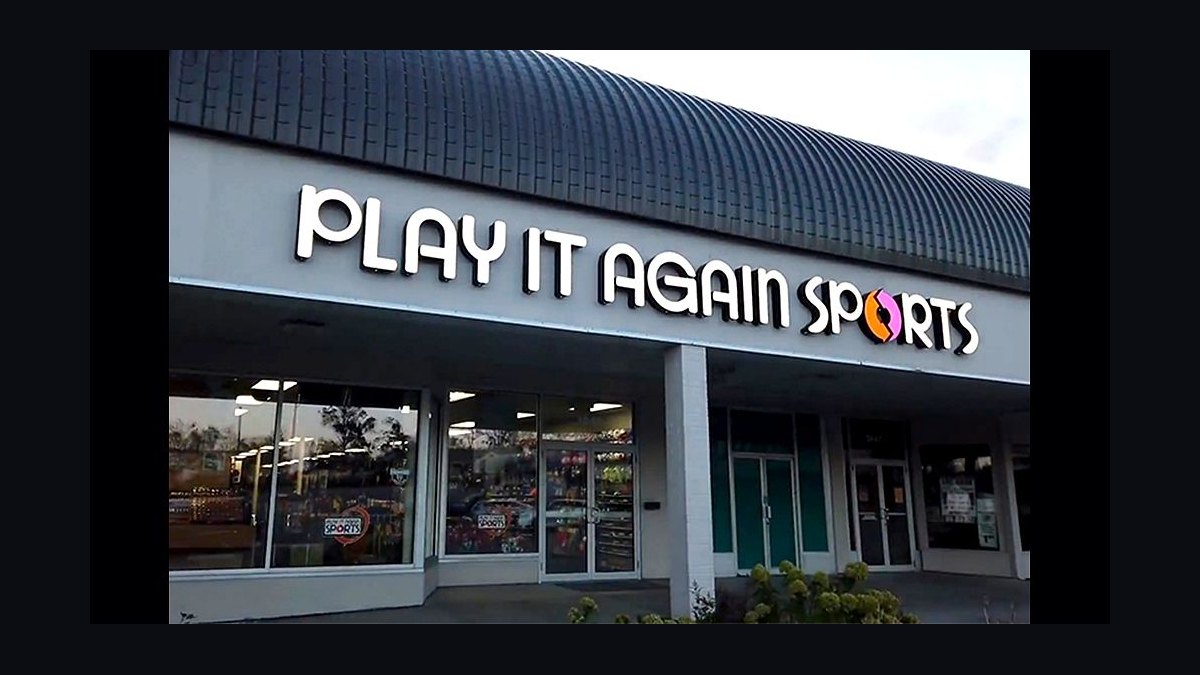
The buy-sell-trade loop is the whole business, and it runs on three decisions made at the counter, often in under five minutes: what to pay for an item, what condition grade to assign it, and how fast it will move once it's priced. Winmark's training covers baseline category knowledge — brand resale hierarchies in hockey, baseball, fitness, and golf — but the loop only compounds when a store develops local-specific pricing instincts. A pair of ice skates that's a strong buy in a hockey-dense Minnesota suburb might be a weak buy in a market where rec leagues skew toward soccer. Franchisees who open in 2027 inherit a proven mechanical loop; what they don't inherit automatically is the judgment that makes the loop profitable at their specific address.
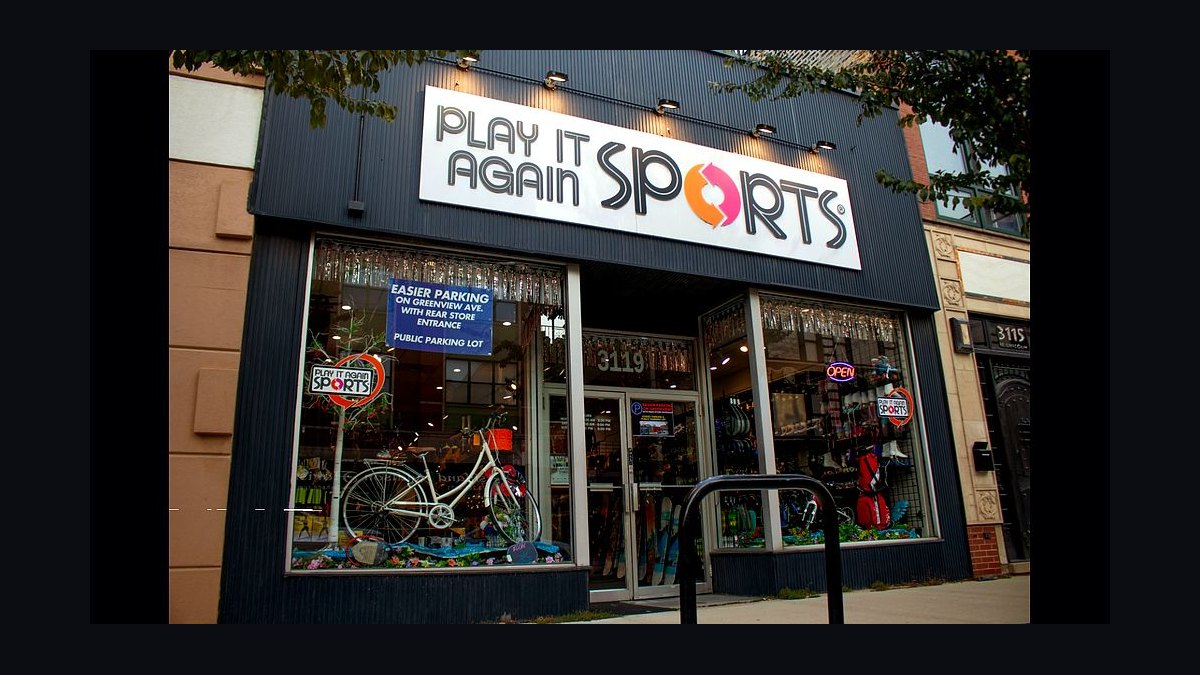
The loop also has a cash-timing dimension that's easy to underestimate going in. A store pays cash (or extends store credit, which costs less) at the moment of intake, but doesn't recoup that capital until the item sells — which can be same-day for in-demand items or several months for slow-moving categories like off-season fitness equipment. That lag is why working capital requirements in the FDD ($40,000-$90,000) exist as a separate line from opening inventory: the store needs a buffer to keep buying from walk-in customers even while earlier purchases are still sitting on the floor. Operators who run the loop well use point-of-sale data to throttle buying by category — paying more for items in active season, less for items that are about to go stale — which is a subtler skill than the FDD's training outline suggests and takes most owners a full buying season (roughly 12 months) to internalize.
Real numbers, ranges, and benchmarks
The 2026 FDD economics are specific enough to model before signing. The franchise fee sits at $25,000, and total Item 7 investment runs $300,000-$450,000 once leasehold improvements, opening inventory, technology, training, and working capital are included. Royalties run at 5% of gross sales, and several agreements carry no separate national marketing fee — a meaningfully lighter ongoing fee load than many retail franchise systems, which often stack a 2-4% marketing assessment on top of royalty.
| Line item | Low | High |
|---|---|---|
| Franchise fee | $25,000 | $25,000 |
| Leasehold/buildout | $60,000 | $160,000 |
| Opening inventory | $120,000 | $180,000 |
| Technology & POS | $15,000 | $35,000 |
| Working capital | $40,000 | $90,000 |
On the revenue side, mature locations gross $700,000-$1,500,000 annually. Gross margins run 40-55%, materially higher than a full-price sporting-goods retailer because a large share of inventory was acquired for cash well below resale value rather than purchased wholesale at standard retail markup. After rent, payroll, the 5% royalty, and operating costs, owner earnings typically land in the $80,000-$220,000 range — a wide spread that correlates directly with how well an operator manages the buy side rather than the sell side.

Inventory velocity is the benchmark that separates top-quartile stores from the median. Healthy franchises carry $120,000-$180,000 in used inventory and turn it 3.5-4.5 times annually; stores stuck below 2.5 times annual turnover usually have an owner who's overpaying for incoming gear or under-pricing to move it, both of which quietly erode the margin advantage that makes this business model work in the first place. A 2026 review of franchise-level profit-and-loss statements found that owners with under two years of category experience averaged $18,000-$25,000 in annual inventory write-downs, compared with $5,000-$8,000 for operators who'd been buying and pricing gear for several years — a gap that's almost entirely attributable to judgment, not capital.
Geography moves these numbers more than almost any other variable. Top-quartile markets — generally 150,000-400,000 population with dense youth-sports infrastructure — see 30-50% higher inventory turnover than low-participation areas, while markets with declining school athletics budgets or heavy big-box competition from Dick's or Academy Sports often need an extra $50,000-$80,000 in working capital to survive a slower ramp. Franchise Business Review data has shown that stores facing three or fewer direct used-sporting-goods competitors post roughly 22% higher net profit than those in saturated territories, which is a strong argument for doing independent trade-area homework — participation rates from state athletic associations, league counts within a 15-minute drive — rather than relying solely on Winmark's site-selection tools.
Trade-offs and alternatives

The core trade-off in 2027 is the same one every resale-franchise buyer faces: pay a 5% royalty and a $25,000 fee for a proven buying system, brand recognition, and a franchisor with a long track record (Winmark also runs Plato's Closet, Once Upon a Child, and Style Encore), or go independent and keep 100% of margin while building pricing software and brand trust from zero. Independent operators avoid the royalty drag entirely, but they also give up Winmark's category-pricing guidance, point-of-sale buying tools, and the instant credibility of a recognized storefront — credibility that matters disproportionately in a cash-intake business, where a stranger has to trust you enough to hand over a $600 set of golf clubs for less than it's worth.
For someone sold on the resale model but unsure sporting goods is the right category, the other Winmark concepts are worth comparing directly, since they share the same operating playbook with a different product mix: Once Upon a Child and Plato's Closet run the identical buy-sell-trade engine against children's gear and teen apparel, categories with faster turnover but lower average ticket size than hockey equipment or treadmills. Style Encore applies the same model to women's apparel. None of those alternatives change the fundamental trade-off — royalty and system versus equity and independence — but they let a buyer match the model to a category they personally understand better, which matters because category judgment, not retail experience in general, is what drives margin in this format.

A second-order alternative worth naming: specialty full-price retail (a running specialty shop, for instance) trades away the counter-cyclical demand pattern entirely. Play It Again Sports tends to see buying and selling both increase when household budgets tighten, since families sell gear for cash and shop secondhand for savings simultaneously — a hedge full-price retail doesn't have. That counter-cyclical behavior is one of the strongest arguments for the franchise fee and royalty being worth paying in a 2027 economic environment where recession risk is a live planning consideration for any new small-business owner.
Common pitfalls and how to avoid them
The most common failure mode is treating the store as an ordinary retailer that happens to also buy used gear, rather than treating buying as the primary skill the business depends on. New franchisees who lack category pricing experience routinely overpay for incoming inventory, eroding margins by 10-15 percentage points before they've sold a single item — a mistake that compounds because overpriced intake inventory also tends to sit longer, dragging down turnover at the same time it's dragging down margin. The fix is structural, not motivational: build a written pricing reference by category before opening (using Winmark's training as a floor, not a ceiling), track every buy against eventual sale price for the first two buying seasons, and adjust intake offers quarterly based on what actually moved.

A second pitfall is mismanaging seasonal inventory swings. Northern-climate stores often see 60% of annual revenue concentrated in Q4-Q1 (hockey, skiing, indoor fitness), while southern stores lean into baseball, softball, and golf from spring through late summer. Overstocking off-season gear can tie up $30,000-$60,000 in cash that would otherwise fund more trade-in buying during active season — effectively starving the loop that generates the store's margin. The practical countermeasure successful operators use is running seasonal trade-in promotions (offering elevated store credit on hockey gear in February, for example, when families are clearing out basements) timed to both clear shelf space and refill the buy pipeline before the next peak season.
A third, quieter pitfall shows up for buyers acquiring an existing location rather than opening fresh in 2027: stale inventory baked into the asking price. Resale brokers have flagged that a meaningful share of existing-franchise sales include $20,000-$40,000 of aged, hard-to-move inventory the seller wants valued at or near cost. A buyer who skips third-party inventory appraisal (typically $2,500-$4,000) risks overpaying by $10,000-$30,000 relative to what that inventory will actually realize on the floor. Negotiating a due-diligence window with an independent appraiser before closing is the standard protection, and it's cheap relative to the downside of skipping it.
Finally, absentee ownership is its own pitfall category. Because buying judgment is the engine of profitability, a store run day-to-day by undertrained staff while the owner stays hands-off tends to drift toward overpaying on intake and underpricing on the floor — the two errors that erode margin fastest. Owners who eventually want to step back successfully do so only after a general manager has absorbed real buying judgment, typically after a full year or more of close, hands-on mentorship.
Related questions

How much does it cost to open a Play It Again Sports franchise in 2027?
Total investment runs $300,000-$450,000, including a $25,000 franchise fee, buildout, opening inventory, and working capital, per the 2026 FDD Item 7 disclosure.
Is a Play It Again Sports franchise recession-resistant?
Largely yes — the buy-sell-trade model tends to see both buying and selling activity rise when household budgets tighten, acting as a built-in hedge against soft economic conditions.
What's the biggest skill gap for new Play It Again Sports franchisees?
Category pricing judgment — knowing what to pay for used gear and how fast it will resell — takes most new owners a full buying season to develop.
Should I buy an existing location instead of opening new?
Only after independent inventory appraisal; existing locations sometimes carry overvalued aged stock that inflates the effective purchase price by $10,000-$30,000.
How does Play It Again Sports compare to other Winmark franchises?
It shares Winmark's buy-sell-trade engine with Plato's Closet, Once Upon a Child, and Style Encore, differing mainly in product category and average ticket size.
FAQ
How much does it cost to open a Play It Again Sports franchise?

The franchise fee is roughly $25,000, with total startup investment typically ranging from $300,000 to $450,000 depending on location size and local buildout costs.
What are the ongoing royalty and marketing fees? Franchisees pay a 5% royalty on gross sales, and some agreements carry no separate national marketing fee, which keeps the ongoing fee load lighter than many retail franchise systems.
How much can a franchise owner realistically earn? Mature stores generally gross $700,000-$1,500,000 annually, with owner earnings commonly falling between $80,000 and $220,000 depending on location strength and inventory management.
Is this franchise a good fit for an absentee owner? Not usually — the business depends on buying judgment that's hard to delegate until a manager has a year or more of hands-on experience, so day-to-day owner involvement matters early on.
What support does Winmark provide to new franchisees? Winmark offers category-pricing training, site-selection assistance, proprietary point-of-sale buying software, and operational support drawn from running similar resale brands across multiple categories.
Are territories still available in 2027? Availability varies by region, and prime metro territories often fill first, so prospective franchisees should confirm open markets directly with Winmark before committing significant diligence time.
Sources
- https://www.entrepreneur.com/franchises/directory
- https://www.winmarkcorporation.com
- https://www.franchisebusinessreview.com
- https://www.ibisworld.com
- https://www.sfia.org
- https://www.franchise.org
- https://www.grandviewresearch.com
- https://www.statista.com
- https://www.census.gov
- https://www.franchisedirect.com
Related on PULSE
This page will be disappearing soon. Save it to your device for $1 — or read it free while it is here.
@Kory-White- · if Venmo asks, the last 4 of my number are 2012
This page is gone.
This one is off the shelf now. $1 keeps it on your phone for good — the whole page, pictures and diagrams included.
 franchiseShould I open or buy a Drybar franchise in 2027?
 franchiseShould I open or buy a Jimmy John's franchise in 2027?
 franchiseShould I open or buy a Bruster's Real Ice Cream franchise in 2027?
 franchiseShould I open or buy a Taco Bell franchise in 2027?
 franchiseShould I open or buy a Bahama Breeze franchise in 2027?
 franchiseShould I open or buy a Stanley Steemer franchise in 2027?
 franchiseShould I open or buy a Supercuts franchise in 2027?
 franchiseShould I open or buy a Jeremiah's Italian Ice franchise in 2027?
 franchiseShould I open or buy a Smoothie King franchise in 2027?
 franchiseShould I open or buy a Mac Tools franchise in 2027?