


Should I open or buy a Perspire Sauna Studio franchise in 2027?
Quality
Certified
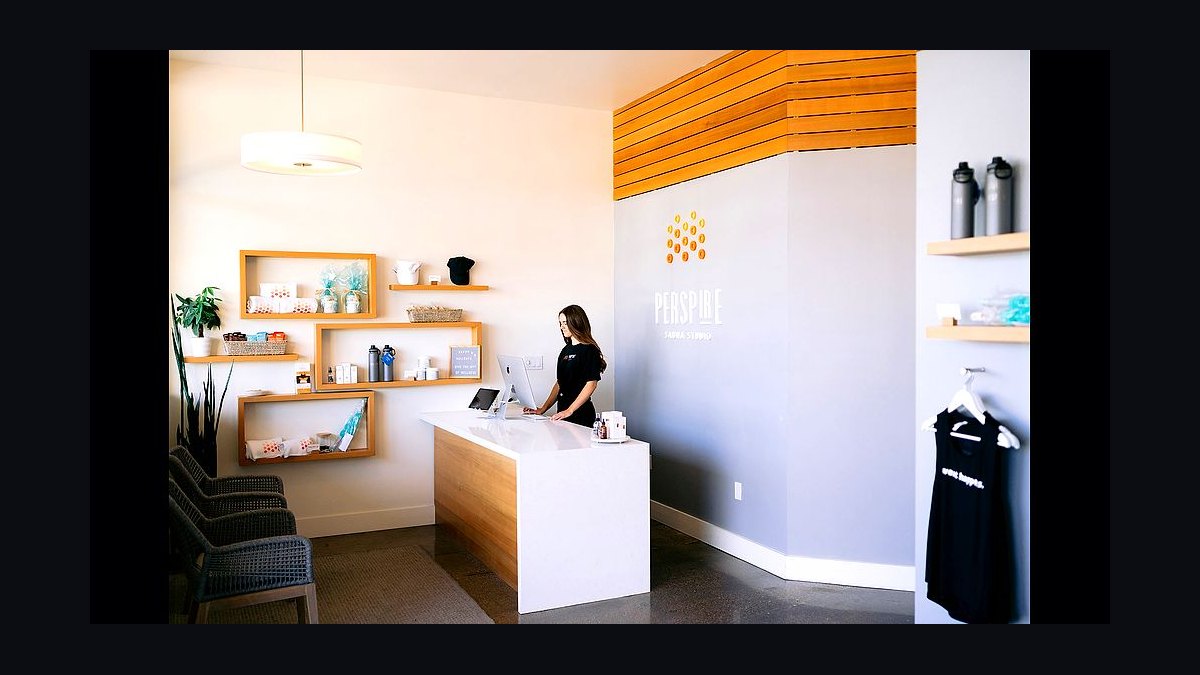
Buy or open a Perspire Sauna Studio franchise in 2027 if you can fund roughly $400,000–$700,000, want low-labor recurring membership revenue, and will personally drive local marketing in an affluent, wellness-minded trade area. Skip it if you expect fully passive income, are undercapitalized on working capital, or your market lacks disposable-income density.
What an infrared sauna studio actually is, and why the model behaves differently than a gym
Perspire Sauna Studio sells private infrared sauna suites — not a communal sauna room, not a locker-room amenity attached to a gym. That single design choice is what makes the unit economics behave the way they do, and it is the thing most first-time franchise buyers misread. A member books a 30-to-45-minute session through an app, walks in, is shown to a private suite that has already been turned over, sweats alone or with a partner, showers or towels off, and leaves. Many studios layer red-light therapy on top as an add-on or as its own dedicated room. There is no instructor. There is no class schedule to fill. There is no certification requirement for the person at the front desk.
Compare that to the two neighboring categories buyers usually shop against. A boutique fitness studio — cycling, yoga, HIIT — is a labor-heavy, schedule-dependent business: every revenue hour requires a paid instructor in the room, and an unfilled 6 PM class still costs you the instructor's wage. A recovery-wellness clinic that includes IV drips or injections is a compliance-heavy business: depending on the state, it requires a medical director relationship, nursing staff, controlled storage, and a materially different insurance posture. Perspire sits deliberately between them. Its revenue hour costs you electricity, a towel, and a few minutes of an $16-an-hour associate's time. Its regulatory footprint is closer to a tanning salon or a massage studio than to a med spa.
Why that matters for a 2027 decision: the two biggest cost shocks hitting service businesses right now are wage inflation and liability/compliance drag. A model that structurally minimizes both is more defensible than one that has to keep repricing labor. When labor is 12%–18% of revenue instead of 30%–40%, a $2/hour wage increase moves your margin by low single digits, not by the whole business. That resilience is the real product you are buying, and it is worth more in an uncertain cost environment than in a cheap one.

The trade-off is honest and you should name it before signing: because the model is simple, the moat is thin. Nothing stops an independent operator from leasing 1,600 square feet, buying six infrared units, and opening a near-identical studio at 20% lower prices with no royalty. What you are actually paying the franchisor for is the playbook, the equipment specification, the pre-sale marketing system, the booking technology, and the brand recognition that shortens your ramp. If you already have retail buildout experience, an established local marketing channel, and the patience to source equipment yourself, the honest answer may be that you do not need a franchise at all. If you do not have those things, the franchise fee and royalty are buying you 12–18 months of avoided mistakes — which, at this investment level, is frequently a good trade.
There is also a demand-side reason the category is not a fad. Recovery, sleep quality, and longevity have moved from athlete-only concerns into mainstream consumer spending, and the same customer buying a sauna membership is often buying cold plunge, stretch therapy, and cryo sessions elsewhere. That is good for demand and bad for exclusivity: your member's wellness budget is being competed for by four other studios in the same shopping center. Studios that win treat sauna as a habit — three visits a week, calendar-anchored — rather than an occasional treat, because habits survive budget tightening and treats do not.
The step-by-step process from first FDD request to a studio that pays you
The sequence below is the one that separates operators who open on budget from operators who spend their working capital before the doors open. Treat it as ordered; skipping the validation steps to get to a site faster is the single most expensive mistake in this category.
Step one — read the FDD like an adversary, not a customer. Item 5 gives you the initial fee. Item 6 gives you every recurring fee, and this is where surprises live: technology fees, a national brand fund contribution, a local advertising minimum spend, transfer fees, and renewal fees are all separate from the headline royalty. Item 7 is the investment range, and the low end assumes an unusually cheap buildout that you probably will not get. Item 19 is the financial performance representation — read exactly what population it describes. "Top quartile studios open 24+ months" is a very different claim from "all studios." Item 20 gives you the transfer, termination, and non-renewal counts, and a rising terminations line over three years is the loudest warning signal in the entire document.
Step two — call owners, and call the ones who left. Item 20 includes a list of former franchisees with contact information. Those calls are the most valuable hour you will spend. Ask current owners four specific numbers: active member count, monthly churn percentage, labor as a percentage of revenue, and owner take-home after debt service. Ask the departed owners one question: what did you not know when you signed? Aim for eight to twelve conversations, weighted toward studios open 18–36 months, because a studio open six months has nothing to tell you about retention.
Step three — validate the trade area before you fall in love with a space. You want population density, household income, and daily rhythm. A workable screen: at least 50,000 people within a three-mile radius, median household income above roughly $100,000, and a mix of daytime employment density (medical offices, corporate parks) and evening residential density. Studios that skew entirely to one or the other end up with dead hours they still pay rent on.

Step four through six — site, financing, buildout. Perspire's buildout is comparatively light: infrared suites need electrical capacity and adequate ventilation, but not the plumbing loads of a hydrotherapy or IV concept. That makes you a low-risk tenant, which is leverage. Negotiate a 5–7 year initial term with two five-year options, and push hard for a tenant improvement allowance. Financing for franchise concepts commonly runs through SBA 7(a) loans, which is why the franchisor's presence on the SBA Franchise Directory matters — it streamlines eligibility review.
Step seven — pre-sell before you open, and treat it as non-negotiable. Opening with zero members means burning working capital while you learn to market. Opening with 80–150 founding members already on autopay means your fixed costs are partly covered on day one and your ramp is measured in months instead of quarters. The pre-sale is run 60–90 days ahead of opening, usually from a temporary table in the shopping center, a local paid-social campaign, and partnerships with nearby gyms, run clubs, and chiropractors.
Costs, timelines, and the ranges you should actually budget against
Here is the honest capital picture, drawn from the disclosed investment range and typical retail buildout behavior. Treat the low end as achievable only with a generous TI allowance and a second-generation space.
| Line item | Low | High | Notes |
|---|---|---|---|
| Initial franchise fee | ~$50,000 | ~$50,000 | Per disclosed FDD range |
| Leasehold improvements | $140,000 | $320,000 | Suite construction, electrical, ventilation |
| Sauna and red-light equipment | $120,000 | $220,000 | 4–8 infrared suites plus panels |
| Technology, booking, CRM | $10,000 | $30,000 | App, member management, POS |
| Pre-opening marketing | $25,000 | $70,000 | Pre-sale campaign plus grand opening |
| Insurance, permits, licenses | $5,000 | $20,000 | General liability, retail permits |
| Training and travel | $5,000 | $15,000 | Corporate onboarding |
| Working capital | $50,000 | $120,000 | First 3–6 months of operating shortfall |
| Total initial investment | ~$400,000 | ~$700,000 | Per disclosed Item 7 range |
Ongoing fees run roughly 7% royalty on gross revenue plus a marketing/brand fund contribution in the low single digits, so budget something in the 8%–9% combined range off the top line before you have paid a single other bill. Liquidity requirements typically land around $120,000–$250,000, with net worth requirements above that; lenders will want to see both.

Revenue side. Membership pricing in this category generally sits in a $99–$199 per month unlimited band depending on market, with single sessions in the $40–$65 range and multi-session packages between. Red-light therapy is commonly an add-on that lifts revenue per member. A mature studio — meaning 18 months or more open — carrying 200–350 active members with a meaningful unlimited-tier share can gross somewhere in the $400,000–$900,000 range annually. Do not model the top of that band for year one. Model the bottom of it for year two.
Cost structure at maturity. Labor tends to run 12%–20% of revenue; occupancy 12%–18%; royalty and marketing fund 8%–9%; remaining operating expenses (utilities — and infrared saunas are not cheap to run — insurance, supplies, laundry, software, repairs) another 15%–20%. What survives is a net margin commonly in the 15%–30% band, which on a $650,000 studio translates to roughly $100,000–$195,000 of owner earnings before debt service. That last clause matters enormously: if you financed $500,000 at prevailing SBA rates over ten years, debt service alone consumes a meaningful five-figure sum annually, and your actual take-home is what remains after it.
Timeline. Signing to opening typically runs 6–12 months: 30–90 days for site selection, 60–120 days for lease negotiation and permitting, and 12–20 weeks for buildout. Permitting is the variable that wrecks schedules — a jurisdiction that requires a full change-of-use review can add three months on its own. Breakeven — the month where revenue covers all operating costs plus debt service — commonly lands somewhere in the 15–30 month window, and it is a direct function of how fast you build the member base, not of how nice the buildout is.
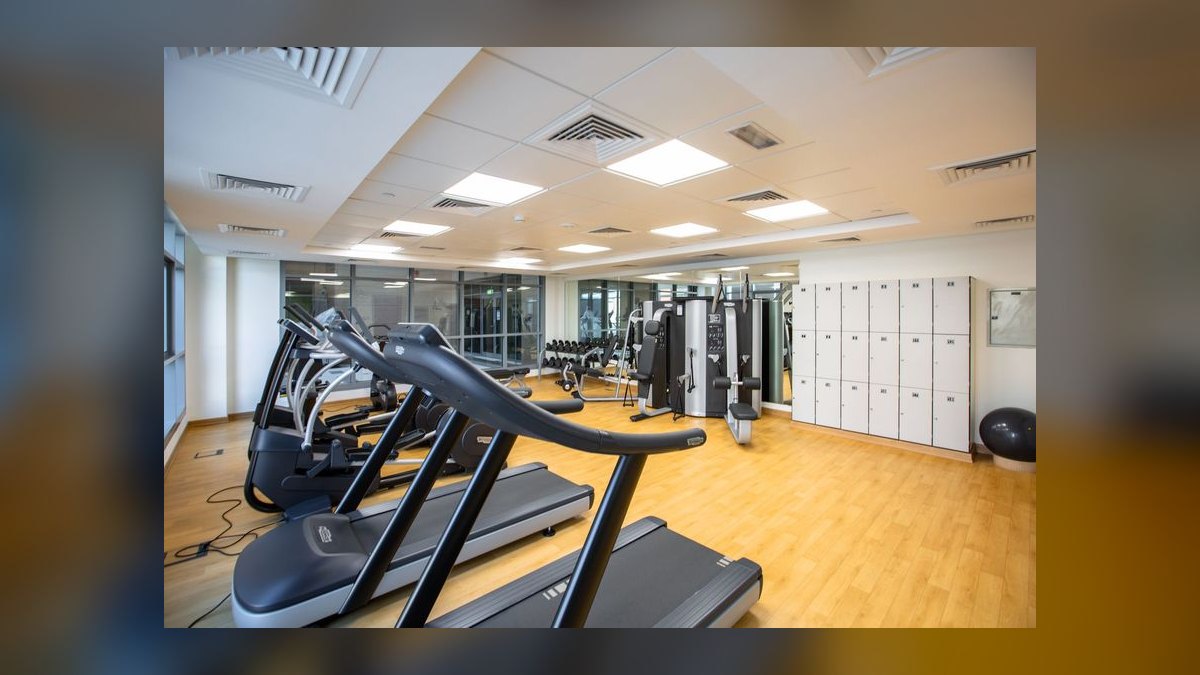
The reserve nobody budgets. Infrared units are capital equipment with a finite life, generally in the five-to-seven-year range under commercial-duty cycling. Red-light panels are shorter. Starting in year three, set aside a replacement reserve — a low five-figure annual amount is a reasonable planning assumption — so that a failed unit in year five is a scheduled expense rather than a cash crisis. A dark suite is not a small problem: with six suites, one down unit removes roughly 17% of your bookable capacity during peak hours, which is precisely when it costs the most.
Where owners get this wrong
Mistaking "low labor" for "low effort." Semi-absentee is real in this model — after the first six months, an owner with a competent manager can plausibly run on 10–15 hours a week. But those hours are not optional, and they are not spent folding towels. They are spent on member acquisition, local partnerships, retention outreach, and reviewing the churn report. Owners who interpret semi-absentee as "hire a manager and check the bank balance" reliably watch membership flatline in month nine, because nobody in the building is accountable for growth.
Underfunding the ramp. The most common failure pattern is not a bad location or a bad concept — it is running out of working capital in month eight. Revenue in a membership business compounds slowly and then meaningfully; the first year is structurally cash-negative. If your model requires the studio to be profitable in month four to service your debt, you have not built a plan, you have built a hope. Carry more working capital than the FDD's low end suggests.
Treating churn as a background number. Wellness memberships churn. Losing 20%–30% of your members monthly is not a crisis — it is the category's baseline — but it does mean that standing still requires replacing a quarter of your base every month. A studio with 250 members needs to add roughly 50–70 members a month just to hold flat. Owners who build an acquisition engine that produces 30 a month and celebrate it are, arithmetically, shrinking. Track net member movement weekly, not monthly, and know your cost per acquired member.

Discounting into a hole. When a competitor opens nearby, the reflex is to cut price. In a premium private-suite concept this is close to suicidal: you train your existing base to wait for the next promotion, you compress the LTV of every member you acquire during the discount window, and you signal that the private-suite premium was never real. Better levers exist — a founding-member tier that is closed to new signups, corporate wellness blocks that fill dead 10 AM–2 PM hours at a modest discount without touching your public rate card, add-on bundling, and referral incentives that cost you a free week instead of a permanent rate reduction.
Signing the wrong protection. Radius-based territory protection sounds reassuring until you learn that a two-mile radius in a dense suburb can contain two competing studios from the same brand. Push for drive-time-based exclusivity where you can get it, and get population-density and income floors written into the development agreement so that "protected territory" means a territory that can actually support a studio.
Ignoring the physical plant. Infrared saunas generate heat and humidity. In an older strip center with shared HVAC, that becomes your neighboring tenant's problem and therefore your landlord's problem and therefore your problem. Verify the mechanical situation before signing — supplemental exhaust or mini-split systems are a mid-five-figure surprise if discovered after the lease is executed. Parking matters more than in a quick-service concept, because a member occupies a space for 60–75 minutes.
Buying an existing studio without reading the member file. If you are buying rather than opening, the asking price will be quoted as a multiple of seller's discretionary earnings — typically in the low-single-digit multiple range for a business this size. Two studios with identical SDE are not worth the same. Ask for the member cohort report: how many members joined in the last 90 days, how many are on annual prepaid contracts that expire next quarter, and what the trailing churn has been. A seller who spent six months discounting to inflate the member count before listing has sold you a number that will evaporate in your second quarter.
Decision framework: open, buy, choose a different concept, or stay out

The choice is rarely "Perspire or nothing." It is a comparison across capital, involvement, and compliance tolerance. Work the framework below honestly before you talk to a franchise development rep, because their job is to move you forward and yours is to be right.
When opening new beats buying existing. Open if you want the lower total entry cost, you have a specific untaken trade area you believe in, and you can survive 15–30 months to breakeven without financial stress. You get to control the buildout quality, the staff culture, and the founding-member pricing — and founding members acquired at a premium rate before opening are the most durable cohort you will ever have.
When buying existing beats opening. Buy if you need cash flow from month one, you are financing heavily and cannot service debt through a ramp, or the trade areas you want are already taken. You are paying a multiple for de-risked revenue, and that is a rational trade. Expect a transfer fee to the franchisor, expect a right of first refusal that can add 60–90 days to closing, and expect to spend your first quarter fixing whatever the previous owner let slide — usually retention outreach and equipment maintenance.
When a different concept fits better. If you want even lower labor and 24/7 access economics, an infrared-plus-workout concept removes the appointment-turnover cycle entirely. If you want higher revenue per member and can stomach a medical director relationship, staffing, and the insurance profile, a broader recovery clinic with IV and injection revenue has a materially higher ceiling — and a materially higher operational burden. If you want boutique-fitness membership dynamics with community effects that improve retention, a yoga or stretch concept trades higher labor for stickier members. If you want full equity and no royalty and you already know retail buildout, an independent sauna studio is genuinely viable in this category precisely because the moat is thin — you keep the 8%–9% you would have paid in fees, and you buy every mistake yourself.

When to stay out entirely. Stay out if you cannot fund the low end plus a real working capital cushion; if your expectation is truly passive income; if your trade area does not clear the density and income screen; or if you are counting on a resale in year two. Exit multiples in this category reward maturity — the sensible window is years four through six, when membership is seasoned but the equipment still has useful life left. Selling in year one or two typically means realizing a substantial loss on your total investment.
One last framing. The most useful question is not "is this a good franchise?" It is "am I the owner this franchise needs?" Perspire's model is well-suited to a marketing-capable operator who wants recurring revenue without clinical complexity and who is honest about the 10–15 weekly hours the business requires forever. It is badly suited to an investor looking for a mailbox check. The concept does not fail people. The mismatch between the concept and the owner's expectations does.
Related questions
How many members does a studio need to break even?
It depends on your fixed cost base, but a useful rule: divide monthly fixed costs (rent, base labor, debt service, software, utilities) by your average revenue per member. Most studios in the $99–$199 unlimited band need somewhere in the 120–180 active member range to clear operating breakeven before owner draw.
Is a franchise better than opening an independent sauna studio?
If you have retail buildout experience, equipment sourcing contacts, and a working local marketing channel, independent keeps the 8%–9% in fees and full equity. If you have none of those, the franchise buys you a tested playbook and a shorter ramp — usually worth the royalty at this investment level.
Does the model really work semi-absentee?

Partially. Day-to-day operations genuinely run with 1–3 staff per shift and a manager. But member acquisition and retention need an accountable owner spending 10–15 hours a week indefinitely. Fully absentee ownership in membership businesses reliably produces flat membership and slow decline.
What happens to the business if a competitor opens nearby?
Expect acquisition cost to rise and some churn to accelerate, but resist price cuts. Defend with add-on bundling, corporate wellness blocks that fill off-peak hours, referral incentives, and service quality — private-suite cleanliness and on-time turnover are the differentiators members actually notice.
How long until I can sell?
Practically, years four through six. Buyers price on a multiple of seller's discretionary earnings, so you want mature membership, clean books, and equipment with remaining useful life. Selling in year one or two usually means accepting a significant loss against total invested capital.
FAQ
What is the total investment for a Perspire Sauna Studio franchise?
The disclosed investment range runs roughly $400,000 to $700,000 including an initial franchise fee near $50,000, leasehold improvements, infrared and red-light equipment, technology, pre-opening marketing, training, and working capital. Actual cost depends heavily on market rents, local construction pricing, whether you take a second-generation space, and how much tenant improvement allowance you negotiate. Always verify current figures against the most recent FDD rather than any secondary source, including this one.
What are the ongoing fees?
Expect a royalty around 7% of gross revenue plus a brand fund or marketing contribution in the low single digits, putting combined ongoing fees in roughly the 8%–9% range off the top line. Item 6 of the FDD will also disclose technology fees, local advertising minimums, transfer fees, and renewal fees — read that item in full, because the headline royalty is never the whole number.

How much can an owner realistically earn?
A mature studio grossing in the $400,000–$900,000 range with disciplined cost control commonly produces owner earnings in the low-to-mid six figures before debt service. After financing a typical build, take-home is meaningfully lower. Treat any Item 19 figure as a description of a specific population of studios — verify which studios it covers, and validate it against calls with actual franchisees rather than accepting it at face value.
Do I need medical or clinical credentials?
No. Infrared sauna and red-light therapy do not carry the medical-director requirement that IV therapy and injection-based wellness concepts do in most jurisdictions. That is one of the model's core operational advantages — you can staff a front desk with a hospitality-minded associate rather than licensed clinical personnel. Confirm your specific state's rules on any service you plan to offer, because state regulation of wellness services is not uniform.
How long from signing to opening?
Typically six to twelve months. Site selection and lease negotiation consume the first several months, permitting is the least predictable stage, and physical buildout generally runs twelve to twenty weeks. Start your membership pre-sale sixty to ninety days before opening so you launch with a paying base rather than an empty schedule.
Should I open a new studio or buy an existing one?
Open if you can absorb a fifteen-to-thirty-month ramp and want lower entry cost with control over buildout and founding-member pricing. Buy if you need immediate cash flow or the territories you want are already taken — but audit the member cohort report before agreeing on a price, since a seller can inflate member count with short-term discounting that evaporates after closing.
Sources
- https://www.sba.gov/funding-programs/loans/7a-loans — SBA 7(a) loan program terms and eligibility
- https://www.ftc.gov/business-guidance/resources/franchise-rule-compliance-guide — FTC Franchise Rule and FDD disclosure requirements
- https://www.franchise.org/ — International Franchise Association, franchise economic research
- https://www.entrepreneur.com/franchises — Entrepreneur franchise listings and category data
- https://www.franchisebusinessreview.com/ — Franchisee satisfaction survey data
- https://globalwellnessinstitute.org/ — Global Wellness Institute wellness economy research
- https://www.ibisworld.com/ — Industry reports on spas and wellness services
- https://www.bls.gov/oes/ — Bureau of Labor Statistics wage data for service occupations
- https://www.score.org/ — SCORE small business planning and financial modeling resources
- https://www.nar.realtor/commercial — Commercial real estate market data and lease trend research
Related on PULSE
This page will be disappearing soon. Save it to your device for $1 — or read it free while it is here.
@Kory-White- · if Venmo asks, the last 4 of my number are 2012
This page is gone.
This one is off the shelf now. $1 keeps it on your phone for good — the whole page, pictures and diagrams included.
 franchiseShould I open or buy a Marco's Pizza franchise in 2027?
 franchiseShould I open or buy a Dunkin' franchise in 2027?
 franchiseShould I open or buy a Matco Tools franchise in 2027?
 franchiseShould I open or buy an Orangetheory Fitness franchise in 2027?
 franchiseShould I open or buy a Roto-Rooter franchise in 2027?
 franchiseShould I open or buy a Valvoline Instant Oil Change franchise in 2027?
 franchiseShould I open or buy a Firehouse Subs franchise in 2027?
 franchiseShould I open or buy a Domino's franchise in 2027?
 franchiseShould I open or buy a Kona Ice franchise in 2027?
 franchiseShould I open or buy a Big O Tires franchise in 2027?