
Should I open or buy a The DRIPBaR franchise in 2027?
 Curated byKory White · Fractional CRO · Maryland
 PULSEKNOWLEDGE LIBRARY
Open a DRIPBaR franchise only if you can treat medical compliance and clinical staffing as the core business, not a detail. Expect roughly $200,000–$500,000 all-in, 24–36 months to payback, and 35–45% of revenue going to licensed labor. Wrong market or thin nurse supply, and the unit economics never close.
The outcome you should expect if you sign
A realistic base case for a single DRIPBaR unit in an affluent suburban trade area looks like this: you sign the franchise agreement, spend six to twelve months getting open, lose money for the first nine to fourteen months, and reach a steady monthly cash contribution somewhere in the $5,000–$20,000 range by month eighteen to twenty-four. That is the middle of the distribution, not the marketing deck. A mature location grossing $400,000 to $1,000,000 annually with owner earnings of $70,000 to $220,000 is achievable, but "mature" in this category means year three, not year one.
The thing that surprises most first-time franchisees is how the money actually arrives. This is not a retail business where revenue is a function of foot traffic. It is closer to a boutique gym crossed with an outpatient clinic: a recurring membership base underneath, with higher-ticket protocols layered on top. At mature units, memberships and multi-drip packages commonly account for a large share of revenue — franchisees in the category regularly describe membership penetration in the 40–60% range of total revenue. If you cannot build that base, you are running a walk-in business, and walk-in IV revenue is seasonal, weather-sensitive, and brutally correlated with local event calendars and hangover culture.
Set expectations on the operator role too. During ramp you should plan 35–50 hours a week, and most of those hours are not clinical. They are recruiting nurses, negotiating the medical director agreement, fixing scheduling software, chasing membership churn, and reading state board bulletins. The owner who wants a semi-absentee wellness asset from month one will be disappointed. The owner who wants an owner-operated healthcare-adjacent business with a defensible regulatory moat is looking at the right category — that same compliance burden that makes it hard for you also keeps casual competitors out.
One more expectation to set honestly: the exit. Franchised wellness units with real recurring revenue, clean compliance files, and a stable clinical team trade meaningfully better than units with the same revenue built on walk-ins. Buyers in this category — whether an existing multi-unit franchisee in your system or an outside operator — underwrite the membership roll and the staffing situation more than the top line. If your sale story is "great revenue, but I've replaced the lead nurse three times and my medical director just resigned," expect a discount. Build the business you would want to buy.
What actually drives the outcome
Four variables move the result more than everything else combined: clinical labor availability, membership conversion, real estate cost, and regulatory posture in your specific state. Everything else — décor, drip menu breadth, local ad spend — is second order.
Clinical labor is the dominant line item. RNs and NPs in most U.S. markets command roughly $35–$55 per hour depending on region, and you need two to three full-time equivalents to cover sixty-plus operating hours per week. Layer on a medical director consulting arrangement, commonly $1,500–$4,000 per month in this category, plus front-desk and membership sales staff at $18–$25 per hour. Total labor lands at 35–45% of revenue for a well-run mature unit and can exceed 55% in year one before the client base exists. That first-year gap is the reason working capital is not optional.
Membership conversion is the second lever, and it is almost entirely a front-desk and sales-process problem rather than a clinical one. A drip customer who buys once is worth $120–$250. The same customer on a monthly plan is worth ten to twenty times that over a two-year horizon. The operational implication: your highest-leverage hire may not be the nurse, it's the person at the desk who converts a first-time drip into a plan. Franchisees who staff the desk with the cheapest available body and put all their attention on clinical quality routinely underperform peers with identical medical standards and better conversion habits.
Real estate is the quiet killer. A DRIPBaR-format space runs roughly 1,200–2,500 square feet — a drip lounge, an injection bar, consultation space, and back-of-house storage with refrigeration. At a monthly rent of $4,000–$8,000 in a decent retail center, you are locked into $48,000–$96,000 a year before a single bag hangs. Sign a ten-year lease at the top of that range in a market you have not validated, and no amount of operational excellence fixes it.
The fourth driver, regulatory posture, is the one franchisees discover late. IV therapy delivered outside a traditional medical setting sits inside a patchwork of state medical board and board of nursing rules governing who may insert a line, who must supervise, what constitutes a valid patient-provider relationship, and how far a good-faith exam can be conducted via telehealth. Two neighboring states can have materially different answers, which means two DRIPBaR units with identical revenue can have very different labor costs. Read your state's rules before you read the earnings claims.
Benchmarks and realistic ranges
Here is what the capital stack tends to look like for a single unit, consistent with the investment range disclosed in the franchise's FDD. Treat every figure as a range to validate against your own quotes, not a promise.
Franchise fee sits in the neighborhood of $55,000–$65,000. Leasehold improvements and build-out — the drip lounge chairs, injection bar millwork, plumbing, and the finish level the brand requires — commonly run $70,000–$220,000 depending on whether you inherit a second-generation medical or salon space or start from a gray shell. Equipment and initial medical supplies land around $25,000–$70,000. Technology (EMR or charting, CRM, membership billing, POS) runs $10,000–$30,000. Pre-opening and grand-opening marketing is $20,000–$60,000, and this is not a line to trim — pre-sold memberships are the difference between opening at $8,000 in month one and opening at $30,000. Insurance and compliance, including medical malpractice on top of general liability, runs $12,000–$40,000. Training and travel adds $6,000–$18,000. Working capital for the first three to six months should be $40,000–$110,000, and honestly the top of that range is the safer plan. Total Item 7 lands roughly $200,000–$500,000, with liquid capital of $80,000–$180,000typically required before a franchisor will approve you.
Ongoing, expect a royalty near 8% of gross plus a marketing fee in the low single digits. Add the medical director stipend, malpractice renewal, and state licensing fees, and the true "cost of being allowed to operate" is a few points higher than the royalty line alone suggests.

The month-by-month shape is the part worth internalizing. Months one through six are pure outflow: $200,000–$350,000 in cash out, revenue effectively zero to $15,000 from a soft opening. Months seven through twelve, monthly revenue climbs into the $20,000–$50,000 band against $25,000–$45,000 of monthly expense — rent $4,000–$8,000, labor $10,000–$20,000, supplies $3,000–$6,000, royalty and marketing $2,000–$4,000, medical director $1,500–$3,000. Most units are still around breakeven or slightly negative at month twelve. Months thirteen through twenty-four, revenue moves to $35,000–$75,000 monthly against $28,000–$50,000 of expense, producing $5,000–$20,000 of monthly net. That is when you begin recovering the initial check.
Two cost items are chronically underestimated. First, inventory. You will carry $15,000–$30,000 in standing supply — bags, tubing, catheters, vitamins, electrolytes, specialty compounds — and slow-moving formulations expire. Spoilage in the 5–10% range is normal, and some ingredients require refrigeration and tighter handling than a first-time operator plans for. Second, the reopening cost of turnover. Losing a lead nurse in a tight market can mean $2,000–$5,000 in sign-on incentive plus weeks of reduced capacity, which is a revenue hit and a cost hit simultaneously.
Payback realistically runs 24–36 months at the middle of the range. Strong trade areas — dense, affluent, wellness-fluent metros of the Scottsdale, Orange County, or Miami type — can compress that toward eighteen months. Thin or lower-income markets stretch past forty-eight months or never fully recoup. Markets under roughly 100,000 people should model the low end of gross revenue, in the $300,000–$500,000 range, and ask honestly whether that clears debt service and an owner's salary.
Risks, edge cases, and failure modes
The single fatal mistake in this category is running the business as a spa that happens to use needles. It is a regulated health service wearing a wellness brand, and every operational decision has to respect that inversion. The franchisor supplies a compliance framework; the franchisee still carries the license risk, the malpractice exposure, and the state board relationship.
Regulatory tightening is a live risk, not a theoretical one. Several states have moved in recent years to clarify or restrict what infusion services may be delivered outside traditional clinical settings, including questions about physician supervision, telehealth-based good-faith exams, and which compounded preparations may be administered. If your state adds a supervision requirement after you sign, your labor line can move sharply and there is no clause in a franchise agreement that protects you from it. Two mitigations: build the pro forma with a supervision-cost cushion, and know the actual name of your state's relevant board rule before you sign, not after.

Staffing is the second failure mode and it compounds. The U.S. nursing shortage is well documented and projected to persist through the late 2020s. You are competing for the same RNs as hospitals, surgical centers, home health agencies, and infusion suites — all of which may pay more. Your genuine advantage is schedule quality: daytime hours, no nights, no code blues, low acuity. Lead with that in recruiting and it works. But a single-nurse unit is a single point of failure. If one person calls out and you have no cross-coverage, you close for the day, and closed days in a membership business generate cancellations, not just lost revenue.
Concentration risk on the medical director deserves its own line. If your director resigns or moves out of state, in many jurisdictions you cannot legally operate until a replacement is credentialed. Have a named backup relationship before you need it, and structure the agreement with a notice period that gives you time to replace rather than scramble.
Competitive compression is the third risk. The IV and infusion-wellness category has crowded considerably: broad-modality recovery chains that include IV among many services, regional infusion lounges, mobile IV operators who come to a home or hotel, and increasingly med-spa and aesthetics chains bolting IV on as an ancillary to existing membership bases. Mobile operators undercut on convenience and price; your fixed location carries higher per-visit revenue but higher fixed cost. Med-spa competitors have foot traffic you must buy. The specialization argument — a deep drip menu, protocol depth, and clinical framing — is real, but it is an argument you have to make repeatedly in local marketing, not one customers arrive already believing.
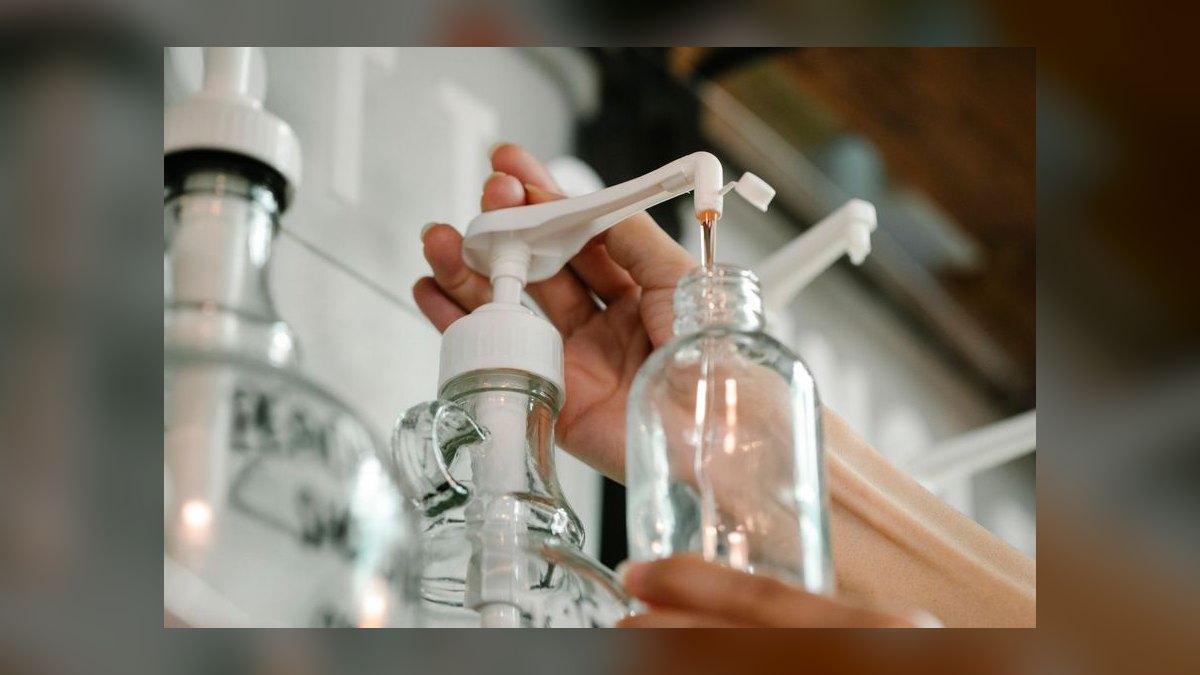
Marketing itself is a compliance surface. Health and wellness claims about infusion therapy attract scrutiny from state boards, the FTC's advertising standards, and platform ad policies. Franchisees who freelance on claims — promising outcomes for conditions, implying treatment of disease — create liability for themselves and the system. Use approved copy. When in doubt, describe the service, not the cure.
Two edge cases worth pricing explicitly. First, payment mix: some units accept HSA/FSA cards and a narrow set of billable codes for clearly medical indications like dehydration, others operate entirely cash-pay. That choice can swing revenue and collections meaningfully depending on your demographic, and it changes your billing and documentation overhead. Second, buying an existing unit versus opening new. Resales let you skip the twelve-month ramp and inherit a membership roll and a trained clinical team — often worth paying for. But underwrite the reason for sale, review the compliance file and any board correspondence, verify the medical director will stay or can be replaced, and check whether the membership base is real recurring billing or a pile of expiring promotional packages. A resale with a burned local reputation or an unresolved regulatory issue is more expensive than a greenfield build.
A practical rollout plan
Sequence the diligence so the cheapest disqualifying questions get asked first. Reading the FDD costs a weekend; discovering a supervision requirement after you sign a ten-year lease costs your equity.

Days one through twenty: read the current FDD end to end, with special attention to Items 5, 6, 7, 19, and 20 — fees, ongoing fees, investment, any financial performance representation, and the franchisee turnover table. Item 20's opening and closing counts tell you more about system health than any brochure. In parallel, pull your state's board of nursing and medical board guidance on IV therapy delivered in a non-hospital setting. Have a healthcare attorney licensed in your state read both. If your state's rules make the model uneconomic, you have saved yourself $300,000 in three weeks.
Days twenty-one through forty: call existing franchisees. Not two or three — eight or more, chosen from across the Item 20 list including at least one who exited. Ask specifics: what do you pay your RNs, how long did it take to find your medical director, what percentage of revenue is membership, what was your month-twelve cash position, what would you do differently. Franchisee validation calls are the single highest-return hours in the entire process and most prospective buyers rush them.
Days forty-one through sixty: validate the trade area on two axes simultaneously — demand and labor. Demand means household income, health and wellness spending behavior, existing competitor density including mobile operators, and the presence of the gyms, studios, and aesthetics practices whose members convert well. Labor means actually calling nurse staffing agencies and checking local job-board rates. A trade area that passes the demand test and fails the labor test is a trap.
Days sixty-one through eighty-five: secure the site and lock the medical director relationship in the same window, because each affects the other's feasibility. Negotiate the lease with real attention to tenant improvement allowance, free rent during build-out, and a personal guarantee that burns off — those three terms are worth more than a small reduction in base rent.
Days eighty-six through one hundred ten: build out, hire and train the clinical team, and pre-sell memberships. Pre-selling is the highest-leverage activity of the entire launch. Founding-member pricing sold to local gyms, studios, and employers before you open converts a dead first month into a functioning one and gives your nurses actual patients on day one rather than an empty lounge.
After opening, the operating rhythm is simple and unglamorous. Watch three numbers weekly: new memberships added, memberships cancelled, and clinical hours booked against clinical hours staffed. Net membership growth is your leading indicator of enterprise value. Booked-versus-staffed clinical hours is your leading indicator of margin — an idle nurse is the most expensive thing in the building. Everything else can be reviewed monthly.

Adjacent plays worth pricing before you commit
If the compliance load is the part giving you pause, price the neighbors before defaulting to a yes or a no. Broader recovery-and-wellness franchise formats bundle IV alongside cryotherapy, compression, and other modalities — more capital and more equipment, but revenue diversified across services so a regulatory change to one modality does not take down the unit. Infrared sauna and recovery studio concepts strip out clinical staffing almost entirely, trading the regulatory moat for far lower labor cost and a much simpler hiring problem. Low-labor fitness formats go further still. Med-spa and aesthetics franchises sit adjacent on the clinical side with similar supervision requirements but different demand drivers and typically higher ticket values.
A mobile IV operation is the interesting comparison. It carries the identical compliance burden — same licensure, same supervision questions, same malpractice — with dramatically lower fixed cost since there is no lease and no build-out. Per-visit revenue is lower, roughly $80–$150 versus $120–$250 for a fixed location, and utilization is harder to control because travel time eats billable hours. But the downside case is survivable in a way a $250,000 build-out with a ten-year lease is not. If you are uncertain about local demand, a mobile or hybrid entry is a cheaper way to learn.
And there is the independent path: build your own infusion lounge, keep 100% of the economics, skip the 8% royalty and the franchise fee. What you give up is the compliance framework, the protocol library, the vendor relationships, the training curriculum, and the brand recognition — all of which are genuinely the hardest parts to build alone in a regulated category. The franchise premium in this vertical buys more real value than it does in, say, food service, precisely because the regulatory scaffolding is expensive to construct from zero. That is the honest case for paying it.
Related questions
How long until a DRIPBaR franchise breaks even?
Most units reach monthly cash-flow breakeven somewhere between months twelve and eighteen, and recoup the full initial investment in 24–36 months. Strong affluent trade areas can compress that toward eighteen months; thin markets stretch past forty-eight or never fully recoup.
Do I need a medical background to own one?
No. Owners hire a licensed medical director and clinical staff. But owners without healthcare experience should budget for a strong clinical manager and expect to spend real time learning state scope-of-practice rules — that knowledge cannot be fully delegated.
Is buying an existing location better than opening new?
Often yes, if the resale has a real membership roll, a stable clinical team, and a clean compliance file. You skip the twelve-month ramp. Underwrite why the seller is leaving, and verify the medical director relationship transfers or can be replaced.
What percentage of revenue should come from memberships?
Aim for a substantial recurring base rather than walk-in dependence; franchisees in this category commonly describe membership and package revenue in the 40–60% range at mature units. Walk-in-only locations are seasonal and volatile, and they sell for less at exit.
How many locations does it take to make real money?
Single-unit owner earnings of $70,000–$220,000 are effectively a job with equity attached. Multi-unit economics improve because a medical director, marketing spend, and management overhead spread across units — but only attempt unit two after unit one is genuinely stable.
FAQ
What is the typical total investment to open a DRIPBaR franchise?
The disclosed total investment range runs roughly $200,000 to $500,000, including a franchise fee in the $55,000–$65,000 area. That covers build-out, equipment, initial medical inventory, technology, and working capital. Actual cost swings widely on space condition and lease terms — a second-generation medical or salon space can save six figures against a gray shell. Always verify current figures in the most recent FDD rather than any secondary listing.
What are the ongoing fees after opening?
Expect a royalty around 8% of gross revenue plus a brand marketing fee. Beyond the franchise agreement, budget for the medical director stipend of roughly $1,500–$4,000 monthly, medical malpractice on top of general liability, state licensing and facility fees, and technology subscriptions. The realistic all-in cost of operating under the brand and the law together is several points above the royalty rate alone.
How long does it take to open a location?
Six to twelve months from signing to opening day is typical. The long poles are securing a medical director, satisfying state licensing requirements, and permitting the build-out — plumbing and medical-grade finishes attract more inspection than a standard retail fit-out. Jurisdictional variance is enormous; the same build can take four months in one county and eleven in another.
Can this work in a smaller market?
It can, but model conservatively. Markets under roughly 100,000 people should assume gross revenue in the $300,000–$500,000 band rather than the higher range, which changes whether the unit clears debt service plus an owner's salary. Smaller markets also tend to have thinner nurse labor pools, which raises the wage you must pay and increases single-point-of-failure risk on staffing.
What is the most common reason franchisees in this category fail?
Treating it as a spa. Owners who under-invest in compliance, under-hire on the clinical side, or build a walk-in business with no recurring membership base tend to struggle. The second most common cause is under-capitalization — running out of working capital during the nine-to-fourteen-month ramp before the membership engine reaches scale.
Should I accept HSA/FSA payments?
It depends on your demographic and your appetite for administrative overhead. Accepting HSA/FSA cards can widen your addressable customer base meaningfully in some markets, but it adds documentation and billing complexity and raises the compliance stakes on how services are characterized. Decide with your attorney and accountant before opening, not after.
Sources
- https://www.ftc.gov/business-guidance/resources/consumers-guide-buying-franchise
- https://www.sba.gov/business-guide/plan-your-business/buy-existing-business-or-franchise
- https://www.franchise.org/
- https://www.entrepreneur.com/franchises
- https://www.ncsbn.org/
- https://www.fda.gov/drugs/human-drug-compounding/compounding-and-fda-questions-and-answers
- https://www.aacnnursing.org/news-data/fact-sheets/nursing-shortage
- https://www.bls.gov/ooh/healthcare/registered-nurses.htm
- https://globalwellnessinstitute.org/
- https://www.irs.gov/publications/p969
Related on PULSE
- [How long does it take to open a franchise and break even in 2027?](/knowledge/fr1104)
- [Should I open or buy a Tommy Gun's Original Barbershop franchise in 2027?](/knowledge/fr1095)
- [Should I open or buy a Painting with a Twist franchise in 2027?](/knowledge/fr1058)
@Kory-White- · if Venmo asks, the last 4 of my number are 2012
 pulse-moviesTop 10 Movies on Netflix 2027
 pulse-moviesTop 10 Movies on Max 2027
 pulse-moviesTop 10 Fantasy Movies of All Time in 2027
 pulse-moviesTop 10 Documentaries of All Time in 2027
 pulse-moviesTop 10 Superhero Movies of All Time in 2027
 pulse-moviesTop 10 Romance Movies of All Time in 2027
 pulse-moviesTop 10 Westerns of All Time in 2027
 pulse-moviesTop 10 Musical Movies of All Time in 2027
 pulse-moviesTop 10 Thriller Movies of All Time in 2027
 pulse-moviesTop 10 Crime Movies of All Time in 2027