


Should I open or buy a Crunch Fitness franchise in 2027?
Quality
Certified

Buy an existing Crunch Fitness club if you can find one at a fair multiple of proven EBITDA; open a new one only if you have $1.5M–$4M, a dense value-shopper trade area, and the patience for an 18–36 month ramp. Buying skips the ramp risk; opening buys you the better site.
Buying an existing club versus opening a new one
These are not two paths to the same place. They are two different businesses that happen to share a logo, and the operators who confuse them are the ones who end up unhappy two years in.
When you open a new Crunch club, you are buying the right to build. You sign a franchise agreement, pay an initial franchise fee in the $25,000–$30,000 range per the current FDD, and then spend the next 6–14 months doing real estate development work: site selection, lease negotiation, landlord tenant-improvement negotiation, permitting, construction management, equipment procurement, hiring, and a pre-sale membership campaign. Your total Item 7 investment lands somewhere between roughly $1.5 million and $4 million depending on square footage, market, and how much of the build-out the landlord funds. You control every variable — you pick the corner, you pick the layout, you pick the GM — and you also own every mistake. There is no revenue at all until the doors open, and then there is a long, slow climb from founding members to a member base that actually covers a big-box rent line.
When you buy an existing club, you are buying a cash flow with a track record. You pay a multiple of trailing EBITDA — the fitness secondary market generally trades in the 3x–5x range for single well-run units, with clusters of three or more commanding the higher end because a buyer inherits management leverage, not just equipment. You inherit the member file, the staff, the lease, and the equipment schedule. You skip the entire ramp. What you do not skip is the previous owner's decisions: their site, their lease terms and remaining term, their deferred maintenance, their churn problem, their local reputation. You also generally pay a transfer fee to the franchisor and must qualify with the franchise system exactly as a new franchisee would.

The distinction that actually matters for your decision is where the risk sits on the timeline. Opening front-loads risk into construction and ramp — you can lose eighteen months and a million dollars before you know whether the trade area supports the club. Buying front-loads risk into diligence — you can overpay for a club whose 5,000-member file is padded with dormant accounts, or inherit a lease with four years left and no renewal option on a site you cannot afford to relocate from. A construction mistake is expensive but visible. A diligence mistake is cheap to make and invisible until month nine.
There is a third path worth naming because a lot of buyers back into it accidentally: buying a distressed or underperforming club and turning it around. These trade well below the 3x floor, sometimes at little more than the value of the equipment plus assumption of the lease. The math can be spectacular if the problem was operator neglect — bad cleanliness, no personal training program, a GM who stopped selling — because those are fixable inside two quarters. The math is a trap if the problem was the site: wrong side of the road, poor visibility, insufficient rooftops, or a Planet Fitness that opened two miles away and took the price-sensitive floor. Fixable problems live inside the four walls. Unfixable problems live outside them.
Worth noting the same fork exists across the whole high-value-low-price (HVLP) fitness category, not just Crunch. EOS Fitness, Fitness 19, Blink, Retro, and Planet Fitness all present open-versus-buy decisions with similar structure and different capital scales. If the analysis below pushes you away from a $3M ground-up build, the answer may not be "no fitness" — it may be "a smaller-format value gym" or "a boutique concept with a fraction of the equipment load." Hold that thought until the numbers section.
How to decide between opening and buying

Run the decision in a fixed order, because the gates are not equally expensive to fail. Capital qualification first, because it eliminates most people in a week. Market availability second, because it determines whether you even have a choice. Then risk tolerance and timeline, which are personal, not financial.
Gate one: liquidity and net worth. Crunch, like most big-box franchisors, screens on liquid assets and net worth before it screens on enthusiasm. Plan on needing several hundred thousand dollars liquid — commonly cited ranges land around $400,000–$900,000 — plus a net worth in the low millions to clear both franchisor approval and SBA underwriting. If you are financing through an SBA 7(a) loan, expect to inject 20–30% equity, with equipment amortized over roughly ten years and any real estate component stretched much longer. Rates in the current environment have sat in the high-single-digit range, which materially changes your debt service line versus the models people built in the cheap-money years. Run your pro forma at a rate 200 basis points above whatever you are quoted; if it still clears, the deal is real.
Gate two: is there anything to buy? In many metros, the answer is no. Crunch's development is concentrated with area developers holding multi-unit agreements, and those operators do not typically sell single clubs to first-time buyers — they sell clusters, or they sell nothing. If your target market has no listings and no open territory, you have no decision to make; you are looking at a different market or a different brand. Check the franchisor's development map, work a franchise broker, and call existing owners in adjacent markets who may be quietly tired.
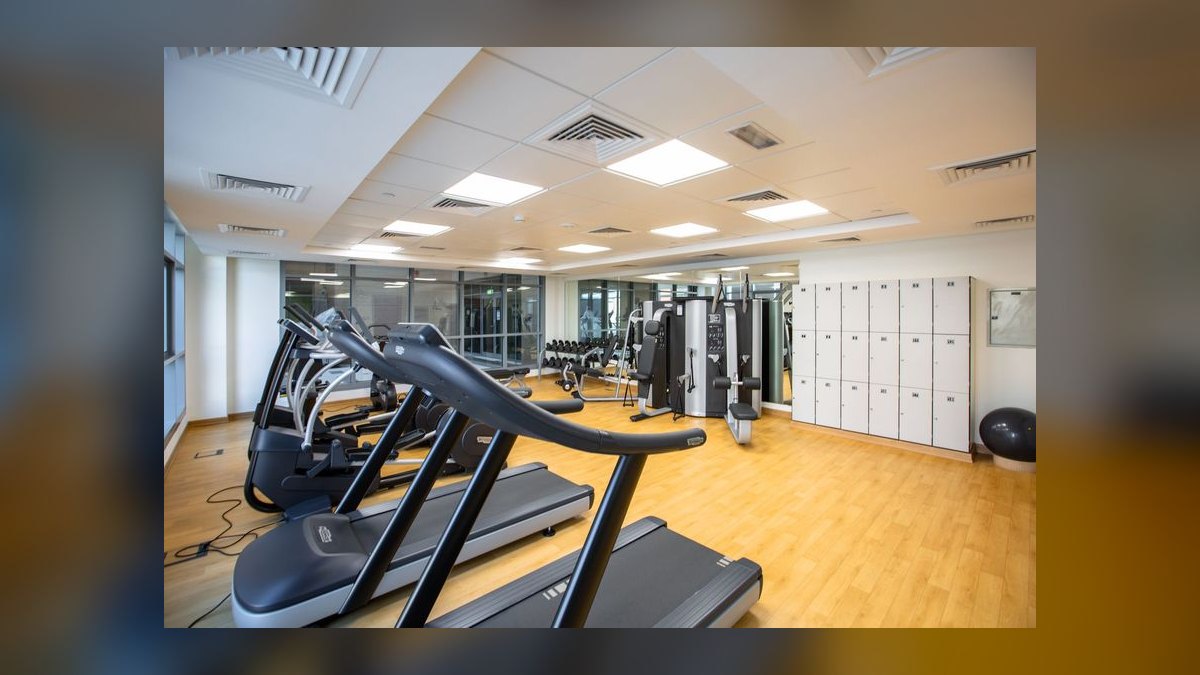
Gate three: your honest timeline. Opening means no distributions for two to three years and full attention through construction. Buying means cash flow in month one but a purchase price that consumed the capital you would have used as a cushion. Ask yourself which failure you can survive: eighteen months of burn with no revenue, or a debt service payment you must make in month two regardless of how the member file performs.
The diagram compresses one thing worth stating explicitly: the site question is the same question in both paths. When you open, you ask it before signing a lease. When you buy, you ask it during diligence about a lease someone else already signed. The trade area either supports thousands of value-priced members or it does not, and no amount of operating skill fixes a location that sits behind a median with poor left-turn access.
The concrete numbers behind each option
Start with the build. A Crunch club typically occupies somewhere in the 18,000–35,000 square foot range, with many newer developments pushing toward the upper end to accommodate the full amenity set — cardio and strength floors, group fitness studios, tanning, HydroMassage and recovery, locker rooms.
Rough build allocation inside that $1.5M–$4M Item 7 band looks like this. Franchise fee: $25,000–$30,000. Leasehold improvements and build-out: $700,000–$2,200,000, the single largest and most variable line, driven almost entirely by how much tenant improvement allowance the landlord contributes. Equipment: $500,000–$1,200,000 across cardio, plate-loaded and selectorized strength, free weights, and recovery. Technology — access control, billing, member CRM: $30,000–$100,000. Pre-opening and grand-opening marketing: $60,000–$200,000. Insurance and permits: $15,000–$60,000. Training and travel: $8,000–$25,000. Working capital: $150,000–$400,000 to cover the first several months of payroll and rent before the member base carries them.

Occupancy is the line that quietly decides your fate. Suburban big-box space commonly runs in the $12–$20 per square foot NNN range, so a 30,000 square foot club carries roughly $360,000–$900,000 a year in base rent before common area charges and taxes. That is a spread of half a million dollars a year in outcome, determined entirely by lease negotiation. A tenant improvement allowance in the $50–$100 per square foot range on a 30,000 foot box is $1.5M–$3M of build cost the landlord absorbs — which is why two franchisees with identical concepts can report wildly different total investments. Negotiate a 10–15 year term with renewal options; a club that must relocate in year six has no terminal value.
Now the revenue side. Mature clubs commonly gross $1.5M–$3.5M annually on member bases in the 3,000–8,000+ range at dues in the roughly $10–$30 per month band. Do that arithmetic and something jumps out: 5,000 members at $20 a month is $1.2M in dues. To reach $2.4M in total revenue, roughly half the top line has to come from somewhere other than base dues. That somewhere is ancillary revenue — personal training, premium tier memberships, tanning, recovery services, retail. Strong operators report ancillaries running 30–40% of total revenue, and the margin profile there is far better than dues: personal training commonly carries 40–50% contribution margin, and low-labor amenities like tanning and HydroMassage carry 60–70% because the incremental cost of one more session is nearly zero once the equipment is paid for.
Against that revenue, the cost stack: labor generally consumes 22–28% of gross, rent and facility 12–16%, royalty around 5%, marketing fund 2–3%, plus equipment financing, utilities, insurance, and supplies. Net margins in the 15–28% band produce owner earnings roughly in the $200,000–$700,000 range at well-run clubs — before debt service, which is a large number when you have financed $2M.

For the buy path, the arithmetic inverts. Instead of estimating future EBITDA, you are pricing observed EBITDA. A club producing $500,000 in normalized EBITDA at a 4x multiple is a $2 million purchase — roughly the cost of building one, but with cash flow starting immediately and no construction risk. The word doing all the work there is *normalized*. Adjust the seller's number for: owner compensation that will need to be replaced with a real GM salary in the $55,000–$85,000 range plus bonus; deferred equipment replacement, since cardio decks and upholstery need refresh roughly every five to seven years at $100,000–$200,000; any below-market rent that resets at the next option period; and one-time revenue items that will not repeat.
Then stress the member file. Ask for a churn report, not a member count. HVLP gyms commonly run 5–8% monthly churn, meaning a 5,000-member club must sell 250–400 memberships every month simply to hold flat. A club whose count is stable only because the previous owner ran a heavy discount promotion in the final quarter before sale is a club whose count will fall the moment you take over. Pull twelve months of joins, cancels, and average dues per member. If average revenue per member is drifting down while count holds steady, you are buying a discounting habit, not a business.
Sequencing the deal and the first year
The order of operations differs enough between paths that it is worth walking each.
If you are opening, the sequence that survives contact with reality is: read the FDD cover to cover, particularly Items 5, 6, 7, 19, and 20 — Item 20 lists franchisee turnover and closures, and Item 19, if it includes a financial performance representation, is the only franchisor-provided earnings data you should treat as anything. Build your own capital model from those numbers before you talk to anyone. Then call owners — not three, ten or more, including at least two multi-unit operators and at least one who left the system. Ask specific questions: how many months to breakeven, what percentage of revenue came from personal training in year two, what the build cost against the FDD estimate, whether the franchisor supported them during construction delays.
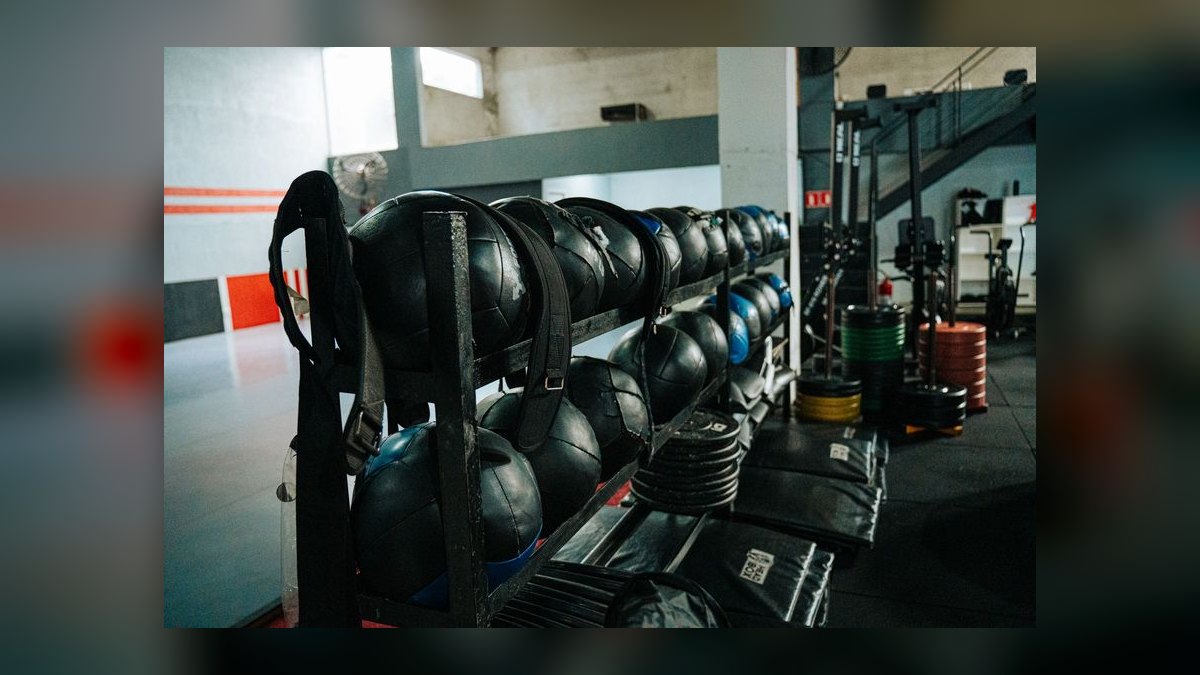
Only after that do you validate a market and chase a site. Site work is where the calendar goes: high-visibility retail corridor, strong daily traffic counts, dense residential base within a ten-minute drive, and a demographic profile weighted toward the households that actually buy $20-a-month memberships. Negotiate the lease and the TI allowance simultaneously with financing — lenders want to see the lease, landlords want to see the financing, and the resolution is to run both in parallel with contingencies. Construction runs six to twelve months, and soft costs (architecture, permits, legal, project management) add meaningfully on top of hard construction. Budget schedule slippage as a cost line, not a surprise.
The pre-sale is not a marketing tactic; it is the business model. HVLP clubs live or die on founding-member volume, and a club that opens with 1,200 pre-sold members has a fundamentally different first year than one that opens with 400. Run the pre-sale from a temporary storefront or trailer on the site during the final construction months, staff it with the sales team you intend to keep, and treat the number as your real opening-day KPI.
If you are buying, sequence differently: letter of intent with an exclusivity period, then diligence in three tracks running at once. Financial track: three years of P&Ls, tax returns, and the member management system's raw export — not a summary the seller prepared. Operational track: walk the club at 6am, at noon, and at 7pm on a weekday, and again on Saturday morning. Look at the locker rooms and the cardio deck; deferred maintenance shows up there first. Talk to the GM if the seller permits it. Legal track: the lease and every amendment, the franchise agreement and its remaining term, any equipment leases you are assuming, and the franchisor's transfer requirements and fee. Franchisor approval is not a formality — you must qualify, complete training, and often agree to a remodel schedule if the club is due for a brand refresh.

Both paths converge on the same first-year priorities, and the priorities are unglamorous. Staffing comes first: a large club employs a substantial full and part-time roster across front desk, cleaning, training, and group fitness, and the fitness industry's staff turnover runs high enough that hiring is a permanent function rather than a project. Cleanliness comes second, because it is the single most-cited reason members quit a value gym and the cheapest thing to fix. Personal training penetration comes third, because it is where the margin lives — a club that converts a meaningful share of new joins into training packages within their first month runs at a different EBITDA than one that does not.
Plan the exit from day one, even if you never take it. Maintain a capital expenditure reserve — roughly $100,000–$200,000 every five to seven years for equipment refresh, plus a larger periodic sum for facility renovation — because a buyer discounts a club with tired equipment far more than the cost of replacing it. Keep clean books that separate owner perks from operating expense, so normalized EBITDA is easy to demonstrate. And if you have any intention of scaling, negotiate a right of first refusal on adjacent territory in your original agreement, when it costs you nothing, rather than trying to buy it later when your success has made it expensive.
When neither option is the right one
Sometimes the honest answer to "should I open or buy a Crunch Fitness franchise" is "neither, at this capital level." A few adjacent plays deserve consideration before you commit millions.
Smaller-format value gyms — Fitness 19, Snap Fitness, Anytime Fitness — run a fraction of the square footage and a fraction of the equipment load. You give up the amenity breadth that drives ancillary revenue, but you also give up the six-figure rent line and the twenty-person payroll. For an owner-operator who wants to work in the business rather than build a management layer, the smaller format is frequently the better risk-adjusted trade.

Low-labor boutique concepts invert the model entirely: fewer members, much higher price per member, minimal staffing. The failure mode is different too — boutiques fail on member acquisition cost and novelty decay rather than on rent. They also scale differently, since the small footprint means territory density can be much higher.
An independent gym keeps all your equity and pays no royalty or marketing fund — call it 7–8% of gross revenue you keep. What you give up is real: brand recognition that drives walk-in traffic, national purchasing power on equipment, proven floor plans, an operating playbook, and a resale market. Independent gyms sell at lower multiples precisely because a buyer is purchasing a job rather than a system. The independent path suits operators who already have deep local fitness credibility and a following they can move.
And the competitive backdrop matters to all of these. The HVLP segment is the dominant growth engine in fitness, which means it is also the most crowded. Planet Fitness, EOS, Crunch, Blink, Retro, and a long tail of regional value chains fight for the same price-sensitive member in the same suburban retail corridors. A trade area that supports two value gyms comfortably supports a third badly. Before you sign anything, drive the ten-minute radius and count the competitors — including the ones under construction, which do not show up on any map you can buy.
Related questions
How long until a new Crunch club breaks even?
Commonly 18–36 months, driven mostly by pre-sale volume and how fast personal training penetration ramps. Clubs that open with a large founding-member base compress that timeline substantially; clubs that open cold on an under-trafficked site can run past three years.
What multiple do existing fitness clubs sell for?
Single well-run units generally trade around 3x–5x normalized EBITDA. Clusters of three or more command the top of that range or better, because a buyer inherits an existing management structure and can spread overhead across locations rather than rebuilding it.
Can I finance a gym franchise with an SBA loan?

Yes, SBA 7(a) is a common route for fitness franchises. Expect to inject 20–30% equity, personally guarantee the debt, and clear liquidity and net worth screens. Equipment amortizes over roughly ten years; real estate stretches far longer.
Is a single Crunch location worth it, or do I need multiple?
A single well-sited club can produce solid owner earnings, but the model's economics reward scale — shared area management, marketing leverage, and a higher exit multiple. Most sophisticated operators in the segment build toward three or more units.
What is the biggest diligence mistake buyers make?
Trusting the member count instead of the churn report. A stable headcount produced by a pre-sale discount promotion collapses after closing. Always pull twelve months of joins, cancels, and average revenue per member from the raw system export.
FAQ
What is the total investment to open a Crunch Fitness franchise?
The FDD's Item 7 range runs roughly $1,500,000 to $4,000,000, including an initial franchise fee in the $25,000–$30,000 band. The spread is driven mostly by club square footage, market rent, and how much tenant improvement allowance the landlord contributes to the build-out. Get the current FDD directly from the franchisor and model your specific site rather than relying on the midpoint.
Is buying an existing club cheaper than opening one?
Not necessarily cheaper — often comparable in total dollars — but the risk profile differs sharply. A $2 million purchase of a club producing $500,000 in EBITDA starts generating cash immediately, while a $2 million build produces nothing for a year and then ramps for another two. You pay roughly the same to skip the construction and ramp risk, and you take on diligence risk instead.

What are the ongoing fees?
A royalty of approximately 5% of gross revenue plus a marketing fund contribution generally in the 2–3% range, with local store marketing spend on top of that. Combined, plan on roughly 8–10% of gross revenue leaving the business for brand and marketing before you pay rent, labor, or debt service. Exact percentages are specified in your franchise agreement.
How much of the revenue actually comes from memberships?
Less than newcomers expect. At $10–$30 monthly dues, base memberships typically cover roughly half to two-thirds of a mature club's top line. Personal training, premium membership tiers, tanning, recovery services, and retail make up the balance — and they carry considerably higher contribution margins than dues, which is why ancillary execution separates 15% EBITDA clubs from 25% ones.
How bad is member churn in a value gym?
Structurally high. Monthly churn commonly runs 5–8% in the HVLP segment, so a 5,000-member club must add 250–400 members a month just to stay flat. That means sales is a permanent operating function, not a launch activity. Clubs that invest in retention — cleanliness, engagement programming, proactive save calls — reliably run below segment average and see the difference straight through to EBITDA.
Do I need to run the club myself?
No, but you need to run the manager. These are multi-department operations with large full and part-time rosters, and most franchisees install a general manager in the $55,000–$85,000 range plus performance bonus. Absentee ownership from day one is a common failure pattern; owner presence during the first year, then a transition to management oversight, is the pattern that works.
Sources
- https://www.franchise.crunch.com/
- https://www.crunch.com/
- https://www.entrepreneur.com/franchises/directory
- https://www.franchisebusinessreview.com/
- https://www.ftc.gov/business-guidance/resources/consumers-guide-buying-franchise
- https://www.sba.gov/funding-programs/loans/7a-loans
- https://www.ibisworld.com/united-states/market-research-reports/gym-health-fitness-clubs-industry/
- https://www.healthandfitness.org/
- https://www.franchise.org/
- https://www.statista.com/topics/1141/health-and-fitness-clubs/
Related on PULSE
- Best fitness and gym franchises to buy in 2027
- Should I open or buy a Fitness 19 franchise in 2027?
- Should I open or buy a Snap Fitness franchise in 2027?
- Should I open or buy an EOS Fitness franchise in 2027?
- Should I open or buy a Blink Fitness franchise in 2027?
- Should I open or buy a Retro Fitness franchise in 2027?
This page will be disappearing soon. Save it to your device for $1 — or read it free while it is here.
@Kory-White- · if Venmo asks, the last 4 of my number are 2012
This page is gone.
This one is off the shelf now. $1 keeps it on your phone for good — the whole page, pictures and diagrams included.
 franchiseShould I open or buy a Sonic Drive-In franchise in 2027?
 franchiseShould I open or buy a Supercuts franchise in 2027?
 franchiseShould I open or buy a Dunkin' franchise in 2027?
 franchiseShould I open or buy a Rita's Italian Ice franchise in 2027?
 franchiseShould I open or buy an Orangetheory Fitness franchise in 2027?
 franchiseShould I open or buy a Take 5 Oil Change franchise in 2027?
 franchiseShould I open or buy a Taco Bell franchise in 2027?
 franchiseShould I open or buy a Hand and Stone Massage franchise in 2027?
 franchiseShould I open or buy a Whataburger franchise in 2027?
 franchiseShould I open or buy a Mac Tools franchise in 2027?