


Should I open or buy a Fit Body Boot Camp franchise in 2027?
Quality
Certified
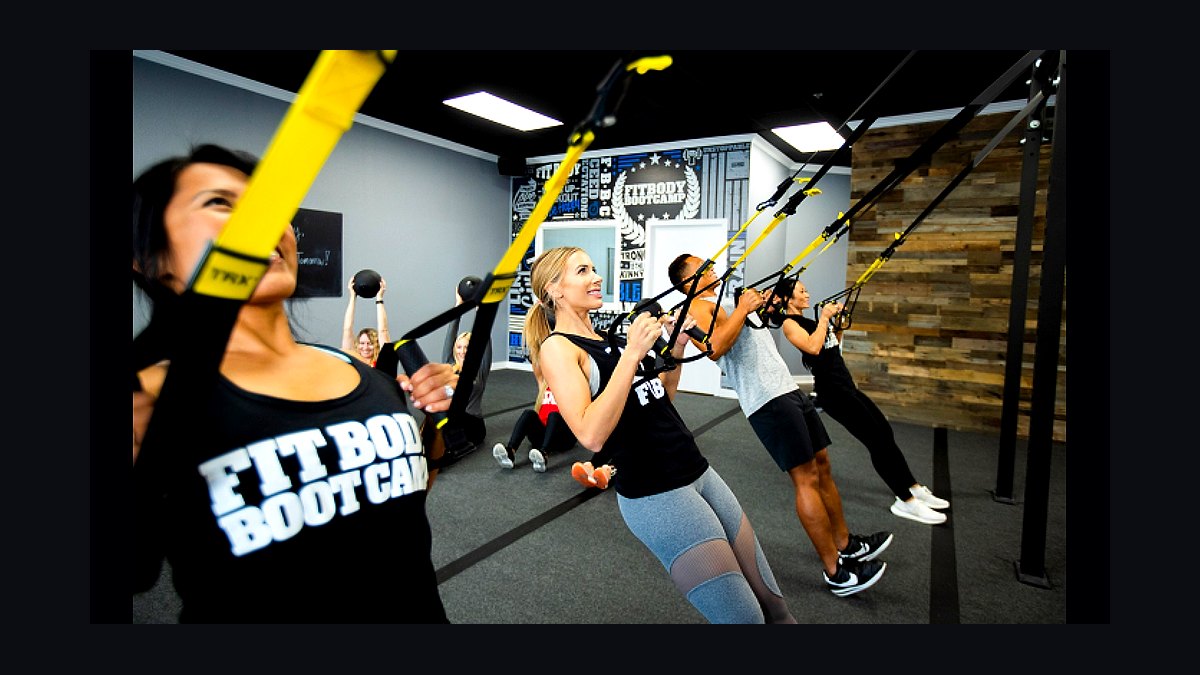
Buy or open a Fit Body Boot Camp only if you will personally run sales and local marketing. The model is capital-light — roughly $100K to $500K total — with a flat monthly royalty that protects margin as revenue grows. Mature studios gross $300K to $700K. Passive owners consistently underperform here.
The outcome you should expect
Set your expectations against the actual mechanics of a 30-minute group HIIT studio rather than against the aspirational numbers in a franchise brochure. Fit Body Boot Camp, founded in 2010 by Bedros Keuilian, sells small-footprint, trainer-led group personal training on a recurring membership. The product is the "Afterburn" session — roughly 30 minutes, 12 to 20 people per class, coach-led the entire way. Everything about the unit economics flows from that one design choice.
Here is the realistic outcome curve for a single unit opened in 2027 by a competent, hands-on operator in a suburban market with adequate demand.
Months 0 to 3 (pre-open and open). You are spending, not earning. Buildout, equipment, franchisor training, and a pre-sale campaign consume most of your working capital. A well-run pre-sale should put 40 to 80 founding members on the books before day one. If you open with fewer than 30 paying members, you have already lost roughly a quarter of your runway and you will be marketing from a defensive position for a year.

Months 4 to 9 (ramp). Membership climbs toward 120 to 180 if lead flow is consistent. This is where most single-unit owners either reach cash-flow breakeven or discover their market is thinner than the territory map suggested. Owner-operators who coach 10 to 15 sessions a week typically hit breakeven materially sooner than owners paying a full coaching roster from day one, simply because trainer labor is the single largest line item.
Months 10 to 24 (maturity). A studio that works settles at 150 to 400 members paying roughly $120 to $200 per month, producing $300K to $700K in gross revenue. Trainer labor runs 28% to 36% of revenue, rent 10% to 14%, plus the flat royalty and the marketing fee. Net margins land in the 18% to 30% band, and owner take-home commonly falls between $70K and $200K — the top of that range assumes the owner is also coaching and personally running the sales funnel.
What you should not expect. Do not expect a passive asset. Do not expect national brand pull to fill the studio for you — Fit Body's brand awareness sits well below Orangetheory or F45 in most metros, which means paid and community-level local marketing is a permanent operating expense, not a launch expense. And do not expect January enrollment spikes to carry you; summer lulls are real in group fitness, and the flat royalty is specifically what keeps a slow August from becoming a loss month.
The honest summary: this is a small, high-touch, sales-driven service business wearing a franchise wrapper. The franchise gives you a proven 30-minute product, a lead-generation playbook, and vendor relationships. It does not give you customers.
What drives that outcome

Four levers move nearly all of the variance between a $70K owner year and a $200K owner year. Rank them in this order, because that is the order in which they actually bite.
Lever one: lead flow. Group HIIT is a churn business. If your retention sits at 65% to 75% annually — which is achievable and materially better than the 40% to 50% typical of big-box gyms — you are still replacing a quarter to a third of your roster every year just to stand still. That means lead generation is never "done." Budget $1,500 to $3,000 per month in local acquisition spend in a normal suburban market, and $4,000 to $6,000 per month in a saturated metro where five to ten boutique studios sit inside a three-mile radius. The national marketing fund (commonly around 2% of gross) buys brand-level presence; it does not buy you leads on your street.
Lever two: labor structure. Trainer payroll at 28% to 36% of revenue is the difference-maker. An owner who coaches 10 to 15 sessions a week is effectively paying themselves the coaching wage instead of a third party, which is worth roughly $30K to $50K a year in retained margin plus faster fill because members bond with the owner. The cost is your calendar: 5:30 AM starts are standard, and 50 to 60 hour weeks are normal for the first 12 to 18 months.
Lever three: buildout discipline. The low-capital advantage is easy to spend away. A 1,200 to 2,500 sq ft open-turf space with rubber flooring, mirrors, sound, and restrooms can run $80,000 to $150,000 in a raw retail shell — often 20% to 30% above the initial allowance in your plan. Every dollar over budget lengthens payback and reduces the working capital that keeps you alive through month nine.

Lever four: retention systems. Attendance tracking, check-in calls on members who miss two consecutive weeks, and a defined onboarding for every new member are what separate 70% retention from 50% retention. At 200 members and $150 a month, a twenty-point retention swing is roughly $72,000 of annual revenue.
Read the loop in that diagram carefully: weak retention does not just reduce revenue, it forces more spend back into the top of the funnel. That feedback loop is why a studio with a lead problem and a studio with a retention problem look identical on a bank statement but require completely different fixes.
Benchmarks and realistic ranges
These are the figures to hold in your head while you read the current Franchise Disclosure Document. Verify every one of them against the actual FDD you receive — franchisors revise fees, and the document you are handed is the only number that binds anyone.
Capital. The 2026 FDD lists a franchise fee in the neighborhood of $50,000 and a total Item 7 investment range of roughly $100,000 to $500,000. A great many single units land under $300,000. Plan on $50,000 to $120,000 in liquid capital on top of whatever you finance.

| Line item | Low | High | Note |
|---|---|---|---|
| Franchise fee | $50,000 | $50,000 | Per current FDD |
| Leasehold / buildout | $25,000 | $150,000 | Open turf floor |
| Equipment | $20,000 | $80,000 | Functional training gear |
| Technology and software | $8,000 | $25,000 | CRM plus booking |
| Initial marketing | $20,000 | $70,000 | Pre-sale plus grand opening |
| Insurance and permits | $4,000 | $15,000 | General liability |
| Training and travel | $5,000 | $15,000 | Owner plus staff |
| Working capital | $30,000 | $95,000 | First three to six months |
| Total Item 7 | ~$100,000 | ~$500,000 | Per current FDD |
Royalty structure. Fit Body has been associated with a flat monthly royalty rather than a percentage of gross — franchisee-reported figures commonly land in the $1,500 to $3,000 per month range — plus a marketing fee around 2% of gross. Confirm both in Item 6. The strategic implication of a flat royalty is significant: your effective royalty rate falls as revenue rises, so a $600K studio pays the same dollars as a $350K studio. That is a genuine structural advantage over percentage-royalty competitors, and it is most valuable in exactly the months when revenue dips.
Revenue and margin. Mature studios gross $300K to $700K on 150 to 400 members at $120 to $200 per month. Net margins of 18% to 30% produce owner earnings of $70K to $200K. Payback on invested capital typically runs 12 to 24 months for studios that fill on schedule.
Comparative capital. Against the field, Fit Body's pitch is capital efficiency. Orangetheory and F45 sit meaningfully higher on total investment, and Burn Boot Camp sits between. Opening a Fit Body unit for a fraction of an Orangetheory buildout while chasing the same time-pressed suburban professional is the entire thesis. The trade you accept is brand recognition — you are buying a system, not a marquee.
Space. 1,200 to 2,500 sq ft of open training floor. No pool, no locker-room investment, no cardio equipment wall. That is the whole reason the capital number is low, and protecting it is your job during lease negotiation.
Consumer demand. The structural tailwind is real: a large share of gym-goers now prefer sessions under 45 minutes, and the 30-minute format directly answers the most common cancellation reason, which is time. Small-group coaching also delivers social accountability that equipment-first gyms cannot match, and that is the mechanism behind the retention gap.

Semi-absentee math. A general manager costs roughly $45,000 to $70,000 a year plus bonus. Running semi-absentee at 15 to 20 hours a week of oversight, a single unit that would clear $100K to $150K under an owner-operator typically nets $60K to $90K instead. Breakeven stretches from a six-to-nine-month scenario toward a twelve-to-eighteen-month one. Resale multiples also compress when the business depends on a specific manager rather than documented systems.
Risks, edge cases, and failure modes
Trainer turnover is the quiet killer. Boutique fitness runs annual coach turnover in the 40% to 60% range. Each departure costs roughly $3,000 to $5,000 in recruiting, onboarding, and lost membership momentum — and the momentum loss is the expensive half, because members quit when their coach quits. Counter it with monthly workshops, certification reimbursement, and performance bonuses tied to retention rather than headcount. A coach who leaves for two dollars more an hour was never paid in belonging.
Territory saturation. In Los Angeles, Dallas, or Atlanta, your three-mile radius may already hold five to ten boutique studios. That does not make the market unwinnable, but it does move your monthly acquisition spend into the $4,000 to $6,000 band permanently and it lengthens your ramp. Model the pessimistic case before you sign, not after.
Buildout overrun. Converting a raw retail shell is where low-capital plans die. Negotiate a tenant improvement allowance of at least $40 to $60 per square foot, or take a "dark shell" space that was already fitted out for fitness. A gut renovation on a 2,000 sq ft unit can quietly add six figures.

Undercapitalization. The most common single-unit failure is not a bad market — it is opening with three months of working capital in a market that needs nine. If your pre-sale underperforms and you have no reserve, you will cut marketing exactly when you need it most, which is a death spiral with a predictable shape.
Owner burnout. Roughly a quarter to a third of hands-on fitness franchisees exit within three years, and life balance is the reason they cite. Early-morning classes, weekend community events, and being the face of the studio are cumulative. Plan a coach-manager hire at a defined revenue trigger before you are exhausted, not after.
Culture mismatch. Fit Body's system is built around aggressive local lead generation and direct membership selling. If that style makes you uncomfortable, you will underuse the single asset you are paying for, and you will resent the royalty for a system you are not running.
Buying an existing unit. A resale can be the better trade — you inherit members, staff, and a demonstrated P&L. Owner-operator units with clean books commonly trade around 2.5x to 3.5x annual net profit; manager-dependent semi-absentee units trade lower. Audit member counts against merchant-processor deposits, not against a spreadsheet, and pull the last 24 months of churn by cohort. A studio being sold with rising revenue and falling member count is being dressed up with price increases.
The FDD gap. Item 19 financial performance representations, where provided, describe averages across a system with wide dispersion. Your comparable is not the system mean; it is studios in markets that look like yours, opened in the last two or three years.
A practical rollout plan

Work this as a 90-day gate sequence, and treat each gate as a genuine stop-or-go decision rather than a formality.
Days 1 to 15 — document and structure. Read the current FDD end to end, with particular attention to Item 5 (initial fees), Item 6 (recurring fees — confirm the flat royalty amount and the marketing fee percentage in writing), Item 7 (investment range), Item 19 (financial performance representations, if any), and Item 20 (outlet counts, transfers, terminations). Item 20's turnover table is the most honest page in the document: a system with a rising count of terminations and transfers relative to openings is telling you something the brochure will not.
Days 16 to 30 — validation calls. Interview at least eight current franchisees, weighted toward units that opened in the last three years, and include at least two from Item 20's departed list if you can reach them. Ask specific questions with numeric answers: current active member count; monthly churn; actual first-year marketing spend versus what you planned; months to cash-flow breakeven; trainer wage and turnover; and take-home after debt service. Vague answers are answers.
Days 31 to 45 — market validation. Confirm you have a results-focused suburban population with the income to carry a $120 to $200 monthly membership. Map every competing boutique within three miles. Check daytime population and commute patterns — a 5:30 AM and a 5:30 PM class are your two revenue peaks, and both depend on where people live relative to where they work.
Days 46 to 60 — site and lease. Target 1,200 to 2,500 sq ft. Prioritize a dark shell or a former fitness tenant. Negotiate the TI allowance hard, push for free rent through buildout plus the first 30 days of operation, and cap your total buildout in writing with the contractor. Protecting the low-capital thesis happens entirely at this stage.

Days 61 to 80 — pre-sale and staffing. Run founding-member pricing while the space is under construction. The pre-sale is not a marketing nicety, it is your primary risk test: if you cannot sell 40 to 80 memberships on a promise, filling a finished studio will be harder, not easier. Simultaneously hire and train your coaching bench, and complete franchisor training yourself.
Days 81 to 90 — open. Launch with a grand-opening event, a local referral program, and paid social running from day one. Then hold the discipline: weekly lead numbers, weekly attendance-lapse calls, monthly P&L review against your model.
After opening, set two explicit triggers so you are not making staffing decisions on feel. First, at roughly 200 active members, hire a coach-manager to take the early-morning block. Second, once you have twelve consecutive months of documented systems and stable retention, evaluate a second unit or a shift toward semi-absentee — in that order, because semi-absentee before the systems exist just converts your margin into a manager's salary.
Related questions
How does Fit Body compare with Burn Boot Camp on capital?
Both are group-training concepts targeting similar suburban demographics, and both sit well below Orangetheory or F45 on total investment. Fit Body's differentiators are the smaller open-turf footprint and the flat monthly royalty. Compare current FDDs directly — Item 7 ranges and Item 6 fee structures — rather than trusting brand-level marketing claims.
Can I run one while keeping a full-time job?
Only with a strong general manager at $45,000 to $70,000 plus bonus, and you should expect a longer path to profitability, roughly 12 to 18 months instead of six to nine. Net owner income compresses to about $60K to $90K on a single unit. It works, but it is the worse version of this model.
Is buying an existing studio better than opening new?

Often yes, if the books are clean. You skip the ramp and inherit members and staff. Verify member counts against processor deposits and pull 24 months of cohort churn. Owner-operator units with documented systems typically command higher multiples than manager-dependent ones for good reason.
What is the fastest way to reach breakeven?
Coach sessions yourself, pre-sell aggressively before opening, and keep buildout under budget. Those three levers compress the ramp more than anything the franchisor can do for you. An owner coaching 10 to 15 sessions weekly retains roughly $30K to $50K a year in labor that would otherwise leave the business.
How many units should I plan for?
Prove one. Document the systems, stabilize retention above 65%, and run twelve clean months before signing for a second. Multi-unit economics improve through shared management and marketing leverage, but only if unit one runs without you. Scaling a business you still personally hold together multiplies the problem, not the profit.
FAQ
How much capital do I really need to open a Fit Body Boot Camp franchise?
The current FDD lists a total investment range of roughly $100,000 to $500,000, including a franchise fee around $50,000, and many single units land under $300,000. Plan on $50,000 to $120,000 liquid beyond financing. Actual cost turns mostly on your space — a dark shell that was previously a fitness tenant can save six figures against a raw retail gut renovation.
What revenue and profit should a mature studio produce?
Mature locations gross $300,000 to $700,000 annually on 150 to 400 active members paying $120 to $200 monthly. After trainer labor at 28% to 36%, rent at 10% to 14%, the flat royalty, and marketing, net margins run 18% to 30% and owner earnings commonly fall between $70,000 and $200,000. The upper end assumes an owner who coaches and personally runs sales.

Can this be a passive investment?
Not well. The model depends on continuous local lead generation and direct membership selling, and both degrade fast under delegation. Semi-absentee ownership is structurally possible with a $45,000 to $70,000 general manager, but margins compress, breakeven stretches to 12 to 18 months, and resale value suffers because buyers discount manager-dependent units.
How does the flat royalty actually help me?
A flat monthly royalty means your effective royalty rate falls as revenue grows — a $600,000 studio pays the same dollars as a $350,000 one. It also caps your obligation during seasonal dips, which matters because group fitness reliably spikes in January and softens in summer. Confirm the exact amount in Item 6 of the FDD you receive; do not rely on reported ranges.
What is the single most common reason these studios fail?
Undercapitalization compounded by weak lead flow. Owners open with three months of runway in a market that needs nine, the pre-sale underdelivers, and they cut marketing exactly when the funnel needs feeding. The second most common cause is trainer turnover — coaches leaving take members with them, and boutique fitness runs 40% to 60% annual turnover.
How long until I break even?
Twelve to twenty-four months is the honest planning range, with owner-operators who pre-sell well and control buildout frequently landing at the short end and semi-absentee owners in saturated metros at the long end. Ask every franchisee you interview for their actual month-of-breakeven rather than accepting a system average.
Sources
- https://www.ftc.gov/business-guidance/resources/franchise-rule-compliance-guide
- https://www.entrepreneur.com/franchises/franchise500
- https://www.franchise.org/
- https://www.healthandfitness.org/
- https://www.sfia.org/resources/
- https://www.ibisworld.com/united-states/market-research-reports/gym-health-fitness-clubs-industry/
- https://www.sba.gov/funding-programs/loans
- https://www.statista.com/topics/1141/health-and-fitness-clubs/
- https://www.bls.gov/ooh/personal-care-and-service/fitness-trainers-and-instructors.htm
- https://www.franchisebusinessreview.com/
Related on PULSE
This page will be disappearing soon. Save it to your device for $1 — or read it free while it is here.
@Kory-White- · if Venmo asks, the last 4 of my number are 2012
This page is gone.
This one is off the shelf now. $1 keeps it on your phone for good — the whole page, pictures and diagrams included.
 franchiseShould I open or buy a Big O Tires franchise in 2027?
 franchiseShould I open or buy a Dairy Queen franchise in 2027?
 franchiseShould I open or buy a Rita's Italian Ice franchise in 2027?
 franchiseShould I open or buy a Domino's franchise in 2027?
 franchiseShould I open or buy a Supercuts franchise in 2027?
 frShould I open or buy a McDonald's franchise in 2027?
 franchiseShould I open or buy a UPS Store franchise in 2027?
 franchiseShould I open or buy a Cook Out franchise in 2027?
 franchiseShould I open or buy an Auntie Anne's franchise in 2027?
 franchiseShould I open or buy a Smoothie King franchise in 2027?