
Should I open or buy a Chicken N Pickle franchise in 2027?
 Curated byKory White · Fractional CRO · Maryland
 PULSEKNOWLEDGE LIBRARY
You almost certainly cannot buy one. Chicken N Pickle grows through company-owned venues and negotiated development partnerships, not a conventional franchise you purchase with a fee. A single location is an $8M–$25M+ eatertainment real-estate project. Realistic paths in 2027: pursue a joint venture directly, build independent, or franchise a smaller pickleball concept.
The outcome you should expect when you inquire
Picture the actual sequence. You send an inquiry to Chicken N Pickle's development contact in early 2027 saying you'd like to open a location in your metro. What comes back — if anything comes back — is not a Franchise Disclosure Document with an item-7 investment table and an item-19 financial performance representation. That is the tell. In a conventional franchise system, the FDD exists because federal and state law requires it before anyone can sell you a franchise, and the brand wants you to have it because selling units is the growth engine. When a brand has no FDD in circulation and no franchise-development portal, it is not because they're being coy. It's because units aren't the product.
What you are far more likely to receive is a conversation about real estate. Do you control a site? What's the parcel size, the visibility, the drive-time demographics? Do you have equity committed, and how much? Have you developed and operated full-service restaurants before, or are you a passive capital source looking for a brand to rent? Those are development-partner questions, not franchisee questions, and they filter almost everyone out at the first pass. The realistic outcome for an individual with $500K and enthusiasm for pickleball is a polite non-response. The realistic outcome for a regional developer with a controlled site, a hospitality operating partner, and $10M of committed equity is a real conversation that may still take 18 months to reach a signed agreement.

This distinction matters more than it sounds, because the mental model you bring determines what you do next. Franchise buyers think in terms of "which brand, what fee, how fast to cash-flow." Development partners think in terms of "what's my basis in the dirt, what's my rent factor, what's the exit cap rate." If you approach Chicken N Pickle with the first mindset, you will spend six months confused about why nobody will quote you a franchise fee. If you approach with the second, you'll quickly understand you're being evaluated as a co-investor in a large, illiquid, hospitality-anchored real-estate asset — and you can decide honestly whether that's the business you wanted to be in.
There's a broader lesson here that applies well beyond this one brand. A whole category of high-capital experiential concepts — large golf-entertainment venues, big-box family entertainment centers, competitive-socializing destinations — has grown primarily corporate or through negotiated development deals rather than open franchising, for the same structural reason. When a single unit costs eight figures and lives or dies on real-estate selection and F&B execution, the brand cannot afford to hand that decision to whoever shows up with a check. Franchising works beautifully when the unit economics are repeatable at $400K a box and the operator can be trained in six weeks. It works badly when every site is a bespoke development with a two-year construction timeline. Before you chase any "hot concept" franchise, check whether the unit cost is inside the range where franchising is even a rational strategy for the franchisor.
What actually drives the outcome
The forces that decide whether a pickleball-eatertainment venue works are not the ones most first-time inquirers focus on. People fixate on court count and league programming. The money is elsewhere.

Food and beverage is the business. Court time is the reason people come; food and drink is why the venue survives. Operators across the eatertainment category consistently report that the majority of revenue comes from F&B rather than the activity itself — often something in the neighborhood of two-thirds. That flips the skill requirement entirely. You are not opening a sports facility with a snack bar. You are opening a high-volume, full-service restaurant and bar that happens to have courts attached, and it must be run by someone who has actually run one. Kitchen throughput at peak, beverage cost control, labor scheduling against an unusually spiky demand curve, private-event sales — these are the competencies that separate a venue that clears real EBITDA from one that grosses impressively and nets nothing.
Average check discipline. A venue in this format needs a per-person spend in the high teens to low twenties to make the model work at typical traffic levels. That sounds easy until you meet the guest who books a court for two hours, brings four friends, and orders two shared appetizers and a pitcher. Programming, menu design, and service model all exist to lift that number. If your local market's willingness-to-pay caps out at fast-casual levels, no amount of court utilization rescues the P&L.

Peak-hour utilization, not total utilization. Courts are empty Tuesday at 10am and that's fine — nobody underwrites daytime. The number that matters is fill rate on weekday evenings and weekend blocks. Healthy venues want roughly 70%+ on those windows. Because revenue concentrates into maybe 25–30 hours a week, a modest erosion in peak demand — a competitor opening two miles away, a corporate-league contract lost — hits the bottom line far harder than the utilization drop suggests.
Weather and seasonality. Outdoor courts and rooftop space are wonderful margin in May and dead capital in February in most of the country. The venues that hold revenue through winter are the ones with enough climate-controlled indoor courts and enough indoor F&B seating to run a full P&L without the patio. When you model, build a winter month and a summer month separately and see whether the winter month covers debt service on its own.
Debt structure. This is where good concepts become bad investments. An $8M–$25M project financed aggressively can be operationally excellent and still fail, because the ramp to mature volume runs two to four years and the lender's amortization schedule does not care. Conservative capital structure is not timidity here; it's the thing that buys you the runway the format requires.

Benchmarks and realistic ranges
Treat every figure below as a planning range drawn from comparable eatertainment and full-service restaurant development, not as a quote. The only authoritative numbers for a specific project come from your own contractor bids, your own broker, and — if a brand partnership materializes — the terms actually put in front of you.
The capital stack. Land or a build-to-suit position in a high-visibility suburban infill or urban edge location typically runs $2M–$6M for the two-to-five-acre footprints these venues use, and materially more in constrained major-metro submarkets. Hard construction costs — a structure capable of housing climate-controlled courts, a full commercial kitchen, multiple bar stations, rooftop or patio deck, and parking — commonly land in the $4M–$12M band. FF&E and technology, meaning kitchen equipment, AV and sound, court surfacing and netting, POS and reservation systems, lighting, and furniture, adds roughly $1.5M–$3M. Pre-opening — permits, impact fees, hiring and training, launch marketing, and three to six months of operating cash — is another $500K–$1.5M. Total lands at $8M on the disciplined end and comfortably north of $25M for a flagship in an expensive market.
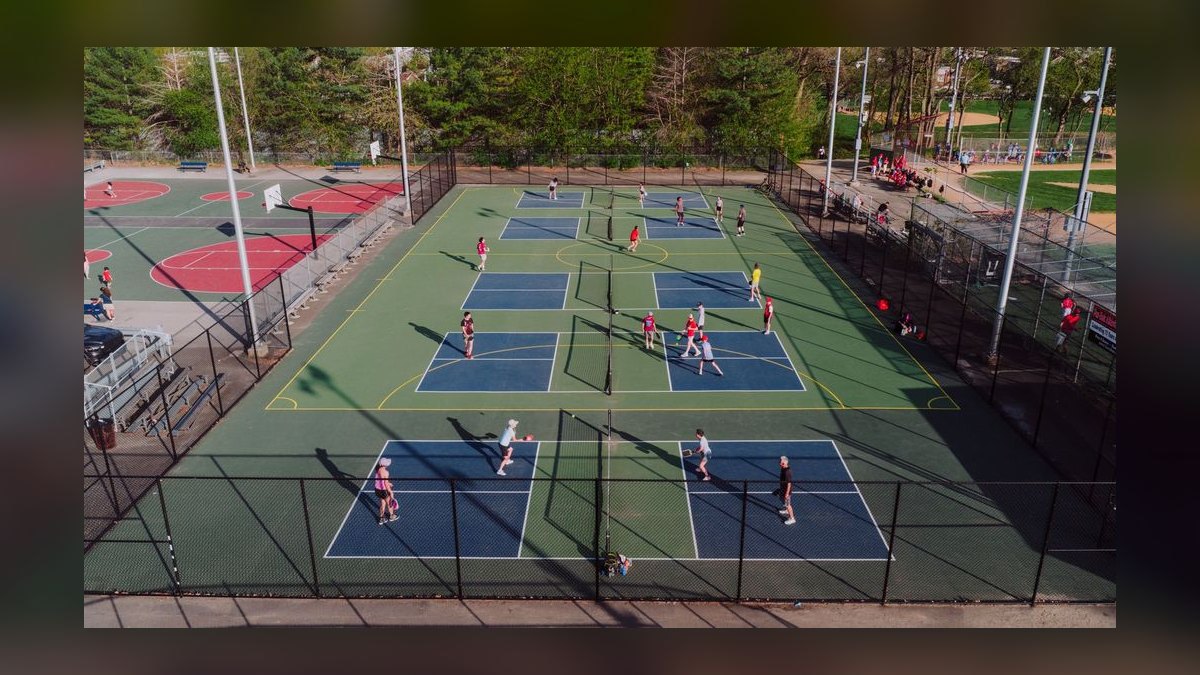
Revenue and margin. A mature venue of this scale can gross in the $8M–$20M+ range, with the spread driven almost entirely by market size, event-business penetration, and how many months a year the outdoor space is usable. Structurally, expect labor around 30% of revenue in a full-service model, F&B cost of goods in the mid-twenties as a percentage, occupancy (rent or debt service plus taxes and insurance) around 12%, and other operating expense — utilities, marketing, R&M, insurance, tech — near 20%. What survives is a mid-teens EBITDA margin in a well-run venue, sometimes low twenties in a standout. On $12M of revenue, that's roughly $1.5M–$2M of EBITDA against a basis that may exceed $15M. Do that division before you fall in love with the concept.
Timeline. Site control to opening runs 18–36 months in practice. Entitlement and permitting alone can consume six to twelve months depending on jurisdiction, and a project this size rarely sails through a suburban planning commission without at least one continuance over traffic or noise. Construction is another twelve to eighteen. Then the ramp: two to four years to mature volume, because destination venues build habit slowly and the second-year comp is often the honest test, after the opening novelty and the local-press cycle both fade.
Market thresholds. The venues that work sit in trade areas with roughly half a million people inside a fifteen-minute drive, with meaningful daytime corporate population for weekday event business. Metros in the 200K–400K range generally cannot fill a destination of this scale on repeat visitation, whatever the enthusiasm at opening. Court supply nationally has expanded enormously — dedicated courts number in the low tens of thousands with thousands more in the pipeline — and a number of mid-sized markets that looked underserved in 2022 were visibly overbuilt by 2025. If three or more dedicated pickleball facilities already operate within ten miles of your site, you are dividing the same finite pool of active players, and the casual "drinks and dinks" segment you're actually targeting is thinner than the raw participation statistics imply.

Comparable franchise economics, for calibration. Smaller pickleball club franchises — the indoor-courts-plus-café format rather than the full destination — generally present total investments in the low single-digit millions, franchise fees in the tens of thousands, and royalties in the mid-to-high single digits as a percentage of gross. Golf-entertainment and competitive-socializing concepts sit between that and the Chicken N Pickle scale. Verify every one of those figures in the current FDD before acting; franchisors revise item 7 annually and the ranges move.
Risks, edge cases, and failure modes
Construction overrun. On a project of this size, a 15% overrun is $1.2M–$3.75M of unplanned equity, and it arrives at the worst moment — after you've committed, before you've opened a door. Fixed-price GMP contracts with a real contingency, ideally 10% held outside the budget you tell yourself you have, are the difference between a delay and an insolvency. Long-lead kitchen and HVAC equipment has been a recurring schedule risk; order early and accept the carrying cost.

The entitlement trap. Neighbors object to lighting, noise, and traffic. Pickleball in particular has generated a genuinely surprising volume of municipal noise complaints and, in several jurisdictions, ordinances or setback requirements aimed specifically at court noise. A site that pencils beautifully can die at a public hearing. Do not close on land without entitlements or a contingency that lets you walk.
Operating-partner mismatch. The most common quiet failure is a capital partner who understands real estate and a brand that understands hospitality, with nobody in the middle who has personally run a $10M-revenue restaurant. F&B execution is the margin engine; if your org chart doesn't have a proven multi-unit F&B operator with real authority, you have a gap that no amount of brand equity closes.
Novelty decay. Opening year is not the baseline. Experiential venues routinely post a strong first twelve months on curiosity traffic and then face a second year where the number that matters — repeat visitation from a local core — reveals itself. Underwrite to year three, not year one, and stress-test what happens if year two comes in 20% below opening.

Category consolidation. Dozens of pickleball-entertainment concepts launched after 2020. Some will not survive to 2030, and the ones that fail will do so by dumping capacity and discounting court time in your trade area on the way down. A distressed competitor is often more damaging than a healthy one. Ask, when you underwrite, what your P&L looks like if a nearby venue starts selling court hours at half price for eighteen months.
Illiquidity and exit. There is no ready buyer pool for a single specialty entertainment venue the way there is for a stabilized net-leased retail building or a franchised QSR. Your exits are essentially: sale-leaseback of the real estate with you retaining operations, sale of the whole asset to a regional entertainment group, or conversion of the building to another use. That third option is worth pricing before you build, because a structure purpose-built for indoor courts has fewer alternative tenants than a generic box. Ask the question early: if this fails, what else can this building be?
Passive-investment mismatch. A development agreement where the brand retains operational control and takes a management fee means you are, functionally, a limited partner in a hospitality asset with an eight-figure basis and a multi-year hold. Some people want that. Many people who think they want to "own a Chicken N Pickle" actually wanted to own a business they run. Those are different products, and confusing them is the most expensive mistake available here.
A practical rollout plan
Days 1–30: decide which vehicle you're actually buying. Write down your liquid capital, your appetite for a five-to-ten-year illiquid hold, and whether you intend to operate or invest. If liquid equity is under roughly $3M, the Chicken N Pickle development path is not open to you and pursuing it wastes a quarter. Instead, request FDDs from the smaller franchised pickleball club concepts and from golf-entertainment brands, and read item 7 (investment), item 19 (financial performance representations, if any), and item 20 (outlet and franchisee turnover) before anything else. Item 20 is the most honest page in the document — a system closing units faster than it opens them tells you more than any brochure.
Days 31–60: prove or kill the market. Pull drive-time demographics for your candidate trade area and confirm the population and daytime employment thresholds. Then go count. Physically visit every pickleball facility within fifteen miles on a Tuesday evening and a Saturday morning, and note court occupancy. Talk to the front desk about wait times and league waitlists. Call three local corporate event planners and ask what they currently book and at what per-head budget. This is two weekends of work and it is worth more than any purchased market study.

Days 61–90: engage and structure. If the market survives and the capital is real, approach Chicken N Pickle's development team with what a developer brings: a controlled or optioned site, a demographic case, an identified F&B operating partner, and a stated equity commitment. Simultaneously — not sequentially — price the independent build and the smaller franchise alternative on the same site. Running all three in parallel is what gives you the standing to walk away from any single one. Then build a model with three cases: base, a case where year two comps down 20%, and a case with a 15% construction overrun and a six-month delay. If the downside case doesn't survive debt service, the answer is no regardless of how good the base case looks.
Months 4–24: execute in order. Entitlements before land close. GMP contract with contingency held outside the stated budget. Long-lead equipment ordered at permit, not at framing. General manager and executive chef hired 90–120 days before opening, not 30. Soft-open with limited menu and limited court inventory to find the throughput failures while the stakes are low. Then open loud, but budget for a marketing spend in months 7–18 as well, because that's the window where novelty traffic fades and habitual traffic hasn't formed yet — and it's the window most operators forget to fund.
Related questions
Can I get a Chicken N Pickle franchise disclosure document?
Not through a public franchise-sales channel, because the brand has not grown as a conventional franchise system. If a development or licensing arrangement is negotiated directly, the governing documents would be that agreement, not a standard FDD. Ask their corporate development contact rather than a franchise broker.
What's the cheapest realistic way into pickleball-eatertainment?
Franchised indoor pickleball club formats — courts plus a café or bar, no full-service kitchen — typically present total investments in the low single-digit millions rather than eight figures. An independent 8–12 court facility with a modest bar sits in similar territory and gives you full control at the cost of no playbook.
Does the pickleball boom still have room in 2027?
Participation growth has been genuine and broad, but supply has expanded fast and some mid-sized markets were already saturated by 2025. National trend data won't answer this; only a court count inside your own ten-mile radius and observed peak-hour occupancy will.
Should I add pickleball courts to an existing venue instead?
Often the best risk-adjusted move. Adding four to six courts to an existing golf-entertainment, bowling, or event property leverages a kitchen, liquor license, parking, and staff you already pay for. Incremental cost is a fraction of a ground-up build.
Is the real estate or the operating business the better position?
They're separate decisions. Owning the building and leasing to an operator gives you a slower, more durable return; operating gives you upside and volatility. Many developers deliberately split them, and a sale-leaseback after stabilization is a common way to recover basis.
FAQ
Is Chicken N Pickle actually a franchise I can buy?
Not in the conventional sense. The company has grown through company-owned venues and selective development partnerships rather than a standard franchise-sales system. There is no publicly marketed franchise fee, territory package, or turnkey unit to purchase. Any participation would come through a negotiated development or joint-venture agreement with a partner who brings site control, capital, and hospitality operating capability — a very different transaction from buying a franchise.
How much would a location realistically cost to open?
Plan on $8M to $25M+ all-in. Land or a build-to-suit position typically runs $2M–$6M, hard construction $4M–$12M, FF&E and technology $1.5M–$3M, and pre-opening plus working capital $500K–$1.5M. The upper end applies in expensive metros or for flagship-scale venues with extensive outdoor and rooftop space. These are planning ranges from comparable eatertainment development, not brand-quoted figures.
Can I open a smaller, scaled-down version?
Not under the brand — the format is built around a large multi-acre destination and doesn't have a compact variant. If you want a smaller pickleball-and-food venue, your options are an independent concept you design yourself or one of the franchised indoor pickleball club brands, which operate at a small fraction of the capital requirement with a café or bar instead of a full-service kitchen.
How long from decision to opening?
Typically 18–36 months. Entitlement and permitting can take six to twelve months, construction another twelve to eighteen, and that assumes no zoning appeal or long-lead equipment delay. Then plan for a two-to-four-year ramp to mature volume. Anyone underwriting this as a quick-to-cash-flow investment has the wrong model; it behaves like real-estate development, because it is.
What single factor most often kills these projects?
Capital structure, followed closely by weak F&B execution. A venue can be operationally sound and still fail if leverage assumed year-one volumes that take three years to arrive. And since food and beverage generates the majority of revenue in this format, a team without a proven full-service restaurant operator in a position of real authority is exposed on the exact line item that determines whether the venue nets anything.
Who should genuinely pursue this in 2027?
Well-capitalized development or hospitality groups in major metros with an identified site, an experienced multi-unit F&B operator on the team, conservative financing, and tolerance for a five-to-ten-year illiquid hold. Individual owner-operators looking to buy a job or a single unit are structurally mismatched with this format and are far better served by a smaller franchised concept.
Sources
- https://www.chickennpickle.com/
- https://www.ftc.gov/business-guidance/resources/consumers-guide-buying-franchise
- https://usapickleball.org/
- https://www.franchise.org/
- https://www.ibisworld.com/united-states/market-research-reports/family-entertainment-centers-industry/
- https://www.iaapa.org/
- https://www.sba.gov/funding-programs/loans/504-loans
- https://www.restaurant.org/research-and-media/research/
- https://www.statista.com/topics/8125/pickleball-in-the-us/
Related on PULSE
- [Should I open or buy a Mr. Pickle's Sandwich Shop franchise in 2027?](/knowledge/fr0740)
- [Best chicken and wings franchises to buy in 2027](/knowledge/fr1125)
- [Should I open or buy a Dave's Hot Chicken franchise in 2027?](/knowledge/fr1025)
- [Should I open or buy a Champs Chicken franchise in 2027?](/knowledge/fr0830)
- [Should I open or buy a Hot Chicken Takeover franchise in 2027?](/knowledge/fr0829)
- [Should I open or buy a Big Chicken franchise in 2027?](/knowledge/fr0828)
 pulse-toolsHow Many Staff Should I Schedule Each Shift Across My Food Truck Fleet?
 pulse-toolsHow Many Sales Reps Do I Need to Hire for My Office Furniture Dealership?
 tlHow Many Sales Reps Do I Need to Hire for My Merchant Services Company?
 tlHow Many Sales Reps Do I Need to Hire for My Landscaping Company This Year?
 pulse-toolsHow Many Employees Should I Schedule Each Shift at My Movie Theater?
 pulse-toolsHow Many Budtenders Should I Schedule Each Shift at My Cannabis Dispensary?
 pulse-toolsHow Many Cashiers Should I Schedule Each Shift at My Convenience Store Chain?
 pulse-toolsHow Many Sales Reps Do I Need to Hire for My Window Replacement Company?
 tlHow Many Baristas Should I Schedule Each Shift at My Coffee Shop?
 pulse-toolsHow Many Employees Should I Schedule Each Day at My Wine Shop?