
Should I open or buy a BigShots Golf franchise in 2027?
 Curated byKory White · Fractional CRO · Maryland
 PULSEKNOWLEDGE LIBRARY
BigShots Golf is a multi-million-dollar entertainment real estate development, not a small-business franchise. Open one only if you are a capitalized investor group with $5M–$15M+, hospitality and food-and-beverage depth, and patience for a two-to-four-year ramp. Individual owner-operators should look at indoor simulator concepts instead.
What you are actually choosing between when you say "BigShots"
The phrase "open or buy a BigShots Golf franchise" hides three very different transactions, and the first job of any serious evaluation is to name which one you mean, because the capital stack, the timeline, and the skill set diverge sharply.
Option A — ground-up development of a full range-entertainment complex. This is the flagship format: an outdoor driving range with covered, climate-managed hitting bays, ball-tracking technology, target games, a full-service restaurant and bar, and dedicated event space. You are buying land or signing a build-to-suit, erecting 80-to-120-foot netting towers, grading and draining several acres, and constructing a commercial kitchen. Total investment realistically lands between roughly $5,000,000 and $15,000,000 or more. Pre-opening timeline runs 18 to 24 months from letter of intent to first ball struck — typically 3 to 6 months of entitlement and permitting, 12 to 18 months of construction, and a 6-to-10-week hiring and training window before doors open. The operating entity you are building is closer to a hotel or a regional restaurant group than to a franchise unit.
Option B — a smaller or indoor-leaning BigShots format. The brand has explored more compact venues that trade the full multi-level outdoor range for a tighter footprint, fewer bays, and a scaled-back kitchen. This lowers the entry point meaningfully but does not make it a small-business purchase. You are still signing a development agreement, still building out bays and technology, and still carrying a hospitality payroll. Think of this as the difference between building a 200-room resort and a 90-room select-service hotel: the second is cheaper and faster, but nobody would call it a lifestyle business.
Option C — buying an existing operating venue. Acquisition of a built, ramped location removes construction risk entirely, which is the single largest variance driver in this category. You inherit a revenue history, a trained management team, an established event book, and a known utilization curve. What you pay for that certainty is a multiple on trailing EBITDA rather than replacement cost, plus franchisor consent on the transfer, plus whatever deferred capital expenditure the seller has been quietly postponing — turf replacement, netting inspection, technology refresh. In practice, existing golf-entertainment venues rarely trade, so this option is more theoretical than available for most buyers.
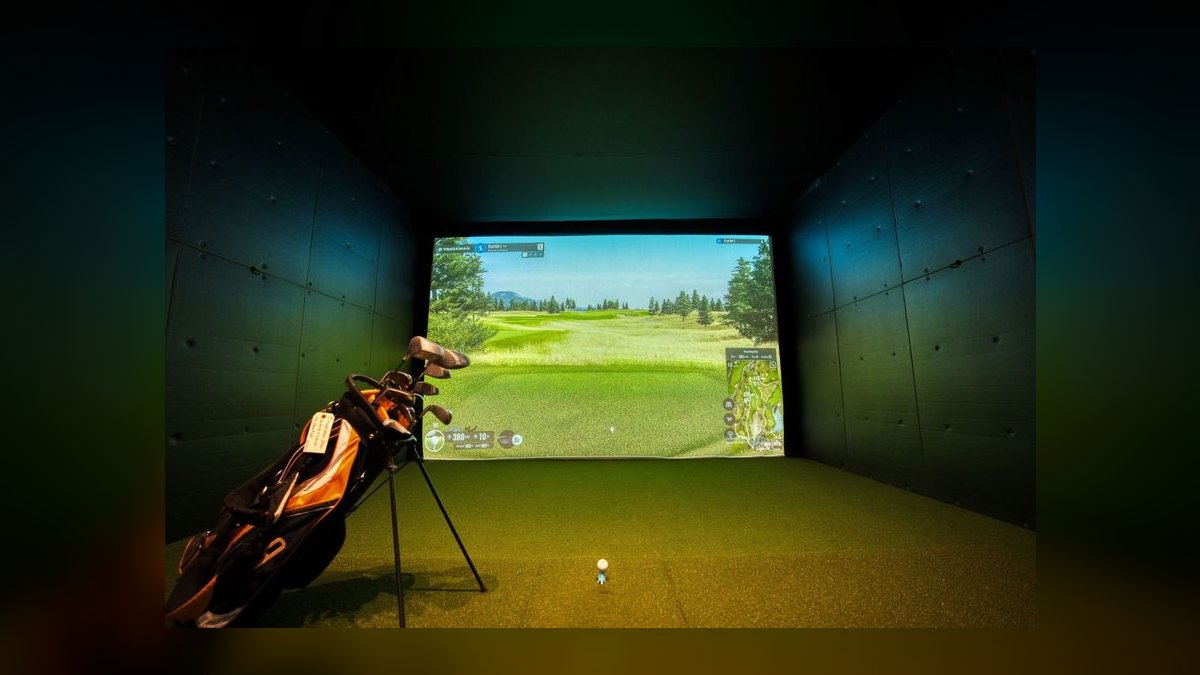
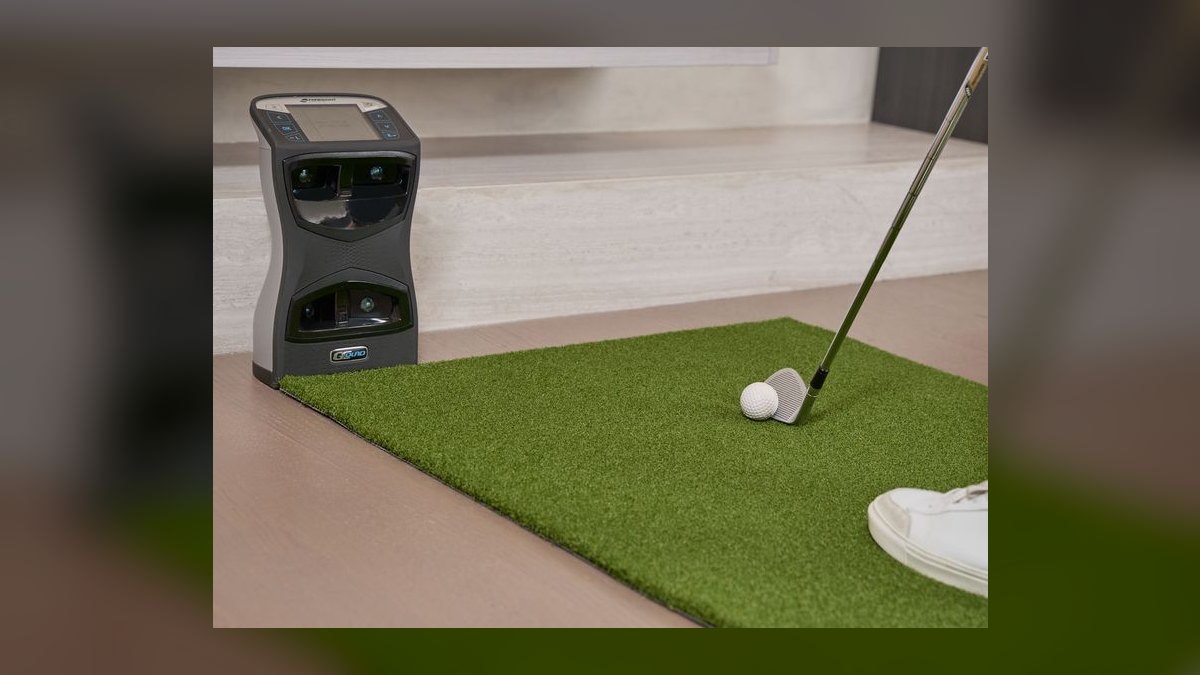
The honest fourth option, which most people arrive at after running the numbers, is not BigShots at all. Indoor simulator-and-bar concepts — the X-Golf and Five Iron category — deliver comparable exposure to the golf-entertainment thesis for roughly $1,200,000 to $4,000,000, fit into second-generation retail or industrial space, and can be operated by a working owner with a general manager. If your capital ceiling is under $5,000,000, that comparison is not a consolation prize; it is the correct answer.
Where BigShots sits against Topgolf, Drive Shack, PopStroke, and the indoor players
BigShots positions itself as the more accessible outdoor format in a category Topgolf defined and still dominates. The distinction that matters commercially is footprint. A Topgolf venue is typically a 60,000-to-100,000-square-foot building on 10 to 15 acres; BigShots targets a smaller building on a materially tighter parcel. Less land and less vertical structure means lower total development cost and — critically — a lower break-even utilization rate. A venue that must fill 40% to 50% of its bay-hours to cover fixed cost has a far wider survivable market than one that must fill 55% to 65%. That single ratio explains why the smaller format can work in a metro that could not support the larger one.
The revenue mix also differs. A BigShots-style venue generally earns roughly 40% to 50% of revenue from bay rentals, 30% to 40% from food and beverage, and 15% to 25% from private events, corporate outings, and league play. Topgolf skews more heavily toward food and beverage because of its larger kitchen and bar throughput. This is not a footnote — it changes who should own the business. A bay-weighted mix rewards operators who are good at pricing, yield management, and reservation systems. A food-and-beverage-weighted mix rewards operators who are good at running restaurants. Whichever way your venue leans, you need genuine capability there, because the weaker half of the P&L is where these projects die.
Drive Shack occupies similar territory with heavy emphasis on gamification and technology, at a comparable $8,000,000-to-$15,000,000 development cost. PopStroke, built around putting courses rather than driving bays, runs lighter — call it $3,000,000 to $8,000,000 — but serves families and casual visitors rather than golfers working on ball flight. Five Iron and X-Golf sit at the bottom of the capital ladder with indoor simulators, no netting, no earthwork, no weather exposure, and no range at all. Each of these is a different bet: on real estate, on technology, on family traffic, or on urban convenience. Pick the one your capital and your operating skill actually match.
BigShots' structural advantage is its association with the Invited golf ecosystem — a large owner-operator of private clubs with deep golf operations experience and an existing membership base to cross-promote against. For a franchisee, that translates into real operational support: agronomy, food-and-beverage systems, event sales playbooks, and a brand golfers recognize. The trade is standardization. You will run their systems, hit their brand standards, and have less latitude on local marketing than an independent operator would. In markets where Topgolf is already open and mature, expect a BigShots venue to see meaningfully lower per-bay revenue — the mid-teens to mid-twenties percent range is a reasonable planning assumption — offset by the lower fixed cost base.
How to decide, in the order the decisions actually bind
Run the gates in sequence and stop at the first hard no. The most common failure pattern in this category is spending $200,000 on site work and design before confirming that the capital stack closes.
Gate one is capital, not enthusiasm. You need the full development budget plus a working capital reserve of $500,000 to $1,000,000 beyond it. That reserve is not optional padding — the first 12 to 18 months typically run at negative EBITDA while the venue climbs from roughly 30% to 40% of capacity toward 60% to 80% by year two. Projects that fund construction but not the ramp fail in month nine with a full parking lot on Saturdays and no cash on Tuesdays.
Gate two is the operating team. Somebody in your group must have run a $5,000,000-plus food-and-beverage operation. Not a restaurant investment — an operation. Hospitality turnover in this segment routinely runs 60% to 80% annually, and a venue that cannot keep a kitchen staffed will bleed margin no matter how good the bays are.
Gate three is the market. You want a daytime population of roughly 250,000 to 500,000 within a 15-minute drive, median household income above about $80,000, corporate density sufficient to fill weekday event slots, and — this one gets skipped constantly — enough favorable outdoor weather days. Below roughly 200 good-weather days a year, expect bay utilization 20% to 30% under Sun Belt comparables. That is not a rounding error; it is the difference between a good return and a workout.
Gate four is the site and its entitlements. Commercial entertainment zoning with permission for outdoor lighting and amplified music is the long pole. Municipalities that have never permitted a lit driving range next to housing will take 3 to 6 months longer than your pro forma assumes, and neighborhood opposition to light spill and netting height is the single most common reason these projects stall.
The numbers behind each path
Treat these as planning ranges drawn from category economics, not as a substitute for the current Franchise Disclosure Document. The FDD is the only authoritative source on fees, and you must read Item 7 and Item 19 yourself before committing anything.
Development budget, full format. The franchise or development fee typically falls in the $75,000 to $250,000 band depending on the agreement and territory. Land or build-to-suit runs $2,000,000 to $7,000,000-plus — suitable parcels in growing metros price roughly $500,000 to $3,000,000, with the Southeast and Southwest currently the most favorable. Bays, ball-tracking technology, and target systems run $1,000,000 to $3,500,000. Restaurant and bar buildout adds $1,000,000 to $2,500,000. Furniture, fixtures, equipment, point-of-sale, and audiovisual add $300,000 to $1,200,000. Initial regional marketing runs $100,000 to $400,000. Working capital for the opening period is $400,000 to $1,200,000.
The line items people forget. Geotechnical work, environmental assessment, and stormwater management: $150,000 to $400,000. The netting structure alone — engineered for local wind load, 80 to 120 feet tall — runs $300,000 to $800,000, and adds 15% to 25% in hurricane-prone or high-wind regions. Hitting-bay turf systems cost roughly $40,000 to $60,000 per bay and need replacement every 3 to 5 years, which on a 20-bay venue is a recurring $800,000-to-$1,200,000 capital event you must sink into the model from day one. Technology refresh on tracking and gamification hardware lands every 5 to 7 years at $200,000 to $500,000 — negotiate those terms into the franchise agreement rather than discovering them later.
Revenue and margin. A 20-bay venue with a 6,000-to-8,000-square-foot restaurant can plan on first-year gross revenue of roughly $3,500,000 to $5,500,000, growing toward $5,000,000 to $8,000,000 by year three as awareness builds. Mature venues across the category gross $4,000,000 to $10,000,000-plus. Contribution margins differ sharply by line: bay rental margin runs 80% to 85% once equipment is amortized, food and beverage gross margin 65% to 70%, and event revenue 50% to 60% after staffing and setup.
Operating cost structure. Food and beverage cost of goods sold at 30% to 35% of food and beverage revenue. Labor at 30% to 35% of total revenue. Occupancy — rent or debt service, taxes, insurance — at 15% to 20%. Marketing at 5% to 8%. Royalty in the 5% to 6% range plus a marketing fee around 2%, both on gross sales. That leaves mature EBITDA margins of roughly 15% to 25%, or $750,000 to $2,000,000 annually for a venue performing well.
Against the alternatives. An indoor simulator venue at $1,200,000 to $4,000,000 produces a much smaller absolute EBITDA but a comparable or better return on invested capital, opens in 6 to 9 months instead of 18 to 24, carries no weather risk, and can be financed by a single family office or an SBA-adjacent structure rather than a syndicate. If your objective is exposure to golf entertainment as a category rather than ownership of a landmark, the arithmetic frequently favors the smaller box — and it favors it more once you weight for construction-overrun risk, which is the dominant variance in every ground-up entertainment project.

The stress test that matters. Model a 20% revenue decline. Comparable golf-entertainment concepts saw revenue drops in the 15% to 25% range during the 2008 downturn, with recovery generally inside 18 to 24 months. A venue at $6,000,000 of revenue with 20% EBITDA has roughly $1,200,000 of cash flow; strip 20% of revenue and most of that margin evaporates because labor and occupancy do not flex proportionally. If your debt service does not survive that scenario with a covenant cushion, you are not conservatively capitalized — you are lucky, and only so far.
Sequencing the build, and what runs in parallel
The order of operations determines how much money you put at risk before you know whether the project is real. Optioning land rather than buying it, and staging design spend behind entitlement milestones, is what separates a disciplined developer from a hopeful one.
Start with the capital stack and the operating partner, because both take longer to assemble than people expect and both are prerequisites to a credible conversation with the franchisor. Engage the BigShots and Invited development team early to understand territory availability, format options, and development terms — territory is often the binding constraint, and finding out that your target metro is committed after you have spent on site work is an avoidable loss.
Site control comes next, and it should be an option or a contingent purchase agreement, never an outright buy, until entitlements are cleared. Run zoning, lighting, and sound approvals in parallel with geotechnical and environmental diligence. Community outreach belongs in this window too — the objections you will face are light spill, noise, traffic, and netting height, and addressing them before the public hearing is materially cheaper than fighting them at it.
Financing closes against an entitled site with a signed development agreement. Construction runs 12 to 18 months; bay technology and kitchen fit-out are the long-lead items and should be ordered well ahead of the general contractor's stated need date. Hiring starts roughly 8 to 10 weeks before opening, with the kitchen and event-sales roles filled first — event sales in particular must be selling before the doors open, since corporate bookings run a 60-to-90-day lead and an empty weekday calendar in month one is very hard to recover.

Then comes the part nobody budgets emotionally for: the ramp. Two to four years to stabilization is normal. Year one is a novelty spike followed by a trough as the opening crowd disperses. Your job in that trough is league play, corporate recurring bookings, and a food-and-beverage offer good enough that people come for dinner without hitting balls. The venues that stabilize fastest are the ones that treat themselves as restaurants with a range attached rather than ranges with a kitchen attached.
Adjacent plays worth modeling before you commit
Golf entertainment is one expression of a broader thesis — that consumers will pay for social, food-anchored, gamified experiences — and the same thesis supports several structures with very different capital profiles. Running two or three of these side by side clarifies whether you want the golf specifically or the category generally.
Mixed-use integration. Golf-entertainment venues embedded in larger developments alongside hotels, residential, or retail have generally shown better revenue per square foot than standalone locations, because they capture tourist and resident traffic in addition to destination visits. If you can partner with a hotel developer or an existing mixed-use landlord, the land basis can drop substantially and the venue becomes an amenity that improves the rest of the project — which sometimes makes the landlord a willing contributor to the buildout.

Sequencing small to large. Some operators open an indoor simulator venue first, learn the food-and-beverage and event-sales muscles at a $2,000,000 risk level, and only then pursue an outdoor complex. This is slower but dramatically de-risks the big build, and it produces an operating track record that lenders and franchisors both value.
Other experiential formats. Pickleball clubs, axe throwing, competitive socializing venues, and bowling-adjacent concepts share the same revenue architecture — a rented activity block plus a bar. The capital ranges span from a few hundred thousand dollars to several million. If your real advantage is running hospitality rather than a specific love of golf, the format is a variable, not a constant.
Building independent. You can develop an unbranded range-entertainment venue and keep the 7% to 8% of gross that would otherwise go to royalty and marketing fees. What you give up is the brand recognition that fills bays in month one, the operating systems, the technology vendor relationships, and the credibility that helps with financing. For most first-time developers in this category, the franchise fee buys real risk reduction. For an experienced hospitality group with an existing local brand, independence often pencils better.
Related questions
How long until a BigShots-style venue reaches stabilized profitability?
Plan on two to four years. The first 12 to 18 months typically run at negative EBITDA as the venue climbs from roughly 30–40% of capacity toward 60–80% by year two. Fund that gap with dedicated working capital, not with hope.
Can a single individual own and operate one of these venues?
Realistically, no. The capital requirement, the construction management, and the hospitality payroll all exceed what a working owner can carry alone. Individuals wanting golf-entertainment exposure should evaluate indoor simulator franchises at $1.2M–$4M instead.
What kills these projects most often?
Construction overruns and entitlement delays, followed by under-capitalized ramps. Every one of these is a pre-opening failure, which is why disciplined developers option land rather than buy it and stage design spend behind approval milestones.
Does weather really change the investment case?
Substantially. Markets with fewer than roughly 200 favorable outdoor days per year can see 20–30% lower bay utilization than Sun Belt comparables. Covered and heated bays mitigate this partially but add cost and never fully close the gap.
How much of the return comes from real estate versus operations?
Often more than owners expect. If you own the land, a meaningful share of total return is the real estate itself. Underwriting the deal as entertainment real estate development — with an operating business attached — is the correct frame.
FAQ
What is the total investment to open a BigShots Golf franchise?
Roughly $5,000,000 to $15,000,000 or more depending on format and market, covering the franchise or development fee, land or build-to-suit, bays and tracking technology, restaurant buildout, furniture and equipment, launch marketing, and working capital. Confirm current figures in Item 7 of the Franchise Disclosure Document, which is the only authoritative source.
How much revenue does a location generate?
Mature venues in this category gross roughly $4,000,000 to $10,000,000-plus annually. A 20-bay venue with a full restaurant can plan on $3,500,000 to $5,500,000 in year one, growing toward $5,000,000 to $8,000,000 by year three. Revenue splits across bay rentals, food and beverage, and events, with events providing the most predictable weekday volume.
What are the ongoing fees?
A royalty and a marketing fund contribution, both calculated on gross sales — category norms run roughly 5% to 6% royalty plus about 2% marketing. Exact percentages, territory terms, and technology-refresh obligations are set in the franchise agreement and disclosed in the FDD; negotiate the capital-expenditure language before signing.
Is this a good fit for an owner-operator?
No. This is destination-entertainment development suited to capitalized investor groups, hospitality companies, and real estate developers with construction management capability. An individual buyer seeking the same category exposure should look at indoor simulator concepts, which open faster, cost a fraction as much, and can be run by a working owner with a general manager.
How does it compare to Topgolf?
BigShots targets a smaller footprint on less land, which lowers development cost and lowers the bay-utilization rate required to break even. That widens the set of markets it can serve. Topgolf runs larger venues with a heavier food-and-beverage mix. In markets where a mature Topgolf already operates, expect meaningfully lower per-bay revenue.
What site does the venue require?
Several acres of commercially zoned land permitting a driving range, restaurant, and event space, with approvals for outdoor lighting and amplified music. High visibility from a major corridor matters. Netting towers of 80 to 120 feet drive engineering cost and are the most common trigger for neighborhood opposition, so test entitlement feasibility before committing capital.
Sources
- https://www.bigshotsgolf.com/
- https://www.invitedclubs.com/
- https://www.ftc.gov/business-guidance/resources/franchise-rule-compliance-guide
- https://www.sba.gov/business-guide/manage-your-business/buy-franchise
- https://www.ngf.org/
- https://www.franchise.org/
- https://www.ibisworld.com/united-states/market-research-reports/golf-courses-country-clubs-industry/
- https://www.iaapa.org/
- https://www.topgolf.com/us/
- https://www.statista.com/topics/1672/golf/
Related on PULSE
- [Should I open or buy a Five Iron Golf franchise in 2027?](/knowledge/fr0669)
- [Should I open or buy an X-Golf indoor golf franchise in 2027?](/knowledge/fr0668)
- [Should I open or buy a Topgolf franchise in 2027?](/knowledge/fr0670)
- [Should I open or buy a pickleball club franchise in 2027?](/knowledge/fr0671)
- [Should I open or buy an axe throwing franchise in 2027?](/knowledge/fr0672)
 pulse-toolsHow Many Staff Should I Schedule Each Shift Across My Food Truck Fleet?
 pulse-toolsHow Many Sales Reps Do I Need to Hire for My Office Furniture Dealership?
 tlHow Many Sales Reps Do I Need to Hire for My Merchant Services Company?
 tlHow Many Sales Reps Do I Need to Hire for My Landscaping Company This Year?
 pulse-toolsHow Many Employees Should I Schedule Each Shift at My Movie Theater?
 pulse-toolsHow Many Budtenders Should I Schedule Each Shift at My Cannabis Dispensary?
 pulse-toolsHow Many Cashiers Should I Schedule Each Shift at My Convenience Store Chain?
 pulse-toolsHow Many Sales Reps Do I Need to Hire for My Window Replacement Company?
 tlHow Many Baristas Should I Schedule Each Shift at My Coffee Shop?
 pulse-toolsHow Many Employees Should I Schedule Each Day at My Wine Shop?