


Should I open or buy a Fox’s Pizza Den franchise in 2027?
Quality
Certified

Buy or open a Fox's Pizza Den only if you want a low-cost, hands-on carryout pizza shop in a small town. Entry runs roughly $150,000–$400,000 with a flat weekly royalty near $200 instead of a percentage, which rewards volume. Skip it for metro markets, dine-in polish, or absentee ownership.
The town where the math actually works
Picture a county seat of 9,000 people forty minutes from the nearest interstate exit. There is a Subway, a Mexican place that closes at eight, a gas station that sells rollers, and a pizza shop that shut down two years ago when the owner retired and nobody bought the equipment. The high school plays home football games eight Friday nights a year. There is a Little League complex, two churches with Wednesday night dinners, and a manufacturing plant with about 200 second-shift employees who get off at 11 p.m. and have nowhere to eat.
That is the Fox's Pizza Den thesis in one paragraph. The brand, founded in 1971, was built to serve exactly this market: towns big enough to sustain a pizza habit but too small for Domino's, Papa John's, or Pizza Hut to bother fighting over. The 2026 FDD indicates the majority of Fox's locations sit in communities under roughly 20,000 people, with a meaningful share in rural counties where the nearest national competitor is a twenty-minute drive. That is not a weakness of the system. It is the system.
Now run the same thesis in a metro suburb of 60,000 with four national pizza chains, two local artisan shops, three ghost kitchens on DoorDash, and a Costco selling an 18-inch pie for under ten dollars. Fox's has no national ad fund to help you fight that. It has no proprietary app ecosystem to sit on customers' phones. Its brand recognition outside its Appalachian and Midwestern core is thin. The same low-cost model that makes you the obvious choice in the county seat makes you the invisible fifth option in the suburb.
So the honest framing is not "is Fox's a good franchise." It is "do I have access to the kind of market where this specific model wins, and am I willing to be the person standing at the make line in that market?" If you can answer yes to both, the economics are genuinely favorable — arguably among the most capital-efficient entries in the pizza category. If either answer is no, almost every dollar of the advantage evaporates and you are left with a no-frills brand competing against companies that outspend you a thousand to one on marketing.
A useful pre-work exercise before you ever request a franchise application: drive the market you are considering on a Friday at 6 p.m. Count the cars in the parking lots of every place that sells hot food. Call the two busiest and ask how long the wait is. If everybody in town is waiting thirty minutes for mediocre food, you have found demand. If the lots are half empty at peak, no franchise agreement is going to fix that.
How the flat royalty actually changes the economics
Nearly every franchise you will look at charges a percentage royalty — commonly 4% to 6% of gross sales, plus a separate marketing fund contribution of 2% to 4%. That structure has a specific consequence: your franchisor's cut grows in lockstep with your success. Sell more, pay more, forever.
Fox's uses a flat weekly fee, historically around $200 per week per store, with minimal or no separate national marketing assessment depending on the agreement in force. Confirm the exact figure and any escalator clauses in Item 6 of the current FDD — do not take a number from an article, including this one, as gospel. But the structural point holds regardless of the precise dollar amount: a fixed fee converts what is normally a variable cost into a fixed one.
Work the arithmetic. At $350,000 in annual sales, a flat $200/week costs you $10,400, or about 3.0% of revenue — cheaper than a 5% royalty but not dramatically so. At $500,000, that same $10,400 is 2.1%. At $700,000, it is 1.5%. Against a hypothetical 5% royalty plus 3% ad fund (8% combined), a $700,000 store would pay $56,000 a year. Fox's would take $10,400. The gap is roughly $45,000 in retained cash flow annually, and on a store where owner earnings might otherwise be $80,000, that gap is not a rounding error — it is the majority of your take-home.
The corollary is uncomfortable and worth sitting with: the flat royalty penalizes weak stores. A percentage royalty is a partnership in the downside. If your store limps along at $220,000 in sales, a 5% franchisor takes $11,000 and feels the pain with you. Fox's takes its $10,400 whether you did $220,000 or $820,000. On a struggling store, that fixed fee becomes a proportionally heavier burden every month you underperform.
This is why the flat-royalty structure should push your entire operating philosophy toward volume. Extended hours to catch the second-shift plant crowd. Aggressive catering into schools, sports leagues, and church functions. Large-format family bundles. Anything that adds incremental transactions costs you food and labor but zero incremental royalty. In a percentage-royalty system, chasing a marginal $50,000 in catering revenue hands the franchisor $2,500 of it. Here it hands them nothing.
The trade you are accepting for that fee structure is support. A percentage royalty funds field consultants, R&D, national media buys, app development, and supply-chain leverage. A flat $200/week does not fund any of that at scale. Fox's provides a training program at an existing store, an operations manual, proprietary dough and sauce specifications through approved supply channels, and a phone number. Marketing, staffing, local pricing, and delivery logistics are your problem. Franchisees who expect a corporate machine behind them are consistently the ones who report disappointment; franchisees who wanted a proven recipe set, a recognizable sign, and to otherwise be left alone tend to be satisfied.
Real numbers: what you spend, what you make, what you keep
Treat every figure below as a planning range to be verified against the current FDD, not as a promise. Item 7 gives you the investment estimate, and Item 19 — if the brand publishes a Financial Performance Representation — is the only sales data that carries any legal weight. Everything else, including owner conversations, is anecdote you should collect widely and weight carefully.
Total investment. Recent disclosures put the initial franchise fee near $12,000, which is among the lowest in the pizza category — many competitors sit at $25,000 to $45,000. Total Item 7 investment lands roughly between $150,000 and $400,000. The spread is almost entirely driven by real estate condition. A second-generation restaurant space with usable hood, grease trap, and three-phase power might cost $60,000 to convert. Raw retail shell with no plumbing or ventilation can run $200,000 before you have made a single pizza. Hunt relentlessly for former restaurant space.
The line items. Buildout and leasehold improvements typically absorb $60,000 to $200,000. Equipment and POS — deck or conveyor ovens, walk-in cooler, dough mixer, prep tables, register system — run $60,000 to $140,000 new, with used equipment from restaurant auctions or a closing shop often available at 40% to 60% of new cost. Signage and decor: $10,000 to $30,000. Opening inventory: $8,000 to $18,000. Grand opening marketing: $8,000 to $25,000. Training and travel for you and a key employee: $4,000 to $12,000. Working capital for the first three months: $20,000 to $60,000, and this is the line first-timers most often shortchange.
Revenue. Mature stores commonly gross $350,000 to $800,000 annually. That is a wide band and the width is the point — a Fox's in a town of 4,000 with no competition might do $320,000 and be a comfortable one-person livelihood, while a well-run store on a highway in a town of 22,000 with strong catering can push past $700,000. Ask every owner you interview for their actual annual gross, not a "typical" number, and ask what year they opened.
Cost structure. Food cost in pizza typically runs 28% to 32% of sales, and pizza is generously forgiving here because flour, sauce, and cheese carry high markup relative to a steak house or a burger concept. Labor in these markets often lands 25% to 30%, helped by small-town wage scales in the $11 to $15 range depending on state minimum and local competition. Occupancy is the quiet superpower: rent on 1,200 to 1,800 square feet in a town of 10,000 can be $1,500 to $3,000 per month, meaning occupancy runs 4% to 7% of sales instead of the 10% to 12% a metro operator eats. Utilities for pizza are meaningful — ovens run hot all day — budget $1,500 to $3,000 monthly depending on climate and equipment age.
Owner earnings. After food, labor, occupancy, the flat royalty, insurance, utilities, supplies, and repairs, an owner-operator working the store typically clears somewhere in the $50,000 to $140,000 range, with $60,000 to $90,000 being a realistic expectation at $500,000 in sales and $100,000 to $130,000 achievable above $700,000. Read that as combined salary and profit — a large share of it is compensation for the 50 to 60 hours a week you are physically present, not a passive return on capital. If you hire a full-time general manager at $45,000 to $60,000 plus payroll taxes to replace yourself, most of the profit goes with them.
Buying existing versus opening new. An existing store with a proven sales history often transacts at a multiple of seller's discretionary earnings — small food-service businesses commonly trade in the two-to-three-times SDE neighborhood, though every deal is negotiated on its own facts. A store earning $80,000 in SDE might therefore be priced somewhere in the $160,000 to $240,000 range, plus a transfer fee to the franchisor. That can land below the cost of building new while eliminating the twelve-to-eighteen-month ramp — an enormous advantage. The offsetting risk is inherited: tired equipment, a damaged local reputation, a lease with three years left and no renewal option, or a seller whose sales are declining for reasons they will not volunteer. Demand three years of tax returns, not a spreadsheet. Reconcile them against POS reports and bank deposits.
Financing. SBA 7(a) loans are the standard path for franchise restaurant acquisitions, generally requiring meaningful equity injection from the borrower and a personal guarantee. Fox's low total investment makes the loan size modest, which some lenders find easier to underwrite and others find too small to bother with. Local and regional banks in the markets Fox's serves are often more willing than national lenders. Some buyers use home equity or a ROBS structure to deploy retirement funds — legal, but it converts protected retirement assets into at-risk business capital, and you should get independent advice before doing it.
What the week actually looks like
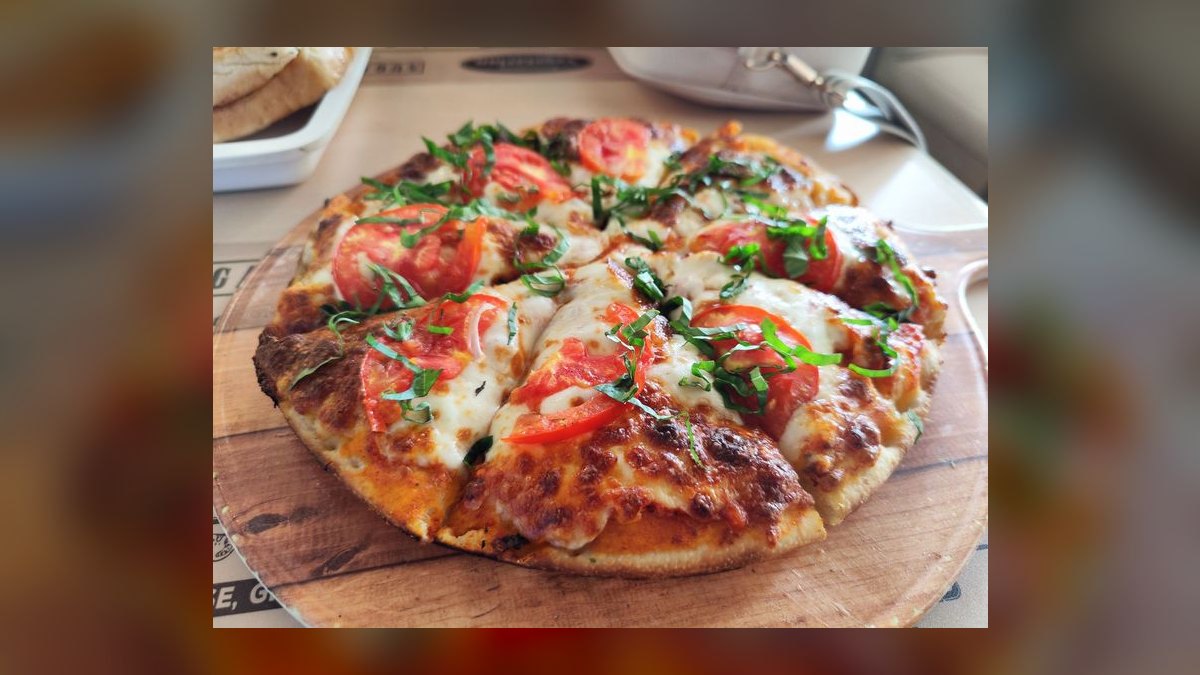
There is a version of franchise ownership sold in webinars where you review dashboards and hire your way out of the daily grind. Fox's is not that. The low fee structure exists precisely because the model assumes an owner in the building.
A representative week: Monday and Tuesday are ordering, scheduling, invoice reconciliation, and payroll. Product comes through approved supply channels — the dough and sauce specifications are proprietary, which is a genuine quality control benefit and also means you cannot shop those items on price when your margins tighten. Wednesday through Saturday is the floor: making pies, running the oven, training whoever quit, handling the customer whose order went out wrong, closing the register. Sunday is prep — sauce batches, dough proofing, deep clean, and the two hours of paperwork you did not do during the week.
Staffing is lean by design. Most shifts run two to three people: one on the make line, one on the oven and cut table, one on register and phones. In a town where everybody knows everybody, your labor pool is high school students, retirees who want twenty hours, and neighbors between jobs. Turnover can be lower than a metro store, but the pool is finite — if the plant is hiring at $19 an hour, your $13 counter job gets hard to fill, and there is no adjacent neighborhood to recruit from. Build relationships with the high school's work-study coordinator early.
Delivery is the operational decision that swings your economics most. Third-party marketplaces charge commission rates commonly in the 15% to 30% band, which on a category with 28% to 32% food cost can erase the profit on a delivered order entirely. Self-delivery avoids that but puts you into hired-driver insurance, vehicle wear, and the scheduling headache of covering Friday night with drivers who may or may not show. In a town where the whole delivery radius is five to seven miles, self-delivery is usually the right call — short runs, low fuel cost, and the driver doubles as a prep hand between deliveries. In a more spread-out rural county, delivery may not pencil at all and a carryout-only model with a strong pickup window is the better shape.
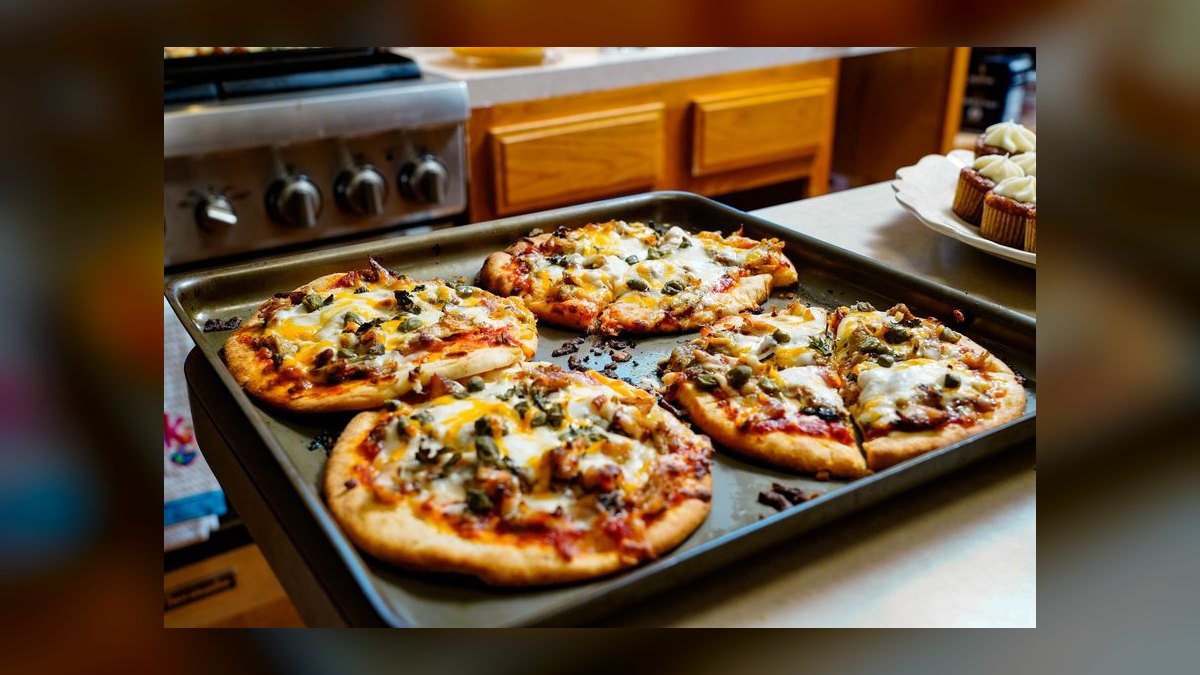
The adjacent revenue streams are where small-town operators separate themselves. School fundraiser nights where a percentage of sales goes to the band program buy you a hundred families' loyalty for the cost of a Tuesday's margin. Standing orders for a plant's Friday shift meeting. Concession partnerships at the ballfield. Party packages for birthday season. None of these require corporate approval or an ad fund — they require you to be a known person in town, which is a real skill and one that not every capable operator possesses.
Trade-offs, alternatives, and the honest comparison set
Fox's is one answer to a question, and you should know what the other answers cost.
Other value pizza franchises. Little Caesars offers vastly stronger brand recognition and a hot-and-ready model built for throughput, but with materially higher total investment and a percentage royalty plus ad fund. Hungry Howie's, Marco's, and Jet's each sit at different points on the investment-versus-support curve; all of them bring more marketing infrastructure and more ongoing cost. Pizza Factory and regional players like Mountain Mike's or Round Table target family dine-in rather than pure carryout, which changes your square footage, your labor model, and your rent. The general shape: as you move up the brand-strength ladder, you buy customer awareness and operational systems, and you pay for them in both upfront capital and permanent percentage-of-sales.
Independent pizzeria. No franchise fee, no royalty ever, complete control of recipes, pricing, and menu. You also get no proven operating system, no supply relationships negotiated on your behalf, no recognizable sign, and a learning curve you pay for in the first eighteen months of mistakes. For an experienced pizza operator who has already run someone else's shop for five years, independent is frequently the better math. For a career-changer who has never run a kitchen, the $12,000 fee and the operations manual are cheap tuition.
Adjacent low-capital food concepts. If what attracts you is the low entry cost rather than pizza specifically, the same $150,000 to $300,000 opens doors in sandwich, coffee, ice cream, and quick-casual categories — each with different labor intensity, different daypart concentration, and different seasonality. Pizza's advantage is a durable dinner daypart and high food margin. Its disadvantage is that Friday and Saturday nights are non-negotiable, forever, which is a genuine lifestyle cost that people underweight during due diligence and resent by year three.
Non-food small-business alternatives in the same towns. Worth naming because the real comparison is often not pizza versus pizza. The same capital and the same small-market thesis apply to home services, self-storage, laundromats, and light industrial service businesses — several of which have lower labor intensity and no perishable inventory. If your attraction to Fox's is "I want to own something in my hometown," widen the search before you narrow it. If your attraction is "I love feeding people and I want a shop with my name on the door," then pizza is the right category and Fox's is a legitimate low-cost entry into it.
The pitfalls that actually sink these stores
Undercapitalizing working capital. The single most common failure. Owners budget precisely enough to open and nothing for the six to twelve months of ramp while the town learns you exist. Carry six months of full operating expenses in reserve beyond the FDD's working capital line, not three.
Taking a bad lease to save on rent. A cheap space with no drive-by traffic, no parking, or a hard-to-see sign costs more in lost volume than you saved in rent. In small towns, the difference between the main highway corridor and a side street two blocks off is often 30% or more of your sales. Negotiate the term, not just the rate — get renewal options so a successful store cannot be held hostage at renewal.
Believing the seller's numbers when buying existing. Cash-heavy small restaurants have a long tradition of creative accounting in both directions. If the seller tells you the tax returns understate reality, the correct response is that you can only buy the business that appears on the returns. Verify against POS exports, bank statements, and supplier invoices — food purchases are hard to fake and a rough sales estimate falls out of them.
Expecting franchisor rescue. With no meaningful ad fund and no field consultant network, nobody is coming to save a slow store. Marketing is you: the school partnerships, the ballfield sign, the plant catering call, the Facebook page you actually update. Operators who treat the franchise agreement as a subscription to someone else's growth engine are consistently disappointed.
Fighting a price war you cannot win. National chains run loss-leader promotions funded by scale you do not have. Competing on the lowest advertised price is a losing posture. Compete on portion, consistency, speed, and the fact that the person handing over the box coaches the kid's team.
Skipping the franchisee interviews. Item 20 of the FDD lists current and former franchisees with contact information. Call at least eight current owners and every former owner you can reach. Ask former owners why they left — that conversation is worth more than any brochure. Ask current owners about real gross sales, their actual take-home, what they'd do differently, and whether they'd sign again.
Ignoring the exit. A single-unit small-town pizza shop has a limited buyer pool. Plan the exit at entry: keep clean books from day one, get the lease assignable, keep equipment maintained, and understand the franchisor's transfer fee and approval process before you need it. Businesses that transfer smoothly are the ones with three years of tidy tax returns and a documented operating system, not the ones run out of the owner's head.
Underestimating equipment replacement. Deck ovens, walk-ins, and mixers have finite lives. Set aside 1% to 2% of sales annually for capital replacement from year one, or year six will present you with a $25,000 surprise at the worst possible moment.
Related questions
How does buying an existing Fox's compare to opening a new one?
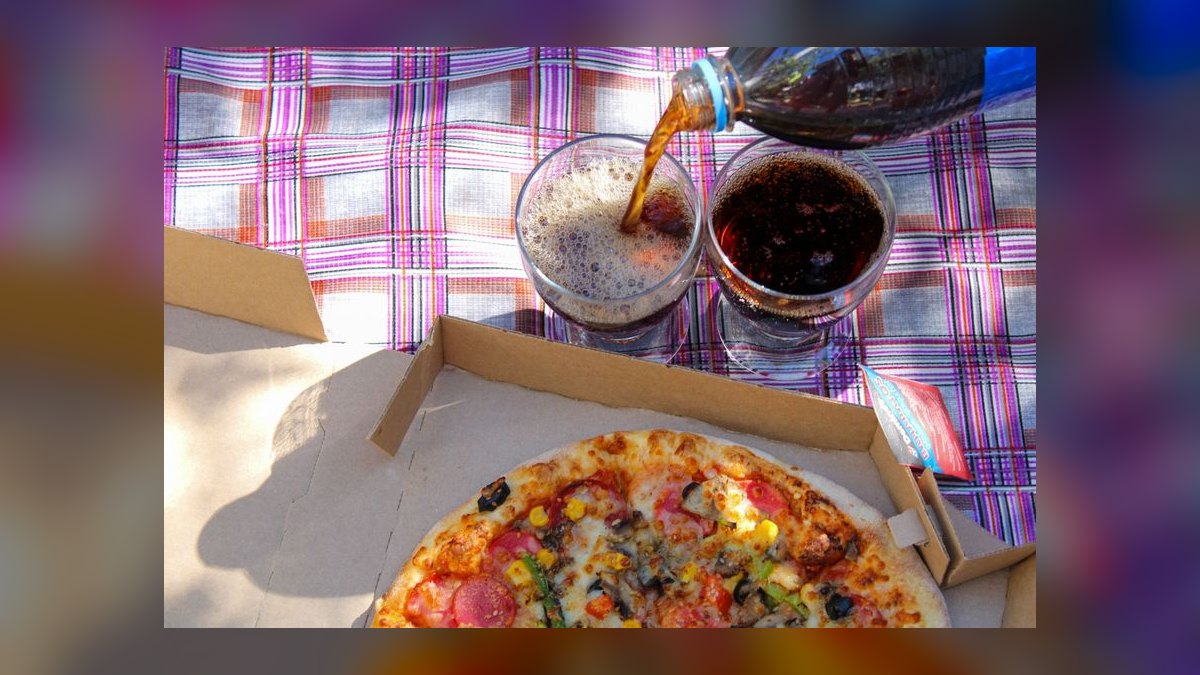
An existing store eliminates the twelve-to-eighteen-month ramp and comes with verifiable sales history, often at or below new-build cost. The risks are inherited: aging equipment, short lease terms, and declining trends the seller won't disclose. Demand three years of tax returns.
Can I own a Fox's Pizza Den semi-absentee?
Realistically, no. The flat-royalty model exists because corporate support is minimal, and the margin structure assumes owner labor. Replacing yourself with a $50,000-plus general manager consumes most of the profit at typical volumes. Plan on being in the building.
What population size does this model need?
Most locations sit in communities under roughly 20,000, with many between 5,000 and 25,000. The threshold isn't purely population — it's population plus traffic patterns, competitive density, and whether the town has gathering occasions like school sports that drive group ordering.
How much liquid cash do I need beyond the loan?
Plan on $50,000 to $120,000 liquid depending on build scope, plus six months of operating expenses in reserve. Lenders will require an equity injection, and undercapitalized working capital is the most frequent cause of early failure in this category.
Does the flat royalty ever increase?
Check Item 6 of the current FDD for the exact fee and any escalation provisions or CPI adjustments. Never assume a figure quoted in an article or by another franchisee reflects the terms in the agreement you would sign today.
FAQ
What is the total investment range for a Fox's Pizza Den franchise?
Recent FDD disclosures place total initial investment roughly between $150,000 and $400,000, including an initial franchise fee near $12,000. The range is driven mainly by real estate condition — converting a second-generation restaurant space costs far less than building out a raw retail shell requiring new plumbing, ventilation, and electrical service.
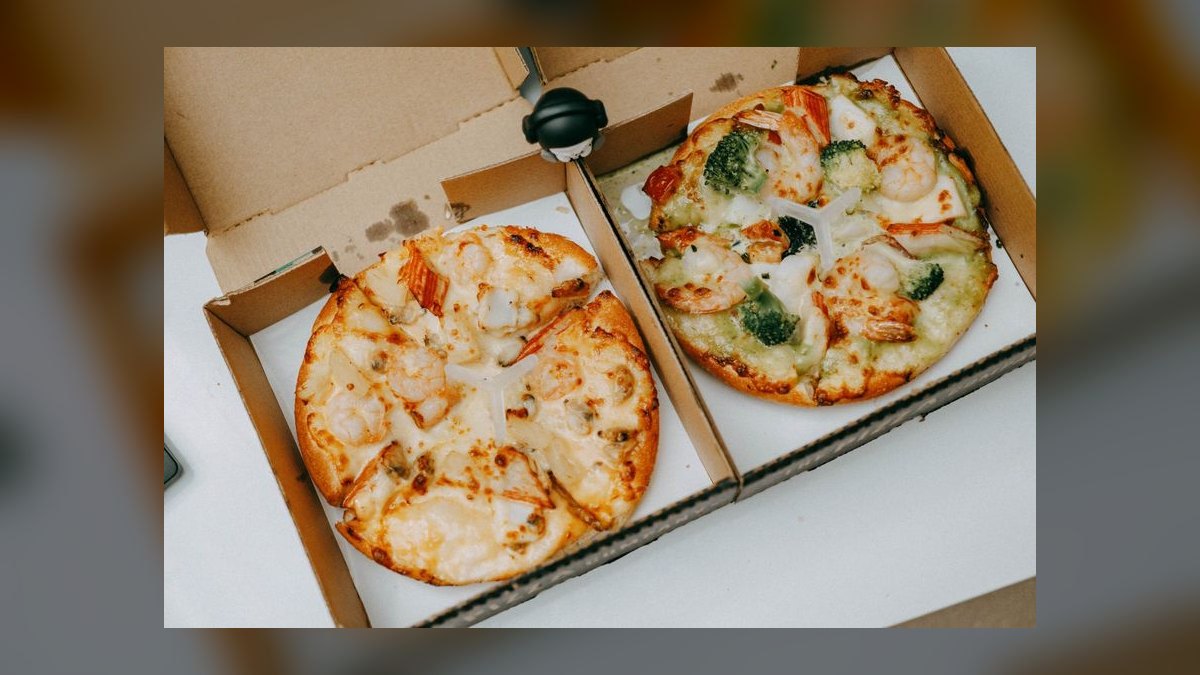
How much can an owner realistically expect to earn?
Mature stores commonly gross $350,000 to $800,000 annually, with owner-operator earnings falling in a $50,000 to $140,000 band. At roughly $500,000 in sales, $60,000 to $90,000 is a reasonable planning figure. Understand that most of this is compensation for full-time owner labor, not passive return on invested capital.
Why does the flat royalty matter so much?
A flat weekly fee near $200 converts a normally variable cost into a fixed one. At $700,000 in sales it works out near 1.5% of revenue, versus 8% or more for a percentage royalty plus ad fund elsewhere — potentially tens of thousands in retained cash annually. The same structure hurts on a low-volume store, where the fixed fee is a heavy percentage of thin sales.
Is this brand viable in a metro or suburban market?
Generally no. The model depends on low occupancy cost, low wage scales, and weak competitive density. In a metro with four national chains and heavy third-party delivery penetration, a brand with no national ad fund and limited regional awareness has no realistic path to the volume the economics require.
How long does it take to open?
Three to six months from signed agreement to opening is typical, driven by site selection, permitting, and buildout. Second-generation restaurant space with existing hood and grease trap moves fastest; municipal permitting timelines in rural counties vary widely and are worth confirming with the local building department before you sign a lease.
Do I need prior restaurant experience?
Not formally, and training at an existing store plus the operations manual make it accessible to career-changers. But hands-on involvement is non-negotiable, and first-time operators should budget more working capital and a longer ramp than experienced restaurant people. Working a season in someone else's pizza shop before signing is the cheapest education available.
Sources
- https://www.foxspizza.com/franchise/
- https://www.ftc.gov/business-guidance/resources/franchise-rule-compliance-guide
- https://www.entrepreneur.com/franchises/directory
- https://www.sba.gov/funding-programs/loans/7a-loans
- https://www.franchisebusinessreview.com/
- https://www.franchise.org/
- https://www.ibisworld.com/united-states/market-research-reports/pizza-restaurants-industry/
- https://www.pmq.com/
- https://www.census.gov/programs-surveys/acs
- https://www.bls.gov/oes/current/oes350000.htm
Related on PULSE
- Best pizza franchises to buy in 2027
- Should I open or buy an East of Chicago Pizza franchise in 2027?
- Should I open or buy a Gatti's Pizza franchise in 2027?
- Should I open or buy a Pizza Ranch franchise in 2027?
- Should I open or buy a Snappy Tomato Pizza franchise in 2027?
- Should I open or buy a Fox Pest Control franchise in 2027?
This page will be disappearing soon. Save it to your device for $1 — or read it free while it is here.
@Kory-White- · if Venmo asks, the last 4 of my number are 2012
This page is gone.
This one is off the shelf now. $1 keeps it on your phone for good — the whole page, pictures and diagrams included.
 franchiseShould I open or buy a Chipotle franchise in 2027?
 franchiseShould I open or buy a Wendy's franchise in 2027?
 franchiseShould I open or buy a Hand and Stone Massage franchise in 2027?
 franchiseShould I open or buy a Goddard School franchise in 2027?
 franchiseShould I open or buy a Taco Bell franchise in 2027?
 franchiseShould I open or buy a Wingstop franchise in 2027?
 franchiseShould I open or buy an Auntie Anne's franchise in 2027?
 franchiseShould I open or buy a Jimmy John's franchise in 2027?
 franchiseShould I open or buy a UPS Store franchise in 2027?
 franchiseShould I open or buy a Sonic Drive-In franchise in 2027?