
Should I open or buy a Jet’s Pizza franchise in 2027?
 Curated byKory White · Fractional CRO · Maryland
 PULSEKNOWLEDGE LIBRARY
Buying a Jet's Pizza franchise in 2027 makes sense if you have $550,000–$900,000 in total capital, a strong residential delivery zone, and the willingness to run an owner-operator carryout shop. Its Detroit-style square pizza is a genuine differentiator, but the square-pan production line demands more labor discipline than round-pizza competitors.
A Saturday night in a strip-center shop tells you everything
Picture the operator who signed a Jet's franchise agreement in early 2026 and opened the following spring in a 1,600-square-foot end cap between a dollar store and a nail salon in suburban Charlotte. It is 6:40 p.m. on a Saturday. The digital order board is stacked eleven tickets deep, three drivers are out, and the make line has two people on it because the third called off. Every one of those tickets is a square pan that has to be hand-stretched, cheesed to the edge so the caramelization actually happens, topped in sequence, and baked. There is no conveyor shortcut that fixes a short-staffed Saturday.
That single hour is the entire investment thesis compressed. The pizza that makes the brand worth buying — the deep-dish square with the crisp caramelized edge — is also the pizza that makes the labor model unforgiving. A round-pizza chain absorbs a missing line cook by speeding the belt. A Detroit-style shop absorbs it by pushing ticket times from fourteen minutes to thirty-two, which shows up in a one-star delivery review the next morning and in a repeat-order rate that quietly sags over the following quarter.
Now run the same hour in the shop across town that staffed four on the line, cross-trained its drivers to fold boxes and run the cut table during the rush, and pre-panned dough at 4 p.m. based on a rolling four-week Saturday forecast. Same brand, same menu, same royalty. One shop is grinding toward a $780,000 annual volume with 9% restaurant-level margins. The other is running $1.2 million at 16%. The franchise agreement did not create that gap. The operator did.
This is the frame worth holding through the rest of this page: with Jet's, brand differentiation is real and it does pull traffic, but it hands you a product that punishes sloppy execution more than the round-pizza alternatives do. If you are the kind of buyer who wants a system that runs itself while you check reports from a laptop, the honest answer is that a first-year Jet's is not that business. If you are the kind who will stand on the line for the first eighteen months, the differentiation works in your favor precisely because it is hard to copy — the local independent down the street cannot easily replicate a Detroit-style program, and neither can the national round-pizza store that shares your intersection.
The scenario also frames the timing question embedded in "2027." Detroit-style has moved from regional curiosity to a category that national chains now run as limited-time offers. That is a tailwind for awareness and a headwind for exclusivity. Buying into the format in 2027 means buying in after the discovery phase, when consumers know what the square pizza is, but also when the differentiation argument is less automatic than it was in 2018. Your moat becomes execution and local density, not novelty.
How the unit economics actually work, dollar by dollar
Strip away the brand story and a carryout-and-delivery pizza shop is a fairly simple machine: convert a fixed footprint and a variable labor pool into ticket volume, then pay a stack of percentages off the top before anything reaches you.
Start with the revenue line. Jet's shops in the system commonly land somewhere between $800,000 and $1,500,000 in annual gross sales once mature, which usually means year three or later. That range is enormous, and the spread inside it is where the real decision lives. A shop at the bottom of the range and a shop at the top carry nearly identical fixed costs — same rent order of magnitude, same manager salary, same equipment note — so almost every incremental dollar above roughly $750,000 falls toward the bottom line at a much higher rate than the first dollar did.
Work down the stack on a hypothetical $1.1 million shop. Food cost typically runs 28% to 31% of sales, so call it $330,000. Cheese is the volatile input; block cheese pricing swings can move your food cost line 150 to 250 basis points in a bad quarter, and because Detroit-style uses more cheese per unit than a comparable round pizza — the edge caramelization requires cheese pushed to the pan wall — a Jet's shop is more cheese-exposed than most of its competitors. That is a real risk factor to model, not a footnote.
Labor lands around 24% to 28% for a well-run off-premise shop, so roughly $286,000 at 26%. Occupancy on 1,400 to 1,800 square feet of strip-center end cap typically consumes 6% to 9% of sales, call it $88,000. Then the franchise stack: royalty in the range of 5% to 6% and a marketing contribution around 2%, which together take roughly $88,000 off a $1.1 million shop before you have paid for a single napkin. Other operating expenses — insurance, utilities, third-party delivery commissions, repairs, credit card fees, supplies — commonly run 10% to 14%.
Add it up and restaurant-level margin lands in the 12% to 18% band, producing something like $130,000 to $200,000 in owner earnings on that volume, assuming the owner is working in the business and not paying a general manager $55,000 to replace themselves. That last clause matters enormously and is the single most common modeling error first-time franchise buyers make. If you intend to be absentee, subtract a full manager's compensation package — base plus bonus plus payroll taxes, realistically $60,000 to $80,000 all-in — from every earnings number you have been shown. A shop that clears $150,000 owner-operated clears $75,000 to $90,000 as a passive investment, which changes the return profile on a $700,000 investment from good to mediocre.
Two structural details change the shape of that machine. First, delivery mix. Every order that moves through a third-party aggregator carries a commission that can range from the mid-teens to the high twenties as a percentage of that ticket. A shop running 40% of volume through aggregators has a materially different P&L than one running 15% through aggregators and the rest through first-party digital ordering and carryout — even at identical top-line revenue. Building first-party ordering habit is worth more than almost any other marketing activity you can fund, because it converts a 20-point commission into a 3-point payment processing cost.
Second, average ticket. Detroit-style deep-dish supports a higher price point than a comparable round pizza, and that is one of the quieter advantages of the format. A shop that holds a $28 to $34 average ticket instead of $22 to $26 gets to the same revenue with fewer orders, which means fewer driver runs, less packaging, and less rush-hour line pressure. Menu mix discipline — bread, wings, sides, and beverage attachment — is a lever most operators underuse.
What the buy-in actually costs and how long you wait to get it back
The total Item 7 investment range for a Jet's franchise commonly falls between roughly $550,000 and $900,000, with the initial franchise fee in the $25,000 to $30,000 neighborhood. Verify all of this against the current Franchise Disclosure Document before you rely on any of it — the FDD is the only authoritative source, it is updated annually, and every number in this section should be treated as a planning bracket rather than a quote.
Inside that range, the biggest and most variable line is leasehold improvement. Converting raw or second-generation retail space into a working pizza shop — hood and fire suppression, gas and electrical service, floor drains, walk-in cooler, restrooms, exhaust — commonly runs $180,000 to $280,000 and can exceed that in high-cost metros or in a shell with no existing restaurant infrastructure. A second-generation restaurant space with a usable hood and grease trap can cut six figures and two months out of your project, which is why experienced multi-unit operators will pay a higher rent per square foot for a former restaurant rather than take a cheap raw shell.
Equipment and point-of-sale typically runs $150,000 to $280,000. Signage and decor, brand-prescribed, adds $20,000 to $55,000. Opening inventory sits around $10,000 to $25,000. Grand-opening marketing, which you should treat as mandatory rather than optional, runs $15,000 to $45,000. Training and travel for you and your opening management team runs $8,000 to $22,000. And working capital — the money that covers payroll and rent while the shop finds its footing — should be $40,000 to $110,000 at minimum, and honestly, budget toward the high end of that or above it.
Liquidity requirements generally sit around $150,000 to $280,000, with lenders wanting to see the rest of the stack financed. SBA 7(a) is the most common path for restaurant franchise financing, typically requiring 20% to 25% injection from the borrower, with terms stretching to ten years on equipment and working capital and longer where real estate is involved. Rates move with the market, so price your deal at current terms rather than a number you read somewhere. Some buyers use a ROBS structure to deploy retirement funds without early-withdrawal penalties; it is legal and reasonably common in franchising, but it puts retirement savings at business risk and carries ongoing compliance obligations, so run it past a specialist rather than a general accountant.
The realistic timeline runs like this. Months one through six after opening are typically negative cash flow — you are still burning through the ramp while paying full rent and full payroll. Somewhere in months seven through twelve, a well-sited shop crosses into break-even territory, often around the $60,000 to $80,000 monthly revenue mark depending on your cost structure. Year two produces the first meaningful owner distributions. Year three and four is where a good shop reaches mature profitability. Total payback on invested capital commonly lands in the three-to-five-year band for single-unit operators, faster for multi-unit owners who spread a district manager, a bookkeeper, and purchasing leverage across three or four locations.
That multi-unit math deserves emphasis, because it is how most people who make real money in food franchising actually make it. A single unit is a job that owns an asset. Three units in a tight geographic cluster is a business — you can afford a real general manager per store, a supervising operator above them, shared prep where the brand allows it, shared drivers during weather events, and enough combined volume to matter to your landlord and your suppliers. If you are running the numbers on one shop and the return looks thin, the answer is often not "pick a different brand" but "underwrite a three-unit development plan or do not sign at all."
On the exit side: mature, well-documented QSR franchise units generally trade on a multiple of adjusted EBITDA. Clean books, a transferable manager, a lease with real remaining term and renewal options, and equipment that will not need immediate replacement all push you toward the top of whatever the prevailing multiple band is. A shop with the owner doing the books on a spreadsheet, three years left on the lease, and a fifteen-year-old oven trades at the bottom of it — or does not trade at all. Start building the file you would want to hand a buyer on day one, not in year six.
Territory, site selection, and the geography that decides your outcome
The single highest-leverage decision in this entire process happens before you sign anything, and it is where the shop goes.
Jet's operates a carryout-and-delivery format, which means your trade area is defined by drive time, not by foot traffic. A protected radius in the neighborhood of one and a half to two and a half miles is typical for delivery-forward pizza brands, compressing in dense urban grids and expanding in low-density suburbs and exurbs. Get the actual protection language from the franchise agreement in writing and understand exactly what it does and does not prevent — many agreements protect against another franchised unit of the same brand while explicitly reserving the company's right to sell through non-traditional channels, grocery, or online ordering that fulfills from outside your radius.
What you are actually underwriting when you evaluate a site is the count of deliverable households inside a ten-to-twelve-minute drive, weighted by household income and family composition, and the visibility of the storefront to daily commuter traffic for the carryout half of the business. Those are two different demands and the best sites satisfy both: a strip center on the residential side of a commuter artery, so you catch the drive-home carryout customer and sit centered in a dense delivery grid rather than on its edge. A site on the wrong side of a highway or a river loses half its radius to geography that no marketing budget can recover.
Jet's real estate approach favors end-cap retail in the 1,400 to 1,800 square-foot range in strip centers with grocery, gas, or convenience anchors, and it generally avoids freestanding buildings and drive-thru configurations. That is a cost advantage worth quantifying: skipping the drive-thru, the extra parking field, and the freestanding shell keeps build-out meaningfully below what a traditional quick-service restaurant with a drive-thru would spend on the same market. It also means you are a tenant in someone else's center, which makes co-tenancy and center health part of your due diligence. Walk the center on a Tuesday at 7 p.m., not a Saturday at noon. Count cars. Note vacancies. Ask the leasing agent what the anchor's lease term is, because when a grocery anchor goes dark, everything around it loses traffic for eighteen months.
Lease terms in this format typically run ten to fifteen years with renewal options, which is a long commitment to a specific set of demographic assumptions. Negotiate for a personal guarantee that burns off after a defined period of on-time payment, a co-tenancy clause tied to the anchor, and an assignment provision that lets you sell the business to a qualified buyer without the landlord unreasonably withholding consent. That assignment clause is your exit, and first-time franchisees routinely sign leases that make the business nearly untransferable.
One genuinely useful flexibility in the Jet's model: the co-tenancy tolerance is looser than at brands that insist on premium grocery anchors. A location next to a dollar store, an auto parts retailer, or a laundromat can work for a delivery-forward pizza shop in a way it would not for a fast-casual concept dependent on lunch foot traffic. That opens up lease rates that a Chipotle-style operator cannot access, and it is one of the quiet reasons the format's occupancy percentage stays reasonable.
Trade-offs against the alternatives, and when to walk away
No franchise decision is made in isolation. The relevant comparison is not "Jet's versus nothing" — it is "Jet's versus the four or five other deployments of the same $700,000."
Against the large delivery-pizza systems, Jet's trades scale for differentiation. The national leaders bring enormous advertising funds, sophisticated first-party ordering technology, supply chain leverage on cheese and flour, and consumer awareness you do not have to buy. What they hand you in return is a product a customer can get at eleven other locations in your metro, which means you compete substantially on price and speed. Jet's hands you a product that fewer competitors sell and that supports a higher ticket, in exchange for a smaller ad fund and less brand-driven traffic on day one. If you are entering a market where the brand has no existing presence, budget heavily for local marketing — you are doing awareness-building work that a national brand would have done for you.

Against the deep-value end of the category, the comparison is starker. Value-priced pizza models run enormous unit volumes at thin per-ticket margins and live or die on operational throughput. They are more forgiving of a weak marketer and less forgiving of a weak operator. Jet's sits in the middle: enough price power that you are not purely a volume machine, enough operational complexity that you cannot be casual about the line.
Against fast-casual pizza, the trade is footprint and daypart. Fast-casual concepts capture lunch and dine-in traffic, need more square footage and front-of-house labor, and are more sensitive to office and retail traffic patterns — a real structural risk in markets where weekday office occupancy has permanently changed. Jet's off-premise model is largely insulated from that shift, which is a meaningful advantage in the current environment.
And against the independent route: opening your own Detroit-style pizzeria costs less, carries no royalty, and gives you total menu freedom. It also gives you no operating system, no supply chain, no recipe consistency, no site selection support, and no brand recognition, and it makes financing considerably harder. The royalty is the price of a manual and a network. Whether it is worth 7% to 8% of gross depends entirely on whether you would otherwise be inventing all of that yourself.
The walk-away signals are worth stating plainly. Walk if the only available site sits on the edge of its delivery grid rather than the center of it. Walk if you cannot fund working capital through month twelve without touching your personal emergency reserve. Walk if you intend to be absentee from day one and have not identified and vetted an actual general manager. Walk if the existing franchisees you interview describe corporate support in vague, defensive terms. And walk if you find yourself arguing with the numbers rather than adjusting the plan to fit them.
The pitfalls that actually sink these shops
Under-capitalization is the leading cause of death, and it rarely announces itself as under-capitalization. It shows up as a decision to skip grand-opening marketing to preserve cash, which produces a soft opening month, which produces a slower ramp, which consumes the reserve you were protecting. Or it shows up as running three on the line instead of four to save $600 a week, which lengthens ticket times, which costs you the repeat customer. Fund the opening properly or delay the opening.
Under-staffing the square-pizza line is the format-specific version of that mistake. Hand-panning and edge-to-edge cheesing add real seconds per unit versus a hand-tossed round pizza, and those seconds compound during a rush. Training a competent make-line cook on this product takes meaningfully longer than at a round-pizza chain — plan for weeks, not days — which means your hiring pipeline needs to run continuously rather than reactively. The operators who struggle are the ones who hire when someone quits. The ones who thrive keep one extra trained body on the schedule at all times and treat that person as insurance rather than overhead.
Aggregator dependence is the slow bleed. Third-party delivery platforms bring incremental orders you would not otherwise get, and for a new shop in a cold market they are a legitimate awareness channel. But every order you never convert to first-party is a customer the platform owns, not you. Build the conversion machine from week one: insert cards in every aggregator order offering a better deal on direct ordering, capture email and phone at the point of first-party checkout, and run a genuine loyalty program. Moving ten points of volume from aggregator to first-party on a $1 million shop is worth more than most operators' entire annual marketing budget.
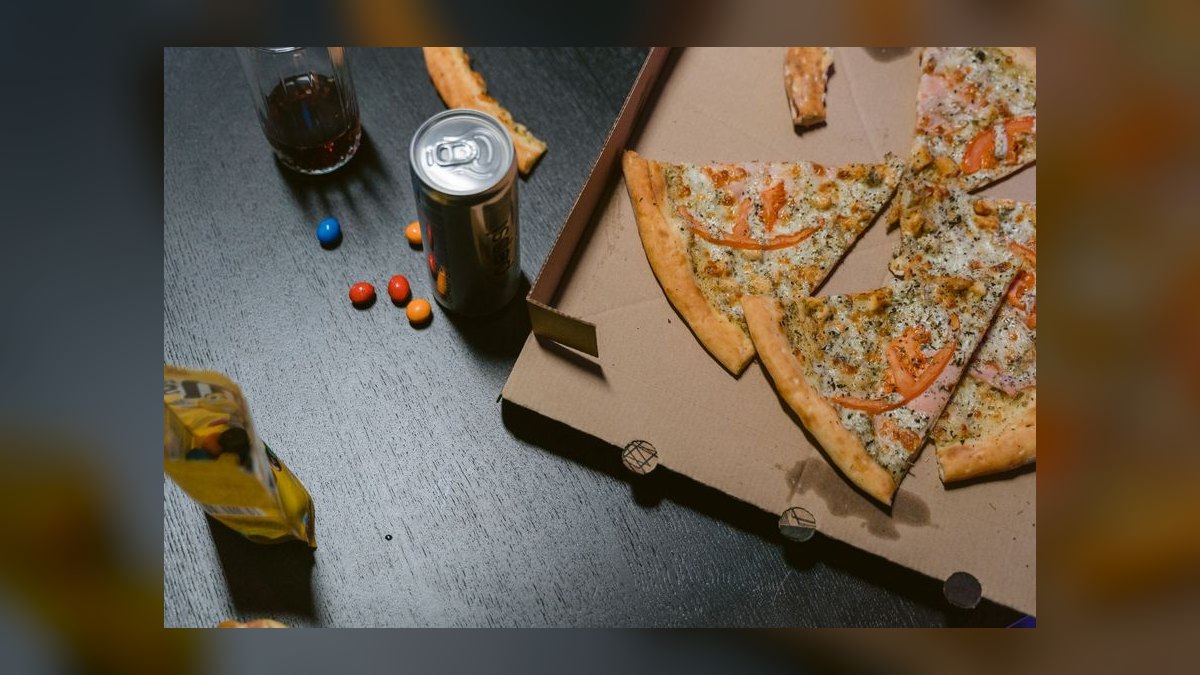
Cheese exposure deserves its own line in your risk model. Because Detroit-style uses more cheese per unit than the round-pizza norm, a cheese market spike hits your food cost harder than it hits a competitor across the street. Understand what pricing protection, if any, the system's supply agreements provide, ask existing franchisees how the last volatile cycle felt on their P&L, and keep enough pricing flexibility in your menu that you are not eating a full commodity swing.
Neglecting the marketing calendar is the quiet one. A differentiated product only wins if people know it exists and know why it is different. The shops that underperform in the system are frequently the ones that opened well, coasted on opening buzz for six months, and never built the recurring local program — school and youth sports partnerships, workplace lunch catering, neighborhood door-hanger drops in the newest subdivisions in the radius, and a genuine cadence of first-party promotions. In a category where a customer has eight options within four miles, the shop that shows up in their life monthly wins the order.
Finally: not doing the franchisee interviews properly. Talk to at least eight to ten existing owners, and make sure some of them are in their first two years, some are mature, and at least one has left the system. Ask specific questions — actual annual volume, actual food and labor percentages, what the ramp really looked like month by month, how corporate responded when something went wrong, what they would do differently, and whether they would sign again. Franchise Disclosure Document Item 20 gives you the contact list and the departure data. Use both. An hour of these calls is worth more than a month of reading.
Related questions
How does Jet's compare to Marco's Pizza for a first-time franchisee?
Both are delivery-forward pizza systems with similar capital requirements. Marco's competes on Italian-quality round pizza with broader unit count; Jet's competes on Detroit-style differentiation and higher ticket. Marco's may offer more market coverage; Jet's offers more menu distinctiveness in a crowded round-pizza field.
Can I run a Jet's franchise as an absentee owner?
Technically possible after the shop stabilizes, but not advisable in years one and two. The square-pan production process depends on trained line discipline, and a new shop without an owner present typically ramps slower and holds worse food and labor costs. Budget a full general manager package if you go passive.
What happens to my delivery radius if a company store opens nearby?
Read the territory language in the franchise agreement carefully. Most protections restrict competing franchised units within a defined radius but reserve corporate rights for non-traditional locations and channels. Radius overlap is more common in the brand's established home markets than in newer growth regions.
Is Detroit-style pizza still a growing category in 2027?
The format moved from regional specialty to national awareness, and major chains now run it as limited-time offers. That means broader consumer familiarity but weaker exclusivity. Your moat shifts from novelty to execution quality and local delivery density rather than being the only square pizza in town.
How many units should I plan to open?
Single-unit ownership is a job that owns an asset. A three-to-five-unit cluster in a tight geography lets you afford real management, share supervision, gain purchasing leverage, and build something that sells at a stronger multiple. Underwrite the multi-unit path before signing a single-unit deal.
FAQ
What is the total investment needed to open a Jet's Pizza franchise?
Total investment commonly falls in the range of roughly $550,000 to $900,000, including an initial franchise fee in the $25,000 to $30,000 neighborhood. The spread depends on your market's construction costs, whether you take second-generation restaurant space with an existing hood and grease trap, and how much working capital you fund. Confirm every figure against the current Franchise Disclosure Document.
How much can I realistically earn as a Jet's Pizza franchise owner?
Mature shops commonly gross $800,000 to $1,500,000 annually, with restaurant-level margins in the 12% to 18% band. That produces owner earnings roughly in the $90,000 to $220,000 range for an owner-operator. If you plan to hire a general manager and step back, subtract that full compensation package — realistically $60,000 to $80,000 all-in — from any earnings figure you have been shown.
What ongoing fees will I pay?
Expect a royalty in the range of 5% to 6% of gross sales plus a marketing contribution around 2%, putting the combined franchise burden roughly in the 7% to 9% band. On a $1.1 million shop that is close to $88,000 annually before any local marketing you fund yourself. Verify current rates in Item 6 of the FDD, since fee structures change between filings.
How long does it take from signing to opening day?
Six to twelve months is typical, and the variance is almost entirely site-driven. Signing the agreement is fast; finding an acceptable end cap, negotiating a ten-to-fifteen-year lease, clearing permits, and completing build-out are not. Second-generation restaurant space with usable infrastructure can compress the schedule substantially. Municipal permitting is the most common source of delay.
What makes Jet's genuinely different from other pizza franchises?
The Detroit-style square deep-dish with a caramelized cheese edge is a real product differentiator in a category dominated by round pizza, and it supports a higher average ticket. The carryout-and-delivery format also needs less square footage and less front-of-house labor than full-service pizza. The trade-off is a production line that takes longer to train and staff.
Does the franchisor provide financing?
The company does not typically finance franchisees directly. Most buyers use SBA 7(a) lending with a 20% to 25% injection, equipment leasing for ovens, refrigeration, and point-of-sale, or a ROBS structure to deploy retirement funds. Expect lenders to want meaningful liquidity — generally $150,000 to $280,000 — plus clean credit and relevant operating or management experience.
Sources
- https://www.sba.gov/funding-programs/loans/7a-loans
- https://www.ftc.gov/business-guidance/resources/consumers-guide-buying-franchise
- https://www.franchise.org/
- https://www.entrepreneur.com/franchises/franchise500
- https://www.bls.gov/iag/tgs/iag722.htm
- https://www.ers.usda.gov/topics/food-markets-prices/
- https://www.restaurantbusinessonline.com/
- https://www.nrn.com/
- https://www.pmq.com/
- https://www.ibisworld.com/united-states/market-research-reports/pizza-restaurants-industry/
Related on PULSE
- [Best pizza franchises to buy in 2027](/knowledge/fr1110)
- [Should I open or buy an East of Chicago Pizza franchise in 2027?](/knowledge/fr0870)
- [Should I open or buy a Gatti's Pizza franchise in 2027?](/knowledge/fr0868)
- [Should I open or buy a Pizza Ranch franchise in 2027?](/knowledge/fr0867)
- [Should I open or buy a Snappy Tomato Pizza franchise in 2027?](/knowledge/fr0866)
- [Should I open or buy a Hunt Brothers Pizza franchise in 2027?](/knowledge/fr0865)
 pulse-toolsHow Many Staff Should I Schedule Each Shift Across My Food Truck Fleet?
 pulse-toolsHow Many Sales Reps Do I Need to Hire for My Office Furniture Dealership?
 tlHow Many Sales Reps Do I Need to Hire for My Merchant Services Company?
 tlHow Many Sales Reps Do I Need to Hire for My Landscaping Company This Year?
 pulse-toolsHow Many Employees Should I Schedule Each Shift at My Movie Theater?
 pulse-toolsHow Many Budtenders Should I Schedule Each Shift at My Cannabis Dispensary?
 pulse-toolsHow Many Cashiers Should I Schedule Each Shift at My Convenience Store Chain?
 pulse-toolsHow Many Sales Reps Do I Need to Hire for My Window Replacement Company?
 tlHow Many Baristas Should I Schedule Each Shift at My Coffee Shop?
 pulse-toolsHow Many Employees Should I Schedule Each Day at My Wine Shop?