
Should I open or buy a The Counter burger franchise in 2027?
 Curated byKory White · Fractional CRO · Maryland
 PULSEKNOWLEDGE LIBRARY
Only if you have real restaurant experience, $200K–$400K liquid, and an affluent, high-traffic trade area. The Counter is a premium build-your-own burger franchise sold in full-service and fast-casual formats, so capital and operating complexity run well above standard burger QSR. Verify Item 7 and Item 19 in the current FDD before you open anything.
What a The Counter franchise actually is, and why the format decision drives everything else
The Counter is a better-burger concept built around customization: the guest works down a checklist of proteins, cheeses, toppings, sauces, and bun choices instead of ordering item #3 off a fixed menu. That single design decision cascades into every number on your P&L. Customization means more SKUs in the walk-in, more prep labor, longer ticket times, and a higher average check. It also means the concept lives or dies on execution — a build-your-own order that comes out wrong is more visible to the guest than a standardized sandwich, because they specified it themselves.
The brand is franchised in two broad formats, and choosing between them is the most consequential decision you will make. The fast-casual format uses counter ordering, a smaller footprint, a leaner front-of-house team, and a smaller capital stack. The full-service format adds table service, a bar program with craft beer and wine, a larger kitchen, and a much larger build-out. These are not two versions of the same business. They have different labor models, different peak-hour bottlenecks, different landlord requirements, different licensing exposure, and different exit markets. A buyer who evaluates "The Counter" as one undifferentiated opportunity is evaluating nothing.
Here is the practical distinction. Fast-casual runs on throughput and daypart balance — you need lunch traffic to justify the rent and dinner traffic to justify the labor, and you can survive with a general manager plus shift leads. Full-service runs on check average and dwell time — you need a beverage program that converts, servers who upsell, and a kitchen that can hold quality when the dining room seats eighty covers in twenty minutes. Full-service also puts you in direct competition with casual-dining chains that have decades of operational infrastructure, national ad budgets, and loyalty programs. Fast-casual puts you against Shake Shack, Five Guys, Smashburger, and every regional smash-burger operator that opened in the last three years.
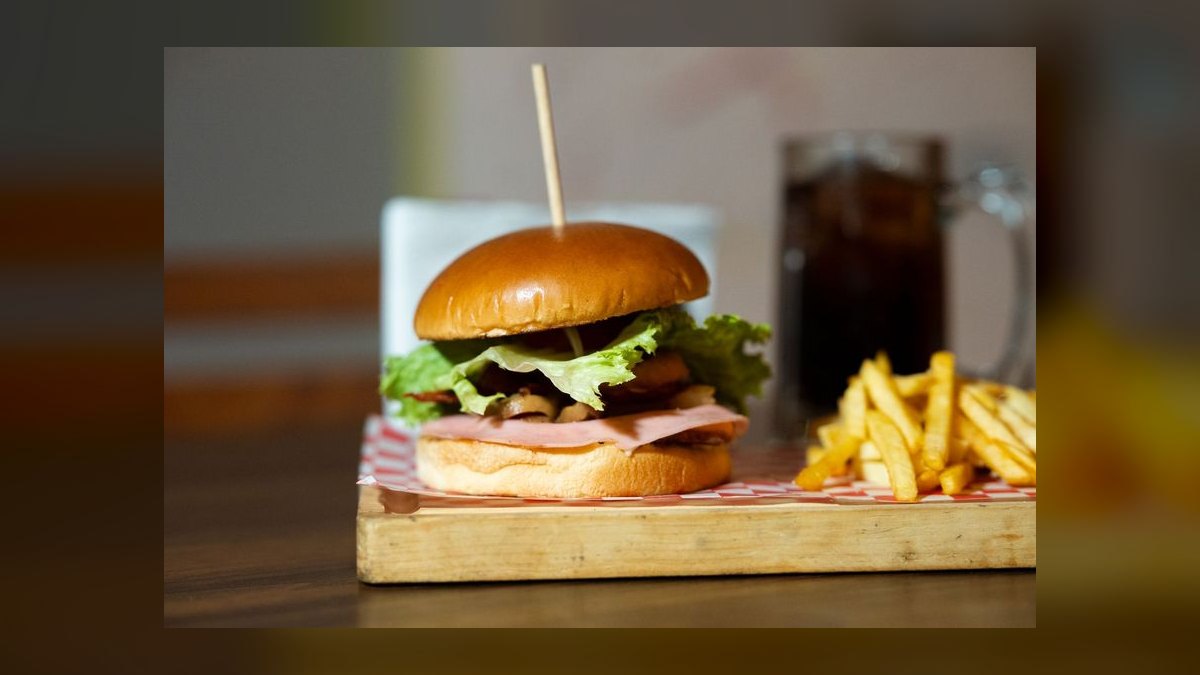
Why does this matter more in 2027 than it did a decade ago? Because the better-burger segment has matured. Between roughly 2010 and 2020 the category expanded fast, and premium positioning alone was enough of a differentiator to fill a dining room. It isn't anymore. Guests in most metros now have four to eight credible better-burger options within a fifteen-minute drive, plus independent operators and gastropubs doing chef-driven burgers at similar price points. Customization is still a genuine differentiator, but it is a *feature* differentiator, not a *category* one — meaning you have to market it actively rather than assume the concept sells itself.
The upstream question most buyers skip: does the brand's current franchise footprint support you? A system with a smaller unit count gives you less brand awareness in a new market, thinner supply-chain leverage, a smaller national marketing fund, and fewer nearby franchisees to lean on for operational help. It can also mean more territory availability and more attention from the franchisor. Neither is inherently better. But you must know which situation you are walking into, and the only reliable place to learn it is Item 20 of the current Franchise Disclosure Document, which lists unit counts, openings, closures, transfers, and terminations for the last three fiscal years. Read that table before you read anything the brand's marketing site tells you.
How to work the deal, from first inquiry to open doors
The franchise development process is designed to move you toward a signature. Your job is to slow it down at the points where information is cheapest to get and most expensive to skip. The sequence below is the one experienced multi-unit operators run, and it is deliberately front-loaded with validation work that costs you nothing but time.
Two steps in that flow deserve emphasis because they are the ones buyers most often rush.
The franchisee calls. Item 20 of the FDD includes contact information for current franchisees and, critically, for franchisees who left the system in the last fiscal year. Call both groups. Current owners will tell you what works; former owners will tell you what broke. Ask specific, unflattering questions: What was your actual first-year sales figure versus what you projected? What is your real food cost percentage today, not your target? How many hours a week are you in the building? What did the build-out actually cost versus the Item 7 estimate? Would you sign again? If you cannot get eight to twelve substantive conversations, that is itself a finding.
Liquor licensing, if you are going full-service. This is the single most underestimated line item in the entire process, and it is not really a franchise question at all — it is a local regulatory one. Beer-and-wine license costs vary enormously by state and municipality. In jurisdictions with open licensing, a beer-and-wine permit is an administrative fee and a few weeks of processing. In quota-license states and cities, licenses trade on a secondary market and can cost a large multiple of that, with waiting periods measured in months. Confirm the availability, cost, and timeline for your specific municipality *before* you sign a lease, not after. A full-service unit that opens without its beverage program is a full-service unit operating at fast-casual check averages against a full-service cost structure. That is how first-year losses become second-year insolvency.
The parallel track most buyers under-plan is financing. Restaurant franchises are commonly financed through SBA 7(a) loans, which typically require the borrower to inject equity, personally guarantee the debt, and often pledge collateral including a home. Get pre-qualified before you sign, and model your debt service as a fixed monthly obligation in your pro forma. A unit that clears a healthy restaurant-level margin can still fail to cover principal and interest if the build-out ran over and the loan is larger than planned.
Costs, timelines, and the ranges you should expect to see
Every dollar figure below should be treated as a *shape of the deal*, not a quote. The authoritative numbers are in Item 5 (initial fees), Item 6 (ongoing fees), and Item 7 (estimated initial investment) of the current FDD, and any financial performance representation lives in Item 19 — if the brand makes one at all. Franchisors are not required to publish an Item 19, and the absence of one is a meaningful signal.
Initial investment. For a premium better-burger concept in this class, the total initial investment for a fast-casual unit typically lands in the mid-six figures, while a full-service unit with a bar can run to seven figures. The gap is driven almost entirely by three things: square footage, kitchen and bar equipment, and the finish level of the dining room. The initial franchise fee itself is usually a small fraction of the total — often in the tens of thousands — which is why fixating on it is a rookie error. Build-out is where budgets die.
The line items that overrun most often. Leasehold improvements in a second-generation restaurant space are cheaper than in raw shell, but only if the prior tenant's infrastructure — grease interceptor, hood, make-up air, electrical service, floor drains — actually matches your needs. Get a contractor and a kitchen designer to walk the space before you sign the lease, not after. Permitting timelines in dense municipalities routinely add two to four months. Signage variances in lifestyle centers and historic districts add more. Budget contingency at 10–15% of hard costs, and treat it as spent.
Working capital. This is the number people cut when the build-out overruns, and it is the worst possible place to economize. A new restaurant does not hit steady-state sales on day one; it typically sees an opening spike, a trough at weeks six through twelve as the novelty fades, and then a slow climb as repeat behavior establishes. You need enough cash to fund payroll through the trough without touching the deposit float. Plan for at least three months of full operating expense, and prefer six if you are financing aggressively.
Ongoing fees. Expect a royalty stated as a percentage of gross sales plus a separate advertising or brand-fund contribution, also percentage-of-gross. These are charged on *gross sales*, not profit, which means they are a fixed drag regardless of how your margins perform. Model them off the top line before you model anything else. Item 6 lists every recurring fee, including ones people forget: technology fees, POS licensing, mandatory third-party subscriptions, transfer fees, renewal fees, and audit charges if you report late.
Cost of goods and labor. The better-burger segment carries a structurally higher food cost than value QSR because the ingredient spec is the product. Beef is the dominant input and it is volatile; cattle supply cycles, feed costs, and processing capacity all move the wholesale price of ground beef year to year, and 2026–2027 has been a tight-supply period for domestic beef. Franchisees who lock supplier pricing on core proteins for a six-to-twelve-month horizon give up upside but buy planning certainty — a reasonable trade when your royalty is charged on gross and every point of food cost comes straight out of your take.
Labor is the other structural pressure. A build-your-own model needs more hands per ticket than an assembly-line concept, and a full-service unit adds servers, bartenders, and an expediter on top. Minimum wage floors continue to rise in a large number of states, and in several metros the applicable rate for food-service employers is set locally and higher than the state floor. Pull the actual prevailing wage for your specific city — federal and state occupational wage data is published publicly and is a better planning input than the franchisor's national average.
Timeline. From signed franchise agreement to open doors, a ground-up or full-build restaurant realistically takes twelve to eighteen months: site search and approval (three to six months), lease negotiation (one to three), design and permitting (two to five), construction (three to five), hiring and training (one to two, overlapping construction). Anyone who tells you six months is either converting an existing restaurant space with minimal changes or is not counting from the same starting point you are.
Return horizon. For a premium restaurant franchise of this size, a healthy outcome is recovering the invested equity over several years of operation, not in the first eighteen months. Model the base case, then model a case where you hit 75% of your projected sales — if that scenario cannot service debt, you are not conservatively capitalized, you are gambling.
Where buyers get this one wrong
They evaluate the brand instead of the trade area. The concept can be excellent and your specific location can still fail. A premium burger at a premium price needs a trade area with the disposable income to support it and enough density to fill the room on a Tuesday, not just a Saturday. Pull actual demographics for a three-mile radius: household income distribution, daytime employment population, and competitive density. If the nearest four better-burger units are all discounting to hold traffic, that is a market telling you its price ceiling.
They assume the fast-casual format is "the safe one." It has a lower entry cost, which is not the same as lower risk. Fast-casual competes on throughput and value perception, and a customization-heavy menu is structurally slower than a smash-burger line. If your ticket time runs long at the lunch rush and your price point sits above the competitor across the parking lot, you lose the daypart that pays your rent. The fix is menu engineering and station design, and it is much cheaper to solve in the design phase than after opening.
They buy full-service without full-service management depth. Table service, a bar, and alcohol compliance are their own discipline. Over-serving liability, cash handling at the bar, pour cost control, server scheduling against forecasted covers, and reservation or waitlist management are all skills you either have, hire, or lose money learning. If your restaurant background is counter-service, the honest move is either to start fast-casual or to hire a proven full-service GM at market rate and budget for it from day one.
They under-plan the second-year staffing problem. Hourly turnover in the restaurant segment is extremely high — well above 100% annually is normal, not exceptional. That means you are perpetually recruiting and training, and the cost of doing that badly shows up as inconsistent food quality and slow tickets. The operators who beat the average do specific things: they cross-train front and back of house so a call-out doesn't cripple a shift, they build a pipeline with local culinary and hospitality programs, they promote from within so shift leads see a path, and they schedule against forecast rather than against last week's schedule copied forward.
They treat delivery as free incremental revenue. Third-party delivery commissions take a large percentage of the order, and a premium burger travels poorly — buns get soggy, fries arrive cold, and the customization the guest paid for is exactly what gets mis-picked. Delivery can absolutely work, but it needs its own packaging spec, its own menu subset (drop the items that don't travel), and its own margin math. Running your full dine-in menu through a delivery marketplace at dine-in prices is how a healthy top line produces a shrinking bottom line.
They skip the "buy existing" analysis entirely. Building new is not the only path into a system, and it is frequently not the cheapest one. More on that below.
A decision framework: build new, buy an existing unit, or walk away
Most prospective franchisees frame this as a yes/no on one concept. The better frame is a three-way comparison against the same capital: build a new unit, acquire an existing franchised unit through a transfer, or deploy the capital into a different concept — or into no concept at all.
The case for buying an existing unit. A transfer gives you something a new build never can: real sales history. You can read three years of P&Ls, see the actual food and labor percentages, know the real rent, and watch a lunch rush before you commit. You skip the twelve-to-eighteen-month construction window and start generating cash immediately. You also inherit the previous operator's problems — deferred maintenance on equipment, a damaged local reputation, a bad lease with limited remaining term, or a staff that has already decided to leave. Price the resale off trailing cash flow, verify the numbers against tax returns and POS exports rather than a broker's summary, and confirm with the franchisor what transfer fees, remodel obligations, and remaining agreement term apply. A resale that requires a mandatory refresh in year two is a resale with a hidden capital call.
The case for a multi-unit development agreement. Restaurant franchising rewards density. A second and third unit in the same market share a general manager pool, a marketing spend, a supplier relationship, and often an area manager. Single-unit restaurant ownership is frequently the worst of both worlds — all the operational burden of a business owner with none of the scale that makes the economics work. If you are serious about the segment and you have the capital, ask about area development terms before you sign a single-unit agreement, because converting later is harder and more expensive.
The adjacent comparison worth running. The same capital that opens one premium full-service burger restaurant will open two or three units in a lower-investment fast-casual or QSR concept, or several units in a service-based franchise with no build-out at all. That is not an argument against The Counter; it is an argument for doing the comparison explicitly. Premium restaurants earn higher check averages and carry higher fixed costs, which makes them more sensitive to a soft economy than value-positioned concepts. If your read on 2027–2028 consumer spending is cautious, a concept whose value proposition is "premium experience" carries more downside than one whose proposition is "cheap and fast." Conversely, if your market is affluent and under-served for a quality sit-down burger with a beer list, the premium end is exactly where you want to be.
When to walk. Walk if the FDD's Item 20 shows sustained net unit decline without a credible explanation. Walk if you cannot get current franchisees to talk candidly, or if the ones who do are uniformly unhappy. Walk if your stress case at 75% of projected sales cannot cover debt service. Walk if the only site you can get is the site nobody else wanted. None of these are reasons to distrust the brand specifically — they are the standard disqualifiers for any restaurant franchise investment, and applying them without sentiment is the entire discipline.
Related questions
How much liquid capital do I actually need before a franchisor will approve me?
Franchisors set minimum net worth and liquid capital thresholds and enforce them during qualification. For a premium restaurant concept, expect meaningful six-figure liquidity requirements. The exact figures are stated in the brand's franchise application materials and referenced in the FDD — confirm them before spending money on site research.
Can I run a The Counter as a semi-absentee investment?
Rarely, and not in year one. Customization-heavy, service-forward restaurant concepts depend on daily operator presence for food quality and guest experience. Some systems permit a qualified operating partner in place of the owner, but that partner must be compensated at market rate, which comes directly out of your margin.
Is the full-service format worth the extra capital?
It is if your market supports the check average and you have full-service management depth. The bar program lifts both ticket size and margin percentage on beverages. Without operational depth, the same program becomes a compliance liability and a cost center.
How exposed am I to beef prices?
Substantially. Beef is the primary input in a burger concept and its wholesale price moves with cattle supply cycles. Contracting core proteins for six to twelve months reduces volatility. Menu engineering — adjusting portion, mix, and price — is the other lever, but franchise agreements typically constrain menu changes.
What happens if I want to sell in five years?
Restaurant franchise resales are priced off trailing cash flow, and the franchisor must approve the buyer. Transfer fees, remaining agreement term, and any pending remodel obligation all affect what a buyer will pay. Keeping clean books from day one is what makes an exit possible at a fair multiple.
FAQ
What is the single most important document to read before signing?
The Franchise Disclosure Document, and specifically Items 5, 6, 7, 19, 20, and 21. Item 7 gives the estimated initial investment range, Item 19 gives any financial performance representation, Item 20 gives unit counts and franchisee contact lists, and Item 21 gives the franchisor's audited financial statements. Federal law requires the FDD be delivered at least 14 calendar days before you sign anything or pay any money. Use that window.
How long does it take to open from signing the franchise agreement?
Realistically twelve to eighteen months for a full build-out, driven mainly by site approval, lease negotiation, and municipal permitting. Converting a second-generation restaurant space with compatible infrastructure can compress that meaningfully, sometimes to six to nine months. Any timeline that assumes zero permitting delay is a fiction — build slack into your working capital plan, because rent often starts before revenue does.
Do I need prior restaurant experience to be approved?
Many franchisors prefer it and some require it, particularly for full-service formats. If you lack it, the standard workaround is partnering with an experienced operator who takes an equity stake and runs the unit day to day. That structure works, but it dilutes your return and creates a governance question you should resolve in writing before opening, not after the first bad quarter.
How much of my sales will go to the franchisor each month?
Expect a royalty plus a brand-fund or advertising contribution, both calculated on gross sales rather than profit. Item 6 of the FDD lists every recurring fee, including technology, POS, and administrative charges that buyers routinely forget to model. Add them all together, apply the total to your projected top line, and treat that number as a fixed monthly cost in your pro forma.
What is a realistic food cost target for a premium burger concept?
Better-burger concepts run structurally higher food cost than value QSR because the ingredient specification is the differentiator. Ask current franchisees what they actually run, not what the target is. If your food cost drifts several points above the system norm, the cause is almost always portioning discipline, waste, or theft — investigate in that order, and fix it within one inventory cycle rather than waiting for the quarter to close.
Is a liquor license required, and what does it cost?
It is required for any format serving beer or wine, and the cost varies enormously by jurisdiction. Open-license states charge modest administrative fees; quota-license markets have a secondary market where licenses trade at a substantial premium with long waiting periods. Verify availability, cost, and timeline for your exact municipality before signing a lease — this line item has sunk more full-service openings than build-out overruns have.
Sources
- https://www.ftc.gov/business-guidance/resources/franchise-rule-compliance-guide
- https://www.ftc.gov/business-guidance/resources/buying-franchise-consumer-guide
- https://www.sba.gov/funding-programs/loans/7a-loans
- https://www.franchise.org/
- https://www.entrepreneur.com/franchises
- https://www.franchisebusinessreview.com/
- https://www.restaurant.org/research-and-media/research/
- https://www.bls.gov/oes/current/oes_nat.htm
- https://www.ers.usda.gov/topics/animal-products/cattle-beef
- https://www.ttb.gov/
Related on PULSE
- [Best burger franchises to buy in 2027](/knowledge/fr1135)
- [Should I open or buy a Habit Burger Grill franchise in 2027?](/knowledge/fr0141)
- [Should I open or buy a Tasty Burger franchise in 2027?](/knowledge/fr0138)
- [Should I open or buy a Burger King franchise in 2027?](/knowledge/fr0019)
 pulse-toolsHow Many Staff Should I Schedule Each Shift Across My Food Truck Fleet?
 pulse-toolsHow Many Sales Reps Do I Need to Hire for My Office Furniture Dealership?
 tlHow Many Sales Reps Do I Need to Hire for My Merchant Services Company?
 tlHow Many Sales Reps Do I Need to Hire for My Landscaping Company This Year?
 pulse-toolsHow Many Employees Should I Schedule Each Shift at My Movie Theater?
 pulse-toolsHow Many Budtenders Should I Schedule Each Shift at My Cannabis Dispensary?
 pulse-toolsHow Many Cashiers Should I Schedule Each Shift at My Convenience Store Chain?
 pulse-toolsHow Many Sales Reps Do I Need to Hire for My Window Replacement Company?
 tlHow Many Baristas Should I Schedule Each Shift at My Coffee Shop?
 pulse-toolsHow Many Employees Should I Schedule Each Day at My Wine Shop?