


Should I open or buy a Bad Ass Coffee of Hawaii franchise in 2027?
Quality
Certified
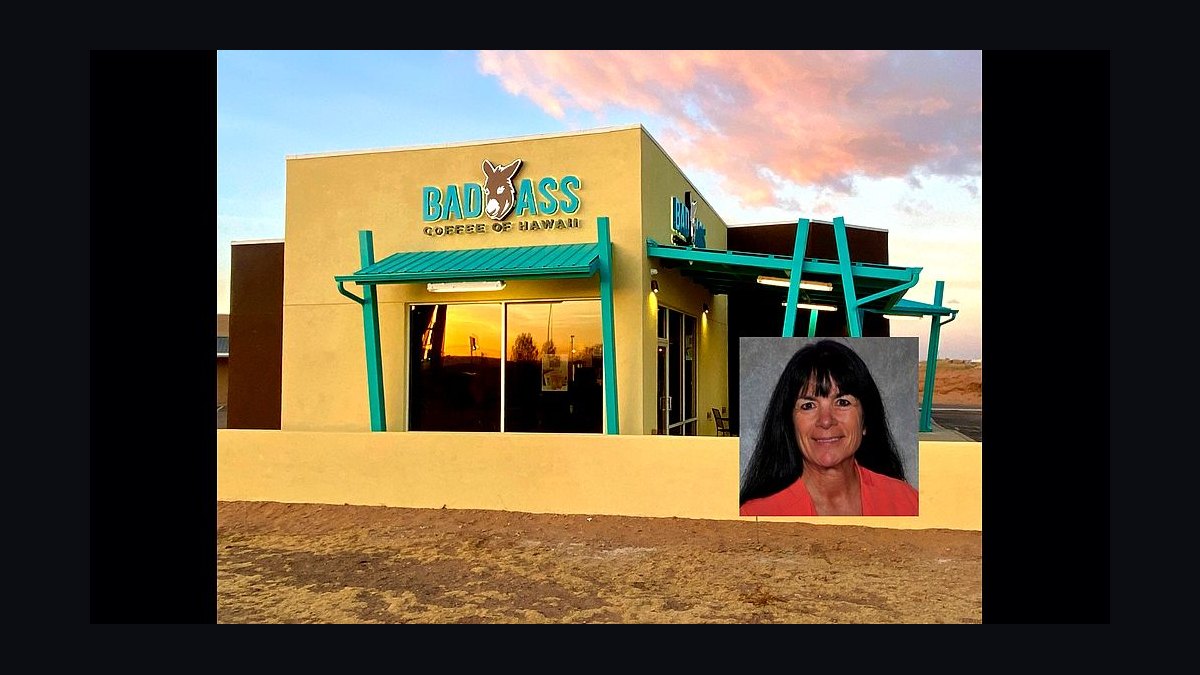
Only if you want a niche, owner-operated coffee brand and can secure a genuinely high-traffic drive-thru corridor. Bad Ass Coffee of Hawaii trades national recognition for Hawaiian-sourced differentiation at a lower entry cost — roughly $300,000 to $1.5 million depending on format. Expect hands-on years one and two, not a passive investment.
What a Bad Ass Coffee of Hawaii franchise actually is, and why the format matters more than the brand
Bad Ass Coffee of Hawaii has been around since 1989, which makes it older than most of the drive-thru chains it now competes against. That longevity is worth something and worth less than you'd think. The brand spent decades as a mostly-Hawaii and mostly-tourist operation before pivoting into mainland franchising, and the system today sits in the neighborhood of 80 to 100 open units — a rounding error next to Starbucks, and a fraction of what Dutch Bros or Scooter's Coffee will have on the ground by 2027.
What you are actually buying is three things stacked together. First, a sourcing story: Hawaiian-grown beans, Kona blends and 100% Kona at the premium end, plus macadamia-nut flavor profiles that most competitors cannot credibly claim. Second, a visual identity — the donkey logo, island décor, a name that people repeat out loud, which is free word-of-mouth in a category where most storefronts are interchangeable. Third, an operating system: approved equipment, drink specs, supply relationships, training, and a site-selection process.
The thing prospective franchisees get wrong is weighting those three in the wrong order. They fall in love with the story and the logo, then treat the operating system and the real estate as details to sort out later. It runs backward. In drive-thru coffee, the site is the business. A mediocre brand on an excellent corner outperforms an excellent brand on a mediocre corner, every time, and it isn't close. The Hawaiian theme raises your ceiling — it lets you charge a premium and gives you something to say in local marketing — but it does not raise your floor. Bad traffic counts kill differentiated concepts exactly as fast as they kill generic ones.
Format is the second decision that dominates everything downstream. Bad Ass franchises in multiple footprints, and they behave like different businesses. A drive-thru-only kiosk is a throughput machine: no dining room, minimal square footage, a small crew, and a revenue model driven almost entirely by cars per hour and average ticket. A full cafe is a hospitality business: seating, restrooms, longer dwell times, more staff, more square footage, food attachment, and a different rent profile. The cafe can produce higher gross sales. It also requires two to three times the capital, carries more fixed cost, and is far less forgiving when a market softens.
Why does any of this matter more than the brand itself? Because the coffee category has commoditized the product and moved the competition to convenience. Consumers have already decided they'll pay $5 to $7 for a specialty drink. What they will not do is turn left across four lanes of traffic, or wait six minutes in a line. Your differentiation gets you considered. Your format and your site get you the transaction.
There's an adjacent lesson worth borrowing here from other franchise categories. The same dynamic plays out in quick-lube, car wash, and drive-thru food: as a segment matures, the winning operators stop competing on concept and start competing on real-estate access and cycle time. Coffee is further down that curve than most owner-operators realize. Treat this as a real-estate and operations decision that happens to carry a coffee brand, and your odds improve substantially.
The step-by-step process from first FDD request to opening day
The path from "I'm interested" to "we're open" runs six to twelve months for most franchisees, and the sequencing matters. Do these in the wrong order and you'll either sign a franchise agreement before you know whether your market has an available corner, or you'll chase real estate you're not yet approved to develop.
Request and read the Franchise Disclosure Document. The franchisor must deliver the FDD at least 14 calendar days before you sign anything or pay any money. Read Item 5 (initial fees), Item 6 (ongoing fees — royalty, marketing, technology, any local ad requirement), Item 7 (estimated initial investment, which is where the $300,000-to-$1.5-million range lives), Item 19 (financial performance representations, if the brand makes any), and Item 20 (unit counts plus openings, closures, transfers, and terminations over the last three years, and the contact list for current and former franchisees). Item 20's closure and transfer table is the single most revealing page in the document. A system with steady closures or heavy transfers is telling you something the marketing deck will not.
Call franchisees — current and former. Eight to twelve calls, minimum, and make sure several are former owners. Ask specific questions: what did you actually invest, all-in, versus the Item 7 estimate? What's your annual gross? What's your food-and-beverage cost as a percentage? What do you pay in labor? How many months until you were cash-flow positive? Would you buy again? How responsive is corporate when something breaks? What surprised you in year one? Vague answers are answers. So is a franchisee who won't take the call.
Validate your market before you fall in love with it. Drive the corridors at 7 a.m. on a Tuesday, not at 2 p.m. on a Saturday. Count the competing drive-thru coffee locations within a two-mile radius — in a mid-sized metro you should expect three to five. Note which side of the road they sit on relative to the morning commute. Note whether they have double lanes. Morning coffee traffic is directional, and a site on the wrong side of the street can cost you a third of your volume for reasons no amount of marketing will fix.
Secure financing before you secure a site. SBA 7(a) is the common route for franchise builds, and lenders typically want 20% to 25% injection plus collateral. Get pre-qualified early. A landlord will not hold a good pad while you shop for a bank.
Site selection and franchisor approval. Work with the franchisor's real estate criteria and a local broker who knows the pads. Key metrics: traffic counts, ingress/egress quality, stacking depth (how many cars can queue without blocking the road), visibility from the primary approach, and co-tenancy. Signage rights matter enormously and get negotiated at lease time or not at all.
Build out, permit, hire, and train. Permitting is the most commonly underestimated line item on the calendar. Municipal review on a drive-thru — especially the traffic study and the queuing plan — can add two to four months in restrictive jurisdictions. Build to the franchisor's spec, run training, and hire ahead of opening so you're not learning drink builds on live customers.
Costs, timelines, and the ranges you should actually plan around
The published Item 7 range spans roughly $300,000 on the low end to about $1.5 million on the high end, and the spread is entirely explained by format. Treat these as planning brackets, and verify every figure against the current FDD, because franchisors update these numbers annually.
The initial franchise fee sits in the $30,000 to $40,000 neighborhood. That's your ticket, not your build. Leasehold improvements are the largest and most variable line: a drive-thru kiosk on a prepared pad might run $150,000 to $300,000, while a full cafe buildout can reach $800,000 once you're paying for seating, restrooms, HVAC capacity, and a larger footprint. Equipment and POS — espresso machines, grinders, brewers, refrigeration, blenders, drive-thru headsets, the register system — lands somewhere between $90,000 and $320,000 depending on how many drink stations you're building and whether you're running a double lane.
Signage and décor is where the Hawaiian theme costs real money: $20,000 to $90,000, and monument signage in a jurisdiction with strict sign codes can consume most of that alone. Initial inventory runs $10,000 to $30,000. Grand-opening marketing is $15,000 to $50,000, and I'd argue the low end of that is a mistake in a market where nobody knows the name. Training and travel, $8,000 to $25,000. Working capital, $40,000 to $150,000 — and this is the line people shave when the budget gets tight, which is precisely backward.
On ongoing fees: royalty runs approximately 6% of gross sales, with a marketing or brand fund contribution on top, commonly in the 1% to 2% range. Assume total franchisor fees of 7% to 8% of gross, and read Item 6 carefully for technology fees and any local advertising minimum, which are separate obligations that don't always get quoted in the headline number.
Now the revenue side. Mature units are described in the range of $500,000 to $1.5 million in annual gross sales, with a well-located drive-thru realistically landing $600,000 to $1,000,000 and a high-performing cafe reaching toward the top of the range. Build your model on the low end. Every franchise pro forma that fails, fails because it was built on the average unit rather than the median new unit in year one.
Here's how a representative $800,000 drive-thru actually breaks down. Beverage and food COGS: 28% to 32% of revenue, which is toward the high side for coffee because Hawaiian bean sourcing costs more than commodity arabica — call it $224,000 to $256,000. Labor: 30% to 35%, and with minimum wages in the $15 to $18 range across many states, plus a drive-thru needing four to six people per shift to hold a sixty-to-ninety-second service window, budget $240,000 to $280,000. Occupancy including rent, triple-net, insurance, and utilities: 12% to 18%, or roughly $96,000 to $144,000. Royalty and marketing at 8%: $64,000. Other operating expenses — supplies, repairs, credit card fees, local advertising: another 10% to 12%.
Add that up and the net margin lands in the 8% to 15% band, producing owner net income somewhere around $64,000 to $120,000 pre-tax on that $800,000 unit — before debt service. If you financed $500,000 on an SBA 7(a), your annual payment will consume a meaningful share of that. This is the arithmetic that separates a viable single unit from a job with a large downside.
Timeline: six to twelve months from signing to opening in normal conditions. Cash-flow positive commonly around month six to nine in a strong location. Break-even on the operating statement typically twelve to eighteen months. Full return of invested capital is a multi-year proposition, and anyone telling you otherwise is selling something.
One more cost worth planning for: coffee commodity exposure. Kona and Hawaiian-grown supply is genuinely limited — that's what makes it a differentiator — and limited supply means price pressure when demand rises or a harvest disappoints. Build 3% to 5% annual increases in your bean cost into a three-year model and know in advance which menu items you'd reprice.
Where operators get this wrong
They buy the story instead of the corner. This is the failure mode that accounts for most of the others. An owner falls for the Hawaiian identity, signs, then accepts the third-best available pad because the first two were taken by a competitor. The concept was never the problem. The 14,000-vehicle-per-day road with a difficult left turn was.
They underfund working capital. The Item 7 working capital figure covers roughly the first three months. In a market with no existing brand awareness, three months is not enough to reach steady-state volume. Carry six to nine months of operating cash beyond the buildout, and treat that reserve as untouchable. Under-capitalization doesn't kill you in month two — it kills you in month eight, when you're growing but not yet profitable and you have nothing left to fund the ramp.
They model a manager they can't afford. Semi-absentee ownership sounds appealing and the math frequently doesn't support it at this unit volume. A competent general manager costs $60,000 to $80,000 fully loaded. Subtract that from a $64,000-to-$120,000 owner income and you're looking at $30,000 to $50,000 on a half-million-dollar investment — a return that doesn't justify the risk. If you want passive, this brand's current unit economics are the wrong vehicle. Owner-operators who work the counter in year one are the ones who make this work.
They misjudge the market's receptivity to the theme. In a city with an entrenched independent coffee culture — Portland, Seattle, Austin, parts of the Bay Area — a Hawaiian-themed chain can read as gimmicky rather than premium. In a suburban Sun Belt corridor where the competition is a national drive-thru and a gas station, the same theme reads as distinctive and worth a detour. Same brand, opposite reception. Test before you commit: run a pop-up, a farmers-market stand, a soft launch. Real transactions from real strangers tell you more than any demographic study.
They neglect throughput mechanics. Sixty to ninety seconds per car is the target, and hitting it is an engineering problem, not an attitude problem. Menu design, drink complexity, station layout, order-taking position, mobile-order staging, payment speed — each shaves or adds seconds. A shop that averages 150 seconds per car during the 7-to-9 a.m. peak isn't slow by a little; it has structurally capped its ceiling, because the queue reaches a length where cars stop joining it. Measure this weekly from day one.
They under-spend on local marketing because the brand "sells itself." It does not, at 80 to 100 units. Budget $2,000 to $5,000 monthly for local advertising, social, and community presence — school fundraisers, local events, sponsorships. Lean into what's actually distinctive: Kona flights, Aloha Friday promotions, an origin story that gives customers something to tell a friend. A national chain doesn't have that. Use it.
They skip former franchisees in validation. Current owners have an incentive to be positive — a struggling system hurts their resale value. Former owners have nothing to protect. Item 20 gives you their contact information, and those conversations are the most valuable diligence you will do.
They ignore the resale question until they need it. A system growing 10 to 15 units annually has a thinner buyer pool than a hyper-growth chain. That's fine if you're building a ten-year business. It's a real problem if your exit plan assumes a quick sale at a healthy multiple in year four.
Decision framework: when to open, when to buy existing, when to walk
Three distinct paths sit under this question and they have different risk profiles. Opening a new unit gives you site selection control and a clean operating slate, at the cost of full construction risk and a twelve-to-eighteen-month ramp. Buying an existing unit gives you real financials to underwrite and immediate cash flow, at the cost of inheriting whatever the previous owner built — a tired crew, deferred equipment maintenance, a damaged local reputation, or a lease with four years left and no renewal option. Walking away costs you the price of your diligence time and nothing else, which is the cheapest outcome on the board when the numbers don't work.
For an existing-unit purchase, underwrite differently. Get three years of tax returns and P&Ls, not a broker's summary. Reconcile reported sales against POS data and supplier purchase records. Read the lease in full — remaining term, renewal options, rent escalators, signage rights, and any exclusivity or radius restrictions. Confirm the franchisor will approve the transfer and find out what transfer fee applies and what remodel obligations attach. A unit selling at a low multiple is usually communicating something; find out what before you assume you're smarter than the seller.
Ask yourself honestly: can you personally be on site fifty to sixty hours a week for the first twelve to eighteen months? If no, this brand is likely wrong for you at current unit economics, and a larger system with thicker margins and stronger multi-unit infrastructure is the better fit. Can you secure a corner with strong morning-directional traffic, clean ingress and egress, and stacking for at least eight to ten cars? If no, wait for one. Waiting eighteen months for the right site beats opening in six months on the wrong one — the rent term outlives the impatience by a decade.
The adjacent options deserve honest consideration too. A larger drive-thru coffee system costs more upfront and brings brand recognition, denser supply-chain support, and a deeper resale market. An independent drive-thru costs less, gives you total menu and pricing control, and demands that you build every system yourself — sourcing, training, marketing, POS — with no playbook. Adjacent beverage formats like boba, smoothies, and juice run similar footprints with different daypart profiles; a coffee shop dies at 2 p.m., while a boba shop is just waking up, which changes the labor model entirely. And a multi-unit development agreement in any of these only makes sense after you've proven you can run one profitably. Nobody should sign for three before opening one.
Related questions
How does Bad Ass Coffee compare to larger drive-thru coffee chains on startup cost?
The drive-thru kiosk format at roughly $300,000 to $700,000 is generally more accessible than the larger national drive-thru builds, which often require $1 million or more. Lower entry cost, less brand recognition — you trade capital for a longer awareness ramp you fund with local marketing.
Do I need coffee experience to be approved?
Prior coffee experience isn't typically required, but foodservice or quick-service management background helps substantially. You'll manage ten to twenty staff, perishable inventory, and drive-thru timing. Franchisors provide training; they don't provide the operating instincts that come from having run a shift.
What happens if Hawaiian bean costs spike?
Limited Kona supply means real price exposure. Model 3% to 5% annual increases in bean cost, know which menu items you'd reprice first, and protect your premium positioning rather than discounting into it. The sourcing story only justifies a higher price if you keep the sourcing.
Is a full cafe or a drive-thru kiosk the better first unit?
For a first-time franchisee, the kiosk is usually the safer entry: lower capital, lower fixed cost, simpler labor model, faster to open. Cafes can produce higher gross sales but carry two to three times the investment and far less margin for a site-selection error.
How many franchisees should I call before signing?
Eight to twelve minimum, and insist on reaching several former owners from the Item 20 list. Current franchisees have resale value to protect; former ones don't. Their answers about year-one surprises and corporate responsiveness are the most reliable diligence available.
FAQ
What is the total investment range for a Bad Ass Coffee of Hawaii franchise?
Total investment varies dramatically by format. A kiosk or small drive-thru generally runs in the $300,000 to $700,000 range, while a full cafe can reach $800,000 to $1.5 million. Those figures include the initial franchise fee, leasehold improvements, equipment, signage, initial inventory, training, and working capital. Verify current numbers in Item 7 of the latest FDD — franchisors update these annually and regional construction costs move the range meaningfully.
How much can a franchise owner realistically expect to earn?
Mature units are described in the $500,000 to $1.5 million annual gross sales range. After COGS in the high twenties to low thirties percent, labor around 30% to 35%, occupancy, the roughly 8% in combined royalty and marketing fees, and other operating expenses, net margins typically land between 8% and 15%. On an $800,000 unit that's roughly $64,000 to $120,000 pre-tax, before debt service. Results vary enormously by location and how hands-on the owner is.
What ongoing fees will I owe the franchisor?
Expect a royalty around 6% of gross sales plus a marketing or brand fund contribution commonly in the 1% to 2% range — call it 7% to 8% combined. Read Item 6 closely for technology fees, POS fees, and any local advertising minimum, which are separate obligations on top of the brand fund and are frequently missed in first-pass financial models.
How does this brand compete against Starbucks, Dutch Bros, Scooter's, and 7 Brew?
It competes on differentiation rather than scale. Hawaiian-grown bean sourcing, Kona blends, macadamia flavor profiles, and island-themed identity give you a genuine story in a category where most storefronts are interchangeable. That supports premium pricing for customers seeking an experience. What it doesn't give you is national recognition, so local marketing spend and site quality carry more weight than they would in a larger system.
How long does it take to open, and when does the unit turn profitable?
Six to twelve months from signing to opening is typical, with permitting and the drive-thru traffic study being the most common source of delay. Cash-flow positive often arrives around month six to nine in a strong location, with operating break-even commonly at twelve to eighteen months. Returning your full invested capital is a multi-year timeline, which is why the working-capital reserve matters more than almost any other budget line.
Can I run this as a semi-absentee investment?
Realistically, no — not at current unit economics. A general manager costs $60,000 to $80,000 fully loaded, which consumes most of the owner income on a typical unit and leaves a return that doesn't compensate for the risk. This brand rewards owner-operators who are physically present through the first twelve to eighteen months. If passive ownership is the goal, look at systems with higher unit volumes and thicker margins.
Sources
- https://www.ftc.gov/business-guidance/resources/franchise-rule-compliance-guide
- https://www.sba.gov/funding-programs/loans/7a-loans
- https://www.franchise.org/
- https://www.entrepreneur.com/franchises/directory
- https://www.ncausa.org/Research-Trends/Market-Research
- https://www.ibisworld.com/united-states/industry/coffee-shops/1973/
- https://www.restaurantbusinessonline.com/
- https://www.nrn.com/
- https://www.franchisebusinessreview.com/
- https://www.hawaiicoffeeassoc.org/
Related on PULSE
- Should I open or buy a Bad Axe Throwing franchise in 2027?
- Best coffee and beverage franchises to buy in 2027
- Should I open or buy an It's A Grind Coffee franchise in 2027?
- Should I open or buy a The Coffee Bean & Tea Leaf franchise in 2027?
- Should I open or buy a Summer Moon Coffee franchise in 2027?
- Should I open or buy a Just Love Coffee Cafe franchise in 2027?
This page will be disappearing soon. Save it to your device for $1 — or read it free while it is here.
@Kory-White- · if Venmo asks, the last 4 of my number are 2012
This page is gone.
This one is off the shelf now. $1 keeps it on your phone for good — the whole page, pictures and diagrams included.
 franchiseShould I open or buy a Roto-Rooter franchise in 2027?
 franchiseShould I open or buy a McAlister's Deli franchise in 2027?
 franchiseShould I open or buy a Culver's franchise in 2027?
 franchiseShould I open or buy a Domino's franchise in 2027?
 franchiseShould I open or buy a Big O Tires franchise in 2027?
 franchiseShould I open or buy a Dairy Queen franchise in 2027?
 franchiseShould I open or buy a Rita's Italian Ice franchise in 2027?
 franchiseShould I open or buy a Massage Envy franchise in 2027?
 franchiseShould I open or buy a Smoothie King franchise in 2027?
 frShould I open or buy a McDonald's franchise in 2027?