


Should I open or buy a Vivi Bubble Tea franchise in 2027?
Quality
Certified
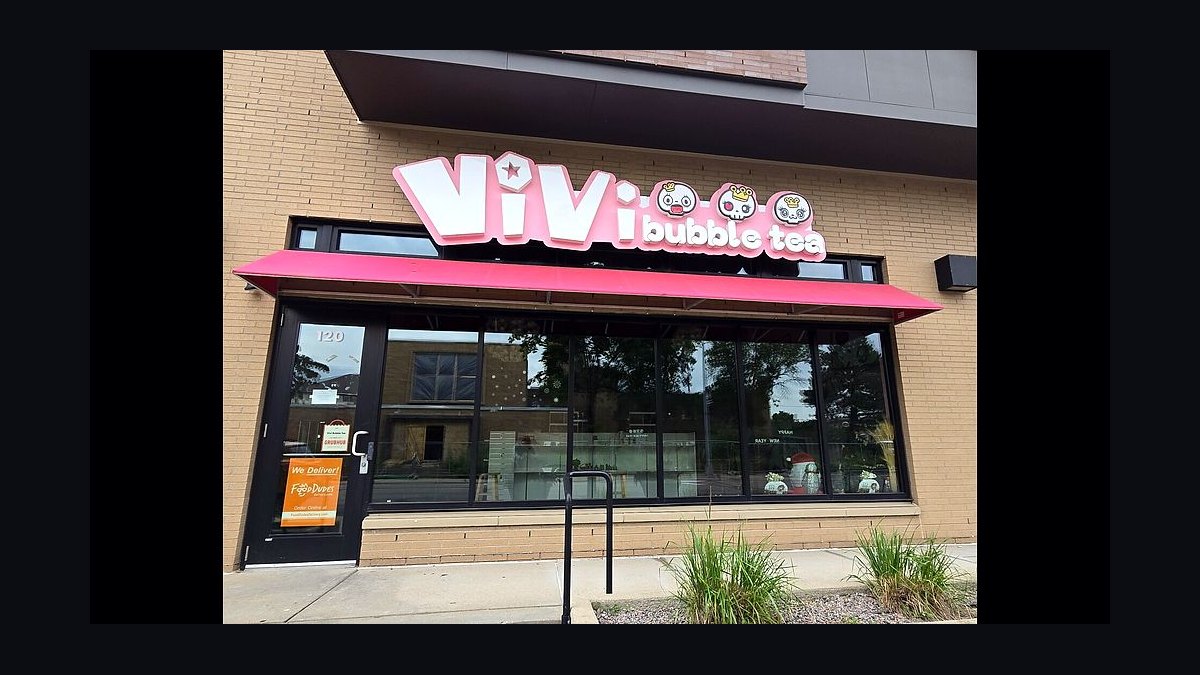
Open a Vivi Bubble Tea franchise only if your market is dense, young, and already boba-literate; buy an existing Vivi if you want proven sales and a shorter runway to cash flow. New builds cost roughly $150K–$400K per the 2026 FDD. Existing shops cost more upfront but eliminate build-out risk entirely.
Building new versus buying an existing Vivi shop
These are two genuinely different businesses wearing the same logo, and most prospective franchisees never think that through before they sign.
Opening new means you pay the ~$25,000 franchise fee, pick your own site, negotiate your own lease, and carry every dollar of build-out risk. The 2026 FDD puts total Item 7 investment somewhere around $150,000 to $400,000 — a wide band, because the low end assumes you're taking over a space that already has a grease-free kitchen, three-compartment sink, adequate electrical, and a functioning HVAC system, while the high end assumes raw vanilla shell in a new-construction strip center where you're paying for plumbing runs, panel upgrades, a grease interceptor you may or may not need, and every square inch of finish. The gap between those two scenarios is not marginal. It is the difference between opening on $180K and opening on $340K, and it's decided almost entirely by what was in the space before you.
The upside of opening new: you choose the trade area. Nobody hands you a location that was failing for reasons the seller declined to mention. You get a clean brand impression, a grand opening moment you can actually market around, and a lease you negotiated rather than assumed. You also get to design the workflow — where the sealing machine sits relative to the pickup counter matters more than new operators expect, because a bad line of travel costs you fifteen seconds per drink forever.
The downside: you are guessing. Every sales number in your model is a projection. You will burn four to eight months from signing to opening — longer in dense urban markets where permitting, health department sign-off, and landlord approvals stack up — and during those months you're paying rent on a space producing nothing. Then you spend another three to nine months climbing the sales ramp. In a boba shop, that ramp is real: the category is habit-driven, and habits form slowly. You are not busy on day one because a bubble tea shop earns its regulars one visit at a time.
Buying an existing Vivi flips the risk profile. You are purchasing a revenue stream you can inspect. You get real POS data, real daypart curves, a real labor schedule that someone already tuned, a staff that knows how to cook pearls, and a customer base with existing habits. Your ramp is measured in weeks of transition rather than quarters of discovery. If the shop grosses $450,000 and you can verify it through bank deposits and merchant statements, you're buying a known quantity.
The catch is threefold. First, price: profitable shops sell at a multiple of earnings, typically somewhere in the two-to-three-times-adjusted-EBITDA range for small food-and-beverage franchises, and that premium comes on top of the assets. Second, you inherit everything — the lease term (including how few years remain, which is often the actual reason it's for sale), the equipment age, the deferred maintenance, the staff's habits both good and bad, and any reputation the shop has built locally. Third, healthy franchises rarely hit the open market. The ones that do are frequently being sold because the owner is tired, the lease is expiring, a competitor just opened two doors down, or the numbers are trending in a direction the P&L doesn't show at a glance.
There's a third option worth naming: buying a distressed or closed Vivi location and reopening it. You get the build-out at a fraction of new cost — often the equipment package alone is worth $50K–$100K — but you inherit the trade area that killed the previous operator. Sometimes that's a fixable operational problem. More often it's a traffic problem, and traffic problems do not respond to better management.
Reading the market before you commit either way
Bubble tea is a demand-concentrated category. That single fact should drive your decision more than any spreadsheet.
Vivi's footprint is heaviest in New York, California, Texas, and Florida — dense metros with large Asian-American populations, significant international student enrollment, and neighborhoods where boba is not a novelty but a default. In those markets, you don't have to teach anyone what tapioca pearls are or why the drink gets sealed instead of lidded. Category education is free. The customer walks in already knowing they want 50% sugar, less ice, and pearls.
Move that same shop to a mid-sized market where boba is still a curiosity, and your economics change fundamentally. Trial is high — people try it once — but repeat frequency collapses. Boba profitability lives on repeat visits. A regular who comes twice a week at $6.50 is worth roughly $675 a year; a curious one-time visitor is worth $6.50 and a photo. You need hundreds of the former, not thousands of the latter.
Here's a practical screen. Walk your target trade area and count boba shops within a half-mile radius, excluding mall food courts. Three or more and you're fighting for share in an established market — Vivi's value positioning can win that fight, since it typically prices in the $4.50–$6.50 range against premium competitors running $6.00–$8.00, but only if you execute on speed and consistency. Zero boba shops in a half-mile might mean untapped opportunity. It far more often means the demand isn't there and someone smarter already checked.
The demographic markers that actually correlate with boba volume: college or university enrollment within two miles, a large high school with open-campus lunch, significant Asian-American or broader Asian-diaspora population, transit adjacency, and evening foot traffic. That last one is underrated. Boba skews afternoon and evening — a lot of shops do 40% or more of daily volume after 3 p.m. — so a location that dies at 5 p.m. when the offices empty is structurally wrong for the format, no matter how good the daytime traffic looks.
Cross-check this against adjacent categories. If the trade area supports a busy poke shop, a Korean corn dog stand, a Japanese dessert café, or a hot pot restaurant with a line, those are the same customers with the same discretionary spend and the same willingness to queue. Their presence is a stronger signal than a generic demographic report. Conversely, a trade area where the only sit-down restaurants are chain steakhouses and a sports bar is telling you something.
The numbers behind each path
Start with the build-new case, using the 2026 FDD's Item 7 range as the frame.
The ~$25,000 franchise fee is fixed and non-negotiable. Leasehold improvements and equipment together run roughly $80,000 to $200,000 — the swing driven almost entirely by whether you're in second-generation food space. Signage and décor to brand spec runs $12,000 to $40,000, and in urban markets with sign ordinances and landmark districts, permitting alone can eat weeks and thousands. Opening inventory — tea leaves, tapioca starch, syrups, jellies, cups, lids, sealing film, straws — runs $8,000 to $22,000. Training and travel for you and your first crew: $5,000 to $18,000. Grand opening marketing: $10,000 to $30,000, and Vivi will expect a local plan, not just a banner.
Working capital is where new franchisees under-budget most reliably. Three months is the number people write down. Six is the number that keeps you solvent. Budget $30,000 to $80,000 of genuine working capital that is not earmarked for anything else, because the sales ramp is slower than your pro forma and payroll doesn't wait.
Add it up honestly and realistic all-in cash need for a new Vivi lands around $180,000 to $340,000. Financing typically comes through an SBA 7(a) loan — franchise concepts on the SBA Franchise Directory tend to move through underwriting more smoothly — covering up to 85% of project cost for qualified borrowers, plus equipment leasing for the sealing machines, brewers, and refrigeration. At small-business rates in the 8%–12% range, a $250,000 loan over ten years services at roughly $3,000–$3,600 monthly. That's a real line on your P&L and it is not in the Item 7 number.
Now the operating model, which governs both paths. A mature Vivi shop grosses somewhere in the $300,000 to $700,000 range annually. Take a $500,000 shop:
Beverage COGS runs roughly 25%–30% of revenue — call it 28%, or $140,000. Boba economics are genuinely good; a drink costing $1.60 to make sells for $6.00, which is why the category attracts so many operators. Labor lands 26%–32%; at 29% that's $145,000, and in California or New York with minimum wages in the $16–$18 range you are pushing the top of that band unless your scheduling is disciplined. Occupancy — rent, CAM, insurance, utilities — runs about 11%, or $55,000, though a prime urban corner will exceed that meaningfully. The royalty is around 6% of gross, $30,000. Marketing fee roughly 2%, $10,000. Other operating expenses — supplies, repairs, credit card fees, delivery-platform commissions — run another 11% or so, $55,000.
That leaves $65,000 to $130,000 in owner profit on a $500,000 shop, and the spread within that range is almost entirely occupancy and labor discipline. Note what's excluded: debt service. If you financed $250,000, subtract $36,000 to $43,000 annually. A shop clearing $95,000 pre-debt is clearing $55,000 after — respectable for a first unit, thin if you're paying yourself a manager's salary out of it too.
The buy-existing math works differently. You're paying for proven cash flow, so the question is payback period, not build cost. A shop with $110,000 of verified adjusted owner earnings priced at $280,000 is roughly 2.5x — reasonable if the lease has runway and the equipment is under five years old. The same shop at $400,000 is 3.6x, and you're paying for optimism. Always adjust seller's discretionary earnings honestly: add back the owner's salary only if you intend to work the same hours, and subtract a market-rate manager's wage if you don't.
Diligence items that change the price: remaining lease term and option periods, any percentage-rent clause, the transfer fee Vivi charges on a franchise resale, whether a fresh franchise term or refresh/remodel obligation triggers at transfer, equipment age and warranty status, and the last three years of monthly sales by daypart rather than annual totals. A shop trending down 8% year-over-year is not worth trailing-twelve-month earnings, and monthly data is the only place that shows up.
Operations that separate the profitable shops
Two operational realities decide whether either path works, and they are unglamorous.
Tapioca management. Cooked pearls have a usable window of roughly four to six hours at room temperature. Past that they harden, lose chew, and become a refund. Overcook them and they turn to mush; undercook and you get a chalky center that customers notice immediately even if they can't name it. The successful pattern is batch-cooking every two to three hours through peak periods, sized to forecast rather than to comfort. Expect to discard 5%–10% of cooked pearls daily in your first six months. Disciplined operators grind that to 2%–3% through demand forecasting and cook-sheet tracking. On $500,000 of revenue with pearls in a meaningful share of drinks, that difference is thousands of dollars a year in pure margin, recovered by doing nothing more than writing down what you cooked and what you dumped.
Tea brewing precision. Black tea wants roughly 175°F–195°F; green tea sits lower, around 160°F–175°F, and over-steeping green tea produces bitterness that no amount of syrup masks. Steep times need to be timed, not eyeballed. This is the single most common source of "this location tastes different" complaints, and in a category where the drink is the entire product, taste inconsistency is a slow-bleeding wound. Standardize with timers, brew logs, and taste checks at each shift change.
Speed of service. Target under three minutes from order to handoff during peak. Boba lines are self-reinforcing in both directions: a fast line pulls people in, a slow line pushes them to the shop down the block. Achieving that means cross-training everyone on every station — brewing, assembly, sealing, cashiering — so the bottleneck moves rather than stalls. Two to three staff during slow periods, four to five during rushes, and a schedule built around your actual daypart curve rather than a generic template.
Supply chain. Vivi's agreement typically requires approved suppliers for tea leaves and tapioca. That runs roughly 18%–22% of beverage revenue and removes your ability to shop around, which is the trade you make for consistency and brand standards. Tapioca starch is largely imported, and the category has seen periodic disruption. Carry a 30-day inventory buffer and model it in your cash flow rather than discovering it during a shortage.

Delivery and third-party platforms. Boba travels poorly — ice melts, pearls harden in transit, sealed cups still leak in a delivery bag. Commissions run 15%–30%. Many operators find delivery volume dilutive to margin and damaging to product quality; others build it into a real incremental channel with dedicated packaging and shorter delivery radii. Decide deliberately rather than defaulting in, and if you buy an existing shop, look hard at what share of its revenue is third-party delivery, because that revenue is worth less than dine-in revenue of the same size.
Seasonality. Cold-drink categories dip in winter, and college-adjacent locations fall off a cliff during breaks. A shop near a campus can lose 30%–40% of volume in December and again over the summer. That is survivable if you planned for it and fatal if your cash flow model assumed twelve equal months. When you review an existing shop's numbers, insist on monthly data for exactly this reason.
Sequencing the decision and the first year
The order in which you do things matters more than the speed.
Read the 2026 FDD front to back, not just Item 7. Item 19 tells you what financial performance the franchisor is willing to represent, and its absence or narrowness is itself information. Item 20 gives you the unit counts — openings, closures, transfers, terminations — over the past three years. Closures and transfers concentrated in a particular region are the most honest signal in the entire document. Item 5 and Item 6 cover fees you'll pay forever.
Then call owners. Not the list of enthusiastic references the franchise development rep offers, but a broad sample from the Item 20 contact list, including the ones who left. Eight is a floor, and ask specific questions: annual gross, what labor runs as a percentage, how long to break even, what they'd do differently, and whether they'd buy the same unit again. That last one produces more honesty than any other question in franchise diligence.
Validate the trade area with your own feet before you validate it with a demographic report. Sit in the parking lot or across the street at 3 p.m. on a Tuesday and 8 p.m. on a Friday. Count people. Watch where they come from and where they go. Demographic software will tell you the population within a mile; it will not tell you that the foot traffic all flows toward the transit stop on the opposite corner.

Whichever path you choose, budget for the first year to be worse than year two. New shops ramp. Acquired shops go through a transition dip as staff turns over and the previous owner's regulars notice something changed. Both recover if the fundamentals are right.
Hold off on unit two until unit one has produced twelve months of stable, verified profit under your own management — not the seller's, not your projection's. Multi-unit is where boba economics genuinely shine, because the small footprint and shared management overhead scale well and a second shop in the same trade area lets you share inventory, cross-schedule staff, and split marketing. But a second unit built on an unproven first unit doubles a problem you haven't diagnosed. The operators who succeed at three and four units almost universally spent a boring, disciplined first year on one.
Related questions
Is buying an existing Vivi always safer than opening new?
No. You inherit the trade area, the lease term, the equipment condition, and the reputation. A shop for sale because a competitor opened nearby or the lease has two years left carries risk a new build doesn't. Safer only when the sales are verified and the lease has runway.
How long until a new Vivi shop breaks even?
Plan for four to eight months from signing to opening, then three to nine months of sales ramp. Break-even on a monthly basis commonly arrives somewhere in months six through twelve after opening. Cumulative cash break-even takes considerably longer, often two years or more.
What multiple do small boba franchises typically resell for?

Small food-and-beverage franchise resales commonly transact around two to three times adjusted owner earnings, with lease term, equipment age, and sales trend moving the number. Verify earnings against bank deposits and merchant statements, never against a seller-prepared summary alone.
Does a second-generation space really save that much?
Yes. Existing plumbing, grease-capable drainage, adequate electrical service, and functioning HVAC can cut build-out by $60,000 to $100,000 and shave a month or more off permitting. It's the single largest controllable variable in your total investment.
Should I worry about boba market saturation by 2027?
Saturation is local, not national. Three or more shops within a half-mile means competing on execution — speed, consistency, and value pricing. Vivi's lower price point helps in student and value-sensitive markets. Saturation kills weak operators; it rarely kills the fastest, most consistent shop on the block.
FAQ
What is the typical total investment for a Vivi Bubble Tea franchise?
The 2026 FDD puts total Item 7 investment at roughly $150,000 to $400,000, including a franchise fee of about $25,000. Where you land inside that range depends mostly on your space — a second-generation food location with existing plumbing and electrical can come in near the bottom, while a raw shell in new construction pushes toward the top. Realistic all-in cash need including contingency is $180,000 to $340,000.
How much can I expect to earn as a Vivi Bubble Tea owner?
Mature shops gross roughly $300,000 to $700,000 annually, with owner profit typically landing between $50,000 and $160,000 before debt service. On a $500,000 shop, beverage COGS around 28%, labor near 29%, occupancy near 11%, a 6% royalty and 2% marketing fee, plus other operating costs, leaves roughly $65,000 to $130,000. Results vary heavily by location, rent, and labor discipline.

What ongoing fees apply?
A royalty of about 6% of gross sales plus a marketing fee of roughly 2%. On a $500,000 shop, that's around $40,000 a year combined, and it's charged on gross revenue rather than profit, which means it's owed in weak months too. Franchise resales also typically carry a transfer fee — confirm the amount in the FDD before you price an acquisition.
How long does it take to open a new Vivi location?
Typically four to eight months from signing the franchise agreement to opening. Site selection and lease negotiation consume the first stretch, then permitting and build-out. Dense urban markets take longer because health department sign-off, sign permits, and landlord approvals stack rather than run in parallel. Budget rent for the dark months before you open.
What location characteristics matter most?
Density, youth, and existing boba familiarity. Look for college or university enrollment within two miles, transit adjacency, evening foot traffic, and a trade area that already supports adjacent Asian food-and-beverage concepts. Boba skews afternoon and evening — many shops do 40% or more of daily volume after 3 p.m. — so a location that empties at 5 p.m. is structurally wrong for the format.
Is this a reasonable first franchise for someone new to food service?
It can be. The investment is low relative to full-service restaurant concepts, the menu is narrow, and the operations are learnable. But it is hands-on daily work, and the failure modes — inconsistent tea brewing, tapioca waste, slow service during peak — all come down to operator discipline rather than strategy. If you don't intend to be in the shop most days during year one, the odds get considerably worse.
Sources
- https://www.ftc.gov/business-guidance/resources/franchise-rule-compliance-guide
- https://www.sba.gov/funding-programs/loans/7a-loans
- https://www.ibisworld.com/united-states/market-research-reports/bubble-tea-stores-industry/
- https://www.grandviewresearch.com/industry-analysis/bubble-tea-market
- https://www.statista.com/topics/9908/bubble-tea-market-worldwide/
- https://www.franchise.org/
- https://www.entrepreneur.com/franchises
- https://www.franchisebusinessreview.com/
- https://www.bls.gov/oes/current/oes353023.htm
- https://www.dol.gov/agencies/whd/minimum-wage/state
Related on PULSE
This page will be disappearing soon. Save it to your device for $1 — or read it free while it is here.
@Kory-White- · if Venmo asks, the last 4 of my number are 2012
This page is gone.
This one is off the shelf now. $1 keeps it on your phone for good — the whole page, pictures and diagrams included.
 franchiseShould I open or buy a Culver's franchise in 2027?
 franchiseShould I open or buy a Jamba franchise in 2027?
 franchiseShould I open or buy a Meineke franchise in 2027?
 franchiseShould I open or buy a Massage Envy franchise in 2027?
 franchiseShould I open or buy a Pizza Hut franchise in 2027?
 franchiseShould I open or buy a Dunkin' franchise in 2027?
 franchiseShould I open or buy a Merry Maids franchise in 2027?
 franchiseShould I open or buy a Rita's Italian Ice franchise in 2027?
 franchiseShould I open or buy a Take 5 Oil Change franchise in 2027?
 franchiseShould I open or buy a Mac Tools franchise in 2027?