


Should I open or buy a Happy Lemon franchise in 2027?
Quality
Certified
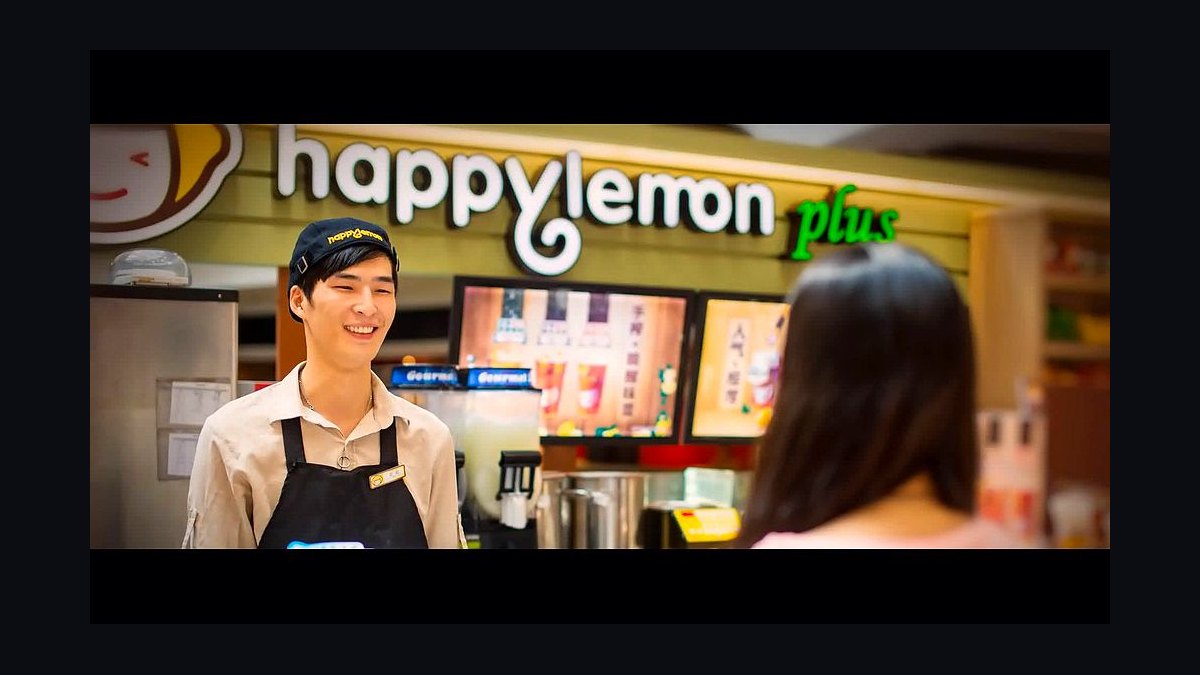
Yes, if you're an operator who wants to open a Happy Lemon franchise built around its signature cheese-foam ("salted cheese") teas, in a young, dense, diverse market — the differentiated product and global brand recognition are real competitive assets. With total investment of roughly $200,000-$500,000, a 6% royalty, and owner profit of $60,000-$160,000 at maturity, it's a capital-efficient, hands-on beverage franchise — but a weak location or unfamiliar market erases the edge fast.
What Happy Lemon is and why opening one matters in 2027
Happy Lemon was founded in 2006 in Taiwan and built its identity around a single innovation: a layer of whipped "cheese foam" — a lightly sweetened, slightly salty cream-cheese topping — poured over iced black or green tea. That one product decision is the whole reason to open a Happy Lemon franchise instead of a generic boba shop. The bubble tea category in the US and globally has been growing for well over a decade, and by 2027 it is a crowded, commoditized space: Gong Cha, Kung Fu Tea, Sharetea, CoCo, Chatime, and thousands of independents all sell variations of milk tea, fruit tea, and tapioca boba. Differentiation inside that category is scarce, and cheese foam is one of the few product innovations that has held up as genuinely distinct rather than a repackaged flavor variant.
This matters commercially in three ways. First, perceived novelty supports premium pricing — Happy Lemon's signature drinks typically run $1-2 higher than a standard milk tea, and that pricing gap survives because customers are paying for an experience, not just caffeine and sugar. Second, the visual distinctiveness of the foam layer drives organic social sharing, which functions as a built-in, low-cost marketing engine in markets with a young, image-conscious customer base. Third, global brand recognition — Happy Lemon operates in 20-plus countries — gives a new franchisee instant credibility in diverse, immigrant-dense neighborhoods where the brand may already be known from Asia or other US metros, shortening the time it takes a new location to build a local following.

The flip side is that the entire value proposition rests on one product mechanic. If a market doesn't respond to cheese foam — because the demographic skew is wrong, because a local competitor already owns the "specialty tea" positioning, or because the novelty genuinely doesn't land — a Happy Lemon location is just an expensive, mid-tier boba shop with higher royalty obligations than an independent competitor. Before signing anything, a prospective franchisee needs to validate that the specific trade area they're considering actually has the population density and cultural familiarity with specialty tea that makes the differentiation work, rather than assuming the concept travels automatically because it has traction elsewhere.
The step-by-step process to open a Happy Lemon franchise
Opening any beverage franchise is a sequential process where each stage gates the next, and skipping steps to "save time" is the single most common cause of a troubled opening. The process typically runs 6-12 months from signed agreement to grand opening, broken into five phases: disclosure review, validation, site selection, build-out, and training/launch.

The first phase — disclosure review — is where most of the real due diligence happens, and it's also where prospective owners rush. The FDD lays out the franchise fee (commonly $25,000-$40,000), the royalty structure (around 6% of gross sales), a marketing fee (roughly 2%), and — critically — Item 19, the financial performance representations, if the franchisor provides one. A serious buyer reads Item 19 line by line and then calls a minimum of eight to ten existing franchisees, specifically asking about actual average unit volume, how long it took to hit breakeven, and what the royalty and marketing fees feel like against real cash flow rather than the pro forma numbers in the sales deck.
The second phase, trade-area validation, is specific to a differentiated-product brand like Happy Lemon in a way it wouldn't be for a plain coffee shop. This means pulling census tract data on population density, median age, and ethnic composition, and physically walking the proposed trade area to count competing boba and specialty-tea shops within a 10-15 minute drive. A location near a university, a dense Asian-American retail corridor, or a diverse urban core with a 21-40 median age skew is structurally different from a suburban strip mall with an older, less dense population — and the brand's own performance data bears this out repeatedly.
Site selection and lease negotiation follow, and this is where the five-year minimum lease term that Happy Lemon typically requires becomes a real constraint: a bad location commitment is a five-year mistake, not a one-year one. Build-out follows brand specifications for a 600-1,400 square foot footprint with a tea kitchen designed around the cheese-foam process — whipping equipment, cold storage, and a counter workflow optimized for drink assembly speed, since peak-hour throughput of 80-150 orders per hour requires a layout that doesn't bottleneck at any single station. Training is typically a two-week brand program covering drink recipes, the cheese-foam process specifically (which requires more precision than a syrup pour), equipment sanitation, and POS operation, followed by a soft-open period before the full marketing push.
Costs, timelines, and typical ranges

The total investment to open a Happy Lemon franchise runs roughly $200,000 to $500,000, and understanding where that money actually goes — rather than treating it as a single lump sum — is what separates a franchisee who budgets correctly from one who runs out of working capital in month four.
Leasehold improvements and build-out typically account for $85,000-$230,000, the single largest line item, because the tea-kitchen buildout is specialized rather than generic restaurant space. Equipment and POS — brewing stations, cheese-foam whippers, sealers, refrigeration, and a tablet-based point-of-sale system — run $55,000-$140,000. Signage and brand-prescribed decor add $14,000-$45,000, since Happy Lemon's store identity is part of what customers are paying a premium for and the brand controls it tightly. Initial inventory (tea leaves, the proprietary cheese-foam mix, boba, toppings) runs $9,000-$26,000, and initial grand-opening marketing is budgeted at $10,000-$32,000. Training and travel for the operator and key staff is a comparatively small $6,000-$20,000, and working capital for the first three months of operation — payroll, rent, and inventory before cash flow stabilizes — should be budgeted at $30,000-$80,000 and never treated as optional padding.

On top of the upfront investment, ongoing fees are a fixed cost that doesn't flex with a slow month: roughly 6% of gross sales as royalty plus about 2% for marketing, meaning a store doing $500,000 in annual revenue sends roughly $40,000 a year back to the franchisor regardless of how thin that year's margins run.
Revenue at maturity for a well-run location falls between $350,000 and $750,000 gross. After beverage cost of goods (roughly 26-30%), labor (26-32% of gross, and trending toward the higher end as minimum wages in core target markets like California, New York, Washington, and Illinois climb toward $15-18/hour), occupancy, the royalty and marketing fees, and remaining operating expenses, restaurant-level margins typically land in the 8-19% range, producing owner profit of roughly $60,000-$160,000 a year. That is a wide band, and where a specific store lands inside it is driven almost entirely by location quality, labor management discipline, and how well the market actually embraces the cheese-foam product — not by anything the franchisor controls after the doors open. Financing a purchase at this scale commonly runs through an SBA 7(a) or 504 loan, which typically requires a 20-30% cash down payment and a credit profile in the high-600s or better, so a realistic liquidity floor for a serious applicant is $70,000-$160,000 in accessible cash before debt.
Where operators get it wrong

The single most common mistake is treating brand recognition as a substitute for local validation. Happy Lemon's global footprint and visual identity create an impression of guaranteed demand, but a franchisee who signs a lease in a trade area without directly confirming that the local population has either existing familiarity with specialty tea or a demonstrated appetite for trying novel beverage concepts is gambling on an assumption the brand's own marketing encourages but doesn't guarantee. The fix is unglamorous: walk the trade area, count the competing boba shops, and talk to people who actually live and work there before committing to a five-year lease.
A second recurring error is underestimating labor intensity and turnover. The cheese-foam process is genuinely more labor- and skill-intensive than pouring a syrup-based drink — it requires temperature control, proper whipping technique, and consistent storage discipline — and quick-service beverage turnover commonly runs 50-80% annually. Owners who treat the two-week brand training program as sufficient and don't invest in their own ongoing cross-training, shift-lead career paths, and tip-sharing structures see inconsistent drink quality, which directly undermines the one thing (a reliably excellent signature product) that justifies the premium price point in the first place.
Third, many new franchisees underprice the real cost of third-party delivery. By 2027, delivery through platforms like Uber Eats and DoorDash commonly accounts for 20-35% of a specialty beverage shop's revenue, but commission fees of 15-30% on those orders compress margin substantially if the menu and operations aren't adapted for it. Operators who don't streamline customization options for delivery orders or negotiate better commission terms end up subsidizing a growing share of their revenue at razor-thin or negative contribution margin.

Fourth, commodity and input-cost volatility is routinely underbudgeted. Tea, dairy for the cheese foam, sugar, and tapioca have all seen double-digit annual price swings tied to weather events and supply disruptions originating in Taiwan and Southeast Asia; a franchisee who builds a pro forma around a single static ingredient cost, rather than a 10-25% volatility band, will be caught flat-footed the first time a drought or shipping disruption hits.
Finally, operators sometimes mistake the brand's broad category tailwind (bubble tea's long growth run) for guaranteed durability of the specific cheese-foam niche. Food and beverage fads — frozen yogurt and the cupcake boom are the frequently cited cautionary examples — can peak and decline over a 5-10 year horizon even while the parent category keeps growing. A franchisee signing a long-term lease in 2027 should have a candid view of how much of the business case depends on cheese foam staying novel versus the brand's broader execution and service quality carrying the location if the specific product trend cools.
Decision framework: when to choose Happy Lemon vs. the alternatives
The decision to open a Happy Lemon rather than a competing boba concept, an adjacent beverage franchise, or an independent shop comes down to three variables: how strongly the target market responds to cheese foam specifically, how much capital and operating bandwidth the prospective owner has, and how much the owner values brand backing versus full creative and pricing control.

If the trade area doesn't clearly skew young, dense, and culturally familiar with specialty tea, the right move is either to keep looking for a better site or to pick a broader-menu competitor like CoCo or Chatime whose appeal doesn't depend on one differentiated product resonating. If the capital isn't there — particularly the $70,000-$160,000 in liquid reserves beyond financed debt — a lower-investment format like Vivi Bubble Tea is a more honest fit than stretching into a Happy Lemon buildout. If the market and capital both check out but the owner's real priority is menu and pricing freedom rather than a recognized name, an independent cheese-foam shop avoids the 6%-plus royalty and marketing fee stack entirely, at the cost of starting with zero brand recognition. And even for an owner who clears every other filter, the operational reality — 50-60 hours a week, a young and high-turnover labor pool, and a precise production process — means the decision should also include an honest assessment of whether the owner intends to run the floor personally or needs to have a strong general manager identified before signing.
Related questions
How long does it take to open a Happy Lemon franchise from signing to opening day?
Typically 6-12 months, covering disclosure review, trade-area validation, lease negotiation, a build-out phase for the specialized tea kitchen, and the two-week brand training program before a soft open.
What's the minimum lease term Happy Lemon requires?
Franchise agreements commonly require a minimum five-year lease with renewal options, which is why trade-area validation before signing matters more than it would for a shorter-term commitment.
How much of a Happy Lemon location's revenue comes from delivery apps?

Often 20-35% by 2027, but third-party commissions of 15-30% mean delivery-heavy locations need a streamlined, delivery-optimized menu to protect margin.
Is Happy Lemon a good fit for a first-time franchisee with limited restaurant experience?
It can work, but the cheese-foam production process is more technical than a typical quick-service drink, and the 50-80% annual staff turnover common to the category rewards owners with real hands-on labor-management experience.
How does Happy Lemon compare to opening a Kung Fu Tea or Gong Cha franchise instead?
Those brands compete on broader, more familiar menus rather than one signature differentiated product; they may suit markets less receptive to cheese foam specifically, generally at comparable investment ranges.
FAQ
What is the typical total investment for a Happy Lemon franchise? Total investment runs roughly $200,000 to $500,000, covering leasehold build-out, equipment, signage, initial inventory, training, and working capital. Actual cost depends heavily on local real estate prices and the size of the space.
How much can a Happy Lemon franchise owner expect to earn? Mature locations typically gross $350,000-$750,000 annually, with owner profit after all costs — including the roughly 6% royalty and 2% marketing fee — landing in the $60,000-$160,000 range, varying widely by location and operational execution.

What makes Happy Lemon different from other bubble tea brands? Its signature cheese-foam ("salted cheese") topping over iced tea is a genuine product differentiator in a category where most competitors sell variations of the same milk-tea and fruit-tea formats, supporting both premium pricing and organic social-media visibility.
What are the ongoing fees after opening a Happy Lemon franchise? A royalty of roughly 6% of gross sales plus a marketing fee of about 2%, together amounting to roughly $40,000 a year in fixed fees for a store doing $500,000 in revenue, regardless of that year's profitability.
What's the biggest operational challenge of running a Happy Lemon location? Managing a young, high-turnover workforce through a production process — the cheese-foam whipping and storage steps specifically — that is more technical than a standard syrup-based drink, while keeping throughput fast enough to handle 80-150 orders per hour during peak periods.
Should I open a Happy Lemon if my market doesn't have a strong existing boba culture? Generally no — the brand's core strength (product differentiation and brand recognition) depends on a population that's either already receptive to specialty tea or demographically primed to try it quickly; without that, the royalty burden outweighs the benefit versus a lower-fee independent concept.
Sources
- https://www.entrepreneur.com/franchises
- https://www.franchise.org
- https://www.ibisworld.com
- https://www.statista.com
- https://www.sba.gov/funding-programs/loans
- https://www.franchisebusinessreview.com
- https://www.grandviewresearch.com
- https://www.census.gov
Related on PULSE
- Should I open or buy a Happy Joe's Pizza franchise in 2027?
- How long does it take to open a franchise and break even in 2027?
- Should I open or buy a Tommy Gun's Original Barbershop franchise in 2027?
- Should I open or buy a Kung Fu Tea franchise in 2027?
- Should I open or buy a Gong Cha franchise in 2027?
This page will be disappearing soon. Save it to your device for $1 — or read it free while it is here.
@Kory-White- · if Venmo asks, the last 4 of my number are 2012
This page is gone.
This one is off the shelf now. $1 keeps it on your phone for good — the whole page, pictures and diagrams included.
 franchiseShould I open or buy a Crumbl Cookies franchise in 2027?
 franchiseShould I open or buy a Sonic Drive-In franchise in 2027?
 franchiseShould I open or buy a Planet Fitness franchise in 2027?
 franchiseShould I open or buy a Cinnabon franchise in 2027?
 franchiseShould I open or buy a Mathnasium franchise in 2027?
 franchiseShould I open or buy a Panera Bread franchise in 2027?
 franchiseShould I open or buy a Hand and Stone Massage franchise in 2027?
 franchiseShould I open or buy a Servpro franchise in 2027?
 franchiseShould I open or buy a Jeremiah's Italian Ice franchise in 2027?
 frShould I open or buy a McDonald's franchise in 2027?