


Should I open or buy a Nothing Bundt Cakes franchise in 2027?
Quality
Certified
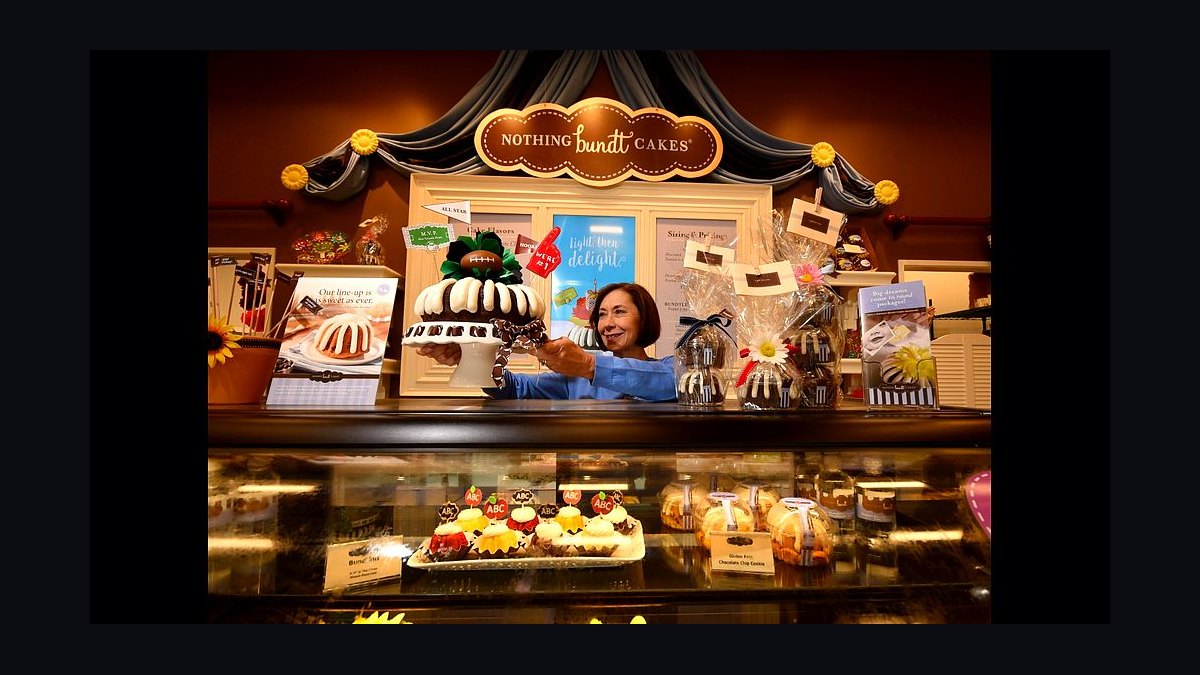
Buying an existing Nothing Bundt Cakes bakery usually beats opening a new one in 2027: you inherit proven sales, trained staff, and immediate cash flow instead of an 8–14 month build-out and a slow ramp. Open new only if you have a strong untapped suburban trade area and $150,000–$300,000 in liquid reserves beyond the build.
Resale versus new build: two genuinely different businesses
People treat "open or buy" as one decision with two checkout buttons. It is not. A resale and a new build differ in what you are actually purchasing, when the money moves, and what skill the first year demands of you.
When you buy an existing Nothing Bundt Cakes bakery, you are purchasing a revenue history. There is a P&L with two or three years of trailing numbers, a customer list, an established corporate-gifting book, a decorated staff who know the frosting-petal technique, and a lease with known terms. The price is typically expressed as a multiple of seller's discretionary earnings (SDE) — in food franchising, resales commonly trade in the 2.5x–4x SDE range, with stronger multiples going to bakeries with long lease terms, low owner involvement, and clean books. On top of the purchase price you pay a transfer fee to the franchisor (usually a fraction of the current initial franchise fee), plus legal, escrow, and often a required remodel reserve if the store is nearing its refresh cycle.
When you open, you are purchasing an option on a trade area. You pay the initial franchise fee, sign a 10-year lease before you have a single customer, spend months on permits and equipment, and then absorb a ramp period during which revenue climbs from opening-week novelty, dips in months two through four, then builds toward a steady-state as birthday-cycle repeat customers and corporate accounts accumulate. The reward is that a well-sited new bakery is worth more than you paid for it within a few years — you captured the development spread yourself instead of paying a seller for it.

The trade-off compresses to this: a resale converts capital into cash flow immediately but at a premium price and with inherited problems. A new build converts capital into equity slowly, at cost, but with a long period where you fund losses and cannot prove the site works. If you need income in year one — because you are leaving a salaried job and have no other household income — the resale is almost always the right structural answer, even at the higher entry price. If you have runway and want to build asset value, and you can identify a trade area the brand hasn't reached, the new build pays better over a seven-to-ten-year hold.
A third path deserves mention because franchise buyers routinely miss it: buying a distressed or underperforming unit. These trade at low multiples precisely because the seller is tired or has mismanaged the corporate channel. If the reason for underperformance is fixable — weak local marketing, no B2B outreach, poor staffing, bad hours — you get the resale's instant infrastructure at closer to new-build pricing. If the reason is structural — wrong trade area, terrible parking, a lease at above-market rent with six years left — no operator fixes that, and you have bought someone else's mistake at a discount that isn't a discount.
What each option actually costs you in the first eighteen months
Franchise brochures compare the initial investment. That comparison is misleading because it stops at the door-opening moment and ignores the eighteen months that follow, which is where the real financial divergence lives.

The new-build path. The Item 7 total investment for a Nothing Bundt Cakes bakery has run in the neighborhood of $550,000 to $1,100,000, anchored by an initial franchise fee around $45,000. The spread inside that range is driven almost entirely by three line items: the condition of the space you take (a second-generation food space with existing hoods, grease traps, and three-phase power can save six figures over raw vanilla shell), local permitting and impact fees, and equipment pricing at the moment you order. Build-out and leasehold improvements typically consume $250,000–$580,000 of the total; ovens, mixers, refrigeration, and POS another $150,000–$320,000; brand-prescribed signage and decor $25,000–$75,000; opening inventory $12,000–$30,000; grand-opening marketing $20,000–$55,000; training and travel $10,000–$28,000; and working capital $55,000–$140,000.
Treat that last line skeptically. Working capital in an Item 7 table is the franchisor's estimate for an initial period, not a survival budget. A bakery that opens in a soft month, or that takes longer than planned to build its corporate book, can burn through the low end of that range before it reaches breakeven. Underwrite your own number: total the first six months of rent, payroll at a realistic staffing level, royalty, marketing fee, insurance, utilities, and loan service, then assume revenue covers only 60% of it. Whatever gap that produces is your true working-capital requirement, and it usually lands above the FDD's low end.
The resale path. Here the arithmetic runs differently. Say a bakery grosses $1.3 million and produces $220,000 in SDE after a reasonable manager's salary is added back. At a 3.2x multiple, the asking price is roughly $700,000. Add a transfer fee, roughly $25,000–$45,000 in legal and diligence costs, an inventory adjustment at closing, and a working-capital cushion of $75,000–$125,000 — smaller than a new build's, because revenue starts on day one. You are in for somewhere near $850,000 all-in, which sits in the upper half of the new-build range. But the day after closing, the ovens are running, the staff shows up, and the phone rings with a corporate order.

The margin structure both paths converge on. Once mature, a bakery's income statement looks broadly similar regardless of how you acquired it. Food cost typically runs 28%–32% of sales. Labor runs 26%–32%, and it is the line most under your control — batch baking in the morning and decorating through the day is genuinely more labor-efficient than a made-to-order model, but only if you schedule to the order book rather than to habit. Occupancy commonly lands 8%–11% depending on how disciplined you were on the lease. Royalty sits near 5%–7% of gross, with a marketing fee of roughly 2%. What's left after other operating expenses — utilities, insurance, packaging, credit-card fees, repairs — produces store-level margins in the 13%–20% band. On $900,000 to $2,000,000 in gross revenue, that produces owner earnings roughly in the $130,000–$350,000 range, before debt service and before you pay yourself for the fifty hours a week you actually work.
Debt service is the quiet variable that decides which path is survivable. An SBA 7(a) loan on a new build amortizes over ten years for the business portion, and the payment starts before revenue does. On a resale, real estate–free acquisition loans also run ten years, but the cash flow that services them already exists and can be underwritten from tax returns rather than projections — which is precisely why lenders approve resales faster and at better terms. If a bank is hesitant on your new-build projections but eager on a resale package, that is not an inconvenience; it is a third party with money at risk telling you which risk is smaller.
A decision framework you can actually run
Most buyers decide emotionally and then hunt for numbers that agree. Invert it. Run the sequence below and let the answer fall out.

Start with liquidity and income need, because those two constraints eliminate more candidates than anything else. If you cannot personally cover twelve months of household expenses from savings or a spouse's income, you cannot responsibly take the new-build ramp, and the question is settled. Next test the trade area. Nothing Bundt Cakes performs as a destination retail concept, not an impulse one — a large share of revenue is pre-ordered rather than walked in — so what you need is households with disposable income and celebration frequency inside a ten-minute drive, adequate and easy parking, and no existing unit close enough to split your gifting demand. Then test your own operating posture honestly: are you going to be in the bakery, or are you hiring a general manager on day one? A resale with a tenured manager tolerates a semi-involved owner far better than a new build, where the first year genuinely requires the owner on the floor learning the product, the rhythms, and the staff.
Two refinements make this framework sharper. First, run the resale test even if you intend to open — pulling financials on three or four listed units in your region calibrates what real bakeries earn far better than any published average, and gives you a defensible number to plug into your own pro forma. Second, ask the franchisor's development team where they will and will not award a territory before you fall in love with a site. Brands with mature footprints generally prefer to fill in around existing units for supply-chain and marketing efficiency; a first-time franchisee proposing a site far from any existing bakery is a harder approval than one filling a gap in a market the brand already serves.
Diligence that actually protects you
On a resale, the seller's tax returns are the anchor document, not the P&L they hand you. Reconcile three years of returns against POS data and bank deposits. Then interrogate the revenue mix specifically: what share is pre-ordered versus walk-in, and what share is corporate? A bakery leaning heavily on two or three large corporate accounts is more fragile than its top line suggests, because those relationships often belong to the departing owner personally. Ask to see the account list and whether anyone besides the owner has a relationship with each buyer.
Inspect the lease with the same intensity you inspect the numbers. Remaining term matters enormously — a bakery with three years left and no options is a bakery you may have to relocate at your own expense, and a relocation costs most of a new build. Confirm the assignment clause, any personal-guarantee requirement, the CAM reconciliation history, and whether the landlord has a right to relocate you within the center. Then check the franchise agreement's remaining term and the remodel obligation. Many agreements require a refresh at renewal or on a fixed cycle; buying a unit two years from a mandated remodel means budgeting that cost as part of the purchase price whether or not the seller mentions it.
Finally, spend a week in the store before closing. Watch the morning bake, count the pickup traffic at 4 p.m. on a Friday, and note who on staff actually holds the operation together. Franchise buyers regularly discover after closing that the "system" was one exceptional assistant manager who leaves within ninety days.
On a new build, diligence shifts to the FDD and to other franchisees. Item 19 gives you the franchisor's financial performance representation — read exactly what population it describes, because averages that include only mature units in established markets will overstate what a new unit earns in year one. Item 20 gives you the unit counts, openings, closures, transfers, and terminations, plus the contact list for current and former franchisees. Call at least eight current owners and, importantly, at least two former ones. Ask current owners a specific question — "what were your first twelve months of monthly sales?" — rather than a general one. Ask former owners why they left. That second conversation is the one most buyers skip and the one that most often changes a decision.
Validate the site independently of the broker and the franchisor. Sit in the parking lot at the hours your customers will come. Count how many spaces are realistically available at 5 p.m. A destination pickup concept dies quietly in a center where the anchor tenant's customers occupy every space near your door.
Sequencing the eighteen months after you commit

The order of operations differs sharply between paths, and getting it wrong costs months.
For a new build, work backward from the opening date. Weeks one through four go to the FDD, franchisee calls, and a personal financial statement clean enough for a lender to pre-qualify you. Weeks five through ten are territory approval and site search — run these in parallel, not in sequence, because a great site with no territory approval evaporates while you wait. Weeks eleven through eighteen are lease negotiation and landlord work letter; this is where you win or lose $100,000, and it is worth paying a tenant-rep broker who has done food deals in your market. Weeks nineteen through twenty-six are permitting and design, the phase that most reliably runs long — assume your municipality is slower than you were told. Weeks twenty-seven through forty are construction and equipment installation, overlapping with hiring and the franchisor's in-store training program. The final four weeks are staff training, test bakes, and pre-opening corporate outreach, which almost every new franchisee starts too late.
That last point deserves emphasis. Corporate and gifting revenue is not a channel that appears on its own; it is built by an owner calling HR managers, office administrators, hospital departments, real-estate brokerages, and car dealerships and offering a sample tray. Owners who start that outreach four weeks before opening arrive at their first holiday season with a book of accounts. Owners who wait until after opening spend their first December wondering why their revenue looks like a retail bakery's.
For a resale, sequencing is faster but denser. Letter of intent and diligence run four to six weeks. Franchisor approval — including the transfer application, your qualification, and often attending the training program — runs concurrently and frequently becomes the critical path, so file it early. Lender underwriting takes four to eight weeks and is smoother than new-build underwriting because the historicals exist. Plan a two-to-four week overlap where the seller trains you in-store, and negotiate that into the purchase agreement rather than assuming goodwill. In the first ninety days after closing, resist the urge to change things. Staff are watching to see whether they should look for another job; recipes, hours, and pricing are the brand's decisions anyway. Spend that quarter learning the order book and personally meeting every corporate account.
How this decision generalizes across food franchising
The open-versus-buy calculus you just ran is not specific to bundt cakes, and seeing the general shape helps you sanity-check the specific answer.
Resales are structurally more attractive in mature brands with dense footprints — where most good trade areas are already claimed, where the franchisor is filling in rather than expanding, and where a robust secondary market of retiring owners exists. New builds are structurally more attractive in brands still in their expansion phase, where prime territory is available and the development spread between build cost and market value is wide. A dessert brand that has grown substantially over the past several years sits closer to the first case than the second in its established states, and closer to the second in markets it has barely entered. Where your target market falls on that spectrum should drive your answer more than personal preference does.
The occasion-driven model itself is worth understanding as a category trait rather than a brand slogan. Celebration and gifting demand behaves differently from impulse dessert demand. It is scheduled rather than spontaneous, which makes it forecastable and staff-plannable. It is tied to birthdays and holidays, which recur regardless of whether a category is fashionable. And it is partially B2B, which means a portion of revenue is governed by corporate budget cycles rather than consumer discretionary spending. That combination is why occasion-based dessert concepts have generally proven steadier than novelty-driven ones, where a brand's same-store sales can sag once the social-media novelty fades. It also caps the upside: you will not see the explosive opening-year numbers that a viral concept produces, because your demand builds through a birthday cycle rather than a hype cycle.

The same reasoning transfers to adjacent decisions. If you are weighing a bakery against a gifting concept, a cupcake brand, or a mall cookie franchise, run the identical framework: what share of revenue is pre-ordered, how exposed is the concept to fad fatigue, what is the labor model, and is the brand's footprint mature or expanding in your specific market? Multi-unit ambition changes the answer again — if your real goal is three or four units, buying one existing bakery as a cash-flowing base and then developing additional units off that cash flow is a well-worn path that is far less financially violent than opening three from zero.
One last consideration that buyers underweight: your exit. A bakery you build and operate well becomes a saleable asset priced off its own SDE, and the same multiple math that made a resale expensive to buy makes it lucrative to sell. That means every operating improvement — a stronger corporate book, a manager who runs the store without you, a renewed lease with options — is worth roughly three times its annual dollar value at exit. Whether you open or buy, operate the business as though you are selling it in year six. That single frame improves nearly every decision you will make in between.
Related questions
Is a franchise resale always more expensive than opening new?
Not always. Underperforming units trade at low multiples and can cost less all-in than a new build, especially if the space is already built out. The premium applies to well-run bakeries with clean books, long leases, and established corporate accounts — where you are paying for proven cash flow.
How long until a new bakery reaches steady-state sales?
Plan on twelve to eighteen months. Opening week is inflated by novelty, months two through four typically dip, and real revenue accumulates as birthday-cycle repeat customers and corporate accounts build. Budget working capital against that curve, not against opening-week receipts.
Can I operate semi-absentee?

Eventually, with a strong general manager and proven systems — more realistically on a resale with tenured staff than on a new build. Expect to be in the store full-time for the first six to twelve months regardless of path; product quality and team culture are set in that window.
What kills most new dessert franchise units?
Three things, in order: a bad lease signed under time pressure, insufficient working capital to fund the ramp, and a failure to build B2B and pre-order demand. Site and capital problems are unfixable after signing; the third is fixable but only by the owner doing outreach personally.
Should I buy in a market that already has several bakeries?
Often yes, if territory protection holds and the trade areas are genuinely distinct. Brand density improves local awareness and supply logistics. The risk is overlap in the gifting radius — map the existing units' actual customer draw before assuming a gap exists.
FAQ
How much money do I need liquid, not just total?
Lenders on food franchise deals typically want to see meaningful liquidity beyond the injected equity — commonly 20%–30% of project cost as an equity injection plus a post-close cash reserve. Practically, budget $150,000–$300,000 in accessible cash for a new build and somewhat less for a resale, since revenue starts immediately. Do not count retirement funds you would have to penalize to reach, and do not count a home-equity line you have not actually drawn and confirmed.
What does a Nothing Bundt Cakes bakery typically gross?
Mature bakeries commonly gross in the $900,000 to $2,000,000 range, with owner earnings roughly $130,000 to $350,000 depending on labor discipline, occupancy cost, debt service, and how much corporate and gifting revenue the owner has built. Treat those as ranges, not promises. The FDD's Item 19 is the authoritative source and you should read exactly which units it describes before applying any average to your own site.

How long does the whole process take on each path?
A new build commonly runs eight to fourteen months from signed franchise agreement to opening, with permitting and construction the phases most likely to slip. A resale typically closes in three to five months, gated by franchisor transfer approval and lender underwriting rather than by construction. File the transfer application early — it is more often the critical path than the loan is.
Is the business seasonal?
Demand is occasion-driven rather than seasonal in the vacation sense — birthdays occur every month. You will see pronounced spikes around major holidays, graduation season, and end-of-year corporate gifting, and softer stretches in late winter and mid-summer. Staff and cash-flow plan to that curve. The B2B channel smooths it further, which is one reason building corporate accounts is the highest-leverage activity an owner has.
What ongoing fees should I model?
Model a royalty in the 5%–7% of gross range plus a marketing or brand fund contribution around 2%. Also budget for local marketing you fund yourself, technology and POS fees, required remodels on the franchisor's cycle, and periodic equipment replacement. The fees themselves are unremarkable for food franchising; what surprises new owners is the remodel obligation, because it arrives as a lump sum years after the pro forma was written.
Can I convert this into a multi-unit business?
Yes, and it is a common path. The usual sequence is to stabilize the first bakery, promote or hire a general manager who can run it without you, then develop or acquire the second unit within the same regional cluster so you can share management, catering logistics, and corporate relationships. Franchisors generally favor proven single-unit operators for additional territory, so performance in your first bakery is effectively the application for your second.
Sources
- https://www.ftc.gov/business-guidance/resources/franchise-rule-compliance-guide
- https://www.sba.gov/funding-programs/loans/7a-loans
- https://www.entrepreneur.com/franchises/franchise500
- https://www.franchise.org/
- https://www.ibisworld.com/united-states/market-research-reports/bakery-cafes-industry/
- https://www.bls.gov/iag/tgs/iag722.htm
- https://www.nrn.com/
- https://www.restaurantbusinessonline.com/
- https://www.census.gov/data.html
- https://www.irs.gov/businesses/small-businesses-self-employed
Related on PULSE
This page will be disappearing soon. Save it to your device for $1 — or read it free while it is here.
@Kory-White- · if Venmo asks, the last 4 of my number are 2012
This page is gone.
This one is off the shelf now. $1 keeps it on your phone for good — the whole page, pictures and diagrams included.
 franchiseShould I open or buy a Bruster's Real Ice Cream franchise in 2027?
 franchiseShould I open or buy a Drybar franchise in 2027?
 franchiseShould I open or buy a Chipotle franchise in 2027?
 franchiseShould I open or buy a Bojangles franchise in 2027?
 franchiseShould I open or buy a Wendy's franchise in 2027?
 franchiseShould I open or buy a Merry Maids franchise in 2027?
 franchiseShould I open or buy a Cold Stone Creamery franchise in 2027?
 franchiseShould I open or buy a Mac Tools franchise in 2027?
 franchiseShould I open or buy a Smoothie King franchise in 2027?
 franchiseShould I open or buy a Sonic Drive-In franchise in 2027?