
Should I open or buy a Smallcakes Cupcakery franchise in 2027?
 Curated byKory White · Fractional CRO · Maryland
 PULSEKNOWLEDGE LIBRARY
Open a Smallcakes Cupcakery franchise in 2027 only if you want a lower-capital treats bakery — roughly $200,000 to $450,000 all-in — and you will actively sell occasions, gifting, and ice cream alongside cupcakes. Mature stores gross $350,000 to $800,000 and clear $50,000 to $150,000. Cupcake-only operators in weak locations lose.
The outcome you should expect
Set your expectations against the middle of the range, not the top of it. A Smallcakes bakery that opens in a decent suburban strip center with grocery co-tenancy, run by a hands-on owner who is physically in the store most days, tends to land somewhere between $380,000 and $550,000 in first-full-year gross sales. That is the honest center of the distribution. The stores that gross $700,000 or more are almost always doing something structurally different — heavy corporate catering, a wedding and event pipeline, a second daypart driven by ice cream, or a location with genuinely exceptional visibility. They are not simply selling more cupcakes to walk-in traffic than everyone else.
Translate that revenue into what actually reaches your household. At $450,000 gross, after cost of goods in the 30 to 35 percent band, labor in the high twenties to mid thirties, occupancy running $3,500 to $8,000 a month, a royalty around 5 percent of gross, and a marketing fee on top, you are looking at a restaurant-level margin somewhere between 11 and 18 percent before your own draw. That is $50,000 to $80,000 for a job that will consume 50 to 60 hours a week for the first year and a half. At $650,000 gross with the same cost discipline, the picture improves materially — $100,000 to $150,000 — because your fixed costs (rent, insurance, the base management layer) do not scale with revenue the way food and hourly labor do. This is the single most important financial fact about the concept: the difference between a disappointing Smallcakes and a good one is almost entirely operating leverage on a fixed cost base, not margin improvement.
Expect break-even somewhere between month 14 and month 20 on a cash basis. Operators who staff aggressively for their first holiday season — the natural instinct, because December is genuinely busy — frequently push that break-even into month 22 or later, because they carry that payroll through the January and August troughs before they learn to flex it. Plan for a first year that consumes cash rather than generating it, and size your working capital accordingly. The $30,000 to $80,000 additional-funds line in the disclosure document is a floor, not a comfortable cushion.
One more expectation to calibrate: this is not a semi-absentee business in year one, no matter how it is positioned. Baking starts before 5:00 AM. Decorating requires a skill that is hard to hire and harder to retain. If your plan depends on a general manager running the store while you keep a day job, you are betting your entire investment on a single hire in a role with 40 to 60 percent annual turnover across the category. Some operators eventually get there in year three. Almost nobody gets there in year one.
What drives that outcome
Four variables move the number, and they are not equally weighted. In rough order of impact: location quality, occasion and catering mix, menu breadth beyond cupcakes, and labor stability.
Location quality dominates because a treats bakery converts impulse and proximity, not destination intent. Most people do not drive across town for a cupcake. They buy one because they are already there, or because they need something for tonight's party and your store is on the way. That means daytime foot traffic, arterial visibility with meaningful vehicle counts, and co-tenancy with a grocery anchor or a busy quick-service cluster matter more than the size or finish of your build-out. A beautiful 1,800 square foot store in a quiet retail pocket will underperform a plain 1,200 square foot end-cap next to a busy supermarket, every time.
Occasion and catering mix is the second lever, and it is the one most within your control. Birthdays, graduations, corporate breakfasts, baby showers, teacher appreciation weeks, and small-event orders can plausibly account for 35 to 50 percent of revenue at a well-run store. That business does not walk in. It comes from a deliberate outbound habit: calling the office parks and medical campuses within a couple of miles, getting on the preferred-vendor list at local event venues, showing up at the chamber of commerce, and making it trivially easy for an office manager to place a standing Friday order. Operators who treat their store as a retail counter and wait for the door to open are choosing the bottom quartile.
Menu breadth is the third lever and the one the brand itself has leaned into. Cupcakes alone are a maturing category — past the late-2000s peak, still steady, but not a rising tide. Cakes, cookies, and especially ice cream broaden both the occasion set and the daypart. Ice cream in particular pulls an evening and weekend crowd that a cupcake case simply does not, and it partially offsets the seasonal cupcake troughs. If your pro forma assumes cupcakes carry the store, rebuild it.
Labor stability is fourth but it gates the other three. Decorating is an artistic skill. A decorator who leaves in month seven takes two to three weeks of training and $2,000 to $4,000 of recruiting cost with them, and in the interim you are the one at the piping bag at 5:00 AM instead of calling the office park down the road. Pay above the local floor for your one or two key decorators. It is cheaper than the alternative.
Benchmarks and realistic ranges
Here is the investment picture, drawn from the disclosure document's Item 7 range and the way it typically distributes across line items. A store leases 1,000 to 2,000 square feet and needs a production kitchen behind a retail counter, which is why the build-out is the largest single variable.
| Line item | Low | High | Notes |
|---|---|---|---|
| Franchise fee | $25,000 | $25,000 | Per the current disclosure document |
| Build-out and leasehold | $110,000 | $250,000 | Kitchen plus retail counter; second-generation space saves the most |
| Equipment and POS | $80,000 | $180,000 | Ovens, mixers, refrigeration, ice cream equipment, POS |
| Signage and decor | $14,000 | $45,000 | Brand-prescribed package |
| Initial inventory | $8,000 | $22,000 | Baking supplies and packaging |
| Initial marketing | $12,000 | $35,000 | Grand opening push |
| Training and travel | $6,000 | $18,000 | Operator plus initial staff |
| Working capital | $30,000 | $80,000 | First three months |
| Total Item 7 | ~$200,000 | ~$450,000 | Per the current disclosure document |
Ongoing fees run roughly 5 percent of gross in royalty plus a marketing fee on top. Liquidity requirements typically land in the $70,000 to $150,000 range, with the rest financed — SBA 7(a) is the common path for this size of food franchise, and lenders generally want to see 20 to 30 percent injection plus a personal guarantee.
On the operating side, the ranges worth planning against: cost of goods 30 to 38 percent of revenue, which is higher than a lot of bakery concepts because fresh buttercream and premium ingredients do not come cheap; labor 26 to 35 percent, with skilled decorators commanding a meaningful premium over your counter staff; occupancy $3,500 to $8,000 monthly depending on whether you are in a strip center or an inline mall space. Local digital advertising — Instagram and Facebook specifically, because this is a visually driven category — runs another $500 to $1,500 a month out of your own P&L, on top of the brand marketing fee.
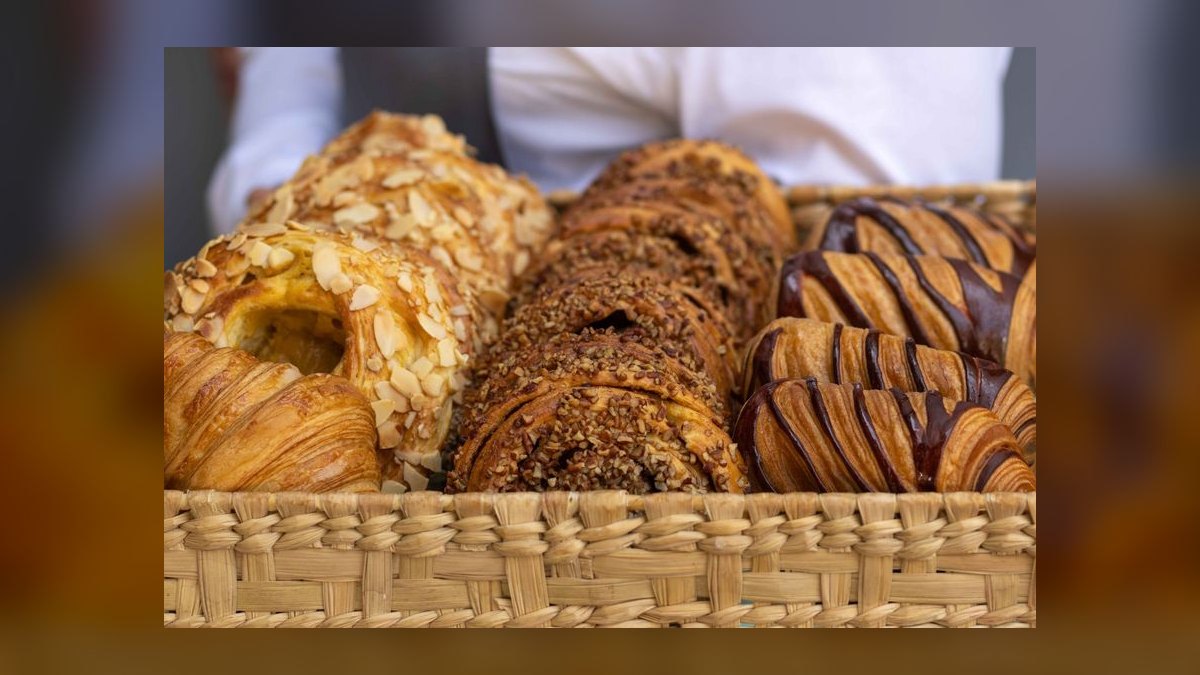
Two numbers people consistently underestimate. First, spoilage: fresh product has a 24 to 48 hour shelf life, and first-year operators commonly run 5 to 8 percent waste before their production forecasting sharpens. On $450,000 of revenue that is $22,000 to $36,000 of pure margin, which is roughly the difference between a decent year and a frustrating one. Second, seasonality: February, May, and December can run 60 to 80 percent above baseline, while January and August drop 20 to 30 percent below it. If you spend the December cash, January will hurt.
For calibration against adjacent concepts: Nothing Bundt Cakes generally requires meaningfully more capital and sells a more durable occasion product with better shelf life. The gourmet cookie brands — Crumbl and its competitors — run hotter and trendier with correspondingly more volatility. An independent cupcake shop costs less and gives you full menu control, but you give up the supply chain, the recipes, the brand recall, and the site-selection support, which for a first-time food operator is usually a worse trade than it looks on a spreadsheet.
Risks, edge cases, and failure modes
The failure modes here are well-worn and largely avoidable, which is what makes them frustrating.

The category-trend bet. The clearest way to lose money is to buy this franchise because you think cupcakes are hot. They were, in 2009. The category is mature now — steady, durable, tied to occasions, but not growing fast. If your business case requires category tailwind, you have no business case. Underwrite it as a stable local treats retailer that lives or dies on execution, and the deal either works at those assumptions or it does not.
The wrong location, locked in for ten years. Mall food courts look attractive on foot-traffic sheets and punish you on lease economics and off-peak hours. Standalone buildings carry overhead the revenue cannot support. A neighborhood without a strong celebration culture — where birthday parties, corporate orders, and event catering are thin — removes the 35 to 50 percent of revenue that separates a healthy store from a marginal one. Before you sign anything, walk the trade area on a Saturday. Count the competing treat concepts within two miles: more than two established ones (a Crumbl, a Nothing Bundt Cakes, a beloved local bakery) and you are fighting for a share of a fixed occasion budget.

Undercapitalization at the working-capital line. This is the quiet killer. Operators fund the build-out precisely and leave themselves three months of thin cushion, then hit a permitting delay, then open into a slow month, then have a decorator quit. Add 25 to 40 percent to whatever the disclosure document's additional-funds line suggests. Cash is the only thing that buys you time to learn the business.
Single-point staffing dependency. If exactly one person besides you can decorate to brand standard, you do not have a staffing plan, you have a hostage situation. Cross-train a third person even if it feels like an unnecessary payroll line. The cost of coverage is always less than the cost of closing the case early on a Saturday.
Seller-side risk on resales. If you are buying an existing store rather than opening one, the diligence is different and harder. Get three years of P&Ls and bank statements, not a summary. Ask specifically why the seller is exiting — a genuine relocation or retirement is fine; a store bleeding on a lease that renews in eighteen months at a 30 percent step-up is not. Verify the remaining franchise term and what a transfer costs. Check whether deferred maintenance on ovens and refrigeration is about to become your capital expenditure. A resale at a discount to build cost can be the best deal in the category or the worst one, and the difference is almost always in the lease and the equipment condition.

The semi-absentee illusion. Worth repeating because it drives more three-year exits than any single financial factor. Anyone selling you on passive ownership of a bakery in year one is selling you something that does not exist.
A practical rollout plan
Work this in phases and do not let enthusiasm compress the diligence window. The disclosure document has a mandatory waiting period for a reason; use it.
Days 1 through 15 — read the document properly. Not the summary, the actual filing. Item 5 and 6 for fees, Item 7 for the investment range, Item 19 for whatever financial performance representation is offered, and Item 20 for the tables showing openings, closures, transfers, and terminations over the last three years. Item 20 is the one people skip and the one that tells you the most. A concept with steady openings and low closures is telling you something. So is the opposite.

Days 16 through 30 — call owners, and call the ones who left. Item 20 lists former franchisees. Talk to eight or more current owners and at least two who exited. Ask specific questions: What is your split between walk-in and order-ahead? What percentage of revenue is catering and events? How much does ice cream actually contribute? What did you net last year after paying yourself a manager's wage? How long did it take to find a decorator you trusted? If you had to do it again, what would you change about the site? Vague answers to specific questions are themselves an answer.
Days 31 through 45 — validate the trade area with your own feet. Do not outsource this to a demographic report. Sit in the parking lot of your candidate site on a Tuesday at 11:00 AM and a Saturday at 2:00 PM and count. Visit every competing treat concept within three miles and buy something. Talk to the office managers at the two largest employers nearby about whether they order breakfast or celebration catering and from whom. You are testing one hypothesis: does this area have a real occasion culture with money attached to it?

Days 46 through 60 — negotiate the lease, not just the site. Second-generation food space with existing hoods, grease traps, and three-phase power can cut six figures off your build-out. Push for tenant improvement allowance, a rent abatement period covering construction plus the first slow month, a co-tenancy clause tied to your anchor, and a personal guarantee that burns off after two or three years. The lease is a longer commitment than the franchise agreement in practical terms; treat it with more care than you treat the franchise paperwork.
Days 61 through 120 — build, hire, and pre-sell. Construction and permitting reliably take longer than promised. Use that time productively: hire and train your decorator early, build a local Instagram presence before you have a store to photograph, and get on the preferred-vendor lists at every event venue and school within your radius. Book catering for opening week before opening week arrives.
Opening and beyond — install the sales habit immediately. In the first 90 days, block time every week for outbound occasion work: office parks, medical campuses, schools, venues, realtors, HR departments planning employee appreciation. Add ice cream and the broader treat menu deliberately rather than treating them as afterthoughts. Track your walk-in versus order-ahead split monthly, because that ratio moving in the right direction is the leading indicator that the store will clear the $450,000 threshold where the economics actually start working.
Related questions
How long until a Smallcakes franchise breaks even?
Cash break-even typically arrives between month 14 and month 20. Operators who overstaff through their first holiday season and carry that payroll into January and August commonly push it to month 22 or beyond. Plan working capital for a first year that consumes cash rather than producing it.
Can I run a Smallcakes Cupcakery as a semi-absentee owner?
Not realistically in year one. Baking starts before 5:00 AM and decorating is a hard-to-hire skill with 40 to 60 percent category turnover. Semi-absentee becomes plausible around year three with a proven general manager and two cross-trained decorators, not before.
Is buying an existing Smallcakes better than opening a new one?
Sometimes, and the deciding factors are the lease and the equipment. A resale below build cost with a favorable lease term and sound ovens is often the better deal. A discounted store with an 18-month renewal at a steep step-up is not a bargain.
How much does ice cream actually add to the business?
Ice cream primarily buys you a second daypart and a partial seasonal offset — evening and weekend traffic that a cupcake case does not attract, and summer volume when cupcake occasions thin out. Treat it as a structural part of the model, not an add-on.
What competing dessert franchises should I compare against?
Nothing Bundt Cakes for a more durable occasion product at higher capital, the gourmet cookie brands for a trendier and more volatile profile, and independent ownership if you want full menu control and can live without brand recall and supply chain support.
FAQ
What is the total investment to open a Smallcakes Cupcakery franchise?
The disclosure document puts the total Item 7 range at roughly $200,000 to $450,000, including a franchise fee near $25,000. Build-out is the largest swing factor — a second-generation food space with existing hoods, grease traps, and adequate power can save six figures against a raw shell. Equipment, initial inventory, grand-opening marketing, training, and three months of working capital fill out the rest. Liquidity requirements generally land between $70,000 and $150,000, with the remainder typically financed through an SBA 7(a) loan carrying a personal guarantee.
What can an owner realistically expect to earn?
Mature bakeries gross roughly $350,000 to $800,000 annually. After food cost in the 30 to 38 percent band, labor in the high twenties to mid thirties, occupancy, the roughly 5 percent royalty, and the marketing fee, restaurant-level margins land around 11 to 18 percent — producing $50,000 to $150,000 of owner profit. The spread is driven almost entirely by operating leverage: below $350,000 gross, fixed costs consume the store and the owner's draw shrinks toward $35,000 to $60,000, which is part-time-job money for full-time hours.
Is the cupcake category still growing?
No, it is mature rather than expanding. Demand is steady and genuinely durable — birthdays, graduations, workplace celebrations, and gifting do not go away — but the late-2000s growth wave is long over. That is not disqualifying; plenty of good businesses operate in mature categories. It does mean you should underwrite the deal on local execution, site quality, and occasion mix rather than on category tailwind, and it means menu breadth beyond cupcakes matters more than it would in a rising market.
What ongoing fees apply?
A royalty of roughly 5 percent of gross sales plus a marketing fee, which is standard for the dessert franchise segment. Budget separately for local digital advertising — Instagram and Facebook in particular, since this is a visually driven category — at $500 to $1,500 monthly out of your own P&L. Some markets also carry regional advertising cooperative contributions. Confirm the current fee structure in Items 5 and 6 of the disclosure document rather than relying on any secondhand summary.
How long does it take from signing to opening?
Most franchisees report four to eight months. Site selection and lease negotiation usually consume the first two to three, build-out and permitting another two to four, with equipment installation and staff training running toward the end. Permitting is the most common source of delay, particularly for a raw shell requiring new hood, grease trap, and electrical work. Use the waiting time productively — hire and train your decorator early and pre-sell catering for opening week.
Do I need baking experience to open a Smallcakes Cupcakery?
No. The franchisor provides recipe, production, and business training, and plenty of successful operators come from outside food service. What matters more is comfort with retail operations, hourly staff management, and — critically — local outbound selling, because the occasion and catering revenue that separates a good store from a marginal one has to be actively hunted. If you dislike calling office parks and event venues, this is the wrong concept for you regardless of your baking skill.
Sources
- https://www.ftc.gov/business-guidance/resources/franchise-rule-compliance-guide
- https://www.sba.gov/funding-programs/loans/7a-loans
- https://www.franchise.org/
- https://www.entrepreneur.com/franchises/directory
- https://www.franchisebusinessreview.com/
- https://www.bls.gov/ooh/production/bakers.htm
- https://www.ibisworld.com/united-states/industry/dessert-restaurants/4353/
- https://www.restaurantbusinessonline.com/
- https://www.nrn.com/
- https://www.census.gov/programs-surveys/acs
Related on PULSE
- [How long does it take to open a franchise and break even in 2027?](/knowledge/fr1104)
- [Should I open or buy a Tommy Gun's Original Barbershop franchise in 2027?](/knowledge/fr1095)
- [Should I open or buy a Painting with a Twist franchise in 2027?](/knowledge/fr1058)
 pulse-toolsHow Many Staff Should I Schedule Each Shift Across My Food Truck Fleet?
 pulse-toolsHow Many Sales Reps Do I Need to Hire for My Office Furniture Dealership?
 tlHow Many Sales Reps Do I Need to Hire for My Merchant Services Company?
 tlHow Many Sales Reps Do I Need to Hire for My Landscaping Company This Year?
 pulse-toolsHow Many Employees Should I Schedule Each Shift at My Movie Theater?
 pulse-toolsHow Many Budtenders Should I Schedule Each Shift at My Cannabis Dispensary?
 pulse-toolsHow Many Cashiers Should I Schedule Each Shift at My Convenience Store Chain?
 pulse-toolsHow Many Sales Reps Do I Need to Hire for My Window Replacement Company?
 tlHow Many Baristas Should I Schedule Each Shift at My Coffee Shop?
 pulse-toolsHow Many Employees Should I Schedule Each Day at My Wine Shop?