


Should I open or buy a MaidPro franchise in 2027?
Quality
Certified
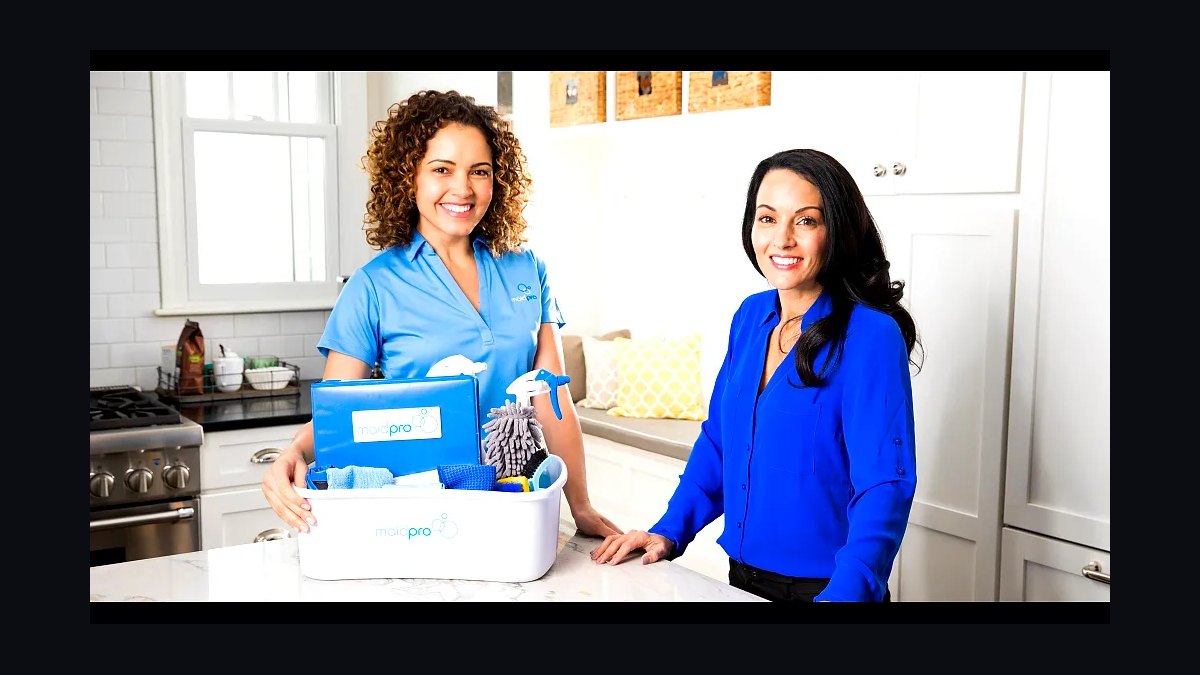
Buy or open a MaidPro franchise in 2027 only if you genuinely want to run a staffing business that happens to clean homes. The economics are attractive — roughly $75,000 to $200,000 all-in, no real estate, recurring revenue — but everything hinges on recruiting and keeping reliable cleaners.
The outcome you should expect
Set your expectations against the actual shape of this business rather than the brochure version. A MaidPro territory that is worked seriously typically follows a predictable arc: a slow first two quarters spent hiring and proving the service, a middle stretch where recurring clients compound faster than churn drains them, and a mature phase where revenue stabilizes and the operator's job shifts almost entirely to labor management and quality control.
In the first 90 days after launch you should expect very little revenue and meaningful cash burn. You are paying for training hours that produce nothing billable, paying for local marketing that has not yet built a reputation, and paying yourself nothing. Most operators describe the first six months as a hole they are climbing out of rather than a business they are running.
By month twelve, a competently run territory in a reasonable suburban market has usually assembled a recurring client base large enough to keep two or three cleaning teams busy through a normal week. That is the inflection point. Recurring residential cleaning is a subscription business wearing work gloves — once a household puts you on a biweekly rhythm, the revenue arrives without a new sale every cycle, and your marketing spend starts working on growth instead of replacement.

The mature-state outcome is what makes people look at this category in the first place. A well-developed territory grosses somewhere in the mid-six figures to low seven figures annually, and the owner's take-home lands somewhere in the range of a strong professional salary rather than a windfall. The reason the margin looks the way it does is structural: cleaning labor is the dominant cost line, and it does not compress with scale the way rent or software does. You do not get dramatically cheaper labor at $1 million in revenue than at $400,000 — you get more of it.
What you should *not* expect is passivity. Nothing about this model runs itself in the first three to five years. Operators who eventually step back do so by hiring a general manager, and that hire only pencils out once the territory can absorb another salaried person. Below that threshold, the owner is the scheduler, the recruiter, the quality inspector, and the person who drives across town at 7 a.m. when someone calls out sick.
The upside outcome, honestly stated: a durable, cash-generating, home-based business with no landlord, no inventory, business hours, and a client base that renews itself. The downside outcome, equally honestly: a business where a bad quarter of turnover can undo a year of client-base building, because every cleaner who quits takes service consistency with them and service consistency is the only thing that keeps a recurring client recurring.
What drives that outcome
Three variables determine almost everything about how a MaidPro territory performs, and they interact rather than operating independently.

Labor cost as a share of revenue. Cleaning wages typically consume roughly half of gross revenue, and that ratio is the single largest determinant of owner earnings. It is also the least controllable. Wages are set by your local market, not by your preferences. In a high-cost metro you may need to pay materially more per hour to fill a schedule, and unless your pricing rises in step, the margin compresses directly. The practical implication: your pricing model has to be indexed to your local wage floor before you sign anything.
Retention on both sides. Client retention and staff retention are the same problem viewed from two ends. A household cancels a recurring service for one of three reasons — price, life change, or inconsistent quality. Of those, only the third is inside your control, and it is driven almost entirely by whether the same trained person shows up week after week. Turnover therefore does not just cost you the recruiting and training expense; it costs you the clients that departing cleaner was serving.
Density. Because cleaners are paid for time and drive time is not billable, revenue per labor hour depends heavily on how tightly your clients cluster. Two clients on the same street are worth substantially more per hour than two clients twenty minutes apart. This is why territory quality is not just about household count — it is about whether those households are concentrated enough to route efficiently.
The loop is the important part. Staffing feeds quality, quality feeds retention, retention feeds density and revenue, and revenue funds better wages and better recruiting — which feeds staffing. Break the loop at any point and it runs backward: churn forces reactive hiring, reactive hiring produces undertrained cleaners, undertrained cleaners produce complaints, complaints produce more churn. Almost every failed home-services franchise story traces to that reversal, not to a lack of demand.
A fourth factor sits underneath all three: your own operating discipline. Scheduling in this business is a daily optimization problem — callouts, reschedules, add-on requests, new client onboarding, and route balance all change every morning. Operators who run it out of a spreadsheet and their memory get worse results than operators who actually use the scheduling and routing tools the franchisor provides, even when both have identical territories.
Benchmarks and realistic ranges

Here are the numbers you should be working from, with the caveat that the Franchise Disclosure Document for the year you buy is the only authoritative source and you must read Item 7 and Item 19 yourself.
Startup capital. The published total initial investment for MaidPro has historically fallen in a range with a low end around the mid-five figures and a high end around $200,000, with a franchise fee in the neighborhood of $25,000. The reason the band is wide is that the model is home-based-capable — an operator working out of a spare bedroom with leased vehicles occupies the bottom of the range, while one leasing a small office and buying a vehicle fleet occupies the top. Budget separately for liquid working capital; payroll runs weekly or biweekly while client payments arrive on their own rhythm, and the float between those two is where undercapitalized operators die.
Ongoing fees. Royalties in this segment are commonly structured on a sliding scale in the mid-single digits as a percentage of gross revenue, decreasing as volume rises, plus a separate brand or marketing fund contribution of roughly a couple of percent. The sliding structure is genuinely favorable — it means the franchisor's take shrinks proportionally exactly when your labor costs are largest in absolute terms. Confirm the current brackets and thresholds in the FDD, because they change between filings.

Cost structure at the unit level. For planning purposes, model cleaning labor at roughly 45–55% of revenue, supplies and vehicle costs in the high single digits, royalty and brand fund combined in the high single digits, and local marketing plus administrative overhead somewhere in the mid-to-high teens. What remains is owner earnings. Run that arithmetic at three revenue levels — a struggling territory, an average one, and a strong one — before you commit, and note how thin the bottom scenario looks. That is the scenario you must be able to survive.
Revenue. Mature, fully developed territories are commonly described as grossing from the mid-six figures into seven figures. But averages hide enormous variance. Two territories with identical household counts can differ by a factor of three based on median household income, the share of dual-income households, housing stock (large single-family homes generate larger tickets than apartments), and how many competing services are already established. Never underwrite a purchase on a national average.
Ramp time. Plan for 18–24 months to reach a stable operating profit, and treat anything faster as upside rather than as the plan. Franchisees who bought during the unusual demand surge of the early 2020s reached profitability faster than is typical; that period is not a useful benchmark for a 2027 purchase.
Buying an existing unit versus opening new. A resale changes the math substantially. You pay a multiple of earnings — home-services businesses of this type generally trade in the low-single-digit multiples of seller's discretionary earnings, with the exact number driven by client contract quality, staff tenure, and owner dependence. In exchange you skip the ramp entirely: existing clients, existing crews, existing cash flow. The risk profile is different, not lower. In a resale, the two questions that matter most are whether the staff will stay through the transition and whether the client base is genuinely recurring or has been propped up by one-time deep cleans. Ask for at least 24 months of month-by-month revenue by client, not an annual summary.
Comparable categories, for calibration. It helps to price this against its neighbors. Commercial janitorial franchises typically require less capital and sell contracted B2B revenue but carry lower per-hour billing and slower payment terms. Lawn care and pest control offer similar recurring-revenue mechanics with seasonality that residential cleaning largely avoids. Home health and senior care carry higher regulatory burden but higher ticket sizes. Restoration franchises have far higher capital requirements and lumpier, insurance-driven revenue. Residential cleaning sits at the low-capital, steady-revenue, labor-heavy corner of that map — which is exactly its appeal and exactly its constraint.
Risks, edge cases, and failure modes
Worker classification. This is the risk most first-time buyers underweight. Residential cleaning has historically been a category where some operators misclassified cleaners as independent contractors. Federal and state enforcement in this area has tightened considerably, and several states apply strict tests that make contractor classification untenable for workers who are scheduled, trained, and directed by you. Misclassification exposure is retroactive and can include back taxes, penalties, and unpaid overtime. If you are buying an existing unit, this is a specific diligence item: ask directly how cleaners are classified and get documentation.
Insurance and bonding gaps. Your people carry keys to strangers' homes and work unsupervised inside them. General liability, a fidelity bond covering theft, workers' compensation, and non-owned auto coverage (for cleaners driving their own vehicles to jobs) are all necessary, and the last one is frequently overlooked. A single uncovered incident — a cleaner's car accident en route to a job, a claimed theft — can generate a loss far larger than a year's profit.
Territory encroachment from outside the system. Your franchise agreement protects you from another MaidPro opening inside your area. It does not protect you from anything else. Independent cleaners marketing on neighborhood social apps, gig platforms, and two-person operations with no overhead and no royalty will compete for the same households at lower prices. Your defense is not price — it is insurance, bonding, background checks, backup coverage when someone is sick, and a real business to complain to. Households that value those things are your market; households that do not were never going to be your clients.
The single-key-employee trap. Many small territories end up with one exceptional cleaner or lead who carries the best clients and effectively holds the quality standard. When that person leaves, the damage is disproportionate. Mitigation is deliberate cross-training and rotating team composition early enough that no client is attached to one individual — which is uncomfortable, because clients prefer the person they know.
Seasonality and macro sensitivity. Residential cleaning is more resilient than discretionary services but it is not recession-proof. It is a line item households can cut, and when they cut, they usually reduce frequency first — biweekly becomes monthly — which shows up as revenue decline without visible client loss. Watch frequency mix, not just client count, as an early warning indicator. There is also a modest holiday-season peak and a summer dip in some markets.
Buying a distressed unit. Resales come to market for a reason. A unit priced attractively often has a client base that has been shrinking, a staffing roster that has churned, or a reputation problem in local reviews. Sometimes that is a genuine turnaround opportunity — you are buying a brand and a system at a discount. But price it as a turnaround, not as a going concern, and assume you will need to rebuild both crew and client list.
Personal fit failure. The most common non-financial failure mode is simply that the owner did not want this job. If you are energized by hiring, coaching, scheduling, and handling the human friction of a workforce, this business fits you. If you are drawn to it because it is cheap to enter and produces recurring revenue, but you dislike people management, you will be miserable and the business will reflect it.
A practical rollout plan

Work the evaluation and launch in defined stages rather than treating it as one decision.
Stage one — document diligence. Get the current Franchise Disclosure Document and read it completely, not selectively. Item 5 and 6 give you fees, Item 7 gives you the investment range and its assumptions, Item 19 gives you whatever financial performance representation the franchisor makes and — critically — the footnotes explaining what population it describes. Item 20 gives you unit counts, openings, closures, and transfers over recent years. That last table is the most honest document in franchising: a system with high closure and transfer rates is telling you something the marketing does not.
Stage two — validation calls. Call current franchisees, including ones the franchisor did not suggest. Item 20 lists them. Aim for eight to ten conversations, weighted toward operators in their second through fifth year, because year-one owners do not yet know their own numbers and ten-year veterans bought under different conditions. Ask specific questions: what percentage of revenue goes to cleaning wages, what your annual staff turnover actually is, how long it took to reach positive owner draw, what you'd do differently, and whether you would buy the territory again.
Stage three — territory underwriting. Pull the demographics yourself. Household count is the headline number, but you want median household income, the share of dual-earner and full-time-employed households, owner-occupied single-family density, and the geographic compactness of the area. Then map the competition — franchise and independent — and read local reviews to see where the service gaps are.
Stage four — capital and structure. Line up financing before you commit. Confirm liquid working capital separate from startup costs, and set an explicit floor: the amount below which you stop and reassess rather than funding losses with personal debt. Decide your entity and get the insurance quotes in writing at this stage, not after signing.
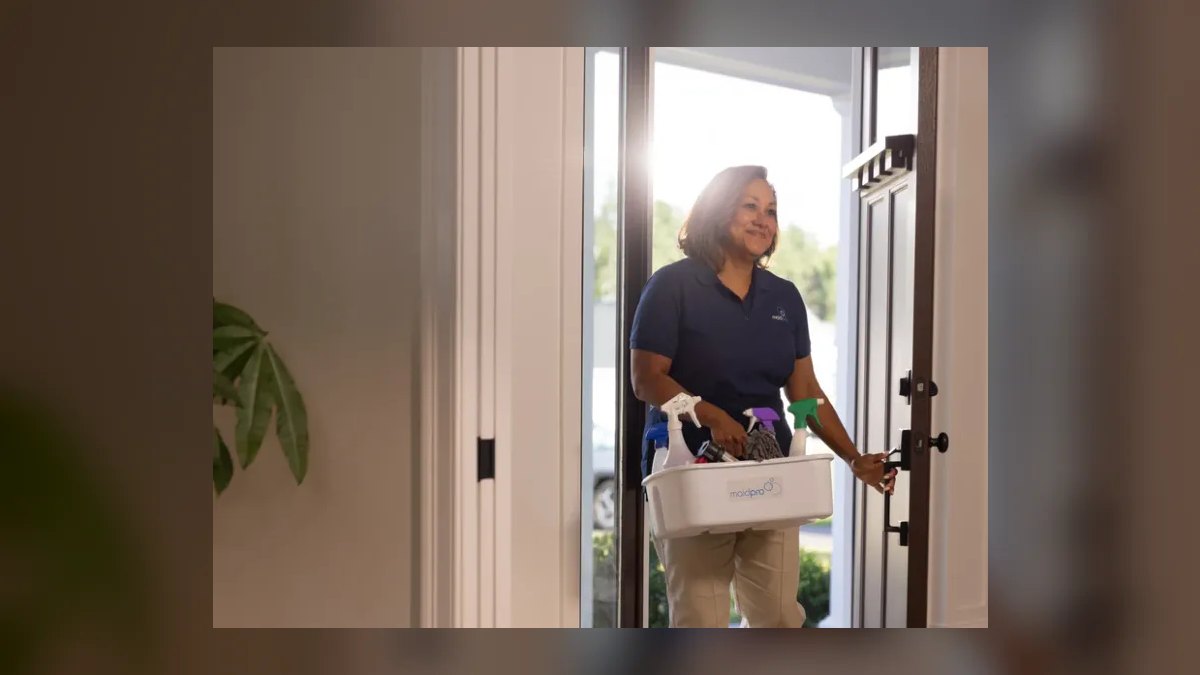
Stage five — recruit before you sell. This inverts most people's instinct and it is the single most useful sequencing decision in this business. Hire and train your first crew *before* you have committed clients, not after. Selling recurring service you cannot reliably staff is how new territories generate their first bad reviews, and in a local service business early reviews are durable.
Stage six — controlled client acquisition. Grow the client base at a rate your crew capacity can absorb. Prioritize geographic clustering over raw client count in the early months — a tight route with fifteen clients outperforms a scattered route with twenty-five.
Stage seven — instrument the business. From day one, track four things weekly: cleaning labor as a percentage of revenue, staff turnover, client retention and frequency mix, and revenue per labor hour. These four numbers tell you nearly everything, and operators who watch them catch problems a quarter earlier than operators who only look at the bank balance.
If any stage produces an answer you do not like, stopping is cheap. Stopping after signing is not.
Related questions
Is it better to buy an existing MaidPro or open a new territory?
Buying skips the 18–24 month ramp and delivers immediate cash flow, at the cost of a purchase multiple and inherited problems. Opening is cheaper up front but you fund the ramp yourself. Buying suits operators with capital and less runway; opening suits those with time and a strong local market.
How much of the work is actually cleaning versus managing?
Almost none of it is cleaning once you are past the first weeks, and even then you clean mainly to learn the standard you will enforce. The job is recruiting, scheduling, quality control, and local marketing. If you want to clean, you want an independent business, not a franchise.
What happens if I cannot hire enough cleaners?
You cap out. Revenue is bounded by billable labor hours, so a chronic staffing shortfall becomes a hard ceiling regardless of demand. The usual failure sequence is overselling capacity, then missing or rescheduling visits, then losing recurring clients. Fix hiring before selling more.
Does residential cleaning hold up in a downturn?
Better than most discretionary services, but not perfectly. Households typically reduce frequency before cancelling outright, so watch your frequency mix as the leading indicator. Higher-income and dual-earner households are the most durable segment, which is another argument for underwriting territory income levels carefully.
How does this compare to a commercial janitorial franchise?
Commercial usually requires less capital and sells contracted B2B revenue with longer terms, but at lower billing rates, slower payment, and night-shift staffing. Residential bills higher per hour and runs business hours, at the cost of higher client churn. Pick based on which staffing problem you would rather own.
FAQ
What does it actually cost to get into a MaidPro franchise?
The published total initial investment range spans roughly the mid-five figures to about $200,000, including a franchise fee in the neighborhood of $25,000. The spread reflects whether you run home-based or lease space, and whether you buy vehicles. Verify current figures in Item 7 of the most recent Franchise Disclosure Document — those numbers are re-filed annually and the FDD is the only authoritative source.
How long before the business supports me financially?
Plan for 18–24 months to a stable owner draw and treat anything faster as a bonus. The variables are how quickly you staff up, how tightly your early clients cluster, and how much marketing spend it takes to acquire a recurring client in your specific market. Undercapitalization is the most common reason owners fail before reaching that point, so size your working capital for the slow case.
Do I need cleaning industry experience?
No, and most successful franchisees do not have it. What you need is genuine competence at hiring hourly workers, building schedules, and handling customer complaints without flinching. The franchisor supplies the cleaning system and training curriculum. It cannot supply your tolerance for the people-management side, which is where the real difficulty sits.
Can I run this as an absentee or semi-passive investment?
Not in the early years. The model requires daily operational involvement — callouts, route changes, quality issues, and hiring all happen continuously. Some owners eventually install a general manager and step back, but that transition typically requires enough revenue to absorb a management salary without gutting the owner's return. Buy this expecting a job first and an asset second.
How defensible is the territory I am buying?
Contractually, it protects you from another unit of the same brand opening inside it. It does not protect you from competing franchise brands, independent cleaners, or gig platforms, and in most suburban markets you will face all three. Your durable advantages are insurance, bonding, screened staff, and reliable backup coverage — things a two-person independent operation genuinely cannot match.
What should I look at hardest during diligence?
Item 20 of the FDD — the table of openings, closures, transfers, and terminations. Unit churn tells you more about system health than any marketing material. Alongside that, call franchisees the franchisor did not select for you, and if you are buying a resale, demand month-by-month revenue by client for at least two years so you can see whether the recurring base is genuinely recurring.
Sources
- https://www.ftc.gov/business-guidance/resources/franchise-rule-compliance-guide
- https://www.sba.gov/business-guide/plan-your-business/buy-existing-business-or-franchise
- https://www.bls.gov/ooh/building-and-grounds-cleaning/maids-and-housekeeping-cleaners.htm
- https://www.dol.gov/agencies/whd/flsa/misclassification
- https://www.irs.gov/businesses/small-businesses-self-employed/independent-contractor-self-employed-or-employee
- https://www.franchise.org/
- https://www.entrepreneur.com/franchises/franchise500
- https://www.census.gov/programs-surveys/acs
- https://www.maidpro.com/franchise/
Related on PULSE
This page will be disappearing soon. Save it to your device for $1 — or read it free while it is here.
@Kory-White- · if Venmo asks, the last 4 of my number are 2012
This page is gone.
This one is off the shelf now. $1 keeps it on your phone for good — the whole page, pictures and diagrams included.
 franchiseShould I open or buy a Kumon franchise in 2027?
 franchiseShould I open or buy an Ace Hardware franchise in 2027?
 franchiseShould I open or buy a Marco's Pizza franchise in 2027?
 franchiseShould I open or buy a Kona Ice franchise in 2027?
 franchiseShould I open or buy a Bahama Breeze franchise in 2027?
 franchiseShould I open or buy a Primrose Schools franchise in 2027?
 franchiseShould I open or buy a Culver's franchise in 2027?
 franchiseShould I open or buy an F45 Training franchise in 2027?
 franchiseShould I open or buy a Cook Out franchise in 2027?
 franchiseShould I open or buy a UPS Store franchise in 2027?