


Should I open or buy a Two Maids franchise in 2027?
Quality
Certified
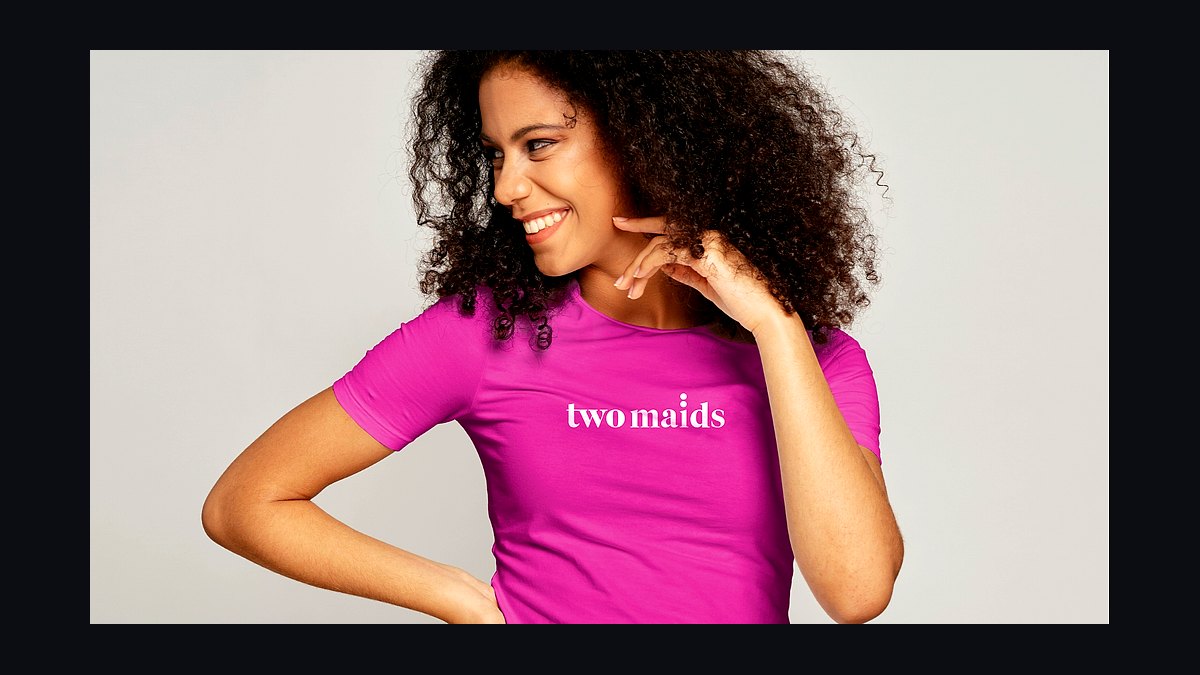
Yes — for an operator who can recruit and retain hourly cleaning staff, opening a Two Maids franchise in 2027 is a sound, low-capital entry into recurring residential cleaning. The brand's pay-for-performance system, tying cleaner pay to customer ratings, is a real structural edge over flat-wage competitors. Total investment runs $95,000–$170,000; mature territories gross $500,000–$1,400,000, with owners clearing $80,000–$220,000 — contingent entirely on staffing execution.
The outcome you should expect
Open a Two Maids franchise in 2027 with adequate capital and a demographically suitable territory, and the realistic trajectory looks like a slow first year, a break-even second year, and meaningful cash flow by year three. Almost every new franchisee underestimates the ramp. It typically takes 60–90 days just to recruit, background-check, and train a first two-person cleaning team to brand standard — proper equipment handling, customer communication scripts, and the rating-driven quality checklist all have to become habitual before that team can be trusted on a full schedule. It then takes another 90–120 days to build a client base large enough to keep that team booked five days a week rather than sitting partially idle. During this entire window you're carrying labor, vehicle, and overhead costs against a thin revenue base, which is exactly why the working-capital reserve matters as much as the franchise fee itself — undercapitalized owners frequently run out of runway in month five or six, right before the client base would have caught up to the payroll.
By month 18–24, a well-run single territory usually supports two to three cleaning teams and $250,000–$450,000 in trailing annual revenue. By year three or four, mature territories in favorable demographics reach the $500,000–$1,400,000 range cited in the FDD, with owner earnings of $80,000–$220,000 after royalty, marketing fee, labor, supplies, and vehicle costs. The spread between the low and high end of that range is almost entirely explained by two variables: how consistently the owner runs the pay-for-performance system — weekly rating reviews, coaching sessions, incentive payouts processed on time — and how disciplined the local marketing spend is. Franchisees who treat the rating dashboard as a passive report rather than an active management tool tend to land at the bottom of the earnings band regardless of how strong their territory's underlying demographics are.
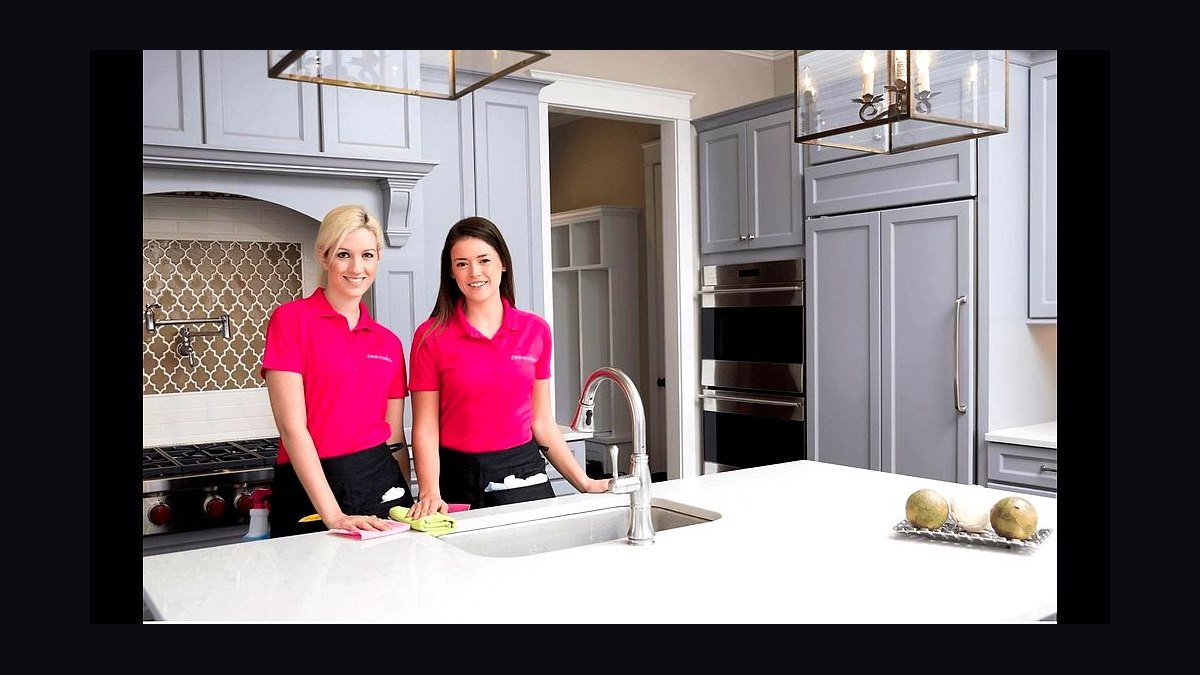
The 2027-specific context matters too. Residential cleaning demand is a durable category, driven by dual-income households with no time for chores and an aging homeowner population with declining physical capacity to clean. Neither trend is new, but neither is reversing — if anything, remote and hybrid work has modestly increased demand for more frequent cleanings as homes double as offices. That tailwind won't substitute for execution — staffing still determines who wins and who struggles — but it does mean the addressable market isn't the constraint for most new owners entering in 2027. The constraint is nearly always the labor pipeline.
What drives that outcome
Three forces determine whether a Two Maids territory lands near the top or bottom of its earnings range: the strength of the pay-for-performance incentive loop, the local labor supply for hourly cleaning work, and the owner's marketing discipline. The incentive loop is the most distinctive lever the brand offers. Cleaners earn a base hourly wage plus a bonus tied to post-clean customer star ratings, typically scored on a 1-to-5 scale after each visit. Teams that sustain averages above 4.7–4.8 stars see materially higher repeat-booking rates — franchisees commonly report 70–80% repeat-booking among top-rated teams versus 50–60% industry norms for flat-wage competitors. That repeat-booking rate is the single biggest driver of gross revenue stability, because acquiring a new residential client typically costs three to five times more than retaining an existing one, once you account for lead generation spend, the sales call, and the first below-margin "trial" clean many franchises offer at a discount.
Labor supply is the second force, and it's local, not systemic — this is the part buyers most often fail to diligence before signing. A Two Maids franchise competes for the same hourly cleaning workforce as Molly Maid, Merry Maids, The Cleaning Authority, and every independent cleaner advertising on neighborhood apps in that territory. In tight labor markets, franchisees who don't actively manage the performance-pay system as a retention tool — rather than just a payroll mechanic — see turnover creep toward the 50–70% range typical of conventional cleaning franchises, instead of the 30–40% mature Two Maids territories report. Turnover this high effectively caps growth: every departing cleaner takes weeks to replace and retrain, and clients notice inconsistent teams and start canceling.
The third force, marketing discipline, determines how quickly new client acquisition offsets the inevitable churn from relocations, life changes, and price-sensitive cancellations that hit every subscription-style service business. Franchisees who under-invest in local SEO and paid search in year one frequently stall at a single-team operation long after their territory could support a second — they're spending just enough to replace churned clients, never enough to build a waiting list. A secondary, often-overlooked channel worth budgeting for from day one is referral partnerships with real estate agents and property managers, who generate move-in and move-out cleaning leads that convert into recurring weekly or biweekly contracts at a lower acquisition cost than paid search.
Benchmarks and realistic ranges

The 2026 FDD lists a franchise fee of roughly $30,000 and total Item 7 investment of $95,000–$170,000, broken down across office setup, equipment and vehicles, technology and scheduling software, initial marketing, insurance and bonding, training, and working capital. Royalty runs near 6% of gross revenue, with an additional marketing fee around 2%. Multi-unit operators can add territories at a reduced fee, typically $15,000–$20,000 each, once the first territory is stable and cash-flowing — a common growth path for owners who've proven they can run the staffing loop and want a second income stream without doubling their personal time commitment, since an established manager can often run a second territory day-to-day.
On the revenue side, mature territories gross $500,000–$1,400,000, with cleaning labor consuming 45–55% of revenue — the single largest cost line by far, dwarfing every other expense category combined. After labor, supplies and vehicle costs run roughly 6–10% of gross, the royalty takes 6%, and marketing/admin overhead typically consumes another 15–20%. Net owner margins land in the 12–24% range, translating to the $80,000–$220,000 stated earnings band. Territories with household incomes above $70,000 and homeownership rates above 40% consistently outperform this range, because homeowners with disposable income treat recurring cleaning as a standing line item rather than a discretionary expense; territories below $55,000 median income struggle to keep cleaning off the chopping block in a tight month, and cancellations spike noticeably during local economic downturns or layoff waves.

Working capital is the benchmark new buyers most often underestimate, and it deserves more attention than the headline franchise fee. Monthly fixed costs for a single-territory operation — rent or home-office overhead, insurance, software subscriptions, payroll for two to three cleaners, and the owner's own draw — typically run $12,000–$18,000. That implies three to six months of reserves, or $36,000–$108,000, on top of the initial Item 7 investment. Lean operators who start from home, use a personal vehicle instead of a wrapped fleet van, and staff a single team can compress this to $20,000–$40,000, but growth slows accordingly and the owner effectively trades faster scaling for lower risk. A representative 2027 all-in budget looks like: $30,000 franchise fee, $15,000 equipment and supplies, $5,000 vehicle wrap, $3,000 scheduling and routing software, $10,000 initial marketing, and $40,000 working capital — roughly $103,000 total, with $63,000 of that typically needed in liquid cash if the remainder is financed through an SBA loan.
It's worth benchmarking against adjacent home-services categories too. Lawn care and pest control franchises often carry lower total investment but thinner recurring-revenue predictability, since cleaning's weekly or biweekly cadence produces steadier cash flow than seasonal outdoor services. Handyman and HVAC franchises sit at the other end, with far higher equipment and licensing costs but higher average ticket sizes. Two Maids occupies a middle ground: modest capital requirements, genuinely recurring revenue, but a labor-intensive model where the ceiling on any single territory is set by how many teams the owner can staff and retain, not by equipment capacity or service radius.
Risks, edge cases, and failure modes

The dominant failure mode for a Two Maids franchise isn't market demand — it's staffing. Owners who cannot consistently recruit and retain cleaning teams never reach the client volume needed to cover fixed costs, regardless of how strong the territory's demographics look on paper. This is the single risk factor prospective buyers underweight most, because it's invisible in the FDD's financial tables and only surfaces when you talk to existing franchisees directly about their actual hiring funnel — how many applicants it takes to find one reliable hire, and how long that hire typically stays.
A second failure mode is treating the pay-for-performance system passively. Franchisees who don't review weekly rating dashboards, run team huddles around scores, or pair underperforming cleaners with mentors see the incentive structure decay into a payroll formality rather than a quality driver, and turnover rates drift toward the industry-standard 50–70% instead of the brand's 30–40% benchmark. The system only works as designed when the owner actively manages it; it is not a set-it-and-forget-it compensation formula.
A third risk is territory misjudgment. Buying into a low-density, low-income, or heavily rural territory undermines the unit economics before the business ever opens — recurring residential cleaning depends on a critical mass of dual-income, time-constrained households within a tight service radius, typically a 10-to-15-mile zone that can be serviced without excessive drive time eating into billable hours. A related edge case: territories with three or more well-established national competitors carrying 500+ reviews each drive customer-acquisition costs up substantially, with some franchisees reporting $2,000–$4,000 monthly on local SEO and paid search just to stay visible in search results. Buyers should request Item 20 of the FDD and speak directly with franchisees in demographically similar, already-established territories about their actual lead costs and time-to-breakeven before committing to a specific zip-code footprint.

Financing structure introduces its own risk profile that's independent of the franchise's own performance. SBA 7(a) loans require personal guarantees and a 10–20% cash injection, meaning a downturn in the business still leaves the owner personally exposed on the debt. Rollover for Business Startups (ROBS) avoids monthly debt service but requires strict IRS compliance, an ongoing C-corp structure, and $2,000–$5,000 in annual administrative fees — and it concentrates retirement savings risk directly into the franchise's performance, which is a materially different risk posture than financing with new debt. A blended approach — partial SBA financing alongside a smaller personal cash injection than a full self-fund — is common among owners who want to preserve some liquidity outside the business.
Finally, owners expecting a passive or semi-absentee investment consistently underperform. Two Maids, like nearly every service-labor franchise, requires active, hands-on staff management, particularly in the first 24 months while hiring systems and rating-driven coaching habits are still being established. Some multi-team, multi-territory owners eventually transition toward semi-absentee oversight once a trusted operations manager is in place, but that's a year-three-or-later outcome, not a day-one operating assumption — and it typically requires the owner to have personally run the rating-coaching loop long enough to train someone else to do it the same way.
A practical rollout plan
The path from signing to a stable, cash-flowing territory follows a fairly consistent sequence across successful Two Maids launches. The first two weeks should be spent entirely on FDD review — confirming the pay-for-performance mechanics, fee structure, and Item 19 earnings claims against what franchisees in comparable territories actually report, not just the headline range. The following two weeks go to direct outreach: call at least eight existing franchisees, prioritizing those in demographically similar territories, and ask specifically about lead cost per zip code, time to breakeven, and how they run the rating-coaching loop day to day. Pay close attention to how they answer questions about turnover — vague answers are a signal worth probing further.

Weeks five through six focus on validating the territory itself: pulling household income and homeownership data, mapping the top ten competing cleaning services within a 15-mile radius, and confirming the territory clears the $70,000 median-income, 40%-homeownership threshold that correlates with stronger lead conversion. This is also the point to check for commercial-cleaning opportunities adjacent to the residential territory — small offices and short-term rental turnovers can supplement residential income during the slow ramp period, though most Two Maids territories are licensed primarily for residential work, so confirm scope with the franchisor before counting on it.
Weeks seven through eight are for physical setup and initial hiring: securing a home-office or small office base, purchasing initial equipment and a vehicle, and recruiting the first cleaning team through a mix of job boards, local trade schools, and word-of-mouth referrals from the franchisor's existing network. Weeks nine through eleven shift to client acquisition — launching local SEO, paid search, and neighborhood-level marketing, including direct mail and realtor-referral outreach, to book the first cohort of recurring clients before the team sits idle and payroll runs ahead of revenue. Week twelve is launch, followed by an ongoing cycle: run the rating dashboard weekly, coach underperforming cleaners immediately rather than waiting for a formal review period, and reinvest early profits into a second team as soon as booking density supports it rather than waiting for a comfortable cash cushion that may never feel comfortable enough.
Related questions

How long does it take a Two Maids franchise to break even? Most single-territory franchisees reach breakeven in 18–24 months, assuming adequate working-capital reserves and consistent hiring. Slower staffing ramps or weak local marketing can push this to 30+ months.
Can I run a Two Maids franchise part-time? Not in the early years. Building the staffing and client base requires active, full-time management; some mature, multi-team territories eventually support semi-absentee ownership once systems are established.
What's the biggest cost after the franchise fee? Cleaning labor, which typically consumes 45–55% of gross revenue — by far the largest recurring expense, ahead of royalty, marketing, and supplies combined.
How does Two Maids compare to Molly Maid or Merry Maids? The core service and territory model are similar; Two Maids' differentiator is the pay-for-performance compensation system, which its franchisees credit with lower turnover and higher repeat-booking rates than flat-wage competitors.
Can a Two Maids territory add commercial cleaning clients? Most territories are licensed primarily for residential work, so confirm scope with the franchisor before budgeting on commercial revenue; some owners supplement with move-in/move-out and short-term-rental turnovers instead.
FAQ

What is the total investment range to open a Two Maids franchise in 2027? Total initial investment typically falls between $95,000 and $170,000, including a franchise fee around $30,000. Actual costs vary by territory size, office setup, and local marketing needs.
How much can a Two Maids franchise owner realistically earn? Mature territories report annual gross revenues of $500,000 to $1,400,000, with owner earnings in the $80,000–$220,000 range, depending heavily on staffing discipline and local competition.
What makes Two Maids different from other residential cleaning franchises? Its pay-for-performance system ties cleaner compensation directly to customer ratings, which franchisees say improves quality, reduces callbacks, and lowers turnover compared to flat hourly pay.
Is staff recruitment really the biggest challenge? Yes. Finding and retaining reliable cleaners is the top constraint across the residential cleaning category; the performance-pay structure helps but doesn't eliminate the challenge, especially in tight local labor markets.
What ongoing fees does a franchisee pay after opening? A royalty near 6% of gross sales plus a marketing fee around 2%, both detailed in the FDD and standard for the cleaning franchise category.
Should I finance the franchise with an SBA loan or ROBS? SBA loans require a 10–20% cash injection and a personal guarantee but preserve retirement savings; ROBS avoids debt service but adds IRS compliance complexity and concentrates retirement funds into the business. The right choice depends on liquidity and risk tolerance.
Sources
- Entrepreneur Franchise listings — Two Maids
- Franchise Business Review — home-services franchise satisfaction data
- IBISWorld — Residential Cleaning Services in the US industry report
- Statista — US residential-cleaning market data
- International Franchise Association (IFA) — Franchise Economic Outlook
- U.S. Bureau of Labor Statistics — cleaning-labor market and turnover data
- Grand View Research — Cleaning Services market report
- U.S. Census Bureau — household income and dual-income demographic data
- U.S. Small Business Administration — SBA 7(a) loan program guidelines
Related on PULSE
- Should I open or buy a Two Men and a Truck franchise in 2027?
- Should I open or buy a You've Got Maids franchise in 2027?
- Should I open or buy The Maids franchise in 2027?
- Should I open or buy a Merry Maids franchise in 2027?
- Should I open or buy a Molly Maid franchise in 2027?
This page will be disappearing soon. Save it to your device for $1 — or read it free while it is here.
@Kory-White- · if Venmo asks, the last 4 of my number are 2012
This page is gone.
This one is off the shelf now. $1 keeps it on your phone for good — the whole page, pictures and diagrams included.
 franchiseShould I open or buy a Dunkin' franchise in 2027?
 franchiseShould I open or buy a Big O Tires franchise in 2027?
 franchiseShould I open or buy a Marco's Pizza franchise in 2027?
 franchiseShould I open or buy a Dairy Queen franchise in 2027?
 franchiseShould I open or buy an Auntie Anne's franchise in 2027?
 franchiseShould I open or buy a Roto-Rooter franchise in 2027?
 franchiseShould I open or buy a Great Clips franchise in 2027?
 franchiseShould I open or buy an Orangetheory Fitness franchise in 2027?
 franchiseShould I open or buy a Subway franchise in 2027?
 franchiseShould I open or buy a Rita's Italian Ice franchise in 2027?