


Should I open or buy a House Doctors franchise in 2027?
Quality
Certified
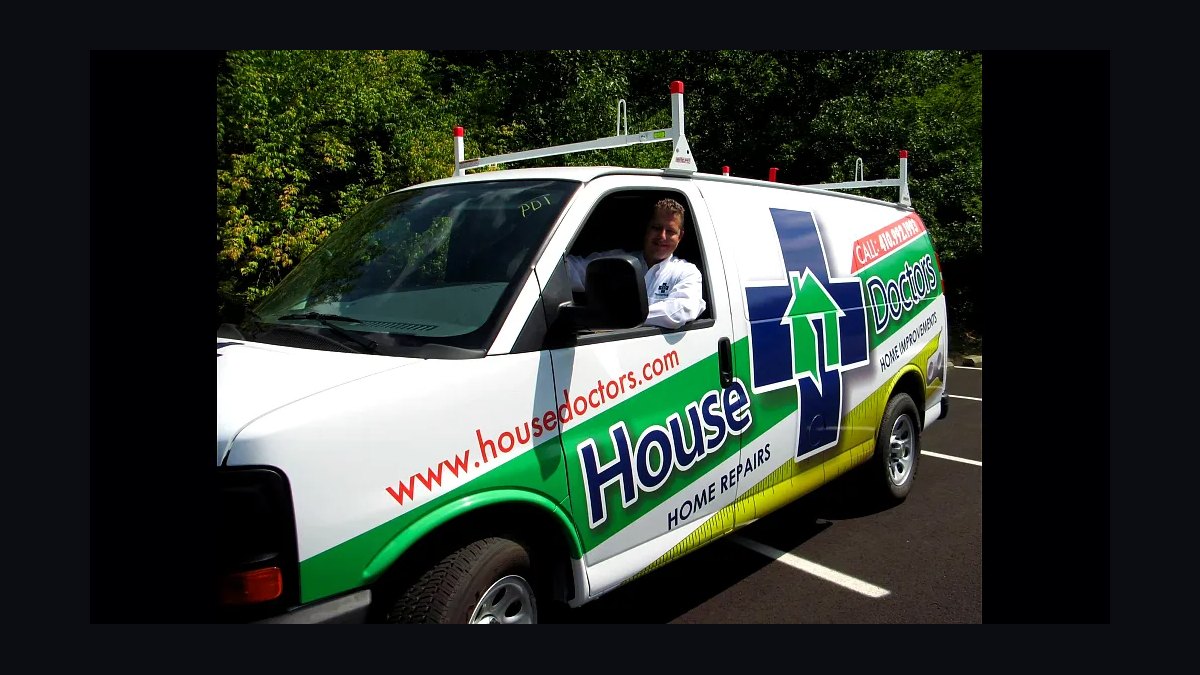
Opening a House Doctors franchise in 2027 is a reasonable move if you want a low-capital ($110,000–$180,000), home-based handyman franchise in a durable repair-and-maintenance market — but only if you can recruit and retain skilled technicians. Buying an existing territory or an independent competitor can shortcut the ramp-up. If you can't solve the labor problem, skip it regardless of which path you choose.
Buying a Franchise vs. Buying an Existing Territory vs. Going Independent
Anyone evaluating House Doctors in 2027 is really choosing among three distinct paths, and they carry very different risk profiles. The first is opening a brand-new House Doctors franchise from scratch: you pay the roughly $50,000 franchise fee, sign the FDD, and start with zero customers, zero technicians, and zero local reputation. The second is buying an existing House Doctors territory from a current owner who wants to exit — this means a resale, which isn't disclosed in the 2026 FDD's headline numbers but is common in mature handyman franchise systems. The third is skipping the franchise altogether and opening an independent handyman business, or buying a small existing independent operation outright.
Each path trades capital for speed differently. A new House Doctors franchise requires the full Item 7 investment of $110,000–$180,000, but you get an established training program, a known brand (even if regional awareness varies), vendor relationships for insurance and bonding, and a system for recruiting and scheduling technicians that you don't have to invent yourself. The tradeoff is you're paying full price for a business with no revenue history in your specific territory — you're betting on the brand and the market, not on existing cash flow.

Buying an existing House Doctors territory, when one is available, changes the math substantially. A seller with 3–5 years of operating history and $500,000–$900,000 in trailing revenue will typically price the business at 2x–3.5x seller's discretionary earnings — meaning a territory clearing $150,000 in owner profit might sell for $300,000–$525,000, well above the new-franchise investment range but with immediate cash flow, trained technicians (assuming they stay through the transition), and existing customer relationships. The risk shifts from "can I build this" to "will the technicians and customers stick around after ownership changes," which is its own serious due-diligence question — you should interview every technician before closing, not just review the P&L.
Going independent — opening a handyman business with no franchise affiliation, or buying a small local operation — eliminates the $50,000 franchise fee and the ongoing 6% royalty plus roughly 2% marketing fee (roughly 8% of gross revenue, or $40,000–$112,000 annually on a $500,000–$1.4 million territory). Over a 10-year hold, that royalty difference alone can total $400,000–$1,100,000. But you give up House Doctors' training curriculum, its name recognition with any customers who already trust the brand from prior markets, and its negotiated vendor pricing on insurance, bonding, and technology. Independents also have to build every recruiting channel, every marketing funnel, and every operating system from zero, which is exactly where most new handyman businesses fail in year one.
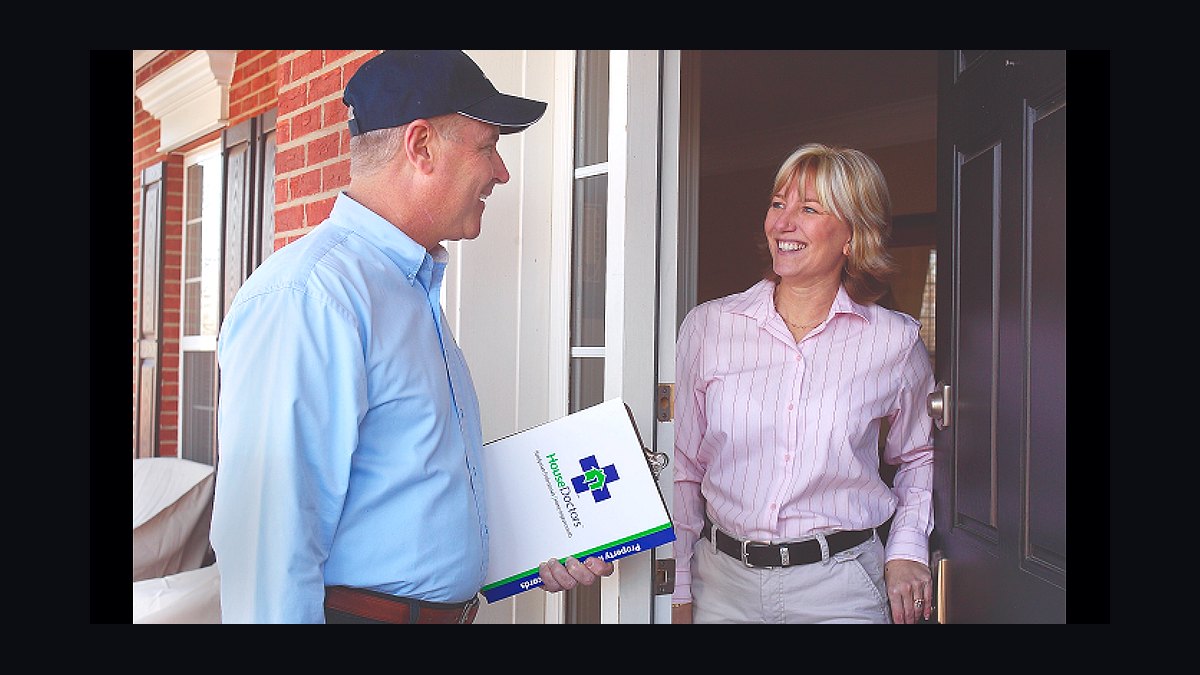
The honest comparison: franchising buys you a tested playbook and a support structure at a real, ongoing cost; buying an existing territory buys you speed and cash flow at a premium price and integration risk; going independent buys you full margin retention at the cost of building everything yourself with no safety net. None of the three is universally correct — the right choice depends on how much you value a tested system versus full economic upside, and how much capital you have for Year 1 versus how much you can risk building slowly.
How to Decide Between Franchising, Buying, and Going Independent
The decision tree below is not about picking a favorite — it's about matching your actual constraints (capital, time horizon, risk tolerance, existing trade relationships) to the path that fits them, rather than defaulting to whichever option you heard about first.
If your capital is under roughly $110,000 including working capital, franchising is effectively off the table regardless of which brand you're considering — the 2026 FDD's Item 7 range assumes you can fund equipment, vehicles, initial marketing, and payroll float simultaneously, and underfunding any one of those categories is the single most common reason new handyman franchisees fail in the first 18 months. In that case, an independent, slower-growth build (starting with one technician, including yourself, and reinvesting every dollar of profit) is the more honest starting point, even though it takes longer to reach the $500,000+ revenue range that mature House Doctors territories report.

If capital isn't the constraint, the next real question is whether an existing territory is for sale in a market you want to operate in. This is worth checking directly with House Doctors' franchise development team and with FDD Item 20 data (which lists transfers and terminations by state) — a seller motivated by retirement rather than distress is a meaningfully better acquisition than one exiting because the territory is underperforming. If no resale exists, the decision comes down to whether you can actually solve the technician recruiting problem before you open, not after. Franchisees who sign the agreement and then start recruiting technicians consistently open 60–90 days later than planned and burn through working capital waiting for billable labor. The technicians should be lined up, or close to lined up, before you commit capital — not treated as a Day 1 task.
The Concrete Numbers Behind Each Path
Specific figures make this decision tangible rather than theoretical. A new House Doctors franchise, per the 2026 FDD, carries a $50,000 franchise fee and a total Item 7 investment of $110,000–$180,000, broken down roughly as: $5,000–$20,000 for home or small-office setup, $8,000–$35,000 for tools and branded vehicles, $5,000–$15,000 for scheduling and CRM technology, $15,000–$40,000 for initial marketing and client acquisition, $5,000–$16,000 for insurance and bonding, $6,000–$16,000 for owner training and travel, and $20,000–$50,000 in working capital to cover payroll before revenue catches up. Ongoing costs run a 6% royalty plus roughly a 2% marketing fee on gross revenue — about 8% total.

Mature territories gross $500,000–$1,400,000, with owner's discretionary earnings of $80,000–$240,000, or roughly 13%–24% margin after technician labor (40%–50% of revenue), vehicle and overhead costs, and royalties. A franchisee in a mid-sized market with 3 technicians, 70%–75% technician utilization, and an average job size in the $350–$450 range tends to land near the middle of that range — roughly $700,000–$850,000 in revenue and $130,000–$160,000 in owner profit in Year 2 or 3, once the technician base and customer pipeline have stabilized.
Buying an existing territory changes the entry price but not the operating economics — you'd still see the same 40%–50% labor cost and 6%–8% royalty/marketing load, but you're paying a multiple of 2x–3.5x SDE upfront instead of spreading your capital across buildout. A $150,000-profit territory purchased for $400,000 means you're effectively prepaying roughly 2.7 years of profit for the privilege of skipping the ramp-up — a reasonable trade if the ramp-up would otherwise cost you 2–3 years of under-capacity operation, but a bad one if the technicians don't transfer with the sale.
Going independent removes the $50,000 fee and the 8% ongoing royalty/marketing load, meaning an independent operator at the same $700,000 revenue level keeps roughly $56,000 more per year than a franchisee at identical revenue — but independents typically take longer to reach that revenue level in the first place, often 18–30 months longer, because they lack a structured launch marketing push and a recruiting playbook. Whether the royalty savings outweighs the slower ramp depends entirely on how quickly you can personally build a technician pipeline and a referral engine without a franchisor's support.
Sequencing the First 180 Days, Whichever Path You Choose

Regardless of which of the three paths you pick, the sequencing problem is identical: technicians, customers, and cash flow all depend on each other, and getting the order wrong is the most common reason new handyman operations stall.
In the first 30 days, whether you're opening new, closing on a resale, or launching independently, the priority is locking in insurance, general liability coverage, and bonding — handyman work touches people's homes, and operating even one day without proper coverage is an unacceptable liability exposure. If you're buying an existing territory, this window is also when you verify which technicians are staying and get retention agreements or bonuses in writing before the sale closes, because technician flight immediately after an ownership change is the single biggest value-destroyer in a resale.
Days 31–60 should be dedicated almost entirely to technician recruiting if you're opening new: partnering with trade schools and community college vocational programs 6–8 weeks ahead of a graduating cohort, offering $60,000–$90,000 total compensation packages with a vehicle, and running $500–$1,500 referral bonuses to any technicians you've already hired. Trying to recruit after you've already started taking customer calls puts you in a reactive position where you're turning away paying jobs because you have no one to send.

Days 61–100 is when marketing spend should ramp, with Google Local Services Ads as the primary channel — these pay-per-lead ads carry a Google Guarantee badge, only charge on an actual call or message, and typically run $15–$35 per lead, cheaper than standard Google Ads at $40–$80 per lead. A referral program offering existing customers a $25–$50 credit per booked referral should launch simultaneously, since referral customers carry 30%–50% higher lifetime value than cold leads in most handyman franchise systems.
By days 101–140, the goal is pushing technician utilization — the percentage of paid hours that are actually billable — from a typical new-franchisee rate of 55%–60% toward 70%–75%. That 15-point improvement alone adds roughly $15,000–$25,000 per technician annually to the bottom line, because the fixed cost of employing a technician doesn't change whether they're billing 55% or 75% of their hours. Days 141–180 is when profitable franchisees reinvest into a second or third technician and widen their service radius, rather than letting a single crew's schedule become the ceiling on revenue growth.
Related questions
Is House Doctors better than Ace Handyman Services or Mr. Handyman?
All three operate similar home-based handyman models with comparable investment ranges. The real differentiator is local brand recognition and territory availability — compare FDD Item 19 figures for each directly before deciding.
Can I finance the $110,000-$180,000 investment with an SBA loan?

Many handyman franchises, including home-based models like House Doctors, qualify for SBA 7(a) loans since they're asset-light relative to retail franchises. Expect to put down 10%–20% in cash with the remainder financed.
How long does it take a new House Doctors territory to break even?
Most new franchisees report breakeven between month 12 and month 20, driven primarily by how quickly they build technician capacity and a referral-based customer base rather than by marketing spend alone.
Should I buy a resale territory instead of opening new?
Only if the trailing financials are verified, the technicians are staying, and the purchase multiple (typically 2x-3.5x SDE) doesn't erase the savings versus a new-unit buildout. Interview technicians before closing.
FAQ
Is House Doctors a good franchise to open in 2027 specifically? The underlying market — residential repair and maintenance — is durable and not particularly sensitive to the calendar year. 2027 isn't materially different from 2026 or 2028 for this decision; what matters is your local technician labor market and household density, not the specific year.
What's the minimum liquid capital House Doctors expects from a franchisee? FDD disclosures for home-based handyman franchises in this investment range typically call for $55,000-$95,000 in liquid capital, with the remainder financed through savings, SBA loans, or a combination. Confirm the exact figure in the current FDD before applying.

Can I run a House Doctors franchise part-time while keeping another job? Technically the home-based model has low overhead, but successfully recruiting, scheduling, and managing technicians while also fielding customer calls is a full-time job in practice, especially in the first 18-24 months of building the business.
What happens if I can't find enough skilled technicians? This is the single most common reason handyman franchisees underperform the FDD's revenue ranges. Without adequate technician capacity, you'll be turning away booked jobs regardless of how strong your marketing and lead flow are — recruiting has to be solved before growth, not after.
Does House Doctors compete directly with Mr. Handyman and TruBlue in the same markets? Yes, in most metro areas you'll find multiple handyman franchise brands competing for the same customer base and often the same technician labor pool, which is why differentiating on response time, reviews, and technician retention matters more than brand name alone.
Is buying an existing House Doctors territory always better than opening new? Not always — a resale at an inflated multiple with technicians likely to leave post-sale can be worse than a clean new-unit buildout. Evaluate the specific deal on its own numbers rather than assuming a shortcut is automatically cheaper.
Sources
- https://www.entrepreneur.com/franchises/directory
- https://www.franchisebusinessreview.com
- https://www.ibisworld.com
- https://www.statista.com
- https://www.franchise.org
- https://www.jchs.harvard.edu
- https://www.bls.gov
- https://www.census.gov
- https://www.sba.gov/funding-programs/loans/7a-loans
Related on PULSE
This page will be disappearing soon. Save it to your device for $1 — or read it free while it is here.
@Kory-White- · if Venmo asks, the last 4 of my number are 2012
This page is gone.
This one is off the shelf now. $1 keeps it on your phone for good — the whole page, pictures and diagrams included.
 franchiseShould I open or buy a Papa John's franchise in 2027?
 franchiseShould I open or buy a Firehouse Subs franchise in 2027?
 franchiseShould I open or buy a Wingstop franchise in 2027?
 franchiseShould I open or buy a Servpro franchise in 2027?
 franchiseShould I open or buy a Hand and Stone Massage franchise in 2027?
 franchiseShould I open or buy a Goddard School franchise in 2027?
 franchiseShould I open or buy a Matco Tools franchise in 2027?
 franchiseShould I open or buy an F45 Training franchise in 2027?
 franchiseShould I open or buy a Cinnabon franchise in 2027?
 franchiseShould I open or buy a Valvoline Instant Oil Change franchise in 2027?