


Should I open or buy a Made in the Shade Blinds franchise in 2027?
Quality
Certified
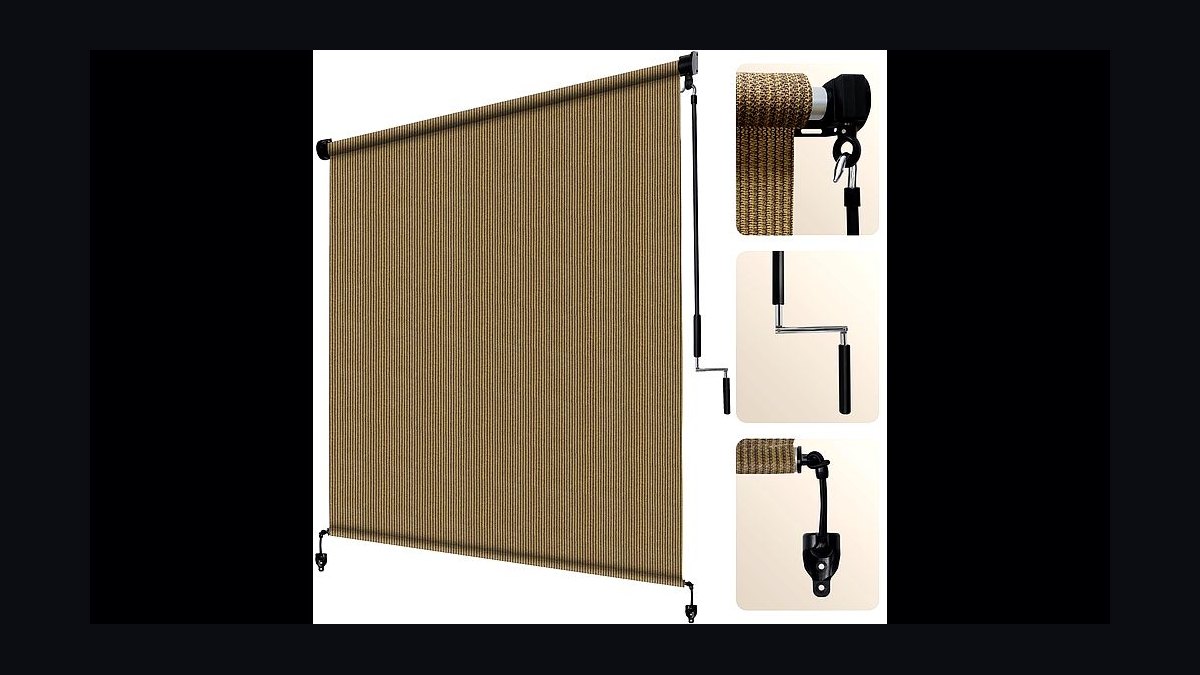
Yes, for the right operator — Made in the Shade Blinds & More is one of the lowest-capital, mobile, home-based franchises on the market, built around a shop-at-home model with no showroom and no inventory risk. The 2026 FDD lists roughly $30,000-$70,000 in total investment, mature territories grossing $250,000-$700,000, and owner earnings of $70,000-$180,000. The catch: this is a sales job first, an installation business second, so success hinges entirely on your ability to run in-home consultations and keep a lead pipeline full.
A Concrete Scenario: Two Franchisees, One Territory
Picture two people buying adjacent Made in the Shade Blinds territories in the same suburban county in early 2027. Both pay the roughly $20,000 franchise fee, both spend about $45,000 total getting licensed, insured, trained, and stocked with a sample kit. Eighteen months later, one is grossing $410,000 a year and clearing close to $95,000 in owner profit. The other is grossing $140,000 and barely covering a part-time installer's wages.
The difference almost never comes down to the territory itself — median household income, housing stock age, and renovation activity were nearly identical on both sides of the county line. It comes down to what each owner did in the first 90 days. The stronger operator treated lead generation as the actual job: she built a referral relationship with six real estate agents, ran a modest $600/month Google Local Services Ads budget, and logged every lead source in the CRM so she knew her cost per closed sale within the first quarter. The weaker operator assumed the brand name and a mailer drop would be enough, then discovered that Shade Blinds installs don't sell themselves — someone has to sit across a kitchen table, open 150 fabric swatches, and close the deal that day.

This is the scenario every prospective buyer needs to run through before writing a check: are you the person who builds the lead engine, or the person who waits for the phone to ring? A franchise this lean in overhead puts nearly all of the performance variance on the owner's sales execution, not on the brand, the territory, or the product.
How the Shop-at-Home Mechanism Actually Works
Made in the Shade's entire operating model runs on that loop above, and understanding each stage matters because the business has no physical location to fall back on if any single stage breaks down. The week typically splits into three phases. Monday through Wednesday mornings go to lead response and scheduling — most franchisees aim to book two to four in-home consultations per day using the company's CRM and lead-management tooling, since a lead that sits unanswered for more than a few hours starts to go cold. Thursday through Saturday are consultation-heavy: the owner (or a hired sales rep, later on) arrives with a vehicle loaded with sample boards, measuring tools, and a tablet for on-the-spot quoting, and spends 45 to 75 minutes per appointment measuring windows, walking through fabric and material options, and attempting to close before leaving the house.

Installation is deliberately decoupled from the sale — it's scheduled one to two weeks later once the product ships from the manufacturer, which means a franchisee can keep selling continuously without installation backlogs capping growth. Many owners bring on a part-time installer, often paid $20-$30 an hour, once they're closing ten or more jobs a month, which frees the owner to spend nearly all their time on the revenue-generating half of the business: selling.
The mechanism also explains why the model is so capital-light compared to a retail competitor. There's no showroom lease, no retail staff, no inventory sitting on shelves — product is ordered per project after the sale is made, which is also why gross margins can run higher than a traditional window-covering retailer carrying its own stock.
Real Numbers, Ranges, and Benchmarks

| Line Item | Low | High | Notes |
|---|---|---|---|
| Franchise fee | $20,000 | $20,000 | Per 2026 FDD |
| Samples & equipment | $5,000 | $18,000 | Sample kits, measuring and install tools |
| Vehicle | $0 | $10,000 | Many owners use an existing SUV or van |
| Technology & software | $2,000 | $8,000 | CRM, quoting/estimating tools |
| Initial marketing | $5,000 | $20,000 | Launch-phase lead generation |
| Insurance & licensing | $2,000 | $8,000 | General liability, local licensing |
| Training & travel | $3,000 | $10,000 | Owner certification |
| Working capital | $5,000 | $20,000 | First three months of operating costs |
| Total Item 7 | ~$30,000 | ~$70,000 | Among the lowest investment tiers in franchising |
On the revenue side, mature territories gross $250,000 to $700,000 annually on window-covering projects. Because there's minimal fixed overhead — no rent, no showroom staff, no idle inventory — owner margins typically land between 18% and 35%, translating to $70,000-$180,000 in annual owner earnings once a territory matures, usually in year two or three.
Lead-generation spend benchmarks matter just as much as the investment table, because this is where ongoing profitability actually gets decided. Google Local Services Ads tend to run $300-$800 a month and produce 10-20 qualified leads on a pay-per-lead basis. Facebook and Instagram campaigns targeting homeowners aged 35-65 within a 15-mile radius typically run $500-$1,200 a month for 15-30 leads. Home show booth rentals cost $500-$2,000 per event but can generate 50-100 leads in a single weekend if follow-up happens within 48 hours. Real estate agent referral fees of $50-$100 per closed deal are one of the cheapest acquisition channels available, and owners who build five to ten active agent relationships sometimes source 30-40% of their business that way. The royalty structure is a low flat fee or small percentage of gross, with a marketing fee around 2% of gross — both modest relative to retail-footprint franchise models.
Trade-offs and Alternatives

The core trade-off of this franchise is capital efficiency against sales dependency. You're not buying a location, inventory, or a team you can hide behind — you're buying a brand name, a training system, a supplier network, and a CRM, and then you're personally responsible for generating and closing nearly all of your own revenue, especially in year one. That trade is excellent for someone who already sells well in person and wants the lowest possible financial downside if things don't work out. It's a poor trade for someone hoping to buy a job that runs itself.
Compared against direct competitors, Budget Blinds is the category leader with a larger footprint and more brand recognition, but typically carries a higher investment range and more established territory competition. Gotcha Covered runs a similar shop-at-home window-treatment model at a comparable capital tier, making it a near head-to-head alternative worth interviewing owners from before committing to either brand. Floor Coverings International uses the identical mobile, no-showroom playbook but in flooring rather than window coverings — useful as a reference point if you're drawn to the business model more than the specific product category.

Going independent is the non-franchise alternative: you keep 100% of margin and avoid royalty payments, but you give up the training curriculum, the supplier relationships that keep product costs down, the CRM and marketing systems, and the brand recognition that shortens the trust-building step of an in-home sale. For most first-time small-business owners, that trade favors the franchise, since the systems and supplier pricing alone can be worth more than the royalty they cost.
Common Pitfalls and How to Avoid Them
Underestimating the sales requirement. This business runs on roughly 95% sales and 5% installation, and franchisees who come from installation or trades backgrounds sometimes assume the product will sell itself. It won't. Take the company's sales training seriously, role-play consultations daily for the first 90 days, and consider a sales coach if closing rates stay flat past month three.
Treating the in-home visit casually. Customers are inviting a stranger into their home and expect a polished, low-pressure presentation. A late arrival, a disorganized sample kit, or a dead tablet battery erodes trust before the pitch even starts. Build a pre-appointment checklist — clean vehicle, organized samples, charged devices, a follow-up email template ready to send within two hours of leaving.
Over-relying on paid ads without tracking conversion. It's common for new owners to spend $2,000 or more a month on Google and Facebook ads without tagging which channel actually produces closed sales. Use the CRM to track cost-per-acquisition by source, and pause any channel costing more than roughly $50 per closed sale until you can fix the targeting or the offer.
Neglecting referrals. Word-of-mouth is the cheapest lead source available, yet most new franchisees never systematically ask for it. Offer a modest gift card or discount for every referral that converts, and attach the ask to every post-install thank-you message.
Trying to do everything alone. Owners who handle sales, installation, and bookkeeping simultaneously tend to burn out within 18 months. Bring on a part-time installer once you're closing roughly ten jobs a month, and consider a low-cost virtual assistant for scheduling and follow-up once lead volume outpaces what you can personally manage.
Related questions
How much does a Made in the Shade Blinds franchise cost compared to Budget Blinds?
Made in the Shade's $30,000-$70,000 total investment sits at the lower end of the window-covering franchise category; Budget Blinds typically requires a higher investment tier given its larger brand footprint and territory scale.
Can I run this franchise part-time?

It's designed as a full-time, 40-50 hour-a-week commitment, especially in year one, since sales and lead generation are continuous activities that don't pause on a part-time schedule.
Do I need sales experience to succeed?
No formal sales background is required, but comfort with in-home consultative selling and objection handling is the single biggest predictor of success in this model.
How long before a territory becomes profitable?
Most franchisees reach meaningful profitability in year two or three, once referral and repeat-customer volume supplements paid lead generation.
FAQ
What is the total investment to open a Made in the Shade Blinds franchise? Total investment ranges from roughly $30,000 to $70,000, including the approximately $20,000 franchise fee. The low figure is possible because the business is mobile and home-based, with no showroom build-out or inventory to finance.
How much can a franchise owner expect to earn?
Mature territories generate annual gross revenue of $250,000 to $700,000, with owner earnings typically between $70,000 and $180,000, depending on location, sales skill, and local demand.
Do I need experience in window coverings or sales to succeed? No prior window-treatment experience is required, but strong in-home sales ability and comfort with ongoing lead generation are essential, since the owner is almost always the primary salesperson.
How long does it take to open and start operating? Most franchisees launch within 60 to 90 days of signing, since there's no construction or inventory setup — the timeline is mostly training, vehicle setup, and licensing.
Is this a full-time commitment or can I run it part-time? It's built as a full-time operation requiring 40-50 hours a week initially. Some owners add installers later to reclaim time, but the sales and lead-generation workload makes a true part-time schedule difficult.
What are the biggest challenges franchisees face? Consistent lead generation and mastering in-home sales execution are the two recurring challenges, compounded by competition from big-box retailers and other mobile blind companies in the same territory.
Sources
- Entrepreneur Franchise listings — Made in the Shade Blinds & More: https://www.entrepreneur.com/franchises/directory
- International Franchise Association, Franchise Economic Outlook: https://www.franchise.org
- IBISWorld, Window Treatment & Home Furnishings industry reports: https://www.ibisworld.com
- Statista, US home-improvement and window-covering market data: https://www.statista.com
- Joint Center for Housing Studies of Harvard University, home-improvement research: https://www.jchs.harvard.edu
- Grand View Research, Window Coverings Market report: https://www.grandviewresearch.com
- US Census Bureau, housing and renovation demographic data: https://www.census.gov
- Franchise Business Review, home-services franchise satisfaction surveys: https://www.franchisebusinessreview.com
Related on PULSE
This page will be disappearing soon. Save it to your device for $1 — or read it free while it is here.
@Kory-White- · if Venmo asks, the last 4 of my number are 2012
This page is gone.
This one is off the shelf now. $1 keeps it on your phone for good — the whole page, pictures and diagrams included.
 franchiseShould I open or buy an Orangetheory Fitness franchise in 2027?
 franchiseShould I open or buy a KinderCare franchise in 2027?
 franchiseShould I open or buy a Great Clips franchise in 2027?
 franchiseShould I open or buy a Rita's Italian Ice franchise in 2027?
 franchiseShould I open or buy a Panera Bread franchise in 2027?
 franchiseShould I open or buy a Subway franchise in 2027?
 franchiseShould I open or buy a Mathnasium franchise in 2027?
 franchiseShould I open or buy a FACE FOUNDRIÉ franchise in 2027?
 franchiseShould I open or buy a Planet Fitness franchise in 2027?
 franchiseShould I open or buy a Culver's franchise in 2027?