


Should I open or buy a Rhino Linings franchise in 2027?
Quality
Certified
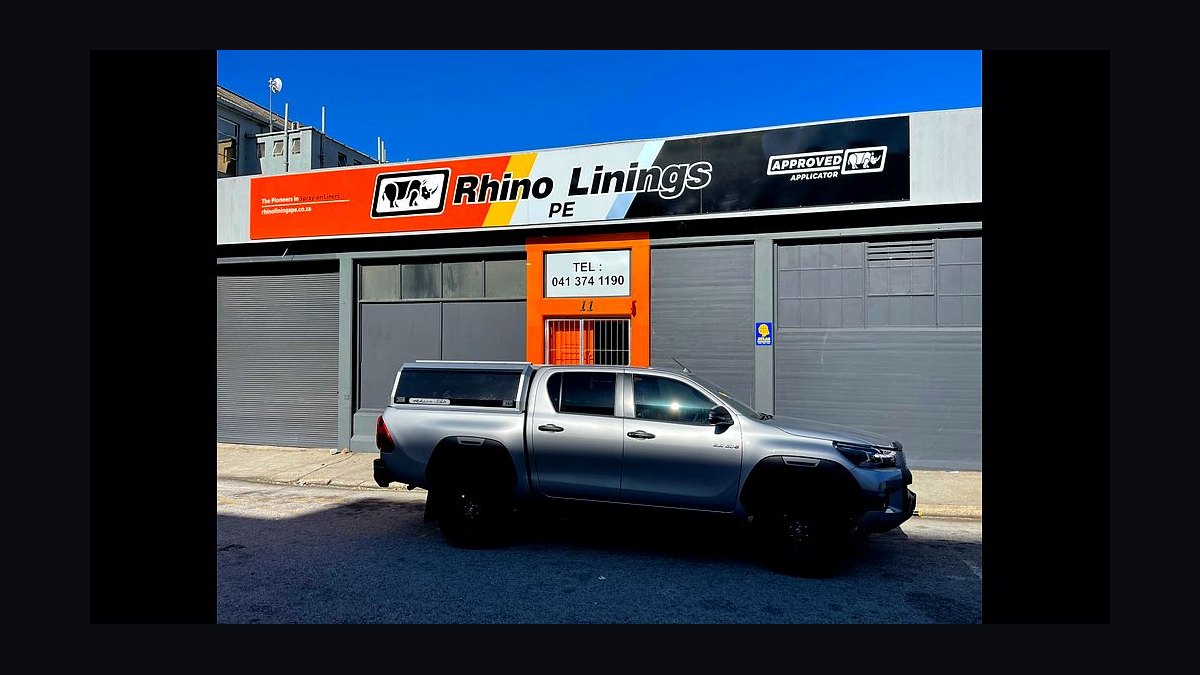
Yes, if you want a protective-coatings franchise weighted toward higher-value industrial and commercial work, not just truck bed liners. Rhino Linings carries a roughly $30,000 franchise fee, a total investment of $150,000–$300,000, and a 5% royalty. Mature locations gross $500,000–$1,500,000, with owners clearing $90,000–$260,000 once the commercial book matures. Skip it if you can't sell B2B or manage spray quality.
A Concrete Scenario That Frames The Problem
Picture two people considering whether to open a Rhino Linings franchise in the same mid-sized metro in early 2027. The first has run a small auto-detailing shop for six years, knows how to turn around a truck bed liner in under two hours, and assumes the Rhino brand will simply bring in walk-in automotive customers the way a quick-lube franchise would. The second has spent a decade in industrial sales — selling coatings, fasteners, or safety equipment to contractors, fleet managers, and municipal facilities departments — but has never sprayed anything in their life.
Six months after opening, the first owner is busy on weekends with bed liners but struggling to hit $400,000 in annual revenue, because automotive work alone, at 30–40% gross margin, caps out fast in a single-bay shop. The second owner is slower to open — it takes three to four months of relationship-building before the first secondary-containment or tank-lining contract lands — but by month ten, a single industrial job worth $18,000 at 45–55% margin equals two months of retail bed-liner volume. This is the actual fork in the road for a 2027 buyer: Rhino Linings is marketed around trucks, but the real profit engine is the industrial/commercial side, and the franchise rewards the operator who treats this as a B2B coatings business with a retail sideline, not a retail shop that occasionally does B2B. Anyone evaluating whether to open a location needs to decide, before signing, which of these two owners they actually are — because the Item 7 investment and the daily operating demands are identical, but the five-year outcomes are not.
How The Mechanism Actually Works
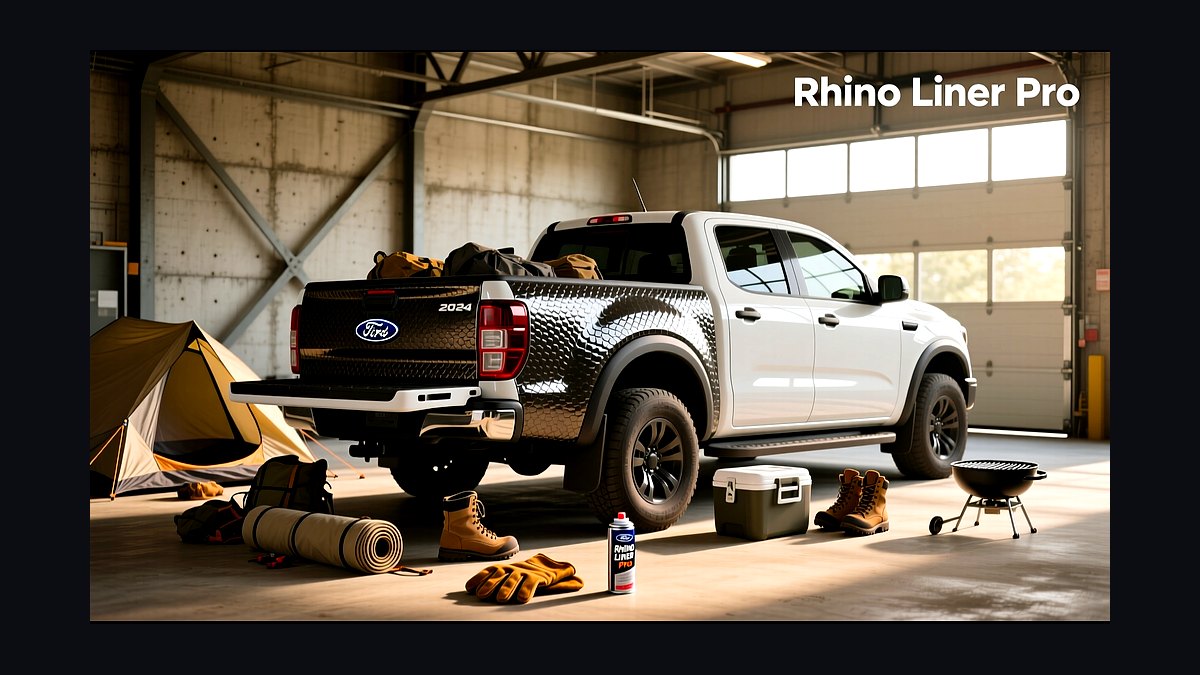
A Rhino Linings franchise functions as a dual-channel coatings applicator operating out of one facility with application bays, a plural-component spray rig, and a service vehicle for off-site jobs. Revenue flows through two distinct pipelines that share equipment and labor but behave very differently.
The automotive channel is transactional: a customer brings in a truck, the owner or an applicator sprays a polyurea/polyurethane bed liner in one to two hours, and the customer pays and leaves same-day or next-day. Lead flow here comes partly from Rhino's national website and call center, but franchisees report that 70–80% of centrally-generated leads skew automotive, meaning this channel is largely self-sustaining once the shop is known locally.
The industrial/commercial channel is relationship-driven: a fleet manager, general contractor, or municipal facilities buyer needs corrosion protection, secondary containment lining, or equipment coating. These deals are sourced through cold outreach, trade shows (World of Concrete, the NTEA Work Truck Show), and referrals from equipment dealers and truck-body builders — not from Rhino's lead-gen system. The sales cycle runs 6–18 months for a first contract with a new commercial account, because buyers want to see certifications, references, and a completed sample job before committing a facility or a fleet to a new applicator.
The mechanism explains why first-year financials look weak relative to year three or four: the automotive channel ramps almost immediately, but the higher-margin industrial channel — the part of the business that actually separates Rhino from a pure retail coatings shop — takes a year or more to contribute meaningfully. An owner who only tracks month-to-month automotive volume in year one may wrongly conclude the concept underperforms, when the commercial pipeline simply hasn't matured yet.
Real Numbers, Ranges, And Benchmarks
The 2026 FDD lays out a franchise fee of approximately $30,000, which covers the territory grant. Total Item 7 investment runs $150,000–$300,000, broken down roughly as: buildout/leasehold improvements $50,000–$140,000, equipment and technology (spray rig, compressor, plural-component proportioner) $55,000–$130,000, signage and decor $12,000–$40,000, initial inventory $15,000–$45,000, initial marketing $12,000–$40,000, training and travel $8,000–$22,000, and working capital $25,000–$70,000. Ongoing fees are approximately a 5% royalty on gross sales plus a roughly 2% marketing fee.
Revenue at mature, multi-year locations ranges from $500,000 to $1,500,000 gross, with owner compensation landing between $90,000 and $260,000 — but that maturity typically arrives in years three through five, not year one. A realistic first-year gross for a new owner-operator falls between $150,000 and $350,000, since the commercial pipeline hasn't yet layered onto the automotive base. A reasonable year-two target is $80,000–$120,000 in net income, scaling toward $150,000–$200,000 by year four as B2B accounts compound.
Several costs sit outside the headline Item 7 range and should be budgeted separately. Plural-component spray equipment (Graco or Gusmer-type rigs) costs $15,000–$40,000 to replace and $2,000–$5,000 a year to maintain. Insurance — general liability, product liability, and workers' comp — runs $8,000–$15,000 annually, higher if the shop pursues containment or tank-lining work requiring pollution liability coverage. Industrial certifications such as ISO 9001, SSPC, or NACE, which many commercial buyers require before awarding a contract, cost $5,000–$15,000 up front plus recurring audit fees. A wrapped service vehicle runs $3,000–$8,000 and typically gets replaced every five to seven years. Franchisees consistently recommend holding $40,000–$80,000 in liquid reserves beyond the Item 7 minimum, since commercial accounts frequently pay on net-30 or net-60 terms, creating a cash-flow lag the automotive side doesn't have.

On competitive density: Line-X, the primary national competitor, operates roughly 700+ U.S. locations against Rhino's approximately 250, so a Rhino territory usually has less intra-brand competition but will encounter Line-X in nearly every market. Other competitors include Bullet Liner, ArmorThane, and independent polyurea/polyurethane applicators, who typically compete on price rather than brand or certification.
Trade-Offs And Alternatives
The core trade-off in deciding whether to open a Rhino Linings location is capital and patience versus speed to cash flow. The automotive-only path toward a quick, simple retail shop is cheaper to run day-to-day but caps revenue well below the $500,000+ mature-location benchmark. Building the industrial/commercial book takes longer and requires either an owner who can sell B2B or the budget to hire someone who can, but it's the only path to the $90,000–$260,000 owner-earnings range and the 40–55% margins that make the economics work at scale.
A second trade-off is owner-operator versus passive ownership. An owner who applies coatings and sells commercial accounts personally keeps labor costs internal. A passive investor instead needs to hire a general manager ($60,000–$80,000 salary plus bonus) and at least one applicator ($45,000–$65,000), which removes $100,000–$150,000 from annual net — meaning the franchise is only comfortably profitable as a passive investment once gross revenue clears roughly $800,000, a threshold many locations don't reach until their third or fourth year.
Against Line-X, the trade-off is weighting: Line-X leans more retail/automotive, so a buyer who genuinely wants the industrial/commercial emphasis and is comfortable with the longer B2B sales cycle is better served by Rhino; a buyer who wants fast, transactional, mostly-consumer volume may find Line-X's model and larger location count a more familiar fit. Going independent with no brand at all saves the royalty and marketing fee but forfeits Rhino's training, proprietary CRM, and brand recognition with commercial buyers who look for certifications and an established name before awarding contracts. Adjacent automotive-protection or detailing franchises are lower-complexity alternatives but don't carry the industrial upside that makes Rhino's ceiling higher than a pure retail coatings concept.
Common Pitfalls And How To Avoid Them
The single most common mistake is opening a Rhino Linings location and running it exactly like a retail bed-liner shop, never building the commercial sales function. Because 70–80% of Rhino's centrally generated leads are automotive, an owner who passively waits on lead flow will stay automotive-only by default. The fix is to budget for active outreach from day one — trade show attendance, a dedicated contact list of fleet managers and contractors, and a sales cadence — rather than treating B2B as something that will develop on its own.

A second pitfall is underestimating application-quality risk. Runs, orange peel, or adhesion failures on a job cost $500–$2,000 to redo in materials and labor, and warranty claims (3–5 years on bed liners, 1–2 years on industrial coatings) compound margin loss if quality control is weak. Spray proficiency typically takes 3–6 months of daily practice to reach a reliable standard, even after Rhino's roughly two-week initial training in Dallas. Owners should plan for this ramp explicitly — scheduling lower-stakes automotive jobs early and holding off on high-visibility commercial contracts until technique is consistent — rather than assuming training alone produces expert-level output.
A third pitfall is under-capitalizing working capital for the commercial side specifically. Net-30 and net-60 payment terms from municipal and corporate accounts can strand an owner who only funded the Item 7 minimum. Carrying the recommended $40,000–$80,000 buffer beyond Item 7 avoids a cash crunch in the exact months when commercial revenue is starting to arrive but hasn't yet been collected.
A fourth pitfall is skipping the territory competitive analysis. Because no territory is guaranteed to be untapped, a buyer should request a full list of existing Rhino and Line-X locations within 100 miles before signing, and independently check local business licenses for unaffiliated spray-coating shops — mature markets like parts of Texas, Florida, and California may already have multiple centers compressing margins, while the Midwest, Mountain West, and parts of the Northeast tend to have larger, less contested territories.
A fifth pitfall is neglecting certifications the industrial channel actually requires. Many commercial contracts — especially containment and infrastructure coating work — expect ISO 9001, SSPC, or NACE credentials that aren't automatically included in Rhino's base training. Budgeting $5,000–$15,000 for certification early, rather than discovering the requirement mid-sales-cycle on a six-figure contract, keeps the commercial pipeline from stalling at the finish line.
Related questions
How long does it take a Rhino Linings franchise to become profitable?
Many owners reach basic profitability within the first year from automotive volume alone, but reaching the $90,000–$260,000 owner-earnings range tied to mature revenue typically takes three to five years, once the industrial/commercial account base has developed.
Does Rhino Linings require prior coatings or sales experience?
No prior experience is required and initial training is provided, but mechanical aptitude for spray application and strong B2B sales ability are major advantages, since industrial/commercial contracts drive the highest-margin revenue.
What's the biggest financial risk in opening a Rhino Linings location?
Under-capitalizing working capital for net-30/net-60 commercial payment terms, combined with underestimating how long it takes (6–18 months) to land a first industrial account, is the most common source of early cash-flow strain.
How does territory size work for Rhino Linings?
Territories are typically exclusive geographic grants — a county or multi-county area depending on population density — included in the roughly $30,000 franchise fee, but size and competitive density vary widely by market.
FAQ
How much does it cost to open a Rhino Linings franchise? Total investment typically runs $150,000 to $300,000, including a franchise fee around $30,000. This covers equipment, buildout, initial inventory, and training, with exact figures depending on facility size and local market.
What is the typical revenue and profit for a Rhino Linings franchise? Mature locations often report $500,000 to $1,500,000 in annual gross revenue, with owner earnings between $90,000 and $260,000. First-year gross revenue is usually lower, often $150,000–$350,000, since the commercial account base takes time to build.
How does Rhino Linings compare to Line-X? Both are established spray-on protective coating brands, but Rhino Linings carries a stronger industrial/commercial emphasis — corrosion protection, secondary containment — alongside truck bed liners, while Line-X leans more retail/automotive and has a larger U.S. footprint at roughly 700+ locations versus Rhino's 250.
Do I need prior experience in coatings or sales to open a location? No prior coatings experience is required, but mechanical aptitude for spray application and comfort with B2B sales are significant advantages, since the industrial/commercial channel drives the highest-margin revenue and requires an active sales effort.
What ongoing fees does a Rhino Linings franchise pay? Royalties run approximately 5% of gross sales, plus a marketing fee near 2%. These fund brand development, national advertising support, and the proprietary CRM and lead-gen infrastructure Rhino provides.
How long does it take to open and start generating revenue? Opening typically takes three to six months from signing the franchise agreement, covering buildout and equipment installation. Automotive revenue usually starts quickly after opening, while industrial/commercial revenue takes 6–18 months longer to materialize.
Sources
- https://www.franchise.org
- https://www.entrepreneur.com/franchises
- https://www.franchisebusinessreview.com
- https://www.ibisworld.com
- https://www.statista.com
- https://www.sema.org
- https://www.census.gov
- https://www.ftc.gov/business-guidance/resources/franchise-rule-compliance-guide
- https://www.sspc.org
- https://www.nace.org
Related on PULSE
This page will be disappearing soon. Save it to your device for $1 — or read it free while it is here.
@Kory-White- · if Venmo asks, the last 4 of my number are 2012
This page is gone.
This one is off the shelf now. $1 keeps it on your phone for good — the whole page, pictures and diagrams included.
 franchiseShould I open or buy a Culver's franchise in 2027?
 franchiseShould I open or buy a Jamba franchise in 2027?
 franchiseShould I open or buy a Domino's franchise in 2027?
 franchiseShould I open or buy a Goddard School franchise in 2027?
 franchiseShould I open or buy a Hand and Stone Massage franchise in 2027?
 franchiseShould I open or buy a Wendy's franchise in 2027?
 frShould I open or buy a McDonald's franchise in 2027?
 franchiseShould I open or buy a UPS Store franchise in 2027?
 franchiseShould I open or buy an F45 Training franchise in 2027?
 franchiseShould I open or buy a Rita's Italian Ice franchise in 2027?