


Should I open or buy a Central Bark franchise in 2027?
Quality
Certified
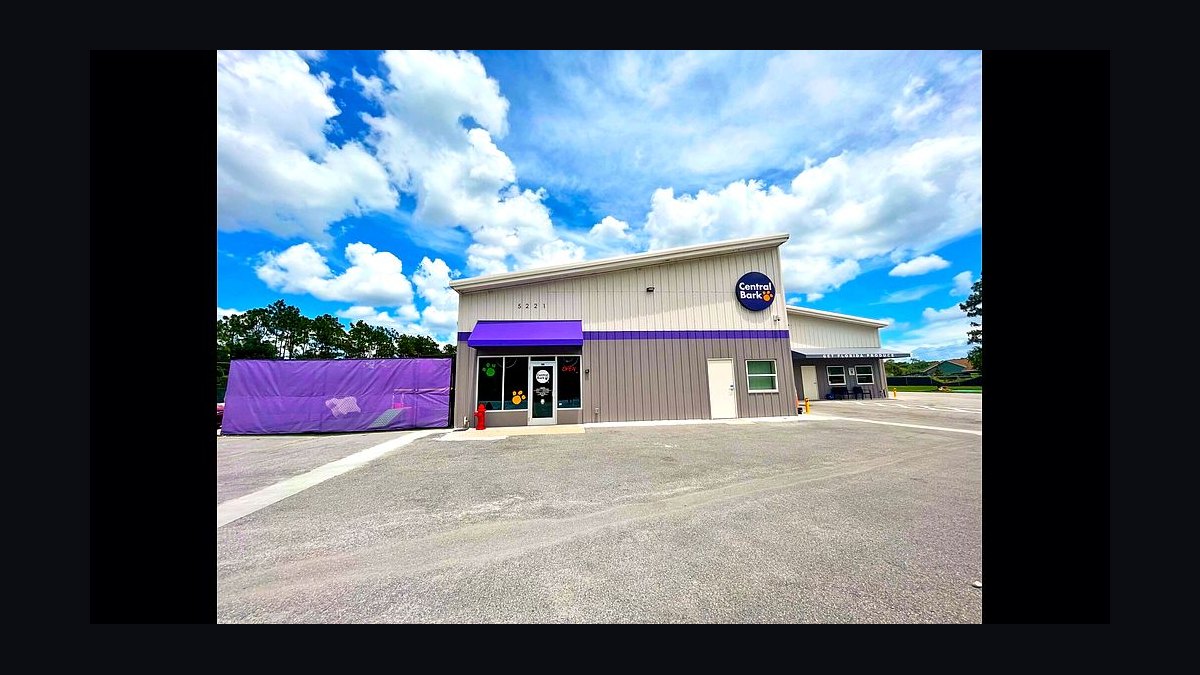
Open a Central Bark in 2027 only if you can fund the full $700,000–$1,500,000 Item 7 range and want a facility-based, recurring-revenue dog care business. The daycare membership base, layered with boarding, grooming, and training, is a genuinely diversified model — but it demands real estate, a trained staff, and patience while memberships build. Under-capitalized buyers or those unwilling to manage a labor-intensive facility should look elsewhere.
The outcome you should expect
If you open a Central Bark in 2027, expect a multi-year build rather than an overnight payoff. The franchise is not a lemonade stand you flip on and watch fill up — it is a facility business where revenue compounds as your daycare membership base grows. In year one, most new centers run at 40%–60% of mature-center capacity because daycare memberships, which anchor the whole "whole dog care" model, take time to build through word of mouth, local marketing, and trust. A family does not sign up for daily or weekly daycare the week a new facility opens; they watch it operate safely for a few months first.
By the time a center matures — typically 24 to 36 months after opening — you should expect to be grossing somewhere in the $900,000 to $2,200,000 band, with boarding, grooming, and training layered on top of the daycare base. Owner take-home at that mature stage lands between $130,000 and $350,000, which is a wide spread driven almost entirely by two variables: how many active daycare memberships you've built and how tightly you control labor costs, which typically run 30%–38% of gross revenue in this model (compared with 20%–25% for a typical retail franchise). A center that cross-sells aggressively — getting daycare members to also book boarding during holidays and grooming on a rotation — will sit at the top of both ranges. A center that only fills daycare slots and never converts those families into boarding or grooming customers will sit near the bottom, sometimes below it.
The realistic timeline to break even on your initial investment is longer than many franchise buyers expect going in. Because the buildout itself consumes $350,000–$850,000 of your capital before you've served a single dog, and because staffing a facility to opening-day readiness means payroll starts before meaningful revenue does, most owner-operators should plan for 18–30 months to reach cash-flow breakeven, and longer if you're financing a large share of the buildout. That is a longer runway than a low-capital service franchise (mobile pet care, a small retail storefront), but it is also a more defensible, harder-to-replicate business once it's running — a competitor can't simply undercut your lease, your trained staff, and your existing 200-member daycare roster the way they could undercut a thin-margin retail concept.
The honest expectation, then, is this: Central Bark rewards operators who treat the first 24 months as a membership-building campaign, not a grand opening. If you expect immediate profitability, you will be disappointed. If you expect a facility that compounds in value as its membership base and service mix mature, the 2027 numbers support that expectation for a well-capitalized, hands-on owner.
What drives that outcome
Three forces interact to produce the revenue and profit ranges above, and understanding how they connect explains why some Central Bark centers land at $2.2M gross and others stall near $900K.
The first force is the recurring daycare membership base itself. Unlike a transactional pet-care visit, a membership or package purchase converts an occasional customer into a predictable, repeating line of revenue — the same mechanic that makes gym memberships or subscription box businesses valuable. Every member you add doesn't just add one visit's worth of revenue; it adds a recurring claim on that household's future pet-care spending. This is the base layer the whole model sits on.
The second force is cross-sell velocity — how quickly and effectively you convert a daycare member into a boarding, grooming, or training customer. Boarding is highly seasonal (holidays, summer travel) and carries a higher ticket than daily daycare. Grooming is sticky — once a dog has a regular groomer who knows its temperament and coat, owners rarely switch. Training adds a third touchpoint, often early in the relationship when a puppy owner is at their most willing to spend. A center that treats these as separate, siloed services leaves money on the table; a center that systematically offers boarding at every daycare drop-off during the two weeks before a holiday, or bundles a grooming visit into a daycare package, pulls far more revenue per household.
The third force is the local labor market and your staffing discipline, because this model's cost structure is unusually labor-intensive relative to other franchise categories. You need roughly one staff member per 10–15 dogs during peak daycare hours, plus dedicated boarding attendants for overnight and weekend shifts, plus commission-based groomers, plus front-desk and management staff. That staffing requirement — often 8–15 full-time-equivalent employees at a mature, $1.2M+ center — means your profit margin is extremely sensitive to turnover. Pet-care staff burn out faster than typical retail staff because of the physical and emotional demands of the work (noise, cleaning, occasional bite incidents), and every departure costs you both direct replacement costs and the indirect cost of degraded service quality while a new hire ramps up.
These three forces don't operate independently — they reinforce each other. A well-staffed center delivers better daycare experiences, which builds membership trust faster, which creates more cross-sell opportunities, which generates the revenue to invest in better staffing. A poorly staffed center creates the opposite spiral: service lapses, membership churn rises, cross-sell opportunities shrink, and the business gets stuck well below its potential even in a strong local market.
Benchmarks and realistic ranges
The numbers below reflect the 2026 Franchise Disclosure Document figures and should be your baseline for underwriting a 2027 opening, adjusted for your specific real estate market.
Initial investment (Item 7):
- Franchise fee: $50,000 flat
- Buildout and leasehold improvements: $350,000–$850,000 — the widest swing in the budget, driven almost entirely by your local construction costs and how much work the shell space needs
- Equipment and technology (kennels, play-area flooring and fencing, POS systems): $150,000–$350,000
- Signage and decor (brand-prescribed, limited negotiating room): $25,000–$70,000
- Initial inventory (retail, supplies): $10,000–$30,000
- Initial marketing for membership acquisition: $25,000–$60,000
- Training and travel for owner and staff: $10,000–$28,000
- Working capital for the first three to six months: $70,000–$180,000
- Total: roughly $700,000 to $1,500,000
Ongoing fees: a royalty near 6% of gross revenue plus a marketing fee near 2% of gross revenue — standard for the pet-care facility category and comparable to what Dogtopia and Camp Bow Wow franchisees pay.

Liquidity expectations: lenders and the franchisor typically want to see $200,000–$400,000 in liquid capital on top of financing for the remainder, since a facility buildout with a slow membership ramp is exactly the kind of project that strains undercapitalized buyers in year one.
Revenue and profit at maturity: gross revenue of $900,000–$2,200,000, with labor running 30%–38% of gross and owner profit landing at $130,000–$350,000 after rent, labor, royalties, and operating expenses.
Resale benchmarks: the FDD lists 12 transfers in the prior three years, with average sale prices of $350,000–$650,000 for mature, profitable centers — roughly 0.4x–0.6x annual gross revenue, lower than fast-food multiples (0.8x–1.2x) but respectable for a service-facility concept. A transfer fee of $15,000–$25,000 applies, typically paid by the buyer, and the franchisor holds a right of first refusal that is rarely exercised in practice. Expect a 6–12 month sales timeline when you eventually exit, and plan on a minimum 5-year hold to build enough membership equity to sell at a strong multiple.
Facility footprint: most locations run 6,000–12,000 square feet, though site-selection guidance within the system points to a minimum of roughly 2,500–5,000 square feet of ground-floor space plus a dedicated outdoor play yard of 1,000–2,500 square feet — a requirement that immediately rules out second-floor or below-grade spaces regardless of price.

Territory: protected radius typically runs 1.5 to 3 miles, larger in suburban markets and tighter in dense urban cores, though the franchisor reserves rights to mobile grooming, pop-ups, and online retail inside your territory even when brick-and-mortar daycare is protected.
Risks, edge cases, and failure modes
The failure modes in this model cluster around three predictable patterns, and recognizing them before you sign is cheaper than discovering them after you've spent $700,000.
Undercapitalization is the single biggest killer. Because the buildout alone can run $350,000–$850,000 before any revenue arrives, and because working capital needs to cover three to six months of a slow membership ramp, buyers who stretch to the low end of the investment range with thin reserves are the ones most likely to run out of cash exactly when the business needs patient capital most — month 8 through 14, when membership is building but not yet sufficient. If your financing plan assumes a fast ramp to mature-center revenue, you are underwriting the wrong case; underwrite the slow case and treat a fast ramp as upside.

Staffing failure compounds quietly. Because labor runs 30%–38% of gross and the work itself drives above-average turnover, an owner who doesn't actively manage culture, cross-training, and scheduling will find themselves in a reactive hiring cycle — always short-staffed, always training someone new, never building the service consistency that drives membership retention. The franchisor's "Bark University" training program and cross-training recommendation exist precisely because this failure mode is common across the system, not unique to any one market. An owner-operator who plans to work 50–60 hours a week for the first 12–18 months is following the model as designed; an owner who expects a semi-absentee role from day one needs to budget a general manager at $55,000–$75,000 plus bonus, and accept $30,000–$60,000 lower net profit as the cost of that choice.
Territory and competitive density erode pricing power faster than owners expect. Dogtopia, Camp Bow Wow, K9 Resorts, and independent operators are all competing for the same dog-owning, dual-income households that Central Bark targets. If your proposed territory already has two or more competing daycare facilities per 10,000 households, your membership pricing will be squeezed from day one, and your path to the top of the revenue range narrows considerably. This is a diligence task you can do before signing — overlay competitor locations on a map against your proposed site and count.
Operational and reputational risk is real in this category. A bite incident, a health-code violation, or a visible cleanliness lapse does more damage to a facility-based pet-care brand than an equivalent incident does to most retail concepts, because the entire value proposition rests on trust with a family's pet. These incidents also directly depress resale value — buyers discount heavily for any inspection history blemish, just as they discount for an expiring lease or visible staff turnover.
Market saturation is a regional, not national, risk. The pet-care industry overall remains in growth mode, and that broad tailwind is real — but "the category is growing" does not protect an individual territory from local overbuilding. A thorough local market analysis, not a national trend line, should drive your go/no-go decision for any specific site in 2027.
A practical rollout plan

The rollout below sequences the work so that your heaviest capital commitments happen only after you've validated the two things that matter most: the market, and your own appetite for operating a labor-intensive facility.
Start by reading the full 2026 FDD closely enough to understand the recurring-membership mechanics, not just the headline investment figures — Items 5, 6, 7, 19, and 20 are where the real economics live. Use that reading to interview at least eight existing owners, and ask pointed questions about their actual daycare membership base, their service mix between daycare, boarding, grooming, and training, their staffing turnover, and their real net profit rather than gross revenue. Owners who are candid about the hard parts — staffing, the slow ramp, local competition — are more useful references than owners who only tell you what's working.
Next, validate your target market independently of what the franchisor's territory map tells you. Confirm genuine dog-owning, dual-income household density, check real estate availability against the 2,500–5,000 square foot ground-floor-with-yard requirement, and map every existing competing daycare and boarding facility within your proposed territory. If you count more than roughly two competing facilities per 10,000 households, treat that as a serious yellow flag rather than something to push through on optimism.

Only after that validation should you commit to the buildout and begin recruiting staff — in parallel, not sequentially, since your facility and your team both need to be ready on the same timeline. Build toward the "Bark University" training program for every handler, and plan cross-training from the outset so a single staff departure doesn't create a scheduling crisis. Begin pre-selling daycare memberships well before your opening date; the whole model depends on walking in with a membership base already seeded rather than starting at zero on opening day.
Once open, the highest-leverage ongoing discipline is monitoring two numbers monthly: your labor cost as a percentage of gross (keep it as close to 30% as your market allows) and your active membership count (the leading indicator for every other revenue line). Centers that drift above 38% labor or stall in membership growth for more than two consecutive quarters are the ones that tend to end up in the bottom half of the profit range — catching that drift early, rather than discovering it at year-end, is what separates a $350,000-profit center from a $130,000-profit one running in the same market.
Related questions
How does Central Bark's investment compare to Dogtopia or Camp Bow Wow?
All three sit in a broadly similar $700K–$1.5M+ range with comparable royalty structures near 5%–7% of gross. The real differentiator is service mix and brand positioning within your specific territory, not headline cost.
Can I open a Central Bark as a semi-absentee owner?

Yes, but budget a general manager at $55,000–$75,000 plus bonus and accept $30,000–$60,000 lower net profit than an owner-operator model, since the facility still needs full-time, on-site leadership.
How long until a new Central Bark becomes profitable?
Most centers need 18–30 months to reach cash-flow breakeven, since the daycare membership base — the model's revenue engine — builds gradually rather than filling immediately at opening.
What's the biggest financing mistake buyers make?
Underwriting the fast-ramp case instead of the slow one. Working capital of $70,000–$180,000 should assume a membership base that takes months to build, not weeks.
Is a smaller, lower-capital pet franchise a better starting point?
If $700,000+ is out of reach, a mobile or membership-wellness model like Woofie's or Scenthound offers a lower-capital entry into the same growing pet-care category, with a different risk profile.
FAQ
What is the total investment needed to open a Central Bark franchise? The total investment range is roughly $700,000 to $1,500,000, including a franchise fee of about $50,000. Build-out, equipment, and working capital make up most of the variance, and actual costs depend heavily on local real estate and construction markets.
How much can I expect to earn as a Central Bark franchise owner?

Mature centers typically gross between $900,000 and $2,200,000 annually, with owner earnings ranging from $130,000 to $350,000. Actual profit depends on membership growth, cross-sell execution, and how tightly labor costs are managed.
What ongoing fees does Central Bark charge? The royalty is approximately 6% of gross revenue, plus a roughly 2% marketing fee. Both are in line with other facility-based pet-care franchises like Dogtopia and Camp Bow Wow.
How does Central Bark compare to competitors like Dogtopia or Camp Bow Wow? Central Bark centers on a "whole dog care" model with daycare memberships as the recurring base, layered with boarding, grooming, and training. Competitors offer similar service bundles; the deciding factor is usually local territory availability and franchisee support rather than a dramatic model difference.
What are the biggest challenges of owning a Central Bark franchise? The largest challenges are the sizable facility capital requirement, recruiting and retaining pet-care staff in a labor-intensive model, and competing against established daycare brands already operating in dog-dense markets.
Is the pet-care market still strong enough to open a new franchise in 2027? Broadly yes — pet-care spending has remained durable as owners treat pets as family and seek professional daycare, boarding, and wellness services. That said, saturation is a local issue, so a specific-territory competitive analysis matters more than the national trend.
Sources
- https://www.ftc.gov/business-guidance/industry/franchises-business-opportunities
- https://www.sba.gov/business-guide/plan-your-business/franchise-businesses
- https://www.entrepreneur.com/franchises
- https://www.franchisebusinessreview.com
- https://www.franchise.org
- https://www.americanpetproducts.org
- https://www.ibisworld.com
- https://www.bls.gov
- https://www.census.gov
- https://www.centralbark.com
Related on PULSE
This page will be disappearing soon. Save it to your device for $1 — or read it free while it is here.
@Kory-White- · if Venmo asks, the last 4 of my number are 2012
This page is gone.
This one is off the shelf now. $1 keeps it on your phone for good — the whole page, pictures and diagrams included.
 franchiseShould I open or buy a Jiffy Lube franchise in 2027?
 franchiseShould I open or buy a Bojangles franchise in 2027?
 franchiseShould I open or buy a Firehouse Subs franchise in 2027?
 franchiseShould I open or buy a Drybar franchise in 2027?
 franchiseShould I open or buy a Panera Bread franchise in 2027?
 franchiseShould I open or buy a Primrose Schools franchise in 2027?
 franchiseShould I open or buy a Planet Fitness franchise in 2027?
 franchiseShould I open or buy a Mathnasium franchise in 2027?
 franchiseShould I open or buy an Ace Hardware franchise in 2027?
 franchiseShould I open or buy a Chipotle franchise in 2027?