


Should I open or buy a Deka Lash franchise in 2027?
Quality
Certified
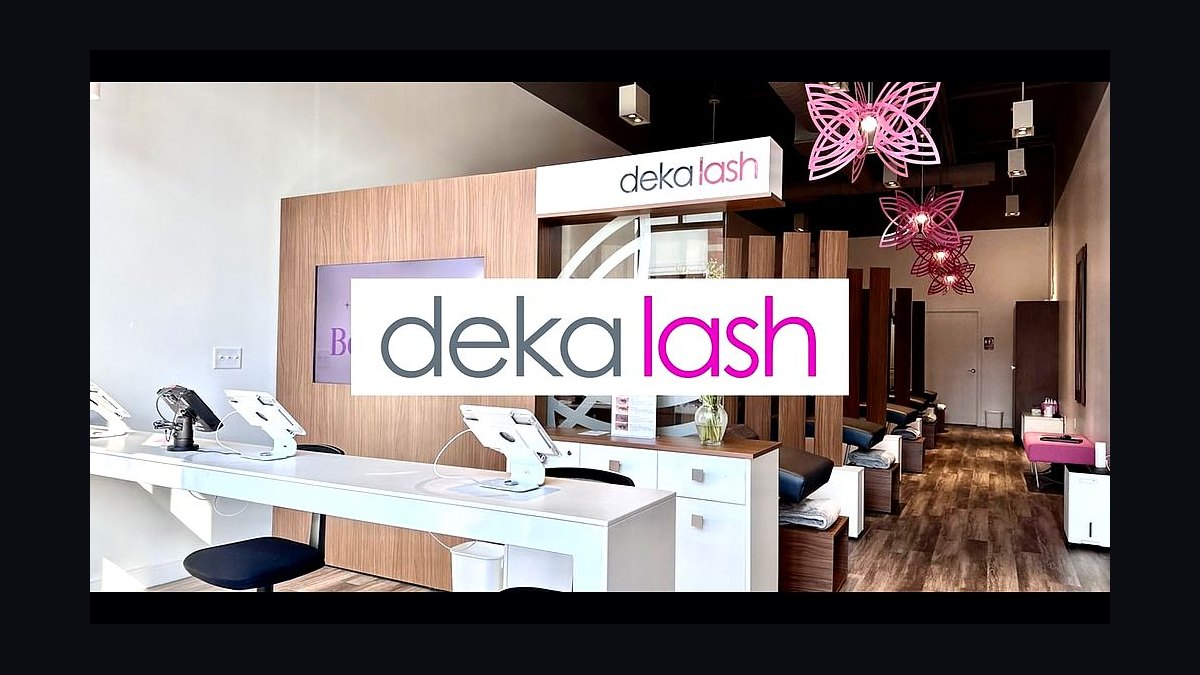
Yes, if you can recruit and retain skilled lash technicians and build a paid membership base — Deka Lash's 2027 economics work at a lower capital entry than most eyelash-extension franchises. The 2026 FDD puts total investment near $150,000-$350,000 for studios grossing $400,000-$1,000,000, with owners clearing $70,000-$200,000. Skip it if staffing or membership sales aren't your strength.
A Founding Member Problem in Month One
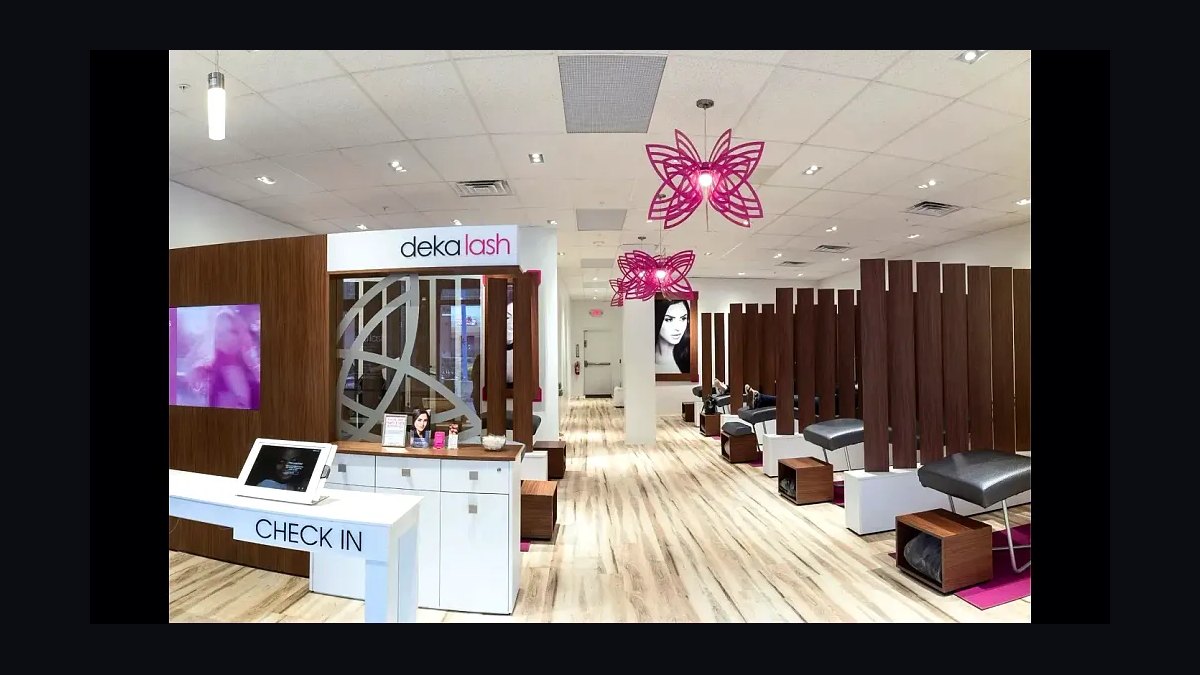
Picture a franchisee who signed a Deka Lash agreement in early 2027, leased 1,200 square feet in a power center next to an Ulta, and spent $95,000 on buildout, equipment, and signage. The studio opens on schedule, the lash beds are staffed, and the marketing budget has been spent pre-selling founding memberships at a discount. Ninety days in, the studio has 60 active members instead of the 150-250 needed to cover fixed costs. The problem isn't demand — walk-ins are steady — it's that the membership pitch, which depends on converting a first-time lash-fill customer into a recurring monthly payer, is only converting one in four instead of one in two.
This is the scenario every Deka Lash buyer needs to run through before signing: the studio doesn't fail from lack of interest in eyelash extensions, it fails from a gap between one-time service revenue and recurring membership revenue. A technician can fill a chair for a single visit all day long, but the franchise's entire financial model — the 6% royalty base, the payroll math, the owner's eventual semi-absentee schedule — assumes 70-80% of revenue comes from members paying every month for a fill every two to three weeks. If the front-desk conversion script is weak, or the studio opened in a market where $120-plus a month for lash maintenance is a hard sell, the same square footage and the same technician roster produce a studio that's busy but unprofitable. Understanding this mechanism — not just the sticker price of the franchise fee — is the real diligence question for 2027.
How the Membership Mechanism Actually Works
Deka Lash's business model runs on a simple loop: a client gets a full set of lash extensions, is offered a membership that bundles a discounted monthly fill with the extension maintenance she needs anyway, and — once enrolled — becomes predictable revenue that renews without a new sales conversation. The store's entire staffing, scheduling, and marketing plan is built to protect that loop. A technician's day is scheduled in fill-length appointment blocks (typically 45-75 minutes for a fill versus 2-2.5 hours for a new full set), so a studio with a strong member base runs shorter, more frequent, higher-volume appointments, while a studio still selling mostly one-time full sets runs a slower, lower-margin day.
The royalty and marketing fee structure reinforces this: because Deka collects roughly 6% of gross plus a marketing fee on total revenue rather than a fee only on new-member signups, the franchisor's incentives point toward supporting studios that both open new memberships and retain existing ones — churn is a shared problem, not just the local owner's. That's why the training program, the pre-sale marketing calendar, and the recommended launch sequence are all structured around hitting a member count before day 90, not around maximizing one-time appointment volume.

The mechanism also explains why technician retention matters more here than in a typical service franchise: a member expects the same technician (or one trained to match her prior lash set precisely), so when a technician quits, the studio doesn't just lose a staff slot — it risks losing every member that technician served, because lash extension work is visibly personal and clients often follow their artist or cancel rather than accept an unfamiliar hand near their eyes.
Real Numbers and Benchmarks for 2027
The 2026 FDD frames the investment as follows: a franchise fee around $45,000, and a total Item 7 range of roughly $150,000 to $350,000 depending on market, lease terms, and buildout condition. Breaking that down, buildout and leasehold improvements run $80,000-$200,000, equipment and fixtures (lash beds, lighting, ventilation for adhesive fumes) run $25,000-$60,000, signage and brand-prescribed decor run $12,000-$35,000, initial inventory of lash supplies runs $6,000-$18,000, initial membership-focused marketing runs $20,000-$50,000, training and travel run $6,000-$18,000, and working capital reserves run $25,000-$70,000 for the first three to six months. Ongoing, the royalty sits near 6% of gross and there's an additional marketing fee, commonly around 2%.
Studios typically occupy 1,000-1,800 square feet, with the FDD's site-selection guidance favoring 1,100-1,400 square feet in high-traffic retail corridors — lifestyle centers, grocery- or big-box-anchored power centers, and strip malls with strong beauty co-tenancy. Lease terms usually run five to seven years. Mature, stabilized studios gross $400,000-$1,000,000 annually, and after technician labor (35-45% of revenue), rent, the royalty, and marketing spend, owners typically clear $70,000-$200,000. A sample $50,000-a-month mature studio might break down as roughly $24,000 from 200 memberships averaging $120 each, $8,000 from retail and add-ons like lash serums, and $18,000 from non-member services, against fixed costs of $6,000-$9,000 rent, $18,000-$22,000 payroll, $3,000 royalty, $1,500 marketing, and smaller insurance and utility lines — leaving $8,000-$14,000 in monthly net owner income once the studio is mature.

Break-even for new studios commonly lands in month 10-14, and studios in higher-rent locations (above roughly $10,000/month) need a materially larger membership base — often 280 or more — to clear fixed costs before the math works. Financing for a franchise at this size typically comes through SBA 7(a) loans (lenders generally look for 20-30% down and credit scores of 680 or better) or rollover-as-business-startup structures arranged through franchise-focused funding firms, which typically carry $15,000-$20,000 in setup fees. A resale of an established, membership-heavy Deka Lash studio can run $200,000-$450,000, reflecting the value of an existing base of paying members rather than just the physical buildout.
Trade-Offs Against Amazing Lash, The Lash Lounge, and Independent Studios
The core trade-off in choosing Deka Lash over Amazing Lash Studio or The Lash Lounge is capital versus brand maturity and territory density. Deka Lash's Item 7 range sits below what franchisees typically report for some longer-established lash-membership competitors, which lowers the entry barrier and shortens the time to first dollar invested — but a newer, smaller franchise system also means fewer decades of franchisee-performance data to diligence, a thinner bench of existing owners to call for validation, and a brand that's still building consumer recognition in some markets compared to a category leader.

Choosing an independent, non-franchised lash studio instead trades away the membership-software infrastructure, the training curriculum, and the brand marketing support in exchange for zero royalty and full control over pricing, hours, and technician pay structure — a real option for an operator who already has an esthetician license and an existing client book, but a much harder path for someone starting cold, since building a membership program, a booking system, and a training pipeline from scratch is itself a significant operational project. A third path — multi-unit development within Deka Lash once a first studio is validated — trades a slower initial ramp for the ability to spread corporate overhead (bookkeeping, a shared regional manager, group purchasing on supplies) across two or three studios, which is often where the "semi-absentee" promise actually becomes realistic rather than aspirational.
Adjacent membership-beauty franchises worth weighing side by side include European Wax Center and Waxing the City, which run a similar recurring-visit, membership-discount model in a different beauty vertical; an operator deciding between waxing and lash extensions should note that lash technician training is longer and more specialized (a multi-week, in-house-only curriculum) than most waxing certifications, which affects how fast a new location can staff up after opening or after a technician departure.
Common Pitfalls in Opening a Deka Lash Studio
The most frequent pitfall is treating the franchise fee and Item 7 range as the full capital picture and underfunding working capital, when the FDD's own recommendation of $25,000-$70,000 (some franchisee reports cite $30,000-$50,000) in reserve for the first six to twelve months exists precisely because break-even commonly takes ten to fourteen months, and roughly a quarter of studios take eighteen months or longer. An owner who capitalizes only to the buildout number, without a comparable reserve for the ramp period, ends up personally funding payroll gaps out of pocket during the exact window when membership acquisition is hardest.
A second pitfall is underestimating the technician pipeline problem. Because Deka Lash requires its own multi-day training course rather than accepting outside lash certifications, an owner cannot simply hire an experienced lash artist off the street and put her on the schedule the same week — she still has to complete Deka's course and a supervised-practice period, which can take three to five weeks from hire to floor-ready. With industry-typical turnover in lash roles running high, a studio that hasn't built a standing trainee pipeline (relationships with local cosmetology schools, cross-training every technician on multiple lash styles so no single departure creates a scheduling crisis) will regularly find itself short-staffed at the exact moment membership fills need to be honored, which drives cancellations and, eventually, member churn.
A third pitfall is site selection that looks right on paper but fails the franchisor's real-estate criteria in practice — insufficient parking ratio, a landlord unwilling to accommodate the ventilation Deka Lash's adhesive-heavy service requires, or an older retail space that needs costly ADA retrofitting for lash-bed clearance. Vetting a site with a broker experienced in beauty-franchise leasing, before signing a letter of intent, avoids discovering these issues after capital is already committed to a location the franchisor's real estate committee ultimately won't approve.
A fourth, subtler pitfall is treating "semi-absentee" as fully passive from day one. The model can genuinely reduce an owner's on-site hours once a studio is mature and staffed with a trusted lead technician or manager — but that manager role itself typically costs $50,000-$65,000 a year in salary and bonus, a cost that has to be modeled into year-one and year-two projections rather than assumed to be free capacity the owner already has.
Related questions
How long does it take a Deka Lash franchise to become profitable?

Most studios reach break-even in month 10-14, though roughly a quarter take 18 months or more, largely driven by how quickly the studio builds its paid membership base past the 150-250 threshold needed to cover fixed costs.
Can I finance a Deka Lash franchise with an SBA loan?
Yes — SBA 7(a) loans are common for this size of investment, though lenders typically expect 20-30% down and a personal credit score of 680 or higher; rollover-as-business-startup structures are another option some franchisees use.
What's the difference between Deka Lash and Amazing Lash Studio?
Both run recurring lash-membership models, but Deka Lash's typical investment range runs lower, while Amazing Lash and The Lash Lounge generally have longer operating histories and more franchisee performance data to diligence.
Do I need an esthetician license to own a Deka Lash franchise?
No — the owner doesn't need to be a licensed lash technician, since the franchise model is built around hiring and training staff through Deka's own curriculum, though owners without industry experience should plan extra time for learning the staffing and membership-sales side.
Is buying an existing Deka Lash studio better than opening new?
A resale, typically $200,000-$450,000, buys an established membership base and skips the ramp-up period, but requires diligence on membership churn and technician retention before closing, since those two factors drive most of a resale's real value.
FAQ
How much does it cost to open a Deka Lash franchise? Total initial investment typically ranges from $150,000 to $350,000, including a franchise fee around $45,000. This is lower than some competing lash franchises, making it a more accessible entry point for new operators in 2027.

What are the ongoing fees and royalties? Franchisees pay a royalty of about 6% of gross sales plus a marketing fee, commonly cited around 2%. These are standard for the beauty-franchise category and fund brand marketing, training updates, and operational support.
How much can I expect to earn as a Deka Lash owner? Mature studios generally gross between $400,000 and $1,000,000 annually, with owner income ranging from $70,000 to $200,000. Actual earnings depend heavily on location, membership growth, and how efficiently the studio manages technician labor costs.
Is Deka Lash a good option for semi-absentee ownership? It can be, once a studio is mature and staffed with a reliable lead technician or manager, who typically costs $50,000-$65,000 a year. In the first year, though, the owner should expect to be closely involved in hiring, membership marketing, and financial oversight.
What is the biggest challenge with opening a Deka Lash franchise? Recruiting and retaining skilled lash technicians is the most commonly cited difficulty, since Deka requires its own in-house training rather than accepting outside certifications, and technician turnover directly threatens membership retention and revenue.
How does the membership model affect day-to-day operations? Because members book recurring fills every two to three weeks, technician schedules run on shorter, more frequent appointments than a purely one-time-service studio, and the front desk's ability to convert new clients into members becomes the single biggest driver of hitting break-even.
Sources
- https://www.dekalash.com
- https://www.entrepreneur.com/franchises/dekalash/451234
- https://www.franchisebusinessreview.com
- https://www.ibisworld.com
- https://www.statista.com
- https://www.franchise.org
- https://www.probeauty.org
- https://www.bls.gov/ooh/personal-care-and-service/skincare-specialists.htm
- https://www.census.gov
- https://www.sba.gov/funding-programs/loans/7a-loans
Related on PULSE
This page will be disappearing soon. Save it to your device for $1 — or read it free while it is here.
@Kory-White- · if Venmo asks, the last 4 of my number are 2012
This page is gone.
This one is off the shelf now. $1 keeps it on your phone for good — the whole page, pictures and diagrams included.
 franchiseShould I open or buy a Stanley Steemer franchise in 2027?
 franchiseShould I open or buy a Dairy Queen franchise in 2027?
 franchiseShould I open or buy a Mathnasium franchise in 2027?
 franchiseShould I open or buy a Mac Tools franchise in 2027?
 franchiseShould I open or buy a Planet Fitness franchise in 2027?
 franchiseShould I open or buy a Jimmy John's franchise in 2027?
 franchiseShould I open or buy a Taco Bell franchise in 2027?
 franchiseShould I open or buy a Drybar franchise in 2027?
 franchiseShould I open or buy a Take 5 Oil Change franchise in 2027?
 franchiseShould I open or buy a Rita's Italian Ice franchise in 2027?