


Should I open or buy a Salon Lofts franchise in 2027?
Quality
Certified
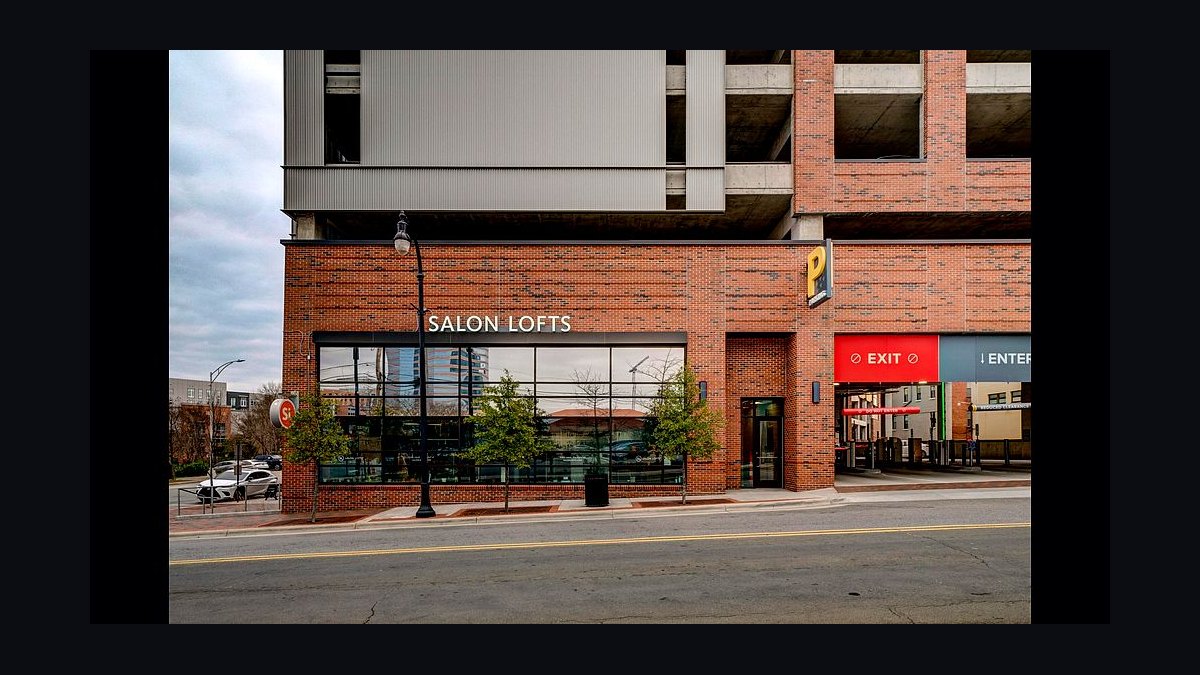
Yes, if you can fund a $700,000–$1,400,000 buildout and you're prepared to run a semi-absentee, recurring-rent landlord business rather than a salon — Salon Lofts franchise owners lease private studio suites to independent beauty professionals, not customers off the street. The 2026 FDD lists a $50,000 franchise fee, roughly 6% royalty, and mature-location profit of $120,000–$340,000 once occupancy stabilizes above 85%. Skip it if you can't commit to leasing discipline or are entering a market already saturated with competing suite brands.
The outcome you should expect
Opening or buying a Salon Lofts franchise puts you into a real-estate-adjacent business wearing a beauty-industry wrapper. You are not cutting hair, doing nails, or managing stylists as employees — you are building out a facility of individually lockable "lofts" (suites, typically 150–300 square feet under Salon Lofts' premium format) and renting each one, on a recurring lease, to an independent beauty professional who runs their own book of clients. Your revenue is suite rent, not service tickets, and your profit depends almost entirely on how many of those suites are occupied at any given time.
In year one, expect occupancy in the 60–75% range while you lease up a new location, producing rental revenue of roughly $300,000–$600,000 and a net result somewhere between breakeven and $80,000, after royalty, marketing fund contribution, mortgage or base lease payment, utilities, insurance, and debt service on the buildout loan. Most franchisees describe reaching sustained positive cash flow between month 18 and month 24, not at grand opening. That ramp is the single biggest psychological adjustment for buyers coming from a traditional retail or restaurant franchise background, where the first 90 days either validate or kill the unit economics; here, the first 90 days just tell you whether your leasing funnel works.
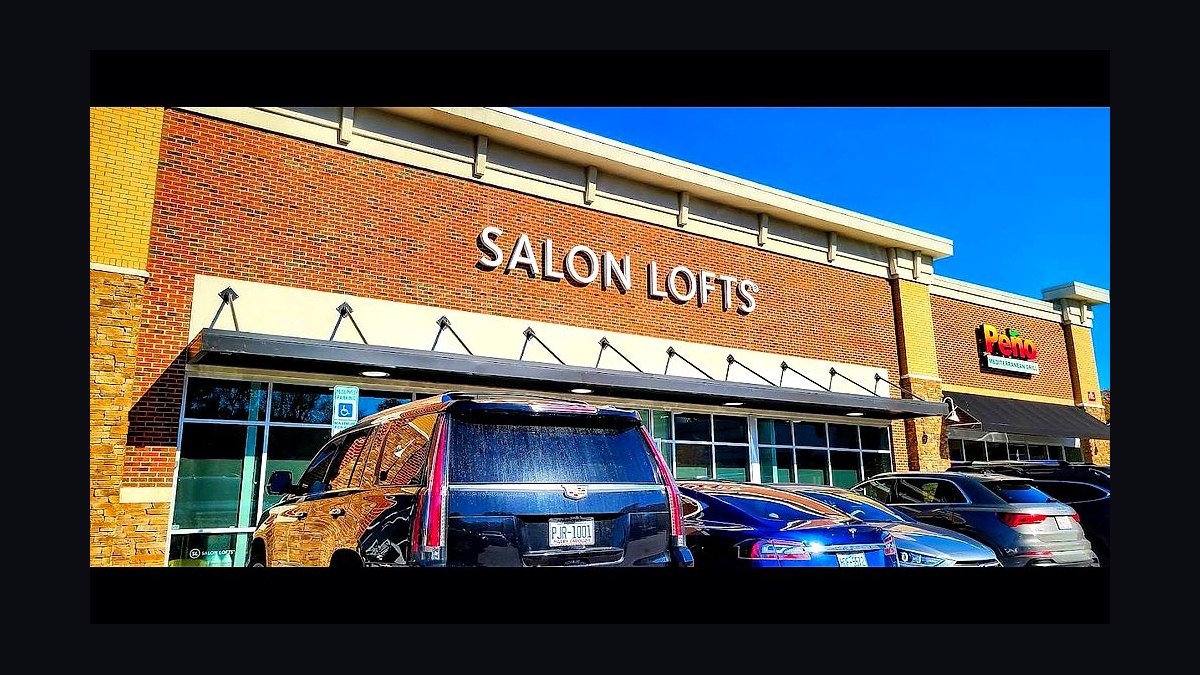
Once a location stabilizes — typically years three through five — occupancy should sit at 85–95%, annual rental revenue lands between $500,000 and $1,200,000, and owner profit settles into the $120,000–$340,000 band the FDD's Item 19 representations describe. That is a wide range, and the spread is almost entirely explained by two variables: how dense the local beauty-professional labor pool is, and how actively the franchisee manages tenant retention. A location in an affluent suburb with a deep bench of independent stylists, estheticians, and lash/brow artists looking to leave commission-based salons will fill faster and churn less than one in a market where most beauty professionals are still comfortable as employees.
By year six through ten, with proper capital reinvestment into common areas and suite refreshes, mature units can produce $150,000–$400,000 in annual net profit, with the top of that range concentrated in prime metro-adjacent markets — operators point to suburban Atlanta, Dallas, and Phoenix as examples of geographies where premium suite rents have held. The realistic expectation for a new 2027 buyer, though, is to underwrite at 80% occupancy and $400,000–$800,000 in revenue, not the FDD's top-end figures, and treat anything above that as upside rather than baseline.
What drives that outcome
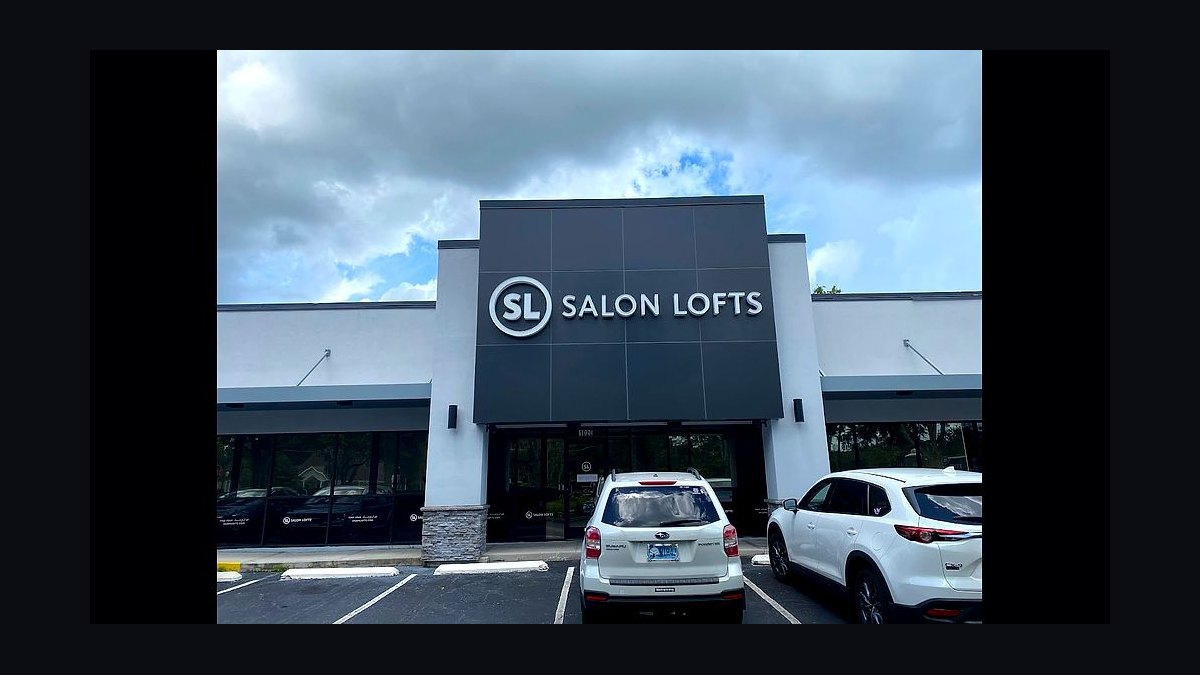
Three forces determine whether a Salon Lofts location hits the top or bottom of its profit range: occupancy, tenant tenure, and local competitive density. Occupancy is the obvious one — every vacant suite is a fixed cost with no offsetting revenue, since mortgage, property tax, insurance, and common-area utilities don't scale down when a loft sits empty. Tenant tenure matters almost as much and is less visible to new buyers: average tenure for an independent beauty professional in a salon suite runs 12–24 months, meaning a well-run location still re-leases 30–50% of its suites every year. Each turnover costs you 2–4 weeks of vacancy for cleaning, light repairs, and re-marketing, so a franchisee who treats leasing as a one-time launch task rather than a continuous discipline will bleed occupancy even after a strong opening.
Competitive density is the force new buyers most often underweight. Salon Lofts competes directly with Sola Salon Studios, Image Studios, MY SALON Suite, and Phenix Salon Suites, and in many metros two or three of these brands already operate within a few miles of each other. Salon Lofts' competitive position is built on premium positioning — larger suites (150–300 sq ft versus 100–200 sq ft at most rivals) commanding $800–$1,500 per month versus $600–$1,000 at competing brands — which works well in affluent markets with a deep professional-beauty labor pool, but can slow lease-up in mid-tier markets where a lower price point from Solara or My Salon Suite fills faster. The franchise disclosure documents for those competitors show meaningfully different entry points: Solara around $600,000–$1,100,000 total investment with a $40,000 fee and 5% royalty; My Salon Suite around $500,000–$900,000 with a $35,000 fee but a higher 7% royalty. None of these differences make one brand categorically better — they shift where each brand wins, with Salon Lofts favored in dense, affluent suburban and urban markets and the lower-fee brands favored where speed of lease-up and lower rent points matter more than suite size.

Underneath all three is a structural shift this franchise rides rather than creates: independent beauty professionals increasingly prefer renting their own suite over working on commission or booth rent inside a traditional salon. That trend is the demand engine for the entire salon-suite category, and it's why Salon Lofts, Sola, and their peers have expanded steadily even as traditional salon employment has flattened. A 2027 buyer is betting that this preference for independence continues to broaden, not that it reverses.
Benchmarks and realistic ranges
The 2026 FDD's Item 7 investment range runs from roughly $700,000 to $1,400,000, broken out approximately as: $50,000 franchise fee, $400,000–$850,000 for buildout and leasehold improvements, $120,000–$280,000 for suite fixtures and common-area equipment, $25,000–$70,000 for brand-prescribed signage and decor, $10,000–$30,000 for booking/access/billing technology, $25,000–$55,000 for initial leasing marketing, $8,000–$25,000 for owner training and travel, and $55,000–$140,000 in working capital to carry the location through lease-up. Ongoing costs include a royalty near 6% of gross and a marketing fee near 2%, with many franchisees also contributing roughly 1% to a national marketing fund on top of that local spend.

Staffing is light relative to the investment size — most owners hire a part-time on-site manager at 20–30 hours per week, costing $25,000–$40,000 annually in salary and payroll taxes, plus a common-area cleaning service at $500–$1,000 per month. Property management software to track leases, maintenance, and tenant financials (separate from Salon Lofts' own leasing platform) typically adds $200–$500 per month. None of this approaches the labor overhead of a service-based salon or a food franchise, which is the core of the "semi-absentee" pitch, but it is not zero-touch — budget 10–15 hours a week of owner or manager attention even at a stabilized location.
On exit, resale values for Salon Lofts locations have generally run 3–5 times annual net profit when sold franchisee-to-franchisee with brand approval; a location earning $200,000 a year would reasonably trade for $600,000–$1,000,000. Some multi-unit salon-suite operators have also drawn interest from private equity buyers in recent years at 4–6x EBITDA as the category has institutionalized, though that exit path is concentrated among owners with several units, not single-location franchisees. A buy-and-hold strategy — collecting cash flow for a decade or more as a quasi-retirement vehicle — is at least as common an exit as an outright sale.
Financing terms matter more here than in many franchise categories because the capital stack is large relative to typical first-time-franchisee liquidity: expect lenders to want $200,000–$380,000 in liquid capital even when financing the balance, and rising interest rates directly compress the net profit range by increasing debt service on whatever portion of the $700,000–$1,400,000 is borrowed rather than put down in cash.
Risks, edge cases, and failure modes

The dominant failure mode is simple to name and hard to fix: a location that cannot keep its suites leased. Because so much of the cost structure (mortgage or base lease, property tax, insurance, common-area utilities) is fixed regardless of occupancy, a drop from 90% to 70% occupancy doesn't shave 20% off profit — it can erase most of it, since the fixed costs keep accruing against a shrinking revenue base. Owners who treat the opening lease-up push as a one-time event rather than an ongoing sales function are the most common underperformers; the brand's own data implies that passive owners average shorter tenant tenure (12–18 months) than owners who run quarterly tenant events, collect feedback, and actively market vacancies (18–24 months).
Under-capitalization is the second major risk. Because Item 7 investment commonly reaches into seven figures, buyers who stretch to the minimum down payment with no reserve for a slow lease-up, a major capital expenditure (roof, HVAC, parking lot resurfacing), or a downturn in local beauty spending can find themselves cash-strapped well before stabilization. A conservative buyer should underwrite to 80% occupancy and the lower half of the revenue range, not the FDD's best-case figures, and hold back working capital beyond the $55,000–$140,000 range the FDD assumes.

Market selection risk compounds the first two. A low-density market — fewer independent beauty professionals, fewer affluent consumers willing to pay premium suite-adjacent service pricing, or a market already served by two or three competing suite brands — makes lease-up structurally slower no matter how well the owner executes. This is a geography-first business: the underwriting question isn't "can I run this well," it's "does this zip code have enough beauty professionals wanting to go independent, and is a competitor already capturing them."
A less obvious edge case is over-reliance on the brand's training and systems in place of local market judgment. Salon Lofts' roughly two-week on-site training and ongoing field support are more extensive than some competitors (Solara's one week, My Salon Suite's three to five days), which reduces — but does not eliminate — the leasing learning curve. Franchisees who assume brand support replaces local relationship-building with cosmetology schools, beauty-industry associations, and referral networks tend to lag the FDD's representative range even with full brand backing.
A practical rollout plan
A disciplined evaluation and launch sequence runs roughly 130 days before suites start generating revenue, followed by an indefinite occupancy-maintenance phase that never really ends.

The first 20 days should be spent entirely on the FDD — Items 5, 6, 7, and 19 in particular — confirming you understand this as a suite-rental business, not a salon operation, before spending a dollar. Days 21 through 45 are for owner interviews: existing franchisees are the only reliable source on real occupancy curves, actual suite rates achieved versus FDD assumptions, and how long their specific market took to stabilize. Days 46 through 65 validate the market itself — pull data on the local density of independent beauty professionals, commission-salon employment trends, and household income, and map every competing suite brand already operating nearby.
Buildout (days 66–100) and initial leasing (days 101–130) should overlap wherever possible rather than running sequentially — the strongest openings pre-lease a meaningful share of suites before the doors open, using the initial marketing budget to build a waitlist of interested beauty professionals during construction rather than starting the leasing clock at grand opening. After opening, the plan never really exits the leasing phase: ongoing local marketing (budgeted at $10,000–$25,000 annually for a mature location), tenant retention programming, and continuous vacancy marketing are permanent operating tasks, not launch tasks.
Related questions
Should I open or buy a MY SALON Suite franchise in 2027?
A similar suite-rental model with a lower entry point (roughly $500,000–$900,000, $35,000 fee) but a higher 7% royalty and smaller average suites — often a better fit for mid-tier markets than Salon Lofts' premium positioning.
Should I open or buy a Sola Salon Studios franchise in 2027?
Sola is the largest and most established name in the salon-suite category, generally competitive on investment size with Salon Lofts but with broader national footprint and brand recognition among beauty professionals.
Should I open or buy a Phenix Salon Suites franchise in 2027?

Phenix competes in the same recurring-rent, semi-absentee category; evaluate it on the same occupancy, local density, and competitive-saturation criteria used for Salon Lofts rather than on brand name alone.
What's the biggest difference between Salon Lofts and a traditional salon franchise?
Salon Lofts is a real-estate/landlord business collecting suite rent from independent operators; a traditional salon franchise employs or contracts stylists directly and collects service revenue, carrying far more labor management risk.
How does the salon-suite model compare to self-storage as a recurring-rent investment?
Both are occupancy-driven, low-labor, recurring-rent models with fixed-cost exposure during vacancy, but salon suites require active tenant relationship management and local marketing that storage units generally do not.
FAQ
What exactly does a Salon Lofts franchisee do? You act as a landlord, not a stylist. You lease out private studio suites to independent beauty professionals who run their own businesses. Your main job is managing occupancy, collecting rent, and maintaining the facility.
How much money can I realistically make owning a Salon Lofts?
Mature locations typically generate $500,000 to $1,200,000 in annual rental revenue. After expenses, owner profit generally falls between $120,000 and $340,000 per year, though results vary heavily by location and occupancy rates.
What is the biggest risk with this franchise? The main challenge is keeping suites leased. If occupancy drops below around 80%, your revenue can fall sharply since you have fixed costs like rent and utilities. Local competition from other salon-suite brands can also pressure your lease rates.
Can I run this as a semi-absentee owner while keeping my current job? Yes, many owners operate semi-absentee, spending 10–15 hours per week on management tasks like marketing vacant suites, handling maintenance issues, and collecting rent. You would likely need a local manager or assistant for daily on-site needs.
How long does it take to break even and start seeing profit? Most franchisees report reaching positive cash flow within 12 to 24 months after opening. The initial investment of $700,000 to $1,400,000 means you should plan for a longer ramp-up period while you fill your suites.
What support does Salon Lofts provide to new franchisees? They offer roughly two weeks of training on site selection, build-out, and operations, plus ongoing marketing support and a proprietary leasing system. You remain responsible for local marketing and building relationships with beauty professionals in your area.
Sources
- Salon Lofts Franchise Disclosure Document (2026 filing) — Items 5, 6, 7, 19, 20
- https://www.entrepreneur.com/franchises/directory
- https://www.franchisebusinessreview.com
- https://www.ibisworld.com
- https://www.probeauty.org
- https://www.statista.com
- https://www.franchise.org
- https://www.census.gov
Related on PULSE
This page will be disappearing soon. Save it to your device for $1 — or read it free while it is here.
@Kory-White- · if Venmo asks, the last 4 of my number are 2012
This page is gone.
This one is off the shelf now. $1 keeps it on your phone for good — the whole page, pictures and diagrams included.
 franchiseShould I open or buy a Rita's Italian Ice franchise in 2027?
 franchiseShould I open or buy a Whataburger franchise in 2027?
 franchiseShould I open or buy a Pizza Hut franchise in 2027?
 franchiseShould I open or buy a Dunkin' franchise in 2027?
 franchiseShould I open or buy a Take 5 Oil Change franchise in 2027?
 franchiseShould I open or buy an F45 Training franchise in 2027?
 franchiseShould I open or buy a Mac Tools franchise in 2027?
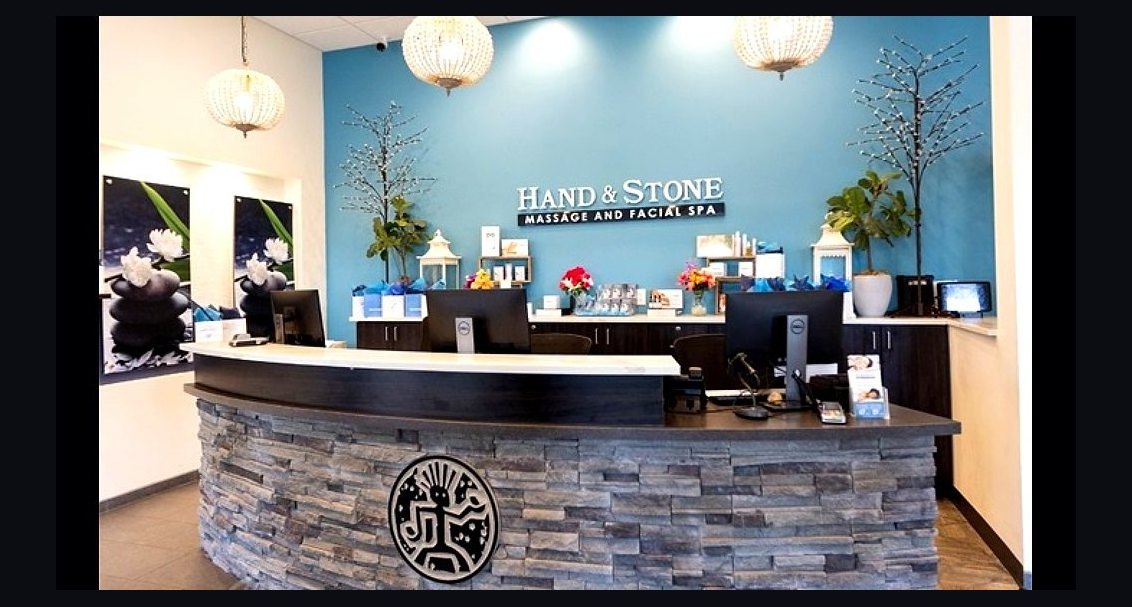 franchiseShould I open or buy a Hand and Stone Massage franchise in 2027?
 franchiseShould I open or buy a Goddard School franchise in 2027?
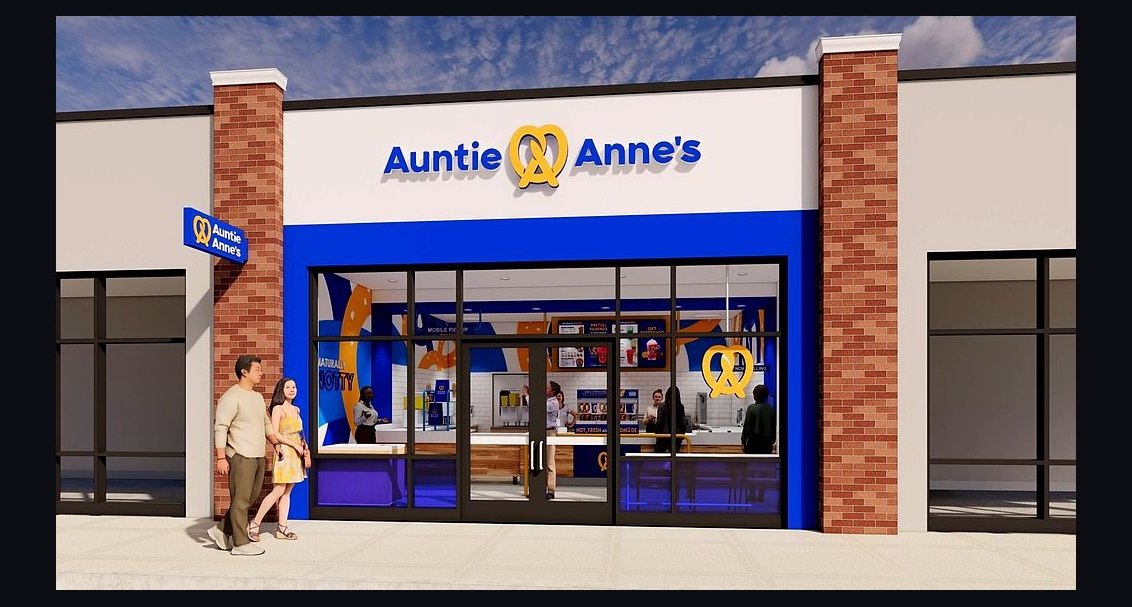 franchiseShould I open or buy an Auntie Anne's franchise in 2027?