


Should I open or buy a Goosehead Insurance franchise in 2027?
Quality
Certified
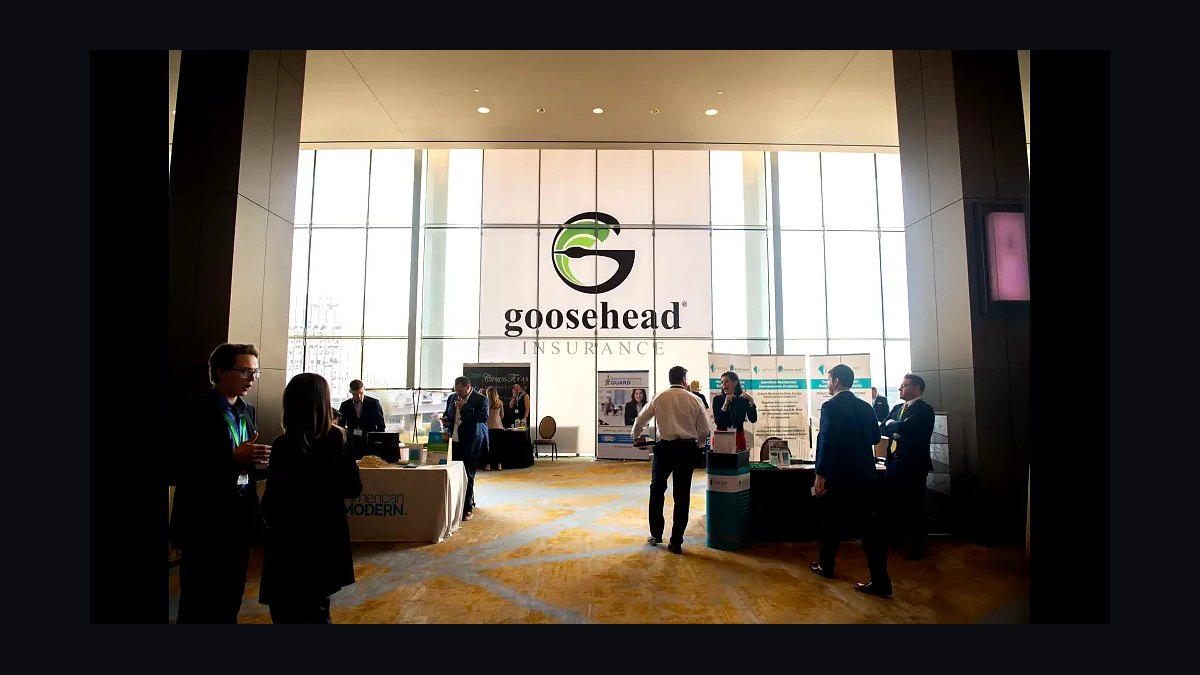
Yes, if you're a sales-driven operator who wants a low-capital, recurring-commission insurance franchise. Opening a Goosehead Insurance agency in 2027 costs roughly $40,000-$120,000 total, requires no inventory or buildout, and pays through annually renewing commissions on personal-lines policies. The trade-off is a significant franchisor commission split (around 20%) and zero passive income until you build a book of business through consistent, disciplined selling.
A Concrete Scenario That Frames The Decision
Picture two people considering the same Goosehead Insurance franchise agreement in early 2027. The first is a former captive State Farm agent who spent eight years building relationships and knows how to cold-call, follow up, and close. The second is a mid-career professional who liked the idea of "owning a business" but has never carried a sales quota. Both read the same 2026 Franchise Disclosure Document, both see the same $25,000-$60,000 franchise fee, and both see the same range of $150,000-$600,000+ in mature-agency commission revenue. Only one of them should sign.
That's the core tension of this franchise model. Goosehead doesn't sell you a location, a lease, or a piece of equipment — it sells you access to a multi-carrier quoting platform, a licensing and compliance backbone, and a brand that carriers and consumers recognize. What it cannot sell you is the will to make 40 outbound calls a day for the first six months when your commission checks are still small. The former captive agent enters with an existing referral network and immediately starts writing policies in week three. The first-time owner spends months learning to prospect from zero, and by month six may still be writing fewer than 15 policies a month — nowhere near the 25-40 monthly pace that separates franchisees who break even in a year from those who take three.

This scenario matters because Goosehead's economics are almost entirely a function of sales velocity, not market conditions, location quality, or even franchise support quality. Two franchisees in the same state, using the same technology, with the same carrier access, can post commission revenue that differs by 4x purely based on how aggressively and consistently they prospect. Anyone evaluating whether to open a Goosehead Insurance franchise in 2027 needs to honestly assess which of the two profiles above they resemble — because the FDD numbers describe averages across a population that includes both.
How The Commission Mechanism Actually Works
Goosehead's franchise model runs on a single core mechanic: you write a personal-lines insurance policy (home, auto, umbrella, and related lines) by comparing quotes across the carriers on Goosehead's panel, and you earn a first-year commission on that placement — typically in the 10-15% range of the annual premium. What makes the model different from a one-time sales business is that the policy renews every year, and if the client stays with the same carrier, you earn a renewal commission again, often climbing to 15-20% of premium in later years as the relationship matures. The franchisor takes a meaningful cut of that commission stream — often cited around 20% — in exchange for the brand, the carrier contracts, the compliance infrastructure, and the Agency Genius quoting platform that automates rating, issuance, and renewal processing.

The compounding effect only appears once you've written enough policies that renewals start outpacing the time you spend writing new business. In year one, nearly 100% of your commission income comes from brand-new policies you're actively selling. By year three, if retention holds near 85-90%, a meaningful share of your revenue comes from policies you wrote in year one and two that are simply renewing without any new selling effort. This is the "book of business" concept: each policy you write is a small annuity that pays again next year, and the next, as long as the client doesn't lapse or switch carriers. The franchisor's platform handles much of the renewal processing automatically, which is precisely why Goosehead can claim a lower time-per-policy burden in later years than a traditional independent agent using disconnected legacy software.
The mechanism has a structural weak point, though: it front-loads the hardest work into the period with the least income. New franchisees spend four to eight weeks in licensing and training before writing a single policy, then spend the next 12-18 months building a book large enough for renewals to matter, all while carrying business costs (E&O insurance, marketing, technology fees) and personal living expenses out of pocket or through savings. Anyone modeling whether to open a Goosehead Insurance franchise needs to model this lag explicitly, not just the eventual steady-state commission revenue.
Real Numbers, Ranges, And Benchmarks For 2027

The 2026 FDD lists a franchise fee of roughly $25,000-$60,000 and a total Item 7 investment range of about $40,000-$120,000, which is low relative to most franchise categories because there's no buildout, no inventory, and often no retail lease — many franchisees start from a home office. Within that total, expect $2,000-$20,000 for office setup, $3,000-$15,000 for technology and licensing, $5,000-$25,000 for initial marketing, $2,000-$10,000 for E&O insurance, $2,000-$10,000 for training and travel, and $10,000-$30,000 in working capital to cover the ramp period before commissions start flowing.
Revenue benchmarks vary sharply by sales activity and geography. A single-agent office writing 30-40 new policies a month can expect first-year gross commission revenue of roughly $60,000-$90,000, with year-two renewal revenue adding another $40,000-$70,000 on top of new business. By year three, a book of around 300 policies at an average annual premium near $1,200, with a 15% commission rate and 90% retention, generates roughly $54,000-$72,000 in renewal income alone — before counting any new policies written that year. Mature, multi-year agencies report $150,000-$600,000+ in total annual commission revenue, translating to owner take-home in the $80,000-$300,000+ range once agent compensation, marketing, and office costs are netted out.
Break-even thresholds depend heavily on cost of living. In lower-cost Midwest markets, monthly personal and business expenses might total $4,500-$6,500, requiring roughly 100-120 active policies in force to break even. In high-cost coastal markets like California or New York, monthly expenses can run $6,000-$10,000, pushing the break-even threshold to 150-200 policies. Roughly 40-50% of franchisees reach profitability within 24 months; another 20-30% take 36 months or longer, and the primary variable separating the two groups is consistent monthly sales activity rather than market or region.

On the regulatory side, 2027 brings a genuinely mixed picture. Several states have tightened rate-increase approvals for property insurers, which raises commission dollars per policy (since commissions are percentage-based on premium) but shrinks the number of carriers willing to quote in catastrophe-exposed regions — a real constraint on close rates in places like coastal Florida or wildfire-prone parts of California. Meanwhile, national auto insurance rate increases averaging 15-20% annually through 2026 have pushed more consumers to shop around, which plays directly into Goosehead's multi-carrier comparison pitch. Competing on price alone has gotten harder as insurtech entrants using AI-driven underwriting have captured an estimated 8-12% of new homeowners' business in some key states, meaning franchisees increasingly need to sell on service, local trust, and claims advocacy rather than rate alone.
Trade-Offs, Ownership Structures, And Alternatives
The central trade-off in opening a Goosehead Insurance franchise is capital efficiency versus commission dilution. You get one of the lowest all-in investments available in franchising — no buildout, no inventory, no lease obligation in most cases — but you give up roughly a fifth of every commission dollar to the franchisor, indefinitely, in exchange for brand recognition, carrier access, compliance handling, and the Agency Genius platform. A fully independent insurance agent keeps the entire commission but must negotiate carrier relationships individually, self-fund technology (though aggregator tools like EZLynx or Applied Epic now run under $500/month), and build a brand from nothing. For someone with an existing book of clients and carrier relationships, independence can net more money over time. For someone starting from zero, the franchise's carrier access and training compress the ramp period meaningfully.

A second alternative is joining Goosehead as a corporate employee-agent rather than a franchise owner — trading long-term equity in a resalable book for a steadier paycheck and none of the startup capital risk. This suits people who want the sales role and brand support without the ownership variance. A third alternative sits one level up: buying exposure to Goosehead's public equity (NASDAQ: GSHD) rather than operating a franchise, which captures the brand's growth without any personal sales obligation but forfeits the owner-operator income multiple entirely.
Within the insurance-franchise category specifically, Brightway Insurance and Estrella Insurance run comparable independent-agency models with their own fee structures and carrier panels, worth comparing line-by-line against Goosehead's FDD before committing. Captive-agency paths — State Farm, Allstate — trade the multi-carrier comparison advantage for deeper single-carrier training and marketing support, which can suit someone who prefers a narrower, more structured sales process. None of these alternatives eliminates the core requirement: every version of this business, franchised or not, lives or dies on the owner's willingness to prospect continuously.
Common Pitfalls And How To Avoid Them
The most common failure mode is underestimating the licensing-and-ramp gap. New franchisees typically spend four to eight weeks getting insurance-licensed and set up before writing their first policy, during which there is zero commission income. Franchisees who arrive without six to twelve months of personal living expenses set aside separately from the $40,000-$120,000 startup investment frequently run out of runway right before their book starts compounding. Budget conservatively for $40,000-$60,000 in total cash burn — franchise fee, startup costs, and a year of personal expenses — before assuming the agency is self-funding.

A second pitfall is treating the first 90 days as a soft ramp rather than a sprint. Franchisees who consistently write 25 or more policies a month from month one tend to hit break-even six to nine months faster than those writing only 10-15. Because renewal income only compounds once a policy has survived a full year, every month of slow prospecting early on pushes the entire compounding timeline back by roughly that same amount — the delay isn't just lost income today, it's lost renewal income for every year the policy would have existed.
A third pitfall is neglecting retention. The renewal commission model only works if clients stay. Franchisees who focus purely on new-policy volume without investing time in claims support, annual policy reviews, and proactive re-shopping when a carrier raises rates see retention slip below the 85-90% benchmark, which erodes the compounding book faster than new sales can replace it. Finally, franchisees planning an eventual sale should know Goosehead retains a right of first refusal and franchisor approval over any buyer, and that books sold within the first three years typically fetch lower multiples (1.0-1.5x commissions) than mature books sold in years five through eight (2.0-3.5x commissions, often $400,000-$700,000 for a $200,000 annual-commission book) — exiting too early leaves real value on the table.
Related questions
How much does a Goosehead Insurance franchise owner actually take home each year?

Mature agencies report annual commission revenue of $150,000-$600,000+, with owner net income typically landing between $80,000 and $300,000+ once agent pay, marketing, and office costs are subtracted, driven mostly by book size and retention.
Can I run a Goosehead franchise from home?
Yes — most franchisees start home-based with no buildout or retail lease required, keeping the Item 7 investment toward the lower end of the $40,000-$120,000 range.
What happens to my book if I want to sell the agency later?
You can sell, but Goosehead holds a right of first refusal and must approve the buyer; mature books (5+ years, 500+ policies) typically sell for 2.0-3.5x annual commissions.
How is this different from being an independent insurance agent?
An independent agent keeps 100% of commissions but must self-fund carrier relationships and technology; a Goosehead franchisee gives up roughly 20% of commissions for brand, carrier access, and an automated platform.
Is prior insurance experience required to open a Goosehead franchise?
No formal insurance background is required, but strong sales or client-facing experience dramatically shortens the ramp to profitability, since the entire model depends on consistent new-policy volume.
FAQ
How much capital do I really need to start a Goosehead franchise in 2027? The total investment range in the 2026 FDD is roughly $40,000 to $120,000, including a franchise fee of $25,000 to $60,000. This is low for a franchise, and many owners operate from a home office initially rather than a retail space.

What's the typical income for a Goosehead franchise owner after a few years? Mature agencies often generate $150,000 to $600,000+ in annual commission revenue, with owner net income in the $80,000 to $300,000+ range as renewal commissions compound. Results vary widely based on sales activity and book size.
How does the royalty and commission split work? Goosehead takes a significant commission split — often around 20% — plus a marketing and technology fee. The exact terms depend on your franchise agreement, but renewals growing over time are designed to offset the ongoing split.
Is this a passive income business once I build the book? Not entirely. Renewal commissions do recur annually, but you still service clients, support claims, and keep selling to grow the book. Many owners find it becomes more predictable after three to five years, though it's never fully passive.
How long does it take to break even and become profitable? Most franchisees break even within 12 to 24 months, with roughly 40-50% reaching profitability inside two years. The first year is lean while the book is being built; by year two or three, renewal income increasingly covers ongoing costs.
What's the biggest risk before I open a Goosehead Insurance franchise? The core risk is sales consistency — if you can't reliably write and retain policies, the book won't grow and renewals won't materialize. Market and carrier-availability risk exists too, but the multi-carrier platform helps mitigate that piece.
Sources
- Goosehead Insurance Franchise Disclosure Document (2026 filing), Items 5, 6, 7, 19, 20 — https://www.goosehead.com/franchise
- Goosehead Insurance investor relations (NASDAQ: GSHD) — https://ir.goosehead.com
- Entrepreneur Franchise 500 listings — https://www.entrepreneur.com/franchises
- Franchise Business Review — https://franchisebusinessreview.com
- IBISWorld, Insurance Agencies & Brokerages in the US — https://www.ibisworld.com
- Statista, U.S. personal-lines insurance market data — https://www.statista.com
- International Franchise Association — https://www.franchise.org
- Insurance Information Institute — https://www.iii.org
- U.S. Census Bureau, household insurance data — https://www.census.gov
- U.S. Small Business Administration, franchise financing guidance — https://www.sba.gov
Related on PULSE
This page will be disappearing soon. Save it to your device for $1 — or read it free while it is here.
@Kory-White- · if Venmo asks, the last 4 of my number are 2012
This page is gone.
This one is off the shelf now. $1 keeps it on your phone for good — the whole page, pictures and diagrams included.
 frShould I open or buy a McDonald's franchise in 2027?
 franchiseShould I open or buy a Jamba franchise in 2027?
 franchiseShould I open or buy a Hand and Stone Massage franchise in 2027?
 franchiseShould I open or buy a Little Caesars franchise in 2027?
 franchiseShould I open or buy a Cinnabon franchise in 2027?
 franchiseShould I open or buy a Sonic Drive-In franchise in 2027?
 franchiseShould I open or buy a Meineke franchise in 2027?
 franchiseShould I open or buy a Dairy Queen franchise in 2027?
 franchiseShould I open or buy a KinderCare franchise in 2027?
 franchiseShould I open or buy a Wingstop franchise in 2027?