


Should I open or buy an Estrella Insurance franchise in 2027?
Quality
Certified

Opening a new Estrella Insurance franchise fits a bilingual, sales-driven operator targeting an underserved Hispanic community with $50,000-$180,000 in capital and patience for a 9-15 month ramp; buying an existing agency fits someone with $150,000+ who wants an immediate renewal book and inherited community trust. Both run through the same franchise agreement, flat royalty, and territorial protections — the difference is risk profile and the first two years.
The Two Paths Into an Estrella Insurance Franchise
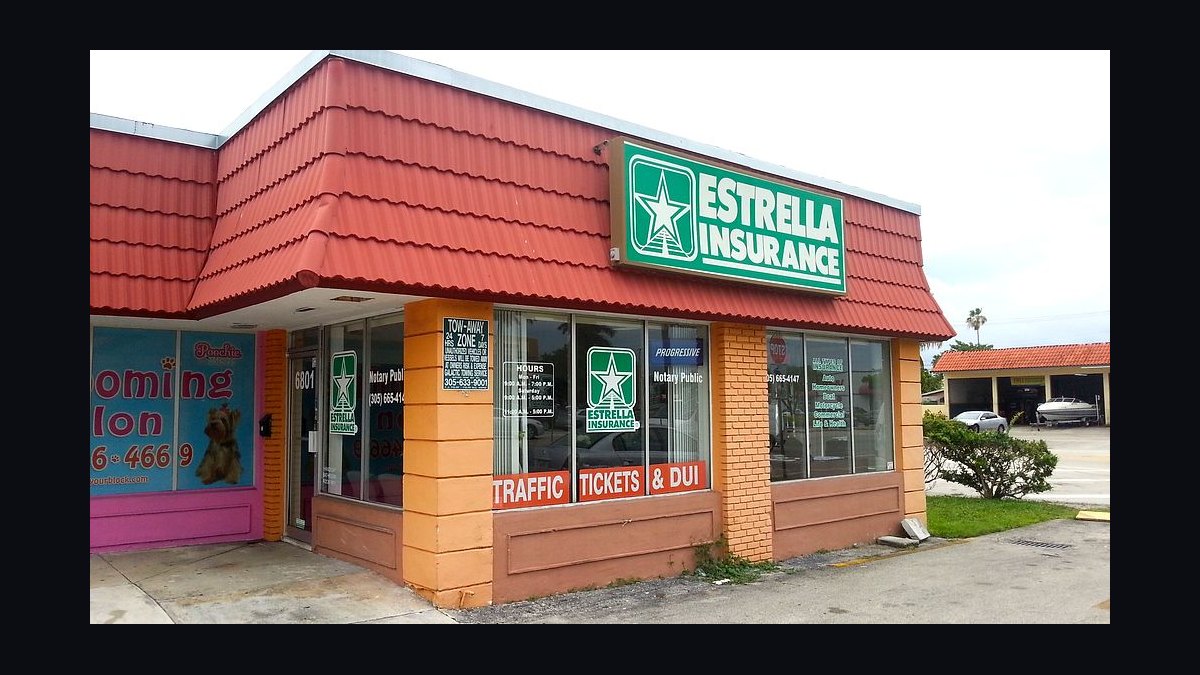
Every person evaluating Estrella Insurance in 2027 is really choosing between two different businesses that happen to share the same storefront sign, the same navy-and-gold branding, and the same franchise agreement. The first path is a new-build: you sign with Estrella for a territory where the brand has no existing presence, lease a small retail space (typically 600-1,200 square feet), build out signage and interior branding, get your producer license, and start writing policies from a base of zero. The second path is an acquisition: you buy an existing franchised location from a retiring or exiting owner, which hands you an established book — often 500 to 1,200-plus active policies — along with trained staff, carrier appointments already in place, and a storefront that already has foot-traffic history baked into the neighborhood's memory.
These are not cosmetic differences. A new-build is, in effect, a startup wearing a recognized insurance franchise's name. You get the benefit of brand recognition, pre-negotiated carrier relationships, and a training program, but you still have to generate every single policy from scratch. An acquisition is closer to buying a small, cash-flowing business — you're underwriting a stream of renewal commissions that, for a mature agency, already renew at 80-90% per year, meaning most of the revenue the previous owner built is still sitting there waiting for you the day you take over.

The financial shape of each path reflects that difference. New-build total investment — franchise fee, build-out, signage, technology, initial marketing, E&O insurance, training travel, and working capital — lands in the $50,000-$180,000 range per the 2026 Franchise Disclosure Document's Item 7 estimate. That is a genuinely accessible number for a first-time franchise buyer, especially one using SBA financing or a partner to cover part of the build-out. But the real cost of a new-build is time, not just money: most new Estrella agencies operate at a net loss for 9-15 months while the book climbs toward the 300-400 policy range where profitability typically begins. During that stretch, you are not just selling insurance — you are building a reputation from nothing in a market where trust, often earned through Spanish-language service and visible community presence, is the actual product being sold alongside the policy paperwork.
Acquisition flips the risk-and-reward profile. A mature agency — four-plus years old, 1,000-plus policies — typically sells for 1.5 to 2.5 times annual net profit, so an agency netting $100,000 a year carries a $150,000-$250,000 price tag. That is a materially bigger check to write than a new-build's franchise fee, and in many cases it means financing a purchase rather than self-funding it outright. But what you're buying is immediate, inherited cash flow: renewal commissions start landing in month one, not month twelve, and you step into carrier relationships, a trained bilingual staff, and — critically — a community reputation that cannot be purchased quickly at any price once it has already been lost to a competitor. In markets like Hialeah, Little Havana, or the Rio Grande Valley, where word-of-mouth referral is the dominant customer-acquisition channel, an existing agency's reputation is arguably worth more than its policy count on paper.
This same open-versus-buy tension shows up across nearly every service-based franchise category — tax preparation, home-services dispatch, even quick-service restaurants — but it is sharper in insurance because the product itself (a renewal relationship) compounds over time in a way that, say, a restaurant's repeat-customer base does not compound nearly as predictably. An insurance book is closer to a subscription business than most franchise concepts, which is exactly why buying into an existing one carries both a steeper price and a steeper reward.
How to Decide Between Opening Fresh and Buying In
The first practical filter is capital versus patience. If your liquid reserves sit closer to the $30,000-$70,000 floor the FDD describes, acquisition is probably out of reach regardless of your preference — sellers of an established agency expect a real purchase price built on trailing net profit, not a franchise-fee-only transaction, so buying in without financing or a partner simply isn't realistic. If instead you're sitting on $150,000 or more and would rather not spend two years building a client base from a cold start, the right next move is calling Estrella's franchise development team directly and asking whether any existing franchisees in your target states — commonly Florida, Texas, Georgia, and North Carolina — are considering an exit or a partner buy-in.

The second filter is territory availability, and it interacts with the first in a way a lot of first-time buyers miss. Estrella grants exclusive territories, often defined as a 2-3 mile radius or a specific ZIP cluster, but adjacent franchise units can still compete for overlapping customers in dense markets. If the territory you want is already saturated with Estrella locations, a new-build application in that area may simply get denied, or you'll be steered to a less desirable adjacent territory you didn't actually want. In a saturated market, buying one of the existing agencies may be the only realistic way in. Conversely, if you've scouted a growing Hispanic or immigrant corridor with zero Estrella presence — parts of Nashville, Raleigh, or the Carolinas' fast-growing exurbs are frequently cited examples — opening fresh lets you claim first-mover advantage in a market where, by definition, there's no existing agency to buy, because nobody has planted the flag yet.
The third filter is the most personal and the most often ignored: which skill set do you actually have? Acquisitions reward operational discipline — retaining inherited staff, servicing an existing book through its renewal cycles without disruption, and resisting the temptation to "fix" things that were already working under the previous owner. New-builds reward raw sales hustle — door-knocking, sponsoring the neighborhood bodega's community event, showing up at the same church or soccer league every week for a year until referrals start flowing on their own. A sales-oriented extrovert who buys a mature, well-run agency may get bored managing what's already stable; a methodical operator who opens a new-build without the stomach for a slow grassroots ramp may burn out around month eight. Matching your actual strengths to the model you choose is a bigger predictor of five-year success than the financing structure you use to get in the door.
It's worth widening the lens one more notch: this decision tree is not unique to Estrella. Anyone evaluating a franchise resale market — in insurance, home inspection, senior care, or tax-prep franchising — runs through the same three filters in roughly the same order: capital-versus-patience, territory saturation, and personal skill fit. What makes the Estrella decision distinct is how much of the "product" is actually a trust relationship delivered in a specific language inside a specific community, which raises the stakes on getting the territory and the skill-fit questions right the first time.
The Numbers Behind Each Path

Opening new: the franchise fee runs $25,000-$30,000, office or storefront build-out $10,000-$60,000, technology and licensing $3,000-$15,000, brand-prescribed signage and decor $5,000-$20,000, initial marketing $5,000-$25,000, E&O insurance $2,000-$10,000, training and travel $2,000-$10,000, and a working-capital reserve of $20,000-$40,000 beyond the build itself — landing total Item 7 investment at roughly $50,000-$180,000. Royalty is structured as a flat monthly fee (commonly $500-$1,500 depending on tier) rather than a percentage of revenue, plus a marketing fee around 1-2% of gross commissions. A new agency writing 15-30 quotes a day with a 25-35% close rate in Hispanic-market territories can expect first-year commissions of roughly 10-15% of premium — on the order of $120-$180 on a $1,200 annual auto policy — with renewal commissions settling to 8-10% in subsequent years. Breakeven typically lands at 300-400 policies, roughly 9-15 months in.
Buying existing: purchase price typically runs 1.5-2.5 times annual net profit for a mature agency with four-plus years and 1,000-plus policies, so a $100,000/year net-profit agency commands roughly $150,000-$250,000. A mature book of 800-1,200 policies generates $15,000-$25,000 a month in gross commissions and $6,000-$10,000 a month in net profit after royalties, rent, staff, and marketing. You skip the 9-15 month ramp entirely and land directly in the renewal layer, but you also inherit existing staff costs — commonly $40,000-$70,000 a year per location for two to three licensed agents plus a part-time bilingual customer service representative — and whatever carrier-mix risk the previous owner built into the book, good or bad.

The multi-unit data point matters for either path if you're thinking past your first location: owners who go on to add a second or third unit report net margins of 20-30%, compared with 12-18% for single-location owners, and roughly 20-25% of Estrella franchisees eventually own two or more units. That gap is largely about shared overhead — one owner managing lease negotiation, marketing spend, and carrier relationships across multiple storefronts captures efficiencies a single-location owner never sees. If either the new-build or the acquisition is really step one of a bigger plan, that multi-unit margin advantage is worth weighing into the initial decision, since the location you pick first often becomes the template (and the training ground for managers) for the next one.
One cost shows up on both sides of the ledger regardless of which path you pick: expect to spend $500-$1,000 a month on supplemental local digital advertising — Spanish-language Google and Facebook campaigns, specifically — because walk-in traffic alone rarely sustains growth much past the first year on either a new-build or an acquired location. Franchisees who treat digital spend as optional, assuming the brand name and storefront signage will do the work, consistently underperform those who budget for it from day one.
Implementation Details and Sequencing
Whichever path you take, reviewing the Franchise Disclosure Document — specifically Items 5, 6, 7, 19, and 20 — comes first, because fees, territorial rights, and earnings disclosures govern both models identically before the paths diverge. From there, the sequencing splits quickly. On the new-build side, licensing and lease negotiation can run in parallel: most states require a resident producer license before you can legally quote a policy, and that process — pre-licensing coursework plus the state exam — typically takes four to eight weeks, so start it the same week you sign the lease rather than waiting until the storefront is finished. Signage installation and the proprietary agency management system (functionally comparable to platforms like EZLynx or Applied Systems that other independent agencies use) get installed during build-out, and Estrella's roughly two-week initial training program at its Miami headquarters should be scheduled to land just before your soft opening — not months in advance, when the material will have gone stale by the time you actually need it.
On the acquisition side, sequencing is driven by due diligence rather than construction timelines. Request 24-36 months of commission statements, carrier appointment letters, and staff retention history before committing capital. A book that looks healthy on paper can be quietly propped up by one or two carriers that are about to pull out of the ZIP code, and a carrier exit can cut quoting volume 30-50% overnight if that exposure isn't caught during diligence. Estrella's right of first refusal means the franchisor can match any outside offer on a resale, so build extra weeks into your timeline for that approval step before treating the deal as final. Staff transition is the other acquisition-specific risk worth negotiating up front: licensed bilingual agents are genuinely hard to replace on short notice, so a 60-90 day transition period where the departing owner stays involved — introducing you to long-tenured clients personally — does more to preserve community trust during the handoff than any amount of marketing spend could replicate in the same window.
In both scenarios, the single riskiest ongoing gap is identical: carrier relationship management. Franchisees who succeed, regardless of which path got them in the door, actively maintain relationships with five to seven carriers and proactively re-quote existing clients when rates shift, rather than waiting for a confused customer to call in after a renewal increase lands in their mailbox. That habit — not the financing structure used to open the doors — is what tends to determine whether an agency is still thriving at year four, and it's a discipline worth building into your very first ninety days, whether you're starting from zero policies or inheriting a thousand.
Related questions

How long does an Estrella Insurance franchise take to become profitable?
Most new-build agencies reach breakeven at 9-15 months, once the renewal book crosses roughly 300-400 policies. Acquisitions skip this ramp since they inherit an existing renewal base from day one.
Can I own more than one Estrella Insurance location?
Yes — roughly 20-25% of franchisees operate two or more units, sharing management and lease negotiating power, and multi-unit owners report 20-30% net margins versus 12-18% for single locations.
Does Estrella Insurance require bilingual staff?
It's not a strict franchise requirement, but bilingual service is the brand's core differentiator in Hispanic and underserved markets, where a large share of new business comes from word-of-mouth referrals built on trust earned in Spanish.
What happens if a carrier drops my territory?
Quoting volume can fall 30-50% overnight if a major carrier pulls back in your ZIP code, which is why successful owners maintain five to seven active carrier relationships rather than relying on one or two.
FAQ

Is it better to open a new Estrella Insurance franchise or buy an existing one? It depends on capital and patience. New-builds cost less upfront ($50,000-$180,000) but take 9-15 months to breakeven; acquisitions cost more ($150,000-$250,000+ for a mature book) but deliver immediate renewal income and an established community reputation.
What is the total investment to open an Estrella Insurance franchise in 2027? The franchise fee is $25,000-$30,000, with total Item 7 investment ranging from roughly $50,000 to $180,000 depending on build-out scope, signage, and initial marketing spend.
How much can an Estrella Insurance franchise owner expect to earn? Mature agencies generate $120,000-$500,000-plus in annual commission revenue, with owner take-home ranging $60,000-$200,000-plus as the renewal book matures, typically with 80-90% of policies renewing annually.
Who is the ideal candidate for opening or buying an Estrella Insurance franchise? A community-connected, sales-minded operator — often bilingual — comfortable with direct storefront sales in diverse, high-density markets. Acquisitions suit operators who prefer managing an existing operation over building one from scratch.
What support does Estrella Insurance provide to franchisees either way? Both paths get a two-week training program at Miami headquarters, ongoing webinars, pre-negotiated carrier appointments, and a flat monthly royalty rather than a percentage-of-revenue structure.
How does territorial protection affect the open-vs-buy decision? Estrella grants exclusive territories, often a 2-3 mile radius, but adjacent units can still compete in dense markets. If your target territory is already saturated, buying an existing agency there may be the only viable entry point.
Sources
- Estrella Insurance Franchise Disclosure Document (2026 filing), Items 5, 6, 7, 19, 20
- Estrella Insurance official franchise site
- Entrepreneur Franchise listings — Estrella Insurance
- Franchise Business Review — insurance-franchise satisfaction data
- IBISWorld — Insurance Agencies & Brokerages in the US, 2026 industry report
- International Franchise Association (IFA) — 2027 Franchise Economic Outlook
- Insurance Information Institute — personal-lines data 2026
- U.S. Census Bureau — Hispanic/diverse-community demographic data, 2025-2026
Related on PULSE
- Should I open or buy a Brightway Insurance franchise in 2027?
- Should I open or buy a Goosehead Insurance franchise in 2027?
- How much does it cost to open an insurance agency franchise in 2027?
- What's the difference between a captive and an independent insurance agency franchise?
This page will be disappearing soon. Save it to your device for $1 — or read it free while it is here.
@Kory-White- · if Venmo asks, the last 4 of my number are 2012
This page is gone.
This one is off the shelf now. $1 keeps it on your phone for good — the whole page, pictures and diagrams included.
 franchiseShould I open or buy an Orangetheory Fitness franchise in 2027?
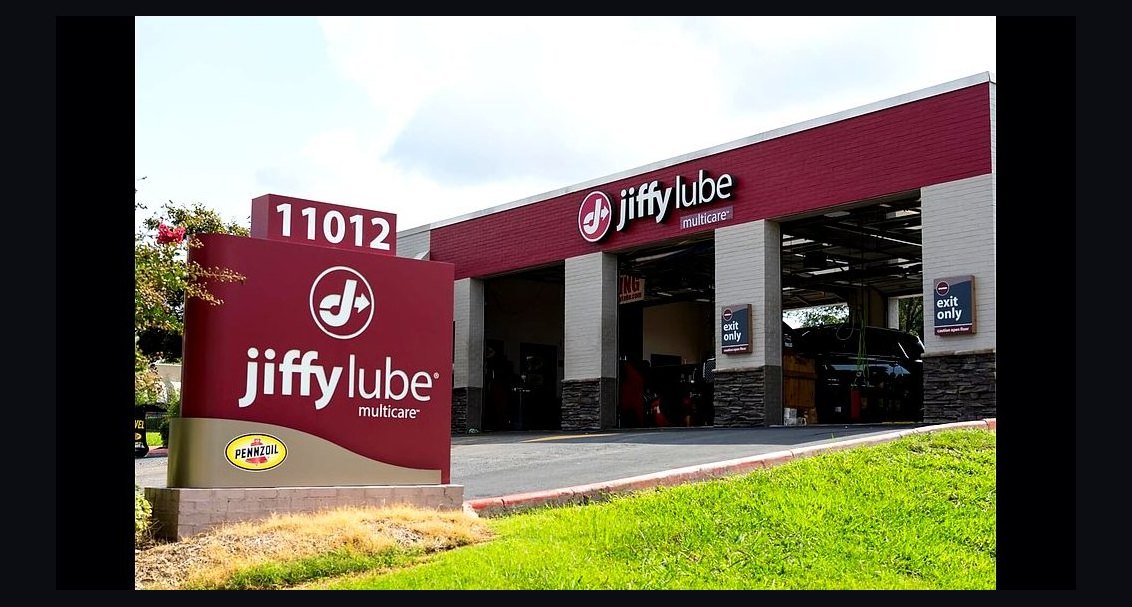 franchiseShould I open or buy a Jiffy Lube franchise in 2027?
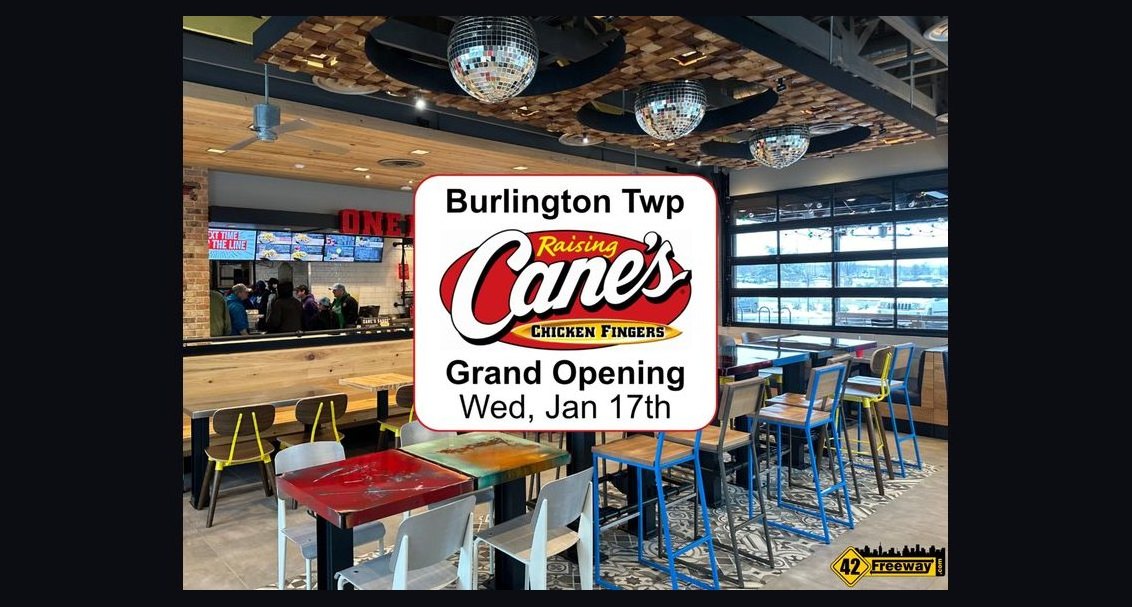 franchiseShould I open or buy a Dunkin' franchise in 2027?
 franchiseShould I open or buy a Jeremiah's Italian Ice franchise in 2027?
 franchiseShould I open or buy a Supercuts franchise in 2027?
 franchiseShould I open or buy a Roto-Rooter franchise in 2027?
 franchiseShould I open or buy a Meineke franchise in 2027?
 franchiseShould I open or buy a Marco's Pizza franchise in 2027?
 franchiseShould I open or buy a Firehouse Subs franchise in 2027?
 franchiseShould I open or buy an Anytime Fitness franchise in 2027?