


Should I open or buy a Padgett Business Services franchise in 2027?
Quality
Certified

Yes, if you're an accounting-literate operator willing to spend 12-24 months building a B2B client base — Padgett Business Services is a low-capital ($70,000-$130,000), recurring-revenue franchise selling bookkeeping, tax, payroll, and advisory services to small businesses. Mature practices clear $90,000-$250,000+ in owner income once the client roster stabilizes. Skip it if you can't network, sell, or tolerate a slow ramp before income normalizes.
The outcome you should expect
Buying into Padgett Business Services in 2027 means entering a professional-services franchise, not a storefront. There's no lease buildout, no equipment line, and no inventory — the entire investment goes toward licensing the brand, learning the PadgettWorks software stack, and funding yourself through the months it takes to sign enough small-business clients to cover overhead. That changes what "success" looks like in year one versus year five.
In the first 12-18 months, expect a J-curve: you're paying the sliding royalty (roughly 9%, decreasing as volume grows) and a marketing fee on a client base that's still thin. Franchisees who report hitting consistent profitability inside 12-24 months are usually the ones who treated the first two tax seasons as client-acquisition sprints rather than service-delivery exercises — they networked with local Chambers of Commerce, insurance agents, attorneys, and bankers who refer small-business owners needing a bookkeeper. By year three, a well-run territory should be generating recurring monthly engagements (bookkeeping, payroll processing) layered with seasonal tax work and higher-margin advisory add-ons.

The realistic long-run outcome is a $200,000-$700,000+ revenue practice throwing off $90,000-$250,000+ in owner compensation, but that top end assumes you've hired staff, retained 85%+ of clients year over year, and expanded into advisory services (cash-flow forecasting, entity-structure consulting) that command higher fees than compliance work alone. The business rewards patience and relationship-building far more than it rewards technical accounting brilliance — Padgett provides the systems and training; you provide the sales engine.
What drives that outcome
Three forces determine whether a Padgett franchise becomes a durable, cash-generative practice or a stalled side-hustle: territory quality, client stickiness, and your willingness to delegate.
Territory quality sets the ceiling. The 2026 FDD typically grants an exclusive area defined by zip codes, county lines, or a mileage radius (often 5-10 miles), and the number of small businesses inside that boundary — ideally 500-1,500 firms with fewer than 20 employees — determines how large your addressable market is before you ever make a sales call. Dense urban territories pack more prospects into a smaller radius; suburban and rural territories are larger geographically but thinner on density. Before signing, pull the FDD's territory exhibit and cross-reference it against U.S. Census Bureau County Business Patterns data for your zip codes.
Client stickiness is the second force, and it's the reason this model works at all. Small businesses rarely switch accountants once a relationship is established — the switching cost (re-onboarding financial history, re-training on a new firm's processes, trusting a new advisor with sensitive numbers) is high relative to the savings from shopping around. That inertia is what turns a franchise with modest initial sales into a recurring-revenue machine over a 5-10 year hold. But stickiness cuts both ways: if a competitor (an independent CPA, a national digital bookkeeping service) already has deep relationships in your territory, prying those clients loose is slow and expensive.
The third force is staffing leverage. Franchisees who stay solo cap their own hours at 40-55 a week during the buildout phase and burn out during tax season. The practices that scale past $300,000 in revenue typically bring on a part-time bookkeeper and a seasonal tax preparer within the first two to three years, which frees the owner to focus on advisory relationships and new-client acquisition rather than data entry.
Benchmarks and realistic ranges

The 2026 FDD lists a franchise fee of about $50,000 and a total Item 7 investment of roughly $70,000 to $130,000, which is low by franchise standards because the format is office- or home-based with minimal buildout. Line items typically break down as: $3,000-$25,000 for home or small-office setup, $5,000-$20,000 for accounting and tax software and hardware, $8,000-$30,000 for initial client-acquisition marketing, $2,000-$10,000 for professional-liability (errors and omissions) insurance, $3,000-$12,000 for owner training and travel, and $15,000-$40,000 of working capital to carry you through the ramp period before recurring revenue covers overhead. The royalty runs on a sliding scale around 9% (decreasing as your gross grows) plus a marketing fee of roughly 2% of gross revenue.
On the revenue side, mature practices generate $200,000-$700,000+ in annual recurring revenue, with owner take-home in the $90,000-$250,000+ range after payroll, benefits, and overhead. Tax season (January through April) typically drives 40-60% of annual revenue for a Padgett office, which means cash-flow planning matters: you need to staff up with temporary preparers for the surge and manage expenses through the slower summer and fall months, often by pushing year-round payroll and advisory retainers to smooth the seasonality.

Staffing costs scale with growth. A part-time bookkeeper runs $20-$35 an hour, and a seasonal tax preparer runs $30-$50 an hour during the January-April crunch — together that's commonly $40,000-$80,000 a year in labor once you're staffed past the solo-operator stage. Top-performing franchises in the upper quartile of FDD Item 19 performance data often carry two to four full-time-equivalent staff supporting owner compensation in the $150,000-$250,000 band.
On exit, resale liquidity is moderate rather than high. Transfers are franchisor-approved and typically carry a transfer fee of $5,000-$15,000. Resale pricing commonly lands at 1.5-2.5 times annual owner's discretionary earnings — a practice clearing $120,000 a year in owner profit might sell for $180,000-$300,000 — and a sale process often takes 6-18 months, longer if the client base isn't well documented or if the owner is the sole point of contact for every account.
Risks, edge cases, and failure modes
The single biggest failure mode is treating this as a passive investment. Padgett is a sales-and-relationship business wearing an accounting-franchise label — the technical work is teachable, but a franchisee who can't or won't network with small-business owners, insurance brokers, bankers, and Chamber of Commerce contacts will stall regardless of how good their bookkeeping is. Owners expecting near-term passive income after buying in are consistently disappointed, because the client base has to be built client by client, referral by referral, before revenue becomes recurring and predictable.

A second risk is territory mismatch. Buying into a sparse rural territory or a saturated urban one where independent CPAs and national digital bookkeeping services (think Bench-style or QuickBooks Live-type offerings) already dominate means a longer, costlier client-acquisition runway. A rough rule of thumb from franchisees: if more than 30% of small businesses in your target area already use a national online bookkeeping service, expect higher acquisition costs and a longer sales cycle, because you're displacing an existing relationship rather than filling a vacuum.
A third risk is seasonality mismanagement. Because 40-60% of revenue often lands in a four-month window, a franchisee who doesn't budget working capital to survive the slower months — or who doesn't staff up temporarily for tax season — can face a cash crunch even while the underlying practice is healthy on an annual basis.
A fourth risk sits at the accounting-competence boundary. Padgett provides 2-4 weeks of initial training plus ongoing field support, which is enough to run the compliance side competently, but franchisees with zero financial background often need to hire a CPA or experienced bookkeeper early rather than relying solely on franchisor training — skipping that step risks client-facing errors that damage the sticky relationships the whole model depends on.
Finally, there's concentration risk at exit. Because buyers are overwhelmingly experienced accountants, CPAs, or neighboring Padgett franchisees expanding territory — not first-time franchise buyers — your buyer pool is narrower than for a retail or food concept. A practice that depends entirely on the owner's personal relationships, with no staff able to run client-facing work independently, is harder to sell and commands a lower multiple than one with documented processes and a team that functions without the owner in the room for 30+ days.
A practical rollout plan

A disciplined 90-day launch, followed by a multi-year build, looks like this:
- Days 1-15: Read the full 2026 FDD, focusing on Item 7 (investment), Item 19 (financial performance), and Item 20 (franchisee turnover and transfer history). Confirm the territory exhibit matches your target geography.
- Days 16-30: Interview at least eight current or former franchisees — not just the two the franchisor refers you to — and ask specifically about client-acquisition timelines, actual take-home pay, and how long it took to reach breakeven.
- Days 31-45: Validate small-business density in your intended territory using Census Bureau County Business Patterns data, and assess competitive saturation from independent CPAs and digital bookkeeping services.
- Days 46-60: Set up your home or small-office location, finalize E&O insurance, and complete Padgett's initial training on PadgettWorks software, tax preparation, and client-management workflows.
- Days 61-80: Begin B2B networking in earnest — Chamber of Commerce events, referral relationships with attorneys and bankers, direct outreach to local small businesses without a dedicated accountant.
- Days 81-90: Launch the practice publicly with your first signed clients, even if the roster is small.
- Ongoing (years 1-3): Reinvest early revenue into a part-time bookkeeper and seasonal tax preparer as volume justifies it, push for 85%+ annual client retention, and begin layering advisory services (cash-flow forecasting, entity-structure planning) on top of compliance work to lift average revenue per client.
- Years 3-10: Shift owner time from service delivery toward advisory relationships and acquisition, document processes so the practice can run without you for stretches, and plan any exit around the 7-10-year mark once the client base is mature and well-documented.
Related questions

How does Padgett compare to buying an independent accounting practice outright?
An independent practice gives full control and no royalty, but you lose Padgett's training, software, and brand recognition. Independent acquisitions also typically require more upfront capital since you're buying an existing book of business rather than building one with franchisor support.
Is a tax-prep franchise like Liberty Tax or Jackson Hewitt a better entry point?
Tax-prep franchises are more seasonal and transactional, with less recurring revenue than Padgett's year-round bookkeeping and advisory model. They suit operators wanting a shorter, more concentrated annual workload rather than ongoing client relationships.
What adjacent franchise models pair well with an accounting territory?

Payroll-service franchises and business-consulting franchises are the closest adjacent B2B models, often serving the same small-business client pool and sometimes cross-sold alongside Padgett's core services.
How much does digital competition (QuickBooks Live, Bench-style services) threaten this model?
It raises client-acquisition costs in markets already saturated with national online bookkeeping adoption, but relationship-driven, in-person advisory work still retains small businesses that value a local, accountable point of contact over a faceless subscription service.
FAQ
What is the typical investment range for a Padgett franchise? The total initial investment (Item 7) is roughly $70,000 to $130,000, including a franchise fee of about $50,000. That low range makes it one of the more accessible accounting franchises, often operated home-based or from a small office.
How long does it take to build a profitable client base? Most new franchisees report 12 to 24 months to reach consistent profitability, since building a recurring small-business client roster takes sustained networking. The ongoing sliding-scale royalty (around 9%) means steady client growth is necessary to offset fixed costs during the ramp.

What revenue can an established practice generate? Mature Padgett practices typically generate $200,000 to $700,000+ in annual recurring revenue, with owner earnings in the $90,000 to $250,000+ range. Results vary significantly by territory density, retention, and how aggressively the owner adds advisory services.
Do I need an accounting background to succeed? It's helpful but not mandatory — Padgett provides training and software systems, though strong financial literacy shortens the learning curve. The bigger determinant of success is sales and client-acquisition skill, not technical accounting depth.
Is the business model recession-resistant? Small businesses need bookkeeping, tax, and payroll support regardless of the economic cycle, which provides durable underlying demand. That said, new-client growth can slow in downturns, and existing clients may trim discretionary advisory spending even while keeping core compliance services.
How much ongoing support does the franchisor provide? Franchisees get initial training, marketing support, and ongoing field assistance, but day-to-day client delivery and local sales are entirely on the owner. The depth of support can vary by region and by the franchisor's current field-staff resources.
Sources
- Padgett Business Services Franchise Disclosure Document (2026 filing), Items 5, 6, 7, 19, 20
- https://www.padgettfranchise.com
- https://www.entrepreneur.com/franchises/directory
- https://www.franchisebusinessreview.com
- https://www.ibisworld.com
- https://www.statista.com
- https://www.franchise.org
- https://www.aicpa-cima.com
- https://www.sba.gov
- https://www.census.gov/programs-surveys/cbp.html
Related on PULSE
- Best home services franchises to buy in 2027
- Should I open or buy a HomeWell Care Services franchise in 2027?
- Should I open or buy a Senske Services franchise in 2027?
- Should I open or buy an Ace Handyman Services franchise in 2027?
- Should I open or buy an Aftermath Services franchise in 2027?
- Should I open or buy an Always Best Care Senior Services franchise in 2027?
This page will be disappearing soon. Save it to your device for $1 — or read it free while it is here.
@Kory-White- · if Venmo asks, the last 4 of my number are 2012
This page is gone.
This one is off the shelf now. $1 keeps it on your phone for good — the whole page, pictures and diagrams included.
 franchiseShould I open or buy an Auntie Anne's franchise in 2027?
 franchiseShould I open or buy a Jimmy John's franchise in 2027?
 franchiseShould I open or buy a UPS Store franchise in 2027?
 franchiseShould I open or buy a Bojangles franchise in 2027?
 franchiseShould I open or buy a KinderCare franchise in 2027?
 franchiseShould I open or buy a Supercuts franchise in 2027?
 franchiseShould I open or buy a Marco's Pizza franchise in 2027?
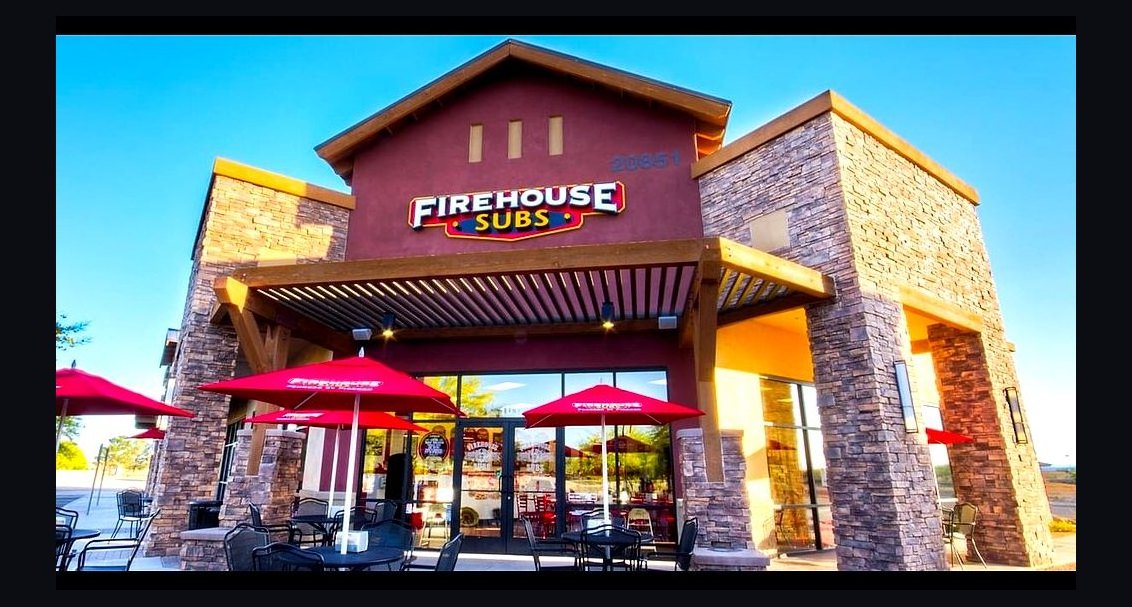 franchiseShould I open or buy a Firehouse Subs franchise in 2027?
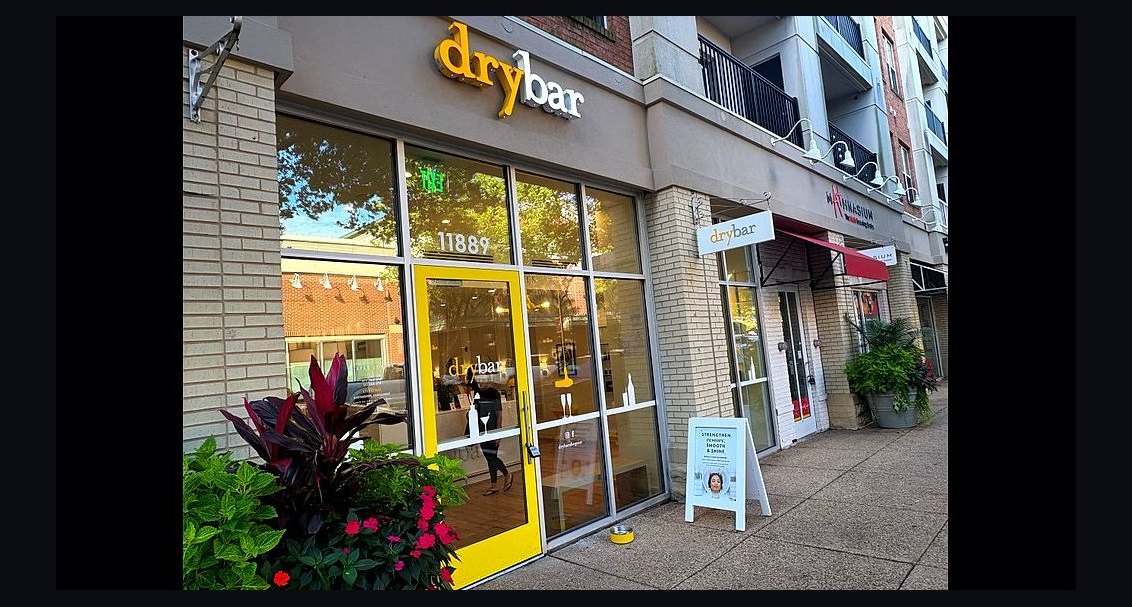 franchiseShould I open or buy a Drybar franchise in 2027?
 franchiseShould I open or buy a Jeremiah's Italian Ice franchise in 2027?