


Should I open or buy a Big Chicken franchise in 2027?
Quality
Certified
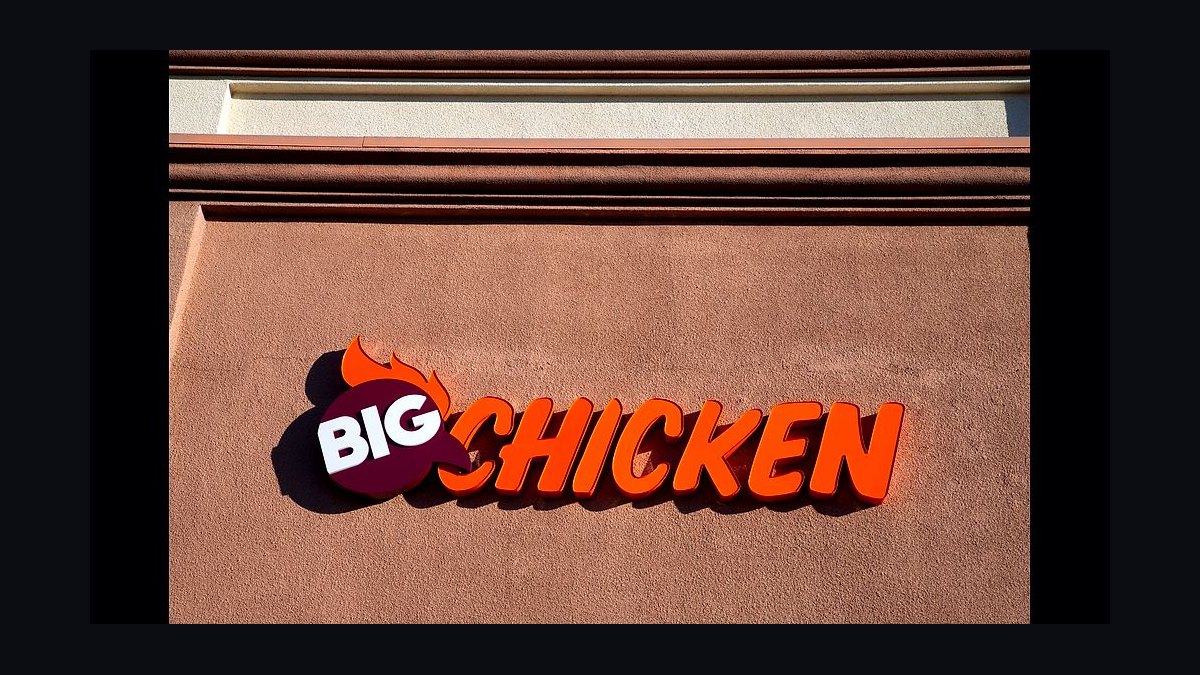
Yes, if you can fund the roughly $600,000–$1,500,000 investment, secure a strong site or venue, and execute disciplined fast-casual operations — Big Chicken pairs Shaquille O'Neal's celebrity marketing with a genuinely hot segment. Skip it if you need a proven, low-variance system: the brand launched in 2018, so you're betting on momentum and execution more than a long track record.
A Concrete Scenario That Frames The Problem
Picture two prospective franchisees evaluating the same Big Chicken opportunity in early 2027. The first has run a Raising Cane's for six years, has $400,000 liquid, and is eyeing a 2,400-square-foot end-cap space with drive-thru access near a mid-size university. The second is a first-time restaurant owner with $250,000 liquid, hoping to open a smaller in-line unit inside a regional mall food court. Both are drawn by the same pitch: a celebrity-backed chicken-sandwich brand riding a wave of brand buzz into a market still dominated by Chick-fil-A and Popeyes.
The difference in outcome between these two operators won't come down to the brand's marketing power — both get access to the same national campaigns and the same Shaq-driven media appearances. It comes down to site quality, capitalization, and whether they can convert curiosity traffic into repeat visits once the novelty wears off. The experienced operator with drive-thru access and deeper reserves can absorb a slower ramp-up and iterate on local marketing. The undercapitalized first-timer in a lower-traffic venue is far more exposed if the opening months underperform the brand's $900,000–$1,800,000 mature-unit average unit volume (AUV). This is the real decision point: not "is Big Chicken a good brand," but "can I personally execute well enough, with enough capital, to convert brand buzz into a durable local business."

How The Franchise Economics Actually Work
Understanding whether to open a Big Chicken franchise means tracing how a dollar of gross sales turns into an owner's take-home pay. The mechanism is straightforward but unforgiving: revenue flows in from dine-in, drive-thru, digital and delivery channels, and — uniquely for this brand — non-traditional venues like arenas, airports, and ghost kitchens. From that top line, the operator subtracts food costs (typically 30–35% of revenue for a premium fast-casual chicken concept with oversized portions and proprietary sauces), labor costs (25–30% including management), occupancy, and then the franchisor's cut — roughly a 6% royalty plus a 2–3% advertising fee.
What makes this mechanism worth diagramming is that Big Chicken's brand buzz affects only the top line — customer traffic and average check — while the bottom line depends entirely on unit-level cost discipline that has nothing to do with Shaq's celebrity. A location can enjoy strong grand-opening traffic driven by press coverage and still post disappointing owner earnings if food waste, labor scheduling, or lease terms are mismanaged. Conversely, a disciplined operator in a modest market can outperform a flashier location that leans on buzz instead of operations.

This is why franchisees are told to validate Item 19 (the financial performance representation) and interview existing operators directly, rather than relying on the celebrity narrative alone. The mechanism rewards operational fundamentals; the marketing only opens the door.
Real Numbers, Ranges, And Benchmarks
The 2026 Franchise Disclosure Document (FDD) lays out the investment picture clearly. The franchise fee runs $40,000–$50,000. Total Item 7 investment for a traditional fast-casual unit (1,800–2,800 square feet, often with drive-thru) ranges from about $600,000 to $1,500,000, broken down roughly as: buildout and leasehold improvements at $300,000–$800,000 (with drive-thru construction pushing costs higher), equipment and kitchen buildout at $160,000–$350,000, signage and decor at $30,000–$90,000, initial inventory at $10,000–$25,000, initial marketing at $20,000–$50,000, training and travel at $10,000–$35,000, and working capital reserves at $60,000–$150,000 to cover the first three months of operations.
Non-traditional venues — stadiums, airports, food halls — often carry a lower initial investment of roughly $300,000–$600,000, but may involve shared revenue structures or different royalty arrangements with the venue operator, on top of the standard franchise royalty. The company generally expects franchisees to have a net worth near $1.5 million with at least $500,000 in liquid capital, a bar that screens out undercapitalized applicants.

On the revenue side, mature units gross $900,000–$1,800,000 annually, with average checks around $12–$15 — meaning consistent lunch and dinner foot traffic, or a strong delivery/carryout mix, is essential to hit the higher end of that range. Owner net income typically lands between $100,000 and $280,000, though secondary-market units that struggle to reach $900,000 in sales can see break-even stretch past three years, compared to 12–18 months for well-located, well-run units. Ongoing fees are a royalty near 6% of gross sales plus a 2–3% advertising fund contribution. Franchise agreement transfer fees, relevant to any future exit, typically run $10,000–$25,000, and the franchisor generally holds a right of first refusal on any sale.
Training support is a two-week initial program at company headquarters or a designated training store — noticeably shorter than the 4–6 week programs at more established chains like Zaxby's or Raising Cane's, which raises the stakes for first-time operators to seek additional preparation before opening.
Trade-Offs And Alternatives Worth Weighing
The core trade-off in deciding whether to open a Big Chicken franchise is buzz versus track record. On one side, the brand offers celebrity marketing power that smaller or newer chains simply cannot buy, a genuinely growing system, and unusual access to non-traditional venues that diversify revenue beyond a single storefront. On the other side, you're joining a system still proving its longevity, competing directly against entrenched players — Chick-fil-A, Popeyes, Raising Cane's, Dave's Hot Chicken, Wingstop — in what is arguably the most competitive segment in all of quick-service dining, and accepting some degree of celebrity-dependency risk if Shaquille O'Neal's public involvement were to change.

For operators uncertain whether this specific brand fits their risk tolerance, several adjacent options are worth comparing side by side. Dave's Hot Chicken offers a similarly fast-growing, culturally buzzy positioning without the celebrity-ownership structure. Wingstop and Popeyes represent the established end of the spectrum — proven systems, lower brand-momentum upside, but far more predictable unit economics and a deep bench of franchisee data to study. Huey Magoo's and Slim Chickens occupy the tender-focused middle ground, while Church's Texas Chicken plays at the value end of fried chicken. An independent, non-franchised chicken-sandwich concept is the highest-risk, highest-control alternative — no royalty, no brand buzz, but full authority over menu, pricing, and operations.
Weighing these alternatives against Big Chicken comes down to how much you value differentiated marketing versus operational predictability. A first-time operator with limited food-service experience may be better served by a system with a longer training program and denser franchisee network, even at the cost of the celebrity halo. An experienced multi-unit operator, by contrast, may see the brand's youth as an opportunity — getting in before saturation, while unit economics and site selection are still being refined system-wide.
Common Pitfalls And How To Avoid Them
The most frequent mistake prospective franchisees make is treating brand buzz as a substitute for site validation. A high-traffic location with strong demographics, drive-thru capability where feasible, and appropriate co-tenancy will outperform a marginal site regardless of celebrity marketing — and Big Chicken's own AUV data suggests top performers cluster in dense, affluent suburban areas or urban cores with strong lunch and dinner dayparts. Before signing a lease, verify traffic counts, demographic fit, and drive-thru feasibility independently rather than accepting the franchisor's site approval as the only diligence step; adding drive-thru capability post-hoc can add $200,000–$400,000 to total investment, so this decision belongs at the front end.

A second pitfall is underestimating the training gap. Because Big Chicken's initial program runs roughly two weeks — shorter than many established chicken chains — first-time operators should budget for additional self-directed preparation, extra time shadowing a training store, or hiring an experienced general manager before opening day, rather than assuming corporate support will fill every operational gap.
A third pitfall is skipping direct conversations with existing franchisees about field support consistency. Because the system is still scaling, regional support can be thin in newer markets; ask specifically about how often the field operations team visits, how responsive the franchise business coach is, and whether marketing fund dollars are visibly translating into local traffic. A fourth pitfall is over-relying on the celebrity narrative when projecting revenue — model your pro forma using the FDD's actual Item 19 ranges and conservative assumptions, not the high end of the $900,000–$1,800,000 AUV band. Finally, don't ignore exit planning at entry: because most units opened after 2020, the resale market is thin, transfer fees apply, and the franchisor's right of first refusal shapes your options, so plan for a realistic 7–10 year hold rather than assuming a quick flip.
Related questions
How much liquid capital do I need to open a Big Chicken franchise?
The franchisor generally expects a net worth near $1.5 million with at least $500,000 in liquid capital, though total Item 7 investment itself ranges from $600,000 to $1,500,000 depending on format and venue type.
Is a non-traditional Big Chicken venue cheaper than a standalone restaurant?

Yes — arena, airport, and food-hall locations often run $300,000–$600,000 in initial investment, lower than a standalone drive-thru unit, but they may carry different revenue-sharing or royalty terms with the venue operator.
How does Big Chicken compare to Dave's Hot Chicken for a first-time franchisee?
Dave's Hot Chicken offers similar cultural buzz without celebrity-ownership dependency; Big Chicken offers Shaq's direct marketing involvement but a shorter operating history, so the choice depends on whether you weight marketing reach or brand maturity more heavily.
What happens if Shaquille O'Neal reduces his involvement with the brand?
The FDD doesn't guarantee continued celebrity involvement, so franchisees should ask directly about contractual commitments and marketing plans that don't depend solely on his personal appearances, and weigh that uncertainty against the brand's other fundamentals.
How long until a Big Chicken franchise breaks even?
Well-located, well-run units can break even in 12–18 months, while slower-starting locations in unproven markets may take 24–36 months, particularly if annual sales fall short of the $900,000 AUV benchmark.
FAQ
How much does it cost to open a Big Chicken franchise? Total investment ranges from roughly $600,000 to $1,500,000 for a traditional unit, plus a $40,000–$50,000 franchise fee. Non-traditional venues like arenas or airports may see lower initial costs, often $300,000–$600,000.

What are the ongoing franchise fees? Franchisees pay a royalty of about 6% of gross sales plus a 2–3% advertising fund contribution, both standard for the fast-casual chicken segment and used to fund brand marketing, training resources, and field support.
How much can I realistically earn as an owner? Mature units gross $900,000–$1,800,000 annually, with owner net income typically between $100,000 and $280,000 after royalties, advertising fees, food and labor costs. Actual results depend heavily on site quality and execution.
Is opening a Big Chicken franchise risky compared to established chains? Yes, more so than a decades-old chain — the brand launched in 2018, so its long-term track record is limited, and outcomes depend partly on sustained celebrity marketing alongside standard execution risk in a crowded chicken-sandwich market.
Do I need prior restaurant experience to open one? It isn't strictly required, since the franchisor provides an initial two-week training program and ongoing field support, but operators with food-service or multi-unit management backgrounds tend to ramp up faster and handle the brand's shorter training window more comfortably.
How many Big Chicken locations currently exist, and is the brand still growing? The system has been expanding steadily with dozens of units open and more in development, including non-traditional venues, but growth is moderate rather than explosive — you would be joining a system still building out its footprint and proving long-term durability.
Sources
- https://www.entrepreneur.com/franchises/directory
- https://www.franchisedirect.com
- https://www.ftc.gov/business-guidance/industry/franchises-business-opportunities
- https://www.franchisebusinessreview.com
- https://www.qsrmagazine.com
- https://www.nrn.com
- https://www.ibisworld.com
- https://www.statista.com
- https://www.franchise.org
Related on PULSE
- Should I open or buy a Big Blue Swim School franchise in 2027?
- Should I open or buy a Big Apple Bagels franchise in 2027?
- Should I open or buy a Big O Tires franchise in 2027?
- Best chicken and wings franchises to buy in 2027
- Should I open or buy a Dave's Hot Chicken franchise in 2027?
- Should I open or buy a Champs Chicken franchise in 2027?
This page will be disappearing soon. Save it to your device for $1 — or read it free while it is here.
@Kory-White- · if Venmo asks, the last 4 of my number are 2012
This page is gone.
This one is off the shelf now. $1 keeps it on your phone for good — the whole page, pictures and diagrams included.
 franchiseShould I open or buy a Taco Bell franchise in 2027?
 franchiseShould I open or buy a Rita's Italian Ice franchise in 2027?
 franchiseShould I open or buy a Matco Tools franchise in 2027?
 franchiseShould I open or buy a Kona Ice franchise in 2027?
 franchiseShould I open or buy a Marco's Pizza franchise in 2027?
 franchiseShould I open or buy a Jimmy John's franchise in 2027?
 franchiseShould I open or buy a Servpro franchise in 2027?
 franchiseShould I open or buy a Valvoline Instant Oil Change franchise in 2027?
 franchiseShould I open or buy a Sonic Drive-In franchise in 2027?
 franchiseShould I open or buy a Crumbl Cookies franchise in 2027?