


Should I open or buy a Garbanzo Mediterranean Fresh franchise in 2027?
Published June 11, 2026 · Updated June 11, 2026
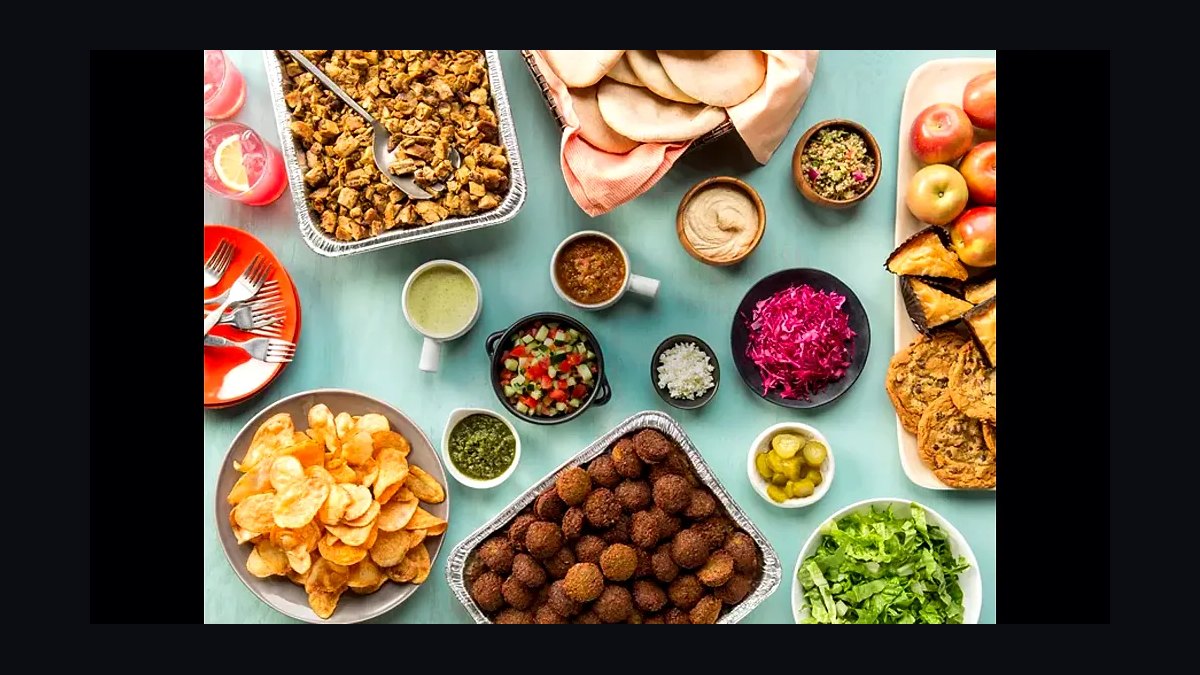
Yes for an operator who wants into the booming Mediterranean fast-casual category with a build-your-own concept at moderate capital — Garbanzo Mediterranean Fresh offers a proven assembly-line Med model, though it's a mid-size system competing against Cava's scale. Garbanzo Mediterranean Fresh, founded in 2007 in Colorado, franchises fast-casual Mediterranean restaurants with a build-your-own pita, plate, bowl, and salad line featuring shawarma, falafel, hummus, and fresh-baked pita. The 2026 FDD lists a franchise fee around $35,000, total Item 7 investment of roughly $400,000 to $850,000, a royalty near 5%-6%, and an ad fee. Mature units gross $700,000-$1,400,000, with owners clearing $80,000-$220,000. Its appeal is the fast-growing Mediterranean category, moderate capital, an efficient assembly-line model, fresh-baked pita, and catering; the challenges are competition (Cava, others), food/labor cost, mid-size brand awareness, and site selection.
The Real Numbers
A Garbanzo operates as a fast-casual unit (2,000-2,600 sq ft) with a build-your-own Mediterranean assembly line and fresh-baked pita, serving dine-in, takeout, delivery, and catering.
| Line Item | Low | High | Notes |
|---|---|---|---|
| Franchise fee | $35,000 | $35,000 | Per 2026 FDD |
| Buildout / leasehold | $220,000 | $470,000 | Fast-casual fit-out |
| Equipment & line | $110,000 | $230,000 | Line, pita oven, POS |
| Signage & decor | $20,000 | $58,000 | Brand image |
| Initial inventory | $10,000 | $25,000 | Fresh food + packaging |
| Initial marketing | $14,000 | $38,000 | Grand opening |
| Training & travel | $10,000 | $28,000 | Operator + staff |
| Working capital | $40,000 | $110,000 | First 3 months |
| Total Item 7 | ~$400,000 | ~$850,000 | Per 2026 FDD |
| Royalty | ~5%-6% of gross | ||
| Advertising fee | ~2%-3% of gross |

Revenue reality: mature units gross $700K-$1.4M with owners clearing $80K-$220K. The booming Mediterranean category (validated by Cava), moderate capital, efficient assembly-line model, and fresh-baked pita differentiator support solid economics, with catering adding incremental revenue. The trade-offs are competition from Cava and other Med concepts, food/labor cost, and mid-size brand awareness. Operators who ride the category trend, leverage fresh pita, drive catering, and control cost earn the most. Validate Item 19 against Cava and peers.
Who Wins With This Business
- Capital required: $400K-$850K, with $150,000-$225,000 liquid.
- Time commitment: full-time fast-casual operator; multi-unit potential.
- Skills: fast-casual operations, catering sales, and cost control.
- Geographic fit: health-conscious suburban/urban/office markets.
- Lifestyle fit: hands-on or multi-unit operator.
The winners are operators who ride the Mediterranean trend and execute well in strong sites.
Who Loses With This Business

- Operators who can't differentiate against Cava's scale.
- Those who can't control fresh-food and labor cost.
- Owners in weak sites or markets without Med demand.
- Buyers who ignore catering and fresh-pita differentiation.
- Under-capitalized operators.
2027 Market Conditions
- Demand: Mediterranean is the fastest-growing fast-casual category.
- Differentiation: fresh-baked pita adds a quality edge.
- Catering: incremental high-margin channel.
- Competition: Cava, The Simple Greek, Roti, Luna Grill, Taziki's.
- Cost: fresh-ingredient and labor cost pressure margins.
The 90-Day Decision Tree

- Day 1-25: Read the 2026 FDD and Item 19 economics.
- Day 26-50: Interview 8+ operators; ask about AUV, catering, food/labor cost, and net profit.
- Day 51-70: Validate a health-conscious site with catering demand.
- Day 71-120: Build and staff the unit.
- Day 121-150: Open and launch catering; promote fresh-baked pita.
- Leverage the fresh-pita differentiator and control cost.
- Ride the Mediterranean category trend; consider multi-unit.
Alternative Plays
- Cava — Mediterranean leader (largely corporate/limited franchising).
- The Simple Greek / Roti / Luna Grill / Taziki's — Med concepts (see fr0839, fr0841-fr0843).
- Salsarita's / Pancheros — fresh-Mex assembly-line (see fr0836, fr0838).
- Playa Bowls / Clean Juice — health fast-casual (in the library).
- Independent Mediterranean concept — full control, no brand.
- Other fast-casual franchises — adjacent models.
Unit Economics Deep Dive: What You Can Actually Expect to Keep
The headline revenue and profit ranges in the direct answer give you the high-level view, but the real decision hinges on unit-level economics — specifically, how much cash a Garbanzo franchise actually throws off after all costs, and how that compares to the debt service on your startup loan.

Realistic revenue trajectory for a new unit typically follows a 3-year ramp: Year 1 gross sales of $550,000–$750,000 (below system average as you build a local following), Year 2 of $650,000–$900,000, and Year 3+ settling into the $700,000–$1,100,000 range for most locations. Top-quartile units in dense suburban trade areas with strong lunch and catering business can hit $1.3M+, but those are outliers — expect the median to land around $850,000–$950,000 once mature.
Cost structure breakdown (as a percentage of sales):
- Cost of goods sold: 28%–33% (Mediterranean ingredients like olive oil, tahini, fresh produce, and proteins are volatile; chicken shawarma is cheaper than lamb/beef)
- Labor: 28%–35% (assembly-line model helps, but you still need a grill cook, line staff, and a manager per shift; minimum wage increases in many states are squeezing this)
- Occupancy (rent + CAM + utilities): 8%–12% (prime suburban strip centers or high-traffic end-caps command premium rent)
- Royalty (5%–6%) + ad fee (2%): 7%–8%
- Other operating expenses (marketing, supplies, insurance, maintenance): 5%–7%
Net operating profit after all costs typically lands at 8%–15% of sales for well-run units. On $900,000 in sales, that’s $72,000–$135,000 pre-tax. Subtract debt service on a $500,000–$700,000 loan (at 8%–10% interest over 7–10 years) and your actual cash-in-hand in Years 1–3 may be $30,000–$70,000 — modest for a full-time owner-operator. By Year 4–5, as sales mature and debt principal declines, that can climb to $80,000–$150,000.

Key profitability levers you control: catering (30%+ margins, high average ticket), lunch-daypart optimization (Garbanzo’s sweet spot is 11am–2pm), and tight labor scheduling. Units that fail to push catering or let labor creep above 33% often slip to break-even or worse.
Site Selection and Territory Strategy — The Make-or-Break Decision
Garbanzo Mediterranean Fresh’s franchise disclosure document (FDD) outlines specific real estate criteria, but the real-world site selection process is where most franchisees either set themselves up for success or lock in years of struggle.
Ideal location profile (based on existing successful units):
- Trade area: 30,000–50,000 people within a 3-mile radius, with median household income of $75,000+ (Mediterranean skews slightly upscale vs. burgers or pizza)
- Daypart mix: Strong lunch traffic (office workers, medical centers, schools) is critical — Garbanzo does 55%–65% of sales at lunch. Dinner is secondary. A location that dies after 2pm will struggle to hit $700,000 in sales.
- Co-tenancy: Look for grocery anchors (Whole Foods, Trader Joe’s, Kroger), fitness centers, or other fast-casual brands (Chipotle, CAVA, Sweetgreen) — these validate the food-court-style traffic. Avoid locations next to QSR drive-thrus (McDonald’s, Taco Bell) that pull a different customer.
- Visibility and access: End-cap or pad site with street frontage and easy in/out parking. In-line spaces in strip centers work only if the center has strong foot traffic (e.g., near a gym or university).
Territory protection in the 2026 FDD typically grants a 1.5–2 mile radius of exclusivity. That’s tighter than some competitors (CAVA often gives 2–3 miles), meaning you could face another Garbanzo relatively close. Before signing, verify that no existing or planned units are within your radius — and ask about “right of first refusal” on any new locations franchisor wants to open nearby.
The urban vs. suburban trade-off: Urban locations (downtown cores, dense mixed-use) can hit $1.2M+ but carry 12%+ rent and limited parking. Suburban locations have lower rent (8%–10% of sales) and easier catering delivery, but may top out at $900,000. For a first-time franchisee, suburban is generally safer — lower downside risk, more forgiving labor market, and catering can push you to $1M+.
Avoid these site red flags:
- Locations where lunch traffic evaporates by 1:30pm (e.g., purely office parks with no residential nearby)
- High-turnover restaurant spaces that have failed 3+ concepts in 5 years
- Sites requiring significant build-out beyond Garbanzo’s prototype (the $400k–$850k estimate assumes a standard 1,800–2,200 sq ft shell — any structural changes add $50k–$150k)
- Areas with three or more existing Mediterranean fast-casual competitors within a mile (CAVA, Roti, Naf Naf, etc.) — the market may be saturated
The Operator Profile — Who Thrives and Who Struggles
Garbanzo Mediterranean Fresh’s franchise system, like most mid-size chains, has a clear pattern of which owners succeed and which wash out. Understanding this profile before you write a check can save you years of misery.
The ideal Garbanzo franchisee:
- Owner-operator who plans to work 50–60 hours per week in the restaurant for at least the first 2 years. Absentee owners (investors who hire a general manager) almost always see margins slip 3–5 points because labor and food cost creep up without daily oversight.
- Restaurant or retail management experience — not necessarily Mediterranean food, but you need to have run a P&L, scheduled staff, and handled a busy lunch rush. First-time business owners with no food background have a steep learning curve and higher failure rate.
- Local market knowledge — you know the neighborhood, the catering accounts, the schools, and the office parks. Garbanzo’s corporate support is solid but won’t generate local catering leads for you; that’s 100% on the franchisee.
- $200,000–$400,000 in liquid capital (not just net worth). The franchise fee + build-out + 6 months of working capital typically requires $250k–$350k cash. If you’re scraping together the minimum, you’ll have no buffer for the inevitable slow first year.
Who typically struggles:

- Corporate refugees who want a “semi-passive” investment — this is a hands-on business, not a passive royalty stream. Franchisees who try to work 20 hours/week from home usually see sales plateau and labor costs spike.
- Multi-unit operators from other concepts who think they can “systematize” Garbanzo without being on-site. The brand is too small to support a regional manager structure; you need to be in the building.
- First-time owners who underestimate the intensity of the lunch rush. Mediterranean fast-casual is high-volume, high-customization, and high-stress between 11:30am and 1:30pm. If you panic under pressure, this isn’t for you.
- Anyone expecting CAVA-level brand recognition — Garbanzo is not a household name outside of Colorado and a few other markets. You will spend significant time and money on local marketing (social media, school partnerships, catering samplings) that a CAVA franchisee doesn’t need.
The validation step you must take: Ask the franchisor for a list of all current franchisees (not just the top performers). Call at least 5–7 of them — including at least one who opened in the last 2 years and one who has been open 5+ years. Ask specifically: “What do you wish you had known before you signed?” and “How much cash did you actually take home in Year 2?” If three or more give evasive answers or describe a harder road than you expected, take that seriously.
FAQ

What is the total investment range for a Garbanzo Mediterranean Fresh franchise in 2027? The 2026 FDD shows an Item 7 total investment of roughly $400,000 to $850,000. This range includes the franchise fee, build-out, equipment, and initial inventory, though actual costs vary by location size and lease terms.
How much can an owner expect to earn annually? Mature units typically gross between $700,000 and $1,400,000, with owner earnings ranging from $80,000 to $220,000. Your actual take-home depends on factors like local sales volume, food and labor costs, and how actively you manage the operation.
What are the ongoing royalty and advertising fees? Royalties run about 5% to 6% of gross sales, and there’s a separate ad fee. These fees are standard for the fast-casual segment and support brand marketing and operational support.
How does Garbanzo compare to Cava or other Mediterranean chains? Garbanzo is a mid-size system with around 30–40 units, competing against Cava’s much larger scale. Its advantage is a proven build-your-own assembly line and fresh-baked pita, but it lacks Cava’s national brand recognition and real estate leverage.
What are the biggest challenges for a new franchisee? Key challenges include intense competition from Cava and local Mediterranean spots, managing food and labor costs, building brand awareness in your market, and securing a high-traffic site that fits the investment range.
Is this a good option for a first-time franchisee? It can be, if you have restaurant or management experience and are comfortable with hands-on operations. The moderate capital and proven model lower risk, but the mid-size brand means you’ll need strong local marketing to drive traffic.
Bottom Line
Open a Garbanzo if you want a moderate-capital entry into the booming Mediterranean fast-casual category with an efficient build-your-own model, a fresh-baked-pita differentiator, and catering, you can ride the category trend and control cost, and you're in a health-conscious market. Its moderate capital, booming category, fresh-pita edge, and catering are genuine strengths. Skip it if you can't differentiate against Cava, can't control costs, or are in a weak market. Validate Item 19 against Cava and peers. For execution-strong operators riding the Mediterranean trend, Garbanzo offers a solid entry into one of fast-casual's hottest categories — category tailwind, fresh-pita differentiation, catering, and cost control are the keys.
Related on PULSE
- Should I open or buy a Garbanzo Mediterranean franchise in 2027?
- Should I open or buy a Taziki's Mediterranean Cafe franchise in 2027?
- Should I open or buy a Roti Modern Mediterranean franchise in 2027?
- How Many Employees Should I Schedule Each Shift at My Mediterranean Restaurant?
- Should I open or buy an Oxi Fresh Carpet Cleaning franchise in 2027?
- Should I open or buy a Surcheros Fresh Mex franchise in 2027?
Sources
- Garbanzo Mediterranean Fresh Franchise Disclosure Document (2026 filing) — Items 5, 6, 7, 19, 20
- Garbanzo official franchise site — investment range and fresh-pita model
- Entrepreneur Franchise listings — Garbanzo Mediterranean Fresh
- Technomic — US Mediterranean fast-casual segment data 2026
- IBISWorld — Mediterranean & Fast-Casual Restaurants in the US, 2026 industry report
- Statista — US Mediterranean fast-casual market and growth, 2025-2026
- Nation's Restaurant News — Mediterranean category growth reporting 2026
- International Franchise Association (IFA) — 2027 Franchise Economic Outlook
- QSR Magazine — Mediterranean fast-casual trends 2026
- Franchise Business Review — restaurant-franchise satisfaction data
This page will be disappearing soon. Save it to your device for $1 — or read it free while it is here.
@Kory-White- · if Venmo asks, the last 4 of my number are 2012
This page is gone.
This one is off the shelf now. $1 keeps it on your phone for good — the whole page, pictures and diagrams included.
 pulse-qHow Do I Negotiate a Lease and Buildout for an Urgent Care in 2026?
 pulse-qShould I open or buy an Eye Level Learning franchise in 2027?
 pulse-qWhat is the single best question to ask after a lost deal to prompt reflection without blame in 2026?
 pulse-qShould I open or buy a Rhino Linings franchise in 2027?
 pulse-qHow Many Front Desk Staff Should I Schedule Each Shift at My Hotel in 2026?
 pulse-qShould I open or buy a Tropical Smoothie Cafe franchise in 2027?
 pulse-qWhat question reveals whether a salesperson has properly qualified a lead before entering the pipeline in 2026?
 pulse-qShould I open or buy a Pei Wei franchise in 2027?
 pulse-qWhat specific questions can I ask during a one-on-one to uncover a sales rep's biggest skill gap in 2026?
 pulse-qShould I open or buy an Earl of Sandwich franchise in 2027?