


Should I open or buy a Flame Broiler franchise in 2027?
Quality
Certified
Only if you operate in California or the greater West, can fund roughly $300,000 to $700,000, and can drive volume at a $9.50–$11.00 check. Flame Broiler's lean no-fryer bowl model produces modest AUVs with tight food and labor cost — profitable for hands-on cost-disciplined operators, risky for pioneers outside the footprint.
What a Flame Broiler unit actually is and why the model matters
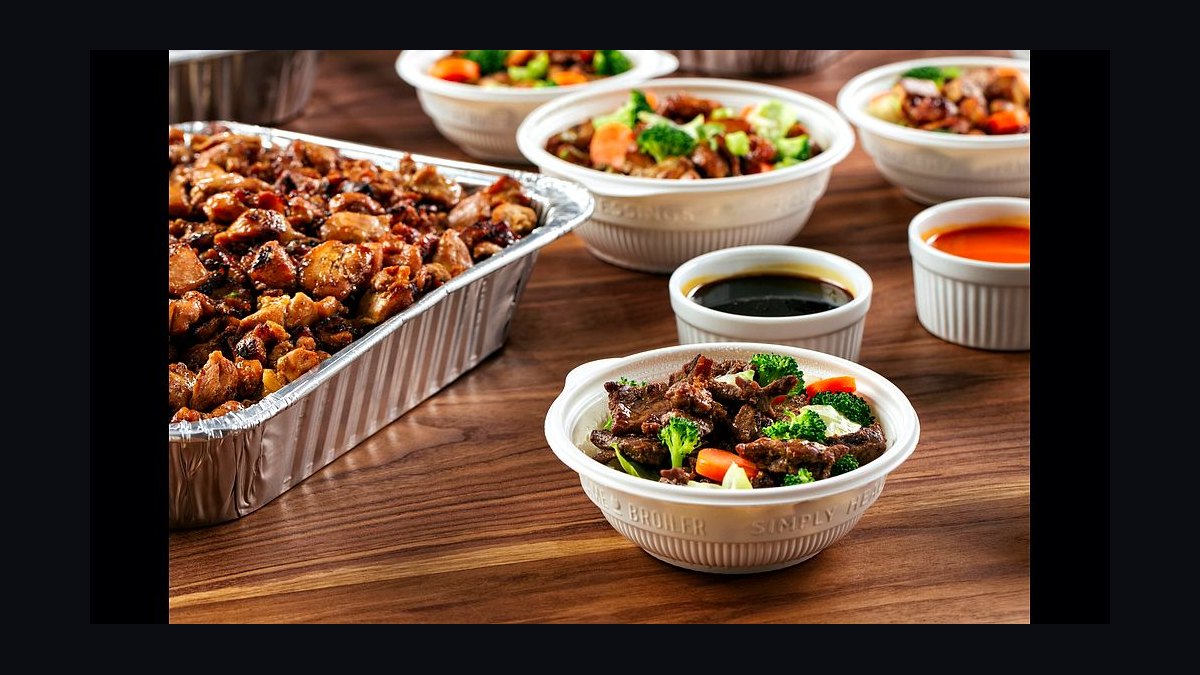
Flame Broiler is a fast-casual Asian rice-bowl brand founded in California in 1995. The entire concept rests on a deliberate subtraction: no fryers, no chicken skin, no trans fat. That single decision cascades through every line of the P&L, and understanding the cascade is the difference between buying this franchise for the right reason and buying it because the investment number looked small.
Start with the physical box. A unit runs 1,200 to 1,800 square feet — meaningfully smaller than the 2,200–2,800 square feet a burrito or Mediterranean bowl concept typically demands. Because there is no fryer, there is no Type I hood, no grease interceptor sized for fry oil, no ansul system built around a fryer bank, and no fry-oil disposal contract. Hood and ventilation work is one of the single most expensive and permit-sensitive line items in any restaurant build; removing the fryer removes both the capital and a large chunk of the plan-check risk that stalls openings for weeks.
Then look at the menu. Six core items — chicken, beef, tofu, and veggie bowls plus sides — is an extraordinarily short line for a restaurant. Short menus produce three compounding advantages. First, SKU count in the walk-in is low, which means less spoilage and tighter inventory variance; a bowl concept with six items can run a physical inventory in twenty minutes, while a 30-SKU competitor cannot. Second, prep is standardized: grilled protein, steamed rice, a sauce, a few vegetables. Third, and most importantly, training time collapses. A new line employee at a six-item concept is productive in days, not weeks — which matters enormously in a labor market where fast-casual turnover routinely runs over 100% annually.
That is why the operating percentages land where they do. Food cost in the 28–32% band and labor in the 25–28% band are both at or below typical fast-casual norms of roughly 30–35% each. On a $600,000 unit, a four-point labor advantage is $24,000 a year straight to the owner. Stack that against a shift crew of two to three people rather than five or six, and the economics of a small-box, short-menu concept start to make sense on their own terms.
The trade-off is on the top line. A $9.50–$11.00 average ticket with no alcohol, no premium add-on ladder, and limited catering ceiling means the unit has to move transactions. Mature stores gross roughly $500,000 to $1,100,000, with a median in the $600,000 range. That is a modest AUV in 2027 dollars. You are not buying a high-volume machine; you are buying an efficient small one. The entire investment case is that the cost structure is disciplined enough that a modest top line still clears $70,000 to $190,000 in owner earnings.
For a 2027 buyer, that reframes the diligence question. The wrong question is "how much can this unit gross?" The right question is "can I hold food and labor at the low end of their bands in my specific market, at my specific rent, with my specific labor pool?" If the answer is yes, the model works. If your market pushes labor to 30% and rent to 12% of sales, the modest AUV has nothing left to absorb it.
Working the deal: FDD to open door, step by step
The sequence below is not generic franchise advice — it is ordered around the two things that actually determine whether a Flame Broiler works: footprint fit and cost discipline. Front-load both.
Days 1–20 — Read the FDD, and read Item 19 twice. Request the current Franchise Disclosure Document and give it a full week. The items that carry the decision here are Item 5 (initial fee), Item 6 (ongoing royalty and ad fund), Item 7 (total investment range), Item 12 (territory), Item 19 (financial performance representations), and Item 20 (outlet and franchisee turnover tables). Item 19 is where the argument gets settled. Do not read the headline average — read what the disclosure actually measures. Ask whether the figure is a mean or a median, how many units are in the reporting cohort, whether it excludes units open under twelve months, and whether it is skewed by a handful of high-volume flagship stores in dense Orange County trade areas. A median that sits well below the mean tells you the top of the range is not reachable in an ordinary site.
Days 21–40 — Call franchisees, and call the ones who left. Item 20 lists current franchisees with contact information, and — critically — franchisees who exited in the prior fiscal year. Call both groups. Historical Item 20 data has shown turnover in the range of roughly 5–7% of the system over a three-year window, modestly above typical fast-casual, with a meaningful share of those exits franchisor-initiated rather than voluntary sales. Involuntary terminations are a signal worth chasing: they usually mean either operational compliance friction or units that never reached viability. Ask every operator the same five questions: actual trailing-twelve gross, actual food cost percentage, actual labor cost percentage, actual rent as a percent of sales, and what they cleared personally after paying themselves a manager's wage. Ask what they wish they had known about franchisor support cadence.
Days 41–60 — Validate the site before you sign anything. This is the gate that most buyers rush. Detail is in the site-selection section below, but the sequencing rule is absolute: no signed franchise agreement before a site is at least identified and traffic-validated. A franchise agreement signed against a market you cannot find a site in becomes an expensive countdown clock.
Days 61–110 — Build and staff. The compact, fryer-free build is genuinely faster than a full-kitchen concept, but permitting timelines are jurisdictional, not brand-dependent. In dense California municipalities, plan check and inspection can consume six to ten weeks regardless of how simple your kitchen is. Order long-lead equipment — grill, hood, walk-in — the day the lease is signed, not when construction starts. Hire your shift leads four weeks before opening and put them through the training store; hire line staff two weeks out.
Days 111–140 — Open into volume, not into a soft launch. A modest-check concept lives or dies on transaction count. Run a real grand opening: local college and hospital outreach, catering sampling for nearby office parks, and a two-week paid local digital push. Your goal in the first sixty days is to establish a lunch daypart habit within a half-mile radius.
Ongoing — Hold the cost line. Weekly food cost variance, weekly labor as a percent of sales, and a monthly P&L review against the FDD-implied model. At this AUV, a two-point drift in either line is your entire distribution.
What it costs, what it earns, and how long it takes
The investment range disclosed in Item 7 runs roughly $300,000 to $700,000 all-in, against a franchise fee in the neighborhood of $30,000. That is genuinely low for a build-out restaurant franchise, and it is the single strongest argument for the brand. Here is where the money actually goes and what each line is sensitive to.
Franchise fee — around $30,000. Fixed. Paid at signing, non-refundable in almost all circumstances. Multi-unit development agreements sometimes discount subsequent units; ask.
Leasehold improvements and build-out — roughly $160,000 to $380,000. The widest and most dangerous line. The low end assumes a second-generation restaurant space with usable plumbing, an existing grease line, adequate electrical service, and an existing hood you can modify. The high end is vanilla shell in a new development where you are running gas, upsizing the electrical panel, and building restrooms to current ADA code. The difference between those two scenarios is $200,000 — more than the franchise fee, equipment, and inventory combined. Chase second-generation space aggressively.
Equipment and grill package — roughly $90,000 to $190,000. Grill line, refrigeration, rice cookers, holding equipment, POS, and small wares. Because there is no fryer bank, this is lighter than a comparable QSR. Used equipment can cut this meaningfully but check that the franchisor's approved-supplier requirements permit it.
Signage and décor — roughly $16,000 to $48,000. Landlord sign criteria and municipal sign codes drive this more than brand standards. A monument sign slot in a strip center is worth paying for.
Opening inventory — roughly $8,000 to $20,000. Low, because the menu is short. This is a structural advantage of the concept.
Grand opening marketing — roughly $12,000 to $32,000. Spend at the top of this range if you are outside California. Brand awareness that does the work for you in Orange County does nothing for you in Dallas.

Training and travel — roughly $8,000 to $25,000. Training typically runs two to three weeks at a certified training store. Budget for two people, not one — sending only yourself means your opening shift lead learns from you, secondhand.
Working capital — roughly $30,000 to $85,000. Treat the disclosed figure as a floor, not a target. Three months of operating cash is the disclosed convention; six months is the safe one. A unit that opens in November into a slow first quarter can burn through three months of reserve before the lunch habit forms.
Ongoing fees. Royalty in the neighborhood of 5–6% of gross, plus an advertising contribution. The national ad fund is small relative to the industry — historically around 1% of revenue, versus 2–4% at larger systems — and most of that spend concentrates in California digital. That low ad fee reads as a savings on paper and is actually a cost: it means local store marketing is your job. Budget $15,000 to $25,000 annually of your own money for local marketing, and more in year one outside the West.
Liquidity and financing. Expect the franchisor to require roughly $120,000 to $180,000 in liquid capital plus a net worth threshold. SBA 7(a) financing is common for franchise restaurant deals, typically requiring 10–20% equity injection, with the balance amortized over ten years for a leasehold-heavy project. Model your debt service against the *median* Item 19 unit, not the average — if the deal only works at the top quartile of the system, it does not work.
The unit-level math. Take a $700,000 store as a realistic mature target. Food at 30% is $210,000. Labor at 27% is $189,000. Occupancy at 10% is $70,000. Royalty and ad at roughly 7% is $49,000. Remaining controllables — utilities, insurance, supplies, repairs, credit card fees, third-party delivery commissions — realistically run 10–13%, call it $80,000. That leaves roughly $100,000 to $105,000 before debt service and before you pay yourself a manager's salary. If you are working the store full-time, that number is your income. If you hire a general manager at $65,000 loaded, the passive return on a $500,000 investment is thin. This is an owner-operator business, and treating it as anything else is the most common modeling error buyers make.
Timeline. From signed franchise agreement to open doors, four to seven months is realistic: two to six weeks site selection and LOI, four to eight weeks lease negotiation, six to ten weeks permitting and plan check, six to ten weeks construction, three weeks training and hiring. Break-even on a cash-flow basis typically lands somewhere in months four through twelve post-opening; full recovery of invested capital is a multi-year proposition at these AUVs.
Site selection, territory, and the lease terms that quietly decide the outcome
More Flame Broiler outcomes are determined by real estate than by operations. The concept requires 1,200 to 1,800 square feet and performs best in end-cap or inline positions in high-traffic strip centers adjacent to demand generators that produce a reliable weekday lunch rush — colleges, hospitals, and office parks. That is a narrow site profile, and narrow profiles are good news for underwriting and bad news for speed.
The geographic reality is the dominant constraint. The overwhelming majority of the system's roughly 130-plus units sit in California, with a thin secondary presence in Arizona, Nevada, and Texas. There is no meaningful franchisor development push into the Midwest, Northeast, or Southeast. A 2027 franchisee outside the Western footprint is a pioneer: near-zero brand awareness, no regional field support density, no local supply chain scale, and no co-op ad presence. Pioneering can work — several regional brands have been carried into new markets by strong local operators — but you must price it. Add $25,000 to $40,000 to your year-one marketing budget and assume a longer ramp to break-even.
Territory protection deserves careful reading. Historically the system has offered limited or no territorial exclusivity in many markets, which means another franchisee — or a company unit — could open within a few miles of you. Read Item 12 line by line and ask specifically: what is my protected radius, what triggers its loss, does it survive renewal, and does it cover non-traditional formats like ghost kitchens or delivery-only licenses? A brand with strong regional density and weak territory language is a combination that can cannibalize your lunch rush.
On lease economics: prime Los Angeles and Orange County retail runs roughly $40 to $60 per square foot annually, which on a 1,500-square-foot box is $60,000 to $90,000 a year, or $5,000 to $7,500 a month. Against a $600,000 median AUV, that is 10–15% occupancy — and the top of that range is a problem. The rule of thumb worth enforcing: total occupancy cost, including CAM, taxes, and insurance, should stay at or under 10% of realistic year-two sales. If the deal only pencils at 8% occupancy and you are being quoted 13%, that is not a site to negotiate harder on — that is a site to walk from.
Lease structure typically runs a ten-year initial term with two five-year options. Three clauses are worth fighting for. First, a co-tenancy clause tying your rent to the continued presence of the center's anchor — grocery or a national retailer. Strip-center bowls concepts are traffic parasites in the best sense; when the anchor goes dark, your lunch count follows within a quarter, and without co-tenancy you are paying full rent into an empty parking lot. Second, a personal guaranty burn-off that steps down after three to five years of on-time payment. Third, an exclusive use clause preventing the landlord from leasing to another Asian bowl or poke concept in the same center. Landlords resist all three; you will typically win one or two, and the co-tenancy is the one worth spending your negotiating capital on.
Finally, validate the site with your own feet, not the broker's traffic study. Sit in the parking lot from 11:00 a.m. to 1:30 p.m. on a Tuesday and a Thursday and count cars and pedestrians. Walk the office park and count nameplates. Call the college and ask about its academic calendar — a store carried by student traffic is a store that loses a third of its revenue for three months every summer, and that seasonality has to be in your model before you sign.
Where buyers get this one wrong
Mistaking low capital for low risk. A $350,000 build-out is easier to fund than a $900,000 one, but the failure mode is identical: a lease you cannot exit and a top line that never reaches plan. Low entry cost lowers the amount at stake; it does not lower the probability of a bad site.
Modeling the average Item 19 unit instead of the median or the bottom quartile. Averages in franchise disclosures are frequently pulled upward by a small number of exceptional locations. Build your pro forma on the median, stress-test at 80% of median, and confirm you can still service debt. If you cannot, you do not have a deal.
Underestimating the awareness gap outside California. In its stronghold, the brand has a following built over three decades — customers walk in already knowing what a Flame Broiler bowl is. Outside that footprint, you are opening an unknown independent restaurant that happens to pay a 5–6% royalty. That is the least attractive version of franchising: full fees, no brand lift. If you are pioneering, negotiate hard on fee structure or reconsider.
Assuming semi-absentee ownership works. At a $600,000 AUV with a $9.50–$11.00 ticket, there is not enough gross margin to fund both a general manager and a meaningful owner return. Operators who clear the top of the $70,000–$190,000 range are almost universally in the store. Buyers who plan to keep a corporate job and hire out management routinely find that the GM's salary consumes the entire distribution.
Waiting on the franchisor for menu innovation. The system's menu has been remarkably stable — that stability is the source of the cost advantage, and it is unlikely to change. Competitors like CAVA and Chipotle push seasonal limited-time offers to drive visit frequency; a six-item concept structurally cannot. Franchisee surveys have consistently shown owners wanting more LTOs. Assume you will not get them, and build your traffic strategy on local partnerships, catering, and daypart extension instead.
Ignoring the loyalty and digital gap. A loyalty program exists and has a substantial member base, but historically drives a far smaller share of sales than the 25–30% that leading fast-casual brands report. Third-party delivery commissions of 15–30% are brutal on a modest check — a $10.50 order on a 25% commission loses more margin than it contributes. Manage delivery as an incremental channel with menu-price adjustments, never as a growth strategy.
Skipping the exited-franchisee calls. Current franchisees have every incentive to be optimistic — their asset's value depends partly on the system's reputation. Former franchisees have none. The single highest-yield hour of your diligence is on the phone with someone who closed or was terminated.
Treating training as sufficient. Two to three weeks at a training store teaches the system, not the market. Franchisee feedback has consistently rated training and communication below average, with ongoing support running more toward periodic check-ins than active field coaching. Budget for a strong shift lead you pay above market, because the franchisor's field team will not be in your store weekly.
A decision framework: buy, build, pioneer, or pass
Run the decision in a fixed order, because the gates are not equally weighted. Geography first, capital second, operating role third, site fourth.
If you are in Southern California or the greater Western footprint, are prepared to run the store yourself, and have $120,000–$180,000 liquid against a $300,000–$700,000 project: this is the profile the model was built for. Prefer an existing resale over a new build. A resale with two to three years of trailing P&Ls removes the single largest unknown — whether the site produces — and you are buying a proven revenue stream rather than a projection. Pay a multiple on real cash flow instead of gambling a full build-out on a forecast.
If you are in the footprint but capital-constrained: a resale of an underperforming unit at a discount, bought specifically because you can fix its cost structure, is the highest-return version of this deal. Buy where food cost is running 36% and labor 32% because the prior owner was absentee, and your operational discipline *is* the value creation.
If you are outside the West: pause. The honest answer for most buyers here is to pass and look at a brand with a national footprint, real ad-fund scale, and field support in your region. If you still want it — because you know the market cold, have a locked-in site next to a hospital, and can fund a two-year ramp — then treat it as an independent restaurant launch with a franchise agreement attached, budget the pioneer premium in marketing, and negotiate territory and development terms hard.
If you want a passive investment: pass. Every version of this business that works requires an owner in the building.
If you can only fund one unit and want to build a portfolio: the low per-unit capital is genuinely attractive for multi-unit stacking, but do not sign a development agreement before unit one has run twelve months at target cost percentages. Development schedules create obligations that a first-time operator cannot always meet, and defaulting on one is expensive.
Related questions
How does a Flame Broiler resale get priced?
Small fast-casual franchise resales generally trade on a multiple of seller's discretionary earnings, commonly in the low single digits, adjusted for remaining lease term, equipment age, and required franchisor-mandated remodels. Always verify the buyer-side transfer fee and the franchisor's approval process before agreeing to terms.
Can I run this as a semi-absentee investment?
Realistically, no. At a $9.50–$11.00 ticket and a median AUV near $600,000, a loaded general manager salary absorbs most of the owner distribution. The operators clearing the top of the earnings range are working the store.
What happens if the franchisor sells or is acquired?
Standard franchise agreements permit the franchisor to assign its interest without franchisee consent. New ownership can change supply chain requirements, remodel schedules, and ad fund allocation. Ask about ownership stability in Item 1 and factor a possible mandated remodel into your ten-year model.
Is delivery worth turning on?
Only with adjusted menu pricing. Third-party commissions of 15–30% on a sub-$12 check erase unit margin. Treat delivery as incremental order capture during off-peak hours, price it to protect margin, and never let it substitute for building an in-store lunch habit.
How does this compare to opening an independent bowl concept?
An independent saves the fee and 5–6% royalty and gives you full menu control, but you build brand, supply chain, and operating systems yourself. Inside the Western footprint, the franchise's existing customer recognition is worth real money; outside it, the case for paying royalties weakens considerably.
FAQ
What is the total cost to open a Flame Broiler franchise?
The franchise fee runs around $30,000, and total initial investment as disclosed in Item 7 falls roughly between $300,000 and $700,000. That covers leasehold improvements, the grill and equipment package, signage, opening inventory, grand opening marketing, training, and initial working capital. The spread is driven almost entirely by build-out: a second-generation restaurant space lands near the low end, while a vanilla shell requiring new plumbing, gas, and electrical service pushes toward the high end. Confirm every figure against the current FDD rather than relying on any secondary summary.
What are the ongoing fees?
Expect a royalty in the range of roughly 5–6% of gross sales plus an advertising contribution. The national ad fund is small relative to larger fast-casual systems and historically concentrates its spend in California. Plan on funding $15,000 to $25,000 annually in local store marketing out of your own pocket, and considerably more in year one if you are opening outside the Western footprint where brand awareness is minimal.
What do franchisees actually earn?
Mature units have grossed roughly $500,000 to $1,100,000, with owner earnings commonly cited in the $70,000 to $190,000 range. That earnings figure generally assumes an owner-operator who is working in the business rather than paying a general manager. Verify the specifics in Item 19 of the current disclosure document, note whether the figure is a mean or median, and build your own model on the median rather than the average.
Is this a good first franchise?
For a hands-on first-time owner inside the Western footprint, yes — the six-item menu, absence of fryers, and two-to-three-person shift crews make it one of the more learnable restaurant systems. The caveats are that training is relatively short at two to three weeks, ongoing franchisor support has historically been rated below average by franchisees, and you should expect to solve most day-to-day problems yourself.
How risky is opening outside California?
Meaningfully riskier. The large majority of units are in California with a small footprint in Arizona, Nevada, and Texas, and the franchisor has not signaled major expansion elsewhere. Outside the West you get no brand recognition, no regional field support density, and no co-op advertising presence, while still paying full royalty. If you pursue it, budget an additional $25,000 to $40,000 for year-one marketing and assume a longer ramp to break-even.
How does the brand hold up against CAVA, Chipotle, and poke chains?
It competes on operating efficiency rather than menu excitement. The short menu holds food cost near 28–32% and labor near 25–28%, which supports healthy unit-level margins at modest volume. The cost is innovation: competitors run frequent limited-time offers to drive visit frequency, and a six-item system structurally cannot. Expect to generate frequency through local partnerships, catering, and daypart extension instead.
Sources
- https://www.ftc.gov/business-guidance/resources/franchise-rule-compliance-guide
- https://www.sba.gov/funding-programs/loans/7a-loans
- https://www.franchise.org/
- https://www.entrepreneur.com/franchises
- https://www.franchisebusinessreview.com/
- https://www.qsrmagazine.com/
- https://www.nrn.com/
- https://www.ibisworld.com/united-states/market-research-reports/chain-restaurants-industry/
- https://www.restaurant.org/research-and-media/research/
- https://www.technomic.com/
Related on PULSE
- How long does it take to open a franchise and break even in 2027?
- Should I open or buy a WaBa Grill franchise in 2027?
- Should I open or buy a Tokyo Joe's franchise in 2027?
- Should I open or buy a Painting with a Twist franchise in 2027?
- Should I open or buy a Tommy Gun's Original Barbershop franchise in 2027?
This page will be disappearing soon. Save it to your device for $1 — or read it free while it is here.
@Kory-White- · if Venmo asks, the last 4 of my number are 2012
This page is gone.
This one is off the shelf now. $1 keeps it on your phone for good — the whole page, pictures and diagrams included.
 franchiseShould I open or buy a Cold Stone Creamery franchise in 2027?
 franchiseShould I open or buy a Panera Bread franchise in 2027?
 franchiseShould I open or buy a Bojangles franchise in 2027?
 franchiseShould I open or buy a Drybar franchise in 2027?
 franchiseShould I open or buy a Jamba franchise in 2027?
 franchiseShould I open or buy a Roto-Rooter franchise in 2027?
 franchiseShould I open or buy a Great Clips franchise in 2027?
 franchiseShould I open or buy a Bruster's Real Ice Cream franchise in 2027?
 franchiseShould I open or buy a Crumbl Cookies franchise in 2027?
 franchiseShould I open or buy a Jimmy John's franchise in 2027?