


Should I open or buy a Sarku Japan franchise in 2027?
Quality
Certified
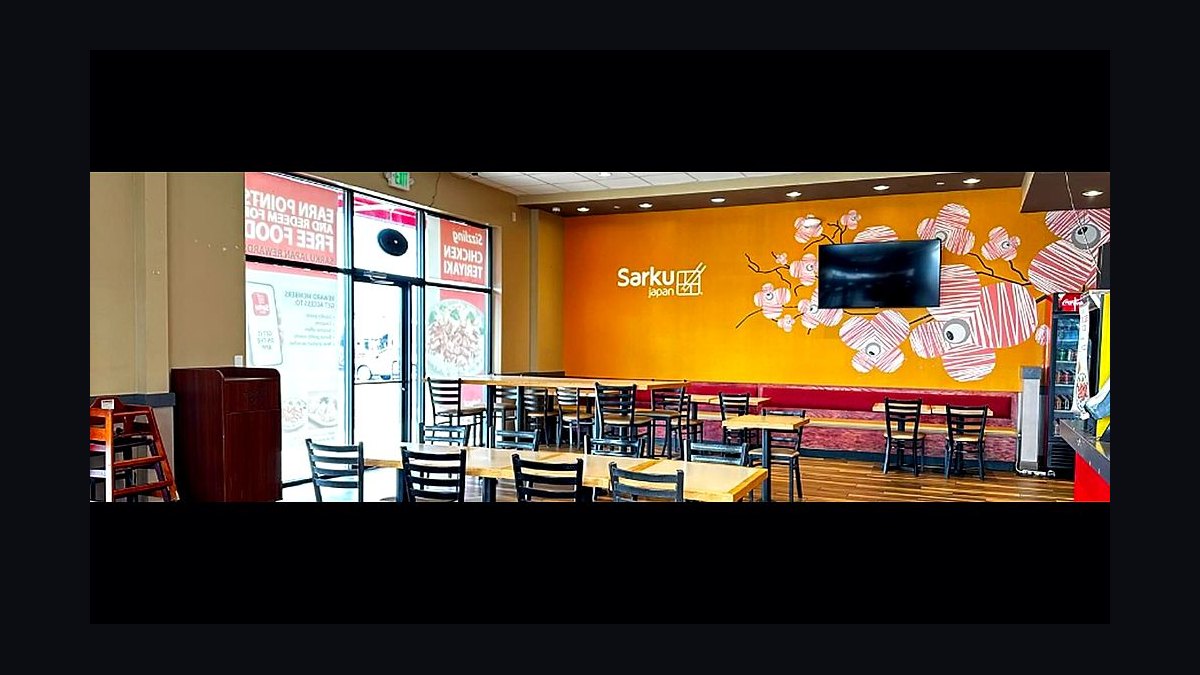
Yes, if you can secure a lease in a top-tier, high-traffic mall and you're prepared to manage food-court economics closely — Sarku Japan is a proven, high-throughput Japanese teriyaki concept with real brand recognition. The franchise fee runs roughly $30,000-$40,000, total investment lands between $300,000 and $650,000, and mature units gross $700,000-$1,400,000 with owners clearing $80,000-$220,000. The single deciding factor is mall traffic — everything else is manageable.
A Mall Food-Court Kiosk, Not a Standalone Restaurant
Picture a 500-square-foot kiosk wedged between a smoothie counter and a pretzel stand in a regional mall's food court. That's the physical reality of a Sarku Japan unit, and it shapes every decision you'll make as an owner. You're not opening a restaurant with a dining room, a parking lot, or street visibility — you're renting a slice of someone else's traffic. A prospective franchisee named Dana is evaluating two malls: one is an A-tier property with a recently renovated food court and 14 million annual visitors; the other is a B-tier mall with a vacant former Sears anchor and softening numbers. Both malls quoted Dana similar base rent, but the A-tier location's percentage-rent breakpoint kicks in at a sales level Dana can hit comfortably by month eight, while the B-tier mall's foot traffic makes that same breakpoint look like a stretch goal three years out. This is the scenario every Sarku Japan applicant faces: the brand, the menu, and the teppanyaki theater are essentially fixed and proven — what varies entirely is the real estate underneath you. Franchising here is less "can I run a kitchen" and more "can I correctly underwrite a shopping center's next decade." Sarku Japan itself, founded in 1987, has decades of operating data behind its display-cooking format — chicken and steak teriyaki grilled in front of customers, served over rice, with the signature free samples on skewers that pull impulse buyers out of the food-court crowd. The operational playbook is not the risk. The mall is the risk, and it's the variable a franchisee controls almost entirely through site selection.
How Mall Traffic Converts Into Your Paycheck (mermaid)
The mechanism connecting a mall's health to your take-home pay is direct and largely outside your control once you've signed a lease. Foot traffic drives impulse sampling, impulse sampling drives conversion at the counter, conversion drives gross sales, and gross sales determine two things simultaneously: your revenue line and your percentage-rent obligation to the mall landlord. A unit in a thriving A-tier mall might do $1.1 million in gross sales; the same brand, same menu, same labor model in a declining B-tier mall might do $650,000 — and the cost structure barely moves, because your rent floor, equipment lease, and core staffing don't scale down proportionally with lower sales. That's why the model is described as high-throughput: the fixed costs (equipment, a baseline crew, royalty minimums in some agreements) mean profitability is extremely sensitive to volume. Below roughly $700,000 in annual sales, many Sarku Japan units struggle to clear meaningful owner income after food cost (28%-32%), labor (25%-30% and climbing to 35%-40% at lower volumes), mall occupancy costs (roughly 14% of gross when you include base rent, percentage rent, and CAM charges), and royalty/ad fees (roughly 7%-9% combined). Above $900,000-$1,000,000, the same cost percentages leave meaningfully more dollars on the table because your fixed costs are being spread across a larger revenue base. This is why franchisees who evaluate a Sarku Japan opportunity are really evaluating a mall, not a menu.

Real Numbers: What the 2026 FDD and Mature Units Show
The 2026 Franchise Disclosure Document lays out the investment in Item 7. The franchise fee sits at $30,000-$40,000. Total investment, covering everything from buildout to opening working capital, ranges from about $300,000 to $650,000. Breaking that down: food-court buildout and fit-out typically runs $180,000-$400,000 (this is the largest and most variable line item, driven heavily by the specific mall's construction requirements and finish standards); equipment including teppan griddles, hoods, and POS systems runs $70,000-$160,000; signage and decor to meet mall branding standards costs $12,000-$35,000; initial inventory is $8,000-$20,000; initial marketing for the grand opening is $8,000-$25,000; training and travel for the operator and initial staff runs $8,000-$25,000; and working capital to cover the first three months is $30,000-$80,000. Liquidity requirements typically call for $120,000-$200,000 in accessible cash or equivalent, since most franchisees finance the balance. Ongoing costs are a royalty of roughly 6%-7% of gross sales plus an advertising fee of roughly 1%-2%. On the revenue side, mature units gross $700,000-$1,400,000 annually, with owner earnings of $80,000-$220,000 — a wide range that maps almost entirely to which tier of mall the unit sits in. A unit doing $700,000 in a marginal mall and a unit doing $1.4 million in a flagship mall wear the same brand and menu but produce dramatically different lives for their owners. Financing typically comes through SBA 7(a) loans (10%-20% down, credit above 680, rates around 8%-11% in 2027, terms of 7-10 years), a ROBS rollover of retirement funds ($3,000-$5,000 setup plus $150-$300/month in compliance costs, with the real risk that a business failure wipes out retirement savings), or equipment leasing at $1,500-$3,500/month, which costs 2-3x the cash price over a five-year term and should be avoided for long-lived equipment where possible. A realistic ROI timeline: Year 1 is often break-even or negative as you pay down startup debt and build a customer base, with owner draws of $0-$40,000. Years 2-3 typically bring owner earnings of $80,000-$150,000 if sales reach $800,000-$1,000,000 and costs are controlled, though SBA debt service consumes $30,000-$60,000 annually during this period. Years 4-5 represent peak profitability, with owner earnings of $120,000-$220,000 as debt is paid down or refinanced — this is typically when you've recovered your initial investment. By years 6-7 you face a lease renewal (usually at higher rent), a sale (typically valued at 2-3x annual net profit), or expansion into a second unit.
Trade-Offs, Alternatives, and the Multi-Unit Decision (mermaid)
The core trade-off with a Sarku Japan franchise is proven concept and high throughput versus almost total dependence on one piece of real estate you don't control. Unlike a standalone fast-casual restaurant that can build a customer base through location visibility, delivery apps, and drive-through convenience, a food-court kiosk lives or dies by the mall's overall draw. This makes diversification across multiple malls a meaningful risk-management strategy for franchisees who can afford to scale — a two-unit or three-unit operator spread across different malls in a region isn't wiped out if one property loses an anchor tenant. If format flexibility matters more to you than a turnkey food-court model, alternatives worth comparing include WaBa Grill or Flame Broiler, which offer healthy Asian bowl concepts with more standalone and strip-mall format options; Tokyo Joe's, another fresh Asian bowl concept with more site flexibility; Charleys and similar food-court QSR brands, which share Sarku Japan's mall dependency but diversify your menu category exposure; independent food-court teriyaki operations, which trade brand recognition and franchisor support for full operational control and no royalty; and non-mall fast-casual franchises generally, which sacrifice the built-in impulse traffic of a food court for freedom from percentage rent and anchor-tenant risk. The decision tree here really comes down to how much you value a proven, low-decision-making operating model (Sarku Japan's strength) against how much exposure you're willing to carry to a single commercial property's trajectory. Franchisees who've successfully scaled to multiple units tend to treat mall selection as the primary skill of the business — they're franchise operators second and mall-real-estate analysts first.
Common Pitfalls and How to Avoid Them
The most damaging pitfall is signing a lease without pulling the mall's trailing twelve months of sales-per-square-foot data, which any competent leasing agent or tenant representative can provide. Franchisees who skip this step and simply trust the mall's marketing materials frequently discover, a year in, that overall mall traffic has been declining for two or three years before they signed. A related mistake is ignoring anchor-tenant health: if a mall has lost one major anchor (a Macy's, JCPenney, or Sears) in the past 24 months, foot traffic can drop 20%-40% and food-court sales follow closely behind. Ask directly about anchor occupancy and any pending closures before committing. A third pitfall is underestimating percentage rent. Most mall leases include a clause requiring 6%-10% of gross sales above a breakpoint, often set at $500,000-$700,000 annually — a unit that succeeds and grows past that breakpoint can see its effective occupancy cost climb sharply in exactly the years it should be most profitable. Negotiate a co-tenancy clause if at all possible: this is a legal right to reduce rent or terminate the lease if a specified anchor or a minimum number of food-court vendors close, and it's standard practice among experienced multi-unit franchisees even though mall landlords rarely offer it unprompted. A fourth pitfall is labor turnover in the teppanyaki cook role specifically — the display-cooking skill is harder to hire for than a standard fast-food line position, and unexpected departures can disrupt operations for weeks. Cross-train every employee on at least two stations and consider a tip-sharing or bonus pool tied to hourly sales targets to reduce turnover. Finally, don't model only the optimistic case. Build a worst-case scenario at $550,000-$650,000 in annual sales and confirm you could still service SBA debt and draw at least $40,000 for yourself. If that worst case doesn't pencil out, walk away regardless of how much you like the brand — the concept's strength doesn't compensate for a weak mall.
Related questions
How long does it take to open a Sarku Japan franchise?
Typically 6-12 months from signing the franchise agreement to opening, covering site selection, mall lease negotiation, buildout, training, and equipment installation. Mall-specific construction requirements can extend this timeline.
Can I open a Sarku Japan outside a mall food court?
No. The concept is built for mall food courts, and most franchise agreements require a mall setting. Off-mall locations are rarely, if ever, approved, so plan to operate exclusively within a shopping center.
What's the biggest financial risk in owning a Sarku Japan unit?
Percentage rent combined with declining mall traffic. If sales grow past the lease's breakpoint in a mall that's simultaneously losing overall visitors, occupancy costs rise just as your revenue trajectory weakens.
Is Sarku Japan a good fit for a first-time franchisee?
It can be, if you have restaurant or retail management experience and can secure a top-tier mall location. First-timers without QSR operations experience often underestimate the labor and lease-management demands.
FAQ
What is the typical total investment to open a Sarku Japan franchise? The total investment ranges from roughly $300,000 to $650,000, including a franchise fee of about $30,000 to $40,000. This covers buildout, equipment, signage, initial inventory, marketing, training, and opening working capital for a mall food-court location.
How much can a Sarku Japan franchise owner earn annually? Mature units typically generate gross sales between $700,000 and $1,400,000, with owner net income often in the range of $80,000 to $220,000. Actual earnings depend heavily on mall tier, foot traffic, and how tightly food and labor costs are managed.
What are the ongoing royalty and advertising fees? The royalty runs approximately 6% to 7% of gross sales, plus a separate advertising fee of roughly 1% to 2%. Both are standard for the quick-service food-court segment and fund brand marketing and franchisor support.
How long does it take to open a Sarku Japan franchise? The timeline from signing the franchise agreement to opening a unit is typically 6 to 12 months, including site selection, lease negotiation, buildout, training, and equipment installation.
Is Sarku Japan dependent on mall traffic, and what are the risks? Yes, the model relies almost entirely on mall foot traffic, which carries structural risk as retail patterns shift. Owners benefit from high throughput during peak hours but remain vulnerable to anchor-store closures or a broader decline in mall visits.
Can I finance a Sarku Japan franchise, or do I need to pay cash? Most franchisees finance the majority of their investment. SBA 7(a) loans are the most common route, typically requiring 10%-20% down, a credit score above 680, and 2+ years of management experience, with 2027 rates projected around 8%-11%.
Sources
- https://www.sarkujapan.com
- https://www.entrepreneur.com/franchises/directory
- https://www.ftc.gov/business-guidance/resources/franchise-rule-compliance-guide
- https://www.franchisebusinessreview.com
- https://www.ibisworld.com
- https://www.technomic.com
- https://www.franchise.org
- https://www.sba.gov/funding-programs/loans/7a-loans
- https://www.statista.com/markets/13/retail-trade
Related on PULSE
- How long does it take to open a franchise and break even in 2027?
- Should I open or buy a Tommy Gun's Original Barbershop franchise in 2027?
- Should I open or buy a Painting with a Twist franchise in 2027?
- Should I open or buy a WaBa Grill franchise in 2027?
- Should I open or buy a Tokyo Joe's franchise in 2027?
This page will be disappearing soon. Save it to your device for $1 — or read it free while it is here.
@Kory-White- · if Venmo asks, the last 4 of my number are 2012
This page is gone.
This one is off the shelf now. $1 keeps it on your phone for good — the whole page, pictures and diagrams included.
 frShould I open or buy a McDonald's franchise in 2027?
 franchiseShould I open or buy a Jamba franchise in 2027?
 franchiseShould I open or buy a Hand and Stone Massage franchise in 2027?
 franchiseShould I open or buy a Little Caesars franchise in 2027?
 franchiseShould I open or buy a Cinnabon franchise in 2027?
 franchiseShould I open or buy a Sonic Drive-In franchise in 2027?
 franchiseShould I open or buy a Meineke franchise in 2027?
 franchiseShould I open or buy a Dairy Queen franchise in 2027?
 franchiseShould I open or buy a KinderCare franchise in 2027?
 franchiseShould I open or buy a Wingstop franchise in 2027?