


Should I open or buy a City Barbeque franchise in 2027?
Quality
Certified
Approach with caution. City Barbeque has grown primarily through company-operated restaurants rather than broad franchising, so your first step is confirming whether franchising is open at all. If it is closed, an actively franchising barbecue brand gives you a faster, better-supported path into the same segment.
What a fast-casual barbecue franchise actually is, and why the ownership model matters more than the logo
City Barbeque was founded in 1999 in Ohio and built its reputation on award-winning smoked meats — brisket, pulled pork, ribs — paired with homestyle sides and a serious catering operation. That combination is the brand's economic engine. It is also the reason the company has expanded the way it has: through company-operated units rather than a wide franchise network. Understanding that distinction is not trivia. It changes the entire nature of the question you are asking.
When a brand franchises broadly, it has built infrastructure specifically for franchising: a Franchise Disclosure Document refreshed annually, a franchise development team, a field consultant structure, a training academy sized for outside operators, an approved-vendor supply chain that a third party can plug into, and — critically — an Item 19 financial performance representation that gives you a defensible basis for underwriting. When a brand grows primarily company-operated, none of that has to exist. The operating knowledge lives in the corporate org chart, not in a manual designed for someone who does not work there.
That is why the honest framing of "should I open or buy a City Barbeque franchise in 2027" starts with a availability question rather than a returns question. You cannot underwrite what is not for sale. Call the brand directly. Ask three specific things: whether new franchise agreements are being issued, whether any existing units are available for resale, and whether there is a development-area program for markets outside the current corporate footprint. If the answer to all three is no, you have your answer for City Barbeque specifically — and you still have a live and interesting question about the barbecue segment generally, which is where most of the value in this analysis lives.
The broader lesson generalizes well beyond barbecue. Plenty of admired restaurant brands — Mission BBQ, Smokey Bones, and others in adjacent casual segments — have deliberately stayed company-owned. Founders who care intensely about product consistency often resist franchising precisely because the thing that makes them special is hard to systematize. Slow-smoked barbecue is the textbook example: it is a craft process with overnight cook cycles, meaningful yield variance, and outcomes that depend on the judgment of the person running the pit. A brand that has protected that craft by keeping units in-house is behaving rationally, not withholding an opportunity from you.
There is a second ownership path worth naming, because prospective buyers often miss it. "Buying a franchise" and "buying a restaurant" are different transactions. If a brand does not sell new territories but does permit transfers, an existing unit may occasionally come to market — usually through the franchisor's own network rather than a public listing. That path involves buying an operating business with real revenue history, which is a materially better underwriting position than a ground-up build. It also usually costs more up front and comes with whatever operational debt the prior owner accumulated. If City Barbeque is closed to new franchises, ask specifically about resales before you move on.
The step-by-step process from first inquiry to open doors
The sequence below is deliberately front-loaded with cheap diligence. Every step you complete before signing a lease costs you time; every step you skip before signing a lease costs you money.
Start by confirming franchise availability in writing, not from a third-party franchise-listing site. Those directories are frequently stale and often list brands that have not issued a new agreement in years. Go to the source.
If franchising is open, request the Franchise Disclosure Document. Federal rules require the franchisor to give you the FDD at least fourteen calendar days before you sign anything or pay any money. Read Item 5 (initial fees), Item 6 (ongoing fees), Item 7 (estimated initial investment), Item 11 (franchisor obligations — what training and support you actually get), Item 12 (territory), Item 19 (financial performance representations, if any), Item 20 (unit counts, openings, closures, transfers, terminations), and Item 21 (audited financials of the franchisor itself). Item 20 is the most under-read section in the document. A table showing more terminations and transfers than new openings tells you something no marketing deck will.
Then validate against operators. Item 20 includes a list of current and former franchisees. Call fifteen of them, not three, and make sure several are former. Ask about actual food cost percentages, actual labor percentages, what catering contributes, how long it took to reach breakeven, and whether they would sign again. Ask specifically about smoker throughput and yield — a pitmaster question that separates people who understand the model from people who bought a logo.
Only after that do you commit capital to site work: market study, trade-area analysis, letter of intent, lease negotiation, financing package, franchisor site approval, permitting, construction, hiring, training, soft open, grand open.
Two notes on that flow. First, the loop from "economics validate — no" back to evaluating other brands is not a failure state; it is the diligence working. Most people who walk away from a restaurant deal after reading the FDD saved themselves several hundred thousand dollars. Second, the "build catering pipeline from day one" step is placed after opening only because that is when it becomes operational. The selling starts sixty to ninety days before you open, when you are calling local hospitals, car dealerships, churches, school districts, and corporate parks to book your first-quarter catering calendar. A barbecue restaurant that opens with an empty catering book has thrown away its single best margin channel during the exact window when local curiosity is highest.
Costs, timelines, and the ranges you should model
Treat the numbers below as a comparable fast-casual barbecue build, not as published City Barbeque figures — because the brand's limited franchising means published franchisee-facing figures may not exist. If you receive an FDD, its Item 7 supersedes everything here.
Franchise fee: roughly $35,000 to $45,000. This is the segment norm for a full-size fast-casual concept. Some multi-unit development agreements discount per-unit fees for units two through five.
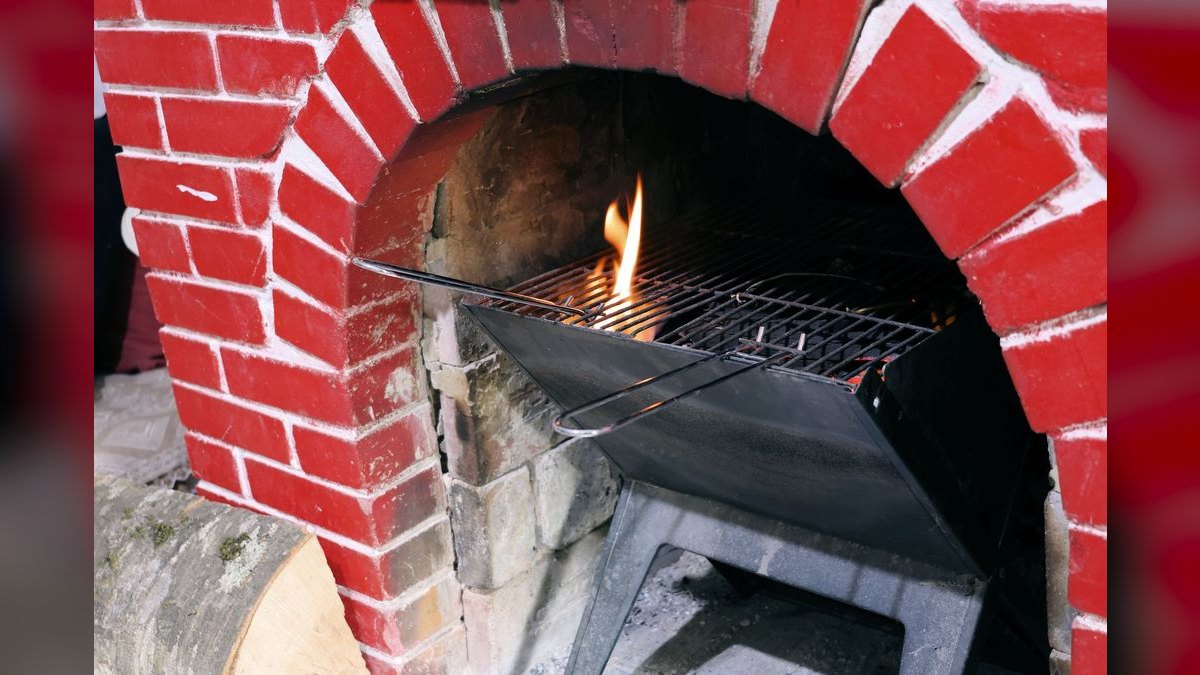
Buildout and leasehold improvements: $350,000 to $900,000. Barbecue sits at the high end of fast-casual buildout because of the smoker. Depending on equipment type you may need a dedicated combustion area, enhanced ventilation and hood systems, gas or wood supply infrastructure, fire suppression sized for the pit, and in some jurisdictions an air-quality permit for wood smoke. That last item is a genuine timeline risk in denser urban markets and is worth checking with the local authority before you sign a lease, not after.
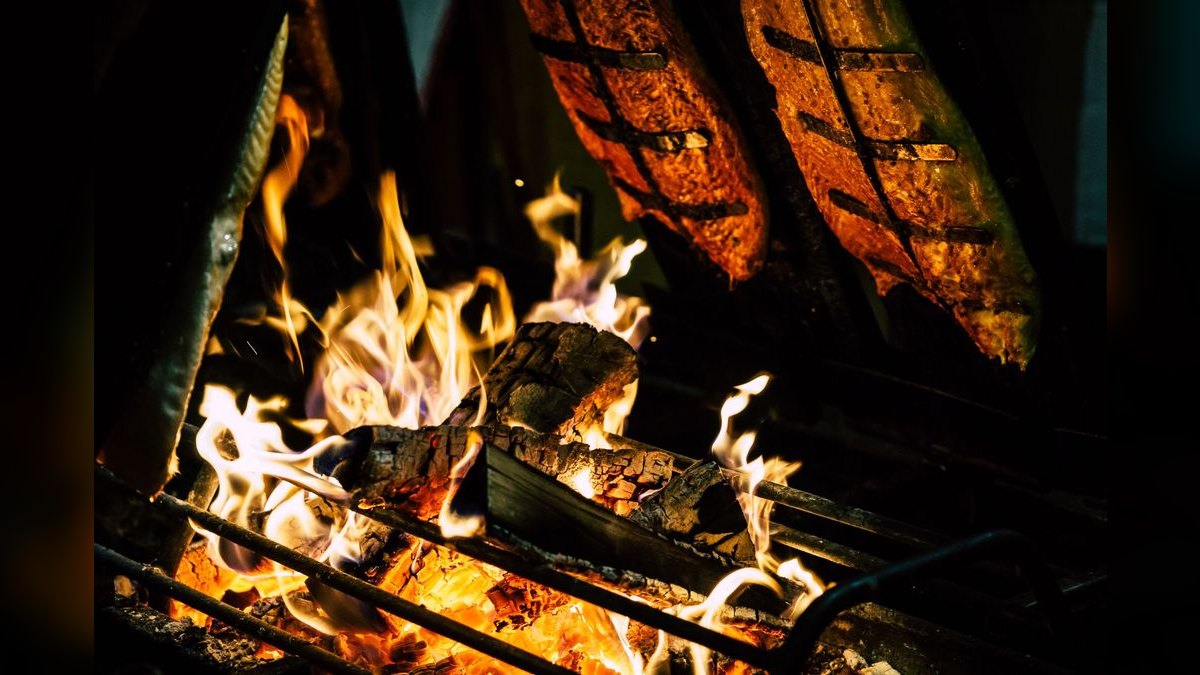
Smokers and kitchen equipment: $200,000 to $450,000. Rotisserie or cabinet smokers, walk-in cooler and freezer, hot-holding, prep line, front-of-house service line, POS, and the catering-specific gear — chafers, transport cambros, insulated carriers — that a lot of first-time barbecue operators forget to budget.
Signage and decor: $30,000 to $90,000. Highly variable by municipality. Sign ordinances in some suburbs will cost you a monument sign you did not plan for.
Opening inventory: $12,000 to $35,000. Proteins, sides, sauces, paper, and packaging. Barbecue carries a heavier opening protein load than most fast-casual concepts because you need product in the pit before you have customers.
Grand opening marketing: $20,000 to $50,000. Plus an ongoing local spend of roughly 2% to 3% of gross, on top of any national ad fund contribution.
Training and travel: $15,000 to $45,000. Pitmaster training is the expensive line. Sending two or three people to a corporate training program for several weeks, with lodging, is not cheap and is not optional.
Working capital: $70,000 to $185,000 to cover three to four months of operating losses. Model four months, not three. Barbecue ramps more slowly than burgers because the catering channel takes a quarter or two to build.
Total: approximately $700,000 to $1,800,000. Royalty in the segment typically runs about 5% to 6% of gross sales, with an advertising fund contribution often in the 1% to 2% range. Confirm both in Item 6.
Net worth and liquidity. Emerging systems at this investment tier commonly require a minimum net worth in the $1.5 million to $2.5 million range and liquid capital of $500,000 to $750,000. Even where the franchisor's stated threshold is lower, your lender will impose its own. Plan on injecting 20% to 30% equity on an SBA 7(a) loan, and expect a personal guarantee.
Timeline. From signed franchise agreement to open doors, six to twelve months is realistic for an inline or end-cap conversion. Ground-up construction on a standalone pad adds roughly $200,000 to $400,000 and stretches the timeline to twelve to eighteen months from lease signing. Permitting is the wildcard. A jurisdiction that has never permitted a commercial wood smoker will take longer than one that has ten of them.
Revenue reality. A well-executed fast-casual barbecue restaurant with a real catering program can gross somewhere in the $1.2 million to $2.5 million range. City Barbeque's quality reputation and catering strength support high average unit volumes at its company stores. But high AUV is not high profit. Run the model: at $1.8 million in sales, roughly 33% food cost, 30% labor, 8% occupancy, and 14% marketing and other operating expenses leaves you in the neighborhood of $270,000 before debt service. Layer a $1.2 million loan at prevailing commercial rates on top of that and the owner's take shrinks quickly. That is why the equity injection and the interest rate matter as much as the AUV.
Cost pressure heading into 2027. Brisket is the exposure. Beef prices have risen substantially since 2023 on cattle supply constraints, and brisket is the cut a barbecue concept cannot substitute away from without damaging the product that justifies its check average. Build your model with 3% to 5% annual food-cost inflation and stress-test a year where beef alone moves more than that. Skilled pitmaster labor is the second pressure point — experienced barbecue cooks command a meaningful premium over general kitchen labor in most markets, and summer peaks push overtime.
Where operators get this wrong
Assuming the brand is franchisable because it is famous. This is the single most common error with City Barbeque specifically. Recognition and availability are unrelated variables. People spend months building a business plan around a brand that has never issued a franchise agreement to an outsider.
Underestimating production complexity. Barbecue is not assembly. It is a craft process with overnight cook cycles, hold-time management, and real yield variance. A brisket that cooks to 60% yield instead of 65% moves your food cost by a full point across the year. Fast-casual concepts with a fryer and a griddle can be run by a competent general manager with a recipe book. A smoked-barbecue restaurant needs someone who genuinely understands the pit, and that person is scarce, expensive, and a single point of failure if you have not cross-trained a backup.
Treating catering as upside instead of infrastructure. At most successful barbecue operations, catering is a meaningful share of total sales — often in the low-to-mid teens as a percentage, sometimes higher at strong units. It also carries better margins than dine-in because you produce in batch, you know the count in advance, and you waste less. Operators who bolt catering on in year two never build the account base. Operators who staff a dedicated catering coordinator before opening usually do.
Overweighting delivery. Barbecue travels poorly. Brisket dries, fries wilt, and sauce migrates. Third-party aggregator commissions commonly run in the 15% to 30% range per order, which means a channel that already produces a compromised product is also your worst-margin channel. Model off-premise conservatively for barbecue relative to concepts like pizza or burgers that were built for the box.
Skipping the former-franchisee calls. Current operators have an incentive to be positive; they may want to sell you a unit someday, and they live inside the system. Former operators have no incentive at all, which is exactly what makes them useful. Item 20 gives you their contact information. Use it.
Signing a lease before permitting is understood. Wood smoke, grease-laden vapor, and combustion equipment all trigger review that a sandwich shop never encounters. Ask the building department and the air-quality authority what a commercial smoker requires in that specific municipality, in writing, before your LOI becomes a lease.
Choosing a site on rent instead of trade area. Barbecue is destination dining more than convenience dining. It draws from a wider radius than a coffee shop — often five to eight miles rather than three to five — and it benefits from visibility and easy parking more than from foot traffic. A cheap second-generation space in a weak trade area is not a bargain.
Decision framework: when to pursue City Barbeque and when to pick a different pit
The choice is really between three paths: wait for a limited or nonexistent franchise window at a brand you admire, enter an actively franchising barbecue system now, or build an independent concept and keep everything.
Actively franchising alternatives. Dickey's Barbecue Pit is the volume franchisor in the segment, with well over a thousand units and a substantially lower entry point — a smaller footprint, a lower total investment, and a franchise fee well below the full-size fast-casual norm. The trade is average unit volume: Dickey's units typically generate a fraction of what a strong City Barbeque store does, and the brand's quality perception varies considerably by market and operator. Sonny's BBQ sits closer to City Barbeque's positioning — premium, Southeast-concentrated, stronger AUVs — but carries a full-service component that raises labor cost and a total investment in the $1.2 million to $2.5 million range. Mission BBQ and Smokey Bones are company-owned and therefore not options. Adjacent casual-dining concepts with partial barbecue menus exist but dilute the focus.
The independent path deserves more consideration than it usually gets. You pay no franchise fee and no royalty. On $1.8 million in sales, a 5% royalty plus a 2% ad fund is roughly $126,000 a year — real money that goes to your own marketing, your own equipment reserve, or your own pocket. What you give up is the playbook, the supply chain pricing, the brand awareness on day one, and the lender comfort that comes with a franchise system's track record. Barbecue is one of the few restaurant categories where independents genuinely compete with chains on quality perception, which is precisely why the segment supports so many strong local operators. If you already have pit experience, the independent math is more attractive here than it would be in, say, quick-service chicken.
Territory and market fit. If City Barbeque were to franchise, new territories would most plausibly sit outside its existing company footprint — which is concentrated in Ohio, Indiana, Kentucky, and parts of the Southeast — to avoid cannibalizing corporate stores in metros like Columbus, Cincinnati, and Indianapolis. That points toward secondary and tertiary markets in the roughly 50,000 to 150,000 population band. Site specifications would mirror other full-size fast-casual builds: something in the range of 2,800 to 3,500 square feet, eighty to a hundred twenty indoor seats, a dedicated catering pickup area of a few hundred square feet, and patio space where zoning allows. Drive-thru is not standard at the brand, so model a dine-in, carryout, and catering business rather than a drive-thru-led one.
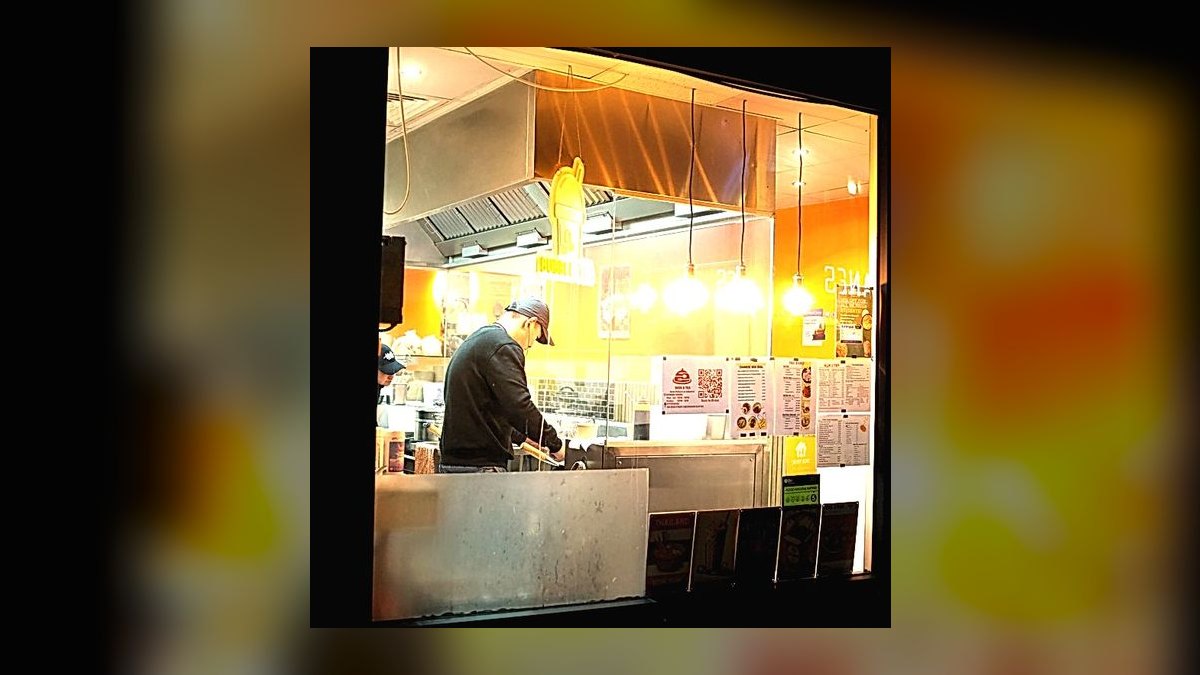
Who wins on this path. Experienced, well-capitalized restaurant operators — ideally with prior multi-unit or production-kitchen experience — operating in a market with genuine barbecue demand and a healthy base of catering customers: hospitals, corporate parks, school districts, churches, and event venues. Someone who can hire and hold a pitmaster, or be one.
Who loses. Under-capitalized first-time operators, buyers who assume franchise availability without verifying it, anyone who models catering as optional, and anyone who needs to be open in six months regardless of which brand they end up with. Impatience is expensive in this segment because the permitting and buildout are genuinely slower than in lighter-equipment concepts.
The honest bottom line. Barbecue is a durable, well-liked, catering-rich category with real margin potential for operators who understand production. City Barbeque is an excellent example of the category executed well. But excellence at a company-operated brand is not an opportunity you can buy simply because you admire it. Confirm availability first. If the window is open and you fit the operator profile, run full diligence. If it is closed, take the same capital and the same market thesis into a system that is actually selling — and keep the brand on your list, because ownership models do change.
Related questions
How do I confirm whether a brand is actually franchising?
Contact the franchisor's development team directly and ask for the current FDD. Third-party franchise directories are frequently outdated. If no FDD is available for your state, the brand is not offering franchises there.
Is buying an existing restaurant better than building new?
Often, yes. An operating unit gives you real revenue history to underwrite instead of projections, and you skip construction risk and the ramp period. You pay more up front and inherit the prior owner's operational and reputational baggage.
How much of a barbecue restaurant's sales should catering represent?
At strong units it commonly lands somewhere in the low-to-mid teens as a percentage of total sales, and can go higher. Because batch production reduces waste and the count is known in advance, catering typically carries better margins than dine-in.
What licenses does a commercial smoker require?
It varies sharply by jurisdiction. Expect fire suppression sized for the pit, enhanced hood and ventilation review, and in some areas an air-quality permit for wood smoke. Ask the local building and air authorities before signing a lease.
Can I finance a barbecue franchise with an SBA loan?
Generally yes, if the brand appears on the SBA franchise directory. Expect a 20% to 30% equity injection, a personal guarantee, and lender scrutiny of your restaurant operating experience.
FAQ
Is City Barbeque actively offering franchises in 2027?
City Barbeque has historically grown through company-operated restaurants, so broad franchise availability is limited at best. Contact the brand directly to confirm whether new franchise agreements are being issued, or whether any existing locations are available for resale. Do not rely on third-party franchise directories, which are often stale.
What total investment should I model for a comparable fast-casual barbecue restaurant?
Roughly $700,000 to $1,800,000 all-in, including a franchise fee in the $35,000 to $45,000 range, buildout of $350,000 to $900,000, smokers and equipment of $200,000 to $450,000, and working capital of $70,000 to $185,000. Ground-up construction adds another $200,000 to $400,000.
What ongoing fees are typical in this segment?
A royalty of roughly 5% to 6% of gross sales plus an advertising fund contribution commonly in the 1% to 2% range. Budget a further 2% to 3% of gross for local marketing. Confirm the exact figures in Item 6 of the Franchise Disclosure Document.
How profitable is a fast-casual barbecue restaurant?
Modeling $1.8 million in sales at roughly 33% food cost, 30% labor, 8% occupancy, and 14% marketing and other operating expenses leaves approximately $270,000 before debt service. Actual results vary widely by market, management, and how much catering the unit books. Request Item 19 representations rather than relying on averages.
What are the main alternatives if City Barbeque is not franchising?
Dickey's Barbecue Pit offers the lowest-cost entry with a smaller footprint but lower average unit volumes. Sonny's BBQ sits closer to City Barbeque's premium positioning at a higher investment with a full-service component. An independent barbecue concept avoids royalties entirely if you already have production experience.
How long does it take to open from signing?
Six to twelve months is realistic for an inline or end-cap conversion. Ground-up construction stretches that to twelve to eighteen months from lease signing. Permitting for commercial smoking equipment is the most common source of delay, especially in jurisdictions unfamiliar with it.
Sources
- https://www.citybbq.com/
- https://www.ftc.gov/business-guidance/resources/franchise-rule-compliance-guide
- https://www.sba.gov/funding-programs/loans/7a-loans
- https://www.franchise.org/
- https://www.nrn.com/
- https://www.qsrmagazine.com/
- https://www.ers.usda.gov/topics/animal-products/cattle-beef/
- https://www.bls.gov/oes/current/oes352014.htm
- https://www.restaurant.org/research-and-media/research/
- https://www.dickeys.com/franchise
Related on PULSE
This page will be disappearing soon. Save it to your device for $1 — or read it free while it is here.
@Kory-White- · if Venmo asks, the last 4 of my number are 2012
This page is gone.
This one is off the shelf now. $1 keeps it on your phone for good — the whole page, pictures and diagrams included.
 franchiseShould I open or buy a Subway franchise in 2027?
 franchiseShould I open or buy a Domino's franchise in 2027?
 franchiseShould I open or buy a McAlister's Deli franchise in 2027?
 franchiseShould I open or buy a Matco Tools franchise in 2027?
 franchiseShould I open or buy a Dairy Queen franchise in 2027?
 franchiseShould I open or buy a Rita's Italian Ice franchise in 2027?
 franchiseShould I open or buy an Anytime Fitness franchise in 2027?
 franchiseShould I open or buy a Mathnasium franchise in 2027?
 franchiseShould I open or buy a Culver's franchise in 2027?
 franchiseShould I open or buy a Pizza Hut franchise in 2027?