


Should I open or buy an Eggs Up Grill franchise in 2027?
Quality
Certified
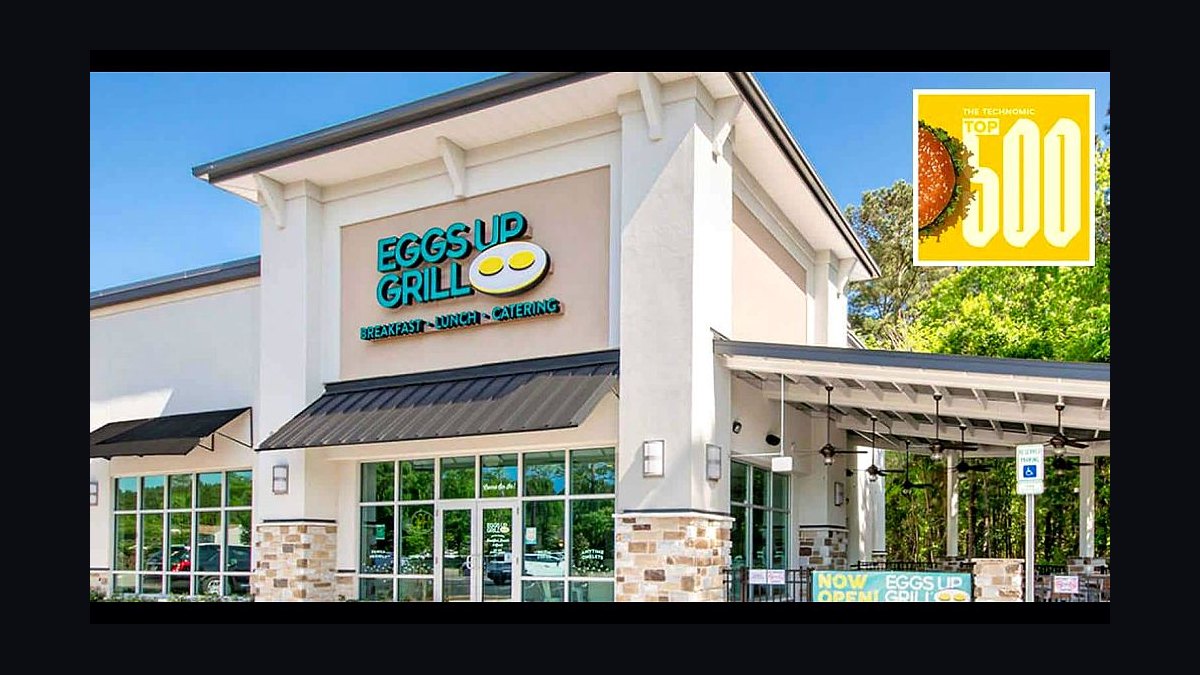
Yes, opening an Eggs Up Grill franchise in 2027 makes sense for an operator who wants an established, daytime-only Southern breakfast-and-lunch concept with moderate capital requirements and strong unit economics. Founded in 1986 and actively expanding, Eggs Up Grill offers $500,000–$900,000 total investment, mature-unit revenue of $1M–$1.7M, and owner earnings of $130,000–$300,000 — provided you execute full-service hospitality and can staff weekend-peak shifts.
The outcome you should expect
If you open an Eggs Up Grill in 2027 and execute reasonably well, expect a ramp period of 12-18 months before the store hits stabilized volume. Most new units open at 60%-70% of eventual mature-store sales in their first six months, climbing as the neighborhood learns your hours and your regulars start showing up two or three times a week. By month 18-24, a well-run unit in a solid trade area should be tracking toward the $1.0M-$1.7M AUV band the brand reports for mature stores. Owners who hit the top of that range typically share three traits: they picked a site with 30,000-50,000 daytime population within a 3-mile radius, they retained a general manager or lead server team through the first year, and they built local repeat business through community touchpoints (a "regulars" wall, sponsoring a youth sports team, showing up at the site during construction to meet future customers) rather than relying only on paid marketing.
The realistic downside case looks different. A unit that opens in a weak or saturated site, or one that can't staff its morning line consistently, tends to plateau in the $700,000-$950,000 AUV range — still survivable, but it pushes owner earnings down toward $70,000-$120,000, which is a thin return against a $500,000+ investment and full-time hands-on involvement. The gap between the good outcome and the mediocre one is rarely the brand system itself; it's almost always site selection and labor execution in the first 12 months. That's the single biggest lever you control before you sign a lease, and it's why the 90-day validation window before you commit matters more than almost any other decision in this process.

Because Eggs Up Grill is daytime-only (roughly 6am-2pm), the "outcome" here also includes a lifestyle dimension that's easy to undervalue on a spreadsheet. Owners consistently report that avoiding dinner and late-night service is what makes the operational intensity tolerable — you're not managing a second shift, you're not dealing with bar-adjacent late-night issues, and you get your evenings back. That's a real, if unquantifiable, part of the expected outcome for anyone comparing this to a full-service dinner concept.
What drives that outcome
Three variables explain nearly all of the spread between a top-quartile Eggs Up Grill and a bottom-quartile one: site quality (daytime population density and breakfast-culture fit), labor execution (can you staff and retain a morning crew), and community-building (does the neighborhood adopt you as "their" breakfast spot). Site quality sets your ceiling before you ever open the door — a store in a strong Southeast suburban trade area with genuine breakfast demand can absorb execution mistakes that would sink a marginal location. Labor execution determines whether you actually reach that ceiling: full-service breakfast is labor-intensive (griddle cooks, prep staff, at least two front-of-house per shift), and most franchisees need 10-14 full-time-equivalent staff to run a single daytime shift well. Community-building is the multiplier that turns a decent store into a great one — repeat visits from people who know your servers by name is what pushes AUV from the low end of the range toward the high end.

Underneath those three drivers sit the operational mechanics: your cost of goods (roughly 30%-33% at a well-run store, since fresh eggs, produce, and dairy don't have the shelf-stability of a QSR menu), your labor percentage (30%-33% when properly scheduled, creeping toward 35% if you can't retain morning staff), and your fixed occupancy and royalty/ad-fund load (roughly 13%-15% combined). Get COGS and labor right and you're looking at store-level EBITDA margins of 12%-18% before owner salary — meaningfully better than what a lot of full-service concepts deliver, precisely because the daytime-only model caps your labor hours even as it concentrates demand into a shorter, more intense window.
Benchmarks and realistic ranges
The 2026 FDD lists a franchise fee around $35,000 and total Item 7 investment of roughly $500,000-$900,000. Breaking that down: buildout and leasehold improvements run $250,000-$480,000 for a full-service cafe in the 2,800-3,600 square foot range; equipment and kitchen (griddles, POS, refrigeration) run $130,000-$260,000; signage and decor (important for the community-cafe brand image) run $25,000-$70,000; initial inventory runs $10,000-$26,000; initial marketing for a grand opening runs $15,000-$40,000; training and travel run $12,000-$35,000; and working capital for the first three months runs $50,000-$120,000. Royalty is near 5% of gross sales, with an advertising fee layered on top around 2%-3%.
On construction specifically, expect $350-$500 per square foot in the Southeast, meaning a 3,000 square foot store can run $1.05M-$1.5M in raw construction cost alone before equipment and signage — which is why franchisees who find a former diner or restaurant space with existing hoods, grease traps, and plumbing infrastructure can land meaningfully below the top of the Item 7 range, while ground-up builds on raw pad sites tend to land at the top or above.
Revenue-wise, mature units gross $1,000,000-$1,700,000 annually. That range already bakes in owner compensation when the brand cites $130,000-$300,000 in owner earnings — treat that figure as owner earnings inclusive of a working-owner salary, not pure EBITDA. On a $1.2M-revenue store, expect store-level EBITDA (before owner draw) of roughly $144,000-$216,000, with the wider $130,000-$300,000 range reflecting how much of that the operator takes as salary versus leaves in the business, plus variance in labor efficiency between individual stores.
Staffing costs matter enough to call out separately: expect to pay $15-$18 per hour plus tips for reliable morning cooks and servers in Southeast markets where unemployment has hovered near 3.5%. That wage pressure is a real 2027 input — if you can't hit efficient scheduling, labor can creep from 30% toward 34%-35% of sales, which is the difference between a $200,000 owner-earnings year and a $140,000 one.
Risks, edge cases, and failure modes

The most common failure mode isn't a bad brand system — it's a mismatched site. Eggs Up Grill's economics assume a suburban trade area with meaningful daytime population and an existing appetite for Southern-style breakfast; a location outside that profile (urban core with weekday-only office lunch traffic, a rural area with thin population density, or a Northeast/Midwest market unfamiliar with the brand and the biscuits-and-gravy category) can underperform even with strong operations, because you're fighting demand rather than capturing it.
The second failure mode is labor. Full-service breakfast requires a dedicated line cook for eggs and griddle work plus a prep crew that starts before dawn — this isn't a role you can leave unfilled or staff with inexperienced part-timers and expect consistent execution. Franchisees who underestimate the morning staffing load routinely end up working the line themselves for months, which burns out the owner and delays the community-building work that actually drives repeat traffic.
A third risk is financing timeline. Eggs Up Grill is not listed as an SBA-preferred franchise on the SBA's registry, which means you'll need a lender willing to underwrite a full-service breakfast concept from scratch rather than working from a pre-negotiated SBA franchise directory listing. That can add four to eight weeks to your financing process versus a brand with SBA-preferred status — plan your 2027 opening timeline with that buffer built in, especially if you're trying to lock in a lease before a seasonal window (spring openings tend to ramp faster than winter ones for a breakfast concept).

Competitive risk is real but manageable if you understand where it comes from. Direct full-service competitors — First Watch, Another Broken Egg Cafe, Keke's, Metro Diner — compete on a similar service model and are generally not the biggest threat, since Eggs Up Grill differentiates on price point (a $12-$15 average check versus $16-$20 at First Watch) and neighborhood positioning. The sharper threat is fast-casual breakfast concepts growing 8%-10% annually since 2022, which can undercut you on speed and price. Your defense is the thing fast-casual can't easily replicate: table service, made-to-order eggs, fresh-squeezed OJ, and a room where the servers know regulars by name.
Finally, consider the exit. Units typically sell on the secondary market for 2.5x-3.5x store-level EBITDA — a $1.2M store generating $180,000 EBITDA might sell for $450,000-$630,000 after 5-7 years. That's a reasonable but not spectacular return, which means Eggs Up Grill is better modeled as a lifestyle cash-flow business than a rapid-scale-and-flip play. If your 2027 goal is fast multi-unit growth and a quick exit, a different concept may fit better; if it's a durable, daytime-only business you can run for a decade, the economics line up well.

A practical rollout plan
Treat the first 90 days as a validation window before you commit capital, then move into a structured build-and-launch sequence. Days 1-25: read the 2026 FDD in full, with particular attention to Item 19 (financial performance) and Item 7 (investment range) so your numbers are grounded in the actual disclosure rather than marketing claims. Days 26-50: interview at least eight existing franchisees and ask directly about AUV, weekend-peak labor challenges, community-building tactics that worked, and net owner earnings after a realistic labor line. Days 51-70: validate that your target site actually has breakfast demand — daytime population, competing breakfast options, and whether the trade area skews toward the Southeast breakfast culture the brand is built around. Days 71-125: build out and staff the location, treating staffing as equally urgent to construction rather than an afterthought handled in the final two weeks. Days 126-155: open and begin deliberately building community loyalty rather than just running the grand-opening marketing push and hoping it sustains itself.
Once the first store stabilizes at 18-24 months, evaluate multi-unit expansion only if you've proven you can delegate day-to-day operations to a trained GM — trying to open a second Eggs Up Grill while still personally running the morning line at the first one is a common way owners stall out rather than scale.
Related questions
How long does it take an Eggs Up Grill to reach mature-unit sales?
Most units ramp over 12-18 months, reaching 60%-70% of eventual mature volume within the first six months and approaching the $1.0M-$1.7M mature AUV range by month 18-24 in a strong trade area.
Is Eggs Up Grill a good fit outside the Southeast?
It's possible but riskier — the brand's positioning, menu, and community-cafe identity are built around Southern breakfast culture, so markets outside that footprint require more marketing adaptation and carry more demand uncertainty.
How does Eggs Up Grill compare to First Watch financially?

Eggs Up Grill has a lower average check ($12-$15 versus $16-$20 at First Watch) and a moderate investment range, positioning it as a more accessible, community-focused alternative rather than a direct national competitor.
What's the biggest operational risk in the first year?
Staffing the morning line — full-service breakfast needs a dedicated griddle cook plus prep and front-of-house staff, and franchisees who underestimate this often end up working the line themselves for months.
Can I finance an Eggs Up Grill with an SBA loan?
Yes, but Eggs Up Grill isn't SBA-preferred, so expect four to eight extra weeks to find a lender willing to underwrite the concept from scratch rather than working off a pre-approved franchise directory.
FAQ
What is the total investment range for an Eggs Up Grill franchise? The total initial investment typically falls between $500,000 and $900,000, including a franchise fee of roughly $35,000. This covers buildout, equipment, signage, initial inventory, training, and working capital, with actual figures varying by site and construction costs in your specific market.
How much can I expect to earn as an owner?

Mature units report annual gross revenues of $1,000,000-$1,700,000, with owner earnings generally in the $130,000-$300,000 range. These figures reflect existing franchisee performance disclosed in Item 19 of the FDD, not guarantees — individual results depend heavily on site quality and labor execution.
What are the ongoing fees? Royalties run around 5% of gross sales, plus an advertising fund contribution of roughly 2%-3%. These are standard for the full-service restaurant franchise category and fund brand marketing, system support, and menu development.
What are the operating hours, and why does that matter? Eggs Up Grill restaurants are open daytime only, typically 6am-2pm. This caps labor hours and avoids dinner and late-night complexity, which owners consistently cite as a major lifestyle advantage over full-service dinner concepts.
Is this franchise suitable for a first-time restaurant owner? Many franchisees come from non-restaurant backgrounds, though full-service breakfast and lunch operations demand real management skill and comfort with weekend-peak labor intensity. The franchisor provides a training program plus ongoing field support to bridge that gap.
Where are Eggs Up Grill locations concentrated, and where is the brand expanding? The FDD lists roughly 82 open units concentrated in South Carolina, North Carolina, and Georgia, with active expansion into the Mid-Atlantic and Texas. The brand's strongest performance remains tied to Southeast breakfast culture.
Sources
- Franchise Disclosure Document filings and franchise research — FTC.gov Franchise Rule guidance
- Entrepreneur Franchise 500 listings
- Technomic foodservice industry research
- IBISWorld industry reports
- Statista restaurant industry data
- Nation's Restaurant News
- International Franchise Association
- QSR Magazine
- Franchise Business Review
- U.S. Small Business Administration SBA-preferred lender program
Related on PULSE
- Should I open or buy a Stand Up Guys franchise in 2027?
- Should I open or buy a Pick Up Stix franchise in 2027?
- Should I open or buy a Curry Up Now franchise in 2027?
- Should I open or buy a Juice It Up! franchise in 2027?
- Should I open or buy a Bibibop Asian Grill franchise in 2027?
This page will be disappearing soon. Save it to your device for $1 — or read it free while it is here.
@Kory-White- · if Venmo asks, the last 4 of my number are 2012
This page is gone.
This one is off the shelf now. $1 keeps it on your phone for good — the whole page, pictures and diagrams included.
 franchiseShould I open or buy a Supercuts franchise in 2027?
 franchiseShould I open or buy a Marco's Pizza franchise in 2027?
 franchiseShould I open or buy a Jimmy John's franchise in 2027?
 franchiseShould I open or buy a Servpro franchise in 2027?
 franchiseShould I open or buy a Valvoline Instant Oil Change franchise in 2027?
 franchiseShould I open or buy an Auntie Anne's franchise in 2027?
 franchiseShould I open or buy a Crumbl Cookies franchise in 2027?
 franchiseShould I open or buy a Jiffy Lube franchise in 2027?
 franchiseShould I open or buy a Bojangles franchise in 2027?
 franchiseShould I open or buy a Kumon franchise in 2027?