


Should I open or buy a Metro Diner franchise in 2027?
Quality
Certified
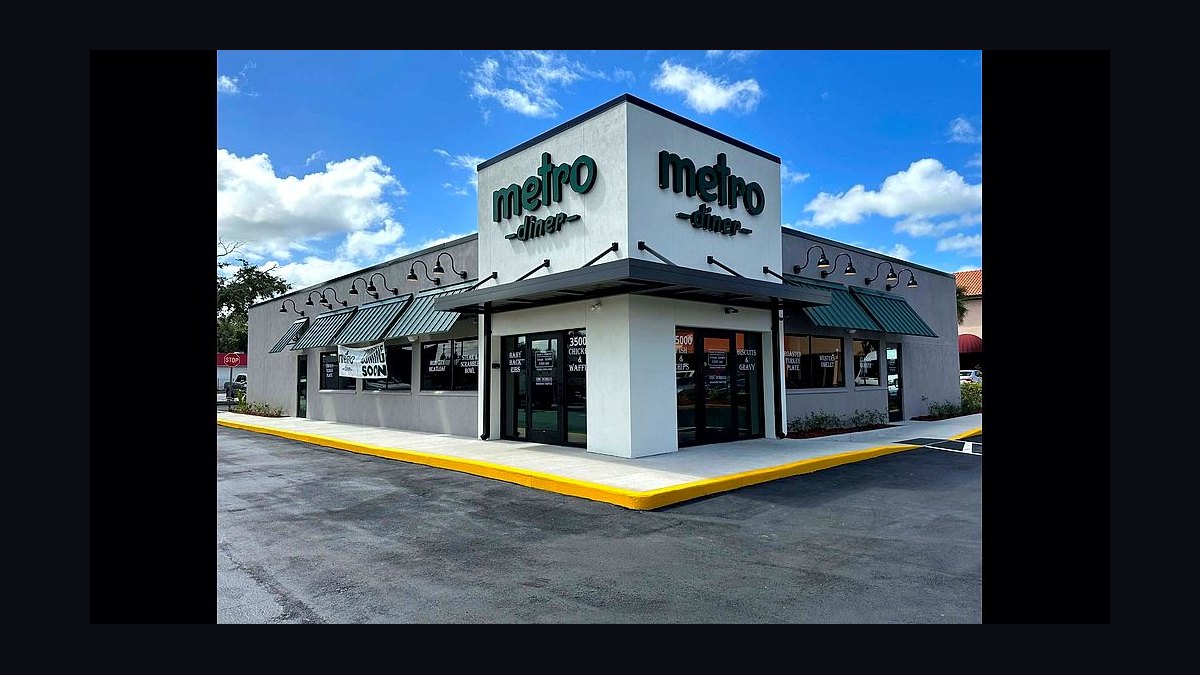
Open a Metro Diner franchise in 2027 only if you're well-capitalized ($350,000–$500,000 liquid, $1M–$2M total investment) and prepared to staff and manage all three dayparts — breakfast, lunch, and dinner. The comfort-food menu and national exposure support strong AUVs ($1.5M–$2.8M), but the capital bar and all-day labor burden make this a poor fit for under-capitalized or first-time restaurant operators.
A Diner Operator Weighs the All-Day Bet
Picture a hospitality operator in a growing Sun Belt suburb sitting on roughly $450,000 in liquid capital after cashing out a stake in two profitable casual-dining units. She's weighing a Metro Diner franchise against a daytime-only breakfast concept such as Eggs Up Grill. The breakfast concept closes its doors at 2 p.m. — one crew, one daypart, one predictable labor curve to manage. A Metro Diner stays open through dinner service, which means a second full kitchen changeover, a second wave of servers walking the floor, and a general manager who has to supervise three distinct rush periods packed into a single 14-hour day.
That is the decision every serious 2027 buyer of a Metro Diner franchise actually faces. The brand's all-day structure is precisely what generates its above-average unit volumes, but it's also what makes the operating commitment fundamentally different from most of its diner-category peers. The operator in this scenario has the capital cushion and the multi-unit experience to make the all-day math work: she can hire a strong kitchen manager, stagger shift leads across three peaks instead of one, and absorb the labor-cost variance that comes with running a full-service kitchen from 7 a.m. until close. A first-time franchisee without that operational depth would likely find the identical structure overwhelming rather than lucrative — not because the concept is flawed, but because the skill required to run it well is genuinely more advanced than what a single-daypart concept demands.
So the real question behind "should I open a Metro Diner" isn't about the brand's economics in the abstract — those are solid. It's whether you, specifically, can run a full-service, three-daypart kitchen without your labor line quietly eating the AUV advantage the brand is built to deliver. Every section below builds on that lens, because the numbers only tell half the story; the operational discipline required to hit them is the other half, and it's the half most franchise-disclosure conversations skip past.
How the All-Day Revenue Model Actually Works
A Metro Diner's economics hinge on stacking three dayparts onto one lease, one building, and one set of fixed costs — but not onto one set of labor costs. Breakfast, lunch, and dinner each demand enough staffed capacity to cover their own peak, and those peaks don't overlap cleanly. A diner fully staffed for a Saturday breakfast rush is badly overstaffed for a Tuesday 3 p.m. lull, and a kitchen staffed for dinner's protein-heavy menu needs different line skills than the griddle-and-fryer choreography of the breakfast shift.
The mechanism that makes the model profitable is volume absorption: because the diner never fully closes between roughly 7 a.m. and 9 or 10 p.m., fixed costs — rent, insurance, base management salaries, utilities — get spread across close to three times the operating hours of a breakfast-only concept. That's the core reason a Metro Diner's $1.5M–$2.8M AUV range beats most breakfast-only peers, whose AUVs more typically land in the $1.1M–$1.8M band. But labor percentage doesn't compress the same way fixed costs do. You still need near-full crews at each of the three peaks, which is why Metro Diner franchisees commonly run labor at 32%–38% of sales, versus 28%–33% for daytime-only concepts that never have to staff a second and third rush.
The practical takeaway is that the same all-day model producing a Metro Diner's revenue advantage is also the single biggest lever an owner has to protect — or destroy — margin. A general manager who schedules loosely, staffing a full breakfast crew straight through the 10 a.m.–11 a.m. trough instead of cutting down, can erase several points of margin that a tightly scheduled operator captures on an identical top line. This is why Metro Diner's franchise consultants spend a disproportionate share of onboarding time on scheduling discipline and sales-mix forecasting compared to single-daypart brands, where building next week's schedule is comparatively mechanical. It also explains why experienced multi-unit operators moving into Metro Diner from a QSR or fast-casual background often need to unlearn simpler staffing habits before the model clicks — a lesson that applies just as much to adjacent full-service, three-meal concepts like Black Bear Diner or a well-run independent diner.
Real Numbers: Investment, Revenue, and Margin Benchmarks
The 2026 Franchise Disclosure Document lists a franchise fee of $40,000–$50,000 and total Item 7 investment of roughly $1,000,000–$2,000,000, with a royalty near 5%–6% of gross sales and an advertising contribution layered on top — commonly cited around 1%–2% under Metro Diner's regional co-op marketing model, notably lighter than the 3%–5% national ad funds franchisees pay at IHOP or Denny's.
Breaking the Item 7 range down by category clarifies where the capital actually goes. Buildout and leasehold improvements run $500,000–$1,100,000, reflecting a full-service kitchen build in a 3,500–4,500 square foot space at roughly $180–$250 per square foot in most 2026–2027 markets — a figure driven up by combi ovens, ventilation hoods sized for a three-meal menu, and dining-room finishes that support both a breakfast crowd and an evening dinner crowd in the same room. Equipment and kitchen costs — combi ovens, flattops, fryers, walk-in refrigeration, and a POS system with kitchen display screens — run $220,000–$450,000 for a new build, though sourcing used equipment from a closed restaurant can trim that by 30%–50% for an owner willing to accept installation and warranty risk. Signage and decor add $35,000–$110,000, initial inventory $15,000–$38,000, initial marketing $20,000–$55,000, and training plus travel $18,000–$50,000. Working capital is listed at $80,000–$200,000 in the FDD, though a realistic 2027 plan should budget $150,000–$350,000, since new diners typically take four to eight months to reach break-even cash flow.
On the revenue side, mature Metro Diner units gross $1.5M–$2.8M annually, with owner earnings of $160,000–$380,000 once a unit is fully ramped. First-year performance runs meaningfully lower — realistic new-unit owner earnings typically fall in the $80,000–$150,000 range — which matters enormously if the buildout is debt-financed. At an SBA 7(a) rate running 11%–13% as of mid-2026 (versus 6%–8% back in 2021), a $700,000–$1,200,000 loan against 30%–40% equity puts annual debt service at roughly $130,000–$170,000. That means a new operator can be cash-flow negative, or barely break-even, in year one even with a fully functioning diner, simply because the mature-unit earnings figure hasn't arrived yet. Anyone underwriting the deal should model at least an 18-month runway on that basis rather than assuming month-one profitability.
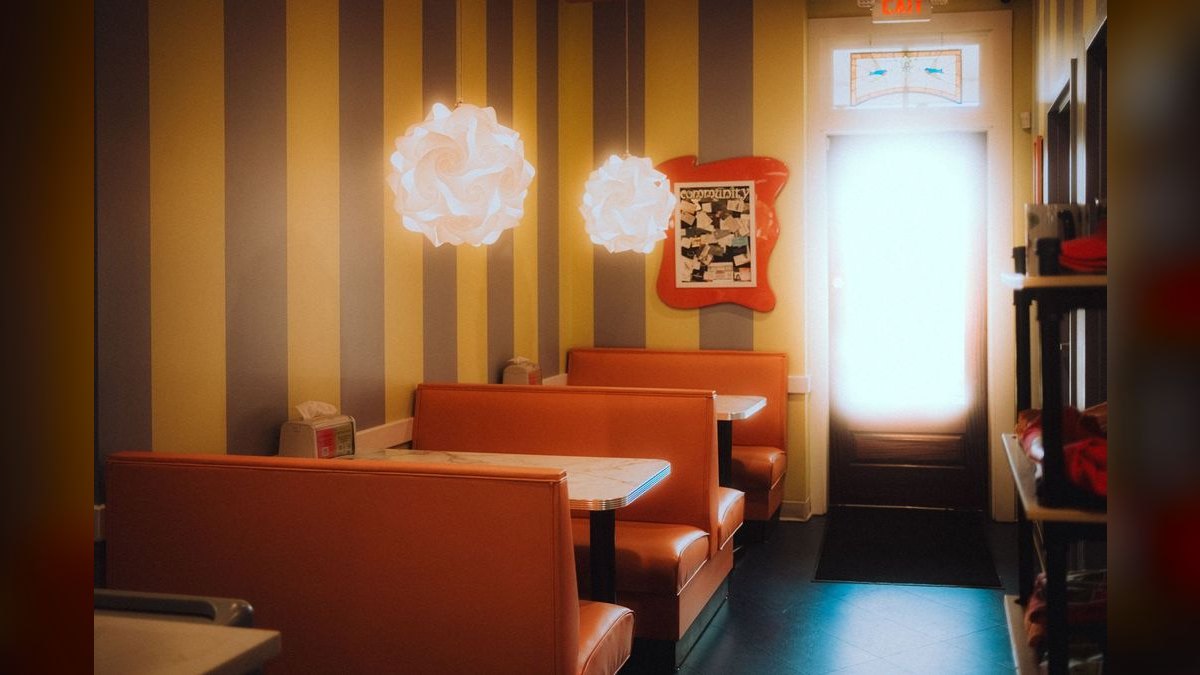
Per-person check averages run $14–$18 at a Metro Diner — above Waffle House's $10–$12, roughly in line with IHOP's $13–$16, and below First Watch's $16–$20. That mid-range check size means the model depends heavily on transaction volume rather than ticket size: a site needs roughly 4,000–5,500 weekly transactions to clear $1.8M in annual revenue, which in turn depends on strong residential density — generally a three-mile radius with adequate rooftops — since Metro Diner locations typically sit in suburban strip centers rather than downtown blocks or highway-exit pads. Site selection, in other words, is doing as much work as menu pricing in determining whether a unit clears the AUV range the brand advertises.
Trade-Offs Against Comparable Diner Concepts
The core trade-off in choosing a Metro Diner franchise over its closest peers is capital and labor intensity in exchange for revenue ceiling. Against Waffle House, an owner trades a simpler roughly 30-item menu and lower build cost for a broader, higher-check comfort-food concept that needs three staffed dayparts instead of two. Against First Watch, the trade is a smaller breakfast/lunch-only footprint ($500,000–$800,000 buildout, $16–$20 check) for Metro Diner's larger space, higher total investment, and dinner-daypart complexity — offset by a materially higher AUV ceiling. Against IHOP or Denny's, a Metro Diner offers a smaller regional-brand footprint with less name recognition, meaning an owner will likely spend $30,000–$60,000 annually on local-store marketing out of pocket rather than leaning on a $20M-plus national ad fund, but potentially gains stronger per-unit differentiation in markets where a genuine diner is still a novelty rather than a commodity.
Resale math is another trade-off worth weighing before signing. Metro Diner units have traded at roughly 2.5x–3.5x seller's discretionary earnings on the secondary market in 2024–2026, compared to 3.5x–5x SDE for First Watch or 4x–6x for a well-located Waffle House. A $1.5M Metro Diner generating $200,000 SDE might resell for only $500,000–$700,000 — a meaningful gap below total invested capital. That doesn't make the deal bad; it means the return has to come from seven to ten years of operating cash flow rather than appreciation at exit, a different mental model than buyers arriving from retail or QSR franchising sometimes expect walking in.
Beyond the direct diner peer set, it's worth weighing adjacent formats that solve the same underlying problem — wanting a proven, recognizable food-service brand — with a lighter operational lift. Fast-casual breakfast-and-lunch concepts, drive-thru coffee-and-breakfast hybrids, and even non-restaurant service franchises in the same investment band can deliver comparable owner earnings with a single daypart and a smaller crew to manage. If the three-daypart commitment or the labor intensity doesn't fit an operator's bandwidth or risk tolerance, alternatives worth evaluating include daytime-only breakfast concepts (Another Broken Egg, Eggs Up Grill, Keke's), The Toasted Yolk for brunch-focused markets, established all-day chains like Denny's or IHOP for scale and national marketing support, Black Bear Diner as the closest comfort-food comparable, or an independent diner concept for owners who'd rather skip franchise fees and franchisor oversight entirely.
Common Pitfalls and How to Avoid Them
The most common mistake new Metro Diner franchisees make is under-scheduling the transition periods between dayparts — treating the 10:30 a.m. and 4 p.m. changeovers as a place to cut labor rather than a place to manage it carefully. A diner that lets service quality slip during changeover loses the repeat-visit habit that drives weekday lunch and weeknight dinner traffic, both essential to hitting the $1.8M-plus revenue tier the brand's economics assume. The fix is building the weekly schedule around three distinct labor curves rather than one blended curve, and giving the kitchen manager explicit authority to adjust staffing day to day based on real sales-mix data instead of a fixed weekly template inherited from a single-daypart mindset.
A second frequent pitfall is undercapitalizing working capital. The FDD's stated three-to-six-month working capital figure assumes a fairly fast ramp to break-even, but with food-cost inflation running 3%–5% annually and labor costs still elevated from pandemic-era increases, a six-to-nine-month cushion is the safer 2027 target. Franchisees who open with only the FDD-minimum reserve frequently end up making reactive cuts to food quality or staffing during the ramp period — precisely the cuts that damage the reputation a new diner needs to build in its first year of trading.
Third, don't skip validating current franchisor support before signing. Metro Diner has gone through ownership and portfolio changes over time, and its franchise team is relatively lean — roughly 15–20 corporate staff supporting 60–80 units as of 2026 — meaning field-consultant visits typically happen every six to eight weeks rather than weekly. First-time restaurant operators should treat that support cadence as a planning input: either budget for a general manager with five-plus years of full-service experience, or be prepared to work 60–70 hour weeks personally through the first 18–24 months. Call at least eight existing franchisees and ask specifically about AUV, all-day labor management, and how support held up through any recent ownership transitions — Item 19 figures only tell part of the story, and franchisee-to-franchisee conversations routinely surface the operational friction a disclosure document glosses over.
Fourth, don't underestimate food waste and inventory complexity. With roughly 200–300 SKUs and four to six seasonal menu rotations per year, new diners commonly run food waste at 8%–12% of food cost in year one, compared to 4%–6% for a mature, well-run unit. On $600,000–$800,000 in annual food cost, that gap represents $24,000–$96,000 — money a disciplined ordering system and a chef who adjusts prep daily based on sales mix can largely recover within the first year of operation.
Related questions
How long does it take a Metro Diner to become profitable?
Most new units take four to eight months to reach break-even cash flow and 12–24 months to approach mature-unit owner earnings of $160,000–$380,000. First-year owner earnings typically land at $80,000–$150,000.
Is Metro Diner more expensive to open than Denny's or IHOP?
Total investment is broadly comparable across all three ($1M–$2M range), but Metro Diner's smaller national footprint means an owner spends more on local marketing since there's no large national ad fund to lean on.
What's the biggest operational difference between Metro Diner and a breakfast-only franchise?
Metro Diner runs three dayparts — breakfast, lunch, and dinner — requiring separate staffed crews and changeovers, versus one crew and one daypart for concepts like Eggs Up Grill or First Watch.
Can a first-time restaurant owner succeed with a Metro Diner franchise?
It's possible but harder than average. The all-day, full-service model has a steeper learning curve than single-daypart concepts, so first-timers should plan to hire an experienced GM or commit to very long hours early on.
FAQ
What is the total investment needed to open a Metro Diner franchise? Total initial investment ranges from roughly $1,000,000 to $2,000,000, including a franchise fee of $40,000 to $50,000. This covers buildout, equipment, signage, inventory, and working capital, though actual amounts vary by market and site condition.
How much can I expect to earn as a Metro Diner franchise owner? Mature units typically generate annual gross revenue between $1,500,000 and $2,800,000, with owner earnings ranging from $160,000 to $380,000. First-year earnings are usually lower, in the $80,000–$150,000 range, as the unit ramps toward maturity.
What are the ongoing fees for a Metro Diner franchise? Franchisees pay a royalty of roughly 5%–6% of gross sales plus an advertising fee, commonly cited around 1%–2% and directed primarily toward regional co-op marketing rather than a large national ad fund.
Is Metro Diner a good fit for first-time franchisees? It's better suited to experienced, well-capitalized operators, given the high investment and the complexity of running breakfast, lunch, and dinner in one location. First-timers should plan for a strong general manager hire or expect very long hours in year one.
How does Metro Diner compare to other diner or breakfast franchises? Metro Diner generally posts higher AUVs than daytime-only peers like Eggs Up Grill or First Watch, but requires meaningfully more capital and labor to run all three dayparts well. Its comfort-food positioning also gives it a broader customer base than niche breakfast concepts.
What support does Metro Diner provide to franchisees? The franchisor provides training — typically four to six weeks at an existing location plus one to two weeks at headquarters — site-selection assistance, and periodic field-consultant visits. Support levels have varied given the brand's ownership history, so reviewing current Item 19 disclosures and speaking directly with existing franchisees before signing is essential.
Sources
- U.S. Small Business Administration — SBA 7(a) loan program and current rate guidance (sba.gov)
- International Franchise Association — Franchise Economic Outlook reports (franchise.org)
- Entrepreneur — Franchise 500 and franchise listings, including diner and restaurant categories (entrepreneur.com)
- Nation's Restaurant News — diner and family-dining segment reporting (nrn.com)
- Technomic — foodservice industry and family-dining segment research (technomic.com)
- IBISWorld — Family & Diner Restaurants industry reports (ibisworld.com)
- Statista — U.S. comfort-food and family-dining market data (statista.com)
- Franchise Business Review — franchisee satisfaction and benchmarking data (franchisebusinessreview.com)
- U.S. Bureau of Labor Statistics — food service labor cost and wage trend data (bls.gov)
Related on PULSE
This page will be disappearing soon. Save it to your device for $1 — or read it free while it is here.
@Kory-White- · if Venmo asks, the last 4 of my number are 2012
This page is gone.
This one is off the shelf now. $1 keeps it on your phone for good — the whole page, pictures and diagrams included.
 franchiseShould I open or buy a Sonic Drive-In franchise in 2027?
 franchiseShould I open or buy a Supercuts franchise in 2027?
 franchiseShould I open or buy a Dunkin' franchise in 2027?
 franchiseShould I open or buy a Rita's Italian Ice franchise in 2027?
 franchiseShould I open or buy an Orangetheory Fitness franchise in 2027?
 franchiseShould I open or buy a Take 5 Oil Change franchise in 2027?
 franchiseShould I open or buy a Taco Bell franchise in 2027?
 franchiseShould I open or buy a Hand and Stone Massage franchise in 2027?
 franchiseShould I open or buy a Mac Tools franchise in 2027?
 franchiseShould I open or buy a Chipotle franchise in 2027?