


Should I open or buy a Broken Yolk Cafe franchise in 2027?
Quality
Certified
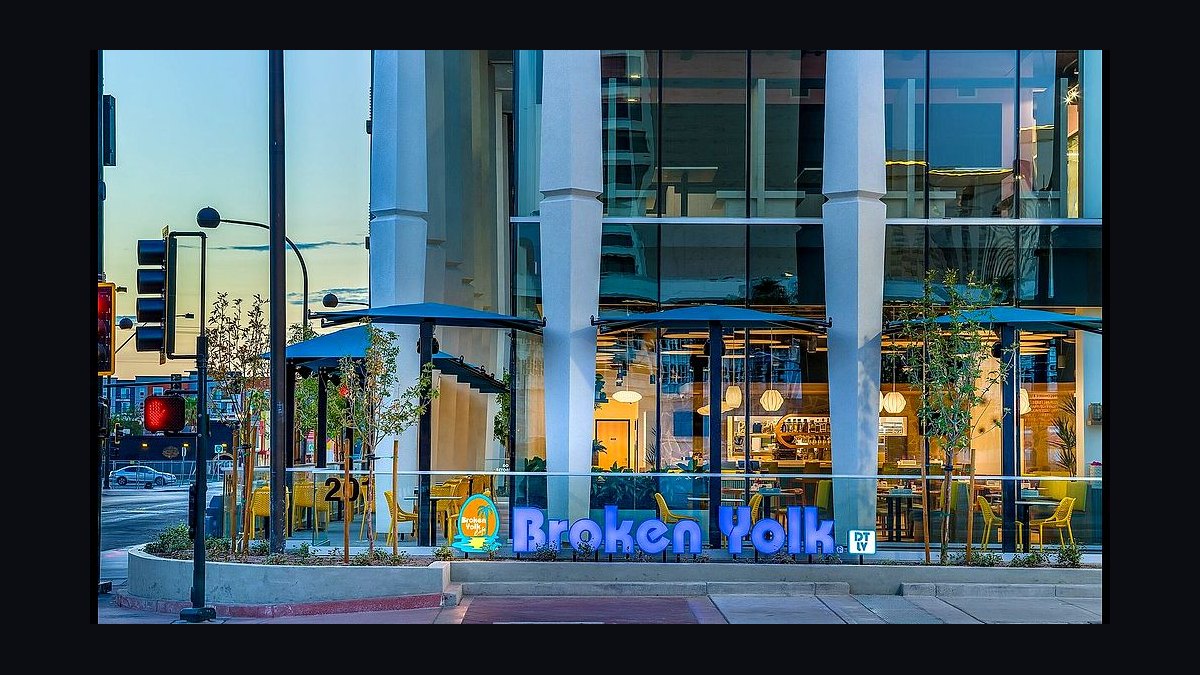
Yes — if you want a proven, daytime-only breakfast-and-brunch franchise with a full bar and a beachy brand, opening or buying a Broken Yolk Cafe in 2027 makes sense for a hospitality operator with $700,000-$1,300,000 in capital who can execute weekend-peak service. Both paths — buying an existing unit or opening a new one — work if you validate Item 19 numbers, liquor licensing, and site traffic first.
The two options compared
When you decide to pursue a Broken Yolk Cafe franchise, you're really choosing between two fundamentally different acquisition paths, and the right one depends less on how much capital you have and more on how much operational risk you're willing to absorb up front. The first path is opening a brand-new unit from the ground up: you sign a franchise agreement with the corporate team, secure a territory, find and build out a location, and open under your own steam with zero trailing history. The second path is buying an existing, operating Broken Yolk location from a current franchisee who wants to exit — sometimes because they're retiring, sometimes because they're underperforming and want out, and occasionally because a strong operator is simply expanding elsewhere and shedding a unit.
A new-build franchise gives you a clean slate. You pick the site, negotiate your own lease terms, design the buildout to reflect the current brand standards (which the corporate team updates every few years), and you're not inheriting anyone else's staff culture, equipment wear, or neighborhood reputation. The trade-off is that you're also absorbing 100% of the ramp-up risk: no revenue for the first several months while you build a customer base, a brunch reputation, and a reliable weekend labor pool from scratch. Site selection becomes existential — get it wrong, and there's no fallback trailing twelve months of sales data to renegotiate against.

Buying an existing Broken Yolk, by contrast, gets you immediate cash flow and a known customer base from day one — assuming the unit is healthy. You can request trailing financials, look at actual weekend brunch volume, and gauge the real local liquor-sales mix (which matters enormously for a concept like this, where the bar can be 15-25% of revenue). The risk shifts: you're now underwriting someone else's decisions — their lease terms (which may have years left at above-market rates), their equipment condition (a tired flat-top griddle or an undersized bar setup can be a five-figure surprise), and their staff (do the cooks and servers stay after a change of ownership, or does the culture walk out the door with the old owner?). Existing units also come with existing reputations — good or bad — baked into local Yelp reviews and neighborhood word-of-mouth, and that's much harder to fix than to build fresh.
There's a third, adjacent option worth naming even though it's outside the Broken Yolk system itself: going independent with your own unbranded brunch concept instead of franchising at all. This sacrifices the proven playbook, the recipe systems, and the brand recognition that pulls in weekend traffic on day one, but it removes the royalty (roughly 5% of gross) and ad fee entirely, and it gives you total control over menu, hours, and even whether you carry a full bar. Very few operators seriously weigh this against a Broken Yolk purchase unless they already have deep restaurant-ops experience and strong local relationships — the brand's decades of recipe development and marketing since 1979 are hard to replicate solo, and most buyers correctly conclude that paying the royalty for a de-risked, tested system is worth it.
How to decide between them

The decision between buying, opening new, or going independent comes down to three practical questions you can answer in sequence: how much operating history do you need to see before you're comfortable, how quickly do you need cash flow, and how much do you trust your own site-selection judgment versus inheriting someone else's location choice. If an existing unit is for sale in a market you already know well, with trailing financials that check out and a lease you can live with, buying is usually the faster and lower-variance path — you're paying a premium for de-risked cash flow instead of gambling on an unproven address. If no suitable resale exists in your target market, or if the units for sale are underperforming for reasons tied to bad real estate rather than fixable operations, opening new lets you correct for that by choosing your own site from scratch.
Franchisees who skip the operator-interview step and jump straight to signing tend to underestimate the weekend-labor grind; franchisees who spend 30-45 days on those calls almost always end up making a more confident buy-versus-build decision, because operators are candid about what corporate marketing materials gloss over — namely how physically demanding the Friday-Saturday-Sunday rush actually is.
Concrete numbers behind each option
The 2026 FDD lists a franchise fee of roughly $35,000-$45,000 regardless of whether you're opening new or transferring into an existing unit (a resale usually carries a reduced transfer fee, but you should confirm the exact figure with the franchisor rather than assume). Total Item 7 investment for a new build runs approximately $700,000 to $1,300,000, broken out roughly as: buildout and leasehold improvements at $350,000-$700,000, equipment and kitchen (including bar setup and POS) at $160,000-$320,000, signage and decor to hit the beachy brand look at $30,000-$90,000, initial inventory (fresh food plus bar stock) at $12,000-$32,000, initial marketing for a grand opening at $18,000-$50,000, training and travel at $15,000-$42,000, and working capital for the first three months at $60,000-$150,000.
Buying an existing unit changes this math substantially. Instead of the full buildout line, you're negotiating a purchase price based on a multiple of the seller's discretionary earnings — commonly somewhere in the 2.5x-4x range for a healthy full-service restaurant, though this varies by market and by how much lease term remains. A unit doing $1.8 million in gross sales with $300,000 in owner earnings might trade for $750,000-$1.2 million, plus you'll still need working capital and possibly a partial refresh of equipment or decor if the outgoing owner deferred maintenance. Mature Broken Yolk units gross $1.3 million to $2.4 million annually, with owners clearing roughly $160,000 to $360,000 after the royalty (approximately 5% of gross), advertising fee (2-3% of gross), food and beverage cost (around 30%), labor (around 30%), and occupancy (around 9%).
The bar component deserves its own numbers because it swings the model meaningfully. At mature units, the full bar — mimosas, Bloody Marys, the "Sippin' on Yolks" cocktail menu — drives 15-25% of total sales, with weekend per-person averages of $25-$35 versus a typical daytime check of $12-$22. But liquor licensing costs vary enormously by state: in controlled or capped markets (parts of Pennsylvania, Utah, and Texas among them), a full liquor license can run $50,000-$300,000 and take 6-18 months to secure, while in open states it's a far smaller line item plus $8,000-$15,000 annually in liquor liability insurance. If you're buying an existing unit, the license may transfer with the sale — which can be worth tens of thousands of dollars on its own in a capped market — so confirm transferability with local ABC or liquor control authorities before you finalize a price.
Implementation details and sequencing

Whether you buy or build, the sequencing that separates a smooth launch from a chaotic one is almost identical, just compressed differently. For a new build, expect roughly 130-160 days from signing to opening: the first 25 days go to reading the FDD and Item 19 disclosures closely (pay particular attention to how many units closed or transferred in the last three years, since that tells you more about real-world difficulty than the average unit volume figure does), the next 25 days to calling at least eight current operators and asking pointed questions about actual AUV, weekend labor turnover, bar sales mix, and net profit after all fees, the following 20 days to validating that your target market has real brunch demand (weekday lunch traffic matters as much as weekend brunch — avoid sites that rely solely on the Friday-Saturday-Sunday crowd), then 60 days for construction, staffing, and licensing running in parallel, and finally 30 days to open and build toward a stable weekend rhythm.
Buying an existing unit compresses this timeline but adds a different kind of diligence: instead of construction lead time, you need 30-45 days for financial due diligence (verify POS reports against tax filings, not just owner-provided summaries), lease assignment approval from the landlord, liquor license transfer paperwork, and a transition plan for retaining key staff — the line cooks and the weekend bartenders in particular, since losing them mid-transition can tank service quality exactly when new ownership is under the most scrutiny from regulars.
In either case, the single highest-leverage step in the whole sequence is the operator-interview phase. Franchisees who talk to eight or more existing owners before committing — rather than relying solely on the FDD's Item 19 averages — consistently report fewer surprises about labor turnover, bar licensing friction, and the physical toll of six-day-a-week morning rushes during the first 18-24 months. That's also where you'll learn honest, location-specific detail the corporate development team simply won't volunteer, like which markets have soft weekday lunch traffic or which regional suppliers cause recurring headaches.
Related questions
How long does it take to break even on a new Broken Yolk Cafe?
Most new units break even in the second to third year of operation, driven largely by how quickly the location builds a repeat weekend-brunch customer base. Sites with strong weekday lunch traffic alongside weekend brunch tend to break even faster than brunch-only locations.
Can I finance a Broken Yolk franchise with an SBA loan?
Yes — full-service restaurant franchises, including breakfast concepts like this one, commonly qualify for SBA 7(a) financing, though lenders will scrutinize the franchisor's Item 19 performance data and your personal liquidity closely given the $700,000-$1.3 million range.
Does Broken Yolk Cafe offer multi-unit development deals?
Corporate development teams for growing breakfast brands typically offer discounted franchise fees for multi-unit agreements. Confirm current multi-unit incentive terms directly with the franchisor, since these change between FDD filings.
What happens if my market doesn't support a liquor license?
Without the bar, you lose 15-25% of mature-unit revenue and the higher per-person weekend average, which meaningfully changes the investment math. Model your pro forma both with and without alcohol sales before committing to a site in a license-restricted area.
Is a Broken Yolk franchise a good semi-absentee investment?
No — this is a hands-on, full-service model with intense weekend-peak labor demands. It suits an owner-operator who works the morning rush most days, not someone seeking a passive, manager-run investment.
FAQ
What is the typical initial investment for a Broken Yolk Cafe franchise?
Total investment for a new build runs approximately $700,000 to $1,300,000, covering buildout, equipment, signage, inventory, marketing, and working capital. This is separate from the franchise fee of $35,000-$45,000. A resale purchase price is negotiated separately based on the unit's earnings.
How much can I expect to earn as a Broken Yolk Cafe owner? Mature units generate annual gross revenue between $1.3 million and $2.4 million, with owner net profit typically in the $160,000-$360,000 range after royalty, advertising fee, food and beverage cost, labor, and occupancy expenses.
What are the ongoing fees for franchisees? The royalty is approximately 5% of gross sales, plus an advertising fee of roughly 2-3% of gross. Exact figures and any additional local marketing co-op requirements are detailed in the current FDD.
Is it better to buy an existing unit or open a new one? Buying gets you immediate cash flow and visible trailing financials but requires careful diligence on the seller's lease, equipment condition, and staff retention. Opening new lets you choose your own site and start with fresh equipment, but carries full ramp-up risk with no revenue history.
How does the liquor license affect the investment decision? In controlled states, a full liquor license can cost $50,000-$300,000 and take 6-18 months, while open states require only modest liability insurance of $8,000-$15,000 annually. Since the bar drives 15-25% of mature-unit sales, verify local license availability and cost before signing anywhere.
What makes Broken Yolk different from other breakfast franchises? It operates daytime-only hours (typically 6am-3pm) with a full bar serving mimosas and Bloody Marys, a large creative menu, and a beachy brand atmosphere — a combination that competitors like First Watch and Snooze generally don't offer at the same scale.
Sources
- https://brokenyolkfranchise.com
- https://www.entrepreneur.com/franchises
- https://www.franchisedirect.com
- https://www.ibisworld.com
- https://www.statista.com
- https://www.nrn.com
- https://www.franchisetimes.com
- https://www.franchise.org
- https://www.technomic.com
- https://www.qsrmagazine.com
Related on PULSE
- Should I open or buy a The Toasted Yolk Cafe franchise in 2027?
- Should I open or buy an Another Broken Egg Cafe franchise in 2027?
- Should I open or buy a Just Love Coffee Cafe franchise in 2027?
- Should I open or buy a Sunny Street Cafe franchise in 2027?
- Should I open or buy a Keke's Breakfast Cafe franchise in 2027?
- Should I open or buy a 85C Bakery Cafe franchise in 2027?
This page will be disappearing soon. Save it to your device for $1 — or read it free while it is here.
@Kory-White- · if Venmo asks, the last 4 of my number are 2012
This page is gone.
This one is off the shelf now. $1 keeps it on your phone for good — the whole page, pictures and diagrams included.
 franchiseShould I open or buy a McAlister's Deli franchise in 2027?
 franchiseShould I open or buy a FACE FOUNDRIÉ franchise in 2027?
 franchiseShould I open or buy an Anytime Fitness franchise in 2027?
 franchiseShould I open or buy a Dunkin' franchise in 2027?
 franchiseShould I open or buy a Firehouse Subs franchise in 2027?
 franchiseShould I open or buy a Little Caesars franchise in 2027?
 franchiseShould I open or buy a KinderCare franchise in 2027?
 franchiseShould I open or buy an Auntie Anne's franchise in 2027?
 franchiseShould I open or buy a Panera Bread franchise in 2027?
 franchiseShould I open or buy a UPS Store franchise in 2027?