


Should I open or buy a Just Love Coffee Cafe franchise in 2027?
Quality
Certified
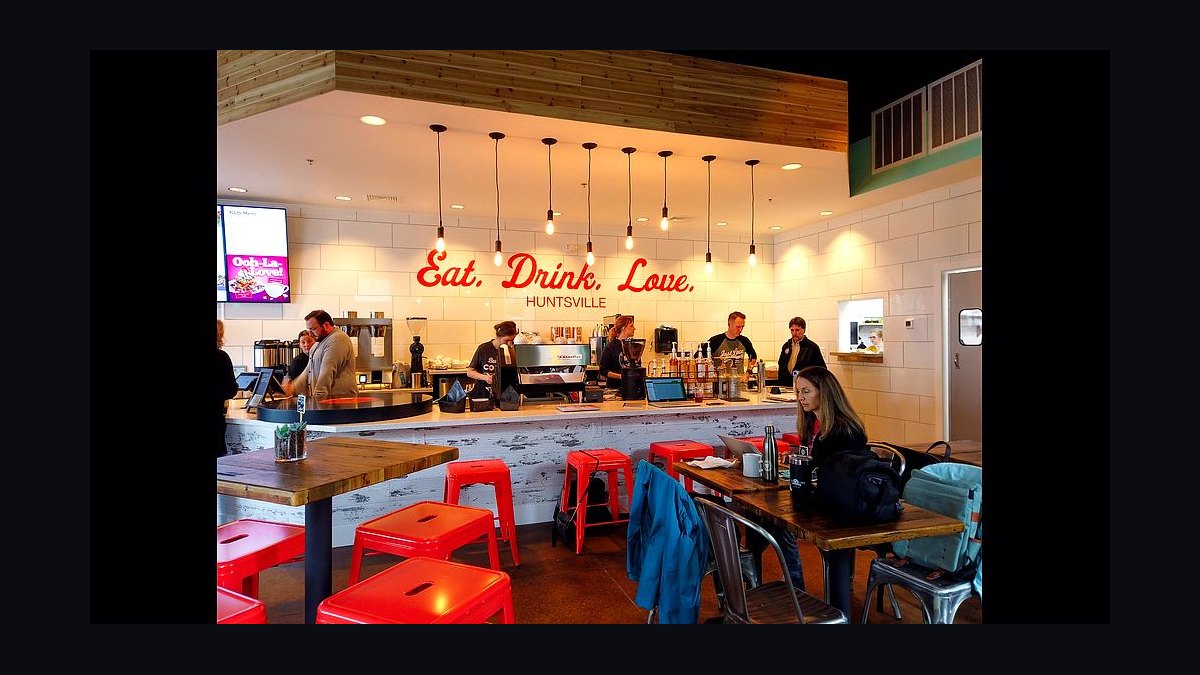
Yes, for a mission-minded operator ready to run a full coffee-and-breakfast cafe — not a simple espresso counter. Just Love Coffee Cafe pairs specialty coffee with a scratch-made breakfast/brunch menu and an adoption/foster-care giving mission, requiring roughly $450,000-$1,000,000 in total investment. Mature units gross $700,000-$1,400,000, with owners clearing $90,000-$250,000, but only if you can execute both dayparts and staff a real kitchen.
What it is and why it matters
Just Love Coffee Cafe is not a drive-thru espresso stand competing on speed alone. It is a hybrid concept: a 2,000-2,800 square foot cafe that runs a full specialty coffee bar (espresso, drip, cold brew, seasonal drinks) alongside a scratch kitchen turning out breakfast and brunch items, including the brand's signature waffle-iron dishes. That dual identity is the entire strategic thesis of the business, and it is why the decision to open one deserves more scrutiny than a typical single-daypart coffee franchise.
The reason this structure matters is economic. A pure coffee shop lives and dies on morning rush margins — high-margin beverages sold in volume, but a narrow revenue window before foot traffic falls off after 10 or 11 a.m. A pure breakfast restaurant carries heavier food cost and labor but can hold traffic later into the day. Just Love Coffee Cafe tries to capture both: the beverage margin of a coffee bar plus the extended-daypart revenue of a breakfast restaurant, served from one footprint, one lease, and one staff roster. Done well, this lifts average unit volume well above what a coffee-only concept could produce from the same square footage. Done poorly — understaffed kitchen, slow bar during the breakfast rush, or a location without both commuter and destination-dining traffic — the dual model becomes a liability instead of an asset, because now you are paying for two operations and getting neither at full efficiency.

Layered on top of the dual-revenue model is the brand's mission. Just Love Coffee Cafe, founded in Tennessee in 2009, ties its identity to adoption and foster-care causes. This is not incidental marketing; it is baked into the franchise's public story and customer-facing messaging. For an operator who genuinely wants to build a business around that cause — donating a portion of proceeds, hosting community fundraising events, hiring locally with intention — the mission becomes a durable differentiator that a pure commodity coffee shop cannot easily replicate. For an operator who sees the mission purely as a marketing hook without intent to live it locally, the effect is muted, and customers in values-driven markets tend to notice the difference between an authentic cause-brand and a franchise using a cause as a logo.
This matters most for anyone evaluating whether to open or buy into the system in 2027, because the category itself — specialty coffee blended with fast-casual breakfast — remains one of the more resilient segments in food franchising even as overall unit-growth franchising slows. Coffee and breakfast are both habitual, recession-resistant purchase categories, and a brand that captures both dayparts is structurally better positioned than most single-daypart concepts, provided the operator can actually run the more complex business that dual-daypart execution demands.
The step-by-step process

Franchise due diligence and launch follows a fairly standard sequence, but for a dual-daypart concept like this one, each stage carries extra weight because you are essentially qualifying two businesses (coffee bar and scratch kitchen) at once.
Start with the Franchise Disclosure Document. The 2026 FDD should be read in full, but Items 5 through 7 (fees and investment), Item 19 (financial performance representations), and Item 20 (unit counts, closures, transfers) deserve the most time. Item 19 specifically should show you how average unit volume splits between coffee/beverage sales and food sales — if the FDD does not break this out, ask the franchisor directly during discovery calls, because that split tells you whether the "dual revenue" pitch is real in practice or mostly theoretical.
From there, move into operator interviews. Existing franchisees are the single best source of ground truth on labor cost percentage, actual food cost against menu pricing, how long it took their unit to reach breakeven, and whether the corporate mission translated into local community engagement or stayed a plaque on the wall. Ask specifically about morning-versus-midday sales mix; a unit that is 80% coffee and 20% food is not actually running the dual-daypart model the brand advertises, and that tells you something about either the location or the execution playbook.

Next comes site and market validation — arguably the highest-leverage step, since a strong dual-daypart cafe needs both a dense residential/commuter coffee audience and enough daytime population to sustain breakfast and brunch traffic through late morning. Build and staff-out follows, typically requiring a general contractor experienced in both a commercial coffee bar build and a light-duty commercial kitchen, since permitting, ventilation, and equipment requirements differ from a coffee-only build. Finally, opening and community-building matter more here than at a typical fast-casual concept, because the mission-driven brand promise is only credible if the local unit visibly participates in it — sponsorships, in-store fundraising nights, and local nonprofit partnerships around adoption and foster care.
Costs, timelines, and typical ranges
The 2026 FDD lists a franchise fee near $35,000, with total Item 7 investment ranging from roughly $450,000 to $1,000,000 depending on square footage, build condition, and market construction costs. Within that range, leasehold improvements and buildout typically run $240,000 to $520,000 — the widest swing in the budget, driven by whether you are converting an existing food-service space or building out a raw shell. Equipment, including the espresso program and kitchen line, runs $120,000 to $260,000, and this is one area where corners should not be cut, since a slow or unreliable espresso setup during a morning rush directly caps your coffee revenue ceiling.

Signage and interior decor, which matter more for this brand than most because the mission-driven identity needs to be visible in-store, run $22,000 to $65,000. Initial inventory across both coffee and food runs $10,000 to $26,000, and initial marketing for a grand opening runs $14,000 to $38,000. Training and travel for the operator and key staff run $12,000 to $35,000, and working capital — the buffer that gets most undercapitalized franchisees into trouble in the first two to three months — should be budgeted at $45,000 to $110,000.
On an ongoing basis, expect a royalty near 6% of gross sales plus an advertising fee in the 2%-3% range. Labor, which runs heavier here than at a coffee-only concept because of the scratch kitchen, typically consumes 30% to 38% of gross sales in 2027 market conditions, with baristas and cooks earning $12 to $18 per hour depending on local wage floors and tip structures. Staffing levels run 12 to 25 employees per unit, with 3 to 5 on shift during the weekday 7-11 a.m. peak and the weekend 8 a.m.-1 p.m. peak, dropping to 1-2 during slower afternoon hours.
Build-out timelines average four to six months from lease signing to opening, and initial training runs two to four weeks at a company location or certified training store. Territory protection is typically a 1.5- to 3-mile radius, though some 2027 franchisees in lower-density suburban markets have negotiated larger 3- to 5-mile territories. On the revenue side, mature units gross $700,000 to $1,400,000 annually, with owner earnings after royalties and operating expenses landing between $90,000 and $250,000 — a wide range that mostly reflects how well an individual unit executes the dual-daypart model rather than differences in the underlying brand economics.
Where teams get it wrong

The single most common failure mode is treating this as a coffee shop with a side menu rather than two integrated businesses. Franchisees who under-hire kitchen staff relative to bar staff — or vice versa — end up with one daypart bottlenecking the other: a slow kitchen during the breakfast rush pushes customers who came for a quick coffee-and-food stop back out the door, while an understaffed bar during a busy brunch service creates long beverage wait times that erode the coffee-loyalty customers the brand depends on for repeat morning visits.
A second frequent mistake is underestimating labor cost planning. Because this concept runs a true scratch kitchen — not a reheat-and-assemble model — kitchen staff need genuine basic culinary skills, not just quick-service training. Franchisees who staff the kitchen the way they would a simple sandwich counter tend to see food quality inconsistency, which is especially damaging for a brand whose signature waffle-iron dishes are a stated differentiator. Cross-training employees across barista and food-prep roles is one of the more effective fixes operators report, since it adds scheduling flexibility and reduces overtime spend, but it requires more training investment upfront than either role alone.
Site selection errors compound quickly in this model. A location with strong coffee commuter traffic but weak daytime population will underperform on the food side, while a location with strong lunch/breakfast demographics but weak morning commuter flow underperforms on coffee volume. Corporate site approval provides demographic screening, but franchisees who skip independent verification of household income, daytime population, and complementary anchor tenants (grocery, gyms, medical offices) within a three-mile radius sometimes discover the mismatch only after opening.

Finally, and specific to this brand, some franchisees treat the adoption/foster-care mission as a passive logo element rather than an active local program. Corporate awareness surveys and operator interviews suggest that markets with values-driven consumers respond to visible, ongoing local charitable engagement — not just a plaque or website mention — and franchisees who never activate that side of the brand tend to see it contribute little to loyalty or word-of-mouth, effectively leaving a differentiator unused while still paying for the training and marketing infrastructure built around it.
Decision framework: when to choose what
Whether to open, buy an existing resale, or walk away from this concept depends on three variables: your operational skill set, your capital position, and your market. If you have run food-service or hospitality operations before — ideally something involving both a beverage program and a kitchen — and you have $150,000 to $250,000 in liquid capital plus access to financing for the balance of the $450,000-$1,000,000 range, and you are targeting a community-oriented suburban or urban market with both commuter and daytime-population density, opening a new unit is a reasonable path.

If you want the dual-revenue economics but are hesitant about the build-out timeline and ramp-up risk, a resale of an existing profitable unit is worth evaluating. Franchisees exiting after two to five years of profitable operation typically price at 2.5 to 3.5 times annual net profit; a unit clearing $150,000 in owner income would run roughly $375,000 to $525,000 as a resale, which converts a multi-month buildout risk into a known, operating cash flow stream, at the cost of a transfer fee typically $15,000 to $25,000 as of the 2026 FDD.
If you only want a simple, single-daypart operation — coffee-only or food-only, without the staffing complexity of running both — this is not your brand, and you would be better served by a drive-thru coffee concept or a dedicated breakfast franchise rather than forcing a dual-daypart model into a single-daypart operating style. Similarly, if you cannot credibly commit to the local charitable-mission activation, or you are entering an oversaturated metro market already dense with coffee chains and breakfast cafes, the differentiation this brand depends on will be weaker, and expected returns should be discounted accordingly.
Related questions
How is Just Love Coffee Cafe different from a standard coffee franchise? It runs a full scratch-made breakfast/brunch kitchen alongside the coffee bar, capturing both beverage and food revenue instead of coffee sales alone, which raises both revenue potential and operational complexity.
Does the charitable mission actually drive sales?
It can build loyalty among values-driven customers, but only when franchisees actively engage locally — sponsorships, events, visible community involvement — rather than treating it as passive branding.
What's the labor cost structure compared to a coffee-only shop? Labor runs 30%-38% of gross sales in 2027, higher than a typical coffee-only concept, because a real kitchen requires culinary-skilled staff in addition to baristas.
Is a resale a safer entry point than opening new? Resales convert buildout and ramp-up risk into known cash flow, typically priced at 2.5-3.5 times annual net profit, though buyers still pay a transfer fee of $15,000-$25,000.
What site characteristics matter most? Household income above roughly $65,000 within three miles, daytime population of at least 10,000, and proximity to anchor tenants like grocery stores or gyms that reinforce both coffee and breakfast traffic.
FAQ
What is the total investment range for a Just Love Coffee Cafe franchise? The total initial investment typically falls between $450,000 and $1,000,000, including a franchise fee of about $35,000. This covers buildout, equipment, signage, inventory, training, and working capital, though actual cost depends on location, size, and local construction pricing.
How much can an owner realistically earn?

Mature units report annual gross revenue of $700,000 to $1,400,000, with owner earnings after royalties and operating expenses ranging from $90,000 to $250,000. Actual results depend heavily on site quality, management, and how well both dayparts are executed.
What ongoing fees apply after I open? A royalty near 6% of gross sales plus an advertising fee, generally in the 2%-3% range, both standard for the category. The 2026 FDD should be reviewed for exact percentages, caps, and any additional local marketing requirements.
Is this more coffee shop or restaurant? It's a genuine hybrid — a specialty coffee cafe combined with a full scratch breakfast and brunch menu, including signature waffle-iron dishes. That dual structure boosts revenue potential but adds real staffing, food-prep, and health-code complexity versus a pure coffee shop.
How much staffing does a unit require? Typically 12 to 25 employees per location, including baristas, cooks, dishwashers, and shift leads, with 3 to 5 staff on shift during weekday morning and weekend brunch peaks and fewer during slower afternoon periods.
What's the biggest risk in this business model? Underestimating the operational complexity of running two integrated food-service businesses at once — a slow kitchen or bar during peak hours, weak site selection, or under-capitalization are the most common reasons units underperform.
Sources
- https://www.entrepreneur.com/franchises/directory
- https://www.franchisedirect.com
- https://www.ibisworld.com
- https://www.statista.com
- https://www.nrn.com
- https://www.franchise.org
- https://www.qsrmagazine.com
- https://www.franchisebusinessreview.com
- https://www.sba.gov/business-guide/plan-your-business/franchise-businesses
Related on PULSE
This page will be disappearing soon. Save it to your device for $1 — or read it free while it is here.
@Kory-White- · if Venmo asks, the last 4 of my number are 2012
This page is gone.
This one is off the shelf now. $1 keeps it on your phone for good — the whole page, pictures and diagrams included.
 franchiseShould I open or buy a Bruster's Real Ice Cream franchise in 2027?
 franchiseShould I open or buy a Hand and Stone Massage franchise in 2027?
 franchiseShould I open or buy a Pizza Hut franchise in 2027?
 franchiseShould I open or buy a Crumbl Cookies franchise in 2027?
 franchiseShould I open or buy a Jamba franchise in 2027?
 franchiseShould I open or buy an Orangetheory Fitness franchise in 2027?
 franchiseShould I open or buy a Jiffy Lube franchise in 2027?
 franchiseShould I open or buy a Servpro franchise in 2027?
 franchiseShould I open or buy a Panera Bread franchise in 2027?
 franchiseShould I open or buy a Cold Stone Creamery franchise in 2027?