


Should I open or buy a HTeaO franchise in 2027?
Quality
Certified
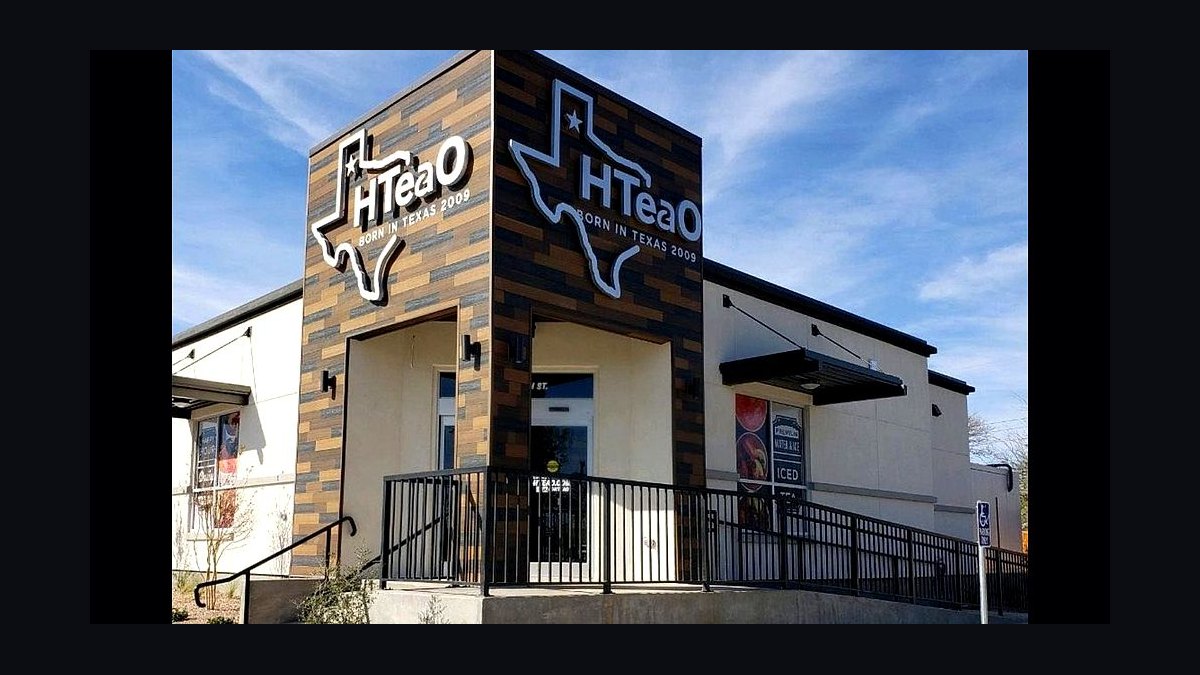
Opening an HTeaO franchise in 2027 is worth pursuing if you can lock down a genuine drive-thru pad with strong vehicle counts and bring $200,000–$350,000 in liquid capital against a total investment near $700,000–$1,500,000. The tea-only, low-COGS model beats coffee on margin structure, but it lives or dies on site access — skip it without a validated drive-thru location already in hand.
The outcome you should expect
A franchisee who opens on a genuinely strong drive-thru site — high daily traffic counts, easy ingress and egress, clear road visibility, and enough stacking room that cars never spill into the street — can reasonably expect a mature HTeaO unit to generate $700,000 to $1.5 million in annual gross sales by year two or three, with owner earnings in the $110,000 to $300,000 range after debt service, royalties, and labor. That outcome looks different from most quick-service concepts because the core product is inexpensive to produce: brewed tea, flavored water, and purified water and ice run a cost of goods sold around 12–18%, versus 25–35% for coffee-forward or food-heavy formats. That single gap is the biggest lever in the entire model, which is why HTeaO's unit economics can still look attractive even against a modest average ticket of $4–$6.
What you should not expect is a fast payback or a passive income stream. Even with favorable COGS, cash-on-cash returns for a well-performing store typically land in the 15–25% range once realistic debt service is layered onto a $700,000–$1,500,000 build, because land, lease, and construction costs for a drive-thru pad dominate the expense stack far more than the beverage program does. Compared with a lower-capital, service-based franchise, HTeaO will feel capital-intensive relative to its topline revenue — the tradeoff is operational simplicity and a cost structure that rewards volume and repeat visits over high-ticket transactions. Owners who go in understanding this — that they are underwriting a real estate and throughput bet dressed as a beverage concept — tend to land closer to the top of the range. Those who treat "low COGS" as the whole story, without independently stress-testing the site's traffic assumption, tend to end up disappointed even when the tea itself sells fine.

Multi-unit development shifts this outcome further. Because the operating model has no barista skill curve, no complex food prep, and no espresso-equipment maintenance cycle, HTeaO suits an owner who wants to run several locations under a general-manager structure rather than work one counter personally. A single-unit operator who works the window themselves sees a different cash picture — lower overhead, but a harder income ceiling — than a multi-unit owner who hires management layers and reinvests cash flow into a second and third build. Either way, expect the first unit to need the full ramp period, typically a year or more, before it reaches a stabilized run rate and the reinvestment decision becomes realistic. Rushing a second site before the first has proven its numbers is one of the more common ways a promising single-unit outcome turns into a strained multi-unit one.
It's worth placing this against the adjacent drive-thru beverage field, because HTeaO doesn't compete in a vacuum. Dirty-soda concepts like Swig run a different ticket and COGS profile; drive-thru coffee players such as Scooter's, Aroma Joe's, and 7 Brew carry higher COGS but higher average tickets; boba and bubble-tea formats land somewhere between the two. An operator evaluating whether to open an HTeaO rather than one of these should expect HTeaO's advantage to show up in margin percentage and operational simplicity, not in headline revenue — a coffee concept on an equivalent site will often post a higher gross number, while HTeaO can still produce comparable or better owner cash flow once the lower cost structure is accounted for.
What drives that outcome

Three variables explain nearly all of the spread between an HTeaO unit that hits the top of its revenue range and one that struggles near the bottom: daily vehicle count at the site, the COGS-and-labor structure once the store is open, and the fixed cost of royalty, advertising, and debt service stacked on top of an intentionally leaner revenue base than a coffee concept carries. A tea-only format cannot lean on a $7 specialty-coffee ticket to carry a mediocre location — it needs volume, because the per-transaction dollar amount is designed to be lower. That makes the site itself, not brand enthusiasm, menu innovation, or the marketing calendar, the dominant factor separating a $700,000 unit from a $1.5 million one.
Downstream of site selection, the next-biggest driver is labor management, since at 25–30% of revenue it is the single largest line item, even ahead of COGS. A drive-thru-only format with no dining room needs fewer staff than a full-service café, but peak-hour throughput of 30–60 cars an hour still demands enough trained hands on the window and brewing station to avoid queues that spill onto the street — which both caps revenue and risks complaints in markets with no-idling ordinances. The third driver is the fixed overhead stack: a roughly 6% royalty, a 2–3% ad-fund contribution, and whatever debt service the build required. None of these are adjustable the way a menu price is, which is exactly why they function as a floor below which no amount of operational excellence can rescue a weak-traffic site.
A related, often underweighted driver is seasonality and climate. Iced-tea consumption skews heavily toward warm months and warm-climate markets, so a unit in a region with a short hot season will see more pronounced swings between peak and shoulder months than a Texas or Gulf Coast location running near-year-round demand. Underwriting a site in a cooler climate without building in that seasonal variance is a quiet way to overstate the annualized revenue a pro forma implies.
Benchmarks and realistic ranges

Use the following as an underwriting baseline before signing anything — and verify every figure against the current Item 19 and conversations with existing operators rather than taking any of it on faith:
- Franchise fee: approximately $40,000, per the 2026 FDD.
- Total Item 7 investment: roughly $700,000 to $1,500,000, covering buildout/leasehold ($350,000–$850,000), equipment and brewing systems ($160,000–$340,000), signage and decor ($25,000–$75,000), initial inventory ($8,000–$22,000), initial marketing ($15,000–$40,000), training and travel ($12,000–$35,000), and working capital for the first three months ($45,000–$120,000).
- Ongoing fees: royalty near 6% of gross sales, plus an advertising fee typically in the 2–3% range.
- Mature unit revenue: $700,000 to $1.5 million gross annually.
- Owner earnings: $110,000 to $300,000 net, with EBITDA on a $1 million unit typically landing between $200,000 and $350,000 before debt service.
- COGS: 12–18% of revenue — the structural edge over coffee concepts running 25–35%.
- Labor: 25–30% of revenue for a well-run store.
- Occupancy: 8–12% of revenue, commonly $80,000–$120,000 annually for a prime drive-thru pad.
- Site requirements: 0.5–1.0 acre pad, 25,000+ daily vehicle counts preferred, stacking space for 8–12 vehicles at peak.
- Average ticket: $4–$6, below the $6–$9 typical of a coffee-forward drive-thru, offset by higher visit frequency.
These numbers only make sense in the context of HTeaO's own cost structure. Comparing its revenue range directly against a coffee concept without adjusting for the COGS and ticket differences will lead you to the wrong conclusion about which model actually produces better owner cash flow on a similarly sized site — a coffee unit posting $1.3 million in sales is not automatically the better investment if its COGS and labor eat a larger share of that top line. The adjacent category data worth pulling for context includes Technomic's drive-thru beverage segment tracking, IBISWorld's coffee-and-beverage-shop industry data, and IFA's Franchise Economic Outlook — all useful for sanity-checking whether a specific market's traffic and demographic profile supports the upper or lower end of HTeaO's range.

Risks, edge cases, and failure modes
The single largest failure mode is signing a lease or committing capital to a site that looks adequate on paper but underperforms the 25,000-vehicle daily-traffic benchmark. A location short of that threshold can still post a respectable year-one number on the strength of grand-opening marketing, then settle into a run rate near or below the $700,000 floor once the novelty fades — at which point fixed costs (royalty, ad fund, and especially debt service on a $700,000-plus build) consume a disproportionate share of a thinner revenue base. Because the product is cheap and operations are simple, there is very little an operator can do on the cost side to rescue a site-driven shortfall; this is fundamentally a real-estate business wearing a beverage brand's clothing, and most of the controllable risk sits in due diligence before the lease is signed, not in day-to-day management afterward.
A second risk is regional and category novelty. HTeaO's strongest performance clusters in Texas and the broader Sunbelt, where daily iced-tea consumption is already a cultural habit. In a market where tea is not an established daily-drink category, a franchisee is effectively building both a location and a consumer habit from zero — doubling the marketing lift needed in the first 12–18 months and warranting a more conservative revenue assumption for any site outside the brand's proven footprint. Closely related is competitive crowding: by 2027 the drive-thru beverage category is far more saturated than when HTeaO first launched, with coffee chains, dirty-soda concepts, and boba and kombucha players all competing for the same pad sites and the same daily-habit customer. Assuming an uncontested lane in your market is a common and costly mistake.
A third, more operational risk is zoning and permitting exposure specific to drive-thru lanes — environmental reviews near residential zones, no-idling ordinances, and queue-stacking requirements can delay an opening or force an expensive redesign if they aren't confirmed before the lease is signed. A fourth is multi-unit overextension: because the model's simplicity makes a second or third unit look easy on paper, some operators commit to growth before the first unit has proven out its stabilized numbers, compounding one bad site decision across several locations. Finally, treat under-capitalization as its own failure mode distinct from a bad site — even a good location needs enough working capital to survive a ramp period that often runs 12 months or more before it reaches the run rate the Item 19 implies, and operators who finance only the Item 7 minimum with no buffer are the ones most likely to be forced into a distressed sale.
A less obvious edge case worth flagging: labor availability in smaller or rural drive-thru markets. A pad site can clear the traffic-count threshold while sitting in a labor market too thin to reliably staff peak-hour shifts, which quietly caps throughput regardless of how many cars are willing to line up.
A practical rollout plan

Treat real estate validation as the gate the rest of the plan depends on — do not sign a lease or commit capital to open until a commercial broker experienced in drive-thru pads has run an independent pro forma on the specific site, separate from whatever the franchisor's development team projects.
During the operator-interview phase, ask specifically about actual vehicle counts at their site versus what was projected pre-opening, how long it took to reach a stabilized revenue run rate, and what their real labor cost percentage looks like once overtime and manager pay are included — these figures diverge most often from franchisor marketing materials. During the build phase, confirm zoning and permitting for the drive-thru lane in writing before signing a general contractor, since this is where timeline slippage most commonly originates.
After opening, resist judging performance against mature-unit benchmarks within the first few months; the daily-habit customer base that drives HTeaO's recurring revenue typically takes a full ramp cycle to build, and early numbers will understate the eventual run rate on a genuinely strong site. It also helps to plan the marketing calendar around the seasonal curve rather than a flat monthly target — front-loading grand-opening spend into the warm months and treating a cooler shoulder season as a habit-building period rather than a performance shortfall keeps expectations grounded in how the product actually sells.
Related questions
How long does it take an HTeaO franchise to become profitable?
Most units need 12–18 months to reach a stabilized revenue run rate as repeat, daily-habit customers build. EBITDA-level profitability can come sooner on a strong site; recouping the full Item 7 investment typically takes several years depending on leverage.
Is HTeaO a better investment than a drive-thru coffee franchise?
It depends on the site and target customer. HTeaO's lower COGS and simpler operations can produce comparable or better margins than coffee, but coffee concepts typically carry a higher ticket — the right choice depends on local demand and real estate economics, not brand alone.
What happens if my HTeaO site underperforms traffic projections?
Because COGS and operations are already lean, there's little room to cost-cut your way to profitability on a weak site. Realistic options are aggressive local marketing to build habit faster, renegotiating lease terms, or in severe cases selling the unit — avoid the scenario by validating traffic independently before signing.
Can I run multiple HTeaO locations as an absentee owner?
Multi-unit development is realistic given the simple operating model, but works best once the first unit has stabilized under a general-manager structure. Opening several units before proving the first one's numbers is a common overextension mistake.
Does climate affect how well an HTeaO location performs?
Yes — iced-tea demand skews toward warm months and warm-climate markets, so a cooler-climate site will show more pronounced seasonal swings than a Sunbelt location. Factor that variance into the pro forma rather than annualizing a peak-season month.
FAQ
What is the total investment needed to open an HTeaO franchise? The total investment range per the 2026 FDD is roughly $700,000 to $1,500,000, including a franchise fee around $40,000. This covers buildout, equipment, signage, initial inventory, and working capital, with the final figure depending heavily on land and lease costs at the specific site.
How much can an owner expect to earn from an HTeaO franchise?

Mature units typically generate gross annual revenue of $700,000 to $1.5 million, with owner net earnings ranging from $110,000 to $300,000. Actual results vary significantly based on site traffic, local market receptiveness to tea, and how tightly labor and occupancy costs are managed.
What are the ongoing fees for an HTeaO franchise? The royalty runs approximately 6% of gross sales, plus an advertising fund contribution typically in the 2–3% range. These fees are standard for quick-service franchising and fund brand marketing, training support, and system development.
Is HTeaO a proven concept or still too new to franchise confidently? HTeaO has operated since 2009 and has expanded steadily, with its strongest and most proven performance concentrated in Texas and the Sunbelt. The core model is established in that region, but newer markets outside the brand's traditional footprint carry more unknowns around tea-as-daily-habit adoption.
What makes HTeaO different from other drive-thru beverage franchises? It is tea-only — more than 30 fresh-brewed tea flavors plus flavored and purified water — rather than a coffee or soda concept. That focus keeps food and equipment costs low and operations simple, but it also means a smaller average ticket that depends on frequent repeat visits rather than high-dollar transactions.
What is the single biggest risk in opening an HTeaO franchise? Site selection. The model's low COGS and simple operations cannot compensate for a drive-thru pad with insufficient daily traffic, poor access, or weak visibility — most of the controllable risk in this business sits in real estate due diligence before signing a lease, not in day-to-day store management afterward.
Sources
- HTeaO Franchise Disclosure Document (2026 filing) — Items 5, 6, 7, 19, 20
- HTeaO official franchise website — investment range and tea-only concept overview
- Entrepreneur Franchise listings — HTeaO franchise profile
- Technomic — U.S. drive-thru beverage and specialty-tea segment data
- IBISWorld — Coffee & Beverage Shops in the US industry report
- Statista — U.S. specialty-beverage and iced-tea market data
- Nation's Restaurant News — drive-thru beverage growth reporting
- International Franchise Association (IFA) — Franchise Economic Outlook
- QSR Magazine — drive-thru beverage trends coverage
- Franchise Business Review — beverage-franchise satisfaction data
Related on PULSE
This page will be disappearing soon. Save it to your device for $1 — or read it free while it is here.
@Kory-White- · if Venmo asks, the last 4 of my number are 2012
This page is gone.
This one is off the shelf now. $1 keeps it on your phone for good — the whole page, pictures and diagrams included.
 franchiseShould I open or buy a Primrose Schools franchise in 2027?
 franchiseShould I open or buy a Matco Tools franchise in 2027?
 franchiseShould I open or buy a Subway franchise in 2027?
 franchiseShould I open or buy a Wendy's franchise in 2027?
 franchiseShould I open or buy a Cook Out franchise in 2027?
 franchiseShould I open or buy a Great Clips franchise in 2027?
 franchiseShould I open or buy an Ace Hardware franchise in 2027?
 franchiseShould I open or buy a Big O Tires franchise in 2027?
 franchiseShould I open or buy a Papa John's franchise in 2027?
 franchiseShould I open or buy an Auntie Anne's franchise in 2027?