


Should I open or buy a Swig franchise in 2027?
Quality
Certified
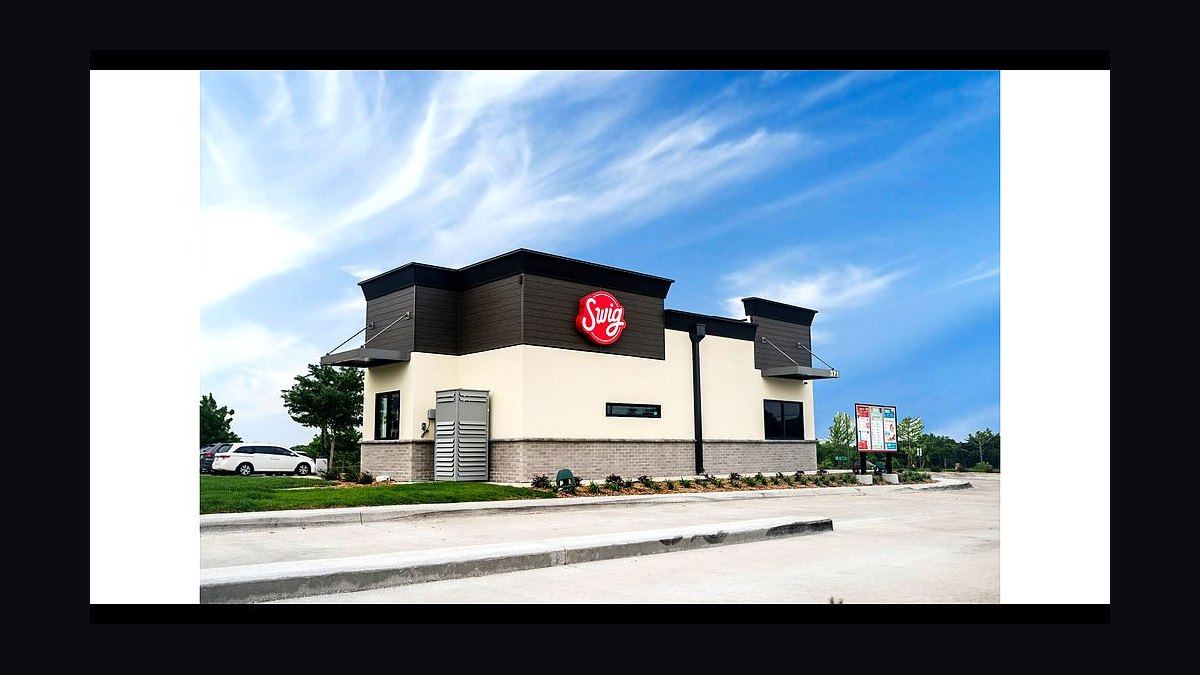
Yes, if you can secure a high-traffic drive-thru site (2,000+ vehicles daily) in a Sunbelt or Mountain West market with existing dirty-soda demand, a Swig franchise offers strong margins on moderate capital ($500,000-$1,300,000) thanks to low ingredient costs and recurring habit traffic. Skip it if your target market lacks category familiarity or you cannot land a qualifying drive-thru location — brand enthusiasm alone won't manufacture demand.
A Concrete Scenario That Frames The Problem
Picture two prospective franchisees evaluating the same Swig opportunity in early 2027. The first is a former restaurant manager in Lehi, Utah, who has identified an end-cap pad site next to a Chick-fil-A doing 2,400 vehicles a day, with three high schools within a five-mile radius. The second is an investor from Ohio who likes the concept from a road trip but has no site lined up and no operating experience in a market where "dirty soda" is still an unfamiliar phrase to most consumers.
The Utah operator is a near-ideal fit: the site meets Swig's traffic threshold, the demographic (16-35 year olds) matches the brand's core customer, and the market already has cultural fluency with the category — mixed fountain sodas, flavor shots, and cream add-ins are a known ritual, not a novelty. The Ohio investor is taking on a materially different risk profile. He would be introducing a regional concept to a market with no existing demand signal, competing for site approval with no operating track record, and betting that a trend concentrated in Utah (roughly half of all units), Arizona, and Texas will translate to a cold market.
Franchise economics don't change between these two buyers — the FDD numbers are the same — but the probability of hitting those numbers diverges sharply. This is the central decision every Swig prospect has to make when they consider whether to open a location: am I buying into an established habit, or am I trying to create one? That distinction should drive the entire due-diligence process before you ever sign a franchise agreement. A franchisee entering a receptive market inherits demand; a franchisee entering a cold market has to manufacture it through marketing spend, and Swig's simple operating model doesn't include a built-in mechanism for demand creation the way a destination restaurant concept might. The brand's low cost structure and high margins are real, but they only materialize once volume shows up at the drive-thru window — and volume is a function of site quality and market receptivity far more than it is a function of the franchise system itself.
This scenario also generalizes beyond Swig specifically. Anyone evaluating a beverage or quick-service franchise in an early-growth phase — before the brand has national recognition — is really running two separate risk assessments at once: the underlying unit economics (which the franchisor controls and discloses) and the local demand environment (which the franchisee alone is responsible for validating). Conflating the two, and assuming a strong FDD automatically means a strong local outcome, is the single most common error prospective owners make across the drive-thru beverage category broadly, not just within this one brand.
How The Mechanism Actually Works

Swig's unit economics are built on a simple structural insight: fountain soda, flavoring syrups, and creamers cost very little relative to the price customers pay for a customized drink. A base fountain soda might cost the store a few cents per ounce in syrup and CO2, while flavor shots and cream add-ins add modest incremental cost — yet the finished product sells at a premium price point because customers are paying for the customization experience, not the raw ingredients. That spread is what makes the model attractive on paper to anyone deciding whether to open a unit.
But the spread only becomes profit if volume clears the fixed and semi-fixed costs stacked on top of it — labor, occupancy, royalty, and advertising fees. A drive-thru with a long stacking lane and high car counts spreads those fixed costs across far more transactions per labor-hour than a slow location, which is why site selection functions as the single biggest lever in the entire model. Two stores with identical build-outs and identical menus can post owner earnings that differ by six figures purely because one site converts traffic into transactions and the other doesn't.

The flow above shows why the same P&L structure can produce very different outcomes. Royalty (roughly 6%-7% of gross) and advertising fees (roughly 2%-3%) are fixed percentages regardless of how the store performs, and labor as a percentage of sales tends to compress as volume rises because a drive-thru crew of three to four people can serve meaningfully more cars per hour at a high-volume site than the same crew serves at a slow one. This is the core mechanism a prospective franchise owner should internalize before signing: you are not just buying a menu and a brand, you are buying a bet on whether your specific location can generate enough throughput to make the fixed-cost stack disappear into the background.
The same mechanism explains why drive-thru coffee brands like Scooter's and 7 Brew obsess over stacking-lane engineering, and why gas-station and convenience retailers increasingly court drive-thru beverage tenants for their pad sites — the throughput math rewards anyone who can move cars fast, regardless of what's in the cup. A Swig franchisee benefits from studying how those adjacent categories solve the same queuing problem, since the underlying operational lesson (speed of service is the real product) transfers directly.
Real Numbers, Ranges, And Benchmarks
The 2026 FDD lists a franchise fee of approximately $50,000, with total Item 7 investment ranging from roughly $500,000 to $1,300,000 depending on market and build type. A realistic 2027 franchisee should plan for total cash investment in the $600,000-$1,200,000 range, with liquid capital requirements typically falling between $175,000 and $300,000. Build-out costs vary meaningfully by region: expect $250,000-$700,000 for leasehold improvements on a drive-thru-equipped building, and another $120,000-$300,000 for fountain equipment, dispensing systems, and point-of-sale infrastructure. Signage and decor typically run $22,000-$70,000, initial inventory $8,000-$22,000, initial marketing $15,000-$40,000, training and travel $12,000-$35,000, and working capital for the first three months $45,000-$120,000.

Ongoing fees include a royalty near 6%-7% of gross sales and an advertising fee generally in the 1%-3% range depending on the specific agreement year. Mature units report annual gross revenue between $700,000 and $1,600,000, with owner earnings typically in the $100,000-$300,000 range — though actual results vary widely based on site quality, local competition, and management effectiveness. A monthly cash-flow model for a $900,000-a-year store illustrates the mechanics: royalty around $5,250, ad fee around $1,500, COGS near $18,750 (roughly 25% of sales for soda, syrups, and cups), labor around $22,500 (roughly 30% of sales for three to four staff), rent in the $4,000-$7,000 range, and occupancy costs (utilities, insurance) of $2,500-$4,000 — netting monthly cash flow of roughly $8,000-$18,000 at a mature run rate.
Break-even timelines typically fall between 18 and 30 months, assuming the unit reaches mature sales in the $850,000-$1,200,000 range. First-year stores commonly run 15%-25% below mature averages while the operator builds brand awareness and works through the operational learning curve, so a franchisee should model a slower ramp rather than assuming day-one performance matches the Item 19 mature-unit figures. As of 2026, Swig operates roughly 100-130 units, concentrated heavily in Utah (about half the system), with meaningful presence in Arizona and Texas. The 2027 pipeline suggests 30-50 new openings annually, with expansion targeting Florida, Oklahoma, and Colorado — still an early-growth footprint compared to a national drive-thru beverage brand, which cuts both ways: less market saturation for an early mover, but also less built-in brand recognition outside the Sunbelt core.

For context, that footprint is smaller than 7 Brew's several hundred locations or Scooter's Coffee's roughly 800-plus units, meaning a Swig franchisee outside the core three-state cluster is effectively an early adopter within the system itself, not just within the category. That has real financial consequences: development incentives, area-representative support, and local co-op advertising pools are all thinner in a newly entered state than they are in Utah, where the brand has near two decades of operating history.
Trade-Offs And Alternatives
The central trade-off in a Swig franchise decision is category-pioneer upside against category-durability risk. Swig invented the dirty-soda format in 2010, and that first-mover position carries real brand equity — a reported 40%+ repeat-visit rate among loyalty members suggests the habit-forming mechanic works once established. But the same attributes that make the concept attractive also make it vulnerable: low barriers to imitation have already produced direct copycats (Sodalicious, Fiiz Drinks among them), and adjacent chains have added their own customized-beverage lines that compete for the same occasion without requiring customers to learn a new brand.
A franchisee weighing Swig against alternatives should think in terms of category maturity versus category ceiling. Drive-thru coffee concepts (Scooter's, 7 Brew, Aroma Joe's) operate in a far larger, more geographically diversified category with a longer track record, but that maturity also means more saturation and more entrenched competition in many markets. Drive-thru iced tea (HTeaO) and bubble tea concepts occupy narrower niches similar in size to dirty soda, carrying comparable regional-concentration risk. An independent, non-franchised dirty-soda shop avoids royalty and ad-fee drag entirely but forfeits brand recognition, supply-chain relationships, and the operational playbook a franchise system provides — a real cost for an operator without prior beverage-retail experience.
The practical takeaway is that Swig rewards operators who treat it as a site-and-market bet first and a brand bet second. If you can secure a high-traffic drive-thru pad in a market that already has cultural familiarity with mixed-flavor sodas, the pioneer positioning and low-cost structure give you a real edge over a market entrant with no brand recognition. If you're trying to open in a market with no existing demand signal, you're effectively underwriting category education costs that the franchise system's low ad-fee percentage wasn't designed to fund at scale.
Prospective owners should also weigh timing risk against a category ceiling that isn't yet known. Dirty soda has grown from a Utah-specific phenomenon into a recognizable national trend over roughly fifteen years, but no one can say with certainty whether it plateaus like frozen yogurt did in the early 2010s or becomes a durable fixture like drive-thru coffee. Diversifying personal capital — rather than putting all available liquidity into a single unit of an unproven-outside-its-core-market concept — is a reasonable hedge many multi-unit operators apply across their portfolios regardless of which specific brand they're evaluating.
Common Pitfalls And How To Avoid Them
The most common and costly mistake is underweighting site selection relative to brand enthusiasm. A franchisee excited about the concept can talk themselves into a marginal site — insufficient stacking lane depth, under 2,000 vehicles per day, poor visibility from the road — because the brand itself feels differentiated. Avoid this by treating the traffic-count threshold and stacking-lane requirement as non-negotiable filters before you evaluate anything else about a potential location, including rent. A cheap lease on a weak site produces a structurally unprofitable store regardless of how well it's run, and no amount of local marketing after the fact reliably fixes a site that was wrong from day one.
A second pitfall is entering a market with no existing dirty-soda cultural footprint and assuming the brand alone will create demand. Franchisees outside Utah, Arizona, and Texas should validate local awareness before signing — informal customer surveys, competitive scans for existing customized-beverage concepts, and conversations with the franchisor's development team about why (or whether) they're targeting that specific market are all reasonable diligence steps. Opening in a cold market without a real marketing budget earmarked for local awareness-building (a reasonable estimate is $15,000-$25,000 annually for events, school sponsorships, and local partnerships) sets the store up to underperform Item 19 benchmarks indefinitely rather than just during a normal ramp period.
Third, franchisees frequently confirm territory protection informally rather than in writing. Some early operators have reported encroachment concerns from company-owned stores opening near existing franchise locations, so pin down the exact radius and any carve-outs in the franchise agreement itself rather than relying on a verbal understanding from a discovery-day conversation. Fourth, don't skip Item 19 conversations with a broad enough sample of existing operators — talk to franchisees in both strong and weak markets, and specifically ask about first-year performance relative to mature-unit averages, since the gap can be substantial and under-capitalized buyers sometimes run out of working capital during that ramp.
Finally, resist the urge to over-customize the menu or operations outside the system's playbook in year one; the brand's simplicity is part of what keeps labor costs manageable, and franchise owners who add complexity before proving out the core model tend to erode the very margins that made the concept attractive in the first place. This last point applies well beyond Swig — it's a pattern seen across the broader quick-service franchise world, where operators who deviate early from a proven operating system almost always underperform peers who run the playbook as designed for at least the first full year before experimenting.
Related questions
How does Swig's territory protection actually work?
Swig typically grants a 1.5-2 mile protected radius around a franchise location, but the exact terms vary by agreement. Confirm the radius and any carve-outs in writing before signing — some franchisees report encroachment concerns from company-owned stores.
What's a realistic first-year sales expectation versus mature-unit Item 19 figures?
Plan for first-year sales running 15%-25% below mature averages while you build brand awareness and work through operational learning curves. Budget working capital accordingly rather than assuming day-one performance matches Item 19 benchmarks.
Is multi-unit ownership realistic for a first-time Swig franchisee?
Many operators consider a second unit only after the first proves out at or near mature Item 19 performance, generally in year two or later. The simple operating model supports multi-unit management, but each additional site still requires its own strong drive-thru location.
How does buying an existing Swig franchise compare to opening new?
Existing units, when available, typically trade at 2.5-3.5x annual net profit — roughly $350,000-$600,000 for a well-performing store. This skips the ramp-up period but requires paying a premium for proven cash flow.
How does Swig's site-selection bar compare to drive-thru coffee chains?
Drive-thru coffee brands generally target similar traffic thresholds (2,000+ vehicles daily) but benefit from broader daypart demand, since coffee sells morning through afternoon while dirty soda skews toward afternoon and evening occasions. That narrower daypart window is a factor Swig franchisees should model into their sales projections.
FAQ
How much does a Swig franchise cost in 2027? The franchise fee is around $50,000, and total startup investment typically ranges from $500,000 to $1,300,000. This covers build-out, equipment, inventory, and initial marketing, though exact costs depend on location, market, and store size.
What are the ongoing fees for a Swig franchise? You'll pay a royalty of roughly 6% to 7% of gross sales, plus an advertising fee generally in the 1%-3% range. These fund brand support, national marketing, and system development.
How much can a Swig franchise owner earn? Mature locations report annual gross revenue between $700,000 and $1,600,000, with owner earnings typically in the $100,000 to $300,000 range. Actual results vary widely based on site quality, local competition, and management.
Is the dirty soda trend just a fad? Swig pioneered the category in 2010 and it has grown steadily in the Sunbelt, but long-term durability remains an open question. The concept depends on repeat habit traffic, and shifting consumer tastes over the next decade are a real risk to underwrite before you open a location.
Where are Swig franchises located, and does that matter if I open elsewhere? Most units are concentrated in Utah, Arizona, and Texas, with limited presence outside the Sunbelt and Mountain West. Opening outside that footprint means taking on demand-creation risk the existing store base hasn't had to solve.
How does Swig compare to copycat brands like Fiiz or Sodalicious? Swig's first-mover position gives it stronger brand loyalty and awareness within its core markets, but copycats compete directly for the same customer occasion. In markets with multiple similar concepts, competition can compress traffic and margins for all of them.
Sources
- Entrepreneur — Franchise Directory listings and franchise profile data
- Franchise Business Review — franchisee satisfaction survey data
- International Franchise Association (IFA) — annual franchise economic outlook reporting
- Technomic — foodservice and beverage industry research
- IBISWorld — beverage and snack shop industry reports
- Statista — specialty beverage and soft drink market data
- Nation's Restaurant News — quick-service and beverage trend coverage
- QSR Magazine — drive-thru and beverage franchise trend reporting
Related on PULSE
This page will be disappearing soon. Save it to your device for $1 — or read it free while it is here.
@Kory-White- · if Venmo asks, the last 4 of my number are 2012
This page is gone.
This one is off the shelf now. $1 keeps it on your phone for good — the whole page, pictures and diagrams included.
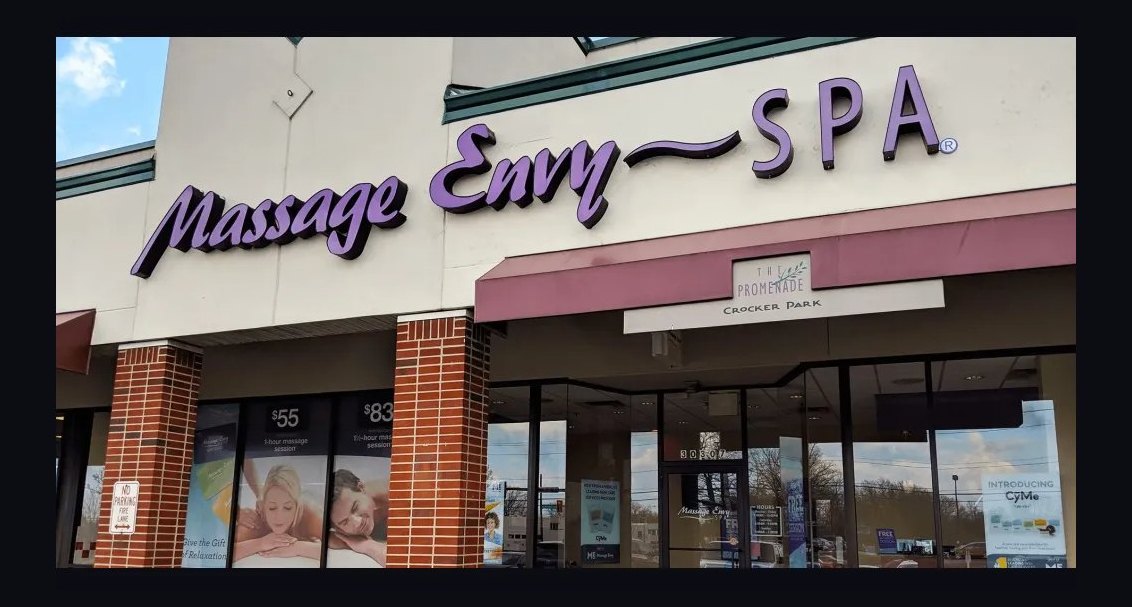 franchiseShould I open or buy a Massage Envy franchise in 2027?
 franchiseShould I open or buy a Dunkin' franchise in 2027?
 franchiseShould I open or buy a Cook Out franchise in 2027?
 franchiseShould I open or buy a Cinnabon franchise in 2027?
 franchiseShould I open or buy a Papa John's franchise in 2027?
 franchiseShould I open or buy a KinderCare franchise in 2027?
 franchiseShould I open or buy a Subway franchise in 2027?
 franchiseShould I open or buy a UPS Store franchise in 2027?
 franchiseShould I open or buy a FACE FOUNDRIÉ franchise in 2027?
 franchiseShould I open or buy a McAlister's Deli franchise in 2027?