


Should I open or buy a Carvel franchise in 2027?
Quality
Certified
Yes, opening a Carvel franchise in 2027 makes sense for an operator who can drive ice-cream-cake sales, choose the right format for their market, and manage seasonality — Carvel is a 90-year-old brand with a total investment of roughly $250,000 to $1,500,000, a 5%-6% royalty, and owner earnings typically in the $50,000-$200,000 range once mature.
The outcome you should expect
A Carvel franchise is not a get-rich-quick play — it's a legacy-brand retail concept where the outcome you should plan for is a moderately profitable, seasonally lumpy business that rewards operators who lean into ice-cream cakes rather than fight the seasonal soft-serve curve. Based on the 2026 FDD and operator reporting collected through 2025-2026, a mature Shoppe grosses between $350,000 and $900,000 annually, with owner earnings after royalties, labor, and occupancy landing between $50,000 and $200,000. That is a wide band, and where you land inside it depends almost entirely on three variables: format, cake-sales mix, and market climate.
Break-even is the first realistic checkpoint, and it typically arrives 18 to 36 months after opening, not in year one. A full Shoppe in a high-traffic suburban location generally needs $28,000-$35,000 in monthly gross sales to clear fixed costs, while an express kiosk with lower rent and a leaner staff can break even at $12,000-$18,000 a month. That gap matters when you're choosing a format, because a smaller format reaches profitability faster even though its ceiling is lower.
The second thing to expect is a profit swing between summer and winter that most first-time franchisees underestimate. Gross margins on soft-serve during June-August frequently reach 65%-70% after food cost, but from November through February that figure can fall to 40%-50% as the mix shifts almost entirely to ice-cream cakes, which carry a heavier 55%-60% food cost because of premium ingredients and decorating labor. Franchisees who treat the cake program as the real winter business — cross-training staff to decorate instead of paying a dedicated decorator, pushing holiday and celebration bundles — hold their winter margins up. Those who treat cakes as an afterthought see winter profit collapse toward breakeven or worse. The honest expectation, then, is not "ice cream shop that also sells cakes" but "cake business that also happens to sell soft-serve in summer," and franchisees who internalize that framing earlier tend to hit the higher end of the earnings range faster.
What drives that outcome
Four levers explain almost all of the spread between a Carvel franchise clearing $50,000 a year and one clearing $200,000: format choice, cake-sales execution, labor-cost control, and local seasonality/competition exposure. Format sets your capital ceiling and your break-even floor — a full Shoppe with a drive-thru or high-visibility retail frontage costs more to open ($400,000-$600,000 in build-out alone, regardless of region) but supports a much higher AUV than an express or non-traditional counter inside a mall, airport, or convenience location. Cake-sales execution is the single biggest swing factor for year-round profitability, since cakes can represent 30%-50% of total revenue in colder months and carry a materially different margin profile than scooped product.
Labor is the lever operators most often mismanage. Carvel's model typically requires 2-4 employees per shift in a full Shoppe, at 2026 hourly wages of $14-$20 depending on state minimums and tip-pooling rules. In high-wage states like New York or California, labor can consume 30%-35% of gross sales; in lower-cost states like Florida or Texas, that figure drops to 22%-28%. Combined with 100%-150% annual turnover in ice-cream retail — a normal but expensive feature of the category — labor discipline (cross-training for cake decorating, tight shift scheduling around the seasonal curve) is what separates operators who protect their margin from those who bleed it out in hiring and retraining costs.
Benchmarks and realistic ranges
Use these figures as planning benchmarks, not guarantees — every number should be validated against the current FDD Item 19 and against operators in your specific target market before you sign. The franchise fee is a flat $30,000 per the 2026 FDD. Total Item 7 investment ranges from roughly $250,000 for a smaller express or retail-counter build to $1,500,000 for a full Shoppe, broken down roughly as: buildout/leasehold $120,000-$800,000, equipment and freezers $90,000-$420,000, signage and decor $15,000-$80,000, initial inventory $8,000-$30,000, initial marketing $10,000-$40,000, training and travel $8,000-$35,000, and working capital $30,000-$120,000. Ongoing costs are a royalty of roughly 5%-6% of gross sales plus a 2%-3% advertising fee.
Real estate cost is regionally driven: a prime Northeast strip-center lease runs $8,000-$15,000 a month, versus $4,000-$7,000 in Sun Belt markets, though build-out costs for a full Shoppe stay in the $400,000-$600,000 band regardless of region because the equipment and cake-prep infrastructure don't change. Roughly 70% of Carvel's 400-plus locations sit in the Northeast corridor (New York, New Jersey, Connecticut, Massachusetts, Pennsylvania, Delaware), which gives new units in that footprint 6-9 months to build brand awareness versus 12-18 months in expansion markets like Florida, Texas, or the Carolinas. Territory protection is typically a 1.5-mile radius for full Shoppes, but express units in malls or airports often carry no exclusive territory at all.

On the exit side, expect a resale timeline of 6-12 months (versus 3-6 months for stronger-traffic brands), with asking prices for established locations running $80,000-$250,000 and actual sale prices landing 10%-20% below asking. Resale value generally works out to 1.5-2.5x annual net profit, so a shop clearing $80,000 a year tends to sell in the $120,000-$200,000 range. Carvel's franchise termination rate runs around 3% annually (roughly 12 terminations or non-renewals in 2025), which is in line with industry norms but worth factoring into any resale or used-equipment purchase decision.
Risks, edge cases, and failure modes
The most common failure mode is opening the wrong format for the market: a full Shoppe in a market that can't sustain $28,000-$35,000 in monthly sales, or an express unit in a location with no cake-order traffic to offset a thin soft-serve season. Seasonality itself is the second major risk — operators who don't build a deliberate winter cake strategy (holiday bundles, corporate and celebration orders, cross-trained decorating staff) routinely see margins fall toward breakeven from November through February, and a few consecutive weak winters can wipe out a marginal unit's cash reserves.
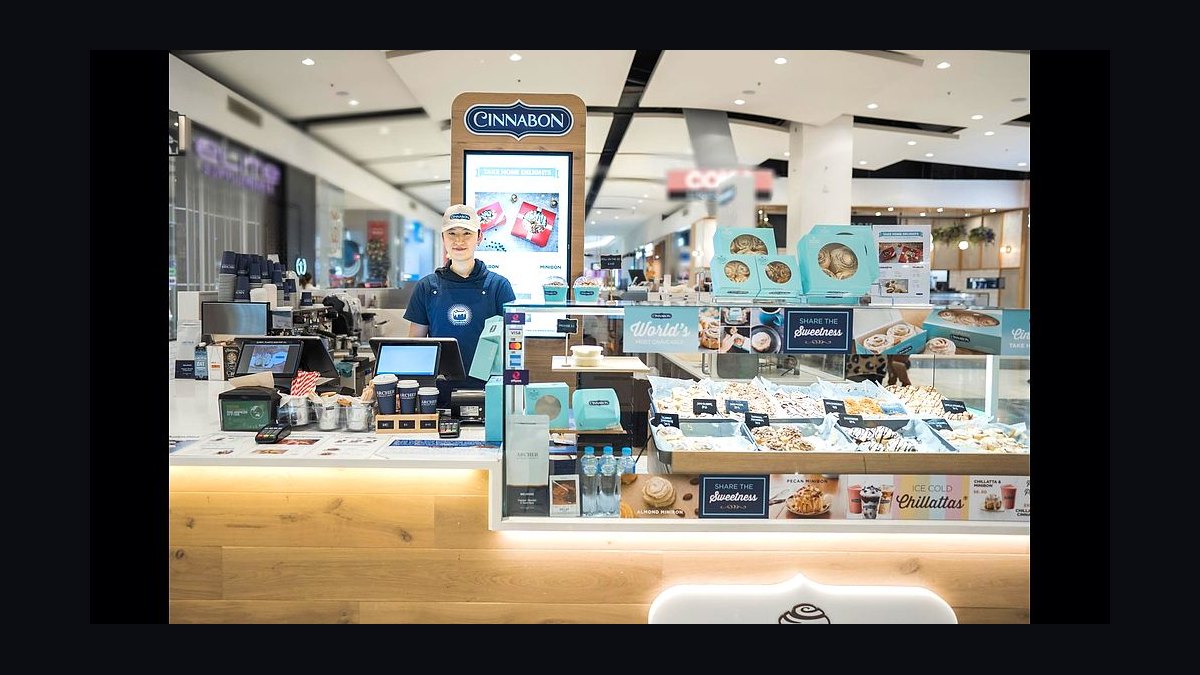
Competitive pressure compounds the seasonality risk. Carvel competes directly with Dairy Queen, Cold Stone Creamery, Baskin-Robbins, and a dense field of independent and regional ice-cream shops, all chasing the same warm-weather traffic. In new markets outside the Northeast, co-branding with sister GoTo Foods concepts like Auntie Anne's or Cinnabon can help build traffic faster, but it adds dual-equipment costs, cross-training overhead, and can compress net margin — one Atlanta co-branded operator reported an 8% net margin versus roughly 12% for a standalone Northeast unit, even though the co-branded location generated more total revenue.
Exit friction is an edge case new franchisees rarely price in. Carvel/GoTo Foods holds a right of first refusal on any sale and can block a transfer if a buyer lacks $150,000-$300,000 in liquid assets and 2+ years of food-service experience, which narrows the buyer pool considerably. Sellers who list during the winter trough often have to discount 30% or more to close — one upstate New York franchisee listed at $120,000 in November and didn't close until $85,000 the following April. Lease timing is another edge case: a buyer facing a soon-to-expire lease will often demand a lower price or walk, so franchisees nearing the end of a lease term should renegotiate before listing, not after. Finally, non-payment of royalties (with a standard 30-day cure period) or health-code violations are the two most common termination triggers — operational discipline on both fronts is non-negotiable protection for your investment.
A practical rollout plan
The path from decision to opening a Carvel franchise runs roughly 145 days if you move efficiently, and it should not compress the diligence phase just to open faster. Start with 20 days reading the current FDD in full, including Item 19 (financial performance) and the format comparisons, so you understand exactly what express, non-traditional, and full-Shoppe economics look like before talking to anyone. Spend the next 25 days calling at least 8 existing operators — not just franchisor-recommended references — and ask specifically about AUV, cake-sales percentage of revenue, winter margin, real labor cost as a percentage of gross, and how long their break-even actually took versus what they were told to expect.
From there, spend roughly three weeks choosing a format and validating that your target market has enough warm-season and celebration-driven demand to support it; this is also when you should confirm territory protection terms for your specific location type, since express and non-traditional formats often have none. Build-out and staffing take the longest stretch, roughly 50 days, covering lease finalization, equipment installation, and hiring your first cake-decorating team member before opening. Once open, the first 30 days should focus on driving cake orders immediately rather than waiting for the first holiday season, since the habits and customer list you build early carry you through the first winter.
Related questions
How much does it cost to open a Carvel franchise? Total Item 7 investment ranges from about $250,000 for a smaller express format to $1,500,000 for a full Shoppe, including a $30,000 franchise fee, build-out, equipment, signage, and working capital.
Is Carvel profitable for franchise owners? Mature shops gross $350,000-$900,000 with owner earnings of $50,000-$200,000, but profitability depends heavily on cake-sales mix, labor-cost control, and how well seasonality is managed.
What's the difference between a Carvel Shoppe and an express location? A full Shoppe costs more ($400,000-$800,000+ build-out) but supports higher volume and stronger territory protection; express/non-traditional formats cost less to open but often carry no exclusive territory.
How long does it take to break even on a Carvel franchise? Most operators report 18-36 months to break even, with monthly break-even sales of $28,000-$35,000 for a full Shoppe or $12,000-$18,000 for an express kiosk.
How easy is it to sell a Carvel franchise later? Resale typically takes 6-12 months, with sale prices often 10%-20% below asking and franchisor approval requiring a buyer with $150,000-$300,000 in liquid assets.
FAQ
What is the total investment range for a Carvel franchise in 2027?
The total initial investment varies by format, typically ranging from about $250,000 for a smaller express or retail-counter setup to $1,500,000 for a full Shoppe. This includes the franchise fee, equipment, build-out, and initial inventory, though exact figures depend on location and size.
How much can I expect to earn as a Carvel franchise owner? Mature Carvel shops generally report gross annual sales between $350,000 and $900,000, with owner earnings after royalties and expenses typically falling in the $50,000-$200,000 range. Actual profits vary widely based on format, location, and how much of the business comes from ice-cream cakes.
Does Carvel have strong brand recognition and support for new franchisees? Yes. Carvel is a 90-year-old brand with high awareness for its ice-cream cakes and soft-serve, especially in the Northeast. As part of GoTo Foods, it offers training, marketing support, and supply-chain resources, though support depth can vary by format and region.
What are the biggest challenges of owning a Carvel franchise? The main challenges are seasonality, since sales and margins swing sharply between summer and winter, intense competition from other frozen-dessert brands, high staff turnover, and heavy geographic concentration in the Northeast, which limits brand-recognition advantages elsewhere.
What franchise fees and ongoing costs should I expect? The initial franchise fee is around $30,000. Ongoing costs include a royalty of roughly 5%-6% of gross sales plus a 2%-3% advertising fee, both standard for the category and detailed in the current FDD.
Is it hard to sell a Carvel franchise if I want to exit? It can take longer than stronger-traffic brands — typically 6-12 months versus 3-6 months for concepts like McDonald's or Dunkin'. Carvel/GoTo Foods also holds a right of first refusal, and qualified buyers generally need $150,000-$300,000 in liquid assets plus food-service experience.
Sources
- https://www.carvel.com
- https://www.gotofoods.com
- https://www.franchise.org
- https://www.entrepreneur.com/franchise-500
- https://www.ibisworld.com
- https://www.statista.com
- https://www.nrn.com
- https://www.franchisebusinessreview.com
- https://www.bizbuysell.com
- https://www.franchisetimes.com
Related on PULSE
This page will be disappearing soon. Save it to your device for $1 — or read it free while it is here.
@Kory-White- · if Venmo asks, the last 4 of my number are 2012
This page is gone.
This one is off the shelf now. $1 keeps it on your phone for good — the whole page, pictures and diagrams included.
 franchiseShould I open or buy a Papa John's franchise in 2027?
 franchiseShould I open or buy a Massage Envy franchise in 2027?
 franchiseShould I open or buy a Meineke franchise in 2027?
 franchiseShould I open or buy a Sonic Drive-In franchise in 2027?
 franchiseShould I open or buy a Kumon franchise in 2027?
 franchiseShould I open or buy a Subway franchise in 2027?
 franchiseShould I open or buy a Wendy's franchise in 2027?
 franchiseShould I open or buy a Cold Stone Creamery franchise in 2027?
 franchiseShould I open or buy a McAlister's Deli franchise in 2027?
 franchiseShould I open or buy a Servpro franchise in 2027?