


Should I open or buy a Pizza Ranch franchise in 2027?
Quality
Certified
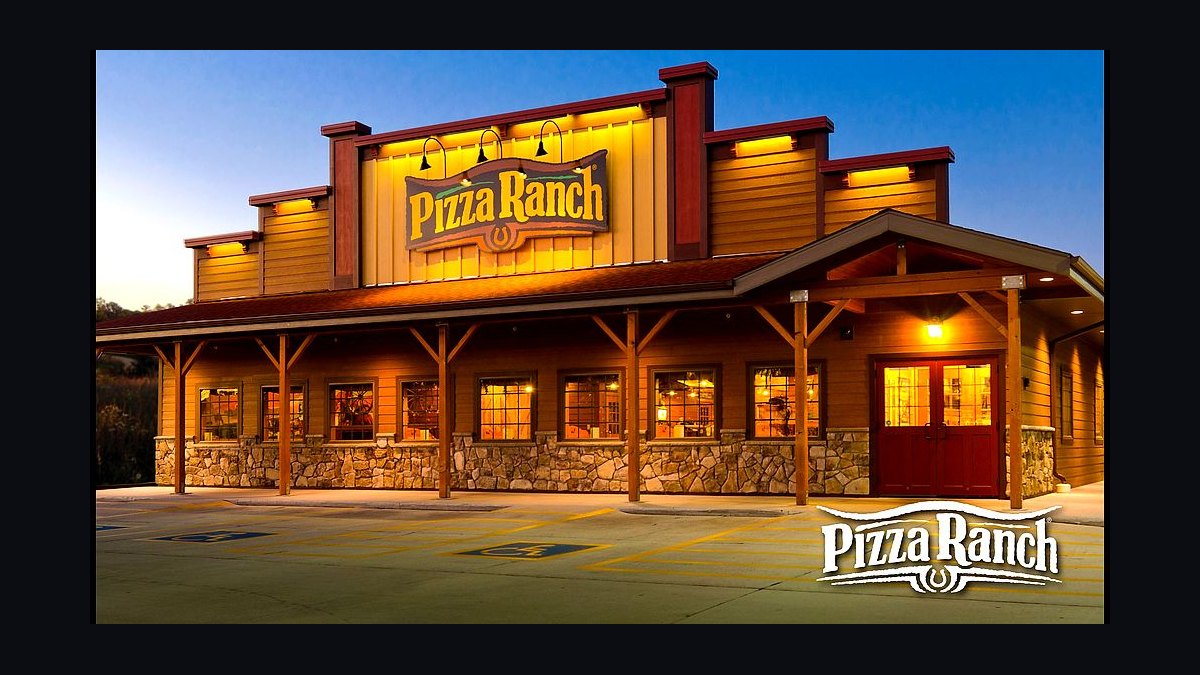
Yes, but only if you're a well-capitalized operator — realistically $500,000+ liquid and $1.5M+ net worth — targeting a Midwest or Plains community market. Opening a Pizza Ranch franchise in 2027 means committing $1.5M-$3M to a labor-intensive buffet model that combines pizza and fried chicken; done right in the right market, mature units clear $200,000-$450,000 a year, but the buffet format punishes under-capitalized or inexperienced operators.
The outcome you should expect
If you open a Pizza Ranch franchise in a strong Midwest community market with adequate capital, the realistic trajectory looks like this: a slow first year while you build lunch and dinner traffic, a meaningful jump in year two as community loyalty compounds, and a mature, high-AUV unit by year three. First-year gross revenue for a new Pizza Ranch typically runs $1.2M-$1.8M — well below the $2.0M-$3.8M a mature unit produces — because the dual buffet (pizza plus fried chicken) needs repeat local traffic to hit steady-state volume, and that traffic takes time to earn in a country-themed, community-anchored format.
Break-even generally lands in months 18-30, which is slower than a delivery-only pizza concept because the capital base is so much larger and the operating model so much more complex. Owner cash flow in the first two years is often just $80,000-$150,000 as you reinvest in community marketing, staff training, and working-capital cushions for slow seasons. By year three or four, well-run units settle into the $200,000-$450,000 owner-earnings range, with the top quartile of the system clearing $3.2M+ in gross revenue against a bottom quartile stuck around $1.5M. The gap between those two outcomes is almost entirely about market selection, labor discipline, and buffet-waste control — not brand strength, since the brand pulls comparably well across its footprint.
The outcome you should NOT expect is a quick-flip franchise. Pizza Ranch is a slow-build, high-ceiling asset: it rewards patience and local roots far more than it rewards fast capital deployment, which makes it a poor fit for an absentee investor chasing a rapid return and a strong fit for an owner-operator planning to live in the community for a decade or more.
What drives that outcome
Three levers explain almost all of the variance between a Pizza Ranch that clears $450,000 and one that limps at $80,000: food cost discipline, labor management, and community-market fit. Food cost for the dual buffet runs 30%-35% of revenue — higher than the 25%-28% typical of pizza-only concepts — because fried chicken carries volatile commodity pricing and a buffet has to stay visually full even during slow dayparts, which means portioning and waste tracking have to be tight from day one. Labor runs another 28%-33%, driven by the 25-40 employees a full buffet format needs versus the 10-15 a delivery-focused pizza brand requires; a FunZone arcade adds maintenance labor on top of that.
Community-market fit is the multiplier on top of both. Pizza Ranch's economics assume a loyal, repeat local customer base — church groups, youth sports teams, senior groups, and families — showing up multiple times a month. That loyalty is real and durable in the brand's Iowa/Minnesota/South Dakota/Nebraska/Wisconsin stronghold, where the concept has decades of trust built in, but it does not transplant automatically to an expansion market. An operator who opens in a strong-fit Midwest town gets a tailwind on all three levers; an operator who opens the same physical restaurant in a market with no cultural affinity for the buffet format is fighting the model from day one.
Benchmarks and realistic ranges
Use the 2026 FDD figures as your planning baseline, then stress-test them against your specific site. The franchise fee sits at $35,000-$45,000, and total Item 7 investment runs $1.5M-$3M, broken down roughly as: buildout and leasehold $700,000-$1.7M, equipment and kitchen (ovens, fryers, buffet line, POS) $350,000-$700,000, signage and country-themed decor $45,000-$130,000, FunZone arcade equipment $30,000-$120,000, initial inventory $18,000-$45,000, initial marketing $25,000-$60,000, and working capital $100,000-$250,000 for the first three to four months. Royalty runs 4%-5% of gross and the ad fee 2%-3%, though the ad fee is capped near $8,000/month for high-volume stores, which protects margin as a location scales past its early years.
Real estate needs are heavier than a typical pizza franchise: 4,500-6,500 square feet with seating for 180-280 guests, versus 1,500-2,500 square feet for a delivery-only pizza brand. The brand looks for end-cap or freestanding buildings in suburban strip centers with strong visibility, targeting trade areas of 25,000-50,000 residents within a 10-minute drive. Territory protection is a 3-mile radius, with exclusive development rights available to multi-unit commitments in a county or metro. As of 2026, roughly 80% of new openings are landing in existing core markets, with only 20% in expansion states like Colorado, Missouri, or Illinois — a signal that the brand itself is being conservative about where the community-loyalty engine actually works, and an early operator considering an expansion-state site should read that ratio as a caution flag, not a green light.
Average check runs $12-$16 per person including drink and arcade tokens, lunch (11am-2pm) drives about 40% of daily traffic, and delivery/catering has grown to 10%-15% of sales at many locations — a meaningful diversification lever against the buffet's structural exposure to slow dayparts. Seasonality is pronounced: Q4 holiday parties and family gatherings can produce roughly 30% of annual revenue, while Q1 often sees a 15%-20% drop, which is exactly why the working-capital reserve matters more here than in a steadier quick-service format. Plan on $200,000-$350,000 in reserves beyond the initial build to ride out that ramp-up and seasonal cycle without cash stress forcing corner-cutting on food quality or staffing.
Risks, edge cases, and failure modes
The single biggest failure mode is opening a large-format, high-capital buffet in a market that doesn't have the community-loyalty base the model depends on. A Pizza Ranch outside the Midwest footprint faces higher startup costs (logistics, training travel, supply-chain setup) and longer site-approval timelines — 6-9 months versus 4-6 in core markets — and if the local customer base doesn't already have cultural familiarity with a country-themed buffet, the AUV can land closer to the bottom-quartile $1.5M than the top-quartile $3.2M+, while fixed costs (rent, debt service, base staffing) stay the same regardless.
The second failure mode is under-capitalization. Because Item 7 runs $1.5M-$3M and the ramp period can run 18-30 months to break-even, an operator who opens with only the minimum working capital and no reserve for a slow Q1 or a rough commodity-pricing cycle on chicken can find themselves cash-constrained exactly when they need flexibility to invest in local marketing or staff retention. This is a structurally different risk profile from a smaller-format QSR pizza franchise, where a bad quarter is a bruise rather than an existential threat.

Third, buffet-specific operational risk: food waste, sanitation compliance, and portion discipline are harder to manage at scale than they look on paper, and health department inspections are more frequent for buffet formats than for delivery-only kitchens. An operator without prior high-volume food-service management experience — ideally with actual buffet or cafeteria-style experience, not just QSR — is taking on a steeper operational learning curve than the brand's marketing materials suggest.
Fourth, there's a category-level risk worth naming honestly: the buffet segment broadly has faced structural headwinds industry-wide (rising food and labor costs squeeze the all-you-can-eat economics harder than a per-item menu), and while Pizza Ranch's community-institution status and multiple revenue streams (buffet, takeout, delivery, arcade) have insulated it better than most buffet concepts, that's a tailwind that could weaken, not a permanent guarantee. Any franchisee should validate current Item 19 data at the time of signing rather than relying on multi-year-old averages, since commodity and labor cost trends move faster than FDD revision cycles.
Finally, consider the adjacent-format comparison as a sanity check on your specific market: Gatti's Pizza runs a similar buffet-plus-games model at a different price point, Cicis is a lower-capital pizza buffet, and Golden Corral is a non-pizza buffet with comparable labor intensity — if you're drawn to Pizza Ranch specifically for the buffet format rather than the pizza-and-chicken combination, it's worth benchmarking your target site against what a Cicis or Gatti's operator in the same trade area is actually seeing, since a market that can't support one buffet concept usually can't support another.
A practical rollout plan
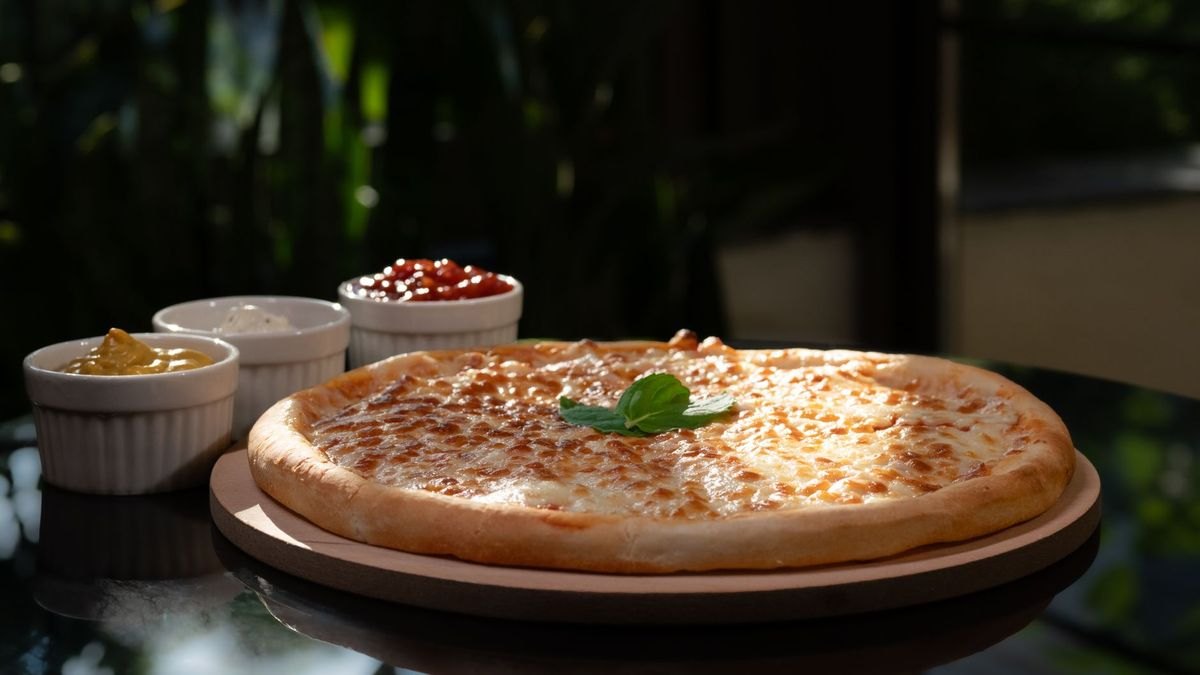
Treat the first 180 days as a disciplined, sequential validation-and-build process rather than a race to opening day — rushing any one of these steps is where under-capitalized or mismatched operators get into trouble. Days 1-25: read the full 2026 FDD, with particular attention to Item 19 (financial performance) and Item 20 (unit counts and turnover by state) — turnover data will tell you honestly whether expansion-state locations are struggling. Days 26-50: call at least eight existing operators, ideally a mix of core-Midwest and expansion-state franchisees, and ask directly about AUV, food-waste percentage, labor cost as a share of revenue, and net profit after debt service — not just gross sales, which can look impressive while masking a thin or negative bottom line.
Days 51-75: validate your specific site against the brand's real estate criteria (25,000-50,000 residents within a 10-minute drive, visibility, trade-area demographics) and confirm the local market has genuine cultural affinity for a family buffet — church groups, youth sports, multi-generational family dining. Days 76-150: build out the 4,500-6,500 square foot space and hire and train your 25-40 person team, treating labor training as seriously as construction, since a buffet's food-waste and service-speed outcomes are set by staff habits from week one. Days 151-180: open and focus deliberately on community-loyalty building — sponsorships, local partnerships, church and school outreach — since that loyalty, more than any menu tweak, is what moves you from a $1.5M bottom-quartile unit toward a $3M+ top-quartile one. From day 180 onward, the ongoing discipline is the same three levers as above: manage buffet waste and labor tightly, and keep pushing catering and delivery as a hedge against the seasonal Q1 slump.
Related questions

How does Pizza Ranch's investment compare to a delivery-only pizza franchise? Pizza Ranch requires roughly 3-6x the capital of a delivery-only pizza brand ($1.5M-$3M versus $300,000-$600,000 for many QSR pizza concepts) because of the large-format buffet buildout, seating, and arcade — but it also produces a much higher AUV ceiling.
Can a Pizza Ranch succeed outside the Midwest? It can, but the data shows only about 20% of new openings are landing in expansion states, startup costs run higher, and site approval takes longer — treat an out-of-footprint location as a higher-risk bet requiring stronger local validation.
What's the biggest hidden cost in opening a Pizza Ranch? Working capital during the 18-30 month ramp to break-even is the most commonly underestimated line — budget $200,000-$350,000 beyond Item 7 specifically for seasonal dips and slow early months.
How much does the FunZone arcade actually contribute? The arcade typically adds 5%-8% of total sales but requires $50,000-$100,000 in equipment investment plus ongoing game repair and prize-inventory maintenance, so it's a genuine revenue stream, not a minor amenity.
FAQ
How much does a Pizza Ranch franchise cost in 2027? Total investment for a new Pizza Ranch franchise in 2027 typically runs $1.5 million to $3 million, including a franchise fee of $35,000 to $45,000. Costs cover the large buffet format, real estate, equipment, and initial inventory, and vary by market and site conditions.
How much money can a Pizza Ranch franchise owner make?

Mature units generally generate $2 million to $3.8 million in annual gross sales, with owner earnings typically in the $200,000 to $450,000 range once past the ramp-up period. Actual profit depends heavily on labor management, food cost control, and local market strength.
Is Pizza Ranch only in the Midwest? Pizza Ranch is heavily concentrated in the Midwest, with the bulk of locations in Iowa, Minnesota, South Dakota, Nebraska, and Wisconsin. Expansion into other regions is happening but remains a small minority of new openings, and the brand's community-loyalty economics are strongest in its historical footprint.
What makes Pizza Ranch different from other pizza franchises? Pizza Ranch combines a pizza buffet with a fried chicken buffet in a country-themed, family-friendly setting, often paired with a FunZone arcade. That dual-product buffet model and deep community focus separate it from typical delivery-first or fast-casual pizza chains.
Is opening a Pizza Ranch franchise high-risk or especially labor-intensive? Yes, relative to most pizza concepts — the buffet format needs 25-40 employees per unit, more intensive food-waste and sanitation management, and higher food cost percentages than a pizza-only menu. Well-capitalized operators with real food-service management experience handle these demands far better than first-time restaurant owners.
What net worth and liquidity do I need to qualify? Franchisees typically need liquid capital of at least $500,000 to $750,000 and a net worth of $1.5 million or more, along with prior restaurant or multi-unit management experience. The brand also screens for cultural fit with its community-focused operating philosophy.
Sources
- https://www.entrepreneur.com/franchises/directory
- https://www.franchisedirect.com
- https://www.ibisworld.com
- https://www.statista.com
- https://www.nrn.com
- https://www.franchise.org
- https://www.qsrmagazine.com
- https://www.franchisebusinessreview.com
- https://www.restaurantbusinessonline.com
Related on PULSE
- Best pizza franchises to buy in 2027
- Should I open or buy an East of Chicago Pizza franchise in 2027?
- Should I open or buy a Gatti's Pizza franchise in 2027?
- Should I open or buy a Snappy Tomato Pizza franchise in 2027?
- Should I open or buy a Hunt Brothers Pizza franchise in 2027?
- Should I open or buy a Toppers Pizza franchise in 2027?
This page will be disappearing soon. Save it to your device for $1 — or read it free while it is here.
@Kory-White- · if Venmo asks, the last 4 of my number are 2012
This page is gone.
This one is off the shelf now. $1 keeps it on your phone for good — the whole page, pictures and diagrams included.
 franchiseShould I open or buy a Wingstop franchise in 2027?
 franchiseShould I open or buy a Meineke franchise in 2027?
 franchiseShould I open or buy a Bojangles franchise in 2027?
 franchiseShould I open or buy an F45 Training franchise in 2027?
 franchiseShould I open or buy a Jeremiah's Italian Ice franchise in 2027?
 franchiseShould I open or buy a Smoothie King franchise in 2027?
 franchiseShould I open or buy a Primrose Schools franchise in 2027?
 franchiseShould I open or buy a Supercuts franchise in 2027?
 frShould I open or buy a McDonald's franchise in 2027?
 franchiseShould I open or buy a Wendy's franchise in 2027?