


Should I open or buy an Uncle Maddio's franchise in 2027?
Quality
Certified
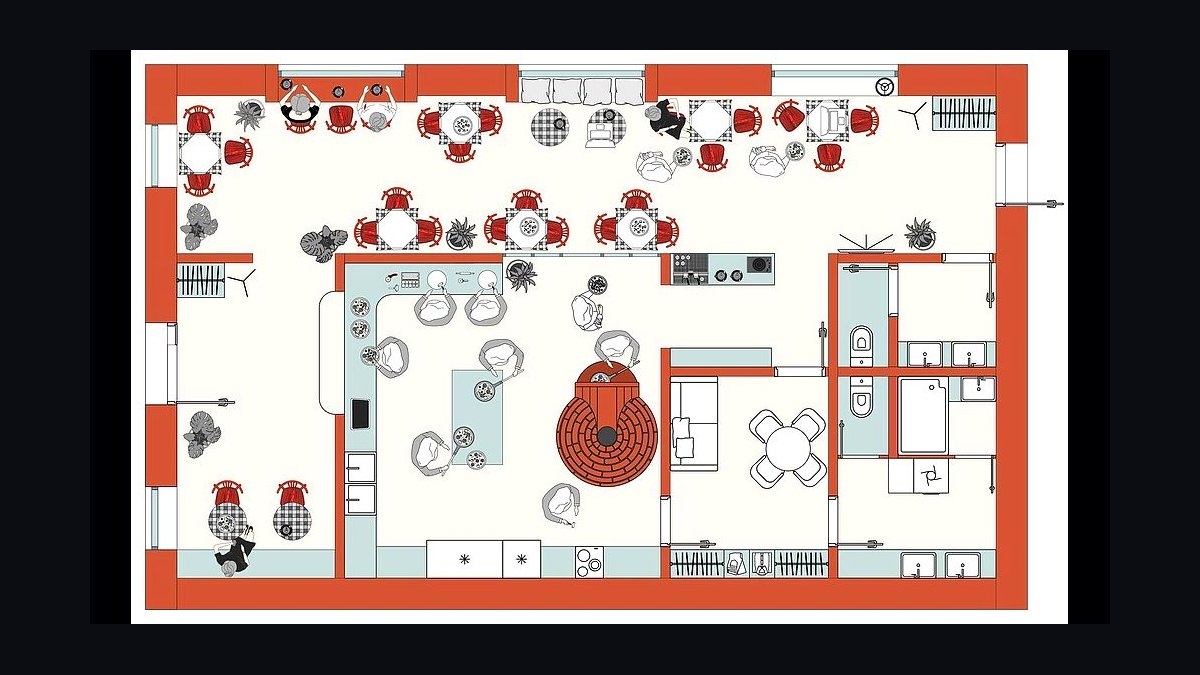
Open or buy an Uncle Maddio's franchise in 2027 if you can bring $400,000-$750,000 in total investment, differentiate against Blaze Pizza and MOD Pizza in a strong site, and commit to hands-on, full-time operation. Uncle Maddio's works best for operators who build a real catering program and control food and labor cost — skip it if you can't do either.
What it is and why it matters
Uncle Maddio's is a fast-casual, build-your-own pizza franchise founded in 2008 in Atlanta, built around an assembly-line format where customers customize personal pizzas, salads, and paninis that move through high-heat ovens in under five minutes. The brand sits in the same competitive tier as Blaze Pizza, MOD Pizza, and Pieology — a segment that expanded rapidly from 2012 through 2019, then consolidated hard as unit economics tightened and several chains overbuilt. Deciding whether to open or buy an Uncle Maddio's franchise in 2027 matters because the fast-casual pizza category is no longer a growth story by default; it's a maturing, competitive space where the winners are the operators who out-execute on site selection, cost discipline, and incremental revenue channels like catering, not the ones simply riding a trend.
The appeal of Uncle Maddio's specifically is threefold: a moderate capital requirement relative to some competitors, a proven build-your-own format that customers already understand from Chipotle-style assembly lines, and a health-forward menu (gluten-free crusts, vegan cheese, organic toppings) that broadens the customer base beyond pizza purists. The franchise also leans on catering as a structural advantage — boxed lunches and party platters can represent 15-25% of sales at a mature location, with meaningfully better margins than the walk-in counter business because of bulk purchasing and lower per-order labor intensity. That catering channel is a genuine differentiator against MOD Pizza, which has struggled post-2024 with store closures and paused franchise development in multiple regions, and against Blaze, which competes primarily on national brand recognition rather than local catering relationships.
Why this decision carries real weight in 2027 specifically: the segment's shakeout already happened once between 2015 and 2018, and it's happening again in slower motion as MOD's distress ripples through the category. That means site availability in formerly MOD-anchored centers has opened up in some markets, but it also means any franchisee evaluating Uncle Maddio's needs to underwrite the deal assuming continued competitive pressure, not category tailwinds. A franchisee who treats this as a passive, "the concept sells itself" investment is underwriting the wrong deal.
The step-by-step process (mermaid)
Evaluating and opening an Uncle Maddio's franchise follows a fairly linear sequence, and skipping steps — especially the operator interviews and the Item 19 validation — is where most bad decisions get made. Start with the Franchise Disclosure Document itself: read Items 5 (initial fees), 6 (other fees), 7 (total investment range), 19 (financial performance representations), and 20 (outlet counts, including closures and transfers, which tell you more about the brand's real health than any marketing deck). Item 20 in particular will show you how many units have closed or been terminated in the last three years — a rising closure count is the single most honest signal available to a prospective franchisee.
From there, the process moves to direct operator outreach. Call at least eight current Uncle Maddio's franchisees, prioritizing a mix of single-unit and multi-unit operators in different geographies, and ask specifically about average unit volume, catering as a percentage of sales, actual food and labor cost percentages (not the FDD's stated targets), and how responsive corporate support has been. Only after that validation should you move to site selection — touring available real estate, running demographic and trade-area analysis, and checking for competitive clustering against existing Blaze, MOD, or Pieology locations within roughly 1.5 miles. Site selection and lease negotiation typically take four to six weeks once you're seriously evaluating specific properties.
Build-out, equipment installation, and staff hiring and training follow, generally running seven to ten weeks depending on permitting timelines and contractor availability in your market — permitting delays are the single most common cause of opening-date slippage. The final phase is opening and, critically, launching catering outreach in parallel rather than treating it as an afterthought once the counter business stabilizes.
Costs, timelines, and typical ranges
The 2026 FDD lists a franchise fee of roughly $30,000, with total Item 7 investment ranging from approximately $400,000 to $750,000 depending on square footage, market, and whether equipment is leased or purchased. Within that range, buildout and leasehold improvements typically run $220,000-$420,000, equipment and high-heat ovens $110,000-$220,000, signage and decor $20,000-$55,000, initial inventory $10,000-$24,000, initial marketing $14,000-$38,000, training and travel $10,000-$30,000, and working capital for the first three months $40,000-$100,000. Liquid capital requirements generally sit at $150,000-$225,000, separate from financing for the remainder.
Ongoing fees stack up to roughly 8-9% of gross revenue: a royalty near 5-6% plus an advertising fee around 2-3%, and some agreements layer on additional local marketing contributions on top of that. Mature units gross between $650,000 and $1.3 million annually, with owners typically clearing $80,000-$210,000 after all expenses — a wide range that reflects how much site quality, catering penetration, and cost control actually matter in this model.
Timeline-wise, most owners report six to twelve months from signing the franchise agreement to opening day. Preferred footprints have shrunk since 2020, from the old 1,800-2,200 square foot standard down to 1,400-1,800 square feet, with corporate now favoring end-cap or inline spaces in strip centers anchored by grocery or discount retailers rather than mall or food-court locations, which have fallen out of favor due to declining foot traffic and high common-area maintenance costs. Lease terms to target: base rent of $3,500-$5,500 per month in secondary markets or $6,000-$9,000 in prime suburban locations, with percentage-rent breakpoints negotiated to kick in only above $700,000 in annual sales, and triple-net costs adding another $1.50-$3.00 per square foot annually. Corporate generally recommends a trade area of at least 15,000 people within a ten-minute drive and median household income of $65,000 or higher, though experienced franchisees report that density of families with school-age children and a strong daytime office or medical population predict performance better than raw income alone.
Where teams get it wrong
The most common mistake is underestimating labor cost. The build-your-own, assembly-line format requires a higher staff-to-customer ratio than a traditional quick-service pizza chain like Domino's or Pizza Hut, and typical labor runs 28-33% of sales including management salaries — in California or New York, minimum wage increases pushed some units to 35-38% by 2026. Franchisees who model labor at national-average percentages without adjusting for their specific state's wage trajectory routinely open with a financial model that's already wrong before day one.
The second recurring error is treating catering as an optional add-on instead of a core revenue channel. Catering can add $50,000-$120,000 in annual sales at a mature store with food cost around 22% — noticeably better than the 26-30% typical of counter sales — but only if the franchisee builds outreach relationships (offices, schools, event planners) from the opening month rather than waiting until the walk-in business plateaus. Franchisees who skip this leave meaningful margin on the table and end up competing purely on foot traffic against Blaze and MOD.
Third, site selection mistakes are expensive and hard to undo. Locating within competitive clustering distance of an established Blaze or MOD without a clear differentiator — better catering, better hours, a stronger local reputation — puts a new unit at a structural disadvantage from day one. Fourth, many operators underprice the impact of third-party delivery commissions: DoorDash and Uber Eats typically account for 15-25% of sales but carry 15-30% commission fees, and franchisees who don't raise delivery-platform menu prices by 10-15% to offset that commission are effectively subsidizing the delivery platform out of their own margin. Finally, some franchisees underbudget equipment maintenance — the ovens alone cost $25,000-$35,000 each and need $1,500-$3,000 in annual servicing, with $8,000-$12,000 per year a realistic reserve for equipment repair and replacement across the unit.
Decision framework: when to choose what (mermaid)
The core decision isn't simply "open an Uncle Maddio's or don't" — it's choosing among several adjacent paths once you've decided the fast-casual pizza category fits your goals. If you have $400,000-$750,000 and want a build-your-own concept with a differentiated health angle and catering upside, Uncle Maddio's is a reasonable choice, particularly in a market where a nearby MOD Pizza location has recently closed and left demand unclaimed. If your capital is closer to the $350,000-$500,000 low end and national brand recognition matters more to you than catering, Blaze Pizza's stronger marketing engine may be worth its slightly higher food-cost profile. If value pricing and a larger parent company's purchasing power appeal to you more than operational flexibility, Pieology (owned by FAT Brands) is the closer fit, though its investment range runs $400,000-$800,000. If you'd rather stay outside the pizza-specific fast-casual assembly-line format entirely, fresh-Mex concepts like Salsarita's or Pancheros use a comparable build-your-own operational model with different food-cost dynamics, and traditional pizza franchises like Marco's Pizza or Hungry Howie's trade the customization story for a simpler, more standardized operation.
Related questions
How long does it take to open a franchise and break even in 2027?
Most Uncle Maddio's franchisees report six to twelve months from signing to opening, with break-even typically arriving twelve to twenty-four months after opening depending on site strength, catering ramp, and how quickly labor cost stabilizes near the 28-33% target.
Is Uncle Maddio's better than Blaze Pizza for a first-time franchisee?
Uncle Maddio's generally requires less capital on the high end and leans harder on catering, while Blaze offers stronger national brand recognition. Neither is objectively better — the right choice depends on your local competitive landscape and whether catering sales relationships are a strength you can build.
What's the biggest financial risk in an Uncle Maddio's franchise?
Labor cost volatility is the biggest recurring risk, especially in high-minimum-wage states where costs can run 35-38% of sales instead of the 28-33% national range, compressing owner earnings faster than any other single line item.
Can I convert a failed MOD Pizza location into an Uncle Maddio's?
It's possible where lease terms allow, and some franchisees have captured former MOD customers this way, but you should independently validate the site's demographics and competitive clustering rather than assuming a prior pizza concept's failure was purely about the brand.
FAQ
What is the total investment needed to open an Uncle Maddio's franchise? The total initial investment typically ranges from $400,000 to $750,000, including the $30,000 franchise fee, equipment, leasehold improvements, and working capital. Exact costs depend on location size, local build-out requirements, and whether you lease or purchase equipment.
How much can I expect to earn as an owner? Mature units generally report annual gross revenue between $650,000 and $1,300,000, with owner income ranging from $80,000 to $210,000 after expenses. Actual profitability varies significantly based on location, local labor costs, and how well you manage food waste and labor.
How does Uncle Maddio's compare to Blaze Pizza or MOD Pizza? Uncle Maddio's operates in the same fast-casual build-your-own pizza space but with a slightly smaller footprint and lower initial investment than some larger competitors. The brand emphasizes customization and health-conscious options, but faces intense competition from better-funded chains with stronger national recognition.
What are the ongoing fees for an Uncle Maddio's franchise? The royalty fee is approximately 5% to 6% of gross sales, plus an advertising fee typically around 2% to 3%. Some agreements may require additional local marketing contributions, so total ongoing fees can reach 8% to 9% of revenue.
How long does it take to open a franchise? From signing the franchise agreement to opening day, most owners report a timeline of six to twelve months. This includes site selection, lease negotiation, build-out, training, and final inspections. Delays often occur due to permitting or construction contractor availability.
Is Uncle Maddio's a good fit for first-time franchisees? Yes, the model is designed for both experienced and first-time operators, with a moderate capital requirement and a straightforward assembly-line operation. Success depends heavily on strong local marketing, effective staff management, and choosing a high-traffic site that can support the volume needed to cover fixed costs.
Sources
- https://www.unclemaddios.com
- https://www.entrepreneur.com/franchises
- https://www.franchise.org
- https://www.qsrmagazine.com
- https://www.nrn.com
- https://www.ibisworld.com
- https://www.statista.com
- https://www.franchisebusinessreview.com
- https://www.technomic.com
Related on PULSE
This page will be disappearing soon. Save it to your device for $1 — or read it free while it is here.
@Kory-White- · if Venmo asks, the last 4 of my number are 2012
This page is gone.
This one is off the shelf now. $1 keeps it on your phone for good — the whole page, pictures and diagrams included.
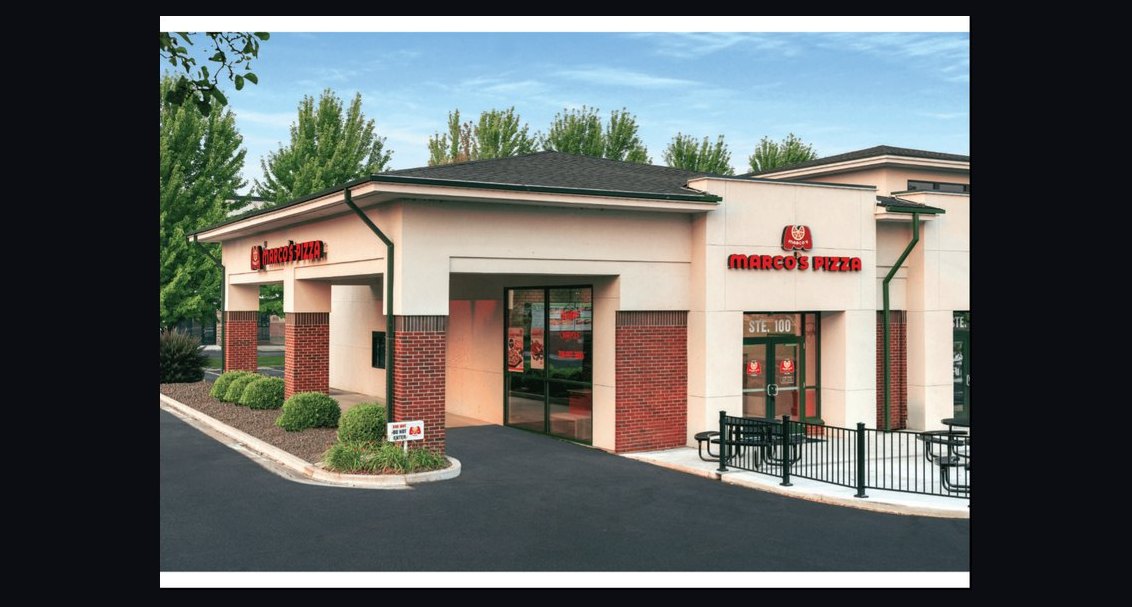 franchiseShould I open or buy a Marco's Pizza franchise in 2027?
 franchiseShould I open or buy a Mac Tools franchise in 2027?
 franchiseShould I open or buy a Bojangles franchise in 2027?
 franchiseShould I open or buy a Kumon franchise in 2027?
 franchiseShould I open or buy a Roto-Rooter franchise in 2027?
 franchiseShould I open or buy a Take 5 Oil Change franchise in 2027?
 franchiseShould I open or buy a Crumbl Cookies franchise in 2027?
 franchiseShould I open or buy a Meineke franchise in 2027?
 franchiseShould I open or buy a Drybar franchise in 2027?
 franchiseShould I open or buy a Bruster's Real Ice Cream franchise in 2027?