


Should I open or buy an East of Chicago Pizza franchise in 2027?
Quality
Certified
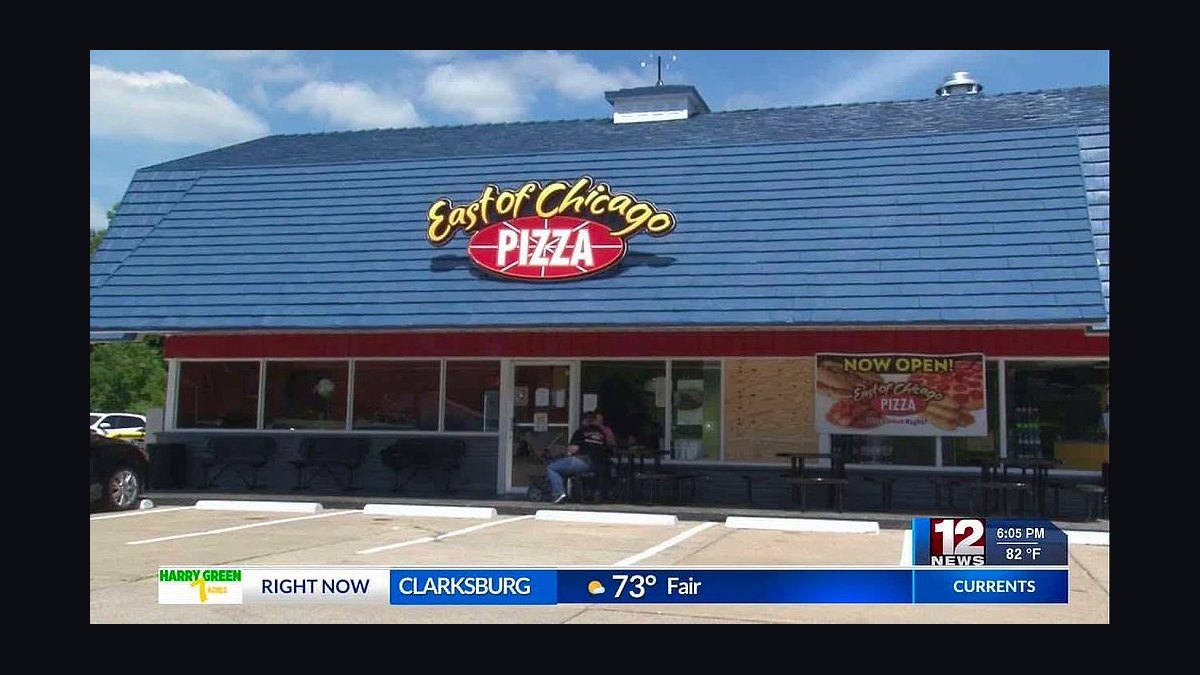
Buying an existing East of Chicago Pizza store is usually the better play for 2027: a mature unit grossing $600K–$1.3M with proven local loyalty removes the two-year ramp risk. Open new only if you already know pizza operations, have $250K–$700K available, and are inside the Ohio/Midwest footprint.
Opening new versus buying an existing store
These are two genuinely different businesses wearing the same sign, and operators get burned by treating them as one decision with two price tags. Opening a new East of Chicago Pizza franchise means you pay the initial franchise fee of roughly $20,000–$30,000, negotiate a lease, build out a space, buy equipment, hire and train a crew from zero, and then spend twelve to twenty-four months teaching a trade area that you exist. Your total Item 7 investment lands somewhere between $250,000 and $700,000 depending on format, and every dollar of that is spent before you have taken a single order. The upside is that you choose everything — the site, the format, the layout, the staff, the culture. Nothing is inherited. There is no previous owner's reputation to overcome, no worn-out oven you did not budget for, no employee who has been coasting for six years.
Buying an existing unit inverts nearly all of it. You are purchasing a revenue stream with a history, and that history is the entire product. Resale values in this system typically land somewhere in the range of 1.5x to 2.5x annual net profit — for a mature store clearing $70,000 to $190,000, that suggests a purchase price in the rough neighborhood of $100,000 to $475,000, before you account for lease assignment, equipment condition, inventory, and any franchisor transfer fee. The franchisor generally holds a right of first refusal on transfers but typically permits them. What you get for that money is a Monday that already has customers on it. What you inherit is everything the seller did not fix: deferred maintenance, a lease with three years left and no options, a delivery driver roster that will quit the week you take over, a Google rating of 3.2 that took four years to earn and will take two to repair.
The framing that actually helps is this: a new build is a capital-risk decision, and an acquisition is a diligence-risk decision. Capital risk can be modeled — you can build the pro forma, stress it, and know your worst case within a range. Diligence risk cannot be modeled, only investigated. It rewards effort disproportionately. Two weeks of hard work on tax returns, POS exports, health inspection history, and the lease can move an acquisition from a coin flip to a confident yes. No comparable two weeks exists that de-risks a ground-up build in a market that has never seen the brand.
There is also a hybrid worth naming, because franchisees in slow-growth regional systems use it constantly: buy one existing store to learn the operation and the franchisor relationship, then open your second and third units yourself once you understand where the real costs hide. This sequences the risk properly. The acquisition funds your education; the new builds capture the upside. Multi-unit operators in this system tend to arrive at that pattern regardless of what they intended at the start, which is a reasonably strong signal that the pattern works.
How to decide between them
The decision hinges on four inputs, and they resolve in a fixed order. Take them out of order and you will talk yourself into whichever option the current conversation favors.
First: is there a store for sale in a trade area you actually want? This is a hard gate, not a preference. East of Chicago Pizza is a slow-growth regional chain that has added roughly five to fifteen net new units per year over the past decade, with a system of around eighty to one hundred units. In a system that size, in any given quarter there may be two available stores, or zero. If nothing is for sale within reasonable driving distance, the buy option does not exist, and the entire decision collapses to open-or-don't. Do not spend three months evaluating an acquisition strategy against an empty market.
Second: do you have restaurant operating experience? Not restaurant enthusiasm — experience. Have you run a shift on a Friday when two people called off and the oven went down? If the honest answer is no, the acquisition is the substantially safer path, because you are buying a functioning system that already knows how to make Friday work. A new build asks a first-time operator to invent the operation and build the demand simultaneously. That is two hard jobs stacked, and the failure mode is that both get done badly.
Third: liquidity versus total capital. These are separate constraints and people conflate them. You need roughly $100,000 to $175,000 liquid to be a credible candidate for either path, but a new build consumes that liquidity on a fixed schedule you do not control — the buildout takes three to six months from lease signing, and the money leaves whether or not the timeline holds. An acquisition typically closes faster and leaves more of the reserve intact, which matters enormously in month four when the walk-in compressor fails.
Fourth: your time horizon. If you intend to hold seven to fifteen years, which is where most franchisees in this system land, the ramp cost of a new build amortizes into noise. If you want cash flow inside eighteen months, buy.
A note on the last branch, because it is the one people argue with. East of Chicago Pizza's recognition is concentrated in Ohio and the surrounding Midwest. Inside that footprint the name does real work — it shortens the trust conversation with a family deciding where to spend forty dollars on a Tuesday. Outside it, you are paying a franchise fee and four to five percent of gross for a name your customers have never heard, while competing against Domino's, Papa John's, Pizza Hut, Little Caesars, and Marco's, all of whom have national advertising behind them. That is not a fatal problem, but it converts your business from "operate a known brand" into "build a brand with a royalty attached," and you should price that honestly before signing.
Concrete numbers behind each option
Start with the new build, because its costs are the most legible. The 2026 FDD puts total Item 7 investment at roughly $250,000 to $700,000, and the spread is almost entirely about format. A delivery and carryout unit at 1,200 to 2,500 square feet sits near the bottom of that range; a dine-in store with a lunch buffet at 2,500 to 4,000 square feet sits near the top. The components break down roughly as follows: franchise fee $20,000–$30,000; buildout and leasehold improvements $120,000–$350,000; equipment and ovens $70,000–$180,000; signage and decor $12,000–$45,000; opening inventory $8,000–$20,000; grand-opening marketing $10,000–$30,000; training and travel $8,000–$25,000; and working capital of $30,000–$80,000 covering roughly the first three months. Ongoing, you pay a royalty near four to five percent of gross and an advertising fee near two to three percent.
Lease cost is the line item that varies most by geography and that people underestimate most consistently. In smaller Midwest towns of five thousand to twenty-five thousand people, monthly rent might run $1,500 to $4,000. In larger cities and suburbs, expect $3,000 to $8,000 and up. Over a ten-year term that difference is not a rounding error — it is the difference between a store that survives a bad year and one that does not. The brand's regional recognition generally does not support premium retail corridors; the productive sites are strip mall end-caps and standalone buildings near schools, churches, and residential neighborhoods, not high-end lifestyle centers.
Now the acquisition. The headline number is the multiple — roughly 1.5x to 2.5x annual net profit — but the multiple is the least interesting part of the deal. What determines whether you overpaid is the quality of the earnings underneath it. Ask what produced the profit. A store clearing $150,000 on $1.1M of gross with a fully staffed crew and an absent owner is a genuinely different asset from a store clearing $150,000 on $850,000 of gross because the owner works sixty-five hours a week and pays himself nothing. The second one is a job with a price tag, and when you hire a manager to replace the owner's unpaid labor you will discover the real profit was $95,000. Recast the P&L before you talk about multiples: add back genuine one-time items, but subtract a market-rate salary for every hour the seller worked that you will not.
Then the operating model itself, which is the same for both paths. On $900,000 of gross, a reasonable shape is food cost around thirty percent ($270K), labor around twenty-eight percent ($252K), occupancy and delivery costs around thirteen percent ($117K), and royalty, advertising, and remaining operating expenses around fourteen percent ($126K), leaving owner earnings near $135,000. Every one of those percentages is a lever, and the two that move the most are food and labor. A three-point swing in combined food-and-labor on that volume is $27,000 — roughly twenty percent of your take-home. That is why cost discipline is not a personality trait in this business; it is the business.
The buffet format deserves its own arithmetic. A lunch buffet drives traffic and raises per-person averages, and in the right trade area it fills a daypart that carryout-only stores simply give away. But it adds labor to run the line, adds waste risk on every unsold pan, and demands a bigger, more expensive box. Model it separately rather than folding it into a blended assumption. If your market cannot deliver consistent weekday lunch volume — no nearby industrial park, no schools, no office cluster — the buffet is a cost center wearing a revenue costume, and the carryout format is both cheaper to enter and easier to run.
What diligence and buildout actually look like
For an acquisition, the work is documentary and it is unglamorous. Get three years of tax returns, not just P&Ls — returns are signed under penalty and they discipline the numbers. Pull the raw POS exports and look at daily sales by daypart across at least twenty-four months; that reveals seasonality, trend direction, and whether the recent months were dressed up for sale. Read the lease in full, including the assignment clause, the remaining term, the option structure, the CAM reconciliation history, and any personal guaranty. Order a health inspection history. Get an equipment condition assessment, with specific attention to the ovens, the walk-in, and the HVAC — those three items can carry five figures of deferred cost apiece. Call the franchisor and ask directly whether the store is current on royalties and whether there are open compliance issues or a required remodel coming. A mandated refresh you discover after closing is a nasty surprise.
Then talk to people. Interview other franchisees in the system, not just the ones the franchisor hands you — ask about actual AUV, format economics, food and labor percentages, and net profit after paying a manager. Ask specifically about the franchise business consultant assigned to their region, because in a system of eighty to one hundred units, support quality varies sharply by who is covering your territory. Some FBCs are responsive; others are stretched across many stores. That is a real operating variable, not a footnote.
For a new build, the sequence is different but no less specific. Budget three to six months from lease signing to opening, and treat that as a floor rather than a target. Initial training typically runs two to four weeks at the company's Ohio headquarters or a designated training store, covering food prep, inventory, POS, and business operations. Grand-opening support generally includes local marketing materials and a field representative for the first week — plan for one week, not a multi-week opening team, and staff accordingly. Ongoing field visits tend to run a couple of times per year, with a franchisee portal for manuals and access to the supply chain for dough, toppings, and packaging.

The realistic sequencing looks like this. Days one through twenty: read the 2026 FDD end to end, with real attention to Items 5, 6, 7, 19, and 20 — Item 20 in particular tells you the transfer and closure history, which is the single most honest page in the document. Days twenty-one through forty: interview existing operators. Days forty-one through sixty: choose your format and validate the trade area, or if you are buying, complete financial and lease diligence. Days sixty-one through one hundred five: build and staff, or close and transition. Days one hundred six through one hundred thirty-five: open, or take over and hold the crew together. After that, the job is cost control and local loyalty, in that order, for as long as you own the store.
One sequencing detail that matters more than it sounds: hire your kitchen lead before you need them, not when you open. In a small system without a deep bench, the constraint on your second unit is almost never capital — it is whether you have a person who can run a store without you in it. Operators who plan for multi-unit from day one start developing that person in month three.
Adjacent plays worth weighing before you commit
The honest comparison is not just open-versus-buy within one brand. Before signing, put East of Chicago next to its neighbors, because the pizza segment gives you unusually good substitutes at similar capital.
Larger pizza franchises — Marco's, Hungry Howie's, Domino's, Papa John's — offer deeper national advertising, more mature supply chains, and larger support organizations, at the cost of higher fees, tighter operating standards, and territories that are often already claimed in desirable markets. Buffet-forward regional players like Pizza Ranch and Gatti's occupy a similar niche to East of Chicago's dine-in format and are worth comparing on the same lunch-daypart math. Value-delivery concepts like Snappy Tomato compete for the same carryout customer at a comparable entry price. And an independent pizzeria remains a genuine option: no franchise fee, no royalty, complete menu freedom, and no brand — which in a small town where you are already known may be a fair trade, and in a suburb where you are anonymous usually is not.
Broaden one step further and the comparison sharpens. The same $250,000 to $700,000, deployed into a non-food service franchise, typically buys lower labor intensity and shorter hours but slower revenue ramp and less resale liquidity. Food service in general, and pizza specifically, has an unusual property: the resale market is deep because operators understand the model instantly. That cuts both ways — you will find buyers when you exit, and you will find competitors when you open. Weigh what you actually want from the asset. A steady owner-operator cash flow business with a manageable capital outlay and a known regional name is exactly what East of Chicago Pizza is. A high-growth equity play that triples in five years is exactly what it is not, and no amount of operating skill converts one into the other.
Related questions
Can I negotiate the franchise fee down when buying an existing store?
The initial franchise fee generally does not apply to a transfer, but the franchisor typically charges a separate transfer fee. That fee is usually fixed by the agreement and rarely negotiable. Your negotiating leverage is on the purchase price with the seller, not on franchisor fees.
How long does it realistically take to reach breakeven on a new unit?
Plan for twelve to twenty-four months of ramp before a new store performs like a mature unit. Working capital of $30,000 to $80,000 covers roughly the first three months, which is why operators who exhaust liquidity at opening struggle — the gap between opening and stability is longer than the reserve.
Should I buy multiple existing units at once if a multi-unit operator is exiting?
Only if you have run a single unit before. Buying three stores as a first-time operator multiplies diligence risk and management load simultaneously. If the portfolio is genuinely attractive, negotiate a staged purchase or acquire the strongest unit first with a right to buy the others.
Does the delivery-only format make sense in 2027?
It can, where third-party delivery penetration is high and rent is expensive. Smaller footprint means lower buildout and lower fixed cost. The trade-off is losing the buffet daypart and paying marketplace commissions, so model your own delivery mix before choosing the format.
FAQ
What is the total investment range for an East of Chicago Pizza franchise?
Per the 2026 FDD, total Item 7 investment runs roughly $250,000 to $700,000 depending on format. A delivery and carryout store sits near the low end; a dine-in unit with a lunch buffet sits near the high end. The range covers the franchise fee, buildout, equipment, opening inventory, marketing, training, and initial working capital.
How much can an owner realistically expect to earn?
Mature units generally gross $600,000 to $1,300,000 annually, with owner earnings in the $70,000 to $190,000 range. Where you land depends on format, trade area, and above all on food and labor cost discipline. Confirm against Item 19 and against operators you interview directly rather than relying on any published range.
Is buying an existing store always cheaper than opening one?
Not always, but often the effective capital at risk is lower. A resale typically prices around 1.5x to 2.5x annual net profit, which for a mature store suggests roughly $100,000 to $475,000 — frequently below a ground-up build, and with revenue starting on day one instead of after a twelve-to-twenty-four-month ramp.
What is the franchise fee and ongoing royalty structure?
The initial franchise fee is roughly $20,000 to $30,000. Ongoing royalty runs near four to five percent of gross sales, with an advertising fee near two to three percent. Exact figures, and any local marketing spend requirement, must be confirmed in the current FDD before you sign anything.
Does the lunch buffet still work as a format?
In the right trade area, yes — it fills a weekday daypart that carryout stores forfeit and raises per-person averages. But it adds labor to staff the line, waste risk on unsold product, and requires a larger box at 2,500 to 4,000 square feet. Model the buffet separately rather than blending it into overall assumptions.
What are the biggest risks specific to a smaller regional system?
Support depth varies by the franchise business consultant covering your territory, brand recognition drops sharply outside Ohio and the Midwest, and the resale buyer pool is smaller than for a national brand. Against national chains running aggressive delivery promotions, your defense is local loyalty and cost control, not advertising spend.
Sources
- https://www.ftc.gov/business-guidance/resources/franchise-rule-compliance-guide
- https://www.sba.gov/funding-programs/loans/7a-loans
- https://www.franchise.org/
- https://www.entrepreneur.com/franchises/
- https://www.ibisworld.com/united-states/market-research-reports/pizza-restaurants-industry/
- https://www.nrn.com/
- https://www.qsrmagazine.com/
- https://www.bls.gov/iag/tgs/iag722.htm
- https://www.franchisebusinessreview.com/
- https://www.restaurant.org/research-and-media/research/
Related on PULSE
- Should I open or buy a Gatti's Pizza franchise in 2027?
- Should I open or buy a Pizza Ranch franchise in 2027?
- Should I open or buy a Snappy Tomato Pizza franchise in 2027?
- Best pizza franchises to buy in 2027
- Should I open or buy an East Side Mario's franchise in 2027?
- Should I open or buy an East Coast Wings + Grill franchise in 2027?
This page will be disappearing soon. Save it to your device for $1 — or read it free while it is here.
@Kory-White- · if Venmo asks, the last 4 of my number are 2012
This page is gone.
This one is off the shelf now. $1 keeps it on your phone for good — the whole page, pictures and diagrams included.
 franchiseShould I open or buy a Matco Tools franchise in 2027?
 franchiseShould I open or buy a Panera Bread franchise in 2027?
 franchiseShould I open or buy a Rita's Italian Ice franchise in 2027?
 franchiseShould I open or buy a Stanley Steemer franchise in 2027?
 franchiseShould I open or buy a Crumbl Cookies franchise in 2027?
 franchiseShould I open or buy a Bahama Breeze franchise in 2027?
 franchiseShould I open or buy a Culver's franchise in 2027?
 franchiseShould I open or buy a Planet Fitness franchise in 2027?
 franchiseShould I open or buy a Pizza Hut franchise in 2027?
 franchiseShould I open or buy a Kona Ice franchise in 2027?