


Should I open or buy a Sweathouz franchise in 2027?
Quality
Certified
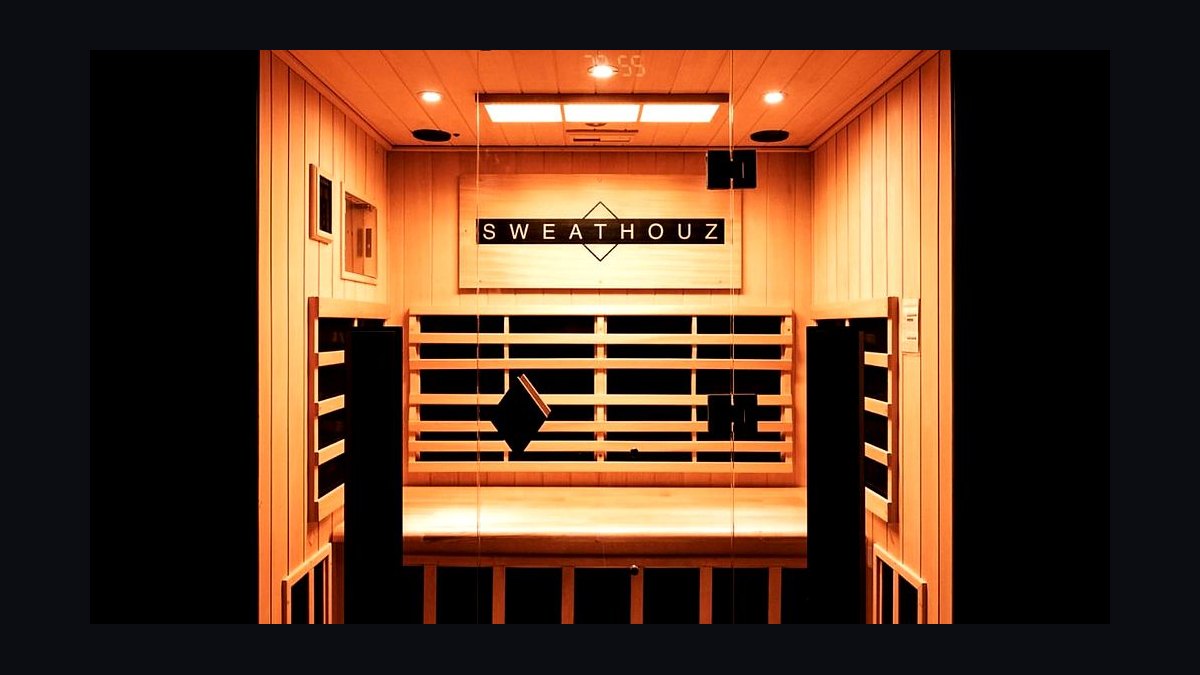
Only if you can fund $500K–$1.1M, hold an affluent wellness market, and treat membership sales as the actual job. Sweathouz is a young, membership-driven infrared sauna and cold plunge system with low labor and strong contribution margins — but a slow ramp, heavy build-out, and crowded recovery competition punish undercapitalized buyers.
The outcome you should expect
Strip away the brochure language and a Sweathouz studio is a real estate and recurring-billing business wearing a wellness costume. You are buying roughly 1,500–3,500 square feet of retail, filling it with private infrared suites and cold plunge tubs, and then spending two to three years converting foot traffic into monthly recurring revenue at something in the neighborhood of $99–$199 per member per month. The infrared cabin does not make you money. The auto-renewing card on file does.
That reframing matters because it changes what "success" looks like on your P&L. A mature, well-sited studio grosses somewhere in the $500,000 to $1,100,000 band per the system's disclosure ranges, and owners in that band clear roughly $90,000 to $280,000. But almost nobody lands there in year one. A realistic first year is $200,000 to $400,000 in revenue while you build a base from zero, with break-even typically arriving 12 to 18 months after opening once you're holding something like 200 to 300 active members. If you have modeled a 6-month break-even, you have modeled a fantasy and you will run out of working capital in month nine.
Expect the following shape, roughly. Months one through six: heavy promotional pricing, founding-member offers, a lot of free trial sessions, and a membership count that climbs fast then plateaus around 120–180 as the pre-launch list exhausts itself. Months seven through fifteen: the grind — referral programs, corporate wellness partnerships, local gym and physical-therapy cross-promotions, and slow net-member growth of maybe 10–25 per month against a churn rate that is very real in boutique wellness. Months sixteen through thirty: if you've kept churn under control, the recurring base compounds and the operating leverage finally shows up, because your labor and rent are essentially fixed while revenue climbs.

The upside case is genuinely good, and it comes from a structural feature rather than a marketing claim: the self-service suite model means one or two front-desk staff can run a studio that would need eight employees if it were a full-service spa. Labor at roughly 20–25% of gross instead of the 40%+ typical in service businesses is the entire margin story. Protect that and you have a real asset. Staff it like a day spa "to improve the experience" and you will erase the reason the model works.
The downside case is equally structural. You have committed to a 7- to 10-year lease and several hundred thousand dollars of specialized, largely immovable equipment in a segment where a competitor can open eight blocks away with a similar offer. Infrared saunas and cold plunge are not proprietary. Your moat is location, membership contracts, and habit — nothing else. Underwrite accordingly.
What drives that outcome
Five variables explain nearly all the variance between a Sweathouz that clears $250K to the owner and one that quietly bleeds. In rough order of impact:
Trade area income and wellness density. This is the single biggest lever and it is decided before you sign anything. A $149/month discretionary recovery membership requires a household that treats $1,800/year of self-care as unremarkable. The practical screen: median household income comfortably above the national figure within a three-mile ring, plus visible evidence of a wellness-spending population — boutique fitness studios, a busy Pilates or barre location, a specialty grocer, med-spas, a Whole Foods-class anchor. If a market cannot support a $200/month boutique fitness studio, it will not support you.

Membership churn. Boutique wellness churn is the quiet killer. Every point of monthly churn compounds against you. At 5% monthly churn you lose roughly half your base annually and must re-sell it just to stand still; at 3% you keep meaningfully more and every new sale is additive. The operational levers are unglamorous — onboarding sequences that get a new member into the suite three times in the first two weeks, usage alerts that flag a member who hasn't booked in 21 days, annual prepay options that convert monthly billing into committed revenue, and a cancellation flow that offers a pause instead of a termination.
Suite utilization during peak windows. You have a hard capacity ceiling. A studio with, say, eight private suites, open 90 hours a week, has a finite number of bookable slots — and the ones that matter are 6–9am and 4–8pm. Off-peak inventory is nearly worthless unless you sell into it deliberately with retiree, remote-worker, or shift-worker pricing tiers. Sophisticated operators sell a cheaper off-peak membership specifically to monetize dead midday hours without cannibalizing prime-time pricing.
Rent as a percentage of gross. Expect 15–25%. That range is enormous in practice. At a $700,000 studio, the difference between 15% and 25% rent is $70,000 a year — which is most of an owner's salary. Chasing the trophy corner in the newest lifestyle center can quietly consume the entire profit of the business. Negotiate for free rent during build-out (six months is a reasonable ask given permitting timelines), a tenant improvement allowance, and a co-tenancy or kick-out clause if the center's anchor leaves.
Ramp speed, which is mostly presale. Studios that open with 100+ founding members already billing hit break-even months earlier than studios that open cold with a grand-opening banner. Presale is not marketing fluff — it is the difference between a 12-month and a 20-month path to profitability, and 20 months is where undercapitalized owners die.
Benchmarks and realistic ranges
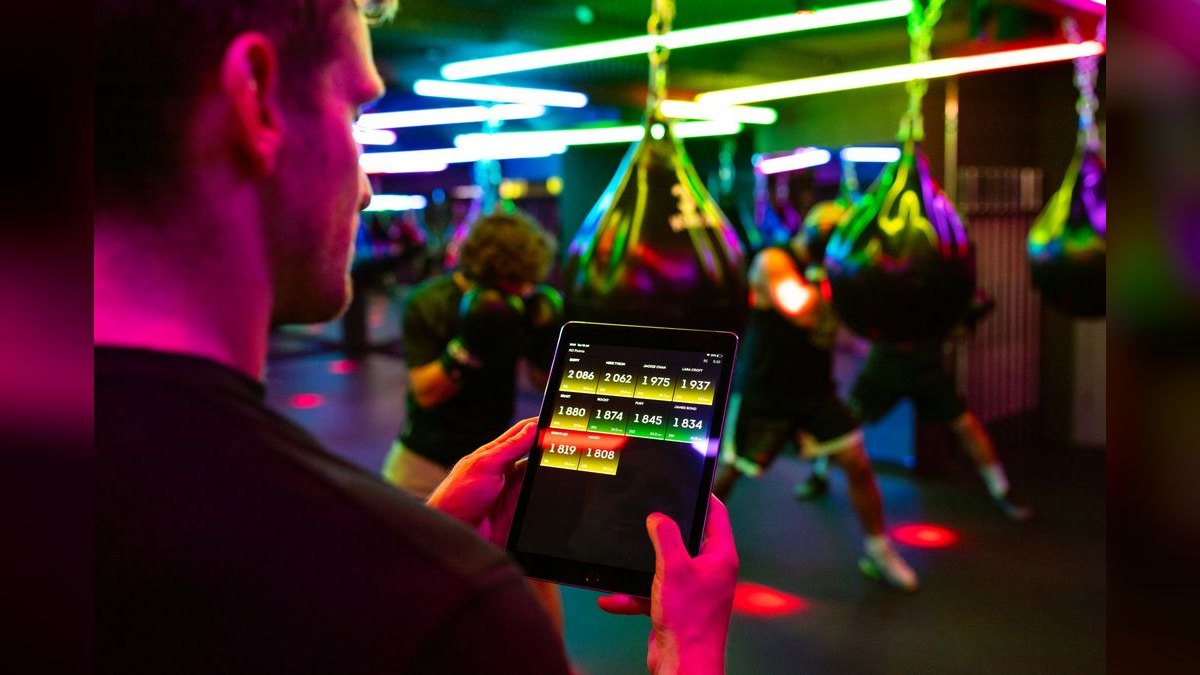
Here is the capital stack you should be underwriting, drawn from the disclosed ranges rather than optimism.
The franchise fee runs roughly $50,000–$60,000. Build-out and leasehold improvements are the dominant line at approximately $250,000–$600,000, because private suites mean interior partition walls, and cold plunge means plumbing, drainage, water treatment, and electrical loads that an ordinary retail shell was never designed for. Equipment — infrared suites and plunge tubs — adds roughly $120,000–$300,000. Signage and decor run $20,000–$60,000; initial inventory and supplies $8,000–$22,000; opening marketing $25,000–$60,000; training and travel $10,000–$30,000; and working capital $40,000–$110,000. Total Item 7 lands around $500,000 to $1,100,000. Ongoing: roughly 7% royalty on gross plus a marketing fee in the neighborhood of 2%.
Two cautions on that table. First, the working capital line is, in my read, the most dangerous number in any franchise disclosure document — not just this one. It is scoped to an initial period (commonly three to six months), and if your ramp takes eighteen months to break even, a three-month working capital reserve is arithmetically insufficient. Budget 12 months of full fixed costs — rent, debt service, insurance, minimum staffing, and your own living expenses — as a separate reserve outside the Item 7 total. For a studio with $10,000 monthly rent and a $600,000 SBA note, that is real money on top of the build.
Second, build-out ranges in disclosure documents were generally set against a construction-cost environment that may not match your market. Plumbing-intensive buildouts in high-cost metros routinely exceed the top of published ranges. Get two independent contractor bids on the actual space before you sign the lease, not after.

On the liquidity side, plan on $175,000–$300,000 liquid plus a net worth that clears the franchisor's threshold. Most buyers at this level use an SBA 7(a) loan, typically requiring 10–20% equity injection, a personal guarantee, and often a lien on your home. That personal guarantee is not a formality — it is the reason the downside of this decision extends well past the money you put in.
Unit economics worth modeling on a napkin before you go further. At 300 members averaging $130/month, you have $39,000/month or $468,000/year of recurring revenue, plus retail and single-session drop-ins that might add 10–20%. Call it $520,000 gross. Against that: rent at 20% ($104,000), labor at 22% ($114,400), royalty and marketing at 9% ($46,800), and other operating expenses — utilities (nontrivial; saunas and chillers are energy-hungry), insurance, software, water treatment, laundry, maintenance, and repairs — at roughly 17% ($88,400). That leaves about $166,000 before debt service. Subtract roughly $80,000–$90,000 of annual payments on a $600,000 note at prevailing SBA rates, and the owner-operator is taking home something in the $75,000–$90,000 range at 300 members. That is a job you bought for $700,000.
The math only becomes interesting above that. At 500 members averaging $135, you are near $810,000 gross, and because rent, most labor, and most fixed costs did not move, the incremental revenue drops through at a very high rate. That is where the $200,000+ owner earnings live. The strategic implication is direct: this concept rewards scale within a unit, not just across units. Getting from 300 to 500 members in an existing studio is far more profitable than opening a second location.
For comparison, the boutique-fitness franchises operating a similar recurring model — the Club Pilates and Pure Barre tier — run on comparable dynamics with lower build-out and lower price points but higher labor, since instructors must be present for every class. Sweathouz trades instructor labor for equipment capital and plumbing complexity. Neither is obviously better; they fail differently. Boutique fitness dies of instructor turnover and class scheduling; recovery studios die of build-out overruns and equipment downtime.
Risks, edge cases, and failure modes

System youth. Founded around 2020, this is a young franchisor. In practice that means fewer years of Item 19 data to extrapolate, a support organization still building its playbooks, a smaller pool of validation calls, and real uncertainty about how the brand performs through a full consumer-spending cycle. Younger systems also change — supplier agreements, required technology, remodel requirements, and marketing fund mechanics all tend to be more fluid in years five through ten than in a fifty-year-old system. Read Item 8 (supplier restrictions) and Item 11 (franchisor obligations) with that in mind.
Discretionary-spend exposure. A recovery membership is among the first line items a household cuts in a downturn. Boutique fitness demonstrated this clearly in prior cycles. Your churn assumptions should include a stress case: what happens to your debt service coverage if churn doubles for two quarters? If the answer is insolvency, you need either more equity or a smaller build.
Equipment downtime. This is the failure mode buyers underestimate most. A cold plunge chiller failure or a water-quality problem takes revenue-generating inventory offline immediately, and specialized equipment does not get repaired same-day by whoever is in the phone book. Have a service contract, understand parts lead times before you open, and hold a maintenance reserve. A suite out of service during peak hours for three weeks is thousands of dollars of unrecoverable capacity.

Health, sanitation, and liability. Contrast therapy involves extreme temperatures, water immersion, and members using facilities largely unsupervised. That combination carries genuine risk: syncope on exit from heat, slip-and-fall on wet surfaces, cardiovascular events in members with undisclosed conditions. Local health department rules for immersion tubs vary widely by jurisdiction and sometimes classify plunge tubs like pools, triggering water-testing logs, chemical handling requirements, and inspection regimes. Verify this with your specific municipality before signing a lease — a jurisdiction that treats your plunge as a public pool can add cost and operational overhead the pro forma never contemplated. Waivers, member health screening, adequate insurance, and documented cleaning protocols are not optional.
Competitive saturation. Restore Hyper Wellness, Perspire Sauna Studio, iCRYO, HOTWORX, independent recovery studios, and — increasingly — gyms and physical therapy clinics adding sauna and plunge as an amenity all compete for the same wallet. The amenity channel is the underrated threat: when the $60/month gym down the street adds a cold plunge for free, your $149 value proposition needs to be about privacy, cleanliness, and availability rather than access to the modality itself. Check whether your protected radius (commonly 3–5 miles, but confirm in your agreement) actually covers where your members will come from, and note that territorial protection never protects you from non-franchise competitors.
Semi-absentee is oversold. The low-staffing model does make reduced owner presence more plausible than in most service franchises, but "low labor" and "absentee" are different claims. Someone has to sell memberships, manage churn, handle facility issues, and run local marketing. Absentee ownership generally means hiring a capable studio manager at $50,000–$70,000, which comes directly out of the owner earnings figures above. Model it explicitly rather than assuming the numbers hold with you gone.
Resale liquidity. Buying an existing unit instead of opening one is often the better trade — you get revealed revenue, an existing membership base, and a build-out someone else paid for and overran on. The catch is that resale inventory in a young system is thin, and a unit for sale in year three is usually for sale for a reason. Underwrite an existing unit on trailing twelve months of *collected* recurring revenue and the actual churn cohort data from the billing system, not on gross session counts. Ask for the membership aging report. If the seller will not produce it, that is your answer.
A practical rollout plan

Treat the first 45 days as pure diligence, where the only money at risk is your time and a few hundred dollars of professional fees.
Days 1–20 — Documents. Get the current disclosure document and read Items 5, 6, 7, 8, 11, 12, 19, and 20 in that order. Item 20's unit table is the most honest page in the document: count openings against terminations, non-renewals, and transfers. A young system with a rising transfer count is telling you something. Have a franchise attorney review it — a few thousand dollars against a $700,000 decision is trivially good value.
Days 21–45 — Validation calls. Call at least ten franchisees, and deliberately include some from the Item 20 list who left or transferred. Ask specific, unavoidable questions: What was your total all-in cost versus the disclosed range? How many members at month six, twelve, eighteen? What is your current monthly churn? What did the build-out overrun on? How responsive is corporate when equipment fails? What would you do differently? Vague, upbeat answers mean you have not asked a sharp enough question.
Days 46–70 — Market and site. Pull demographic data on candidate trade areas and physically visit competitors at 7am and 6pm on a weekday to count cars. Confirm with the municipality how plunge tubs are classified and what permits apply. Only then start looking at spaces seriously, with a broker who represents you rather than the landlord.

Days 71–100 — Lease and capital. Negotiate free rent through build-out, a tenant improvement allowance, and an exit mechanism. In parallel, get two contractor bids on the actual space and secure SBA pre-approval. Do not sign the lease until financing is committed and the bids are in — signing a lease against an estimate is the most common way these deals go wrong before opening.
Days 101–190 — Build and presell. Construction and permitting realistically run four to nine months depending on jurisdiction; run presale concurrently from day one of construction, not at the end. A storefront window sign, a local Instagram presence, a founding-member offer with a real deadline, and partnerships with nearby gyms, run clubs, CrossFit boxes, and physical therapy practices should produce a target of 100–150 members billing on opening day. This is the highest-leverage work in the entire project.
Days 191–365 — Open and optimize. Track four numbers weekly and ignore almost everything else: net new members, churn, peak-window utilization, and cash on hand. Fix churn before chasing growth — filling a leaking bucket is the most expensive mistake in recurring-revenue businesses.
Year two onward — Density before expansion. Push the existing studio toward 450–500 members before considering unit two. Only after the first unit runs profitably without your daily presence does a second location make sense, and then cluster it within the same metro so marketing spend, management, and equipment servicing amortize across both.
Related questions
Is it better to buy an existing Sweathouz studio than to open a new one?
Often yes, if the numbers are real. An existing unit gives you revealed revenue and a built membership base without construction risk. Demand trailing twelve months of collected recurring revenue and cohort churn data from the billing system. Thin resale inventory in a young system is the main constraint.
How many members does a recovery studio need to break even?

Roughly 200–300 active members at $99–$199 monthly, typically reached 12–18 months after opening. The exact figure depends on rent and debt service — a low-rent suburban location breaks even meaningfully earlier than a premium lifestyle-center space with the same member count.
Can I run a Sweathouz semi-absentee?
More plausibly than most service franchises, because suites are self-service. But you still need a studio manager at roughly $50,000–$70,000 handling sales, churn, and facilities. Subtract that from projected owner earnings before calling it passive income.
What happens if a gym nearby adds a cold plunge?
Your differentiation shifts from modality access to privacy, cleanliness, and guaranteed availability at peak hours. Amenity competition is real and territorial protection does not cover it. Price and market on the private-suite experience, not on having a sauna.
How long does construction actually take?
Budget six to nine months from lease signing to opening. Plumbing, drainage, and electrical work for plunge tubs and suites drives permitting complexity, and municipal review timelines vary enormously. Every month of delay is a month of rent without revenue unless you negotiated free rent during build-out.
FAQ
How much does it cost to open a Sweathouz franchise?
Total investment runs roughly $500,000 to $1,100,000 including a franchise fee of about $50,000–$60,000. Build-out and equipment dominate the range. Budget separately for 12 months of fixed costs as a working-capital reserve, since disclosed working capital is scoped to a shorter initial period than a realistic ramp.

What are the ongoing fees?
Approximately 7% royalty on gross revenue plus a marketing fee near 2%. Combined, roughly 9% off the top — standard for the segment but material at scale. On a $700,000 studio that is about $63,000 annually before any of your other operating costs are covered.
How much can I actually earn?
Mature studios in the disclosed range gross $500,000–$1,100,000, with owners clearing roughly $90,000–$280,000. Realistically, a single-unit owner-operator in years two to three lands nearer $80,000–$150,000. The higher figures require high member density and typically lower rent or lower debt service.
Is the system too young to be safe?
Founded around 2020, it carries genuine young-system risk: limited historical data, evolving support, and unproven performance across a full consumer cycle. That is not disqualifying — early entry into a growing segment is a real opportunity — but it argues for conservative capitalization and heavier reliance on your own validation calls.
What separates this from Restore, Perspire, or a gym amenity?
Private, self-service infrared suites paired with cold plunge, sold on membership. The private-suite format is the differentiator against gym amenities and open-floor recovery concepts. Sanitation, availability, and privacy are the durable selling points; the modality itself is not proprietary.
What is the single biggest risk?
Undercapitalization against a slow ramp. Nearly every failure in this model traces back to an owner who budgeted for a 6–9 month path to break-even and hit month fourteen with no cash and a personal guarantee on an SBA note. Fund the ramp you will actually get, not the one in the pro forma.
Sources
- https://www.ftc.gov/business-guidance/resources/consumers-guide-buying-franchise — FTC franchise buyer's guide and disclosure requirements
- https://www.sba.gov/funding-programs/loans/7a-loans — SBA 7(a) loan program terms and eligibility
- https://www.franchise.org/ — International Franchise Association, industry outlook and research
- https://www.entrepreneur.com/franchises — Entrepreneur franchise listings and category data
- https://globalwellnessinstitute.org/ — Global Wellness Institute, wellness economy and recovery-segment research
- https://www.ibisworld.com/united-states/market-research-reports/ — IBISWorld US industry reports, including fitness and wellness services
- https://www.census.gov/programs-surveys/acs — US Census American Community Survey, household income and demographic screening
- https://franchisebusinessreview.com/ — Franchise Business Review, franchisee satisfaction research
- https://www.cdc.gov/healthy-swimming/php/aquatic-facility-operators/ — CDC guidance for aquatic facility operation and water quality
- https://www.nolo.com/legal-encyclopedia/franchises — Nolo, franchise agreements and legal considerations
Related on PULSE
- How long does it take to open a franchise and break even in 2027?
- Should I open or buy a Tommy Gun's Original Barbershop franchise in 2027?
- Should I open or buy a Painting with a Twist franchise in 2027?
- Should I open or buy a Restore Hyper Wellness franchise in 2027?
- Should I open or buy a Club Pilates franchise in 2027?
This page will be disappearing soon. Save it to your device for $1 — or read it free while it is here.
@Kory-White- · if Venmo asks, the last 4 of my number are 2012
This page is gone.
This one is off the shelf now. $1 keeps it on your phone for good — the whole page, pictures and diagrams included.
 franchiseShould I open or buy a Papa John's franchise in 2027?
 franchiseShould I open or buy a Hand and Stone Massage franchise in 2027?
 franchiseShould I open or buy a Culver's franchise in 2027?
 franchiseShould I open or buy a Jamba franchise in 2027?
 franchiseShould I open or buy a Dunkin' franchise in 2027?
 franchiseShould I open or buy a Goddard School franchise in 2027?
 franchiseShould I open or buy a Bojangles franchise in 2027?
 franchiseShould I open or buy a Supercuts franchise in 2027?
 franchiseShould I open or buy an F45 Training franchise in 2027?
 franchiseShould I open or buy a Rita's Italian Ice franchise in 2027?