


Should I open or buy a Sugaring NYC franchise in 2027?
Quality
Certified

Yes, cautiously — Sugaring NYC is worth opening in 2027 for an operator who wants a lower-capital, membership-driven personal-care franchise and is willing to staff and manage licensed estheticians directly. With a roughly $120,000–$300,000 total investment, a 6% royalty, and mature-studio revenue of $250,000–$600,000, it suits hands-on owners in beauty-conscious markets — not passive investors chasing an established, high-brand-recognition system.
The outcome you should expect
Open a Sugaring NYC studio in 2027 and your first 12–18 months will look less like a retail launch and more like a service-business build: you are not selling a product off a shelf, you are recruiting members one appointment at a time. The franchise's own Item 7 disclosure puts total investment at roughly $120,000 to $300,000, with a franchise fee of $30,000–$40,000 sitting inside that range. That is genuinely low for a franchise concept with a physical build-out, and it is the single biggest reason this system attracts first-time owners rather than seasoned multi-unit operators moving in from a larger, more expensive category.
What you should expect in year one is a slow ramp followed by a compounding curve. Membership-model businesses do not generate meaningful cash flow from day-one walk-ins; they generate it from the accumulation of recurring clients who pay monthly whether or not they book that specific week. A studio that opens with zero members and no pre-sold packages will spend its first three to six months essentially breaking even or running a modest loss while the owner and staff convert first-time visitors into monthly members. By month 12–18, if retention and staffing have gone reasonably well, you should be looking at a studio doing somewhere in the $18,000–$25,000 monthly gross range just to clear break-even, with healthy studios pushing toward $30,000–$40,000 a month.

Mature studios — meaning open 24 months or more, with an established base of active members — gross between $250,000 and $600,000 annually, and owners typically clear $60,000 to $170,000 after royalties, marketing fees, labor, rent, and supplies. That is a wide range, and where you land in it is determined almost entirely by two things: how many members you retain past the first year, and how efficiently you staff licensed estheticians against demand. An owner who treats the studio as a side investment and hires a manager from day one should expect to land at the bottom of that range or below it. An owner who works the desk, learns the service, and builds relationships with early clients should expect to land in the upper half.
The realistic outcome, in other words, is not a guaranteed number — it is a range that is unusually sensitive to your own labor and presence in the first year, more so than most retail or food-service franchise concepts where the format itself does more of the work.
What drives that outcome
Three levers determine whether a Sugaring NYC studio lands at the low or high end of its earning range, and they are worth understanding before you sign anything, because none of them are things the franchisor controls for you.
Membership retention is the primary driver. This is a subscription business wrapped in a personal-care service, and subscription businesses live or die on churn. A studio needs to continuously add new members just to offset the ones who cancel, and the studio's growth rate is a function of (new members added) minus (members lost) every single month. If your studio adds 20 members a month and loses 20, you are flat — you are not growing revenue, you are running in place while your marketing spend keeps paying for treadmill motion instead of net gains. Retention is driven by service quality, scheduling convenience, and — critically — whether a client sees the same esthetician consistently, since personal-care relationships are sticky in a way that transactional retail is not.
Esthetician staffing is the second driver, and it is largely outside your direct control. Sugaring is a specialized technique distinct from waxing — different paste temperature, different application method, different aftercare guidance — so you cannot simply hire any licensed esthetician and expect them to be productive on day one. Franchisees typically send new hires through a multi-day training program before they can work independently, and in competitive metro markets, licensed estheticians with sugaring experience are a scarce, contested resource. A studio that is understaffed cannot serve its membership base even if demand exists, which caps revenue regardless of how good your marketing is.
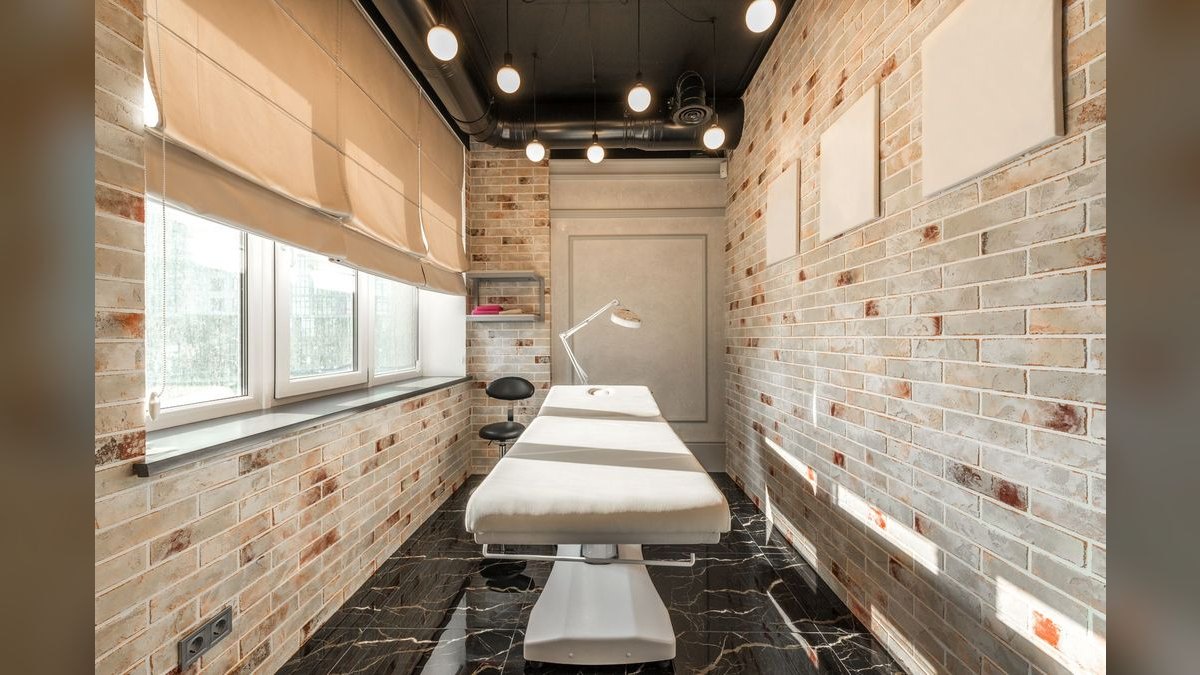
Cost structure is the third driver, and it is more mechanical: labor is the largest controllable expense, followed by rent and product costs, then royalty and marketing fees on top. A studio's break-even point is a function of fixed rent plus minimum staffing costs divided by the margin on each service or membership dollar. Because sugaring studios are compact (roughly 600–1,800 square feet), rent is a smaller absolute number than a full-size retail box, which is part of why the total investment stays low — but it also means there is less room to hide an underperforming location, since fixed costs still have to be covered by a physically smaller footprint of paying clients.
Benchmarks and realistic ranges
Use these ranges to sanity-check any pro forma a franchise sales representative or broker hands you — and to compare against the numbers a current franchisee shares in a validation call.
- Franchise fee: $30,000–$40,000, per the current FDD.
- Total initial investment (Item 7): roughly $120,000–$300,000, covering build-out, equipment, signage, initial inventory, initial marketing, training, and working capital.
- Build-out and leasehold improvements: typically the largest single line item within that range, reflecting treatment-room construction in a compact 600–1,800 square foot footprint.
- Working capital reserve: plan for three to six months of operating expenses beyond your opening budget — in practical terms, an additional $40,000–$100,000 that many first-time franchisees underestimate or skip entirely.
- Royalty: approximately 6% of gross revenue, plus a separate marketing fee, both standard structures for a service-based franchise at this investment tier.
- Mature-studio annual gross revenue: $250,000–$600,000, with the wide spread explained almost entirely by membership base size and local market density.
- Owner earnings (mature studio, after all expenses): roughly $60,000–$170,000 annually.
- Labor as a share of revenue: typically the single largest controllable cost category in a service business like this, ahead of rent and product costs combined.
- Time to break-even: commonly 12–24 months, longer in a slower-to-fill membership base or a weaker retail location.
Two benchmarks matter more than any single number on this list: the franchise's Item 19 financial performance representation (if one is included in the current FDD) and what existing franchisees tell you in validation calls about actual, not projected, monthly membership counts at 12, 18, and 24 months. A brochure range is a ceiling and a floor; the operator calls tell you where the middle of the distribution actually sits.
Risks, edge cases, and failure modes
The single largest risk with Sugaring NYC in 2027 is founder-system youth combined with founder-model dependence: the franchise was founded in 2016, which means the system has a shorter track record than category leaders, fewer franchisees to validate against, and less-tested playbooks for problems like multi-unit scaling, regional marketing, or a downturn in personal-care spending. A younger system is not automatically a bad bet — low capital requirements exist precisely because the brand hasn't built the infrastructure and support apparatus of a decades-old chain — but it does mean you are underwriting more of the operational risk yourself rather than leaning on a proven, widely validated playbook.
Staffing failure is the most common on-the-ground failure mode. If you cannot recruit and retain licensed estheticians trained in sugaring technique, you cannot serve the membership base you're trying to build, and a studio that turns away or reschedules clients repeatedly will see retention collapse faster than any marketing spend can offset. This risk compounds in markets where waxing chains and independent sugaring studios are already competing for the same small pool of trained staff.
Absentee ownership is the second major failure mode. This is a high-touch, relationship-driven personal-care business — clients return because they trust a specific esthetician and like the studio's feel, not because of brand loyalty to a logo. An owner who hires a manager from day one and stays hands-off typically sees inconsistent service delivery, weaker retail attach rates, and higher churn than an owner who works the desk and learns the service personally, at least through the first 12–18 months.
Market-fit risk shows up when an owner opens in a location without genuine natural-beauty or wellness-conscious demand. Sugaring is positioned as a gentler, more natural alternative to waxing, and that positioning only converts in markets where clients are already primed to care about the distinction — a location decision driven purely by cheap rent, without validating local demand for a natural-hair-removal service specifically, is a common and avoidable mistake.
Seasonality is an edge case worth planning cash reserves around. Personal-care and beauty services commonly see softer demand in the winter months and stronger demand heading into spring and early summer, when clients prepare for warm-weather and event seasons. A studio without three to four months of reserved operating expenses can find a normal seasonal dip feels like a crisis, purely because the cash cushion was never built into the opening budget.
Competitive risk comes from two directions simultaneously: national waxing chains adding sugaring to their service menus, and independent local sugaring studios operating without franchise fees or royalty obligations. Your defense against both is the membership structure itself — once a client is on a recurring monthly plan, the switching cost to a competitor rises, which is exactly why retention, not new-client acquisition alone, should be the metric you obsess over.
A practical rollout plan

A disciplined 90-to-130-day sequence, followed by an ongoing retention focus, is the difference between landing in the upper or lower half of the earnings range described above.
Days 1–20: Read the current FDD in full, with particular attention to Item 7 (investment range), Item 19 (financial performance, if disclosed), and Item 20 (franchisee turnover and outlet counts). A young system's Item 20 table tells you how many franchisees have closed or transferred — a number worth scrutinizing closely before you commit capital.
Days 21–40: Call existing franchisees directly, not just the ones the franchisor hands you as references. Ask specifically about member retention rates, how long it took to fully staff their studio with licensed estheticians, how responsive corporate support has been, and what their actual net profit looked like at 12 and 24 months versus what they were told to expect.
Days 41–60: Validate your specific market and site. Confirm there is genuine demand for a natural-hair-removal, membership-based service nearby — proximity to wellness-oriented retail and fitness businesses is a reasonable proxy for the kind of client base this concept needs. Do not sign a lease purely because it is the cheapest available space.
Days 61–100: Build out the studio and begin recruiting licensed estheticians simultaneously, not sequentially — staffing lead time is often underestimated, and a finished space with no trained staff generates zero revenue.
Days 101–130: Pre-sell memberships ahead of your opening date and launch. A pre-sold membership base gives you recurring revenue from week one instead of starting the retention clock from zero.
Ongoing: Treat member retention as the core operating metric, above daily walk-in count or gross bookings. Once your studio is stable, evaluate whether a second unit makes sense — the same low capital requirement that makes a first studio accessible also makes multi-unit expansion a realistic path once you've proven you can staff and retain members in your first location.
Related questions
How long does it take a Sugaring NYC studio to break even?
Commonly 12–24 months, driven primarily by how quickly you build a recurring membership base and fully staff licensed estheticians — not by build-out speed or opening marketing alone.
Is Sugaring NYC better than opening a waxing franchise?
Neither is universally better. Sugaring NYC offers lower capital and a differentiated natural-hair-removal niche; established waxing chains typically offer stronger brand recognition and a longer operating track record.
What license do I need to operate a Sugaring NYC studio?

Estheticians performing services require the licensing your state mandates for hair-removal or esthetics services; owners themselves are not required to be licensed but should understand the credential requirements to hire correctly.
Can one owner run multiple Sugaring NYC studios?
Yes — the FDD's own data shows multi-unit owners with two to three studios generally outperform single-unit owners, largely by spreading fixed costs and sharing trained staff across locations.
FAQ
How much money do I need to open a Sugaring NYC franchise? Plan on $120,000 to $300,000 in total investment per the current FDD, which includes the $30,000–$40,000 franchise fee plus build-out, equipment, initial inventory, marketing, training, and working capital. Add a further cash reserve beyond that range for unexpected build-out overruns or a slower-than-planned membership ramp.
What ongoing fees does a franchisee pay? A royalty of approximately 6% of gross revenue, plus a separate marketing fee, are standard ongoing obligations under the current agreement — both are typical for a service-based franchise at this investment level.

How much can a Sugaring NYC franchise owner realistically earn? Mature studios generate $250,000 to $600,000 in annual gross revenue, translating to roughly $60,000 to $170,000 in owner earnings after labor, rent, product costs, royalty, and marketing fees. Where you land depends heavily on retention and staffing execution.
What is the biggest operational risk with this franchise? Esthetician recruitment and retention. Sugaring is a specialized technique distinct from waxing, licensed talent is limited in competitive markets, and an understaffed studio cannot serve the membership base it needs to reach profitability.
Is this a good franchise for a first-time, hands-on owner? Yes, more so than for a passive investor. The lower capital requirement and simple service format suit an owner willing to work the desk and build client relationships directly, especially in the first 12–18 months.
How does Sugaring NYC compare to independent sugaring studios? A franchise gives you training infrastructure, an established service model, and some brand recognition in exchange for the franchise fee and ongoing royalty; an independent studio gives you full control and no royalty obligation but requires you to build every system — training, marketing, and operations — from scratch.
Sources
- https://www.entrepreneur.com/franchises
- https://www.ibisworld.com
- https://www.statista.com
- https://www.franchisebusinessreview.com
- https://www.franchise.org
- https://www.sugaringnyc.com
- https://www.census.gov
- https://www.probeauty.org
Related on PULSE
This page will be disappearing soon. Save it to your device for $1 — or read it free while it is here.
@Kory-White- · if Venmo asks, the last 4 of my number are 2012
This page is gone.
This one is off the shelf now. $1 keeps it on your phone for good — the whole page, pictures and diagrams included.
 franchiseShould I open or buy a Drybar franchise in 2027?
 franchiseShould I open or buy a Take 5 Oil Change franchise in 2027?
 franchiseShould I open or buy a Chipotle franchise in 2027?
 franchiseShould I open or buy a Planet Fitness franchise in 2027?
 franchiseShould I open or buy a Mac Tools franchise in 2027?
 franchiseShould I open or buy a Papa John's franchise in 2027?
 franchiseShould I open or buy an Auntie Anne's franchise in 2027?
 franchiseShould I open or buy a Servpro franchise in 2027?
 franchiseShould I open or buy a Sonic Drive-In franchise in 2027?
 franchiseShould I open or buy a Bojangles franchise in 2027?