


Should I open or buy a Sugared + Bronzed franchise in 2027?
Quality
Certified
Only if you can secure an affluent trade area and staff two skilled disciplines at once. Sugared + Bronzed pairs natural sugaring with custom airbrush tanning at roughly $300,000–$650,000 all-in, per the 2026 FDD. Mature studios gross $400,000–$900,000. Weak demographics or thin esthetician supply sink it fast.
What the decision actually looks like on the ground
Picture a specific version of this deal instead of the brochure version. You have $180,000 liquid, an SBA pre-qualification for the balance, and two candidate sites in a metro you know well. Site A is a 1,600-square-foot end-cap in a Class A lifestyle center anchored by a Whole Foods and a boutique fitness studio, asking $32 per square foot triple-net. Site B is 1,900 square feet in a workhorse strip mall six miles out, asking $19 per square foot, with a nail salon and a franchised waxing studio already in the same row.
Most first-time franchise buyers pick Site B because the rent math looks kinder — roughly $3,000 a month versus $4,300. That instinct is usually wrong for this concept. A premium body-beauty studio does not sell convenience; it sells a feeling of clean, considered indulgence, and the co-tenancy of the center is doing half the marketing work. The rent delta of $15,600 a year is recovered by about eighteen additional memberships at $75 a month. If the lifestyle center's foot traffic produces even a modest lift in walk-in consultations, Site A wins on year-two cash flow even though it loses on the spreadsheet you build in month one.
Now put people in the picture. You need a lead esthetician who can perform sugaring at a level that survives a Brazilian appointment without a complaint, and who can also lay down a streak-free custom airbrush tan. In most markets that person already has a chair somewhere — commission at a high-volume waxing chain, or a booth rental where they keep the majority of what they bill. Recruiting them means beating what they already have, which realistically means an hourly guarantee in the $18–$25 range plus service commission and retail commission, plus a schedule they actually want.
The scenario that kills deals is the one where the site is signed before the staffing plan is proven. A studio with a beautiful build-out and one esthetician can only sell what one pair of hands can produce. Two treatment rooms and a spray booth sitting idle four days a week still cost full rent. Before you sign anything, run a live hiring test in the target market: post the role, take the calls, and see how many qualified candidates you can actually get into a working interview inside three weeks. That test costs you a few hundred dollars in job postings and tells you more about your future P&L than any Item 19 table.
The last piece of the scenario is timing. If you sign a lease in January 2027, you are looking at permitting, plumbing for sugaring stations, ventilation for the tanning area, franchisor-required build standards, and equipment lead times. Six to twelve months from signing to open is the honest range, and the back half of that window is where most delay costs accumulate — you are paying rent under a delivered lease while producing zero revenue. Budget for it explicitly rather than treating it as an exception.
How the dual-service model actually generates money
The reason to open a Sugared + Bronzed rather than a single-service studio is that one client visit can carry two revenue lines plus retail. Understanding exactly how that stacks changes how you staff, schedule, and price.

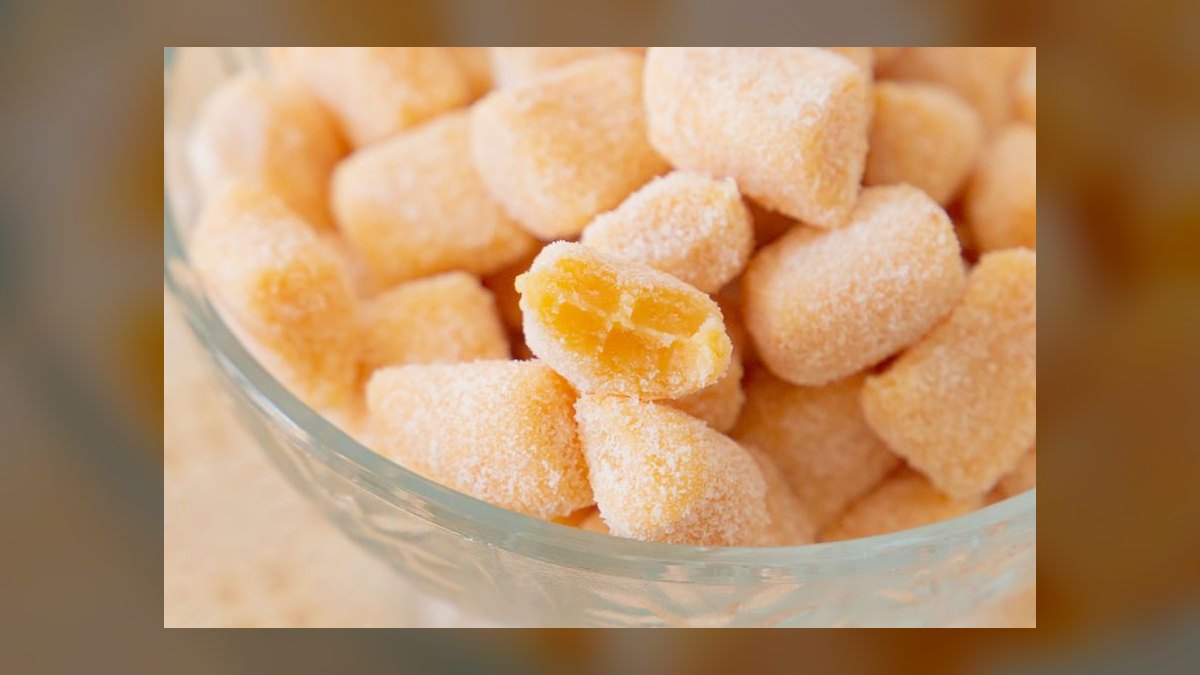
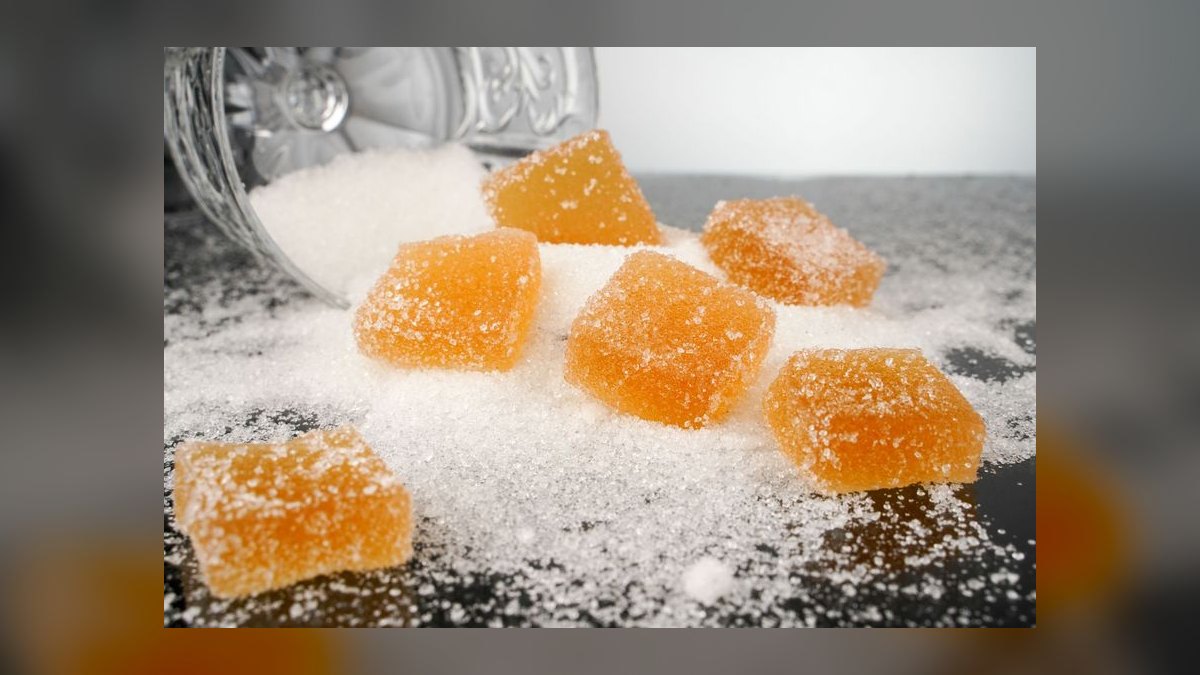
Start with the service mechanics, because they drive everything downstream. Sugaring uses a paste of sugar, lemon, and water applied at body temperature and removed in the direction of hair growth. It is technique-heavy and temperature-sensitive; the paste behaves differently in a humid room than a dry one. Appointment lengths run roughly 15–30 minutes for small areas (brow, lip, underarm) and 45–60 minutes for full leg or Brazilian. Airbrush tanning is fast to apply — typically 10–15 minutes — but carries a long development window of 8–12 hours before the client showers, which shapes when people want to book.
That asymmetry is the operational key. A tanning appointment consumes very little chair time but produces a full ticket. If your booking system can slot a 12-minute spray into the gap between two sugaring appointments, you are converting dead time into revenue at nearly pure margin on labor. Franchisees who treat the spray booth as a scheduling shock absorber rather than a separate business line get materially better utilization out of the same square footage.
Cross-selling is the second mechanism. A client booked for a Brazilian in late June is very likely also planning a beach trip, a wedding, or a reunion. The natural script is not a hard upsell — it is a sequencing recommendation: sugar first, tan after, because you do not want to spray over freshly exfoliated skin the same hour. That conversation is a service, and it produces a second booking. Studios that build this into the standard closing script of every appointment see meaningfully higher per-client value than studios that leave it to the front desk.
Retail is the third layer. Aftercare serums, tan extenders, and exfoliants attach naturally to both services because both create an obvious post-treatment need. A trained staff can add roughly 10–20% to average ticket size through retail, and that revenue carries better margin than labor-intensive services. The constraint is inventory discipline: over-ordering ties up working capital in a space that already needs $10,000–$25,000 in initial inventory, and stockouts on the two or three hero SKUs quietly kill the attach rate.
Membership is the fourth and most important layer, because it converts a transactional beauty business into something closer to a subscription. Members pay a flat monthly fee — commonly in the $60–$90 range for this category — that includes a service and discounts additional visits and retail. The strategic value is not the revenue per member; it is that a member has already decided to come back, which collapses your customer acquisition cost on visits two through twelve.
Put the four layers together and the arithmetic gets clearer. A studio doing 350 visits a month at an $80 average ticket grosses about $28,000. Add a 15% retail attach and you are near $32,000. Convert a third of those clients to memberships over a year and a growing slice of that revenue arrives before the month starts, which is what makes payroll planning possible in a business with tight labor supply.
Real numbers, ranges, and what they imply
The 2026 FDD puts the initial franchise fee at roughly $40,000–$50,000 and the total Item 7 investment at approximately $300,000–$650,000. Royalty sits near 6%–7% of gross, with a marketing fee on top of that in the low single digits. Those are the anchors; everything else is a judgment call you make against them.
Break the build down into the pieces that actually move:

| Line item | Low | High | What drives the spread |
|---|---|---|---|
| Franchise fee | $40,000 | $50,000 | Single unit vs. multi-unit commitment |
| Buildout / leasehold | $120,000 | $300,000 | Plumbing, ventilation, landlord TI allowance |
| Equipment and fixtures | $50,000 | $130,000 | Treatment tables, spray booth, retail displays |
| Signage and decor | $15,000 | $45,000 | Center signage rules, storefront visibility |
| Initial inventory | $10,000 | $25,000 | Sugaring paste, tanning solution, retail SKUs |
| Initial marketing | $15,000 | $40,000 | Pre-sale campaign depth |
| Training and travel | $10,000 | $28,000 | Number of staff sent, distance |
| Working capital | $30,000 | $80,000 | Months of runway funded |
The single largest variable in that table is the tenant improvement allowance. Sugaring stations need plumbing, the tanning area needs real ventilation, and the reception area carries the premium brand impression. A landlord who contributes $30–$50 per square foot in TI on a 1,600-square-foot space is effectively funding a meaningful share of your build. A landlord who contributes nothing pushes you toward the high end of the range on the single largest line. Negotiating TI is the highest-leverage hour you will spend in the entire process, and it happens before you have any revenue to prove yourself with.
On the operating side, model monthly fixed costs honestly. Rent commonly lands between $4,000 and $8,000 depending on market and space. Payroll for two to four estheticians plus a manager runs roughly $12,000–$20,000. Royalty and marketing together consume roughly 8%–10% of gross. Supplies — paste, solution, disposables, linens — run in the mid-single digits as a percentage of revenue. Add insurance, utilities, booking software, card processing, and you get a break-even somewhere in the $25,000–$35,000 monthly gross range for most builds.
Translate break-even into human terms, because that is the number you actually manage to. At an $80 average ticket, $30,000 a month is about 375 visits, or roughly 15 visits a working day. Two estheticians working full schedules can produce that if utilization is good and the mix includes enough short services. Three can produce it comfortably. One cannot, at any price. That is why the staffing test matters more than the site test.
Mature performance is where the ranges widen most. Studios in the reported band gross $400,000–$900,000, with owner earnings commonly cited between $70,000 and $210,000. Read that spread as a statement about variance, not a forecast. A $650,000 studio running roughly a third of revenue to technician labor, low twenties to rent and supplies, high single digits to royalty and marketing, and mid-teens to other operating expense lands owner earnings somewhere around $130,000. Shift technician labor five points either direction and that number moves by $32,500 — which is the entire difference between a good outcome and a mediocre one.
Membership economics deserve their own line. A studio with 300–500 active members at a $60–$90 monthly fee carries roughly $18,000–$45,000 in recurring monthly revenue. Against a $25,000–$35,000 break-even, a healthy membership base means you open each month already at or near cash-flow neutral. That single fact is why franchisees who chase membership conversion aggressively in months one through six generally outperform those who chase walk-in volume.
Finally, the exit. Beauty franchises with real membership bases and clean books trade in a range that generally reflects a multiple of EBITDA rather than revenue, and buyers underwrite three things hard: membership retention rate, staff tenure, and remaining lease term. A studio producing $150,000–$250,000 in EBITDA with a five-year lease runway and a stable team is a very different asset from one producing the same EBITDA with eighteen months left on the lease and a lead esthetician who just gave notice. Build those three assets deliberately from month one, because you cannot manufacture them in the ninety days before you list.
Trade-offs, alternatives, and the honest comparison set
Deciding whether to open a Sugared + Bronzed is really a decision about where this concept sits against its neighbors on two axes: capital required and operational complexity.
A sugaring-only studio is the lower rung. Less equipment, no ventilation requirement for spray, smaller footprint, and a simpler hire — you need one skill, not two. Capital requirements come down materially. The cost is ceiling: one revenue line, no natural cross-sell, and a client whose visit frequency is dictated entirely by hair growth cycles. You trade upside for a lower failure floor.

Waxing chains occupy the volume position. The category is more mature, brand recognition is broader, and the operating model is built around throughput at a lower average ticket. If your market already has an established waxing studio in the same center, you are not competing on service — you are competing on the claim that sugaring is gentler and more natural. That is a real differentiator with sensitive-skin clients and with the segment that reads ingredient labels, but it is a positioning fight, not an automatic win, and it takes marketing dollars to establish.
Tanning-focused concepts sit on the other side. UV and spray tanning businesses generally have simpler labor models — a spray application is a shorter training curve than sugaring — but they carry seasonality that a dual-service studio partially smooths. Spring and pre-summer are enormous; February in a cold market is not. Pairing tanning with sugaring is precisely the hedge that makes the dual-service model interesting, because sugaring demand is steadier across the calendar.
Adjacent beauty franchises — blow-dry bars, lash studios, brow bars — share the same underlying business physics: premium retail location, licensed technician labor, membership monetization, and a client relationship measured in visits per year. If you are genuinely evaluating the category rather than this specific brand, compare them on visits-per-client-per-year and on how replaceable the technician is. Concepts where the client is loyal to the studio rather than to an individual technician are more durable assets.
And then the independent path. You can open a sugaring and airbrush studio with no franchise agreement, keep the 8%–10% that would go to royalty and marketing fees, and design the brand yourself. What you give up is the playbook: site selection criteria that have been tested, a training curriculum for two technical disciplines, a proven membership structure, supplier relationships, and a brand that a client already associates with a certain standard. For an operator who has run a beauty studio before, independent is often the better math. For a first-time operator, the franchise fee and royalty are largely buying you the answer to questions you do not yet know to ask.

There is one more comparison worth making explicitly: doing nothing yet. Signing in 2027 versus 2028 is a real option. If your target trade area has a lease coming available in a better center next year, or if your hiring test says the esthetician pool is thin right now, waiting twelve months costs you nothing but opportunity while a bad site or a bad first hire costs you years.
Pitfalls that repeat, and the specific guard against each
Signing the lease before proving the labor market. This is the most common and most expensive mistake in the category. The guard is mechanical: run a real hiring funnel in the target ZIP code before lease execution, and require yourself to reach at least two qualified working-interview candidates before you commit. If you cannot, either the compensation plan is wrong or the market is wrong — and both are cheaper to learn now.
Underwriting Item 19 as a forecast. Item 19 describes performance of existing units under conditions you may not share. Read it, then do the thing that actually informs the decision: call current franchisees, including ones the franchisor did not put on the list. The Item 20 franchisee contact list makes this possible. Ask specific questions — membership conversion rate, technician turnover last year, months to break-even, what they would do differently on the lease.
Treating turnover as an exception. Esthetician turnover in this industry commonly runs high, and building a plan that assumes a stable team is planning for a world you will not live in. The guard is to always be recruiting at a low level, to cross-train so no single service line depends on one person, and to budget an ongoing line for recruitment and training rather than treating each departure as a surprise cost.

Optimizing for rent instead of trade area. Covered above, but it belongs on the pitfall list because it is so seductive. The discipline is to underwrite the site on projected revenue per square foot and on the demographic profile of the three-mile ring, not on the rent line in isolation. A cheap space in the wrong ring is the most expensive thing you can buy.
Neglecting membership conversion in the opening window. The first ninety days set the trajectory. Studios that pre-sell memberships before opening and drive conversion on visits one through three build recurring revenue while the marketing spend is already committed. Studios that wait until month six to get serious about membership are trying to convert clients who have already formed a transactional habit, which is far harder.
Scheduling as an afterthought. With two service types of wildly different durations, plus an 8–12 hour tan development window that shapes client preference, a naive booking grid strands capacity. Configure buffer times, set service-type-specific durations, and make online booking with real availability the default channel. Utilization is the difference between break-even and profit in a fixed-cost business.
Skipping independent professional review of the agreement. A franchise agreement is a multi-year contract with territory definitions, transfer conditions, renewal terms, and post-term restrictions that determine what your exit actually looks like. Have a franchise attorney and an accountant who has read FDDs before go through it. The cost is small against a $300,000–$650,000 commitment.
Assuming premium pricing survives a soft consumer. Premium beauty is discretionary. The partial hedge is that a monthly membership at $60–$90 is a small luxury rather than a large one, which historically holds up better than big-ticket discretionary spend. But "holds up better" is not "immune." Model a scenario where average ticket and visit frequency both fall 10% and confirm you still clear debt service.
Related questions
How long until a studio like this breaks even?
Most operators should model six to twelve months from signing to opening, then several additional months to reach the $25,000–$35,000 monthly gross that typically covers fixed costs. Aggressive pre-opening membership sales compress that second window meaningfully.
Do I need to be a licensed esthetician myself?
Generally no — franchisors train operators on the concept and the technical services are performed by licensed staff. But state licensing rules govern who may perform hair removal and spray application, so verify your state's board requirements before signing anything.
Is one unit enough, or should I plan for multiple?
Single-unit economics can work, but overhead like a manager and marketing spend amortizes better across two or three studios in one metro. Prove unit one to stabilized profitability first; multi-unit commitments made before that are how operators get overextended.
What actually determines resale value?
Buyers underwrite membership retention, staff tenure, and remaining lease term far more than a single year's revenue. A studio with stable recurring members and five years of lease runway commands a materially better multiple than one without.
FAQ
What is the total investment to open a Sugared + Bronzed franchise?
The 2026 FDD lists total Item 7 investment at roughly $300,000 to $650,000, which spans build-out, equipment, signage, initial inventory, opening marketing, training, and working capital. The initial franchise fee of approximately $40,000 to $50,000 sits inside that range. Where you land depends heavily on the tenant improvement allowance you negotiate and the condition of the space you take.
What do mature studios actually earn?
Reported figures put mature studio gross revenue between $400,000 and $900,000 annually, with owner earnings commonly in the $70,000 to $210,000 band. That spread is wide because technician labor, rent, and utilization vary enormously by market. Verify against Item 19 and direct franchisee conversations rather than treating the midpoint as a plan.
What ongoing fees should I model?
Expect a royalty near 6% to 7% of gross revenue plus a marketing fee in the low single digits, so roughly 8% to 10% of every dollar before you pay rent or labor. Build that into your break-even calculation from the start rather than treating it as a line you can grow past.
Do I need beauty industry experience?
No formal beauty background is typically required, and the franchisor provides technical training. What matters far more is experience hiring and retaining licensed service staff, managing a membership sales motion, and running a fixed-cost business where utilization drives profit. Operators from fitness, med-spa, or multi-unit retail backgrounds tend to translate well.
How do sugaring and airbrush tanning fit together operationally?
Sugaring appointments run 15 to 60 minutes depending on area; airbrush application takes 10 to 15 minutes but requires 8 to 12 hours of development before showering. The short spray appointments fill gaps between longer sugaring bookings, which raises utilization. Sequencing matters — sugar first, tan after — and that recommendation drives natural cross-sell.
What is the single biggest risk?
Staffing. A studio that cannot keep two or three skilled technicians on schedule cannot produce enough billable hours to cover fixed costs, regardless of how good the location or brand is. Test the local esthetician labor market with a real hiring funnel before you sign a lease.
Sources
- https://www.ftc.gov/business-guidance/resources/franchise-rule-compliance-guide
- https://www.franchise.org/
- https://www.sba.gov/funding-programs/loans/7a-loans
- https://www.bls.gov/ooh/personal-care-and-service/skincare-specialists.htm
- https://www.entrepreneur.com/franchises
- https://www.ibisworld.com/united-states/market-research-reports/hair-nail-skin-care-services-industry/
- https://www.probeauty.org/
- https://www.franchisebusinessreview.com/
- https://www.census.gov/programs-surveys/acs/
Related on PULSE
- How long does it take to open a franchise and break even in 2027?
- Should I open or buy a Tommy Gun's Original Barbershop franchise in 2027?
- Should I open or buy a Painting with a Twist franchise in 2027?
- Should I open or buy a Sugaring NYC franchise in 2027?
- Should I open or buy a Blo Blow Dry Bar franchise in 2027?
This page will be disappearing soon. Save it to your device for $1 — or read it free while it is here.
@Kory-White- · if Venmo asks, the last 4 of my number are 2012
This page is gone.
This one is off the shelf now. $1 keeps it on your phone for good — the whole page, pictures and diagrams included.
 franchiseShould I open or buy a Kumon franchise in 2027?
 franchiseShould I open or buy a Dairy Queen franchise in 2027?
 franchiseShould I open or buy a Rita's Italian Ice franchise in 2027?
 franchiseShould I open or buy a Little Caesars franchise in 2027?
 franchiseShould I open or buy a Planet Fitness franchise in 2027?
 franchiseShould I open or buy a Take 5 Oil Change franchise in 2027?
 franchiseShould I open or buy a Culver's franchise in 2027?
 franchiseShould I open or buy a Mac Tools franchise in 2027?
 franchiseShould I open or buy a Cold Stone Creamery franchise in 2027?
 franchiseShould I open or buy a Panera Bread franchise in 2027?