


Should I open or buy a Scissors & Scotch franchise in 2027?
Quality
Certified
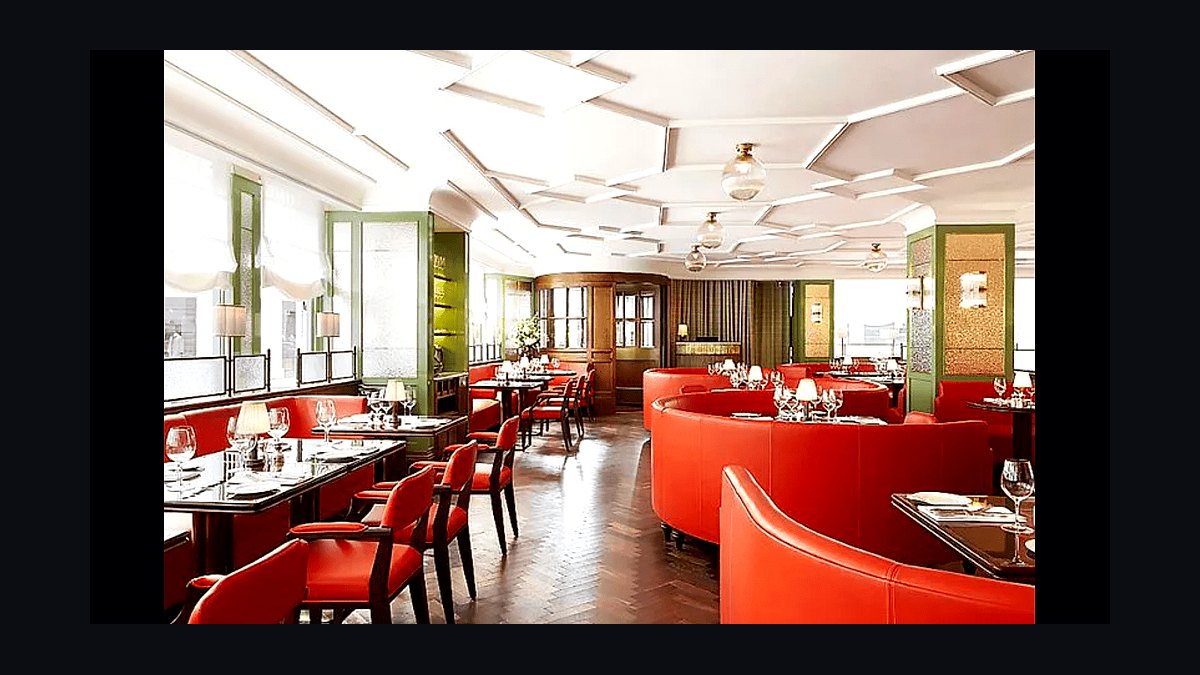
Open a Scissors & Scotch franchise if you have $400,000–$750,000 in capital, can secure a full liquor license in your target market, and can staff both licensed stylists and certified beverage servers — the grooming-plus-lounge model earns real loyalty and $70,000–$200,000 in owner income at maturity, but the brand's short track record, dual licensing burden, and regional (not national) footprint make site selection and local marketing the deciding factors, not the concept itself.
What it is and why it matters
Scissors & Scotch is not a barbershop with a bar bolted on — it is a hybrid hospitality business that happens to cut hair. Founded in 2014 in Omaha, the brand built its entire value proposition around collapsing two errands men usually do separately (get a haircut, unwind with a drink) into one recurring, membership-billed visit. That matters because it changes what you are actually buying when you open a location. A traditional barbershop franchise sells you a repeatable service process. Scissors & Scotch sells you a repeatable *experience* process, and experience businesses live or die on execution details that a service business can ignore: ambiance, staff chemistry between two different professions, and a beverage program that has to feel premium without becoming a liability.
The membership structure is the mechanism that makes the "why it matters" concrete. Members typically pay $40–$60 a month for a haircut plus drink credits, which pushes the average ticket to $60–$90 versus $25–$40 at a standard barbershop. That is not a marginal improvement — it roughly doubles or triples per-visit revenue on the same chair-hours, which is the entire economic argument for tolerating the added regulatory complexity of alcohol service. If you open a unit and never get membership penetration past a trickle of walk-ins, you have taken on liquor licensing risk and staffing complexity for barbershop-level economics, which is the single most common way this concept underperforms.

It also matters that the brand is young and regionally concentrated — roughly 15–20 company-owned and franchised locations as of mid-2026, strongest in the Midwest and Southeast. Opening in a market where nobody has heard of Scissors & Scotch means you are not leasing brand pull the way a Great Clips or Sport Clips franchisee does; you are functionally launching a new local concept under a franchisor's operating system. That reframes what you're paying the franchise fee and royalty for: it buys you the playbook (buildout spec, membership software, vendor relationships, training), not walk-in brand recognition. Franchisees who understand this going in budget realistically for a 12–18 month ramp instead of expecting day-one traffic.
Finally, it matters because the concept sits at the intersection of two regulatory worlds — cosmetology and alcohol beverage control — that almost never overlap in a single small business. Most franchise systems ask you to master one compliance regime. This one asks for two, simultaneously, in the same four walls, which is why later sections spend so much time on licensing and staffing rather than on the haircut itself.
The step-by-step process
Opening a Scissors & Scotch franchise follows a sequence that is longer than a pure grooming franchise because the liquor license and dual-skilled staffing have to be solved in parallel with construction, not after it. The rough order: request and read the current Franchise Disclosure Document (especially Items 5, 6, 7, 19, and 20), get territory approval, apply for financing against the $400,000–$750,000 Item 7 range, begin the liquor license application the same week you sign the site lease (because license timelines, not construction, are usually the critical path), build out the 2,000–3,000 square foot space, hire and cross-schedule stylists and bartenders/servers, pre-sell memberships in the 60–90 days before opening, then open and shift immediately into membership-retention mode.
The reason the liquor license has to start early, not after construction, is that on-premises full liquor licenses can take anywhere from a few weeks in a permissive jurisdiction to many months in a capped-license market, and a franchisee who waits until the buildout is finished to start that application can sit on a finished, non-revenue-generating space for months. This is the step most first-time operators underestimate, and it is the one that most often turns a projected 9-month opening into an 18-month one.
Costs, timelines, and typical ranges

The 2026 FDD lists a franchise fee of about $50,000 and a total Item 7 investment of roughly $400,000 to $750,000, built from buildout/leasehold ($180,000–$400,000), equipment and lounge fit-out ($70,000–$160,000), signage and decor ($18,000–$50,000), initial inventory ($10,000–$28,000), initial marketing for membership pre-sale ($20,000–$45,000), training and travel ($10,000–$28,000), liquor licensing itself ($5,000–$20,000 in the FDD's baseline, though see below), and working capital for the first three to six months ($35,000–$90,000). Ongoing fees run about 6% royalty plus a separate marketing fee near 2% of gross.
Those FDD figures assume a moderate-cost licensing jurisdiction. In practice, liquor licensing is the single biggest source of budget overrun. A full on-premises license (not the cheaper beer/wine-only version) can run from roughly $3,000 in a permissive rural jurisdiction to well over $300,000 on the secondary market in a capped city like New York or San Francisco. A franchisee opening in a license-capped urban market should expect total investment to land closer to $850,000+ rather than the FDD's headline $750,000 ceiling — the FDD range is a floor-to-ceiling estimate for typical suburban sites, not a promise for every market.
Revenue and payback follow a wide band depending on execution. Conservative operators see monthly revenue of $25,000–$35,000 in year one, moderate performers $35,000–$50,000, and optimistic locations $50,000–$65,000; by the steady-state 13–24 month mark that spreads to $35,000–$50,000, $50,000–$70,000, and $70,000–$90,000 respectively. Gross margin after cost of goods, labor, and occupancy ranges 25–35% for conservative operators up to 45–55% for optimistic ones, translating to owner compensation of $40,000–$70,000, $70,000–$120,000, or $120,000–$180,000 a year across the same three tiers — consistent with the FDD's mature-shop range of $450,000–$900,000 gross and $70,000–$200,000 owner earnings. Break-even runs 9–24 months and payback on the initial investment runs 2.5–6 years, with the spread almost entirely explained by how fast membership penetration ramps (200–400 members within 18 months is the benchmark for the faster end of every range). Alcohol contributes only 15–25% of revenue but carries a 60–80% margin versus 40–50% on grooming services, so a location that undersells drink memberships is leaving its highest-margin line underused.

Where teams get it wrong
The most common mistake is treating the liquor license as a paperwork step instead of the actual critical path of the opening timeline. Teams that start the license application after signing the lease and beginning buildout — instead of the same week as the lease — routinely add three to six months of dead rent to their timeline, which erodes the working-capital cushion before a single membership is sold.
The second mistake is underestimating staffing complexity. Licensed cosmetologists and barbers operate under a completely different regulatory and skills regime than bartenders or servers carrying TIPS or ServSafe Alcohol certification, and the two roles cannot be cross-trained into each other on any meaningful timeline. Franchisees who assume "hospitality-minded generalists" can flex between the chair and the bar end up chronically understaffed in one role or the other during peak evening and weekend hours — precisely when the lounge experience is supposed to be strongest. Franchisees report that the alcohol component alone adds 30–50% more day-to-day management complexity versus a pure grooming shop, driven by inventory shrinkage risk, higher liability insurance, age-verification compliance, and local health department inspections layered on top of standard salon sanitation rules.
The third mistake is picking the wrong site. This concept's unit economics depend on an affluent, evening-and-weekend-social demographic — men 25–55 with household income of $75,000 or more — in a suburban strip center near office parks or retail corridors with strong after-work foot traffic. Urban downtown sites often look attractive for visibility but come with the highest liquor license costs and rent, which compresses the exact margin the lounge model is supposed to protect. Teams that chase a trendy downtown address over a boring, affluent suburban corridor frequently end up license-rich and cash-poor.
The fourth mistake is under-investing in the membership pre-sale window. Because the entire revenue model depends on recurring memberships rather than one-off haircuts, a franchisee who opens without at least a meaningful pre-sold base is starting from zero on the metric that determines break-even speed. The 60–90 day pre-open marketing window exists specifically to prevent this, and skipping or shrinking it is a false economy.
The fifth mistake is confusing this concept with its direct competitors during due diligence. The Boardroom Salon for Men (founded 2005, roughly 90 units) and Roosters Men's Grooming Center (founded 1999, roughly 70 units) both compete for the same upscale male client but generally lack the integrated full-liquor lounge, so their unit economics and licensing burden are not comparable. Benchmarking Scissors & Scotch financials against those brands, or against high-volume, low-ticket chains like Sport Clips (roughly 2,000 units), understates both the investment and the upside of the lounge model.
Decision framework: when to choose what
The choice to open a Scissors & Scotch franchise, rather than a comparable grooming concept or an independent lounge, comes down to three gating questions in sequence: can you clear the capital bar with a liquor-license buffer, can you solve the dual-licensed staffing problem in your labor market, and does your target site sit in an affluent, socially receptive trade area. A "no" on any one of those should redirect you toward a different model rather than toward opening anyway and hoping execution fixes a structural mismatch.
If capital is the constraint, a pure grooming franchise like Roosters or The Boardroom Salon for Men avoids the liquor license cost entirely and lowers the total investment floor. If staffing dual-licensed teams is the constraint but you still want the social/membership angle, an independent grooming lounge without a brand gives you full control to design around your local labor pool, at the cost of building your own playbook from scratch. If the site is the constraint — you have capital and staffing solved but only urban, license-capped real estate available — it is usually better to wait for a suburban site than to force a downtown location where licensing costs alone can push total investment past $850,000 and compress margin below the level that makes the model work.
Related questions
How long does it take to open a Scissors & Scotch franchise and break even?

Opening typically runs 9–15 months once licensing and buildout run in parallel; break-even ranges 9–24 months post-opening depending on membership pre-sale strength, with faster break-even tied directly to hitting 200–400 members within 18 months.
Is a Scissors & Scotch franchise a good fit for a first-time franchisee?
It can work, but the brand's short history, dual licensing burden, and need for hospitality and membership-sales skill mean prior experience in grooming, hospitality, or membership-based businesses meaningfully improves the odds versus a true first-timer.
How does the Scissors & Scotch membership model compare to a standard barbershop's pricing?
Members pay roughly $40–$60 monthly for a haircut plus drink credits, pushing average ticket to $60–$90 versus $25–$40 at a standard barbershop — roughly double to triple the per-visit revenue on comparable chair time.
What's the biggest hidden cost beyond the FDD's stated investment range?
The liquor license itself, which can range from $3,000 in a permissive jurisdiction to $300,000+ on the secondary market in a capped city, frequently pushing total investment above the FDD's $750,000 ceiling in dense urban markets.
FAQ
What is the typical total investment to open a Scissors & Scotch franchise? Based on the 2026 FDD, total investment (Item 7) runs roughly $400,000 to $750,000, covering the $50,000 franchise fee, buildout, equipment, signage, inventory, and working capital — though costs run higher in liquor-license-capped markets.
How much can an owner expect to earn from a mature shop? Mature locations typically gross $450,000–$900,000 annually, with owner net income in the $70,000–$200,000 range, depending heavily on membership retention and local demand.
What are the ongoing royalty and marketing fees? The royalty runs about 6% of gross sales, plus a separate marketing fee near 2%; franchisees should verify exact current figures against the live FDD.
Do I need a liquor license to operate a Scissors & Scotch franchise? Yes — the concept's complimentary whiskey-and-beer lounge requires a full on-premises liquor license, not just beer/wine, and requirements and costs vary widely by state and municipality.
Is Scissors & Scotch a good fit for a market with no existing brand presence? It can work, but with only 15–20 locations concentrated in the Midwest and Southeast as of mid-2026, entering a market with zero brand awareness typically extends the ramp-up to 12–18 months and requires heavier local marketing investment.
How does the membership model actually work? Members pay a monthly fee for a haircut plus drink credits and lounge access; mature shops carry several hundred members, and franchisees who actively pre-sell and promote memberships reach break-even faster than those relying on walk-in traffic.
Sources
- https://www.entrepreneur.com/franchises
- https://www.ibisworld.com
- https://www.statista.com
- https://www.franchisebusinessreview.com
- https://www.franchise.org
- https://www.census.gov
- https://scissorsandscotch.com
- https://www.sba.gov
Related on PULSE
This page will be disappearing soon. Save it to your device for $1 — or read it free while it is here.
@Kory-White- · if Venmo asks, the last 4 of my number are 2012
This page is gone.
This one is off the shelf now. $1 keeps it on your phone for good — the whole page, pictures and diagrams included.
 franchiseShould I open or buy a Pizza Hut franchise in 2027?
 franchiseShould I open or buy a Roto-Rooter franchise in 2027?
 franchiseShould I open or buy an Anytime Fitness franchise in 2027?
 franchiseShould I open or buy a Jeremiah's Italian Ice franchise in 2027?
 franchiseShould I open or buy a McAlister's Deli franchise in 2027?
 franchiseShould I open or buy a Big O Tires franchise in 2027?
 franchiseShould I open or buy a Bruster's Real Ice Cream franchise in 2027?
 franchiseShould I open or buy a Domino's franchise in 2027?
 frShould I open or buy a McDonald's franchise in 2027?
 franchiseShould I open or buy a UPS Store franchise in 2027?