


Should I open or buy a Rainbow Restoration franchise in 2027?
Quality
Certified
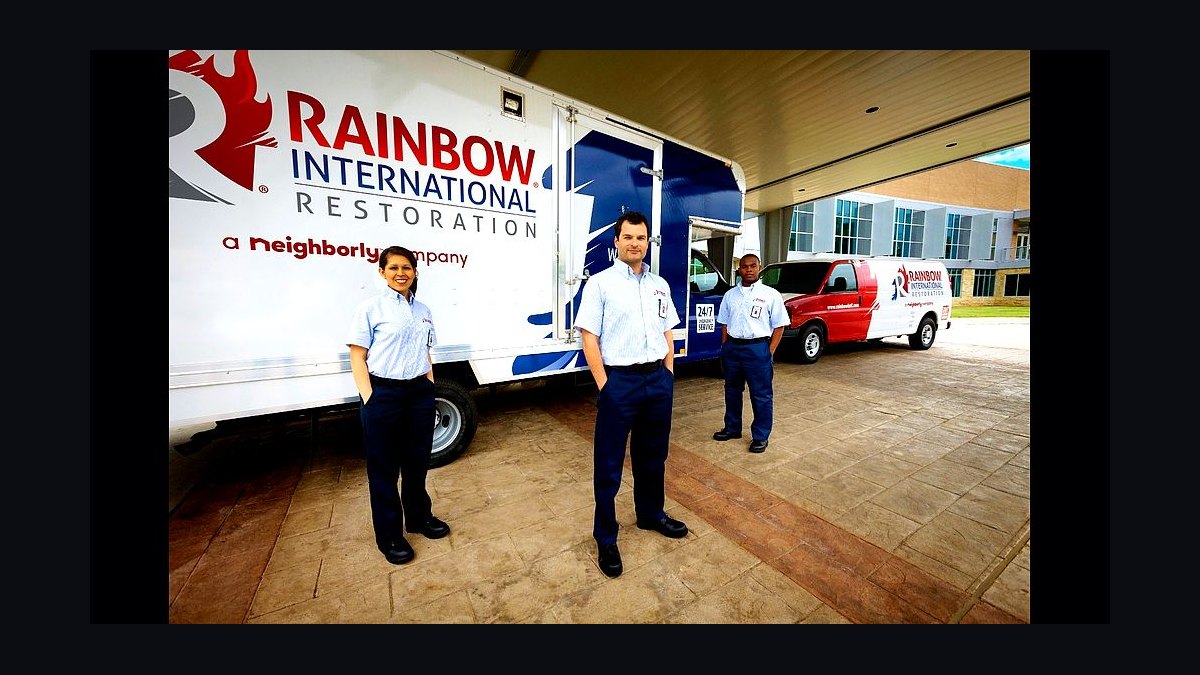
Open a Rainbow Restoration franchise in 2027 if you want an insurance-funded, largely recession-resilient property-restoration business backed by Neighborly's systems and cross-referral network, and you can personally handle 24/7 emergency dispatch, insurance-claim paperwork, and certified-crew staffing. At roughly $200,000-$400,000 total investment and a 7%-8% royalty, it rewards relationship-builders more than passive investors — skip it if you need a predictable schedule.
The outcome you should expect
Most new Rainbow Restoration owners spend their first twelve to eighteen months building the two assets that actually generate calls: certified crews who can respond fast, and referral relationships with insurance adjusters, property managers, and plumbers who see water damage before anyone else does. During that ramp, revenue is lumpy and often thin — early jobs get won on price and availability rather than reputation, and a large share of first-year cash gets reinvested into equipment, additional technicians, and marketing rather than distributed as owner profit. A realistic target is break-even somewhere in that 12-18 month window, with the franchise crossing $1 million in annual revenue by year three if the territory is right and staffing keeps pace with demand.
Beyond that point, the ceiling is genuinely high relative to the capital required. Mature Rainbow Restoration units commonly gross between $700,000 and $2.5 million annually, with owner earnings in the $120,000-$400,000 range once crews, dispatch, and insurance-billing workflows are running smoothly. That spread is wide because restoration revenue scales almost linearly with crew capacity and response speed — an owner who adds a second and third truck, cross-trains technicians across water, fire, and mold categories, and keeps Xactimate estimates accurate and fast tends to climb toward the top of that range within four to five years. An owner who stays a one-truck operation, or who loses technicians faster than they can be replaced, plateaus well below it.

The nature of the demand is what makes this outcome achievable even in a soft economy. Water intrusion, fire damage, and mold remediation are not discretionary purchases homeowners defer the way they defer a kitchen remodel — insurance policies, mortgage covenants, and basic habitability force the work to happen, and a large share of the invoice is paid by the carrier rather than out of the homeowner's pocket. That doesn't make the business recession-proof, but it does decouple much of the top line from consumer discretionary spending, which is the trade-off you're buying with the moderate-to-substantial startup capital and the 24/7 operational demands.
What drives that outcome
Four variables explain most of the spread between a Rainbow Restoration unit clearing $120,000 and one clearing $400,000: response speed, referral-source density, technician retention, and territory selection. Response speed matters because restoration jobs are won or lost in the first 60-90 minutes after a call comes in — a homeowner or property manager with an active water leak calls whichever crew answers and shows up first, and that first-mover advantage typically becomes the crew of record for the full mitigation-and-reconstruction job, which is where the real revenue sits. Referral-source density compounds over time: adjusters, independent insurance agents, plumbers, and property managers who trust a franchisee's documentation and turnaround send repeat volume without any additional marketing spend, and Neighborly's shared brand and cross-referrals from sister concepts like Mr. Rooter or Molly Maid add a layer of built-in lead flow that a standalone restoration company doesn't get.

Technician retention is the least visible driver and the one most new franchisees underestimate. IICRC-certified water, fire, and mold technicians are the bottleneck resource in this business — not equipment, not marketing spend. A franchisee who can only staff one crew caps their own revenue regardless of how many calls come in, and technician turnover forces the owner back into the field personally, which stalls the referral-building and claims-management work that only the owner can do. Territory selection rounds out the picture: markets with a mix of aging housing stock, seasonal storm or freeze exposure, and moderate (not saturated) restoration competition tend to produce steadier call volume than either oversaturated metro cores or very low-density rural territories where drive times eat into the response-speed advantage.
Benchmarks and realistic ranges
The 2026 Franchise Disclosure Document lists a franchise fee of roughly $50,000 and a total Item 7 investment of approximately $200,000 to $400,000, with a royalty near 7%-8% (often tiered downward at higher revenue) plus a marketing fee of roughly 2% of gross. Within that Item 7 range, expect equipment and drying gear (extraction units, dehumidifiers, air scrubbers) to run $60,000-$150,000; service vehicles $40,000-$120,000; warehouse or home-office setup $15,000-$50,000 since most units operate from a warehouse rather than retail storefront; initial marketing and referral-relationship building $15,000-$45,000; technician and operator training and travel $10,000-$30,000; and licensing, certifications, and general liability insurance $8,000-$25,000. Liquid-capital requirements typically fall in the $80,000-$150,000 band, well below the total investment, because a meaningful share of Item 7 is financeable equipment and vehicle debt.
Working capital deserves its own line because it's where undercapitalized franchisees get into trouble. Insurance reimbursements commonly take 30-60 days to arrive after a claim is filed, which means payroll, materials, and vehicle costs have to be covered out of pocket during that gap on every job simultaneously in progress. Plan on $40,000-$120,000 of working capital specifically earmarked for that float, separate from the Item 7 total — franchisees who treat working capital as an afterthought are the ones who end up cash-strapped in months four through eight, right when call volume is finally picking up.

On the labor side, expect to pay $18-$28 per hour for certified technicians in most 2027 markets, plus overtime and on-call premiums for after-hours response, and to start with a crew of two to four technicians before scaling toward ten to twenty as revenue and territory size grow. Relative to the two closest national competitors, Rainbow Restoration's investment range is generally lower than Servpro's larger-territory packages (which often exceed $300,000) and comparable to or slightly above ServiceMaster Restore's $100,000-$200,000 entry point — though ServiceMaster's royalty often runs higher, in the 8%-10% band. Rainbow's roughly 150-200 U.S. units, against Servpro's approximately 2,100 and ServiceMaster's approximately 1,200, means materially less intra-brand territorial saturation but also less adjuster-level brand recognition in many markets, which shifts more of the early referral-building burden onto the individual franchisee.
Risks, edge cases, and failure modes
The single most common failure mode is understaffing relative to call volume: an owner secures strong referral relationships faster than they can hire and certify technicians, ends up turning away or subcontracting jobs, and watches competitors absorb the overflow permanently. The second is cash-flow mismanagement — treating the 30-60 day insurance reimbursement lag as a temporary inconvenience rather than a structural feature of the business, which leaves payroll unfunded during a run of simultaneous large losses (a burst pipe season or a regional freeze event) even though those same jobs will eventually pay out profitably.
Insurance-claim friction is a persistent edge case rather than a one-time hurdle: adjusters vary in how quickly they approve scope, some carriers push back on Xactimate line items or require supplemental documentation, and a franchisee without an established adjuster relationship in a given territory will see slower approvals and more disputed line items than one with two or three years of trust built up. Weather dependency cuts both ways — a major hurricane, flood, or freeze event can spike demand well beyond a single crew's capacity (a genuine upside), but it can also mean multi-week stretches of thin volume in a mild season, which is why working-capital reserves matter as much in slow months as in a claims surge.
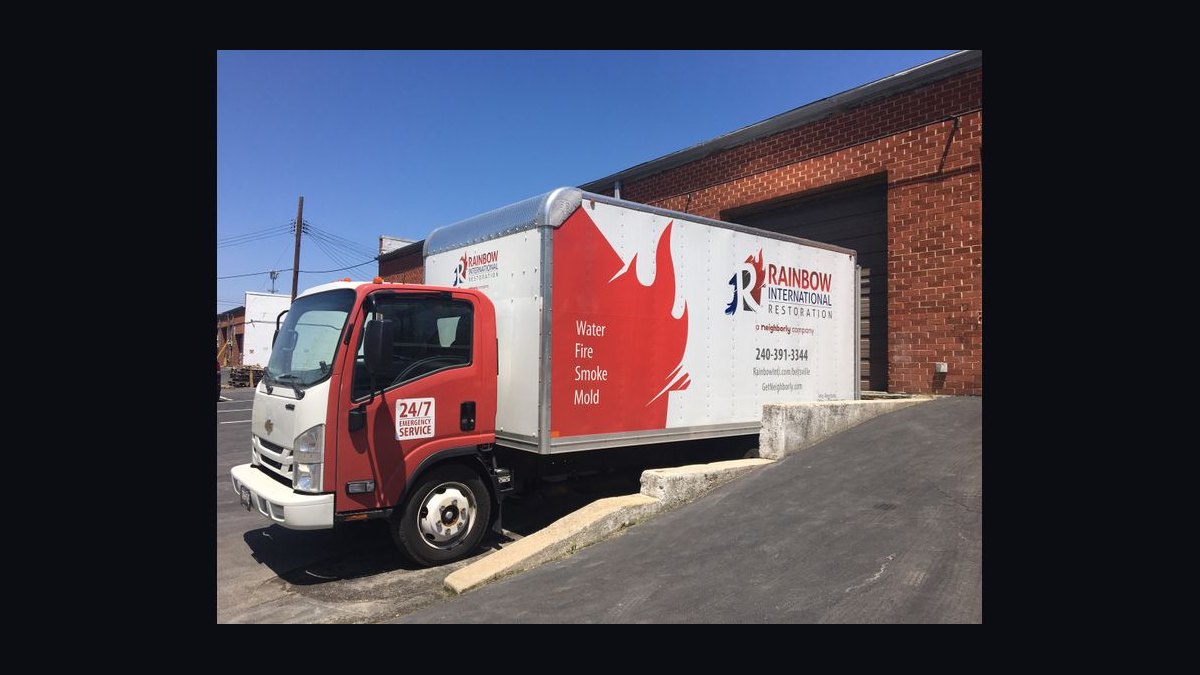
Competitive saturation is real but market-specific: Servpro, ServiceMaster Restore, Paul Davis, PuroClean, BELFOR, and 911 Restoration all compete for the same insurance-referral relationships, and a territory where two or three of these brands already have entrenched adjuster relationships is a materially harder launch than an underserved suburb or growing metro-adjacent market. Rising insurance premiums and deductibles are a 2027-specific pressure worth watching — as out-of-pocket deductibles climb, some homeowners delay or skip filing claims for smaller water or mold losses, which can compress the low end of the job pipeline even while large-loss volume (fire, major flooding) stays strong. Finally, this is not a semi-absentee model: the 24/7 response obligation, on-site crew management, and personal involvement in claims coordination require a genuinely hands-on owner, particularly in the first one to two years before a general manager can credibly take over day-to-day dispatch.
A practical rollout plan
A disciplined 90-140 day pre-launch sequence reduces most of the risks above. Start by reading the full 2026 FDD, with particular attention to Item 19 (financial performance representations) and Item 20 (unit counts and turnover by territory), then spend several weeks calling eight or more existing operators — not just the two or three the franchisor suggests — and ask specifically about insurance-relationship building timelines, actual claim-payment turnaround, technician retention, and first-year net profit versus revenue. From there, validate the specific territory: check existing Rainbow, Servpro, ServiceMaster, and independent restoration competitor density, housing age and storm/freeze exposure, and the local insurance-adjuster landscape before signing.

Once financing and the warehouse lease are secured, prioritize hiring and IICRC-certifying the first crew before marketing spend goes out the door — a franchise that generates calls before it can staff them burns the exact referral trust it needs to build. Launch with a focused push into two or three referral channels (local adjusters, plumbers, property managers) rather than broad consumer advertising, since the highest-value jobs in this category come through B2B relationships, not homeowner search traffic. From year two onward, the growth lever is almost always crew capacity: each additional certified, retained technician team directly expands how many simultaneous emergency calls the franchise can win, which is the real constraint on climbing from the lower to the upper end of the earnings range.
Related questions
How is Rainbow Restoration different from Rainbow International Restoration?
They're related but distinct Neighborly restoration concepts with separate territories and branding; compare their individual FDDs and Item 19 figures directly rather than assuming identical economics.
Do I need construction experience to run a restoration franchise?
No — most owners come from sales, operations, or general small-business backgrounds and hire IICRC-certified technicians for the technical mitigation and reconstruction work itself.
How long until insurance claims actually get paid?
Plan for 30-60 days from job completion to full reimbursement in most cases, longer for large or disputed losses, which is why dedicated working capital matters.
Is Rainbow Restoration better than Servpro for a first-time franchisee?
Rainbow offers less territorial saturation and Neighborly cross-referrals; Servpro offers greater brand recognition among adjusters. The right choice depends on whether you value a leaner system or established scale.
Can this franchise be run part-time?
Not realistically in the early years — 24/7 emergency response and hands-on crew and claims management require a full-time owner until a trusted general manager can be trained in.
FAQ
Is Rainbow Restoration truly recession-proof? No business is fully recession-proof, but water, fire, and mold restoration demand is largely non-discretionary and substantially insurance-funded, which historically holds up better than discretionary home-service categories during downturns, even if claim-processing speed can slow.
How much can I realistically earn in the first few years? Expect thin or negative owner profit in year one while building crews and referral relationships, with mature units reaching $700,000-$2.5 million in gross revenue and $120,000-$400,000 in owner earnings typically by year three or four.
What's the hardest part of running this franchise? Sustaining 24/7 emergency-response capacity while staffing and retaining IICRC-certified technicians — staffing, not marketing, is usually the binding constraint on growth.
How much ongoing support does Neighborly actually provide? Neighborly supplies national brand marketing, a shared CRM and dispatch platform, and field support for training and operations, though the depth of hands-on help varies by region and local franchise consultant.
Can I run this as a semi-absentee owner? Generally no — the emergency-response obligation and insurance-claims coordination require a full-time, hands-on owner, especially in the first one to two years before a general manager can take over.
What's the biggest financial risk beyond the franchise fee? Underestimating working capital needed to cover the 30-60 day gap between job completion and insurance reimbursement, which can strain payroll even on profitable, fully-approved claims.
Sources
- https://www.neighborlybrands.com
- https://www.rainbowrestores.com
- https://www.entrepreneur.com/franchises
- https://www.ibisworld.com
- https://www.statista.com
- https://restorationindustry.org
- https://www.franchisebusinessreview.com
- https://www.franchise.org
- https://www.ftc.gov/business-guidance/resources/franchise-rule-compliance-guide
- https://www.sba.gov/business-guide/plan-your-business/franchise-businesses
Related on PULSE
- Should I open or buy a Rainbow International Restoration franchise in 2027?
- Best restoration and disaster-recovery franchises to buy in 2027
- Should I open or buy a Restoration 1 franchise in 2027?
- Should I open or buy a BluSky Restoration franchise in 2027?
- Should I open or buy a 911 Restoration franchise in 2027?
- Should I open or buy a Paul Davis Restoration franchise in 2027?
This page will be disappearing soon. Save it to your device for $1 — or read it free while it is here.
@Kory-White- · if Venmo asks, the last 4 of my number are 2012
This page is gone.
This one is off the shelf now. $1 keeps it on your phone for good — the whole page, pictures and diagrams included.
 franchiseShould I open or buy a Stanley Steemer franchise in 2027?
 franchiseShould I open or buy a Dairy Queen franchise in 2027?
 franchiseShould I open or buy a Mathnasium franchise in 2027?
 franchiseShould I open or buy a Cold Stone Creamery franchise in 2027?
 franchiseShould I open or buy a FACE FOUNDRIÉ franchise in 2027?
 franchiseShould I open or buy a Jimmy John's franchise in 2027?
 franchiseShould I open or buy a Taco Bell franchise in 2027?
 franchiseShould I open or buy a Mac Tools franchise in 2027?
 franchiseShould I open or buy a Planet Fitness franchise in 2027?
 franchiseShould I open or buy a Bruster's Real Ice Cream franchise in 2027?