


Should I open or buy a DRYmedic franchise in 2027?
Quality
Certified
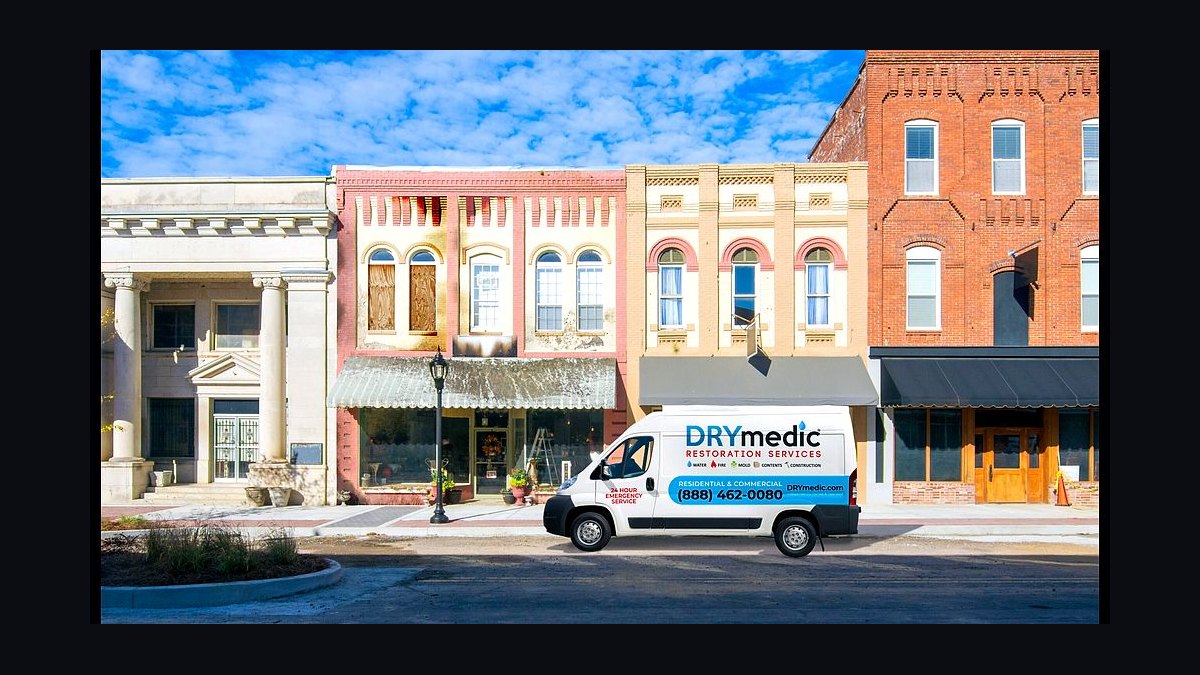
Yes, if you can staff certified crews and handle 24/7 emergency dispatch — DRYmedic gives you a lower-cost entry into recession-resilient, insurance-funded property restoration. With a roughly $50,000 franchise fee and $200,000–$500,000 total investment, it's meaningfully cheaper than SERVPRO or ServiceMaster. Mature units gross $700,000–$2.2M+, with owners clearing $110,000–$370,000. The trade-off is a younger brand with fewer adjuster relationships than the giants.
A Restoration Call at 2 AM
Picture your first year running a DRYmedic franchise: it's 1:47 AM and your phone rings. A burst pipe has flooded a finished basement in a mid-sized suburban home, and the homeowner's insurance adjuster is already on the line asking how fast you can mobilize. This is the actual product you're selling when you open a DRYmedic — not a storefront, not a subscription, but a guaranteed response window. Your contract with the insurance carrier, and often with the homeowner directly, hinges on getting a truck-mounted extraction unit and two technicians on-site within 60 to 90 minutes. If you can't, the adjuster calls SERVPRO next time, and that referral relationship you spent six months building evaporates.
This scenario is the honest starting point for evaluating whether to open or buy a DRYmedic franchise in 2027. The category — water, fire, smoke, mold, and storm-damage cleanup and reconstruction — is largely insurance-funded and non-discretionary. Nobody delays a flooded basement because the economy is soft; the water still needs to come out before mold sets in. That's what makes restoration attractive to franchise buyers who want a recession-resilient business. But the same emergency-driven structure that makes the demand durable is what makes the operating model demanding: you are building a business around being awake, staffed, and equipped at 2 AM, every day, indefinitely. Before you sign a franchise agreement, you need to have honestly answered whether you (or a manager you trust completely) can live inside that rhythm for the next five to ten years.
How the DRYmedic Model Actually Works
A DRYmedic unit is typically home- or warehouse-based, which keeps real estate costs down relative to a retail-facing franchise. The core asset isn't a location — it's a fleet of mobile restoration crews equipped with extraction units, air movers, dehumidifiers, and moisture meters, dispatched against emergency calls that arrive through three channels: direct insurance-carrier referrals, adjuster relationships you build locally, and homeowner calls (often after a Google search or a plumber's recommendation) that then get routed through insurance for payment.
The revenue mechanism matters because it shapes your first-year priorities. Because claims are largely insurance-funded, your actual customer in the money sense is often the insurance carrier or adjuster, not the homeowner standing in the flooded basement. That means the single highest-leverage activity in your first year isn't marketing to consumers — it's proactively building relationships with 20 to 50 local insurance agents and adjusters, sponsoring adjuster association events, and proving you can hit response-time commitments consistently. Expect to spend $15,000–$30,000 on this local networking and relationship-building in year one alone, separate from your general marketing budget.
Once a job starts, the crew's job is to extract standing water, deploy drying equipment, remediate mold or smoke damage, and document everything thoroughly enough to support the insurance claim. That documentation step is not optional paperwork — it's the difference between getting paid promptly and getting stuck in a claims dispute that ties up your working capital for months. Franchisees who treat claim documentation as a core operational skill, on par with the physical restoration work, tend to have far smoother cash flow than those who treat it as an afterthought.
Real Numbers, Ranges, and Benchmarks

The 2026 FDD lists a franchise fee around $50,000 and a total Item 7 investment of roughly $200,000 to $500,000, covering equipment and drying gear ($60,000–$160,000), vehicles ($40,000–$130,000), warehouse or office setup ($15,000–$55,000), initial marketing ($15,000–$50,000), training and travel ($10,000–$32,000), licensing and insurance ($8,000–$28,000), and working capital ($45,000–$130,000) to cover the float between doing the work and getting paid on a claim. Royalty runs near 8%, often tiered, plus a roughly 2% marketing fee.
Your first six months rarely generate meaningful revenue — expect $0 to $20,000 in gross sales while you train, certify technicians, and establish your first vendor and insurance relationships. Months seven through twelve is the ramp-up phase: monthly revenue typically reaches $25,000–$60,000, against which you're paying $2,500–$6,000 monthly in combined royalty and marketing fees. Net margins in well-run restoration units run 10–20%, so by month twelve you might be clearing $2,500–$12,000 per month if overhead stays lean. Franchisees who survive year one often reach $600,000–$1,200,000 in annual revenue by year two, with owner earnings of $90,000–$200,000 — though that growth typically requires reinvesting in a second truck and additional technicians rather than taking the cash out.
Staffing is the largest recurring cost after equipment. Water mitigation technicians earn $22–$35/hour in most markets, mold remediators command $28–$45/hour, and you'll need 2–4 full-time techs by month twelve plus a part-time administrator at $18–$25/hour — total annual payroll of $120,000–$250,000 for a $700,000–$1.2M revenue unit. Insurance (general liability at $2M–$5M coverage, workers' comp, and commercial auto) runs $15,000–$35,000 annually, and licensing/compliance (mold remediation licenses, lead-safe certifications, wastewater permits) adds $3,000–$8,000 per year. Equipment maintenance and replacement runs 5–10% of equipment value annually, meaning a $50,000 equipment package costs $2,500–$5,000 yearly in upkeep, with a major refresh every 3–5 years running $30,000–$60,000. Median time to recoup the full initial investment is 24–36 months for top performers and 48+ months for slower starts — and with SBA rates running 5–7% as of mid-2026, debt service adds another $12,000–$35,000 annually that needs to be built into your break-even math from day one.
Trade-Offs and Alternatives
DRYmedic's core trade-off against the restoration giants is straightforward: lower cost of entry against less brand recognition where it matters most — with insurance adjusters. DRYmedic's $200,000–$500,000 total investment runs roughly 30–50% below SERVPRO's $500,000–$1,000,000+ range, which matters enormously if you're financing with a mix of cash and SBA debt and want to enter a mid-sized market (population 100,000–500,000) with a single truck before scaling organically. But SERVPRO (1,700+ units), ServiceMaster Restore (600+), PuroClean (400+), and BELFOR have decades of adjuster relationships that a newer system like DRYmedic simply hasn't accumulated yet. You're not just opening a franchise — you're rebuilding a referral network from a colder start than the category leaders.

If you're weighing DRYmedic against alternatives, the honest comparison set includes Rainbow Restoration (Neighborly-backed, comparable positioning), PuroClean and 911 Restoration (similarly mid-tier restoration brands), an independent restoration business with no franchise fee or royalty but zero brand support, or an entirely different home-service category if the 24/7 emergency-response lifestyle doesn't fit you. The restoration industry is also consolidating — private equity is buying up multi-unit franchise groups, which cuts two ways. Larger, PE-backed competitors may outspend you on marketing and equipment in the near term, but it also means a well-run DRYmedic unit generating $1.5M+ in revenue could be an attractive acquisition target, potentially selling for 3–5x EBITDA (roughly $300,000–$800,000) to a regional roll-up buyer in five to seven years. Geographic sweet spots for a 2027 entry include high storm-frequency, growing-population markets like the Gulf Coast, Southeast, Texas, Florida, the Carolinas, and Tennessee — avoid already-saturated metros where five or more restoration brands are competing for every claim.
Common Pitfalls and How to Avoid Them
The single most common mistake buyers make is underestimating the insurance-relationship-building timeline. You cannot simply open a DRYmedic and expect adjusters to start routing claims to you; that network has to be built person by person, event by event, over your first 6–12 months, and franchisees who skip this step and rely only on homeowner-direct marketing consistently underperform their Item 19 projections. Budget the $15,000–$30,000 in relationship-building spend as a non-negotiable line item, not an optional extra.
A second recurring pitfall is undercapitalizing working capital. Because you get paid after insurance processes a claim — sometimes weeks after the work is done — franchisees who finance right up to the edge of their equipment and marketing budget without keeping $45,000–$130,000 in working-capital float frequently hit a cash crunch in months four through eight, exactly when payroll and fuel costs are climbing but claim payments haven't caught up yet. A third mistake is trying to run 24/7 on-call coverage personally past the first year without building a rotating team of 3–5 technicians; owners who never delegate emergency response burn out, and burnout shows up as declined calls, which is exactly the failure mode adjusters remember and stop referring around. Finally, buyers sometimes skip a rigorous Item 19 and franchisor-support review because DRYmedic's lower entry cost feels like lower risk — but a younger system means support infrastructure, national-account relationships, and training depth are still maturing, so validating those specifics with current multi-unit operators before you sign is at least as important here as it would be with a more established brand.
Related questions
How does DRYmedic compare to SERVPRO for a first-time franchise owner?
DRYmedic costs 30–50% less to open ($200K–$500K vs. $500K–$1M+) but carries far less adjuster-network brand recognition. First-time owners with less capital but willingness to build local insurance relationships from scratch often do better starting with DRYmedic.
What licenses do I need to run a DRYmedic franchise?
Most states require mold remediation licensing, and some require lead-safe certification for older-home work and wastewater disposal permits. Budget $3,000–$8,000 annually for licensing and compliance, on top of general liability, workers' comp, and commercial auto coverage.
Can I run a DRYmedic franchise without restoration experience?
Yes — no prior restoration experience is required, and the franchisor provides training. A background in construction, operations management, or B2B sales helps more than hands-on remediation experience, since your first-year priority is relationship-building and crew management, not doing the physical work yourself.
How many technicians do I need in year one?
Plan for 2–4 full-time certified technicians by month twelve, plus a part-time administrator, with total annual payroll of $120,000–$250,000 for a unit doing $700,000–$1.2M in revenue. Most owners also take on-call shifts themselves in year one before staffing a rotating team.
FAQ
What does a DRYmedic franchise actually cost in 2027?
The franchise fee is around $50,000, and total startup investment ranges from $200,000 to $500,000. That covers equipment, vehicles, initial marketing, and working capital — actual costs depend on territory size and whether you lease or buy equipment.
How much money can a DRYmedic owner realistically make? Mature units typically gross $700,000 to over $2 million annually, with owner earnings in the $110,000 to $370,000 range. Profit varies heavily by market, staffing efficiency, and how well you manage insurance claims and response times.
Is DRYmedic a recession-proof business to open? Property restoration is considered recession-resilient because water damage, fires, and mold don't stop during downturns, and most work is insurance-funded. Demand can dip slightly in severe recessions if homeowners delay smaller, non-insured claims.
How much experience do I need to run a DRYmedic franchise? No prior restoration experience is required, but a background in construction, management, or sales helps. The franchisor provides training, but you'll need to independently learn insurance-claim processes and 24/7 emergency-response logistics.
What are the biggest challenges of owning a DRYmedic franchise? The main hurdles are round-the-clock emergency calls, staffing reliable certified technicians, and navigating complex insurance claims. The brand is newer than giants like SERVPRO, so adjuster-level brand recognition is still growing in many markets.
How long does it take to break even after I open a DRYmedic franchise? Many owners reach positive monthly cash flow within 12 to 24 months, but full payback on the initial $200,000–$500,000 investment often takes 24–36 months for top performers and 48+ months for slower starts, depending on territory and referral-building speed.
Sources
- DRYmedic Restoration Services official franchise site
- Entrepreneur Franchise 500 — DRYmedic listing
- International Franchise Association — franchise economic outlook
- IBISWorld — industry research
- Statista — restoration and insurance-claim services market data
- Restoration Industry Association
- Franchise Business Review — franchisee satisfaction surveys
- SERVPRO official site
- U.S. Small Business Administration — SBA loan rates
Related on PULSE
This page will be disappearing soon. Save it to your device for $1 — or read it free while it is here.
@Kory-White- · if Venmo asks, the last 4 of my number are 2012
This page is gone.
This one is off the shelf now. $1 keeps it on your phone for good — the whole page, pictures and diagrams included.
 franchiseShould I open or buy a Goddard School franchise in 2027?
 franchiseShould I open or buy a Mac Tools franchise in 2027?
 franchiseShould I open or buy an F45 Training franchise in 2027?
 franchiseShould I open or buy a Take 5 Oil Change franchise in 2027?
 franchiseShould I open or buy a Jimmy John's franchise in 2027?
 franchiseShould I open or buy a Great Clips franchise in 2027?
 franchiseShould I open or buy a Pizza Hut franchise in 2027?
 franchiseShould I open or buy a Bruster's Real Ice Cream franchise in 2027?
 franchiseShould I open or buy a Crumbl Cookies franchise in 2027?
 franchiseShould I open or buy a Servpro franchise in 2027?