


Should I open or buy a Sundek franchise in 2027?
Quality
Certified

Yes, for a contractor-minded operator: Sundek offers an established decorative-concrete-coatings franchise in a growing resurfacing market, with moderate capital requirements (~$100,000-$300,000), large project tickets, and both residential and commercial revenue streams. Opening a Sundek franchise favors people who can execute quality installs, manage crews, and generate their own leads — skip it if you want a passive investment or lack trade/sales comfort.
The outcome you should expect
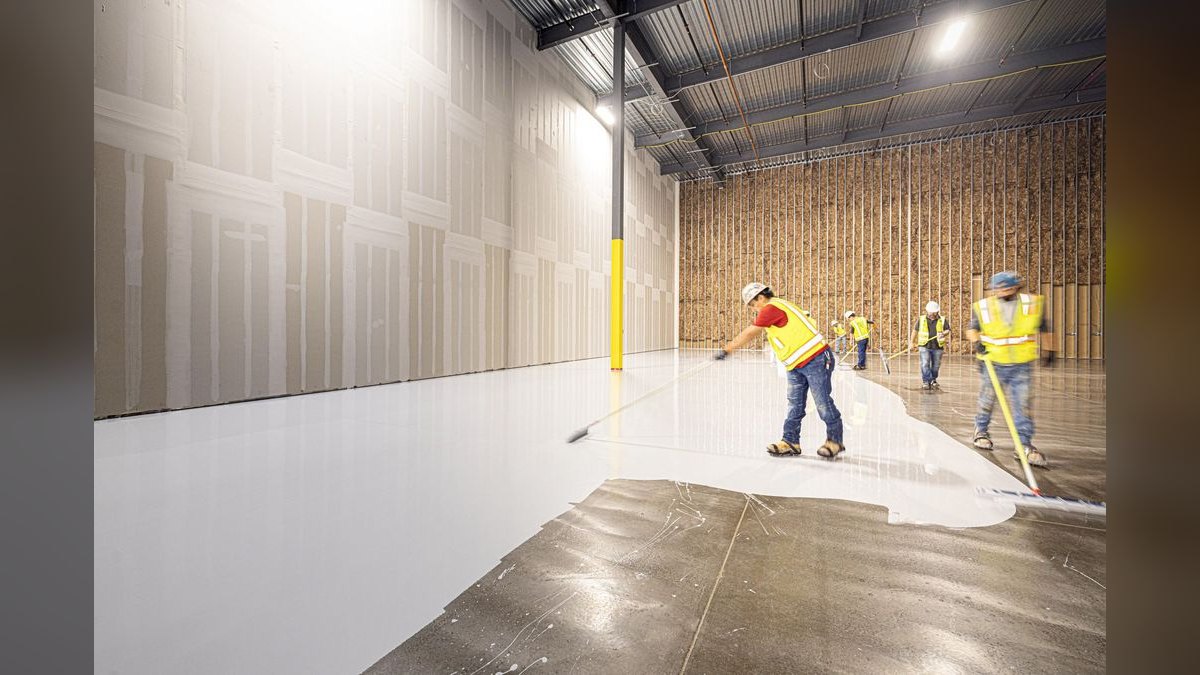
Open a Sundek franchise and you're stepping into a hands-on, crew-dependent trade business, not a semi-absentee retail concept. The realistic outcome for a first-year owner is a slow ramp: months one through six are dominated by systems training, crew hiring, and building a local reputation, with revenue often below breakeven while marketing spend and payroll run ahead of billings. By year two or three, a well-run territory should be generating $600,000 to $2,000,000+ in annual gross revenue, with owner earnings in the $100,000-$350,000 range once materials, labor, royalties, and marketing are subtracted. That outcome, however, is conditional — it assumes the owner personally drives lead generation (Sundek franchisees are expected to source 60%-80% of their own leads) and manages installation quality directly, since the brand's reputation and repeat/referral business depend on workmanship, not national advertising. Operators who treat this as a check-writing investment and hire a manager on day one tend to underperform the Item 19 averages, because the franchisor's proprietary coating systems still require hands-on quality control that a disengaged owner struggles to enforce remotely. The adjacent outcome worth planning for is seasonality-driven cash flow: in colder climates, the April-through-October installation season concentrates most annual revenue into roughly seven months, so owners should expect thin or negative cash flow in winter unless they diversify into interior commercial floor work or garage-floor coatings, which run indoors and less weather-dependent than pool-deck and patio resurfacing.
What drives that outcome (mermaid)
Three levers explain most of the variance between a Sundek unit clearing $100,000 and one clearing $350,000: lead volume, installation efficiency, and channel mix. Lead volume is driven by the owner's willingness to invest in Google Local Services ads, home shows, and builder/contractor referral relationships — franchisees who rely solely on the brand's regional marketing fund (typically 1%-2% of gross sales) under-fill their pipeline compared to those who actively cultivate pool-builder and landscaper referral partnerships. Installation efficiency is driven by crew retention and training; because skilled concrete finishers are scarce and turnover is high, owners who invest in above-market wages ($18-$28/hour for skilled labor) and performance bonuses see fewer schedule slips and callbacks, which directly protects margin. Channel mix is the third lever — commercial projects ($10,000-$50,000+ per job) carry higher tickets than residential pool decks ($3,000-$8,000) but convert at a lower rate (15%-25% versus 25%-40%) and take longer to collect on (30-60 day payment terms versus a 50/50 deposit structure common in residential). The owners who hit the top of the Item 19 range are usually the ones who balance both channels rather than over-indexing on one.
Benchmarks and realistic ranges
The 2026 FDD lists a franchise/license fee of roughly $30,000-$50,000 and a total Item 7 investment of about $100,000-$300,000, covering equipment and application tools ($30,000-$90,000), service vehicles ($25,000-$80,000), warehouse or home-office setup ($10,000-$40,000), initial coating inventory ($10,000-$30,000), initial marketing ($15,000-$45,000), training and travel ($10,000-$30,000), and working capital ($25,000-$80,000). Royalties run near 5%-7% of gross sales, or a product-based fee depending on the model, plus a marketing fee of roughly 1%-2%. On the profitability side, gross margins on materials typically run 30%-45% since Sundek marks up proprietary coatings and stains sold to franchisees, while labor consumes 25%-35% of project revenue. Blended net margins for mature units land in the 15%-25% range, meaning a $1,000,000 operation nets roughly $150,000-$250,000 before the owner's own draw. Working capital needs are real: commercial clients often pay on 30-60 day terms, so the FDD's recommendation of $30,000-$60,000 in liquid reserves beyond the initial investment is a meaningful buffer, not a suggestion. Equipment upkeep (grinders, sprayers, mixers) adds another $5,000-$15,000 per year. For comparison, adjacent decorative-concrete concepts like Concrete Craft carry similar trade-based economics, and garage-floor-coating niche franchises tend to run leaner on Item 7 but with smaller average tickets — useful benchmarks if you're weighing Sundek against a narrower coatings concept. On the exit side, franchise agreements typically run 10 years with renewal options, and resale values for established units tend to run 2-3x annual net profit, though buyers for a trade-heavy concrete business can take 6-18 months to find, given the franchisor's right of first refusal narrows the buyer pool somewhat.
Risks, edge cases, and failure modes
The single biggest failure mode is treating installation execution as an afterthought. Sundek's proprietary systems still depend on correct surface preparation, crack repair, and sealing technique; a franchisee who rushes training or under-invests in crew supervision risks adhesion failures, color-matching complaints, and callbacks that erode both margin and local reputation — and reputation is what drives the referral-heavy lead flow this business depends on. A second risk is crew instability: skilled concrete finishers are in short supply nationally, and franchisees who don't budget competitive wages or retention bonuses often end up leaning on subcontractors during peak season, which compresses margins exactly when volume — and therefore cash needs — is highest. A third edge case is geography-driven seasonality risk: an owner opening in a northern climate should model a genuinely slow six months, not a mildly slower one, and should stress-test whether working capital survives a winter with near-zero installation revenue. A fourth failure mode is under-investing in lead generation and assuming the brand's marketing fund will fill the pipeline — since franchisees are expected to generate the majority of their own leads, an owner who doesn't budget for Google Local Services ads, home-show booth fees ($1,000-$3,000 per show), or builder-referral relationships (often a 5%-10% referral fee) will likely land at the bottom of the revenue range regardless of installation quality. Finally, rising interest rates are a macro risk worth flagging for 2027 planning specifically: they can slow discretionary home-renovation spending, though the underlying decorative-concrete resurfacing market — estimated in the $4-$6 billion annual range in the U.S. — has continued growing in the mid-single digits, driven by aging infrastructure and homeowner preference for durable, low-maintenance surfaces over wood decking or tile. A franchisee who over-leverages the initial investment assuming residential demand alone will insulate them from a rate-driven slowdown should weight the commercial channel more heavily as a hedge.
A practical rollout plan (mermaid)
A disciplined 120-day rollout reduces the odds of falling into the failure modes above. Days 1-20 should be spent reading the 2026 FDD in full, with particular attention to Item 19 financial performance representations and Item 20 franchisee turnover data — these tell you more about realistic outcomes than any sales conversation with the franchisor. Days 21-40 should go to calling existing operators directly (not just franchisor-provided references) and asking pointed questions about installation execution difficulty, crew turnover, seasonality in their specific climate, and actual net profit after owner draw. Days 41-60 are for validating local demand in both the residential and commercial channels — this means talking to pool builders, landscapers, and property managers in your target territory, not just assuming national market growth applies evenly everywhere. Days 61-90 cover systems training and the early work of building your installation crew, ideally with the owner working alongside crews initially to learn the proprietary application methods firsthand rather than delegating from day one. Days 91-120 are launch and lead-generation ramp — running initial ad campaigns, attending a home show, and beginning to cultivate builder-referral relationships in parallel with the first live installations. After launch, the ongoing discipline is simple to state and hard to execute: protect installation quality because the brand's reputation is the lead-generation engine, and keep scaling crews and channel mix as volume grows rather than plateauing on residential-only work.
Related questions
How long does it take a Sundek franchise to break even?
Most trade-based franchises with this Item 7 range target breakeven in 12-24 months, contingent on lead-generation ramp and crew stability; a slow winter season in a cold climate can push this toward the back half of that window.
Is Sundek better than an independent decorative-concrete business?
The franchise buys proprietary formulations, training, and brand credibility versus building your own systems from scratch; independence offers full control and no royalty, but you forgo the established playbook and referral halo of a known brand.
What's the difference between residential and commercial Sundek work?
Residential jobs (pool decks, patios, driveways) run $3,000-$8,000 with faster 3-5 day timelines and 25%-40% close rates; commercial floor jobs run $10,000-$50,000+, take 2-6 weeks, and close at a lower 15%-25% rate but with better payment terms leverage over time.
Can I run a Sundek franchise without prior construction experience?
It's possible given the training provided, but the operators who perform best are contractor-minded — comfortable with crew supervision, project scheduling, and hands-on problem-solving on job sites, so a background in trades or project management is a real advantage.
FAQ
What does a Sundek franchise actually do? Sundek franchises apply decorative concrete coatings — resurfacing, staining, stamping, and repairing concrete for pool decks, patios, driveways, garage floors, and commercial floors. It operates as a trade and project-management business with installation crews, not a retail storefront.
How much money do I need to open a Sundek franchise? Total investment typically runs $100,000-$300,000, including a franchise/license fee of about $30,000-$50,000, plus equipment, vehicles, inventory, training, and working capital. The FDD also recommends holding an additional $30,000-$60,000 in liquid reserves.
What revenue and profit can I realistically expect? Mature units report annual gross revenue of $600,000-$2,000,000+, with owner earnings between $100,000 and $350,000, though results depend heavily on lead generation and crew management execution.
How does the royalty structure work? Royalties run roughly 5%-7% of gross sales, or a product-based fee in some models, plus a marketing fee near 1%-2% of gross sales that funds regional advertising support.
What's the biggest day-to-day challenge of owning a Sundek franchise? Managing a skilled installation crew while simultaneously generating enough leads to keep the schedule full — franchisees are expected to source the majority of their own business rather than relying solely on brand marketing.
Does seasonality significantly affect a Sundek franchise? Yes, in most climates outside the Sun Belt, concrete coating work concentrates in the April-through-October window, so owners need working capital reserves to cover slower winter cash flow, or should pursue more indoor commercial floor work to smooth revenue.
Sources
- https://www.entrepreneur.com/franchises/directory
- https://www.franchisedirect.com
- https://www.ibisworld.com
- https://www.statista.com
- https://www.concrete.org
- https://franchisebusinessreview.com
- https://www.franchise.org
- https://www.census.gov/construction
Related on PULSE
This page will be disappearing soon. Save it to your device for $1 — or read it free while it is here.
@Kory-White- · if Venmo asks, the last 4 of my number are 2012
This page is gone.
This one is off the shelf now. $1 keeps it on your phone for good — the whole page, pictures and diagrams included.
 franchiseShould I open or buy an F45 Training franchise in 2027?
 franchiseShould I open or buy a Bojangles franchise in 2027?
 franchiseShould I open or buy a Dunkin' franchise in 2027?
 franchiseShould I open or buy a Firehouse Subs franchise in 2027?
 franchiseShould I open or buy a Pizza Hut franchise in 2027?
 franchiseShould I open or buy a Goddard School franchise in 2027?
 franchiseShould I open or buy a Jiffy Lube franchise in 2027?
 franchiseShould I open or buy a Sonic Drive-In franchise in 2027?
 franchiseShould I open or buy a Servpro franchise in 2027?
 franchiseShould I open or buy a Massage Envy franchise in 2027?