


Should I open or buy a Men In Kilts franchise in 2027?
Quality
Certified
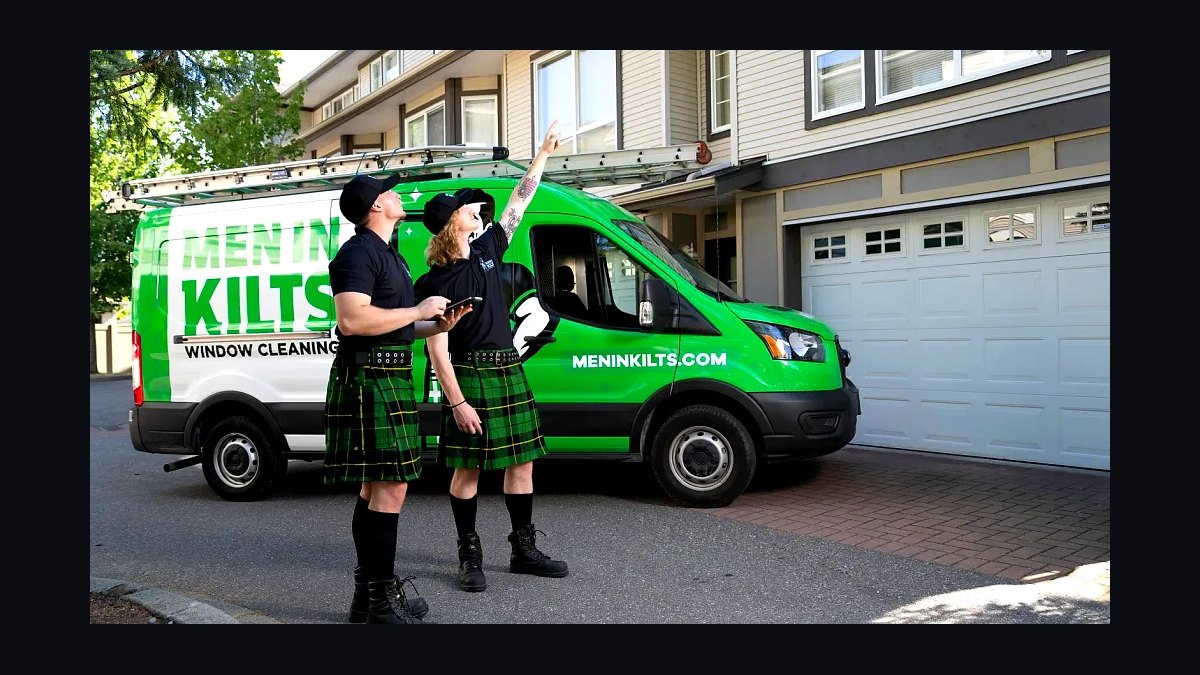
Opening a Men In Kilts franchise in 2027 makes sense for a hands-on operator who can recruit and retain technician crews, has $90,000–$200,000 to invest, and lives in a market with enough recurring exterior-cleaning demand to survive a slow season. The kilted branding drives word-of-mouth in a fragmented, mostly-independent industry, but the business still lives or dies on labor management and local lead generation — not the costume.
A Concrete Scenario That Frames The Problem
Picture two prospective franchisees looking at the same Men In Kilts opportunity in early 2027. The first lives in Charlotte, North Carolina, owns a pickup truck already, and has spent six years as a shift supervisor at a regional landscaping company. He knows how to write a schedule, discipline a no-show technician, and keep a crew moving between eight stops a day. The second lives in Minneapolis, has never managed anyone, and is drawn purely to the idea of a "fun, memorable" brand he saw on a franchise expo floor. Both write the same $45,000 check for the franchise fee. Eighteen months later, the Charlotte franchisee is running two crews, grossing close to $650,000, and clearing roughly $140,000 for himself. The Minneapolis franchisee is still running one crew, bleeding cash every January and February when exterior work stalls, and has cycled through four technicians because he never built a hiring pipeline.
Nothing about the FDD, the territory map, or the marketing materials predicted this gap. The difference is operational readiness. Men In Kilts sells a service and labor business wrapped in a costume, not a passive royalty stream. Before you sign, you need an honest scenario like this one: can you picture yourself scheduling four technicians on a Tuesday when one calls in sick and a $2,400 gutter job is on the books? If the answer is yes, the brand differentiation becomes a real asset. If the answer is no, the kilt is decoration on a business you're not ready to run.

This scenario also exposes why so much franchise-buying advice fixates on the wrong variable — the franchise fee — when the real predictor of success is whether the buyer has already done adjacent work: running a crew, managing a route, or selling a recurring home service. Franchisors rarely disqualify buyers on this basis; due diligence is the buyer's job.
How The Mechanism Actually Works
The Men In Kilts economic engine is a three-part loop: brand-driven lead generation, crew-based service delivery, and contract-based recurring revenue. Understanding how these three parts feed each other — and where they can break — is more useful than memorizing the investment range.
Lead generation starts with the differentiated brand (kilted technicians, wrapped vans) combined with paid local marketing — Google Local Services ads, Facebook, door hangers, and referral incentives. Because the exterior-cleaning category is fragmented and full of unbranded independents, a memorable uniform genuinely lowers customer-acquisition cost over time through referrals and repeat recall. But in year one, before word-of-mouth compounds, the franchisee is paying for most leads directly.

Those leads convert into either one-off jobs (a single pressure-washing visit) or recurring contracts (quarterly window cleaning, annual gutter service). Recurring contracts are the real prize — they smooth cash flow and reduce the marketing spend needed to keep trucks full. A franchisee who converts even 30-40% of first-time customers into a maintenance plan builds a route that requires less new-lead spend every quarter.
Crew execution is the connective tissue and the most fragile part of the loop. Technicians must be hired, trained on ladder and water-fed-pole safety, scheduled efficiently by geography, and retained despite the physical, outdoor, and sometimes cold nature of the work. A missed appointment or a sloppy job doesn't just lose that customer — it undercuts the very word-of-mouth the brand depends on. The loop only compounds correctly if execution quality stays high while the franchisee is also trying to sell more work.
The mechanism breaks down in two predictable places: when a franchisee under-invests in crew training and quality slips, or when they never build the recurring-contract base and stay dependent on expensive one-off lead generation every single month. Franchisees who deliberately push customers toward maintenance plans in year one are the ones who see the loop tighten into a self-sustaining route by year two.
Real Numbers, Ranges, And Benchmarks

The 2026 FDD lists a franchise fee of roughly $45,000, with total Item 7 initial investment ranging from about $90,000 to $200,000 — low relative to brick-and-mortar franchise categories because the model is truck- and service-based rather than storefront-based. A representative build-out looks like this: $25,000-$70,000 for vehicles and cleaning equipment (water-fed poles, pressure washers, gutter vacuums), $5,000-$15,000 for van wraps and kilts, $5,000-$20,000 for a home or small warehouse office setup, $12,000-$35,000 for initial local marketing, $8,000-$22,000 for operator and technician training and travel, $8,000-$25,000 for general liability and workers' compensation insurance, and $20,000-$60,000 in working capital to cover payroll during ramp-up. Royalty runs roughly 6-8% of gross revenue, with an additional marketing fee near 2%.
On the revenue side, mature units gross between $400,000 and $1,500,000-plus, with owner earnings typically landing between $80,000 and $300,000 depending on crew count, territory density, and how much recurring-contract revenue has been built. A single-crew operation in year one might gross $250,000-$400,000; a two-to-three-crew operation in a strong territory by year three or four can approach or exceed the top of that range. Most franchisees report reaching profitability within 12-18 months, though operators who secure a strong initial customer base or convert a large share of local commercial accounts (property managers, HOAs) sometimes break even faster.

Support costs are worth budgeting separately from the royalty: many franchisees report an additional $500-$1,000 per month bundled or itemized for proprietary scheduling software, call-handling systems, and vendor discounts. Territory resale, when the time comes, adds another data point — a transfer fee near $5,000-$10,000, with 2025's resale market moving roughly 15-20 units at prices from $80,000 to $350,000, generally priced at 2-3x annual net profit for a well-documented, revenue-healthy unit.
Climate materially changes these benchmarks. A snow-belt franchisee should budget for 20-30% lower revenue in the first quarter of the calendar year and hold a $15,000-$25,000 cash reserve specifically to cover payroll and loan payments through that stretch, or pivot part of the crew toward commercial pressure washing or seasonal lighting installation. A warm-climate franchisee avoids that seasonality entirely but usually faces denser local competition from independent pressure-washing operators and other national chains, which raises the effective cost per acquired lead.
Trade-Offs And Alternatives
Every exterior-cleaning franchise decision is really a trade-off between brand differentiation and operational burden. Men In Kilts trades a memorable, quirky identity for a labor-intensive, weather-exposed operating model. That trade only pays off if the operator treats crew management as the core skill being purchased — not the branding.

It's worth comparing Men In Kilts against its nearest categories before committing. Shack Shine and Window Genie compete directly in exterior and window cleaning with more conventional branding and comparable investment ranges; Fish Window Cleaning focuses more narrowly on windows alone, which can mean a simpler service menu but a smaller average ticket per visit. Adjacent recurring-service concepts, such as pool maintenance franchises, share the same route-density and recurring-contract logic even though the service itself differs — useful comparison points for understanding what "good" unit economics look like across the broader home-service category. An independent, non-franchised exterior-cleaning company is the other real alternative: no franchise fee or royalty, full control over branding and pricing, but no playbook, no training program, and no brand recognition on day one.
The honest trade-off calculus looks like this: pay the franchise fee and royalty in exchange for a proven training system, a differentiated brand, and a peer network of existing franchisees who've already solved seasonal cash-flow problems — or keep that 6-8% royalty and marketing fee as margin and build your own brand from zero, accepting slower initial lead flow and no fallback support system. For a first-time business owner with no home-service experience, the franchise route's structured onboarding (typically 1-2 weeks at headquarters covering operations, sales, and the brand's customer scripts) meaningfully de-risks the first year. For an operator who has already run a service crew before, the independent route preserves more upside since the brand premium matters less to someone who already knows how to generate local leads.
Common Pitfalls And How To Avoid Them

The single most common failure mode is underestimating labor. Franchisees who budget capital for trucks and equipment but not enough working capital for payroll during slow ramp-up months run out of cash before the recurring-contract base is built. The fix is holding the full $20,000-$60,000 working-capital range recommended in the FDD, not the low end, and treating the first two quarters as a hiring-and-training investment period rather than a profit period.
A second pitfall is ignoring seasonality until it's already hurting. Franchisees in northern territories who don't proactively add gutter cleaning, commercial pressure washing, or holiday-light installation for the November-to-February window watch revenue crater instead of merely dip. Planning the off-season service mix before opening — not after the first slow winter — is the difference between a manageable dip and a cash crisis.
A third pitfall is treating the kilt as a substitute for a real marketing plan. National branding campaigns need local adaptation — a "Kilted Cleaners" promotion that ignores a specific city's weather patterns or competitive landscape underperforms. Top-performing units in the 2026 franchisee survey referenced in the FDD spent $8,000-$15,000 annually on local digital ads plus referral incentives; budgeting less than that and expecting the brand alone to generate leads is a recurring mistake among newer franchisees.
A fourth pitfall involves resale planning done too late. Franchisees who sign long-term leases (over five years) for office or storage space, or who don't maintain clean financial records and modern equipment (water-fed poles, soft-wash systems over older pressure washers), find their exit value depressed when they eventually want to sell. Building a manager-run structure once revenue clears roughly $600,000, with four to five crews, is what ultimately makes the unit sellable as a passive asset rather than a job the buyer has to personally staff themselves. Finally, buyers who skip direct conversations with existing franchisees — asking specifically about crew retention, actual off-season revenue, and net profit rather than gross — consistently overestimate how quickly the business becomes self-sustaining.
Related questions
How long does it take a Men In Kilts franchise to become profitable?
Most franchisees reach profitability within 12-18 months. Faster timelines are typical for operators who secure commercial accounts or a strong initial customer base quickly; slower timelines usually trace back to underinvestment in local marketing or crew hiring delays.
Can I run a Men In Kilts franchise part-time?
No — it's structured as a full-time, crew-and-route operation from the start, though it can become manager-run and closer to passive once revenue and crew count scale, typically around $600,000 in annual revenue with four to five crews.
Does Men In Kilts work in a cold-climate market?
Yes, but only with seasonal diversification. Franchisees in snow-belt territories typically add gutter cleaning, commercial pressure washing, or holiday-light installation for winter months and budget a dedicated cash reserve for the slow first quarter.
How does Men In Kilts compare to Window Genie or Shack Shine?

All three compete in exterior/window cleaning with similar investment ranges. Men In Kilts differentiates primarily through its kilted-technician branding, while Window Genie and Shack Shine lean on more conventional branding; the underlying labor and route economics are comparable across all three.
What happens if I can't find enough technicians willing to wear a kilt?
Recruiting is a genuine constraint in some markets. Franchisees typically address it by emphasizing pay, tips, and the novelty as a selling point in job postings, and by building a referral-based hiring pipeline early rather than relying solely on general job boards.
FAQ
Is Men In Kilts a seasonal business? Yes, in colder climates demand drops significantly during winter months for standard exterior cleaning. Many franchisees offset this by adding gutter cleaning, commercial pressure washing, or holiday-light installation; in warmer regions the business runs close to year-round with minimal seasonality.
How much can I realistically earn as a Men In Kilts franchisee? Mature units typically gross between $400,000 and $1,500,000 annually, with owner earnings ranging from $80,000 to $300,000. Actual income depends heavily on territory density, labor efficiency, and how much of that revenue comes from recurring contracts versus one-off jobs.

What is the total investment needed to open a location? The franchise fee is about $45,000, and total initial investment (Item 7) ranges from roughly $90,000 to $200,000, which is low for a service franchise because it's truck-based and doesn't require a storefront or heavy fixed equipment.
How does the kilt branding actually help the business? The kilt-wearing technicians create a memorable, distinctive identity that drives word-of-mouth and social sharing in an otherwise generic, fragmented exterior-cleaning market. It supports customer recall and modest pricing power, but it doesn't replace the need for consistent local marketing spend and service quality.
What are the biggest challenges franchisees should expect? Labor management tops the list — recruiting and retaining technicians who deliver consistent, safe work. Seasonality in cold climates strains cash flow without proactive planning, and competition from local independent window and pressure-washing operators pressures lead cost and pricing.
Can I sell my Men In Kilts franchise later, and what is it worth? Yes, with corporate approval and a transfer fee near $5,000-$10,000. Well-run units with clean financials and modern equipment have sold for roughly 2-3x annual net profit, though the kilt branding somewhat narrows the pool of interested buyers to those comfortable with the concept.
Sources
- https://www.entrepreneur.com/franchises/directory
- https://www.ibisworld.com/united-states/industry/
- https://www.statista.com/markets/
- https://www.franchisebusinessreview.com/
- https://www.franchise.org/
- https://www.census.gov/topics/housing.html
- https://www.sba.gov/business-guide/plan-your-business/franchise-businesses
- https://www.ftc.gov/business-guidance/resources/buying-franchise-consumer-guide
Related on PULSE
This page will be disappearing soon. Save it to your device for $1 — or read it free while it is here.
@Kory-White- · if Venmo asks, the last 4 of my number are 2012
This page is gone.
This one is off the shelf now. $1 keeps it on your phone for good — the whole page, pictures and diagrams included.
 franchiseShould I open or buy an Ace Hardware franchise in 2027?
 franchiseShould I open or buy a Meineke franchise in 2027?
 franchiseShould I open or buy a Smoothie King franchise in 2027?
 franchiseShould I open or buy a Cook Out franchise in 2027?
 franchiseShould I open or buy a Primrose Schools franchise in 2027?
 frShould I open or buy a McDonald's franchise in 2027?
 franchiseShould I open or buy a Jiffy Lube franchise in 2027?
 franchiseShould I open or buy a Supercuts franchise in 2027?
 franchiseShould I open or buy a Kona Ice franchise in 2027?
 franchiseShould I open or buy a Domino's franchise in 2027?